Itching is an unpleasant sensation in the skin that creates the urge to scratch. It can be short-lived and harmless, for example due to dry skin, an insect bite or irritation, but sometimes itching can also be a sign of a skin disease, allergy, infection, medication side effect or another health problem.
It is important to understand that itching is not a diagnosis, but a symptom. To relieve it, the possible cause should first be identified: whether there is a rash, how long the itching has lasted, where it is located, whether it gets worse at night and whether there are any other symptoms.
Key points
- The most common cause of itchy skin is dry, irritated skin.
- Itching may occur with a rash or without visible skin changes.
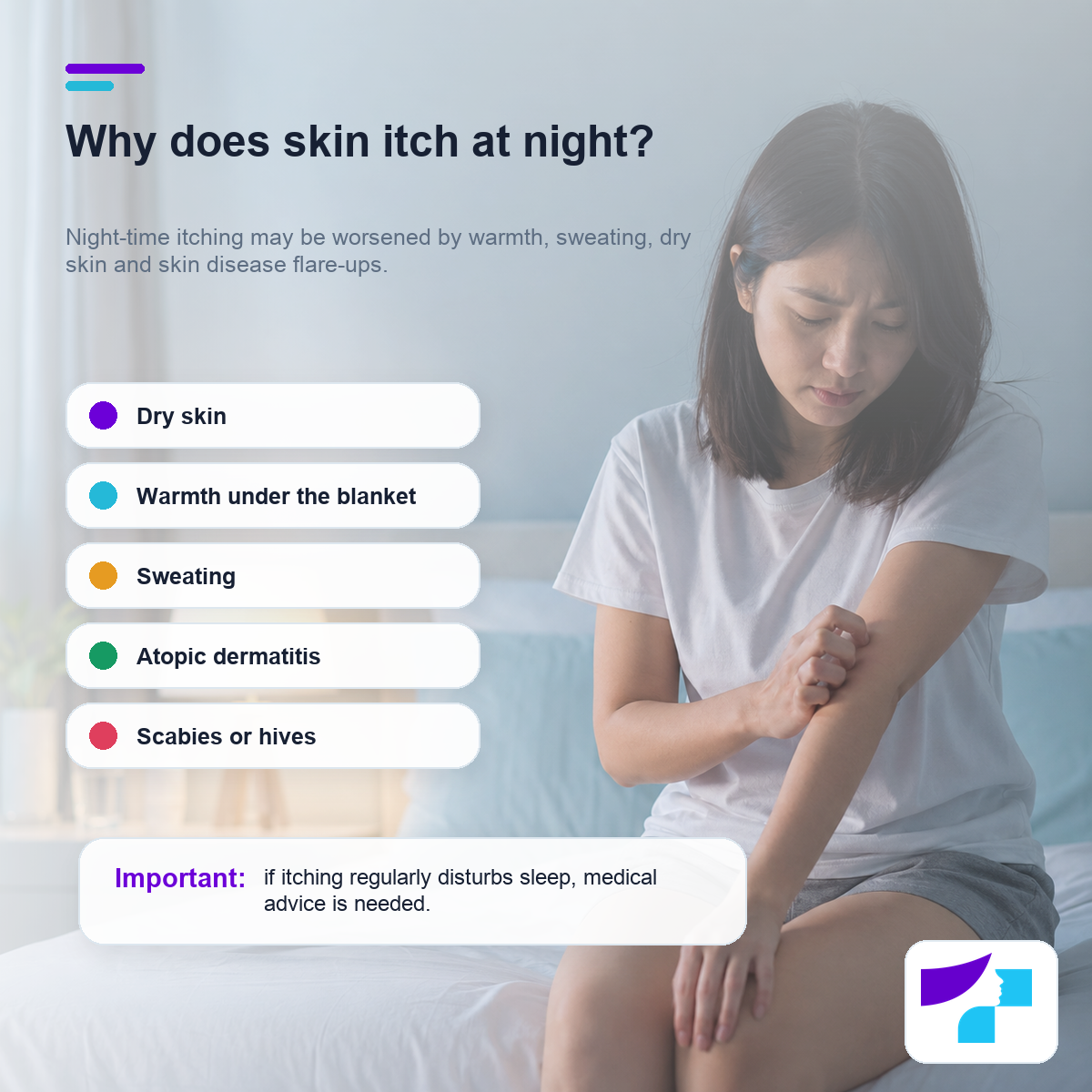
- Itching at night may be worsened by dryness, warmth, sweating, atopic dermatitis, scabies or other causes.
- Allergic itching is only one of many possible causes of itching.
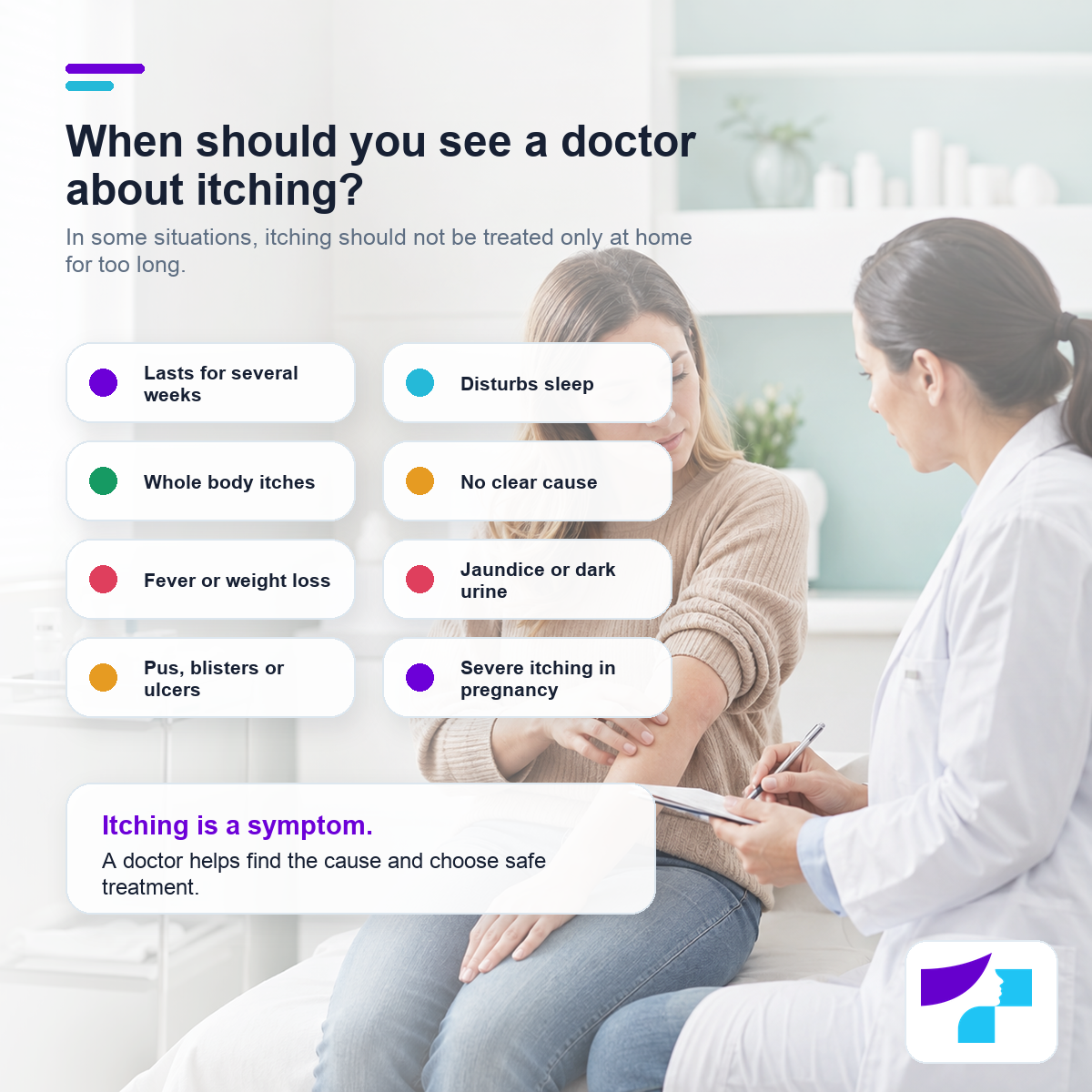
- If itching lasts for several weeks, disturbs sleep, affects the whole body or has no clear cause, you should consult a doctor.
What is itching?
The medical term for itching is pruritus. It is a sensation that causes the urge to scratch. Itching may be local, for example only on the hands, scalp or legs, or it may affect the whole body. It can be short-term or chronic.
Chronic itching is usually defined as itching that lasts for more than 6 weeks. In this case, it is important not only to relieve the symptom, but also to find out why the skin is itching.
What most commonly causes itching?
The most common causes of itching are related to the skin. Very often, itchy skin is caused by dryness, especially in winter, in dry air, after a hot shower, frequent washing or the use of fragranced body care products.
Common causes of itching
- atopic dermatitis or eczema;
- allergic or irritant contact dermatitis;
- hives or urticaria;
- psoriasis;
- seborrhoeic dermatitis;
- fungal infection;
- scabies or lice;
- insect bites;
- medication side effects;
- stress or lack of sleep, which can worsen itching;
- less commonly, body itching caused by liver, kidney, thyroid, diabetes, iron deficiency or blood disorders.
Itching with a rash and itching without a rash
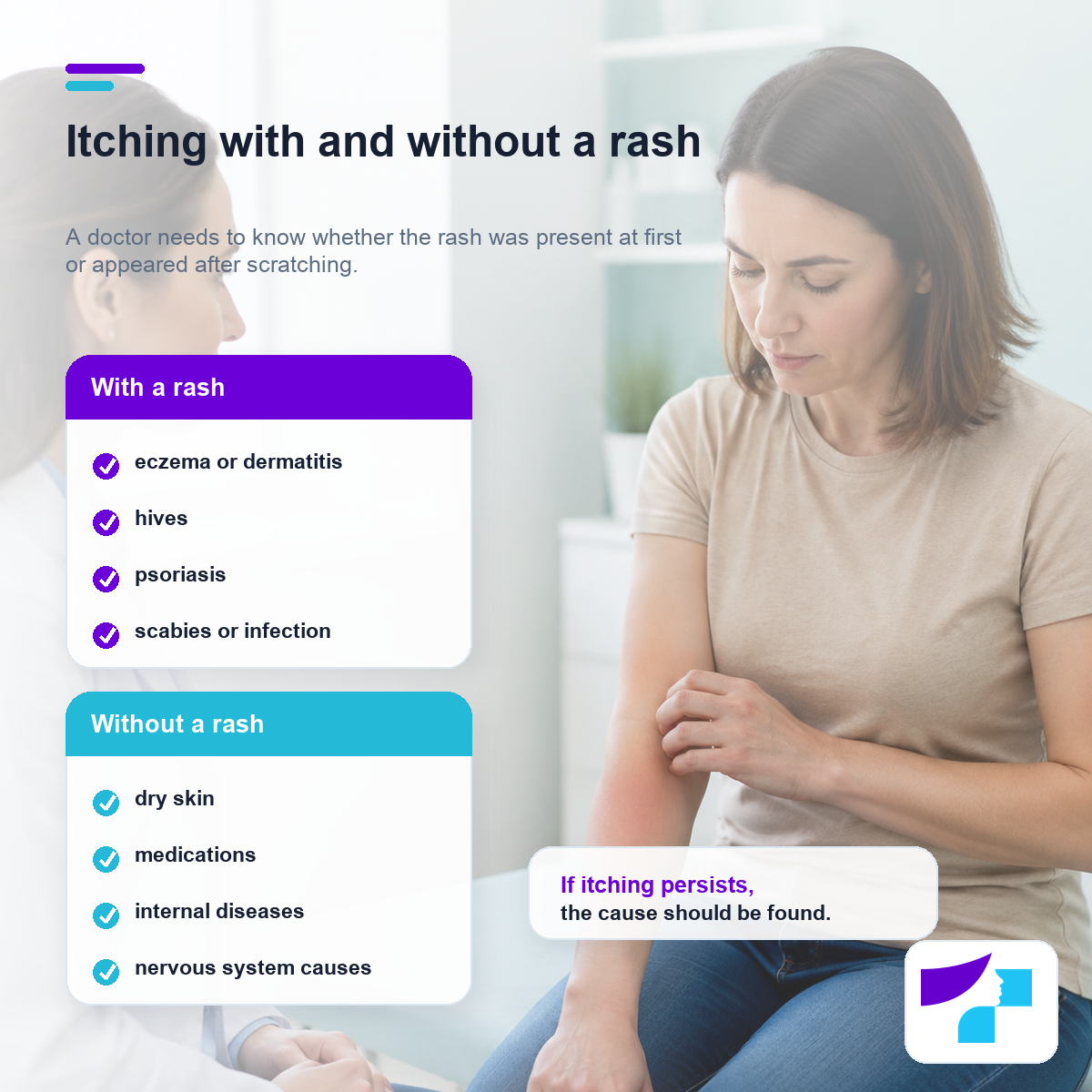
It is important for the doctor to understand whether the itching started together with a rash or whether the rash appeared only after scratching. Scratching itself can cause scratches, redness, crusts and thickening of the skin.
| Situation | Possible causes | When to pay attention |
|---|---|---|
| Itching with dry, scaly patches | Dry skin, atopic dermatitis, psoriasis | If the skin cracks, bleeds or inflammation keeps recurring |
| Itching with sudden raised bumps or wheals | Hives, allergic reaction, infection, medication | If there is facial swelling, shortness of breath or dizziness, urgent medical help is needed |
| Itching with redness after contact with a substance | Contact dermatitis, irritation, allergy | If it recurs after contact with cosmetics, workplace substances, metal or gloves |
| Severe itching at night | Dry skin, atopic dermatitis, scabies, hives | If other household members are also itchy |
| Itching without a rash | Dry skin, medications, internal diseases, nervous system causes | If it affects the whole body or lasts for several weeks |
What does itching without a rash mean?
Itching without a rash means that a person feels itchy, but at first there are no clearly visible spots, bumps or inflammation on the skin. After scratching, however, scratches, redness and crusts may appear.
This type of itching is often related to dry skin, but it may also be a medication side effect or a sign of an internal disease. If itching without a rash is severe, affects the whole body, disturbs sleep or does not go away for several weeks, medical advice is needed.
Why does skin itch at night?
Itching at night is a common complaint. In the evening, people are less distracted by daily activities, so itching can become more noticeable. It may also be worsened by warmth under the blanket, sweating, dry air or a hot shower before bedtime.
Night-time itching may be related to dry skin, atopic dermatitis, hives, scabies, contact dermatitis or medication. If itching at night is very severe, regularly disturbs sleep or other family members are also itchy, you should see a doctor.
Can itching be a sign of allergy?
Yes, allergic itching is possible. It may occur after contact with nickel, cosmetics, fragrances, hair dye, latex, medication or certain plants. In allergic contact dermatitis, itching is often accompanied by redness, swelling, scaling or small rashes in the area that came into contact with the allergen.
However, itching does not always mean allergy. In many people, the cause is dry skin, eczema, irritation, infection or other factors. Therefore, it is not advisable to automatically start a diet, take antihistamines or search for “allergy to everything” without medical assessment.
Can stress cause itching?
Stress can worsen itching and make the skin more sensitive. It can trigger flare-ups of atopic dermatitis, hives, psoriasis or other skin conditions. Stress can also maintain the itch-scratch cycle: the more the skin itches, the more a person scratches, and the more irritated the skin becomes, the stronger the itching may feel.
However, itching should not be explained only by “nerves”, especially if it is persistent, severe, affects the whole body or appears together with other symptoms.
Scalp itching
Scalp itching may be related to dandruff, seborrhoeic dermatitis, psoriasis, dry skin, irritation from shampoo or hair care products, lice or a fungal infection.
It is advisable to see a dermatologist if scalp itching is accompanied by marked scaling, crusts, pus-filled spots, hair loss, pain or if symptoms do not improve with gentle care.
Genital itching
Genital itching, or itching in the intimate area, can affect the external genitalia and surrounding skin in both women and men. It may be caused by contact dermatitis and other skin irritation, eczema, psoriasis, fungal infections, sexually transmitted infections (STIs), scabies, pubic lice and other conditions. In women, itching may also be associated with vulvovaginal candidiasis, other vulvovaginal conditions and hormonal changes, while in men one possible cause is balanitis or balanoposthitis.
Genital itching by itself does not mean that a person has a fungal infection or an STI. When identifying the cause, it is important to consider whether there is also redness, a rash, discharge, an unpleasant odour, burning, pain when urinating, blisters, ulcers or other changes in the skin or mucous membranes. Read more about possible causes, combinations of symptoms, diagnosis and treatment principles in the MedArt Encyclopedia article Genital Itching.
Itching in children
Itching in children is often caused by dry skin, atopic dermatitis, insect bites, infections, scabies or irritation. It does not always mean food allergy. Excluding foods from a child’s diet without medical advice is not recommended, as it may lead to nutrient deficiencies.
A doctor should be consulted if the child sleeps poorly because of itching, the skin becomes weepy, bleeds, hurts, pus appears, there is fever or the rash spreads quickly.
Itching during pregnancy
Milder itching during pregnancy may be related to skin stretching, dryness or hormonal changes. However, intense itching should not always be considered normal.
It is especially important to contact a doctor if itching is severe, appears without a rash, affects the palms or soles, becomes worse at night or is accompanied by feeling unwell, jaundice, dark urine or pale stools. In such cases, the doctor should also assess the possibility of cholestasis of pregnancy.
How to relieve itching quickly at home?
If itching is mild and related to dry or irritated skin, safe self-care measures may help.
- Use a fragrance-free moisturising cream or emollient.
- Wash with lukewarm, not hot, water.
- Avoid fragranced soaps and harsh cleansers.
- After showering, gently pat the skin dry instead of rubbing it.
- Apply moisturiser immediately after washing.
- Use a cool compress for a short time.
- Wear soft, breathable clothing.
- Avoid overheating and sweating.
- Keep nails short so scratching causes less skin damage.
If itching does not go away, these measures do not replace medical consultation. Treatment always depends on the cause.
What should you avoid if your skin is very itchy?
You should avoid prolonged experimenting with alcohol-based solutions, baking soda, lemon, essential oils, harsh scrubs or creams of unknown origin. These can irritate the skin further and worsen itching.
Without a doctor’s advice, prescription ointments, antibiotics, anti-parasitic medicines or strong corticosteroids should not be used. Incorrect treatment can mask the condition, worsen the skin or delay diagnosis.
When can itching indicate a more serious problem?
Itching itself is not always dangerous, but in certain situations it may be related to a more serious health problem. Particular attention should be paid if there is:
- whole-body itching without a clear cause;
- itching without a rash;
- itching lasting more than a few weeks;
- severe itching at night;
- unexplained weight loss;
- fever or night sweats;
- marked fatigue;
- yellowing of the skin or whites of the eyes;
- dark urine or pale stools;
- swelling;
- painful blisters, pus or widespread inflammation;
- a new, changing, bleeding, painful or itchy skin lesion.
When should you see a doctor?
You should see a doctor if itching is persistent, severe, unexplained or disturbs sleep. Consultation is also needed if itching affects the whole body, started after taking a new medication, occurs during pregnancy or if similar symptoms are present in other household members.
A dermatologist or family doctor can examine the skin, review medications, ask about the work environment, household chemicals, allergies, travel and other illnesses. Sometimes blood tests, skin scraping, allergy tests, dermoscopy or other examinations may be needed.
Summary
Itching is a common symptom that may be caused by dry skin, irritation, allergy, skin diseases, infections, medications or internal illnesses. Mild itchy skin can often be relieved with gentle care, lukewarm water and regular moisturising. However, persistent, severe, night-time, whole-body or unexplained itching is a reason to consult a doctor.
This information is for educational purposes and does not replace medical consultation, diagnosis or treatment. Do not use prescription medicines, strong ointments, antibiotics, anti-parasitic medicines or aggressive home remedies without a doctor’s advice.
References and authoritative sources
- DermNet: medical information about itching or pruritus, its causes, diagnosis and treatment principles
- American Academy of Dermatology: common causes of itchy skin and safe recommendations for itch relief
- Cleveland Clinic: patient information about pruritus, or itchy skin
- MSD Manual for patients: possible causes and evaluation of itchy skin
- Doctus: overview for medical professionals on the origin and treatment of itching
