Vulvovaginal candidiasis is inflammation of the vulva and vagina caused by Candida yeasts. In everyday language, it is often called a vaginal yeast infection or vaginal thrush. It is a common cause of vaginal itching, burning and discharge, but it is not the only possible cause. Similar symptoms may also occur with bacterial vaginosis, sexually transmitted infections, urinary tract infection, contact dermatitis or other vulvar skin conditions.
The most common cause of vulvovaginal candidiasis is Candida albicans, but symptoms may also be caused by other Candida species, such as Candida glabrata. It is important to know that Candida can also be present in the vagina without causing disease. If there is no itching, burning, redness, soreness or other symptoms, finding Candida in a test does not usually require treatment by itself.
Typical vulvovaginal candidiasis may present with vulvar and vaginal itching, burning, redness, swelling, soreness, discomfort during sexual intercourse, external burning when urinating and white, thick, curd-like discharge. However, symptoms can vary, and the diagnosis cannot always be made safely based on symptoms alone.
The key points in brief
- Vulvovaginal candidiasis is inflammation of the vulva and vagina caused by Candida yeasts.
- It is commonly called a vaginal yeast infection or vaginal thrush.
- Candida albicans is the most common cause, but other Candida species are possible.
- Candida may be present in the vagina without symptoms, and this usually does not require treatment.
- The most common symptoms are itching, burning, redness, soreness and discharge.
- Discharge is often white and curd-like, usually without a strong unpleasant odour.
- Symptoms are not specific and may resemble other vaginal or vulvar conditions.
- Vaginal candidiasis is not usually considered a classic sexually transmitted infection.
- Antibiotic use, pregnancy, diabetes and weakened immunity may increase the risk.
- First-time, recurrent, severe symptoms or symptoms during pregnancy should be assessed by a doctor.
What is vulvovaginal candidiasis?
Vulvovaginal candidiasis means that Candida yeasts have overgrown and caused inflammation in the vagina and/or vulva. The vulva is the external genital area, while the vagina is internal. For this reason, symptoms may be felt both inside the vagina and externally: itching, redness, burning, small cracks or soreness.
Candida is not always “bad” or foreign. In small amounts, it may be part of the vaginal microbiome. The vaginal environment is not sterile; it contains different microorganisms, and lactobacilli play an important role in a healthy vaginal environment. When this balance changes, Candida may gain more favourable conditions to multiply.
Therefore, vulvovaginal candidiasis is not only a laboratory result. Symptoms, examination findings and, when needed, microscopy, culture or other tests are important for diagnosis.
How common is vaginal yeast infection?
Vaginal candidiasis is very common. International sources indicate that many women experience at least one episode of vulvovaginal candidiasis during their lifetime, and some have recurrent episodes. The exact frequency is difficult to estimate because many patients treat themselves and the diagnosis is not always confirmed in a laboratory.
This is important in two ways. On the one hand, vaginal yeast infection is common and nothing to be ashamed of. On the other hand, its frequency does not mean that every episode of vaginal itching or white discharge is automatically candidiasis. Self-diagnosis is often wrong because similar symptoms can be caused by other conditions that require different treatment.
What are the symptoms of vulvovaginal candidiasis?
Symptoms of vulvovaginal candidiasis are usually related to inflammation and irritation in the vulvar and vaginal area. The most common complaints are:
- vaginal or vulvar itching;
- burning in the vagina and external genital area;
- redness;
- vulvar swelling;
- soreness or irritation;
- discomfort or pain during sexual intercourse;
- external burning when urinating, especially if urine touches irritated vulvar skin;
- white, thick, curd-like discharge;
- small cracks, scratching marks or sensitive vulvar skin.
Discharge is not always very pronounced. In some patients, itching and burning are the main symptoms, while discharge is minimal. In others, white curd-like discharge is more noticeable. A strong fishy smell is not typical of candidiasis and more often suggests bacterial vaginosis or another vaginal microbiome disorder.
What causes vaginal candidiasis?
Vaginal candidiasis develops when the vaginal microbiome or the body’s defence mechanisms change and Candida begins to multiply excessively. A single clear cause is not always found, but common risk factors include:
- recent antibiotic use;
- pregnancy;
- hormonal changes;
- diabetes, especially if blood glucose is not well controlled;
- weakened immunity;
- corticosteroids or other medicines that affect the immune system;
- previous episodes of candidiasis;
- local irritation, for example from harsh intimate hygiene products.
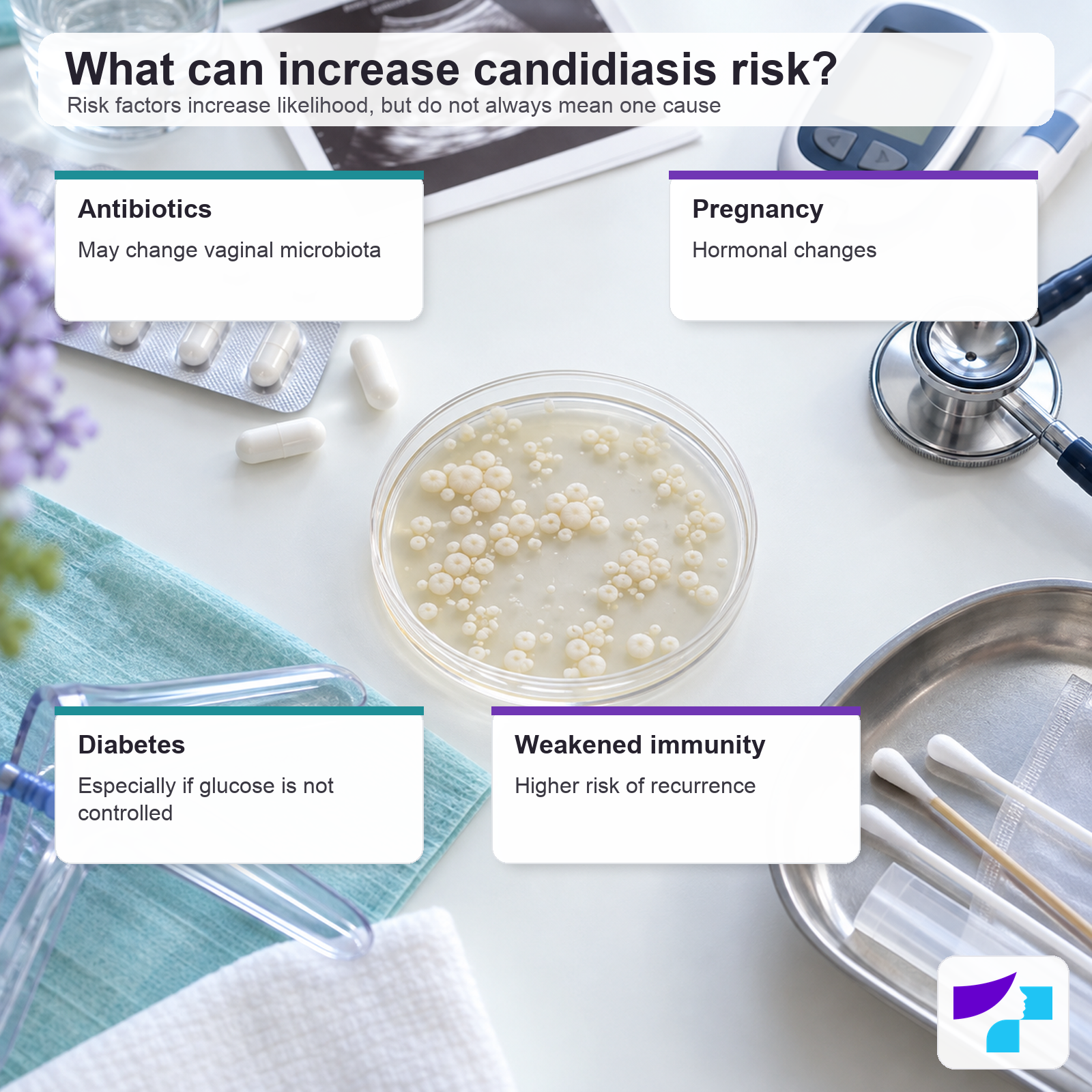
Candidiasis is not a sign of poor hygiene. On the contrary, excessive washing, vaginal douching, fragranced products or antiseptics may disturb the natural protective environment and worsen irritation.
Candidiasis after antibiotics
Candidiasis after antibiotics is common. Antibiotics are used to treat bacterial infections, but they may also affect the normal vaginal microbiome. If the number of lactobacilli decreases, Candida may multiply more easily.
This does not mean that antibiotics should be avoided when they are needed. Antibiotics should be taken exactly as prescribed by a doctor. If you have previously developed vaginal yeast infection after antibiotics, it is worth telling your doctor the next time antibiotic treatment is prescribed.
Vulvovaginal candidiasis or bacterial vaginosis?
Candidiasis and bacterial vaginosis can both cause discharge and discomfort, but they are different conditions. Candidiasis is caused by overgrowth of Candida yeasts, while bacterial vaginosis is a vaginal microbiome imbalance in which lactobacilli decrease and other microorganisms overgrow.
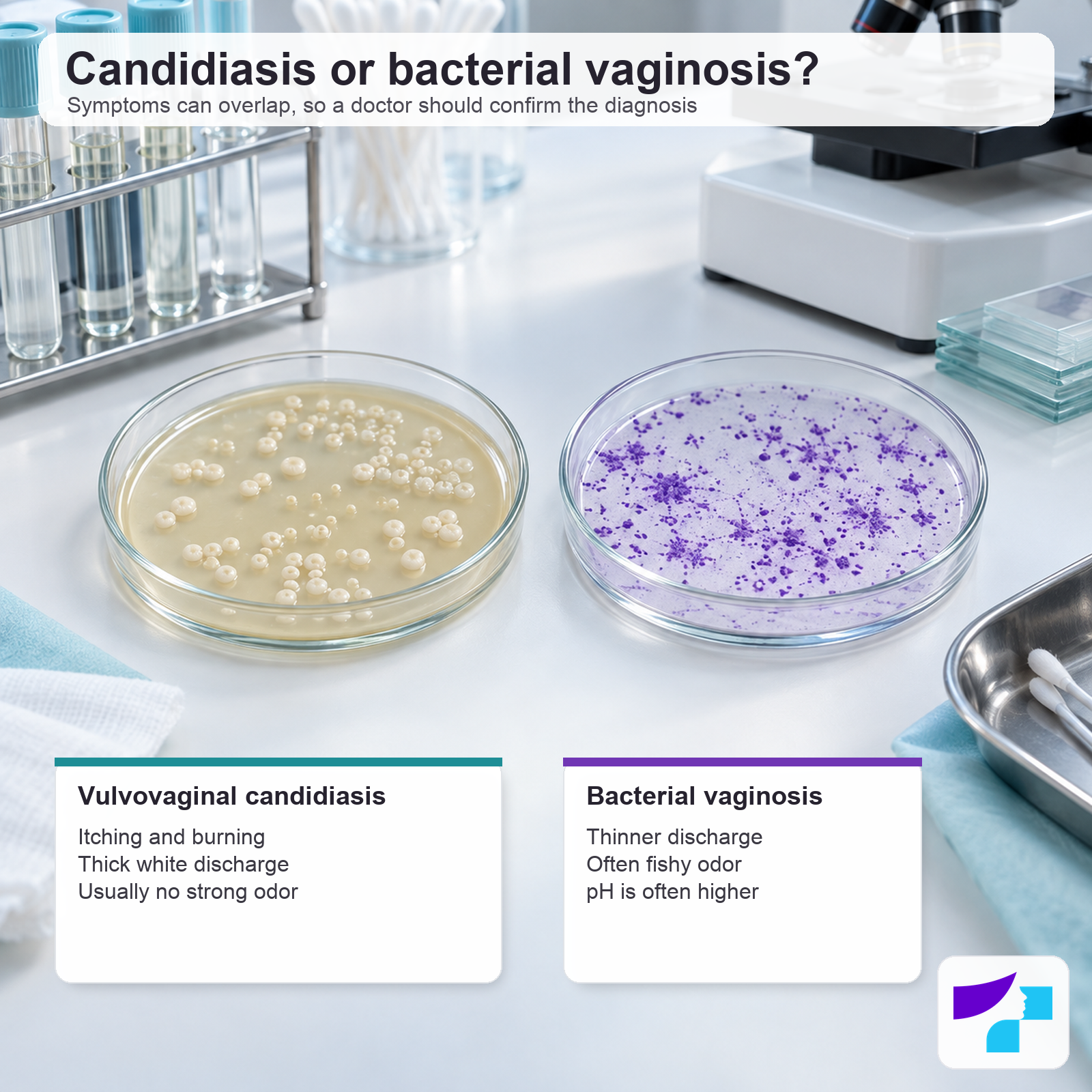
| Feature | Vulvovaginal candidiasis | Bacterial vaginosis |
|---|---|---|
| Main complaint | Itching, burning, irritation | Discharge and unpleasant odour |
| Discharge | Thick, white, curd-like; sometimes watery or mild | Thinner, greyish or white |
| Odour | Usually not strong | Often fishy |
| Vaginal pH | Usually normal | Often elevated |
| Treatment principle | Antifungal medicines | Antibacterial treatment |
This table is only a guide. Diagnosis cannot be made from it alone because symptoms may overlap, and more than one cause may be present at the same time.
What else should vulvovaginal candidiasis be distinguished from?
Itching, burning and discharge may occur for many reasons. Candidiasis should be distinguished from:
- bacterial vaginosis;
- trichomoniasis;
- chlamydia infection;
- gonorrhoea;
- genital herpes;
- urinary tract infection;
- allergic or irritant contact dermatitis;
- atopic dermatitis;
- vulvar dermatoses;
- genitourinary syndrome of menopause;
- rarer vaginal microbiome disorders, such as cytolytic vaginosis.
If symptoms are first-time, long-lasting, recurrent, very painful or atypical, they should not be treated based only on guesswork. Correct diagnosis helps avoid unsuitable treatment.
How is vulvovaginal candidiasis diagnosed?
Diagnosis starts with questions about symptoms: when they began, whether they recur, whether antibiotics have been used recently, whether the patient is pregnant, whether diabetes, immune problems, new medicines, new intimate hygiene products or STI risk are present.
A doctor may perform a gynaecological examination and assess the vulvar and vaginal mucosa, the type of discharge, redness, swelling, cracks or other signs of inflammation. Depending on the situation, tests may include:
- vaginal pH testing;
- microscopy of vaginal discharge;
- KOH preparation to help identify yeast;
- Candida culture;
- molecular tests;
- Candida species identification in recurrent or treatment-resistant cases;
- STI testing if risk factors or symptoms suggest it.
A typical episode can often be assessed relatively simply by a doctor. Recurrent, severe or unclear symptoms require more careful diagnostic evaluation.
When should you see a gynecologist for vaginal thrush?
You should see a gynecologist if:
- symptoms appear for the first time;
- it is unclear whether this is truly a vaginal yeast infection;
- symptoms do not improve after treatment;
- symptoms return quickly;
- there are three to four or more episodes per year;
- the patient is pregnant;
- diabetes is present;
- the immune system is weakened;
- there is abdominal pain, fever or feeling unwell;
- there is bleeding outside menstruation;
- ulcers, blisters or marked pain appear;
- there is a risk of sexually transmitted infection;
- discharge has a strong unpleasant smell or unusual colour.
It is especially important not to delay care if there is severe pain, fever, lower abdominal pain, pregnancy with pronounced symptoms or suspicion of pelvic infection.
How is vulvovaginal candidiasis treated?
Treatment of vulvovaginal candidiasis depends on the diagnosis, symptom severity, pregnancy status, recurrence frequency and Candida species. The goal of treatment is to reduce symptoms and inflammation, not to treat a laboratory finding when there are no symptoms.
Antifungal medicines are used for treatment. They may include:
- local vaginal creams, pessaries, capsules or tablets;
- external preparations to reduce vulvar irritation, if recommended by a doctor or pharmacist;
- oral antifungal medicines, if prescribed by a doctor.
Azole antifungal medicines such as clotrimazole, miconazole or fluconazole are often used. The specific medicine, form and duration are chosen according to the situation. Individual doses are not provided in this article because treatment should be tailored to the patient.
Treatment should be used for the full recommended duration, even if symptoms begin to improve sooner. If symptoms do not improve or return quickly, the same self-treatment should not simply be repeated several times in a row. In this situation, the diagnosis should be clarified.
Some vaginal creams, pessaries or capsules may be oil-based and may temporarily weaken latex condoms or diaphragms. If contraception or STI protection is needed during treatment, read the instructions for the specific product and consult a pharmacist or doctor.
When can over-the-counter treatment be considered?
Over-the-counter antifungal medicines may be appropriate only in certain situations, for example if vulvovaginal candidiasis has previously been confirmed by a doctor and very similar mild or moderate symptoms recur without warning signs.
Self-treatment is not a good choice if symptoms are first-time, the diagnosis is unclear, the patient is pregnant, ulcers or blisters are present, there is abdominal pain, fever, bleeding, a strong unpleasant odour, STI risk, weakened immunity or symptoms do not improve after one treatment course. In these cases, it is safer to see a gynecologist.
Acute, severe and recurrent candidiasis
It is practical for patients to understand that vulvovaginal candidiasis is not the same in every situation. A single mild or moderate episode in a patient with a previously confirmed diagnosis is assessed differently from first-time, severe, pregnancy-related or recurrent symptoms.
Severe candidiasis may involve marked redness, swelling, soreness, cracks or more extensive vulvar inflammation. In such situations, a short self-treatment course may not be the best option.
In recurrent candidiasis, it is especially important not to rely only on a familiar feeling of symptoms. Recurrent “yeast infection” symptoms may also be caused by another type of vaginitis, mixed infection, vulvar skin disease or a Candida species that responds less well to usual treatment.
Recurrent vulvovaginal candidiasis
Recurrent vulvovaginal candidiasis means that symptomatic episodes occur repeatedly during the year. Different guidelines may use slightly different thresholds, but recurrent candidiasis is often discussed when there are at least three or four episodes within 12 months.
Recurrent candidiasis needs a more careful approach. It is important to:
- confirm that symptoms are truly caused by candidiasis;
- rule out bacterial vaginosis, STIs, dermatitis and other causes;
- consider identifying the Candida species;
- assess the possibility of non-albicans Candida;
- consider susceptibility testing if symptoms persist despite treatment;
- assess diabetes or immune factors if clinically appropriate;
- plan treatment under medical supervision.
In recurrent candidiasis, a doctor may choose a longer initial treatment followed by maintenance therapy. Maintenance therapy may help control symptoms, but it does not always provide a permanent cure.
Non-albicans Candida and treatment-resistant symptoms
Most cases of vulvovaginal candidiasis are caused by Candida albicans, but in some patients, especially with recurrent episodes, other Candida species may be involved. Candida glabrata and other non-albicans Candida species may be harder to detect on microscopy and may respond less well to usual azole therapy.
If symptoms persist despite treatment, this does not always mean that a “stronger” version of the same medicine is needed. Another diagnosis, mixed infection, unsuitable treatment, non-albicans Candida or resistance may be involved. Medical assessment is needed in this situation.
Candidiasis during pregnancy
Candidiasis during pregnancy is more common because of hormonal changes. A pregnant patient with vaginal itching, burning or discharge should consult a doctor or midwife, because treatment choices during pregnancy require particular caution.
Self-treatment during pregnancy is not recommended. Similar symptoms may also be caused by other infections that require different treatment. Local treatment is usually preferred in pregnancy if prescribed by a doctor. Oral antifungal medicines during pregnancy should be considered very carefully and only when medically justified.
Is vaginal thrush sexually transmitted?
Vulvovaginal candidiasis is not usually considered a classic sexually transmitted infection. It is more often related to changes in the vaginal microbiome and individual body factors than to infection acquired during sexual contact.
However, sexual contact during active symptoms may worsen irritation and cause pain or discomfort. If there is STI risk, new partners, unusual discharge, bleeding, ulcers or lower abdominal pain, medical assessment and possibly STD testing are needed.
Does the partner need treatment?
In uncomplicated vulvovaginal candidiasis, partner treatment is usually not needed if the partner has no symptoms.
If the partner has redness, itching, burning, irritation or rash on the glans penis, he should see a doctor. In recurrent complaints, the situation should be assessed individually.
Can candidiasis go away on its own?
Mild symptoms may sometimes improve without treatment, but this is not a safe way to confirm the diagnosis. If symptoms are severe, recurrent, first-time or atypical, medical assessment is needed.
Incorrect self-treatment may delay diagnosis of another condition. Particular caution is needed if there is an unpleasant odour, greenish or yellow discharge, bleeding, ulcers, fever, abdominal pain or STI risk.
Probiotics, diet and “natural remedies”
Probiotics are often mentioned in relation to the vaginal microbiome, but evidence for their effectiveness in treating vulvovaginal candidiasis is not strong enough for them to replace antifungal treatment. They should not be presented as reliable first-line treatment.
Dietary changes should also not be described as a proven treatment for vaginal yeast infection. A balanced diet and good diabetes control may be important for general health, but “Candida diets” should not be presented as an alternative to medical treatment.
Garlic, essential oils, homemade mixtures, yoghurt or other “natural” remedies should not be inserted into the vagina. They may irritate the mucosa, cause burns, disturb the vaginal environment and worsen symptoms.
What should you do if vulvovaginal candidiasis is suspected?
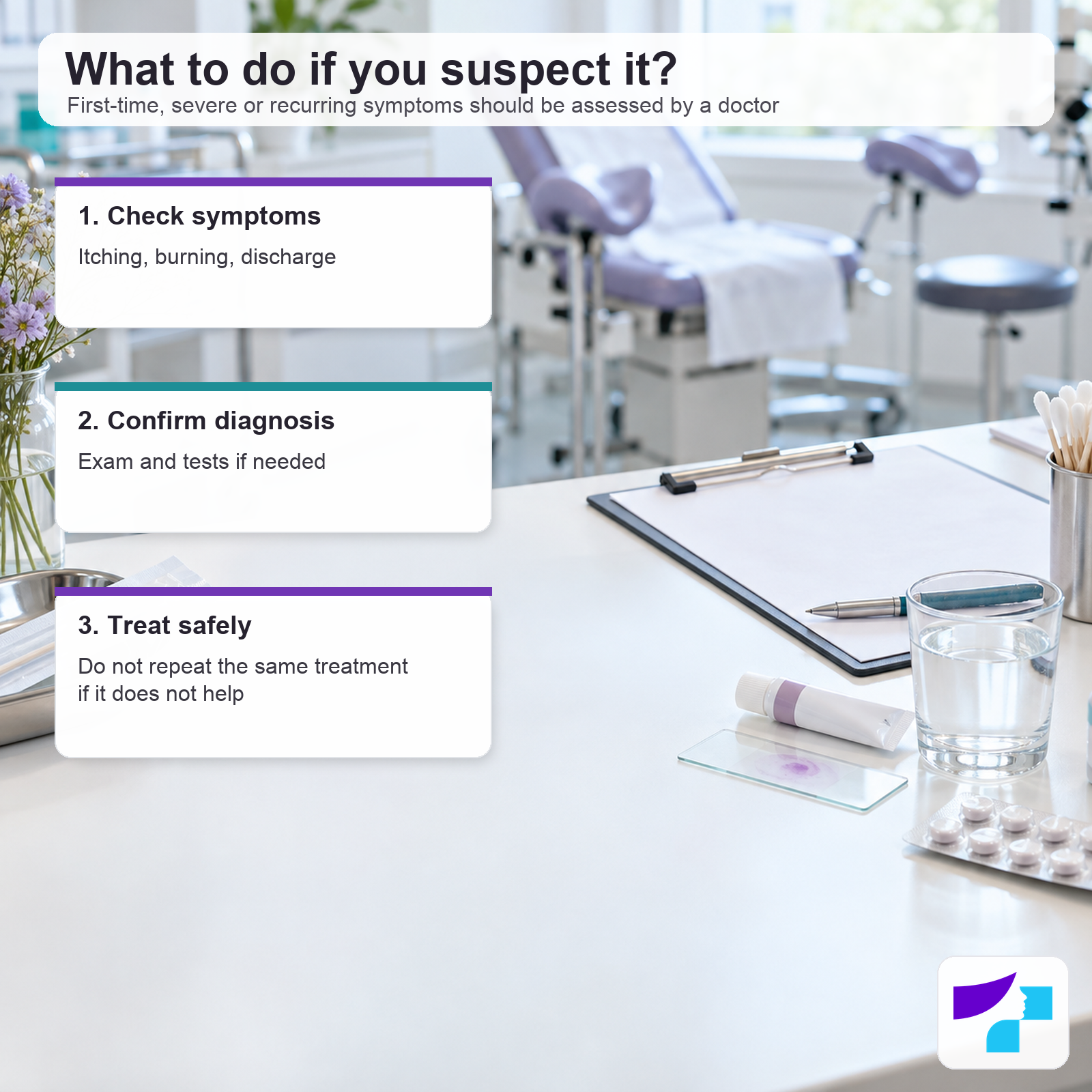
- Assess symptoms: itching, burning, discharge, pain, odour and duration.
- If symptoms are first-time, unclear or pronounced, book a medical appointment.
- Avoid vaginal douching, fragranced products and aggressive washing.
- Do not repeatedly use the same antifungal medicine if the previous course did not help.
- If antibiotics were used recently, tell your doctor.
- During pregnancy, consult a doctor or midwife before treatment.
- If symptoms recur, diagnosis confirmation and Candida species assessment may be needed.
How long does vulvovaginal candidiasis last?
The duration of symptoms depends on inflammation severity, Candida species, treatment choice and the individual situation. With appropriate treatment, improvement often begins within a few days. However, treatment should be completed as directed, even if itching and burning improve sooner.
If symptoms do not improve, become stronger or return quickly after treatment, a doctor should be consulted. This may mean that the diagnosis was not correct, recurrent candidiasis is present, non-albicans Candida is involved or another treatment approach is needed.
How can recurrence risk be reduced?
Recurrence cannot always be fully prevented, but in some cases a gentle approach and risk factor control may help:
- avoid vaginal douching;
- avoid fragranced or irritating intimate hygiene products;
- use antibiotics only when prescribed and necessary;
- control diabetes if present;
- consult a doctor if episodes recur;
- do not change prescription medicines without medical advice;
- tell the doctor how often episodes occur and which medicines have been used before.
Prevention should not turn into blame. Candidiasis may recur even in patients with good hygiene and no obvious trigger.
Common myths about vulvovaginal candidiasis
Myth: any vaginal itching means yeast infection
Itching may be a symptom of candidiasis, but it can also be caused by dermatitis, STIs, urinary tract infection or other conditions.
Myth: white discharge always means candidiasis
Discharge may change for hormonal reasons or be related to other infections. Diagnosis should not be based only on the appearance of discharge.
Myth: vaginal thrush is always sexually transmitted
Vulvovaginal candidiasis is not usually considered a classic STI.
Myth: the partner always needs treatment
Partner treatment is usually not needed if the partner has no symptoms.
Myth: Candida found in a test always needs treatment
Candida may be present in the vagina without symptoms. Asymptomatic colonisation usually does not require treatment.
Myth: probiotics cure vaginal candidiasis
Probiotics should not replace evidence-based treatment.
Myth: if an antifungal medicine does not help, the same one should be repeated
If treatment does not help, the diagnosis should be clarified rather than automatically repeating the same medicine.
Myth: candidiasis is caused by poor hygiene
Candidiasis is not a sign of uncleanliness. Excessive washing may worsen irritation.
Myth: vaginal thrush during pregnancy can be treated as usual
Treatment choices during pregnancy require caution and should preferably be guided by a doctor.
Myth: recurrent candidiasis does not need investigation
Recurrent episodes should be confirmed diagnostically and other possible causes should be assessed.
Summary
Vulvovaginal candidiasis, or vaginal yeast infection, is a common cause of vaginal itching, burning, redness and discharge. It is most often caused by overgrowth of Candida albicans, but Candida may also be present in the vagina without causing symptoms.
Symptoms may resemble bacterial vaginosis, sexually transmitted infections, urinary tract infection or vulvar skin disease. Therefore, first-time, recurrent, severe symptoms or symptoms during pregnancy should be assessed by a doctor. Correct diagnosis helps choose suitable treatment and avoid unnecessary self-treatment.
Medical disclaimer
The information in this article is educational and does not replace medical consultation, diagnosis or individually prescribed treatment. If vaginal or vulvar symptoms are first-time, recurrent, severe, occur during pregnancy, do not improve after treatment, or are associated with fever, lower abdominal pain, bleeding, ulcers, blisters, a strong unpleasant odour or risk of sexually transmitted infection, consult a gynecologist or another qualified healthcare professional. If symptoms may be related to a skin condition, such as contact dermatitis, atopic dermatitis or vulvar dermatosis, assessment by a dermatologist may also be needed.
References and authoritative sources
- Centers for Disease Control and Prevention (CDC): guidelines for the diagnosis and treatment of vulvovaginal candidiasis
- Centers for Disease Control and Prevention (CDC): treatment of candidiasis
- American College of Obstetricians and Gynecologists (ACOG): patient information about vaginitis
- British Association for Sexual Health and HIV (BASHH): vulvovaginal candidiasis guideline
- American College of Obstetricians and Gynecologists (ACOG): guidance on vaginitis in nonpregnant patients
