Atopic dermatitis is a chronic inflammatory skin disease that causes dry, sensitive and intensely itchy skin with recurring flare-ups. Its development is linked to a weakened skin barrier, individual and genetic predisposition, immune inflammation and environmental factors.
Atopic dermatitis often starts in infancy or early childhood, but it can also appear for the first time in teenagers and adults. It is not contagious. Long-term control is based on regular skin care, reducing individual triggers and treating inflammation early.
Key points
- Atopic dermatitis is not simply an “allergy on the skin”.
- It is not contagious and cannot be passed from one person to another.
- Emollients support the skin barrier, but they may not be enough to treat active inflammation.
- Allergy tests are not automatically needed for every patient.
- Milk, eggs, gluten or other foods should not be removed without a medical reason.
- If itching disturbs sleep, the rash is extensive, painful, oozing or repeatedly infected, medical assessment is needed.
What is atopic dermatitis?
Atopic dermatitis is a long-term, relapsing inflammatory skin disease. It is characterized by a disrupted skin barrier, increased water loss from the skin, dryness, itching and inflammation.
The disease usually alternates between flare-ups, when itching and inflammation increase, and quieter periods, when symptoms are less noticeable.
The severity can vary widely. Some people have only a few dry and itchy patches, while others have widespread disease, severe itching, sleep disturbance and a major impact on daily life.
Are atopic dermatitis and atopic eczema the same?
The terms “atopic dermatitis” and “atopic eczema” are often used as synonyms. However, eczema is a broader term that may also include contact dermatitis, discoid eczema and other inflammatory skin conditions.
For medical accuracy, this article uses the term atopic dermatitis.
How does atopic dermatitis develop?
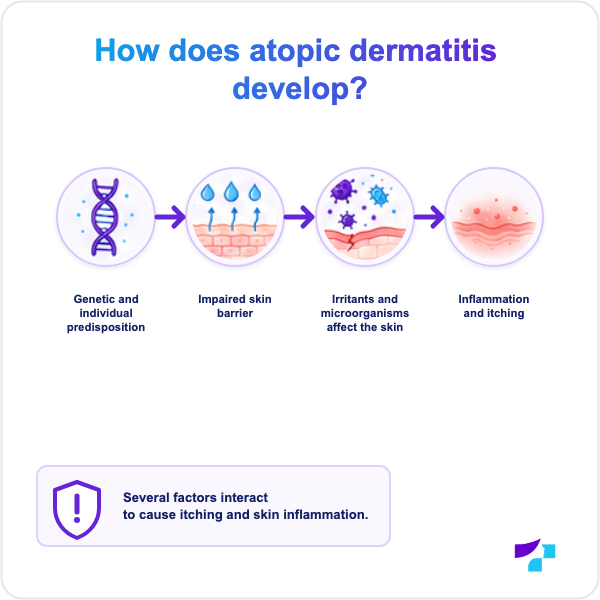
Atopic dermatitis usually does not have a single cause. It develops through the interaction of several factors:
- skin barrier impairment;
- genetic and individual predisposition;
- immune inflammation;
- changes in the skin microbiome;
- environmental influences;
- individual flare-up triggers.
Skin barrier impairment
The outer layer of healthy skin helps retain moisture and protects the body from irritants, allergens and microorganisms. In atopic dermatitis this barrier works less effectively, so the skin loses moisture more easily and becomes dry, sensitive and reactive.
Immune inflammation
Inflammation in the skin drives itching, swelling, color changes and other symptoms. In moderate or severe disease, inflammation may remain active even when the skin looks temporarily calmer.
Genetic and individual predisposition
Atopic dermatitis is more common in people with a personal or family history of atopic dermatitis, food allergy, asthma or allergic rhinitis. Predisposition increases risk, but it does not mean the disease will definitely develop.
Skin microbiome
The skin microbiome is the community of microorganisms living on the skin. During flare-ups, this balance can change. Staphylococcus aureus is often found on atopic skin, but its presence alone does not always mean infection or the need for antibiotics.
What is atopic skin?
Atopic skin is usually dry, sensitive and has a weaker barrier function. It may react more easily to soaps, fragrances, preservatives, cold, heat, sweat, rough fabrics, frequent washing and disinfectants.
Dry or sensitive skin alone does not confirm atopic dermatitis. The diagnosis also depends on itching, inflammation, flare-ups and the pattern of the rash.
Symptoms of atopic dermatitis
Symptoms vary by age, skin tone, disease stage and severity. Common signs include itching, dry skin, inflamed patches, rough or scaly skin, scratch marks, cracks, soreness, small blisters, oozing, crusts, thickened skin and sleep disturbance.
Acute flare-up
During a flare-up the skin may become very itchy, swollen, inflamed, tender, oozing or crusted. Scratching can cause superficial wounds and increase the risk of infection.
Chronic changes
Long-standing inflammation may make the skin dry, rough, scaly, thickened and cracked. Thickened skin with more visible skin lines is called lichenification and usually develops after repeated rubbing or scratching.
The itch-scratch cycle
Itching is one of the most characteristic symptoms. Scratching may briefly relieve the itch, but it damages the skin barrier and increases inflammation. This creates a cycle: dry inflamed skin → itching → scratching → more skin damage → more inflammation → new itching.
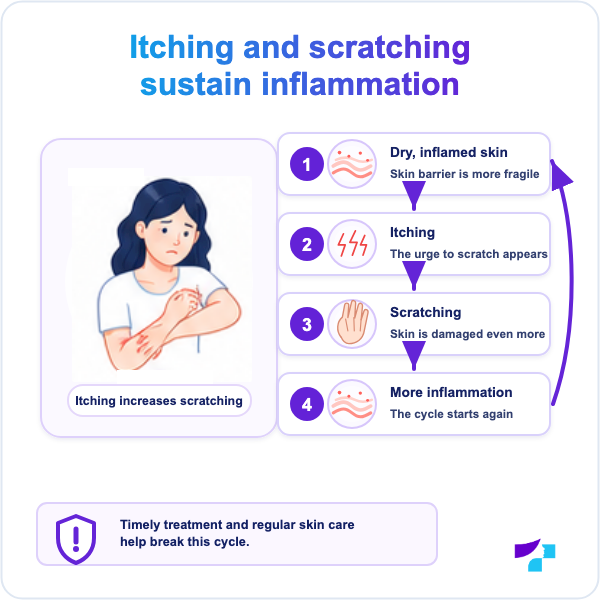
This cycle can be reduced with timely anti-inflammatory treatment, regular emollients, cooler surroundings, short nails, soft clothing and a personalized treatment plan.
How inflammation may look on different skin tones
On lighter skin, inflammation often looks pink or red. On darker skin, redness may be less visible and inflammation may look purple, grey, dark brown, lighter or darker than the surrounding skin.
Where does atopic dermatitis most often appear?
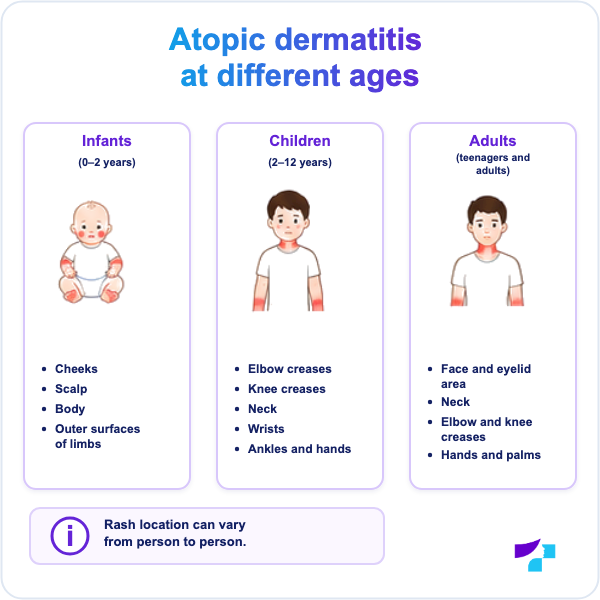
The location of the rash often changes with age, but location alone does not confirm the diagnosis.
Infants
In infants, atopic dermatitis often affects the cheeks, forehead, scalp, trunk and outer surfaces of the arms and legs.
Children
In children, it more often affects the elbow folds, knee folds, neck, wrists, ankles and hands.
Teenagers and adults
In teenagers and adults, common sites include the elbow and knee folds, face, eyelids, neck, hands, palms and upper chest.
Atopic dermatitis in infants, children and adults
Infants
In babies, atopic dermatitis may appear as dry, rough, itchy or oozing patches on the cheeks, forehead, scalp, trunk and limbs. Similar rashes can also be caused by seborrhoeic dermatitis, saliva irritation, infection or other conditions.
Cheek rashes do not automatically mean milk allergy. Saliva, cold air, friction, overheating and washing products may cause similar changes.
Children
In children, itching often worsens in the evening and at night. Poor sleep may affect mood, concentration and the whole family’s daily life. A child with atopic dermatitis can usually attend nursery, school and sports because the condition is not contagious.
Adults
Atopic dermatitis can begin for the first time in adulthood or return after a long symptom-free period. In adults, contact dermatitis, psoriasis, fungal infection, scabies and other skin diseases should also be considered.
Face and eyelids
Facial and eyelid skin is thin and sensitive, so treatment must be chosen carefully. Recurrent eyelid dermatitis may also be related to contact allergy from cosmetics, hair products, nail products, eye drops or other exposures.
Hands
Hand dermatitis may be driven by both atopic tendency and repeated irritation. Frequent hand washing, disinfectants, wet work, gloves, healthcare, cleaning, beauty work and food production can increase the risk. Read more about contact allergens and patch testing in Medart’s article on allergic contact dermatitis.
What triggers flare-ups?
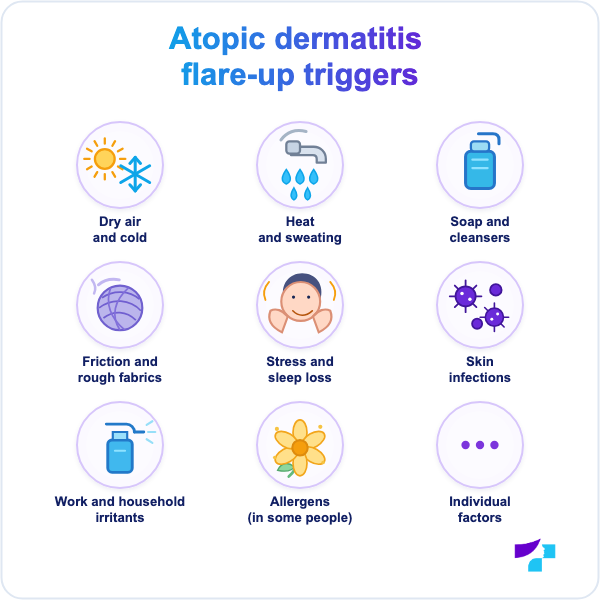
A flare-up trigger is not the same as the underlying cause of atopic dermatitis. Triggers differ from person to person and may include dry skin, cold and low humidity, heat and sweating, hot water, soaps, friction, rough clothing, stress, lack of sleep, infections, workplace irritants and individual allergens.
Is atopic dermatitis an allergy?
Atopic dermatitis is a chronic inflammatory skin disease, not simply an allergic reaction to one substance. Some patients also have food allergy, allergic rhinitis, asthma or contact allergy, but these are not automatically the cause of atopic dermatitis.
For broader information about allergy types, skin prick tests, specific IgE tests and treatment options, see Medart’s article on allergy.
Atopic dermatitis and food allergy
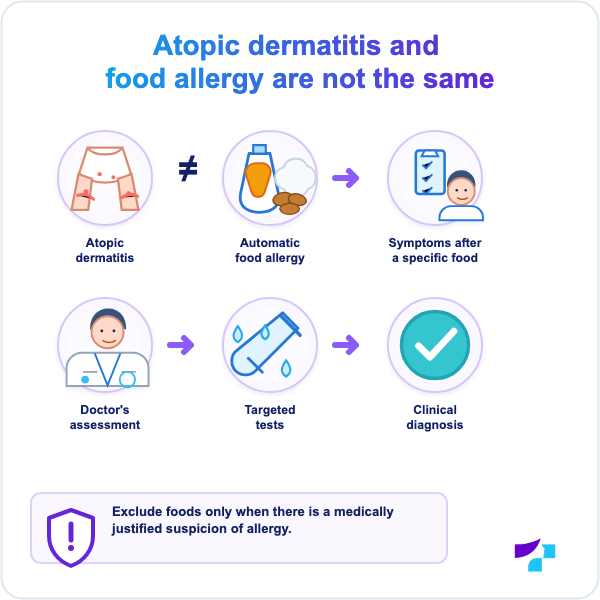
Food allergy can coexist with atopic dermatitis, especially in some young children with moderate or severe disease. However, food allergy is not the cause of every case.
When is food allergy suspected?
Food allergy should be considered when the same clear symptoms repeatedly occur after a specific food, such as hives, lip or facial swelling, vomiting, wheezing, breathing difficulty or another immediate reaction.
Are allergy tests needed?
Allergy tests are not needed for everyone. They may be considered when the history suggests a specific food, airborne allergen or contact allergen, or when a child has difficult-to-control moderate or severe dermatitis.
Why a positive test does not always mean allergy
A positive skin prick test or specific IgE result may show sensitization, but it does not prove that the allergen causes symptoms. Results must be interpreted together with the clinical history.
Diet and elimination diets
A special atopic dermatitis diet is not needed for all patients. Foods should not be removed just because a patient has atopic dermatitis. Unnecessary restrictions in children may cause nutrient deficiencies and growth problems.
What is the atopic march?
The atopic march describes a possible sequence of atopic diseases. Some children with atopic dermatitis later develop food allergy, asthma or allergic rhinitis. This sequence is not inevitable.
How is atopic dermatitis diagnosed?
The diagnosis is mainly clinical. A doctor assesses symptoms, itching, rash location, disease course, skin dryness, family history and the appearance of the skin. There is no single blood test that confirms or excludes atopic dermatitis.
Additional tests may be needed if the diagnosis is unclear, treatment does not work as expected, or there is suspicion of infection, fungal disease, food allergy or contact allergy.
How to tell atopic dermatitis from other skin diseases?
| Condition | Typical signs | Possible difference | When to see a doctor |
|---|---|---|---|
| Allergic contact dermatitis | Itchy inflammation after contact with an allergen | Often linked to a product or contact site | If it recurs or affects the face or hands |
| Irritant contact dermatitis | Dryness, burning and cracks after repeated irritation | Can occur without allergy | If painful, persistent or work-related |
| Seborrhoeic dermatitis | Scaling on scalp, eyebrows and nose folds | Scales may be greasier and itch less intense | If diagnosis is unclear |
| Psoriasis | Well-defined thick scaly plaques | Often affects outer elbows, knees, scalp and nails | If persistent or joints/nails are involved |
| Scabies | Severe itch, often worse at night | Contagious and may affect several household members | If others at home are itchy too |
| Fungal infection | Scaly or ring-shaped patches | May spread with a clearer edge | If it worsens after anti-inflammatory creams |
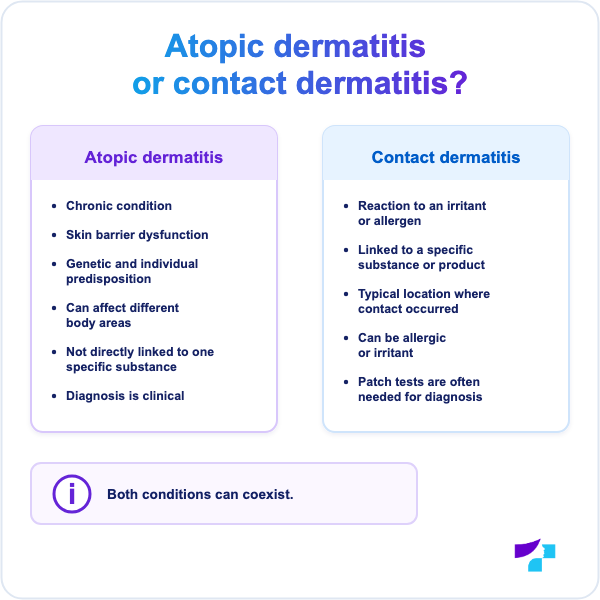
For rashes after contact with cosmetics, jewellery, hair dye, nail gel or other products, see Medart’s article on allergic contact rashes.
How is atopic dermatitis treated?
Treatment is tailored to age, body site, severity, flare frequency, infection, previous treatment response and quality of life. The aims are to restore the skin barrier, reduce inflammation and itching, prevent infection and improve sleep and daily functioning.
Control principle
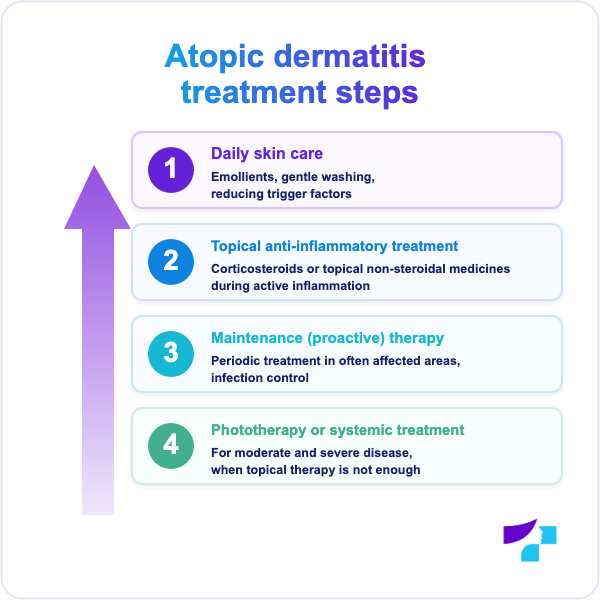
Daily skin care → reducing triggers → early recognition of flare-ups → anti-inflammatory treatment → prevention of complications → long-term control plan.
Emollients and daily skin care
Emollients are skin care products that reduce moisture loss, soften the skin and support the skin barrier. They come as lotions, creams, balms and ointments.
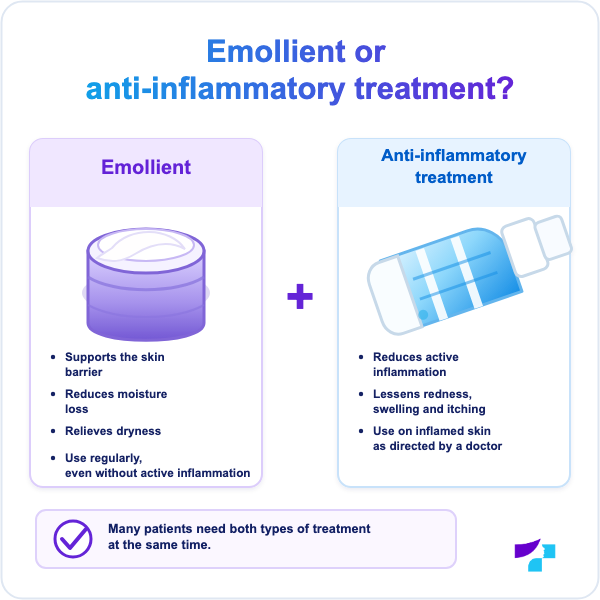
An emollient supports the skin barrier and reduces dryness. An anti-inflammatory medicine treats active inflammation. Many patients need both.
Emollients are usually used regularly, after washing, after hand washing and whenever the skin becomes dry, including during calmer periods.
Washing with atopic dermatitis
Atopic skin can be washed. Use lukewarm water, avoid long hot baths or showers, avoid scrubs, choose mild fragrance-free cleansers, pat the skin dry and apply emollient afterwards.
Inflammation treatment
Topical corticosteroids are effective anti-inflammatory medicines when used at the right strength, on the right body site and for the duration advised by a doctor. The face, eyelids, genital area and skin folds require particular caution.
In some areas or for long-term control, a doctor may choose topical non-steroidal anti-inflammatory medicines. Wet wraps, antihistamines or antibiotics may be appropriate only in selected situations and should not replace assessment when infection is suspected.
When is cream alone not enough?
A dermatologist consultation is needed if itching disturbs sleep, flare-ups recur, the disease is widespread, the skin cracks or oozes, the face, eyelids, hands or genital area are affected, regular skin care is not enough, infections recur or daily life is affected.
Assessing severity
| Feature | Mild | Moderate | Severe |
|---|---|---|---|
| Skin changes | Small patches | Several or recurrent areas | Widespread or intense disease |
| Itching | Occasional | Frequent | Very strong or persistent |
| Sleep | Usually not affected | Repeated disturbance | Major sleep disturbance |
| Treatment | Emollients and occasional topical treatment | Regular doctor-guided treatment | Phototherapy or systemic treatment may be needed |
Moderate and severe atopic dermatitis treatment
If skin care and topical treatment are not enough, a dermatologist may consider phototherapy, traditional systemic treatment, biological therapy or other targeted therapy. Treatment choice depends on age, severity, previous treatment, other diseases and safety considerations.
Atopic dermatitis and skin infections
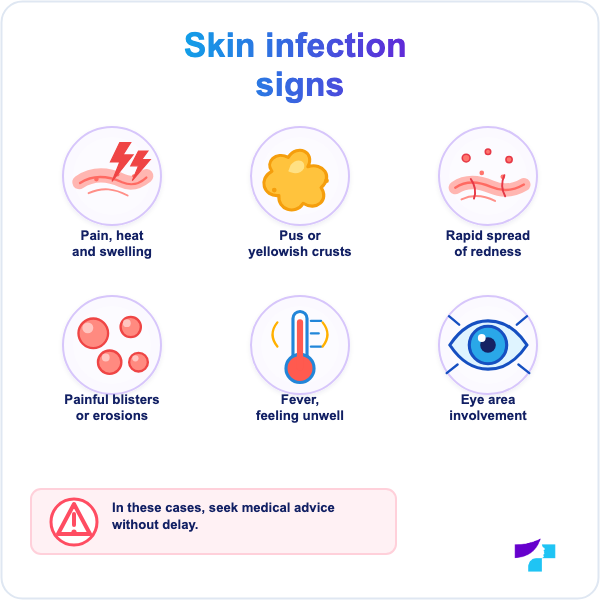
Skin barrier damage and scratching can increase the risk of bacterial or viral infection. Warning signs include increasing pain, swelling, hot skin, pus, yellow crusts, rapidly spreading redness, fever or feeling unwell.
Eczema herpeticum is a potentially serious herpes virus infection on atopic dermatitis skin. Same-day medical assessment is needed if many similar painful blisters or erosions appear, especially near the eyes.
Quality of life
Atopic dermatitis can affect sleep, school, work, physical activity, emotional wellbeing and family life. Visible rashes and chronic itching may contribute to stress, anxiety, low self-esteem and social discomfort.
Action plan
Daily
Use emollients regularly, wash gently, reduce proven irritants and continue skin care during calmer periods.
During a flare-up
Start the doctor-advised anti-inflammatory treatment early, continue emollients and reduce heat, sweating and friction.
If infection signs appear
Contact a doctor and do not use antibiotics without medical advice.
Myths and facts
Myth: atopic dermatitis is always food allergy. Fact: it is a chronic inflammatory skin disease; food allergy may coexist but is not always the cause.
Myth: topical corticosteroids are always dangerous. Fact: they are effective and usually safe when used correctly under medical guidance.
Myth: natural or hypoallergenic products cannot irritate the skin. Fact: fragrances, preservatives and plant extracts can still irritate or cause contact allergy.
When to seek urgent help
Seek urgent medical help if the rash spreads quickly, the skin becomes very painful, hot or swollen, pus or widespread yellow crusts appear, fever develops, many similar painful blisters or erosions appear, the eye area is involved, vision worsens, or a child becomes drowsy, refuses fluids or is difficult to wake.
Medical disclaimer
This article is for informational and educational purposes only and does not replace medical consultation, diagnosis or individually prescribed treatment. Skin changes similar to atopic dermatitis may also be caused by contact dermatitis, infections, psoriasis, scabies, fungal disease and other conditions. If symptoms are extensive, painful, purulent, rapidly worsening, disturb sleep or do not improve, consult a healthcare professional.
References and authoritative sources
- EuroGuiDerm: European guideline for systemic treatment of atopic eczema: Guidance on systemic therapy selection and monitoring.
- American Academy of Dermatology: clinical guidelines for atopic dermatitis: Guidance on topical therapy, phototherapy and systemic treatment.
- American Academy of Dermatology: diagnosis and treatment information for patients: Patient information about symptoms, treatment and skin care.
- NICE: atopic eczema in children: Recommendations for diagnosis and stepwise care in children.
- NHS: atopic eczema: Patient guidance on symptoms, treatment and infection signs.
- AAAAI: atopic dermatitis and food allergy: Expert recommendations on testing and elimination diets.
- DermNet: treatment of atopic dermatitis: Educational dermatology resource.
- DermNet: eczema herpeticum: Information on signs and urgent treatment.
