Allergic contact dermatitis is an inflammatory skin reaction that develops after contact with a substance to which a person’s immune system has become sensitized. The reaction usually does not appear immediately. Itching, redness, small blisters, scaling or cracks may develop after several hours or days.
To identify a possible contact allergen, a dermatologist assesses the location of the rash, products used, occupational exposures and the course of symptoms. If needed, patch testing is performed.
Allergic contact dermatitis is not contagious and is not passed from one person to another. It should be distinguished from irritant contact dermatitis, which is caused by direct damage to the skin barrier, for example due to frequent washing, disinfectants, solvents, friction or prolonged moisture.
For more about other types of allergy, skin prick tests, specific IgE blood tests and general allergy treatment principles, read the Medart article about allergy.
What is allergic contact dermatitis?
Allergic contact dermatitis is a delayed immune reaction to a specific external substance, or contact allergen. Medically, it is classified as a type IV hypersensitivity reaction in which T lymphocytes play an important role.
A contact allergen causes no problem for most people. Dermatitis develops in a person whose immune system has previously become sensitized to that specific substance.
That is why the same cosmetic product, piece of jewelry, adhesive or professional material may be used by one person without difficulty, while in another person it can trigger skin inflammation.
An allergic reaction is often most pronounced where the allergen has touched the skin. However, inflammation may spread beyond the area of direct contact, and the allergen can be transferred by hands, hair, clothing or work tools.
How does contact allergy develop?
Contact allergy usually develops in two stages.
Sensitization stage
During the first or repeated contacts, the substance enters the skin and is recognized by the immune system. At this stage there may be no visible symptoms.
Allergic reaction stage
After repeated contact, the immune system recognizes the allergen and triggers an inflammatory reaction in the skin.
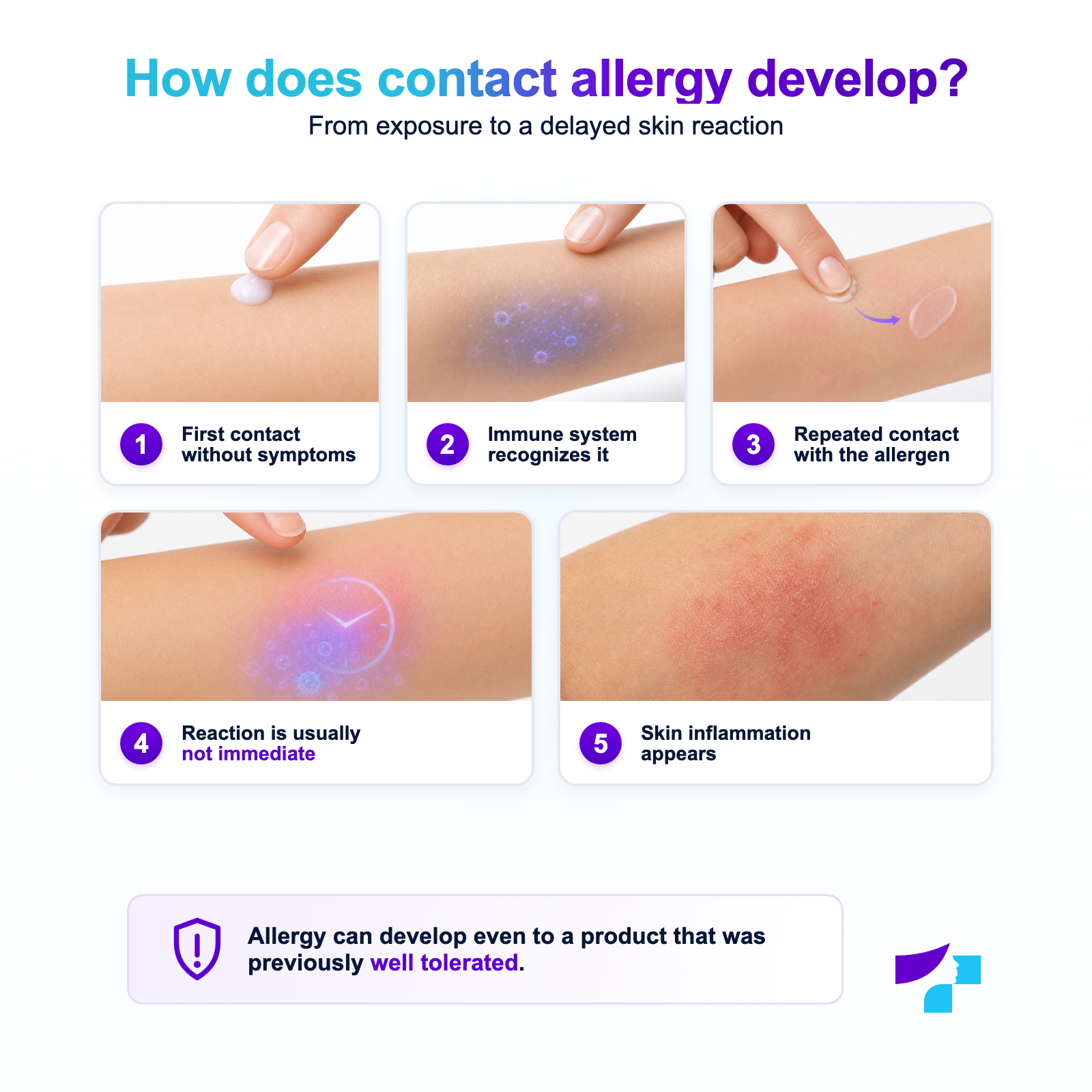
Sensitization can develop after one intense exposure or after many small exposures. Therefore, allergy may also appear to a product that had previously been used for months or years without obvious problems.
After sensitization, sensitivity to the specific substance usually persists long term. Active dermatitis can be treated, but repeated contact with the allergen may cause a new flare.
Sensitization does not always mean the cause of disease
Sensitization means that the immune system has become sensitive to a specific substance. It can be detected by patch testing, but a positive test reaction does not automatically prove that the substance is causing the patient’s current dermatitis.
To determine whether the detected contact allergy is clinically relevant, the doctor must assess:
- whether the patient actually has contact with the substance;
- whether the substance is present in products used by the patient;
- whether the location of the rash matches possible exposure;
- whether the timing of symptoms is consistent with a delayed reaction;
- whether the skin improves after avoiding the substance.
For this reason, patch test results must be interpreted together with the patient’s symptoms, skin examination and exposure history, not separately from the clinical situation.
How does allergic contact dermatitis appear?
The appearance depends on the allergen, duration of contact, location of inflammation and condition of the skin barrier.
In acute inflammation, possible symptoms include:
- marked itching;
- redness and swelling;
- small blisters;
- oozing;
- burning or soreness;
- crusting.
In chronic dermatitis, the skin may become:
- dry and rough;
- scaly;
- thickened;
- cracked;
- persistently itchy.
On darker skin tones, redness may be less visible. The inflamed area may look purple, greyish or darker than the surrounding skin, and pigmentation changes may remain after inflammation.
For more about the appearance of contact rashes, common body sites and initial steps, read the Medart article Allergic contact rashes.
How soon after contact do symptoms appear?
Allergic contact dermatitis is a delayed reaction. Symptoms usually do not appear within minutes, but may develop after several hours or from one to several days.
The onset of the reaction may be influenced by:
- the amount and concentration of the allergen;
- duration of contact;
- frequency of repeated exposures;
- damage to the skin barrier;
- location of inflammation;
- degree of previous sensitization.
This should be distinguished from contact urticaria and immediate allergy to natural latex proteins, which may begin within minutes.
What can the location of the rash suggest?
The location of the rash can help identify a possible source of exposure, but the allergen cannot be determined accurately by location alone.
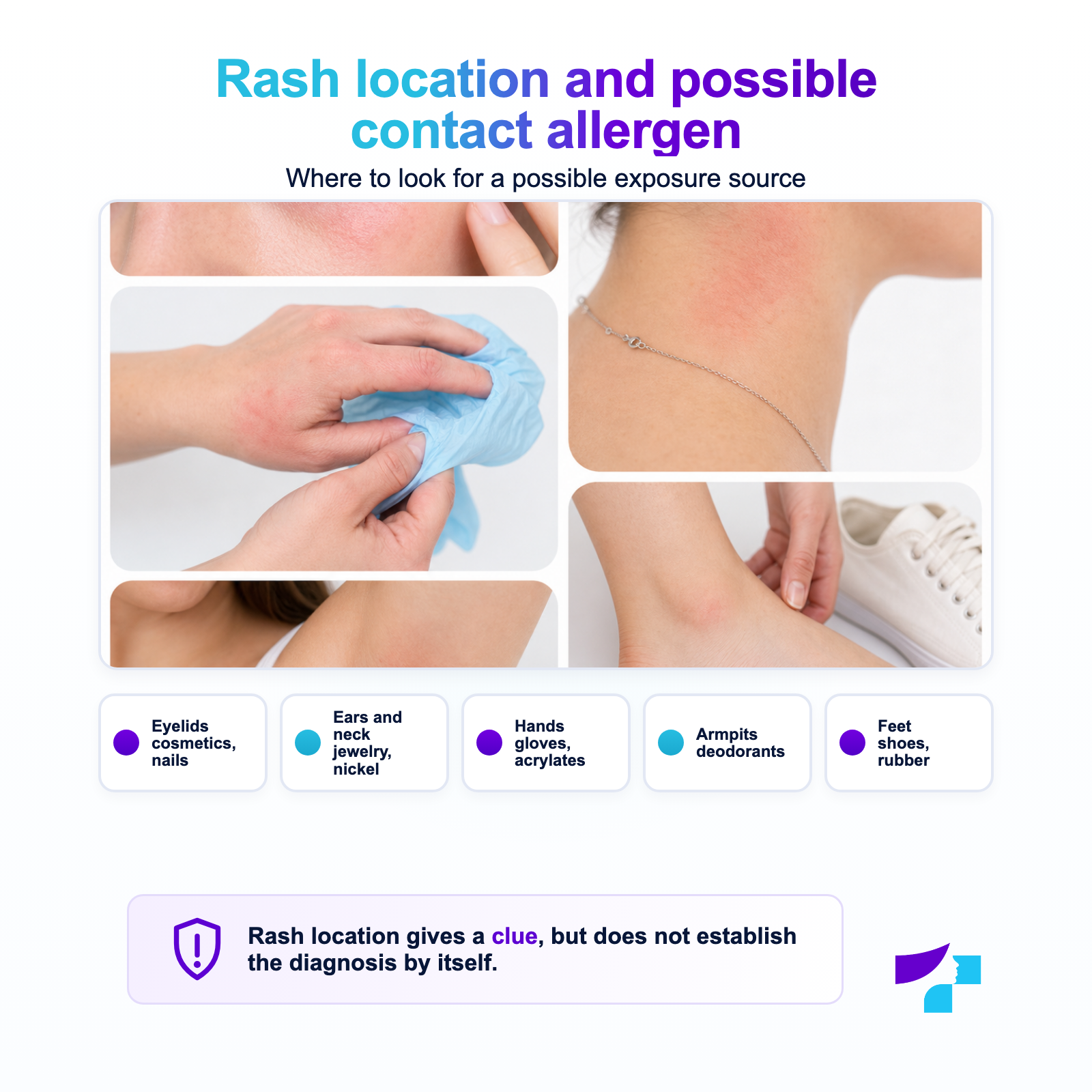
Hands
Hand dermatitis may be related to:
- protective gloves and rubber additives;
- cleaning and disinfecting agents;
- cosmetics;
- metals;
- acrylates and adhesives;
- occupational chemicals.
At the same time, a very common cause of hand dermatitis is irritation from frequent washing, wet work and prolonged glove use.
Face and eyelids
Eyelid and facial dermatitis may be caused by:
- face and eye cosmetics;
- fragrances and preservatives;
- eyelash adhesives;
- hair dyes and hair-care products;
- nail products transferred by the hands.
Eyelid skin is very thin, so inflammation may appear even when the allergen was initially used on the nails, hair or another body area.
Ears and neck
Possible triggers include:
- earrings and other jewelry;
- metal parts containing nickel;
- eyeglass frames;
- hair dye;
- perfume and cosmetics.
Armpits
Dermatitis in the armpits may be promoted by:
- fragrances in deodorants;
- preservatives;
- shaving;
- sweating and friction;
- textile treatment chemicals.
Feet
Foot contact dermatitis may be related to:
- shoe adhesives;
- rubber additives;
- dyes;
- chromium compounds used in leather processing;
- other shoe materials.
Common contact allergens
There are many contact allergens. Testing usually uses a baseline allergen series and, when needed, additional substances are added according to the patient’s occupation, rash location and products used.
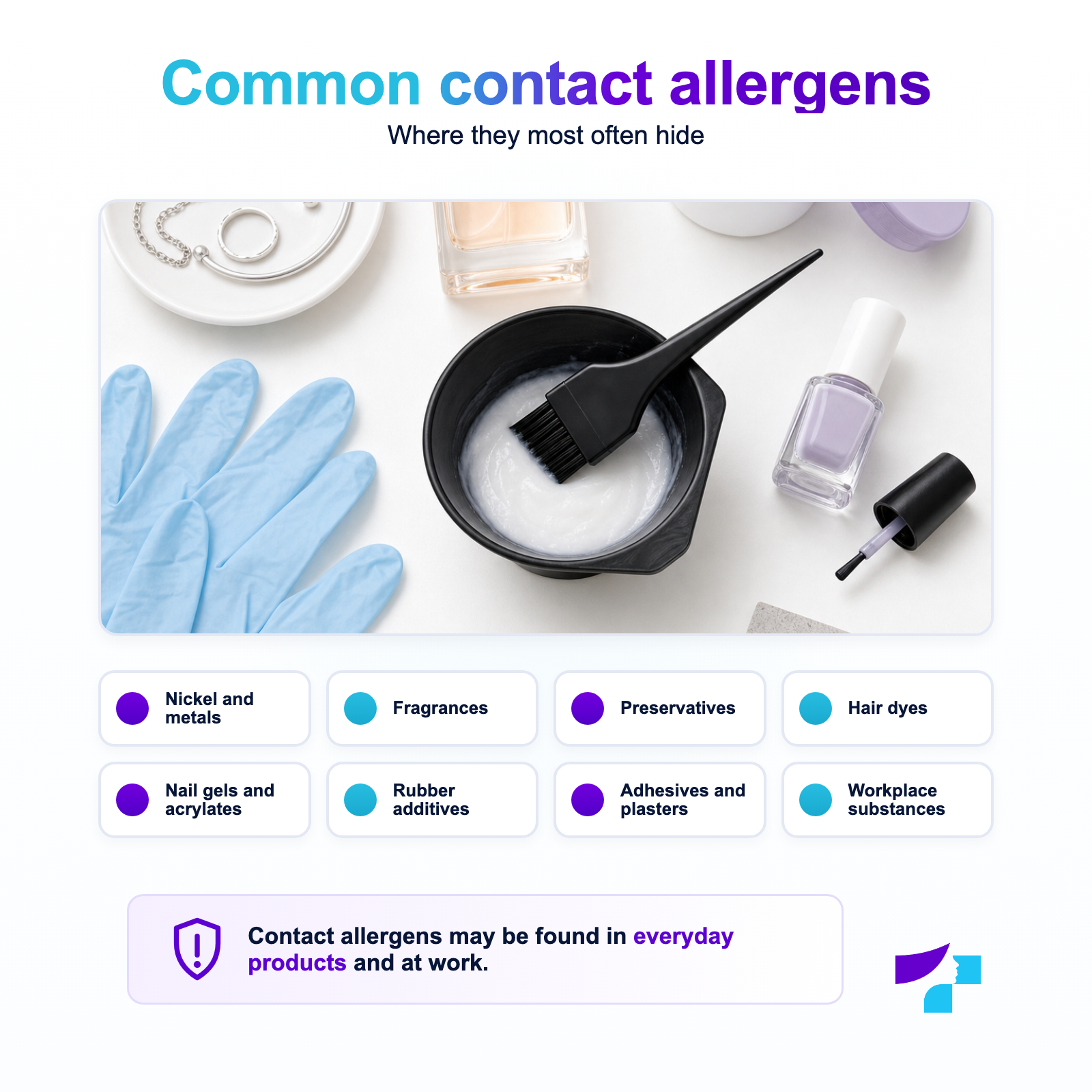
Nickel, cobalt and chromium compounds
Nickel may be found in:
- jewelry;
- watches;
- belt buckles;
- clothing buttons and zippers;
- electronic device parts;
- work tools.
Cobalt may be present in metal alloys, pigments and professional materials. Chromium compounds may be present in cement, leather goods, paints and industrial materials.
Fragrances
Fragrances may be found not only in perfumes but also in:
- creams;
- shampoos;
- deodorants;
- detergents;
- wet wipes;
- essential oils;
- scented household products.
Preservatives
Preservatives help prevent microbial growth in products, but some preservative substances can cause contact allergy.
They may be found in:
- cosmetics;
- skin-care products;
- wet wipes;
- detergents;
- paints and adhesives;
- professional liquids.
Hair dye ingredients
Permanent hair dyes may contain paraphenylenediamine, or PPD, and related substances. The reaction may affect the hairline, forehead, ears, face, eyelids and neck.
In the case of a strong reaction, hair dye should not be used again at home to “test” whether symptoms will recur.
Nail gels, acrylates and adhesives
Acrylates and methacrylates are used in:
- nail modeling products;
- adhesives;
- dental materials;
- medical devices;
- industrial materials.
The greatest risk of sensitization occurs during contact with incompletely cured material. Rashes may appear around the nails and on the fingers, but because the allergen can be transferred, they may also appear on the eyelids, face or neck.
Rubber products and glove additives
Allergic contact dermatitis from rubber or nitrile gloves is often caused not by the base glove material itself but by additives used in manufacturing.
This should be distinguished from immediate allergy to natural latex proteins.
Adhesives and resin derivatives
Contact allergy may be caused by substances found in:
- medical plasters;
- adhesive tapes;
- sports tapes;
- cosmetics;
- waxing products;
- professional adhesives.
Topical medicines
Sometimes contact allergy is caused by the active ingredient, preservative or ointment base of a topical medicine.
If a rash does not improve or worsens during treatment, not only disease progression but also a reaction to the medicine used should be considered.
Plant and natural-origin substances
Natural origin does not guarantee safety. Contact allergy may be caused by:
- essential oils;
- plant extracts;
- propolis;
- resins;
- aromatic plant substances.
Allergy to cosmetics
Rashes caused by cosmetics may be due to either contact allergy or irritation.
Possible contact allergens include:
- fragrances;
- preservatives;
- hair dye ingredients;
- acrylates;
- adhesives;
- certain plant-derived substances.
The reaction does not always occur exactly where the product was applied. For example, ingredients from nail products may be transferred to the eyelids by the fingers, while a hair-care product may reach the ears, face or neck.
Labels such as “hypoallergenic”, “natural”, “dermatologically tested” or “for sensitive skin” do not guarantee that the product is free from an allergen important for a particular person.
Occupational contact dermatitis
Occupational contact dermatitis is skin inflammation caused or significantly worsened by the work environment. Both contact allergens and skin irritants may be present at work.
Higher risk may occur in:
- hairdressers;
- nail-care and other beauty specialists;
- health-care workers;
- cleaning staff;
- construction workers;
- metalworkers;
- cooks and food production workers;
- people working with paints, adhesives, resins or solvents.
A possible work-related cause may be suggested by symptoms worsening on workdays and improving during longer time off. However, this pattern alone does not prove that dermatitis is an occupational disease.
The doctor may need information about products used, work processes, protective gloves and safety data sheets.
Allergic and irritant contact dermatitis - differences
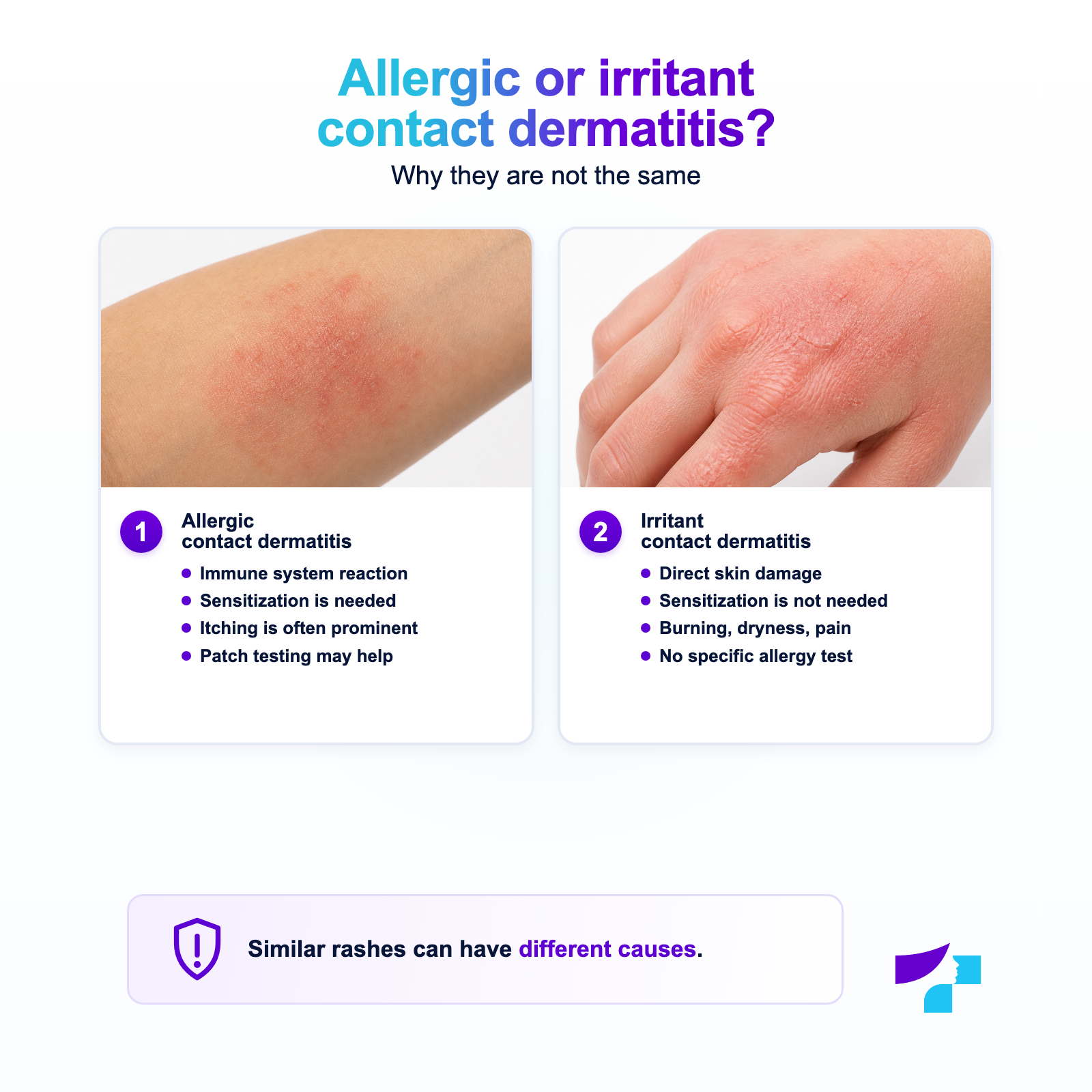
| Feature | Allergic contact dermatitis | Irritant contact dermatitis |
|---|---|---|
| Mechanism | Immune reaction to a specific allergen | Direct damage to the skin barrier |
| Sensitization | Previous sensitization is required | Not required |
| Who can develop it? | A person who has become sensitive to the specific substance | Anyone after sufficient exposure |
| Onset | Usually after several hours or days | May start immediately or develop gradually |
| Common triggers | Nickel, fragrances, preservatives, acrylates, hair dyes, rubber additives | Water, soaps, disinfectants, solvents, acids, alkalis, friction |
| Common sensations | Marked itching | Burning, soreness, dryness; itching may also occur |
| Spread | May spread beyond the site of direct contact | More often limited to the directly exposed area |
| Diagnosis | History, examination and patch testing | History and examination; no specific test |
| Main treatment principle | Identifying and avoiding the allergen | Reducing irritants and restoring the skin barrier |
Both forms of contact dermatitis may occur at the same time. For example, frequent handwashing may damage the skin barrier, while contact allergy to glove additives may cause additional inflammation.
How to distinguish contact dermatitis from other conditions?
Contact dermatitis or atopic dermatitis?
Atopic dermatitis is a chronic inflammatory skin condition related to impaired skin barrier function and individual predisposition.
In allergic contact dermatitis, contact with a specific external substance is important. The two conditions may look similar and may coexist.
Contact dermatitis or urticaria?
Urticaria is characterized by raised, itchy wheals that usually remain in one place for a short time and may quickly change location.
Contact dermatitis lasts longer and may present with blisters, oozing, scaling and cracks.
Contact dermatitis or fungal infection?
A fungal infection may cause itching, redness and scaling, especially on the feet and hands. Laboratory testing is sometimes needed to distinguish it accurately.
Contact dermatitis or bacterial infection?
Bacterial infection may be suggested by:
- increasing pain;
- marked warmth of the skin;
- purulent discharge;
- yellowish crusts;
- fever;
- rapid spread of redness.
Contact dermatitis or medication-related rash?
Medication-related rashes may be widespread and not limited to the area where the skin touched a specific product.
If the rash appeared after starting a new medicine, the medicine should not be restarted or stopped without medical advice.
How is allergic contact dermatitis diagnosed?
Diagnosis begins with a detailed discussion and skin examination, not with a test “for everything”.
The dermatologist assesses:
- when and where the rash appeared;
- how long it persists;
- which skin, hair and nail products the patient uses;
- which cleaning and washing agents come into contact with the skin;
- whether gloves, adhesives, plasters or topical medicines are used;
- which materials are used at work;
- whether symptoms improve on days off or after stopping a specific product;
- whether the patient has other skin diseases.
The location of the rash may help form a suspicion, but the diagnosis cannot be made reliably from the rash image alone.
If delayed contact allergy is suspected, the main diagnostic method is patch testing.
Patch testing
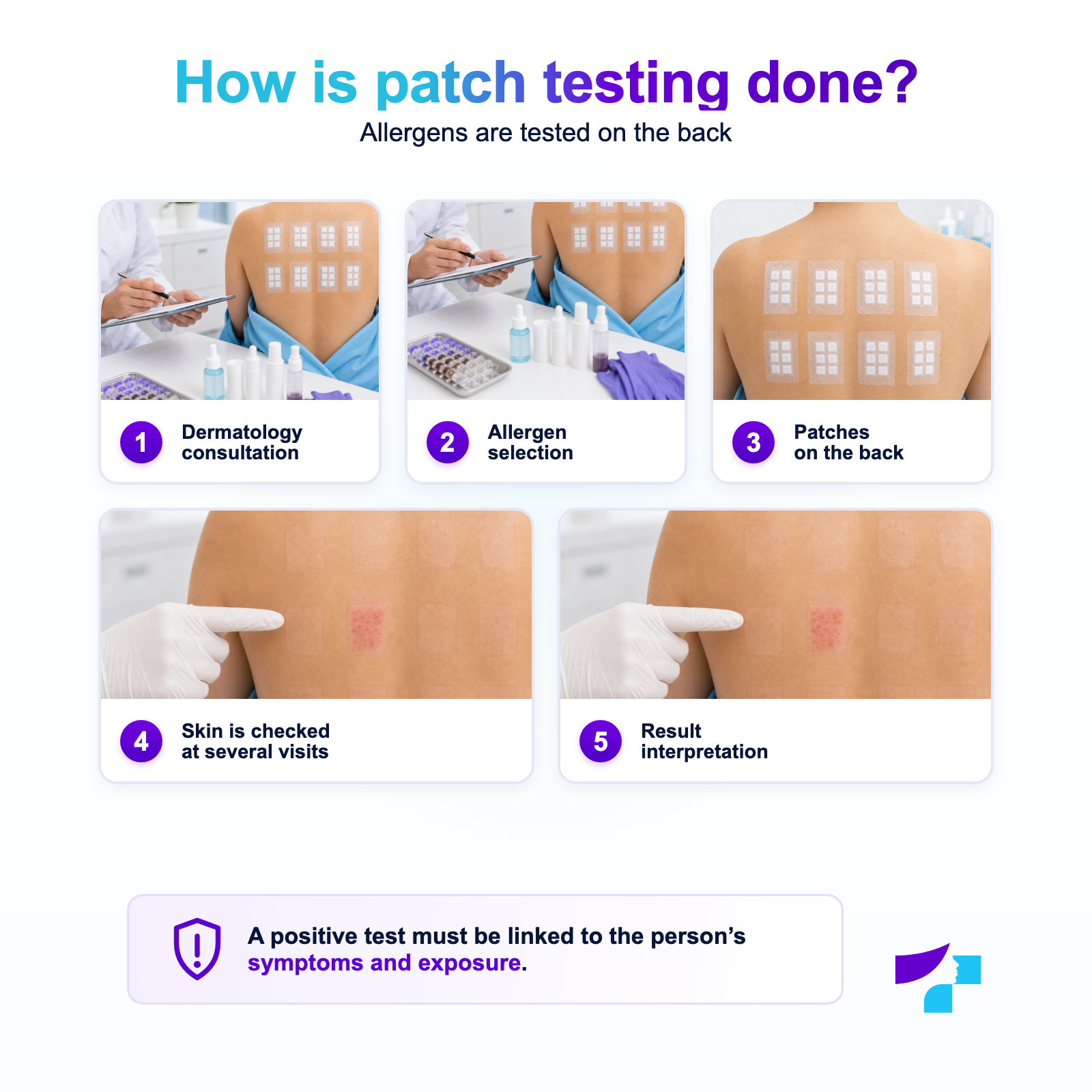
Patch testing is a specialized investigation for detecting delayed contact allergy.
Small amounts of appropriately prepared allergens are placed in special chambers and attached to the skin, most often on the back. Test sites are checked in several stages because the allergic reaction may develop gradually.
The exact number of visits and reading times may differ depending on the medical institution’s protocol.
Which allergens are tested?
A baseline allergen series is usually used, containing the most common and clinically relevant substances in the region.
When needed, the doctor may add additional series, for example:
- cosmetic ingredients;
- hair dye and hairdressing substances;
- acrylates and nail materials;
- rubber additives;
- shoe components;
- dental materials;
- adhesives and epoxy resins;
- topical medicines;
- specific workplace substances.
Patch testing is not one fixed set of a certain number of allergens. The substances tested should be selected purposefully.
Can the patient’s own products be tested?
In selected cases, the doctor may evaluate the patient’s cosmetics, professional materials or other substances used.
Not all products may be applied to the skin undiluted. Some can cause irritation or chemical injury, so safe concentration and testing method must be decided by a specialist.
Patients should not test hair dyes, nail materials, adhesives, cleaning products or industrial chemicals on their own skin.
What to bring to the consultation?
It is useful to prepare:
- a list of all medicines used;
- prescribed creams and ointments;
- cosmetic, hair and nail products;
- product packages with ingredient lists;
- topical medicines;
- glove, plaster and adhesive packages;
- safety data sheets for workplace chemicals;
- photos of the rash at different stages.
Not every product brought to the visit will necessarily be applied to the skin. They may be needed to assess ingredients and choose the most appropriate test allergens.
What does a positive result mean?
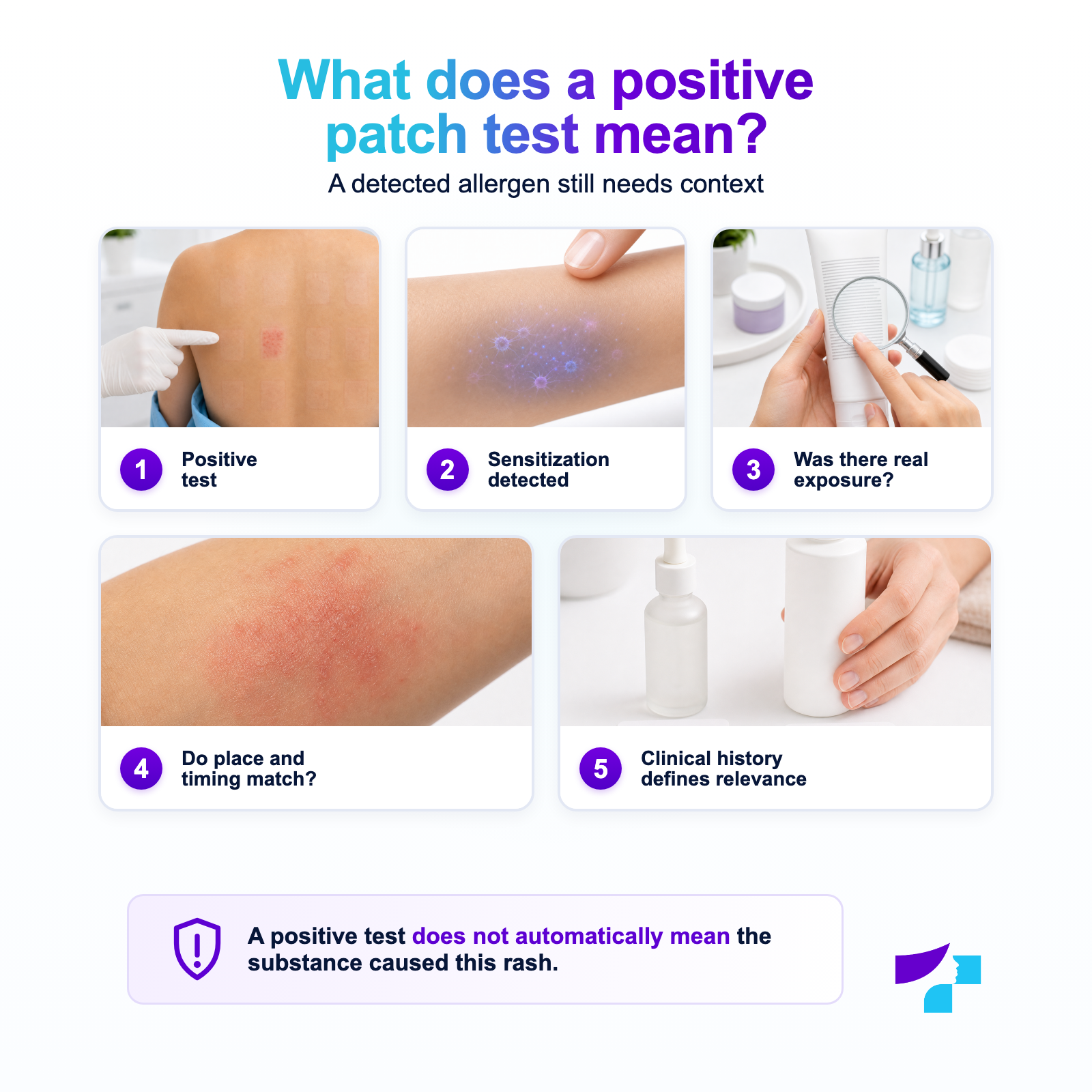
A positive reaction indicates that the immune system has become sensitized to the specific substance.
The doctor must then decide whether the result:
- explains the current rash;
- relates to a previous, but not current, exposure;
- is related to a cross-reacting substance;
- is a finding of unclear clinical relevance.
A positive test without relevant exposure and symptoms does not always mean that the detected allergen is the cause of the current dermatitis.
What does a negative result mean?
A negative result reduces the likelihood that the reaction is caused by the allergens tested, but it does not completely exclude:
- allergy to a substance not included in the test;
- irritant contact dermatitis;
- atopic dermatitis;
- fungal or other infection;
- another inflammatory skin disease;
- the effect of medicines or treatment on the test reaction.
How to prepare for patch testing?
Before the investigation, the doctor should be told about:
- all medicines used;
- topical creams and ointments;
- treatments affecting the immune system;
- pregnancy or breastfeeding;
- active inflammation on the back;
- recent intense sun exposure.
Antihistamines usually do not affect the delayed patch test reaction, but the instructions of the specific medical institution should be followed. Prescription medicines must not be stopped without medical advice.
What should be avoided during testing?
During testing, patients are usually advised to avoid:
- getting the back wet;
- intense sweating;
- heavy physical exertion;
- moving the patches;
- scratching the test area;
- sun exposure on the test area.
Exact instructions are provided by the medical institution.
Patch testing or skin prick testing?
| Test | What does it mainly detect? | Type of reaction |
|---|---|---|
| Patch testing | Contact allergy to metals, cosmetic ingredients, preservatives, acrylates and other external substances | Delayed reaction |
| Skin prick testing | Immediate sensitivity, for example to pollen, dust mites, animals or certain foods | Immediate reaction |
Patch testing does not diagnose food, pollen, dust mite or animal allergy. Other diagnostic methods are used for these types of allergy.
Can contact allergy be detected with blood tests?
Specific IgE blood tests are generally not suitable for diagnosing allergic contact dermatitis, because this condition usually is not driven by IgE antibodies.
Blood tests may be needed when immediate allergy is also suspected, for example to natural latex proteins, foods or airborne allergens.
Why should allergy tests not be done “for everything”?
Broad and unfocused testing may detect sensitization that is not related to the person’s current symptoms.
This may cause:
- unnecessary worry;
- unnecessary avoidance of products;
- an incorrect treatment direction;
- difficulty identifying the true trigger.
The allergens to be tested are selected according to symptoms, rash location, products used, work environment and hobbies.
How is allergic contact dermatitis treated?
Treatment has two main goals:
- to reduce active skin inflammation;
- to prevent repeated contact with the allergen.
Identifying and avoiding the allergen
If the allergen is not identified or exposure continues, dermatitis may recur even after successful anti-inflammatory treatment.
The patient should receive information about:
- the allergen’s name;
- possible synonyms;
- products in which it may be found;
- occupational sources of exposure;
- safer alternatives.
Reducing skin inflammation
Depending on the severity, stage and location of inflammation, the doctor may prescribe topical anti-inflammatory medicines.
The appropriate strength and duration of use differs for:
- hands;
- body;
- face;
- eyelids;
- skin folds.
Prescription anti-inflammatory medicines should not be used for long periods without medical supervision.
Restoring the skin barrier
Regular use of suitable emollients helps:
- reduce dryness;
- reduce cracking;
- restore the skin barrier;
- improve skin resistance to irritants.
Skin-care products may also contain an allergen important to a particular person, so their ingredients should be reviewed after patch testing.
Do antihistamines help?
Antihistamines may reduce itching in some people, but they:
- do not remove the cause of contact allergy;
- do not replace allergen avoidance;
- are not the main treatment for skin inflammation.
Hand protection
In hand dermatitis, it is important to reduce contact with water, detergents and occupational substances.
Gloves should be chosen according to the specific substance. Not all glove materials protect against all chemicals, and glove additives can also cause contact allergy.
Adjusting the work environment
It may be necessary to:
- change the work process;
- use a different type of protective glove;
- reduce contact time;
- improve ventilation;
- involve an occupational safety specialist;
- replace the specific allergen with another substance.
In severe occupational contact allergy, changing work duties may sometimes need to be considered.
Identifying and avoiding the allergen is the key long-term treatment principle.
How to check product ingredients?
After the allergen has been identified, it is important to know:
- its exact name;
- possible synonyms;
- the substance groups to which it belongs;
- products in which it is often found.
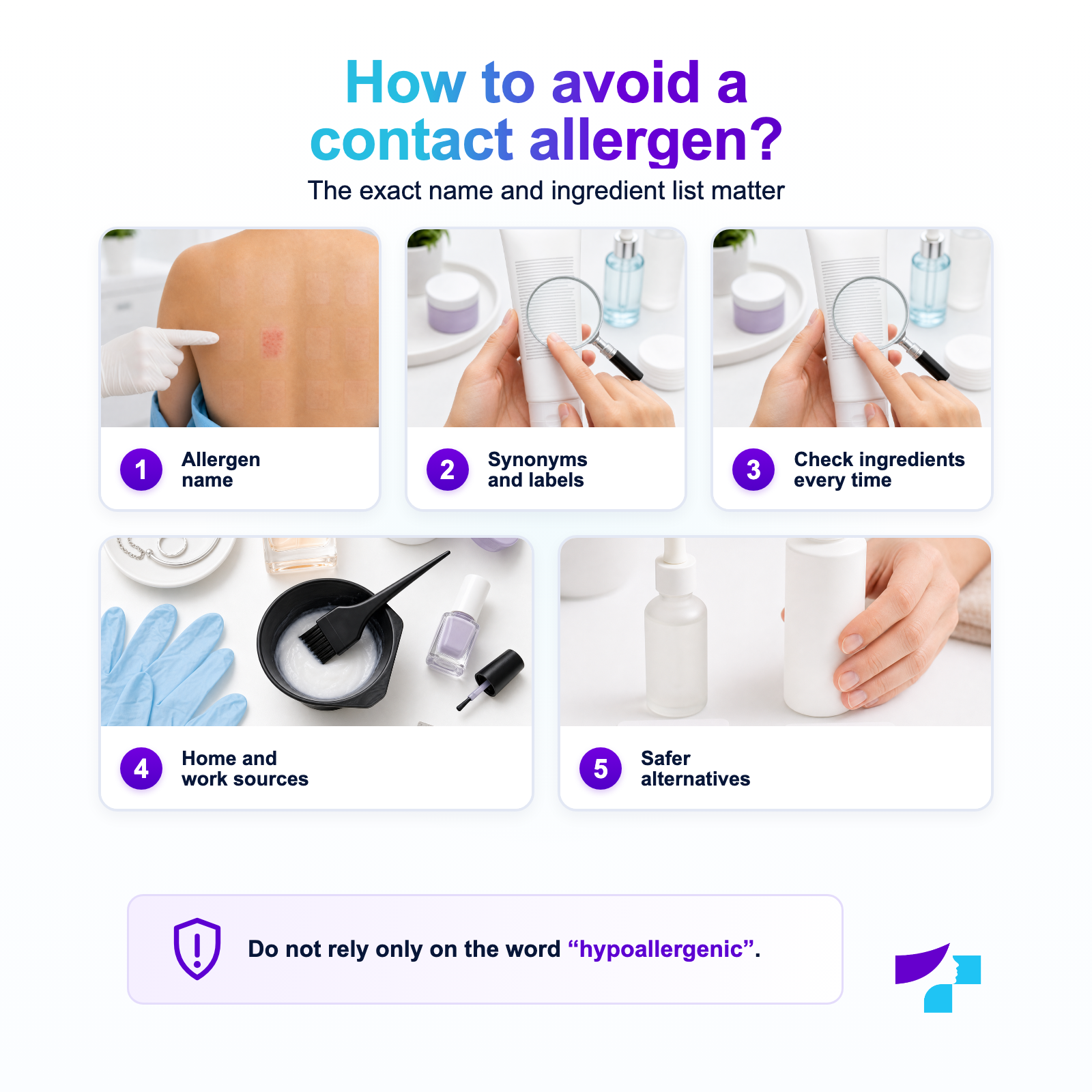
Product ingredients should be checked every time, including when repurchasing a previously used product, because the manufacturer may change its composition.
Do not rely only on “safe product” lists found online, as they may be outdated or may not apply to products sold in Latvia.
What should not be done?
In allergic contact dermatitis, one should avoid:
- reusing a product that caused a strong reaction in order to “test” the allergy;
- trying several new products at the same time on damaged skin;
- applying undiluted hair dyes, adhesives or professional chemicals to the skin on one’s own;
- using prescription anti-inflammatory medicines for a long time without medical supervision;
- stopping important medicines without medical advice;
- assuming that “natural” means “non-allergenic”;
- assuming that a “hypoallergenic” product guarantees safety;
- interpreting patch test results without a doctor’s explanation.
When should you see a dermatologist?
A dermatology consultation is recommended if:
- rashes recur or do not resolve;
- the possible trigger is unclear;
- the rash affects the face, eyelids or a large skin area;
- blisters, oozing or painful cracks develop;
- dermatitis interferes with sleep or work;
- symptoms worsen when using a cosmetic or medical product;
- occupational contact dermatitis is suspected;
- patch testing needs to be considered;
- signs of infection appear.
When may an allergist be needed?
Diagnosis of allergic contact dermatitis and patch testing are most often performed by a dermatologist.
An allergist consultation may be needed when there is also suspicion of:
- an immediate allergic reaction;
- food allergy;
- respiratory allergy;
- natural latex protein allergy;
- drug allergy;
- insect venom allergy.
When is urgent medical help needed?
Allergic contact dermatitis is usually a delayed skin reaction and is most often not life-threatening.
Urgent medical help is needed if any of the following appear:
- difficulty breathing or wheezing;
- rapid swelling of the lips, tongue, face or throat;
- fainting, confusion or marked weakness;
- widespread blisters or peeling of the skin;
- severe eye injury or vision problems;
- rapid worsening of general condition;
- a severe reaction after exposure to a dangerous chemical.
These signs may indicate an immediate allergic reaction, chemical burn, severe infection or another urgent condition.
How to prepare for a dermatology consultation?
Before the consultation, it is useful to:
- write down when and where the rash started;
- photograph the rash at different stages;
- prepare a list of products used;
- bring product packages or photos of ingredient lists;
- write down hair dyes, nail products, adhesives and plasters used;
- list materials used at work;
- prepare safety data sheets for workplace substances;
- note whether symptoms change on workdays, days off or during travel;
- tell the doctor about all medicines used.
Medical disclaimer
The information in this article is intended for informational and educational purposes and does not replace a dermatology consultation, diagnosis or treatment. Itchy rashes, redness, blisters, skin dryness and cracking may be related not only to allergic contact dermatitis, but also to irritation, atopic dermatitis, infection or other skin diseases. If the rash is widespread, recurrent, does not resolve, affects the face or eye area, becomes painful, oozes, produces pus or is associated with shortness of breath or swelling of the face, lips, tongue or throat, medical consultation or emergency medical help is needed. Patch tests, their results and treatment should be assessed by a doctor, taking into account symptoms, skin condition and contact with possible allergens.
References and authoritative sources
- European Society of Contact Dermatitis guidelines for diagnostic patch testing - best practice recommendations, 2026 update.
- British Association of Dermatologists - patch testing.
- British Association of Dermatologists - contact dermatitis.
- American Academy of Dermatology - contact dermatitis diagnosis and treatment.
- American Academy of Dermatology - how patch testing can help identify the cause of a rash.
- DermNet - allergic contact dermatitis.
- DermNet - patch tests.
- DermNet - baseline series of patch test allergens.
Content author:
