Herpes virus is a very common viral infection that can cause cold sores on the lips, rashes in the mouth, on the face, around the nose, or in the genital area. Most often, when people refer to “herpes”, they mean herpes simplex virus, or HSV. It has two main types — HSV-1 and HSV-2. Both virus types can affect both the mouth and the genital area, although HSV-1 is more commonly associated with oral herpes or cold sores, while HSV-2 is more commonly associated with genital herpes infection.
The most important thing to know about herpes simplex virus is that after infection it remains in the body for life. The virus can “hide” in nerve cells and later reactivate, for example during stress, another infection, fever, sun exposure, skin irritation, or weakened immunity. This is why cold sores and other herpes lesions tend to recur in the same place.
Medically, herpes is not only a cosmetic problem. In most people the infection is mild and resolves on its own, but in certain situations herpes can be dangerous — in newborns, during pregnancy, in people with weakened immunity, and in cases where lesions appear near the eye or when more serious complications are suspected.
The key points in brief
- Herpes virus most often means herpes simplex virus, or HSV. It has two main types — HSV-1 and HSV-2.
- HSV-1 more often causes cold sores on the lips and oral herpes, while HSV-2 more often causes genital herpes infection.
- Both virus types can affect both the mouth and the genitals.
- After infection, herpes simplex virus remains in the body for life and may later reactivate.
- Herpes can also be transmitted when there are no visible blisters or ulcers.
- Prescription antiviral medicines can reduce symptoms and shorten an outbreak, but specific treatment must be determined by a doctor.
- A doctor should be consulted if lesions are near the eye, in the genital area, during pregnancy, in an infant, in a person with weakened immunity, or if outbreaks are frequent and severe.
What is herpes virus?
Herpes viruses are a broad group of viruses that include several viruses important to human health. In everyday language, the word “herpes” most often refers to herpes simplex virus — HSV-1 or HSV-2. This virus causes skin and mucosal lesions: painful blisters, ulcers, crusts, burning, tingling, or itching.
Herpes simplex infection can affect:
- the lips and the skin around the mouth;
- the oral mucosa, gums, and tongue;
- the nose or facial skin;
- the genitals, perineum, and anal area;
- the eyes;
- more rarely — the nervous system or other organs, especially in people with weakened immunity.
In Latvia, the Centre for Disease Prevention and Control describes anogenital herpes as an infectious disease of the skin and mucosa of the genital area, characterised by painful blisters on reddened skin. The infection may also occur without pronounced symptoms, which means a person may not always know that they can transmit the virus to others.
Herpes simplex virus: HSV-1 and HSV-2
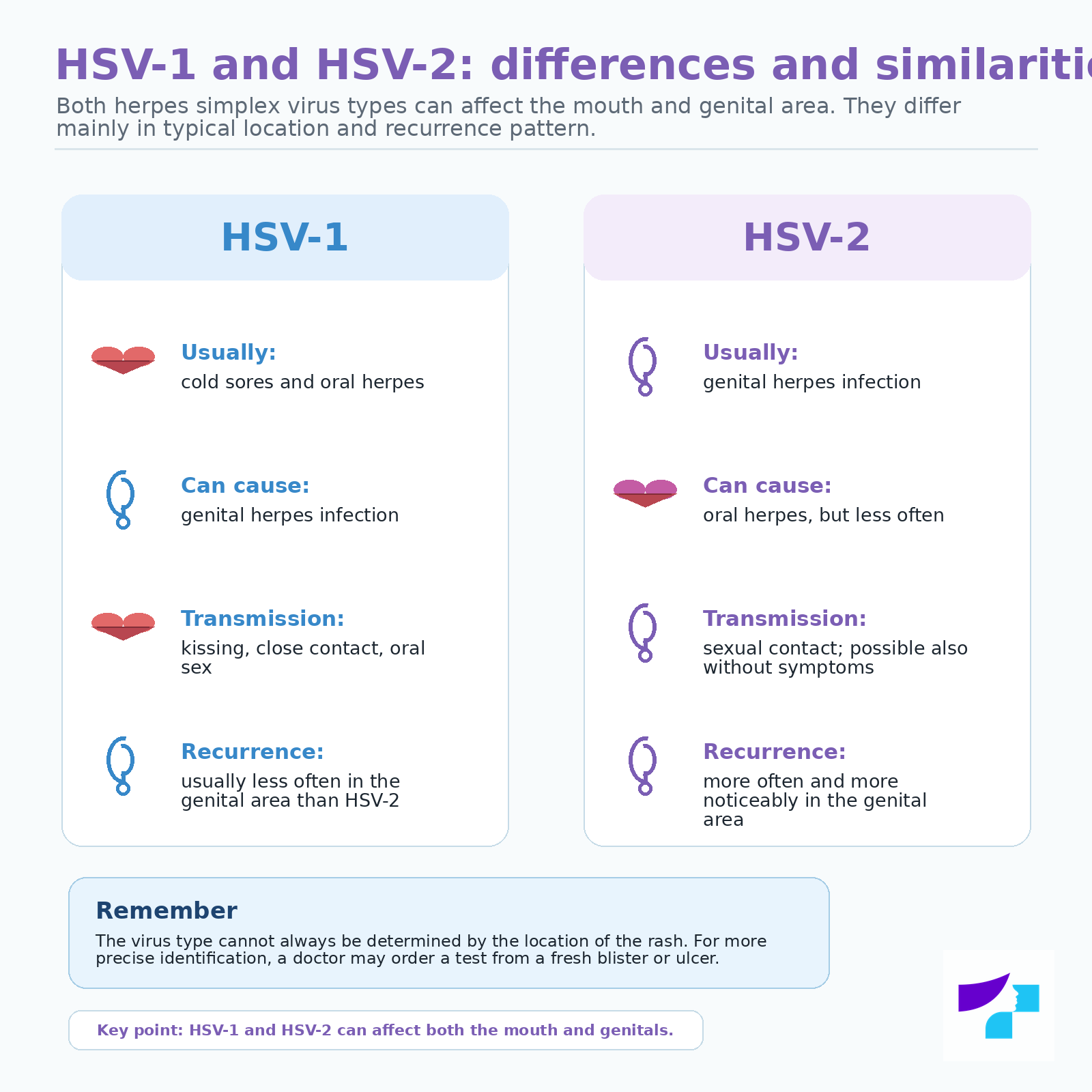
HSV-1 and HSV-2 are related viruses, but they have different typical manifestations.
HSV-1 most often causes oral herpes or cold sores. It may appear as a cold sore on the lip, a cold sore in the mouth, a cold sore on the tongue, herpes lesions on the face, or a cold sore around the nose. However, HSV-1 can also cause genital herpes infection, especially after oral sex.
HSV-2 more often causes genital herpes infection. It may appear as painful blisters, ulcers, itching, burning, pain when urinating, or pain during sexual intercourse. Less commonly, HSV-2 can also affect the mouth area.
Important: the location of the rash does not always reliably show which type of herpes simplex virus caused it. For more precise identification, a doctor may order a laboratory test from a blister or ulcer.
Is a cold sore herpes?
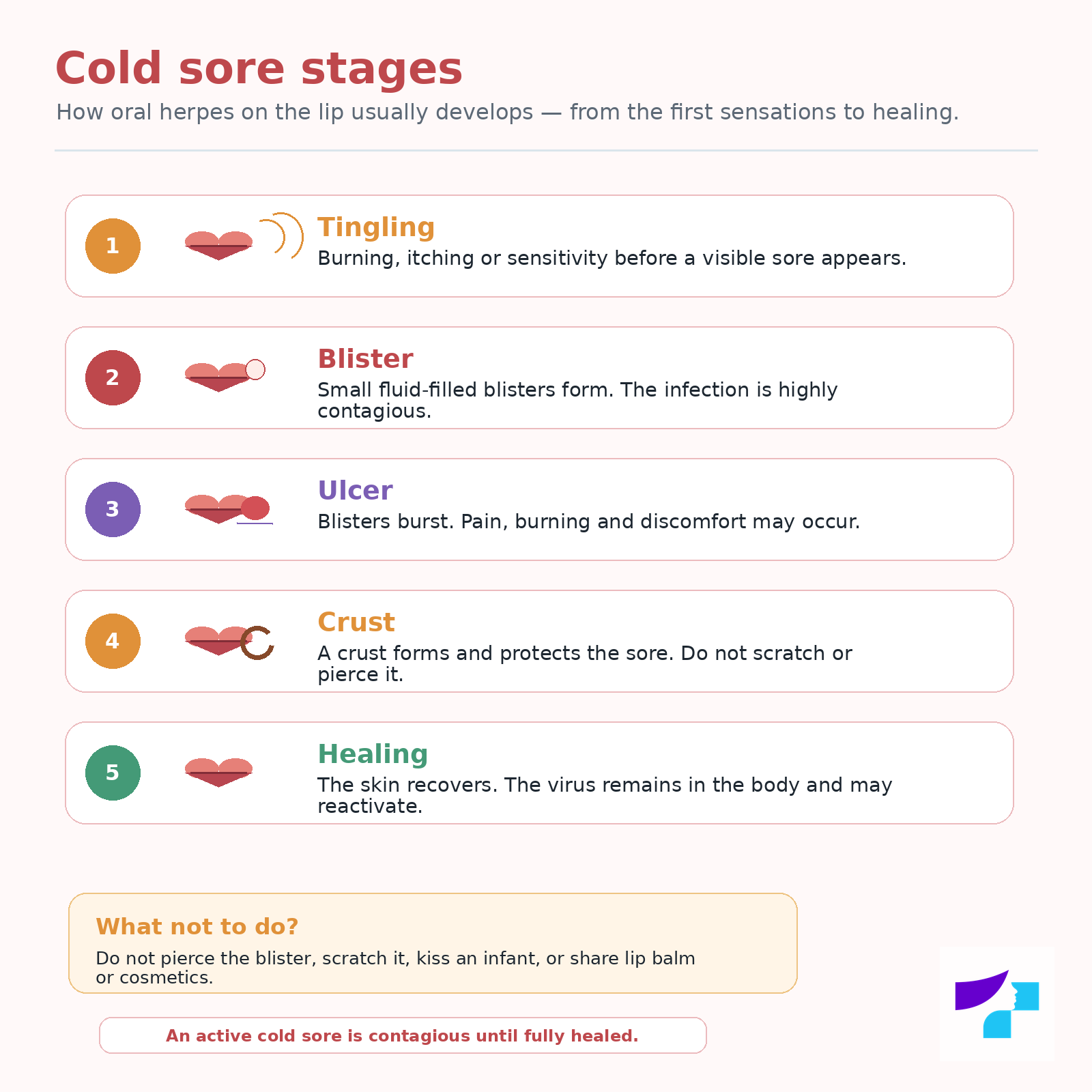
Yes. A cold sore is usually a form of oral herpes most often caused by HSV-1. A cold sore is not a “cold-related spot” in the direct sense, although a cold, fever, or general stress on the body can activate herpes simplex virus that is already present in the body.
A cold sore usually begins with tingling, burning, itching, or sensitivity on the lip or around the mouth. Small fluid-filled blisters then appear. These may burst, form an ulcer, and later develop a crust. In many people, a cold sore heals within 1–2 weeks, although healing may sometimes take longer.
How does herpes virus spread?
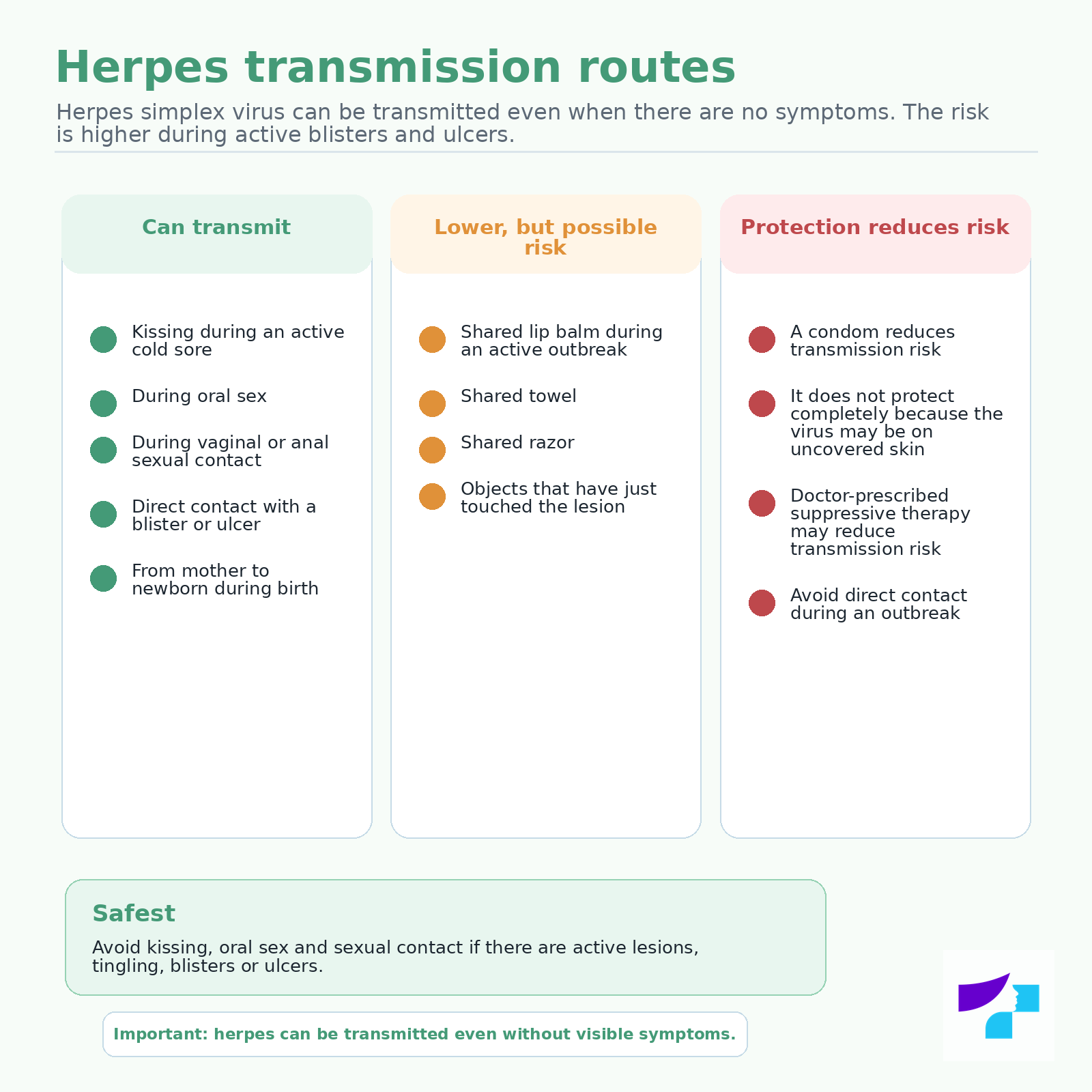
Herpes simplex virus spreads through close contact with skin, mucosa, saliva, or fluid from an active herpes lesion. Infection may occur:
- through kissing;
- by touching an active blister or ulcer;
- during oral sex;
- during vaginal or anal sexual intercourse;
- by sharing items that have just come into contact with an active lesion, such as lip balm, a razor, or a towel;
- from mother to child during pregnancy or childbirth, especially if the infection is active.
The virus can also spread when there are no visible symptoms. This is called asymptomatic viral shedding — the person has no blisters or ulcers, but the virus is temporarily present on the skin or mucosa and may be transmitted to another person.
Infection mechanism
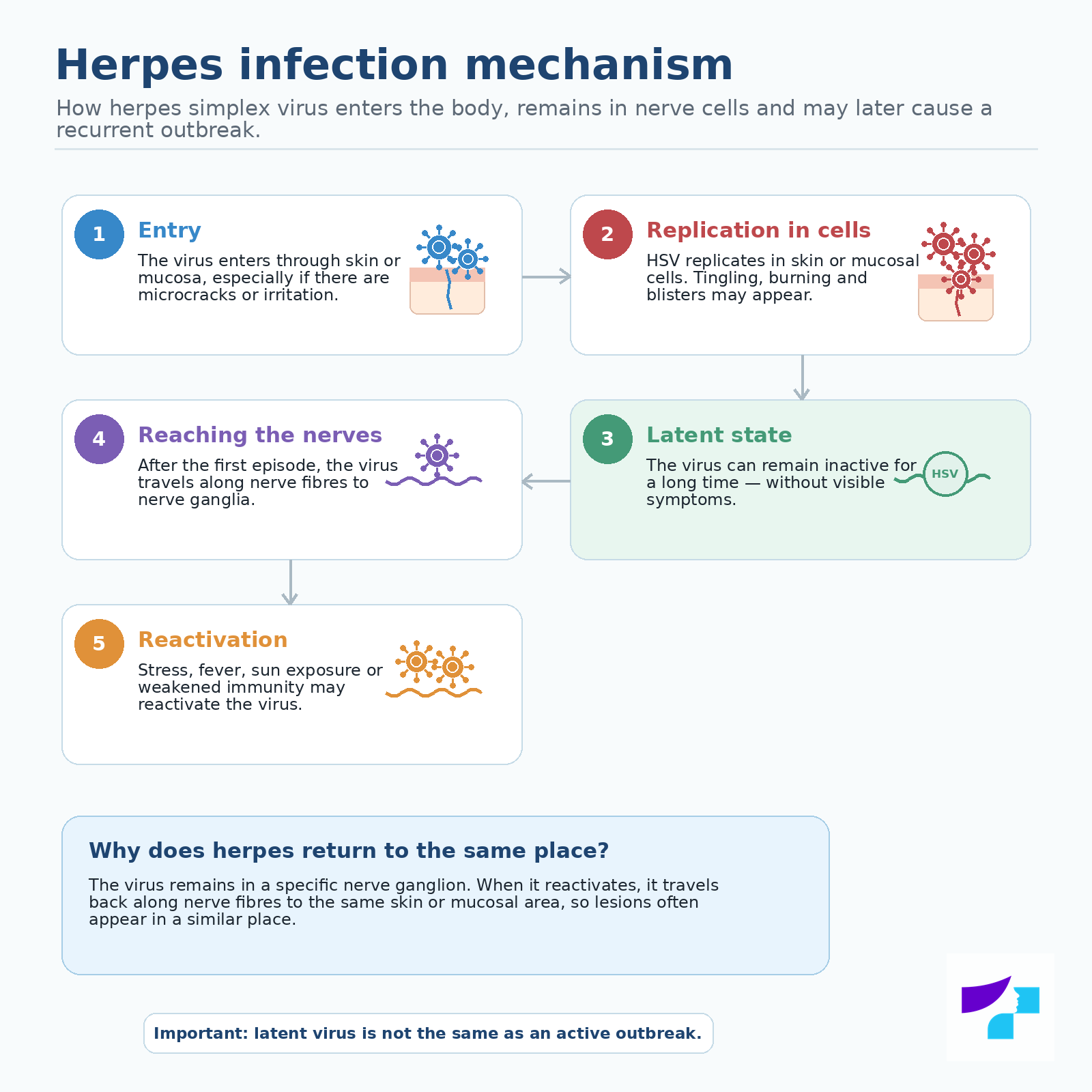
Herpes simplex virus enters the body through the skin or mucosa — especially if there are microscopic cracks, irritation, or damage. After the initial infection, the virus replicates in skin or mucosal cells, causing inflammation, blisters, and ulcers.
After the first episode, the virus travels along nerve fibres to nerve ganglia, where it may remain in an inactive, or latent, state. Latent means that the virus is present in the body but is not actively causing visible symptoms.
Later, under the influence of certain factors, the virus may reactivate, travel back along nerve fibres to the skin or mucosa, and cause a new outbreak. This is why herpes often recurs in the same place — the virus reactivates in the same nerve region.
Where is herpes common?
Herpes simplex infection occurs worldwide. It is not a rare or unusual infection. Many people become infected with HSV-1 already in childhood, while HSV-2 is more often associated with infection acquired through sexual contact. Both virus types can cause both oral and genital herpes infection.
In Latvia, anogenital herpes is one of the sexually transmitted infections for which national public health information is available. It is important that the infection may also occur without pronounced symptoms — this means a person may not know about the infection and may still transmit it to others.
Who is at greater risk?
Anyone can become infected with herpes simplex virus, but the risk is higher if there is close contact with a person who has active blisters or ulcers.
The risk is higher for:
- people whose partner has oral or genital herpes infection;
- people with multiple sexual partners;
- people who have unprotected oral, vaginal, or anal sex;
- newborns, if the mother has active genital herpes infection during childbirth;
- pregnant women, especially if a first-time infection is acquired during pregnancy;
- people with weakened immunity;
- people with atopic dermatitis or extensive skin damage.
Does the body develop immunity against herpes virus?
After infection, the body develops an immune response — antibodies and cellular immunity. This means the immune system recognises and partly controls the virus. However, this immunity usually does not eliminate the virus completely, because HSV remains in nerve cells in a latent form.
Therefore, a person may have positive HSV antibodies, but this does not mean an active disease. It means that the body has previously encountered the virus. Active infection is best confirmed by a test from a fresh blister or ulcer, if one is available.
What triggers a herpes outbreak?
Herpes simplex virus may reactivate under the influence of various factors. The most common triggers include:
- stress;
- lack of sleep;
- another infection, a cold, or fever;
- strong sun exposure;
- skin or lip irritation;
- menstruation;
- dental or cosmetic procedures around the mouth;
- weakened immunity;
- trauma or friction in the genital area.
It is not always possible to identify a specific trigger. In some people, outbreaks recur frequently, while in others they occur very rarely or never.
Main signs that may indicate herpes infection
Herpes infection may be suggested by the following signs:
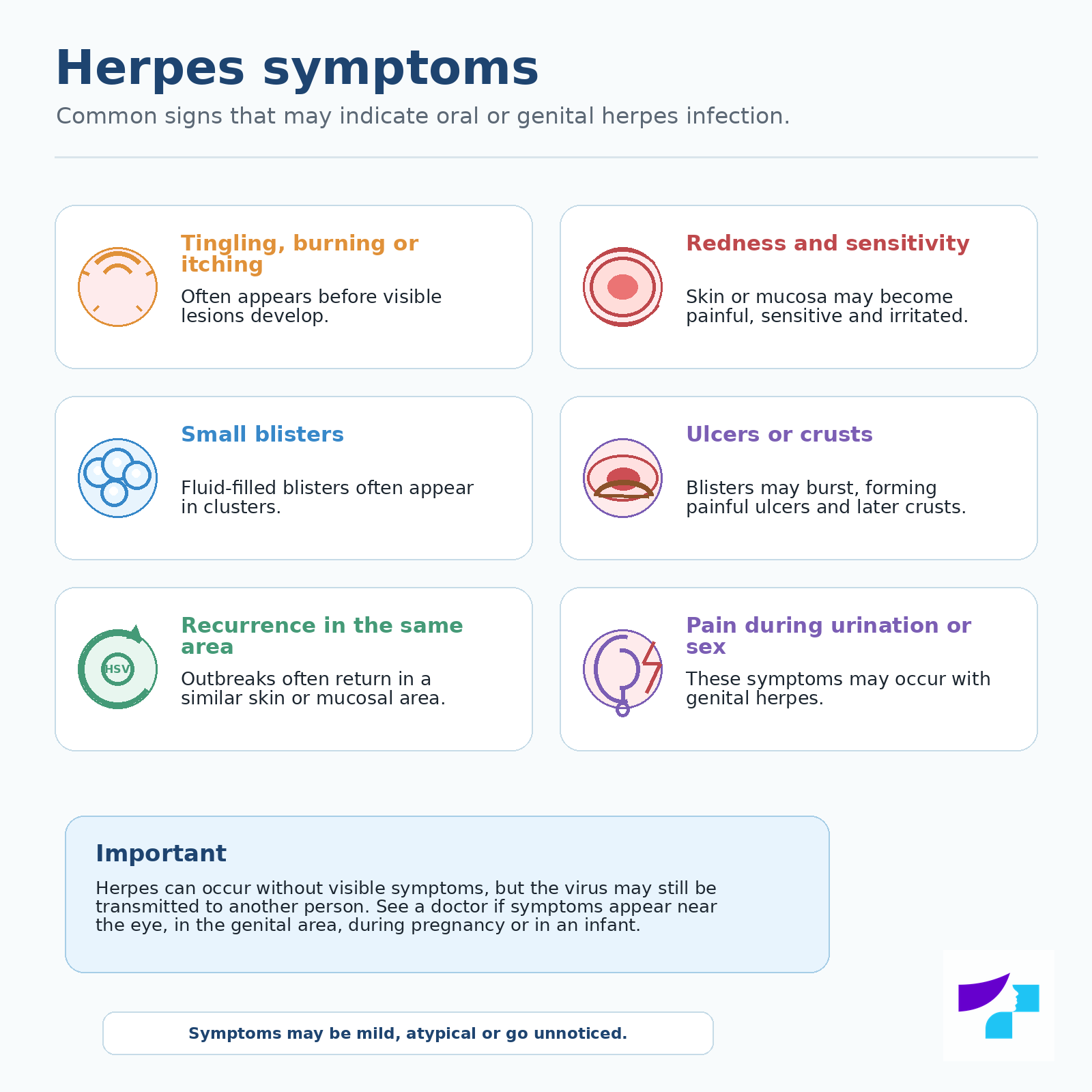
- tingling, burning, or itching before a rash appears;
- small fluid-filled blisters in clusters;
- painful ulcers after the blisters burst;
- recurrence in the same place;
- in genital herpes — pain when urinating, burning, sensitivity, or pain during sexual intercourse.
Herpes symptoms
Herpes symptoms can vary greatly. In some people they are pronounced, while in others they are so mild that they are not recognised. In some people, the infection occurs without visible symptoms.
Early symptoms
Early symptoms often appear before visible blisters. These are called prodrome, or warning symptoms. They may include:
- tingling;
- burning;
- itching;
- sensitivity;
- a feeling of skin tightness;
- mild redness;
- pain or discomfort in a specific area.
In the case of a cold sore, this sensation often appears on the edge of the lip. In genital herpes, it may occur in the genital, perineal, buttock, or anal area.
Typical herpes lesions
Typical herpes lesions are small blisters filled with clear fluid on reddened skin or mucosa. The blisters often appear in clusters. After a few days, they may burst and form painful ulcers, which later become covered with a crust.
On the lip, herpes usually appears as one or more painful cold sores. In the genital area, herpes may look like blisters, ulcers, cracks, redness, or painful skin lesions. Sometimes genital herpes is not recognised because the symptoms resemble skin irritation, a fungal infection, an ingrown hair, or mechanical abrasion.
General symptoms
During the first herpes episode, symptoms may be more severe. Possible symptoms include:
- fever;
- fatigue;
- muscle pain;
- headache;
- enlarged lymph nodes;
- pain when urinating;
- pain during sexual intercourse;
- painful ulcers in the mouth or genital area.
Recurrent outbreaks are usually shorter and milder than the first episode.
Timeline of infection and symptom development
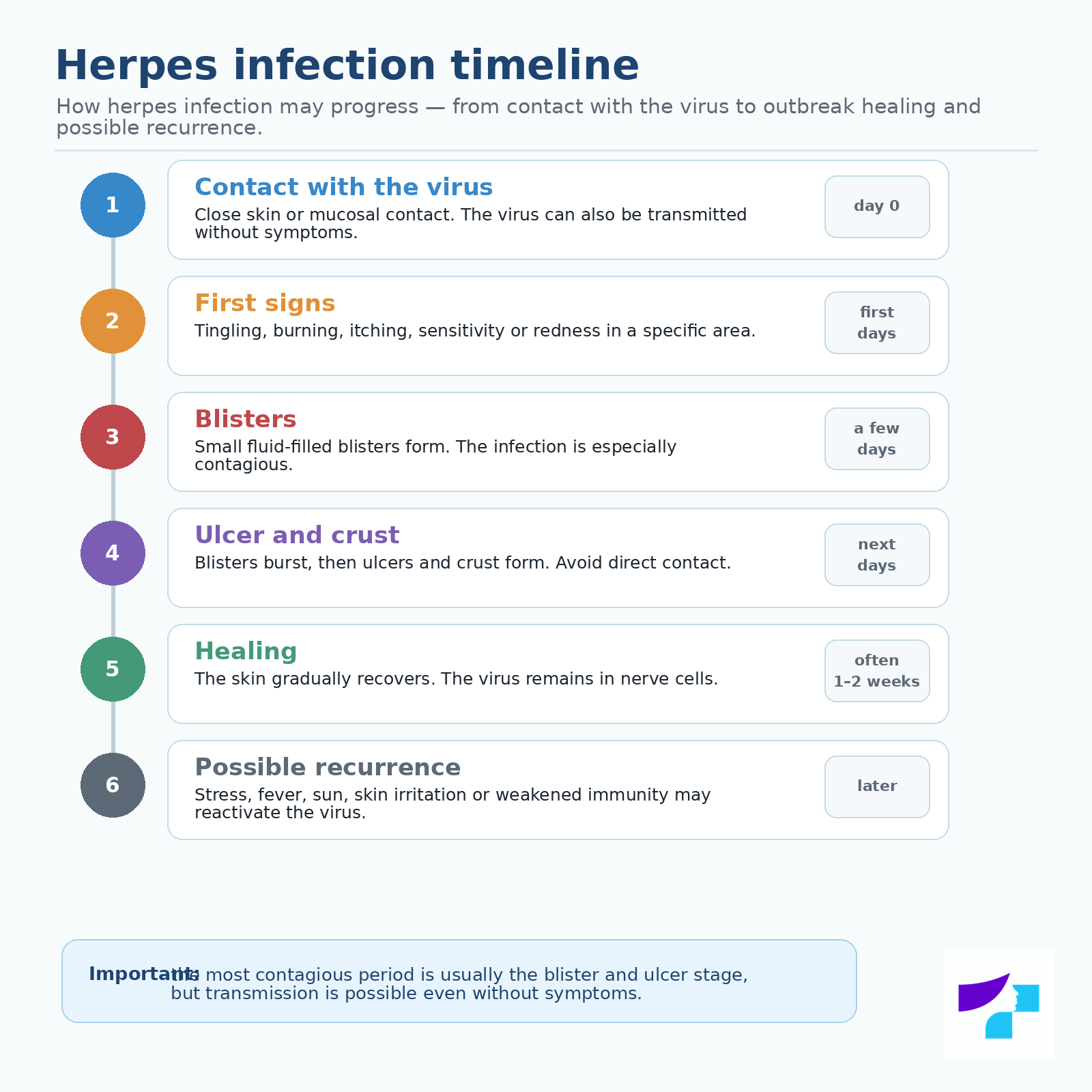
The diagram below helps explain how herpes infection may develop after contact with the virus. Time intervals may vary from person to person.
Contact with the virus
Close skin or mucosal contact, a kiss, oral or sexual contact. The virus may also be transmitted when symptoms are not visible.
The first days after contact
There may be no symptoms at all. If a first episode develops, tingling, burning, itching, sensitivity, or redness may appear.
Blister stage
Small fluid-filled blisters form. At this stage, the infection is usually especially contagious.
Ulcer and crust
The blisters burst, forming an ulcer or crust. Kissing, sexual contact, and touching the lesion should still be avoided.
Healing
The skin gradually recovers. The virus remains in the body and may reactivate in the future.
Diagnosis
Herpes can sometimes be diagnosed based on its typical appearance, especially when there are characteristic blisters and recurrent outbreaks in the same place. However, visual examination is not always sufficient, because herpes can resemble other conditions.
A doctor may use:
- examination and assessment of symptoms;
- a test from a fresh blister or ulcer;
- PCR testing, or nucleic acid amplification testing, which detects the genetic material of the virus;
- blood tests for antibodies, if it is necessary to assess previous exposure to HSV.
A PCR test from an active lesion is usually more informative than a blood test if fresh blisters or ulcers are present. An antibody test can show that a person has previously encountered HSV-1 or HSV-2, but it does not always show when infection occurred, where the infection is located, or whether it is currently active.
What do positive HSV antibodies mean?
A positive HSV-1 result usually means that the person has previously encountered HSV-1. It is often associated with oral herpes or cold sores, but it does not always allow the location of the infection to be determined.
A positive HSV-2 result more often indicates a previous HSV-2 infection, which is more commonly associated with genital herpes infection. However, this result must also be interpreted together with symptoms, medical history, and a doctor’s assessment.
Positive antibodies do not mean that a person currently has an active outbreak. Active infection is best assessed when there is a fresh blister or ulcer and material can be collected for laboratory testing.
How can herpes be distinguished from other conditions?
Herpes may resemble several other conditions, so self-diagnosis can be inaccurate.
Herpes and mouth ulcers
Mouth ulcers, or aphthous ulcers, are usually painful ulcers inside the mouth, but they are not caused by herpes simplex virus and usually do not form typical blisters on the outer edge of the lip. Cold sores more often appear on the lips or around the mouth, while aphthous ulcers are more often found on the oral mucosa.
Herpes and fungal infection
A fungal infection more often causes itching, redness, discharge, and burning, but it usually does not form small, clustered fluid-filled blisters that burst into ulcers.
Herpes and syphilis
A syphilis ulcer is often painless, while herpes ulcers are often painful, burning, and recurrent. However, they cannot be reliably distinguished by appearance alone — tests are needed.
Herpes and HPV
HPV more often causes warts or long-term cellular changes, while herpes causes blisters and ulcers. Both infections can be transmitted through sexual contact, but they are caused by different viruses.
Herpes and shingles
Shingles is caused by another virus from the herpesvirus group — varicella-zoster virus. It is not the same as herpes simplex infection. Shingles usually appears as a painful rash on one side of the body along the course of a nerve.
Treatment
Herpes simplex virus cannot currently be completely eliminated from the body, but symptoms can be reduced and the duration of an outbreak can be shortened. The goals of treatment are to:
- reduce pain, burning, and discomfort;
- shorten the duration of an outbreak;
- reduce viral shedding;
- reduce the frequency of recurrent outbreaks;
- reduce the risk of transmitting the infection to a partner;
- prevent complications in risk groups.
A doctor may prescribe antiviral prescription medicines. These may be in the form of tablets, topical preparations, or, in more severe cases, intravenous therapy. The specific medicine, dose, and duration of use are determined by a doctor, taking into account the location of the infection, severity, patient age, pregnancy, immune status, and frequency of outbreaks.
Important: antibiotics do not help against herpes virus, because antibiotics act on bacteria, not viruses.
Antiviral therapy is most effective when started early — during the tingling, burning, or first blister stage.
Episodic treatment and suppressive therapy
Episodic treatment means that antiviral therapy is used only during an outbreak — preferably at the very beginning, when tingling, burning, or the first blisters appear.
Suppressive therapy means regular doctor-prescribed antiviral therapy over a longer period to reduce frequent outbreaks and lower the risk of transmitting the infection to a partner. It may be suitable for people with frequent, severe, or psychologically very distressing outbreaks, as well as in certain situations when reducing transmission risk is important.
Cold sore treatment at home
In the case of a mild cold sore, supportive measures at home may help reduce symptoms:
- do not touch or scratch the blister;
- wash hands frequently;
- do not share lip balm, cosmetics, towels, or razors;
- avoid kissing until complete healing;
- do not handle contact lenses with unwashed hands, especially if there is an active cold sore;
- use sun protection for the lips if sun exposure triggers outbreaks;
- use cold compresses to reduce discomfort;
- keep the affected area clean and dry.
A cold sore should not be pierced. Piercing the blister may increase the risk of a secondary bacterial infection, prolong healing, and promote spread of the virus to other parts of the body or to other people.
Folk remedies for cold sores are often searched for online, but there is not enough clear medical evidence supporting their effectiveness. Irritating substances, alcohol, toothpaste, vinegar, or aggressive products may burn the skin and worsen healing. The safer approach is gentle skin care and products recommended by a doctor.
What should you do in the first 24 hours if a cold sore appears?
If tingling, burning, itching, or the first blisters appear on the lip, it is important to act quickly. At this stage, antiviral therapy is usually most effective if a doctor or pharmacist has recommended it for the specific situation.
During the first day, the lesion should not be touched, scratched, or pierced. Kissing should be avoided, and lip balm, cosmetics, towels, and dishes should not be shared. Hands should be washed after touching the face, and oral sex should be avoided, because HSV-1 from the mouth area can be transmitted to the genitals.
If cold sores recur frequently, are very painful, do not heal for a long time, or appear near the eye, a doctor should be consulted.
Prevention
The risk of herpes transmission cannot be reduced to zero, but it can be significantly lowered.
To reduce the risk of becoming infected or transmitting herpes to a partner:
- avoid kissing if there is an active cold sore;
- avoid oral sex if there is a cold sore or tingling on the lip;
- avoid sexual contact during a genital herpes outbreak;
- use condoms or barrier protection, understanding that they do not provide complete protection because herpes may be present on skin not covered by the condom;
- inform your partner if you have genital herpes infection;
- consider doctor-prescribed suppressive therapy if outbreaks are frequent or transmission risk needs to be reduced;
- do not share lip balm, cosmetics, razors, or towels during an active outbreak;
- wash hands after touching the affected area.
Herpes and children
A cold sore in a child is usually associated with HSV-1. Children are often infected through close contact with adults, for example through kissing. An adult with an active cold sore should not kiss an infant or young child, especially on the face, lips, or hands.
This is especially important for newborns. Neonatal herpes is rare but potentially severe. It can affect the skin, eyes, oral mucosa, nervous system, or spread throughout the body.
If a parent or caregiver has a cold sore:
- they must not kiss the infant;
- hands should be washed before caring for the child;
- shared towels or dishes should be avoided;
- the lesion should be covered if possible;
- medical help should be sought if the infant develops fever, blisters, sleepiness, poor feeding, or unusual behaviour.
Herpes during pregnancy
Herpes during pregnancy requires special attention. The greatest risk to the newborn is when a woman becomes infected with genital herpes for the first time late in pregnancy or close to delivery. If the infection occurred earlier, the risk is usually lower because the body has developed an immune response, but individual medical assessment is still necessary.
If a woman has genital herpes infection or a suspicion of it, she should inform her gynaecologist or obstetric specialist. This information is important for pregnancy monitoring, delivery planning, and newborn safety.
When can herpes be dangerous?
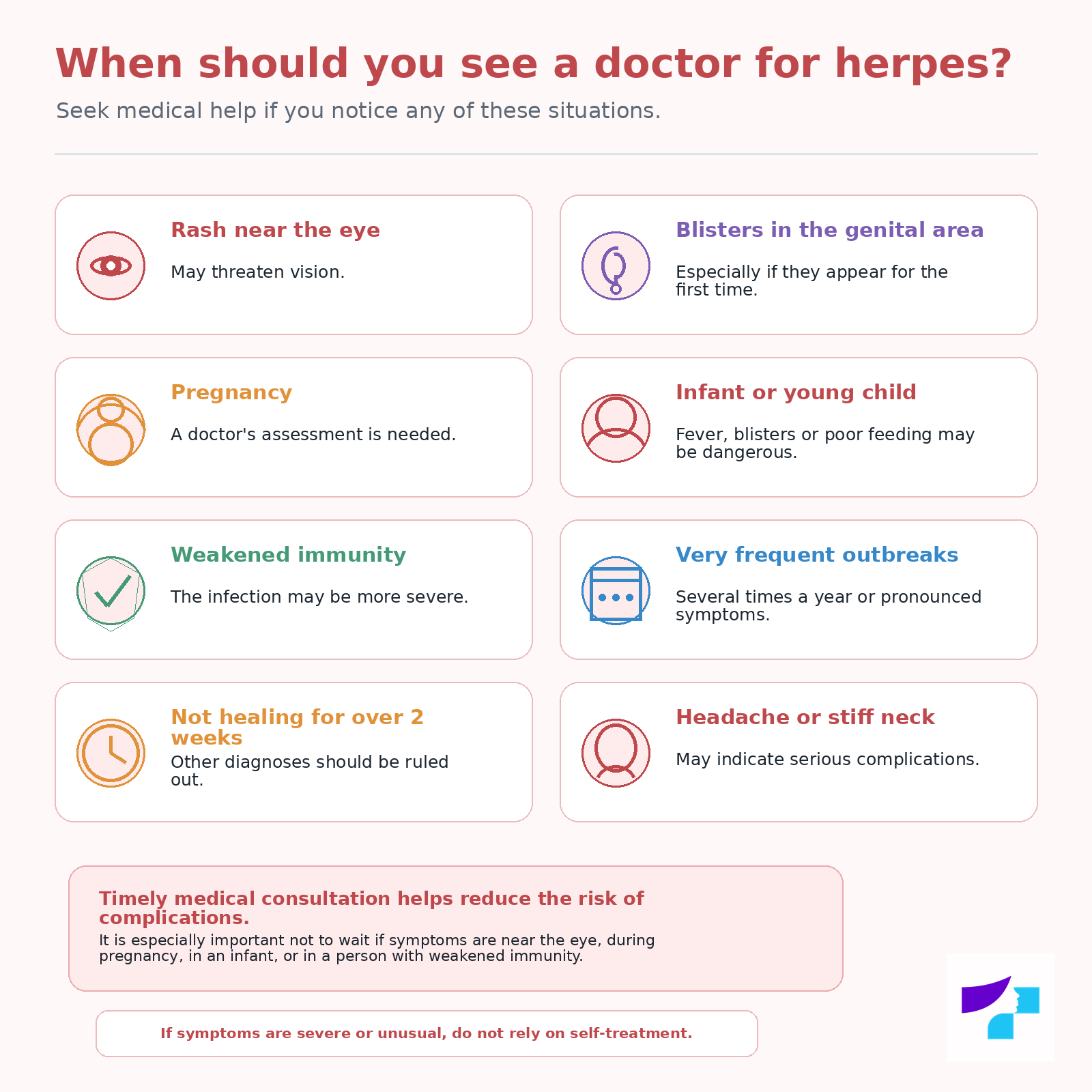
Herpes is not just a “cold sore” if:
- lesions are near the eye or in the eye;
- there is blurred vision, eye pain, or light sensitivity;
- lesions are extensive, very painful, or spreading quickly;
- there is a high temperature, severe headache, stiff neck, or confusion;
- herpes symptoms appear in a newborn or infant;
- the patient is pregnant;
- the person has weakened immunity;
- outbreaks recur very frequently;
- the lesion does not heal for longer than two weeks;
- a first episode of genital herpes is suspected.
Ocular herpes can affect the cornea and threaten vision, so lesions near the eye are not a situation in which waiting for self-healing is advisable. In people with HIV or other immunosuppression, HSV infection may be more severe, longer-lasting, and more extensive.
Which doctor should you see?
If herpes infection is suspected, the most appropriate specialist depends on the location of symptoms, the patient’s age, and risk factors.
A dermatologist should be consulted if there are cold sores, recurrent rashes on the face, skin, or mucosa, unclear blisters, ulcers, or lesions that recur frequently.
An infectious disease specialist is recommended if herpes manifestations are severe, unusual, recurrent, if complications are suspected, or if the person has weakened immunity.
A gynaecologist should be consulted by women with genital symptoms, pain, ulcers, rashes, or signs of herpes during pregnancy.
A urologist should be consulted by men with genital symptoms, pain, burning, ulcers, blisters, or painful urination.
A paediatrician should be consulted if possible herpes signs appear in a child, especially an infant or newborn.
If lesions are near the eye, there are visual disturbances, severe headache, stiff neck, confusion, severe symptoms in a newborn, or rapid worsening of the condition, medical help should not be delayed.
Herpes and HIV risk
Genital herpes infection can increase the risk of acquiring and transmitting HIV because ulcers and inflammation damage the mucosal barrier and attract immune cells that are susceptible to HIV. This does not mean that a person with herpes will definitely become infected with HIV, but it is one reason why genital herpes diagnosis, partner notification, and safer sexual behaviour are important.
Herpes and COVID-19
Some people notice that a cold sore appears after another viral infection, fever, stress on the body, or immune burden. Therefore, a herpes outbreak may coincide with COVID-19 or the recovery period after it, but this does not mean that COVID-19 “causes” herpes virus anew. A herpes outbreak usually means reactivation of HSV already present in the body.
If herpes outbreaks become frequent, severe, or unusual after COVID-19 or another infection, a doctor should be consulted.
Can herpes cause infertility?
Herpes simplex virus is usually not a direct cause of infertility. However, genital herpes infection may be associated with pain, discomfort, limitations in sexual life, and psychological stress. During pregnancy and childbirth, the most important risk is not infertility, but the risk of newborn infection, especially in the case of active or first-time infection close to delivery.
How much do herpes tests cost?
The cost of herpes testing varies depending on the laboratory, the type of test, and whether material is taken from a blister or ulcer, or whether blood tests are performed to detect antibodies. The exact price is determined by the specific laboratory or medical institution.
From a medical point of view, the most important thing is to choose the right test at the right time — for example, in the case of a fresh lesion, a test from the lesion is often more informative than a general antibody test.
What is well established in medicine?
It is well established that HSV-1 and HSV-2 can cause both oral and genital herpes infection. It is also well established that the infection can remain in the body for life, spread even without visible symptoms, and reactivate under the influence of various triggers.
It is also medically well supported that doctor-prescribed antiviral therapy can reduce symptoms, shorten an outbreak, and in certain situations reduce the risk of transmitting the infection to a partner.
Herpes myths and facts
Myth: a cold sore appears only because of a cold.
Fact: a cold sore is caused by herpes simplex virus. A cold or fever can only activate a virus that is already present in the body.
Myth: herpes can be transmitted only when visible blisters are present.
Fact: transmission is possible even without visible symptoms, although the risk is higher during an active outbreak.
Myth: HSV-1 affects only the lips, and HSV-2 affects only the genitals.
Fact: both virus types can affect both the mouth and the genitals.
Myth: positive antibodies mean that there is an active infection right now.
Fact: IgG antibodies usually indicate previous contact with the virus, not necessarily an active outbreak. IgM antibodies may indicate recent or active immune response, but results must always be interpreted by a doctor.
Myth: herpes can be completely cured.
Fact: at present, HSV cannot be completely removed from the body, but symptoms and outbreak frequency can be controlled.
What is medicine still discussing and researching?
Medical research is still focused on:
- an effective herpes simplex virus vaccine;
- new antiviral medicines and longer-acting therapies;
- strategies that reduce asymptomatic viral shedding;
- better prediction of genital HSV-1 infection outcomes;
- individual risk assessment for pregnant women and newborns;
- reducing patient stigma and improving communication with partners.
At present, there is no widely available vaccine for herpes simplex virus intended for routine everyday use. In everyday medical practice, the main approach remains risk reduction, timely diagnosis, and antiviral therapy according to a doctor’s assessment.
Brief patient action plan
If you have a cold sore on the first day: do not touch the lesion, do not try to pierce it, avoid kissing and oral sex, wash your hands, do not share lip balm or towels, and ask a doctor or pharmacist about safe symptom relief.
If blisters appear in the genital area: abstain from sexual contact, do not pierce the blisters, make an appointment with a dermatovenerologist, gynaecologist, or urologist, and, if possible, have the examination while the lesions are still fresh.
If your partner has herpes: this does not mean that you will definitely become infected, but there is a risk. Open communication, avoiding contact during an outbreak, condom use, and a doctor’s consultation about prevention options are important.
Disclaimer
This article is for informational and educational purposes only. It does not replace a doctor’s consultation, diagnosis, or individually prescribed treatment. The manifestations of herpes infection may resemble other skin, mucosal, or sexually transmitted diseases, so self-diagnosis and self-treatment may be incorrect. If you notice painful blisters or ulcers, lesions near the eye, genital symptoms, fever, frequent recurrent outbreaks, symptoms during pregnancy, possible signs of infection in an infant, or if you have weakened immunity, consult the appropriate specialist in good time — a dermatologist, infectious disease specialist, gynaecologist, urologist, or, in the case of a child’s symptoms, a paediatrician. If symptoms are severe, rapidly worsening, lesions are near the eye, or neonatal infection is suspected, medical help should not be delayed.
References and authoritative sources
- World Health Organization (WHO): Herpes simplex virus
- World Health Organization (WHO): Herpes simplex virus — vaccine and immunization research
- Centers for Disease Control and Prevention (CDC): Genital Herpes — STI Treatment Guidelines
- National Health Service (NHS): Genital herpes
- Centre for Disease Prevention and Control of Latvia (SPKC): Anogenital herpes
- E-health Latvia: Sexually transmitted diseases
- American Academy of Dermatology (AAD): Cold sores — diagnosis and treatment
- Mayo Clinic: Cold sore — symptoms and causes
- U.S. National Institutes of Health (NIH): Herpes Simplex Virus in people with HIV
- European guidelines for the management of genital herpes
Content author
Dermatologist Dr. med. Dace Buile
