Dermatitis is inflammation of the skin that may cause itching, redness, dryness, scaling, burning, cracks, blisters or oozing. It is not a single condition, but a broad group of skin disorders. This is why two people diagnosed with dermatitis may have different causes, rash locations and treatment plans.
Key points at a glance
- Dermatitis is usually not contagious, but inflamed and scratched skin may develop a secondary infection.
- Common signs include itching, redness, dryness, scaling, cracks, burning or small skin lesions.
- Dermatitis is not always an allergy. Contributing factors may include damage to the skin barrier, irritants, genetic predisposition, changes in the microbiome, sweating, climate, cosmetics or an immune response.
- Rashes on the face, eyelids and around the mouth require particular care, as incorrectly used creams may worsen the condition.
- See a dermatologist if the rash persists, recurs, oozes, hurts, bleeds, disrupts sleep or affects a child.
What is dermatitis?
Dermatitis means inflammation of the skin. In medicine, the term describes various conditions in which the skin becomes inflamed and sensitive and loses its normal protective function. The terms “dermatitis” and “eczema” often overlap, although in everyday use “eczema” more commonly refers to a dry, itchy and persistent inflammatory skin condition.
Dermatitis may be acute, with a rash appearing suddenly, or chronic, with symptoms recurring or persisting over time. For some patients, dermatitis is a temporary reaction to a specific substance, such as cosmetics, metal or detergent. For others, it is a long-term skin condition, such as atopic dermatitis, that requires regular skin care and flare-up management.
Dermatitis is not the same as a skin infection. Most types of dermatitis are not contagious and cannot be passed to another person through touch. However, damaged skin is more vulnerable to bacteria, viruses and fungi, so untreated or intensely scratched dermatitis may become complicated by an infection.
Five signs that may suggest dermatitis:
- the skin itches and becomes dry, rough or scaly;
- red, pink, brownish or purplish areas of inflammation appear;
- the skin burns, stings or becomes sensitive to creams and water;
- cracks, blisters, oozing or crusts develop;
- the rash recurs in the same areas or worsens after contact with particular products.
What does dermatitis look like, and what are its symptoms?
The appearance of dermatitis varies depending on its type, skin tone, duration and location. On lighter skin, inflammation often looks red or pink, while on darker skin it may appear brownish, greyish, purple or darker than the surrounding skin. Dermatitis therefore cannot always be recognised by redness alone.
Early symptoms often include:
- itching;
- dryness and a feeling of tightness;
- mild redness or a change in skin colour;
- burning or stinging;
- small skin lesions or rough patches;
- sensitivity to cosmetics, soap, sweat or water.
Later or more pronounced symptoms may include:
- scaling and peeling;
- cracks, particularly on the hands, fingers or around the lips;
- blisters or oozing;
- crusts;
- thickening of the skin due to prolonged scratching;
- changes in pigmentation after inflammation;
- pain if the skin is cracked or infected.
Main types of dermatitis
Atopic dermatitis
Atopic dermatitis is a chronic, itchy inflammatory skin disorder that often begins in childhood but may persist or first appear in adulthood. It is characterised by impaired skin barrier function, dryness, itching and flare-ups. Atopic dermatitis is not contagious. It may be associated with genetic predisposition and other atopic conditions, such as allergic rhinitis or asthma, but this does not mean that every patient necessarily has a food allergy.
Read more: Atopic dermatitis.
Seborrhoeic dermatitis
Seborrhoeic dermatitis is chronic or recurrent dermatitis affecting areas rich in sebaceous glands: the scalp, eyebrows, folds beside the nose, behind the ears and the centre of the chest. It often causes redness and yellowish or greasy scaling. A milder form on the scalp may appear as dandruff. The condition involves an inflammatory skin response and the role of Malassezia yeasts, but it is not a typical contagious fungal infection.
Read more: Seborrhoeic dermatitis.
Contact dermatitis
Contact dermatitis develops after the skin comes into contact with a substance that irritates it or causes an allergic reaction. It often affects the hands, face, eyelids, neck or areas directly exposed to cosmetics, jewellery, workplace chemicals, disinfectants, gloves or detergents.
Read more: Contact dermatitis.
Allergic contact dermatitis
Allergic contact dermatitis is a delayed allergic skin reaction to a specific allergen. Symptoms often appear hours or days later rather than immediately. Common allergens include nickel, fragrances, preservatives, hair dye ingredients, cosmetics, topical medicines and adhesives. Patch testing, also known as epicutaneous testing, may be needed to clarify the diagnosis.
Read more: Allergic contact dermatitis.
Irritant contact dermatitis
Irritant contact dermatitis is not an allergy. It develops when a substance damages the skin's protective barrier. Common irritants include water, soap, detergents, disinfectants, solvents, acids, alkalis, friction and sweat. This type of dermatitis is common in people who frequently wash their hands or work with chemicals on a daily basis.
Perioral dermatitis
Perioral dermatitis causes small skin lesions around the mouth, nose or eyes. It may resemble acne or rosacea, but typical comedones, or blackheads and whiteheads, are usually absent. Burning, dryness and sensitivity are common. The condition may be associated with the use of facial creams, cosmetics, toothpaste, sunscreens or topical corticosteroids.
Read more: Perioral dermatitis.
Facial and eyelid dermatitis
Facial and eyelid dermatitis requires particularly careful assessment because the skin in these areas is thin and sensitive. Eyelid dermatitis may be triggered not only by eye make-up, but also by nail polish, hair dye, fragrances, eye drops, contact lens solutions, metals, spectacle frames or substances transferred to the eyelids by the hands.
Read more: Facial and eyelid dermatitis.
Systemic contact dermatitis
Systemic contact dermatitis is a less common condition in which a person already sensitised to a particular substance develops a skin reaction when that substance, or a related substance, enters the body by another route, for example through food, medicines or medical materials. This diagnosis requires a doctor's assessment and clear evidence of the connection.
Read more: Systemic contact dermatitis.
Nappy dermatitis
Nappy dermatitis in infants develops in the nappy area due to moisture, friction, urine, faeces, irritation of the skin barrier and sometimes a secondary infection. A medical consultation is needed if the rash is severe or painful, involves blisters, pus or ulcers, or the child has a fever.
Hand eczema or hand dermatitis
Hand dermatitis is often associated with repeated washing, disinfection, wet work, gloves, chemicals, cold or contact allergy. It may cause dryness, cracks, blisters, itching and pain. If hand dermatitis recurs or interferes with work, the specific cause should be investigated and a skin protection plan developed.
How can you tell which type of dermatitis may be involved?
| Type | Common locations | Typical symptoms | Common triggers | When to see a dermatologist |
|---|---|---|---|---|
| Atopic dermatitis | Skin creases, face in children, neck, hands | Dryness, intense itching, recurrence | Impaired skin barrier, genetics, climate, irritants | If it recurs, disrupts sleep or affects a child |
| Seborrhoeic dermatitis | Scalp, eyebrows, folds beside the nose, chest | Redness, greasy scaling, dandruff | Role of Malassezia, stress, seasonal changes | If it persists or needs to be distinguished from psoriasis |
| Allergic contact dermatitis | Hands, face, eyelids, neck | Itching, redness, blisters, delayed reaction | Nickel, fragrances, preservatives, cosmetics | If it recurs after using particular products |
| Irritant contact dermatitis | Hands, areas exposed at work, nappy area | Dryness, cracks, burning, pain | Water, soap, disinfection, chemicals, friction | If there are cracks, pain or an association with work |
| Perioral dermatitis | Around the mouth, nose, eyes | Small papules, burning, dryness | Facial creams, steroids, cosmetics, toothpaste | If there is an acne-like facial rash |
| Eyelid dermatitis | Upper/lower eyelids | Itching, swelling, scaling, burning | Cosmetics, nail polish, eye drops, metals | If it recurs or affects the eyelids |
| Systemic contact dermatitis | May be more widespread or recurrent | An eczema flare-up following systemic exposure | A substance to which the person is already sensitised | Specialist diagnostic assessment is required |
Why does dermatitis develop?
Dermatitis develops when the skin's protective barrier, immune response and environmental factors become unbalanced. Sometimes the main cause is clear, for example when a hand rash appears after using a harsh cleaning product. In other cases, several factors contribute.
Common mechanisms and contributing factors:
- damage to the skin's protective barrier;
- an excessive immune response;
- allergens such as nickel, fragrances, preservatives and hair dye ingredients;
- irritants such as soap, water, disinfectants, household chemicals and friction;
- changes in the skin microbiome;
- genetic predisposition;
- cold, heat, sweating, dry air and changes in climate;
- stress and lack of sleep.
Dermatitis is not simply a matter of “dirty skin” or a “poor diet”. Overly harsh washing, scrubs and frequent changes of products often worsen the condition.
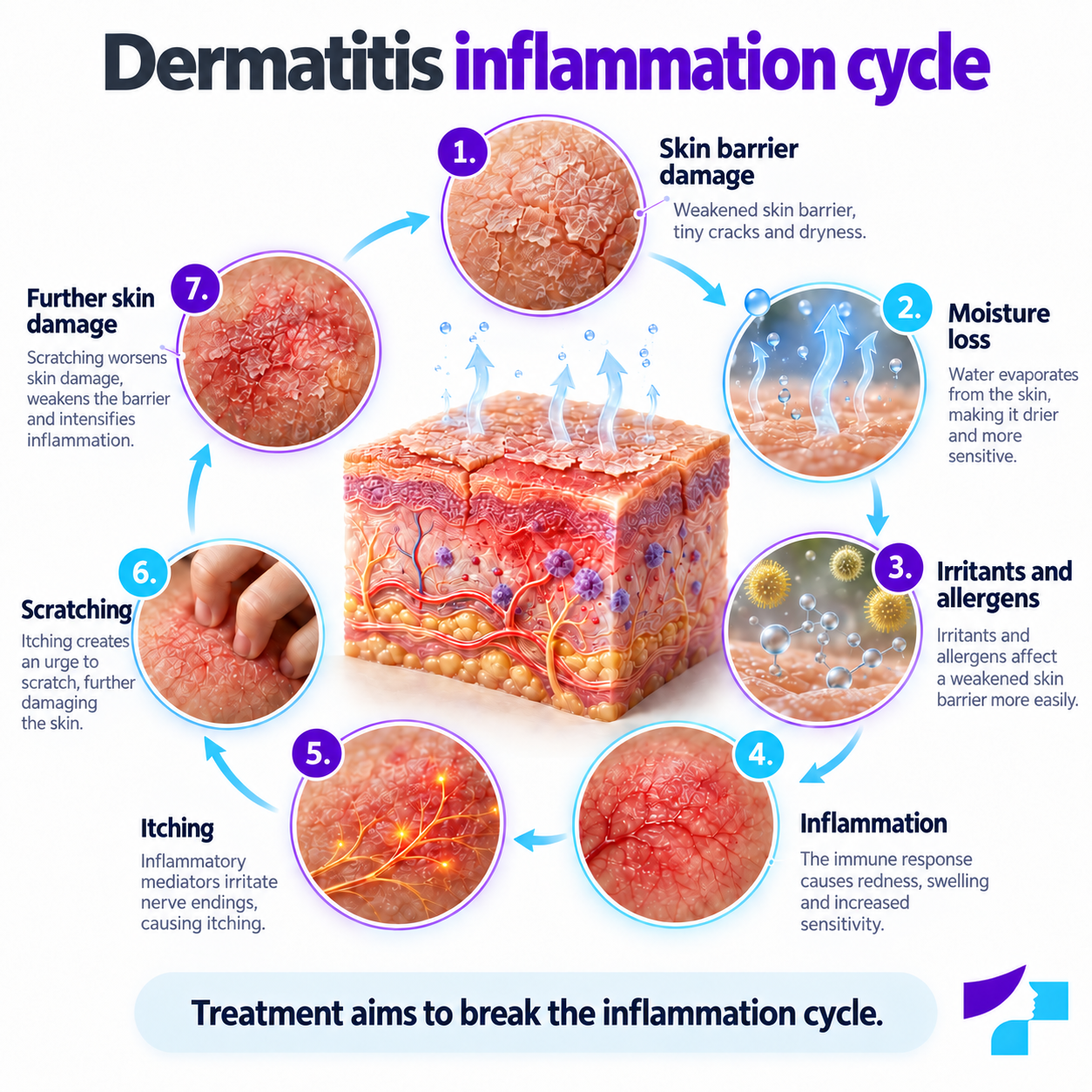
How dermatitis develops
The skin barrier weakens. The skin loses moisture and becomes more sensitive. Irritants or allergens affect the skin more easily. The immune system activates inflammation. Itching, redness, dryness, blisters or scaling develop. Scratching further damages the skin, and the inflammation may become self-perpetuating.
Treatment aims to break this cycle: restore the skin barrier, reduce inflammation and itching, identify triggers and prevent secondary infection.
The course of dermatitis over time
| Stage | What happens |
|---|---|
| Contact with an irritant | The reaction may begin quickly or develop gradually after repeated exposure. |
| Allergic reaction | In allergic contact dermatitis, the rash often appears hours or days later. |
| Atopic dermatitis flare-up | Dryness and itching may gradually increase until visible inflammation appears. |
| Skin healing | Improvement is possible when the trigger is removed and treatment prescribed by a dermatologist is followed. |
| Risk of recurrence | If the irritant, allergen or inappropriate skin care remains, dermatitis may return. |
Where does dermatitis most commonly appear?
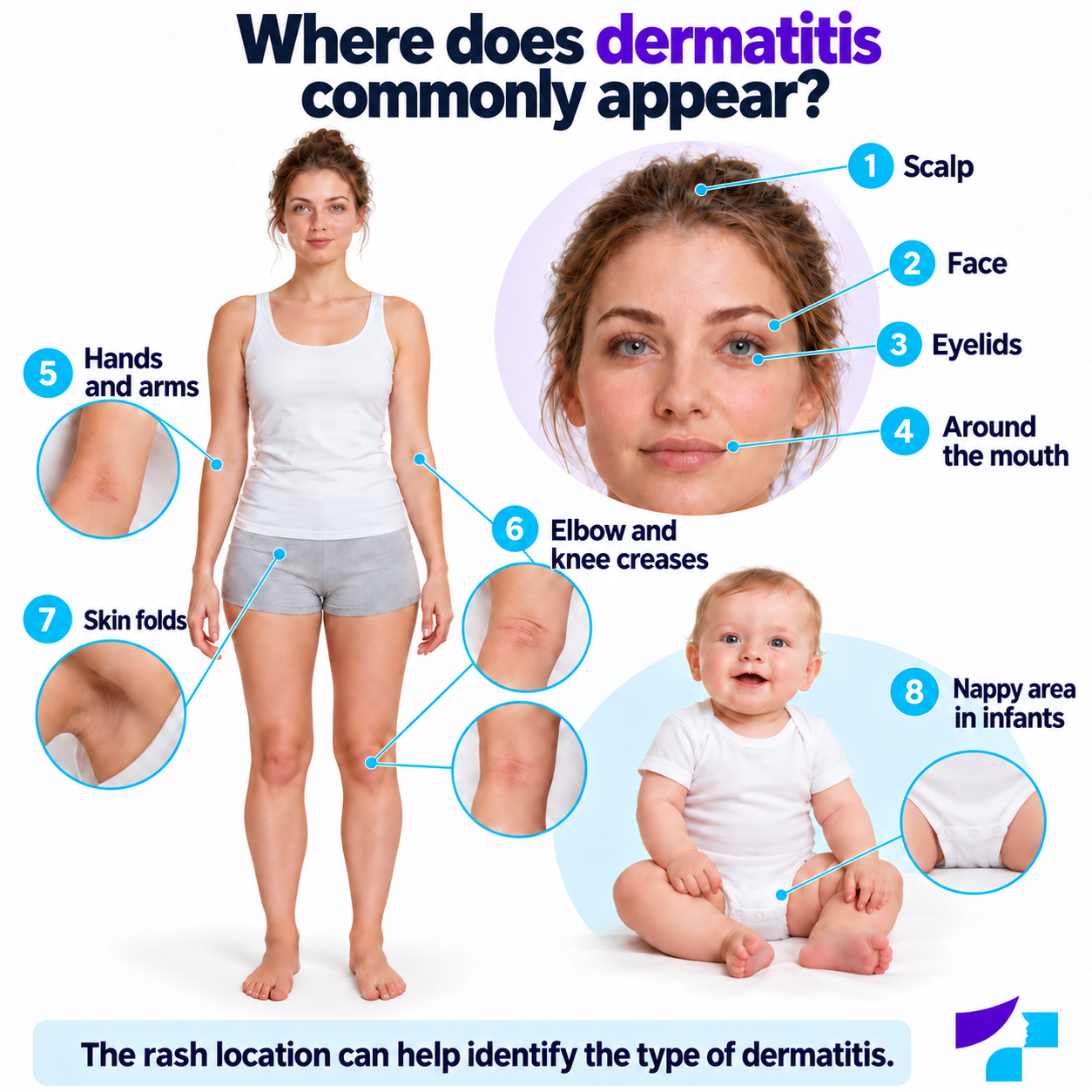
The location of dermatitis often provides important clues to the possible type.
- Face: atopic, seborrhoeic, contact or periorificial dermatitis; rosacea may also cause similar symptoms.
- Around the mouth: perioral dermatitis, irritation, a contact reaction or lip-licking dermatitis in children.
- Eyelids: often associated with contact allergy or irritation.
- Scalp: often seborrhoeic dermatitis, but it needs to be distinguished from psoriasis or a fungal infection.
- Hands: often irritant or allergic contact dermatitis.
- Elbow and knee creases: often atopic dermatitis.
- Skin folds: dermatitis, intertrigo, candidiasis, psoriasis or friction-related irritation.
- In infants: cheeks, scalp, body and nappy area.
When should you see a dermatologist for dermatitis?
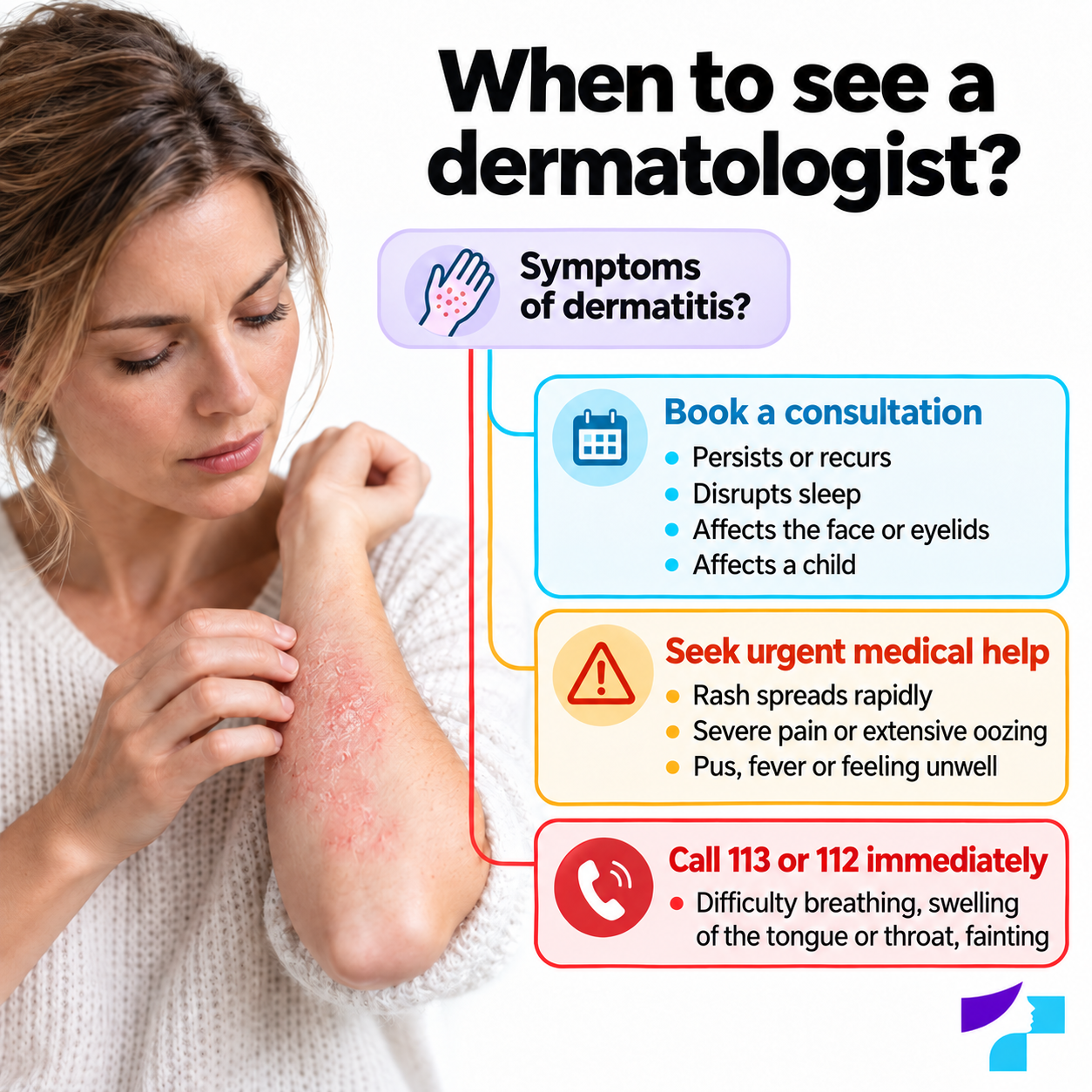
See a dermatologist if:
- the rash persists or recurs;
- itching is severe or disrupts sleep;
- dermatitis affects the face, eyelids, area around the mouth or genital area;
- the skin cracks, bleeds, oozes or becomes very painful;
- pus, yellowish crusts, swelling or fever develop;
- self-treatment does not help or the condition worsens;
- a rash develops in a child or infant;
- dermatitis affects work, studies, sleep or well-being;
- you suspect that the reaction is caused by the work environment, cosmetics, gloves, metals or medicines.
More urgent medical attention is needed if the rash spreads rapidly, there is severe pain, fever, feeling unwell, extensive skin oozing, swelling around the eyes or a suspected severe allergic reaction.
If you have difficulty breathing, swelling of the tongue or throat, or fainting, call 113 or 112 immediately.
Mild, moderate and severe dermatitis
The severity of dermatitis is not determined by the size of the rash alone. A doctor also assesses the intensity of itching, sleep disturbance, skin cracks, oozing, signs of infection, the rash location and how much the condition affects daily life.
| Severity | Possible presentation | What it means for the patient |
|---|---|---|
| Mild dermatitis | Isolated dry or itchy patches, mild redness, no oozing | Often improves with avoidance of irritants and appropriate care of the skin barrier |
| Moderate dermatitis | Frequent flare-ups, cracks, pronounced itching, symptoms that disrupt sleep or work | Usually requires treatment prescribed by a dermatologist as well as skin care products |
| Severe dermatitis | Extensive areas of inflammation, oozing, bleeding, signs of infection or a significant reduction in quality of life | Requires a doctor-led plan; phototherapy or systemic treatment may sometimes need to be considered |
For a more detailed assessment of atopic dermatitis, dermatologists may use internationally recognised measures such as EASI, SCORAD, BSA or DLQI. Patients do not need to calculate these themselves, but they help assess disease severity and treatment outcomes more objectively.
Diagnosing dermatitis
A dermatologist diagnoses dermatitis by combining a skin examination with the patient's history. It is important not only how the rash looks today, but also when it started, what makes it worse, which products have been used and whether similar symptoms have occurred before.
Diagnostic assessment may include:
- an examination by a dermatologist;
- a review of the medical history and triggers;
- a review of skin care, cosmetics, the work environment and household chemicals;
- patch testing if allergic contact dermatitis is suspected;
- testing for fungi if a fungal infection needs to be ruled out;
- a swab or microbiological testing if there are signs of infection;
- a biopsy in rare cases when the diagnosis is unclear.
Dermatitis can sometimes be confused with psoriasis, acne, rosacea, fungal infection, scabies, bacterial infection, urticaria or rarer skin disorders. Treating a persistent rash based solely on a photograph or a similar image online can therefore be misleading.
Treating dermatitis
Dermatitis treatment is individualised. It depends on the type, severity and location of the dermatitis, the patient's age, skin sensitivity, other medical conditions, the possibility of pregnancy, previous treatment and whether there are signs of infection.
A dermatology consultation can help clarify the diagnosis and identify the most appropriate treatment plan. Information about the clinic's specialists is available in the Dermatologist section.
Key principles of treatment:
- Restoring the skin barrier with moisturisers.
- Gentle washing with mild, fragrance-free products.
- Identifying irritants and allergens.
- Topical anti-inflammatory treatment prescribed by a doctor, if needed.
- Treating infection only when a doctor identifies signs of infection.
- In more severe cases, phototherapy or systemic treatment following a dermatologist's assessment.
Prescription creams, especially anti-inflammatory products, should not be used for prolonged periods without medical supervision. Incorrect use may alter the appearance of the rash, worsen perioral dermatitis, damage thin facial skin or delay the correct diagnosis.
Daily skin care during a flare-up
Wash with lukewarm rather than hot water. Gently pat the skin dry without rubbing. Apply a moisturiser soon after washing, before the skin has fully lost its moisture. If a doctor has prescribed a medicine, follow their specific instructions on the order and frequency of application.
If the skin is very itchy at night, a cooler bedroom, short nails, soft cotton clothing, avoidance of irritating fabrics and an itch management plan recommended by a dermatologist may help. Persistent night-time itching is more than discomfort: it affects sleep, concentration and quality of life.
What should you avoid if you have dermatitis?
If you have dermatitis, avoid:
- using potent creams without a diagnosis;
- using prescription steroid products for prolonged periods without medical supervision;
- applying “all-purpose ointments” to the face or eyelids without a dermatologist's recommendation;
- using harsh scrubs, acids or alcohol-containing products on inflamed skin;
- washing or stripping oils from the skin too frequently;
- changing many skin care products at the same time;
- scratching, squeezing or rubbing skin lesions;
- using antibiotics, antifungal medicines or antiseptics without a clear reason;
- delaying a medical consultation if symptoms worsen.
Dermatitis in children
Dermatitis is common in children, but its presentation changes with age. In infants, the cheeks, scalp, body or nappy area are more commonly affected. In older children, atopic dermatitis often appears in the elbow and knee creases, on the neck, hands or eyelids.
Reducing itching is particularly important in children, as scratching can damage the skin, disrupt sleep and increase the risk of infection. Parents should not use prescription creams intended for adults on a child for prolonged periods without medical advice. A medical consultation is needed if the child's rash oozes or develops crusts, there is pain, fever or intense itching, the rash spreads or the child sleeps poorly.
Dermatitis on the face, around the mouth and on the eyelids
The skin on the face and eyelids is thinner and more sensitive than in many other areas of the body. Anti-inflammatory products, including corticosteroid creams, should therefore be used in these areas only as directed by a doctor, following the prescribed strength and duration of use.
Small skin lesions, burning and dryness around the mouth may indicate perioral dermatitis. It is often mistaken for acne, but acne treatments may worsen it.
A contact reaction should be considered in eyelid dermatitis. It may be caused by eye make-up, facial creams, nail polish, hair dye, fragrances, eye drops, contact lens solutions, metals or substances transferred to the eyelids from the hands.
Dermatitis or another skin condition?
| Question | Features more typical of dermatitis | Features that may suggest another condition |
|---|---|---|
| Dermatitis or psoriasis? | Itching, dryness, cracks, an association with irritants or atopy | Thicker, well-defined scaly plaques, nail changes |
| Dermatitis or acne? | Dryness, burning, itching, absence of comedones | Blackheads and whiteheads, deep nodules, oily skin |
| Dermatitis or rosacea? | Scaling, an association with contact exposure or the skin barrier | Persistent facial redness, flushing, visible dilated blood vessels |
| Dermatitis or a fungal infection? | The rash is often associated with dryness or irritation | Ring-shaped patches with a more active border, contagiousness, affected nails or feet |
| Dermatitis or urticaria? | Dryness, scaling, a more prolonged course | Sudden raised wheals that change location and usually disappear within 24 hours |
| Dermatitis or scabies? | Localised or recurrent areas of inflammation | Very intense itching at night, similar symptoms in family members, typical burrows between the fingers |
| Dermatitis or a bacterial infection? | Itching and dryness without feeling generally unwell | Pus, warmth, increasing pain, yellow crusts, fever |
Prevention and daily skin care
Preventing dermatitis involves strengthening the skin barrier and reducing triggers. It is a set of daily habits rather than a one-day solution.
Recommendations:
- use a moisturiser regularly, especially after washing;
- choose mild, fragrance-free cleansing products;
- avoid scrubs and harsh removal of the skin's natural oils;
- review the ingredients in cosmetics if dermatitis affects the face or eyelids;
- wear protective gloves if you have hand dermatitis;
- wash the skin gently and apply a moisturiser after working with irritants;
- protect the skin in cold, wind and dry air;
- keep a record of products or situations that worsen dermatitis;
- make dietary changes only when there is a clear medical reason or a doctor's recommendation.
Why does dermatitis often worsen in cold weather?
For many patients, dermatitis becomes more pronounced in autumn and winter because it is cold and windy outdoors, while indoor heating makes the air drier. The skin loses moisture faster, becomes more sensitive to irritants and is more prone to itching. Flare-ups may also be aggravated by overly warm clothing, sweating under clothing, wool, more frequent handwashing and disinfection.
Wearing breathable layers, avoiding overheated rooms, keeping air humidity at a comfortable level, using gentle cleansing products and moisturising after each wash may help in daily life. If dermatitis returns every winter, it is worth developing a prevention plan with a dermatologist before the next flare-up.
What is well established in medicine, and what varies between individuals?
Well-established points:
- restoring the skin barrier and moisturising are essential for controlling many types of dermatitis;
- in contact dermatitis, identifying and avoiding the cause is the foundation of treatment;
- patch testing is an important tool for diagnosing allergic contact dermatitis;
- atopic dermatitis treatment should be tailored to disease severity and location;
- signs of secondary infection should be assessed by a doctor.
Individual differences include:
- which products a particular patient tolerates;
- whether food plays a role in an individual case of atopic dermatitis;
- how often dermatitis recurs;
- whether prescription topical treatment, phototherapy or systemic treatment is needed;
- how quickly the skin recovers after the trigger is removed.
Current medical research is actively exploring:
- the role of the skin microbiome in dermatitis flare-ups;
- more precise diagnosis of contact allergies;
- targeted therapies for severe atopic dermatitis;
- new topical anti-inflammatory medicines;
- individualised long-term strategies for restoring the skin barrier.
Medical disclaimer
The information in this article is provided for informational purposes. It does not replace a dermatology consultation, diagnosis or treatment. If you have the symptoms described in the article, or a rash that persists, recurs, worsens, affects the face or eyelids, oozes, hurts or bleeds, or if you suspect an infection, consult a dermatologist or the clinic's specialists. Do not attempt to self-treat with prescription medicines, and do not delay a medical consultation if your skin condition worsens.
References and authoritative sources
- Centre for Disease Prevention and Control of Latvia (SPKC): ICD-10 classification section on dermatitis and eczema
- Medart: atopic dermatitis
- American Academy of Dermatology (AAD): eczema types and treatment
- UK National Health Service (NHS): contact dermatitis symptoms, causes and treatment
- DermNet: seborrhoeic dermatitis causes, symptoms and treatment
- DermNet: periorificial dermatitis — rashes around the mouth, nose and eyes
- DermNet: eyelid contact dermatitis
- DermNet: periocular dermatitis, or dermatitis around the eyes
- European Academy of Dermatology and Venereology (EADV): patient information leaflets on skin conditions
- European Dermatology Forum (EDF): EuroGuiDerm guidelines for the systemic treatment of atopic eczema
