Skin and subcutaneous cysts are well-defined, usually benign lesions in the skin or subcutaneous tissue. They generally look or feel like a round, slowly growing lump beneath the skin. A cyst may contain keratin, fluid, semi-solid material or other tissue contents.
Most skin and subcutaneous cysts are not dangerous, but not every lump beneath the skin is a cyst. A lipoma, fibroma, boil, abscess, enlarged lymph node or, less commonly, a tumour may look similar. A new, growing, painful, inflamed, bleeding, ulcerated, pigmented, hard, fixed or otherwise unexplained lesion should therefore be examined by a doctor.
A lump beneath the skin: is it always a cyst?
No. “A lump beneath the skin” describes a lesion; it is not a diagnosis. It may be a benign skin or subcutaneous lesion, inflammation, an enlarged lymph node or, less commonly, a more serious tissue disorder.
Common causes of a subcutaneous lump include:
- a skin or subcutaneous cyst;
- an epidermal or epidermoid cyst;
- a pilar cyst;
- a lipoma;
- a fibroma or dermatofibroma;
- a boil or furuncle;
- an abscess;
- an enlarged lymph node;
- thickening, a haematoma or scar tissue following an injury;
- less commonly, a benign or malignant tumour.
A reliable diagnosis cannot be made by touch alone. The doctor assesses the lesion’s size, shape, mobility, tenderness, skin changes and growth rate and, if necessary, arranges further tests.
What are skin and subcutaneous cysts?
A skin cyst is a closed cavity or capsule within the skin that contains keratin, fluid or another material. A subcutaneous cyst lies deeper, within the tissue beneath the skin.
People use various everyday terms, including “cyst beneath the skin”, “lump beneath the skin”, “atheroma”, “sebaceous cyst” and “nodule beneath the skin”. From a medical perspective, it is important to understand that a true cyst generally has a wall or capsule. If only the contents are drained but the capsule remains, the cyst may persist or recur.
What does a cyst beneath the skin look like?
A skin or subcutaneous cyst is usually round or oval. It may be skin-coloured, whitish, yellowish or red if it has become inflamed. A cyst may feel soft, elastic or firm.
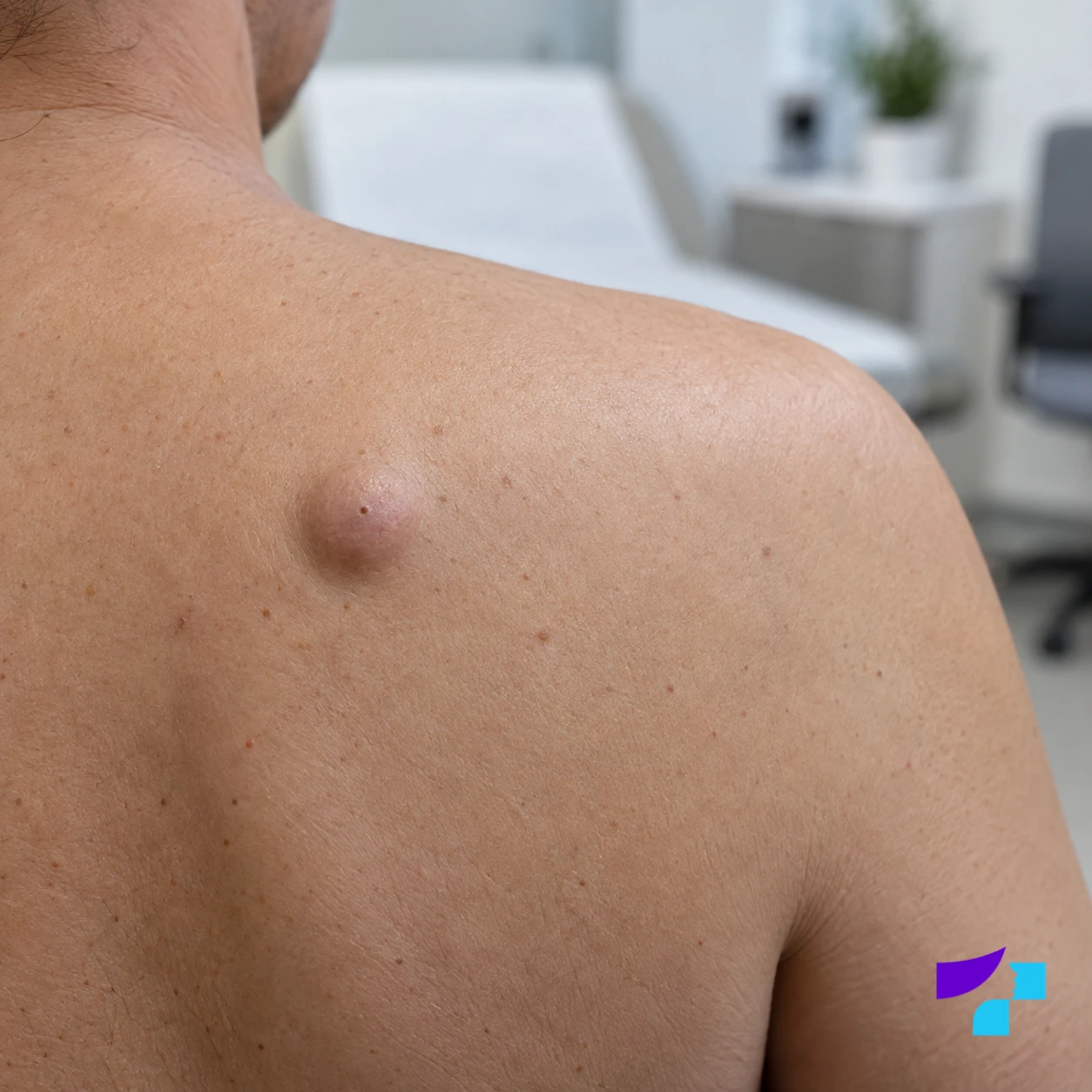
A non-inflamed skin or subcutaneous cyst often appears as a round, smooth and slowly growing lump. A small central punctum or opening may sometimes be visible.
Typical features may include:
- slow growth;
- a round or dome-shaped appearance;
- a smooth surface;
- usually no pain at first;
- mobility over deeper tissues;
- a darker central point or punctum;
- thick, white, yellowish or unpleasant-smelling contents;
- redness, warmth, swelling and pain when inflamed.
If a lesion grows rapidly, is very hard or fixed, bleeds, ulcerates, changes colour or does not heal, it should not be assumed to be an ordinary cyst.
Why do skin and subcutaneous cysts develop?
Skin cysts often develop when skin cells and keratin accumulate beneath the skin instead of being shed from its surface. This may sometimes be associated with changes in a hair follicle, skin irritation, acne, injury or inflammation. In many cases, no single cause can be identified.
Possible mechanisms include:
- blockage of a hair follicle or changes in its structures;
- accumulation of keratin;
- skin cells being implanted into deeper layers following an injury or surgery;
- blockage of a gland duct;
- skin inflammation or acne;
- genetic predisposition, particularly with pilar cysts;
- less commonly, congenital conditions or disorders associated with genetic syndromes.
Cysts are generally not caused by poor hygiene and are not contagious.
Common types of skin and subcutaneous cysts
| Type of cyst | Typical location | Main features |
|---|---|---|
| Epidermal or epidermoid cyst | Face, neck, back, chest and other parts of the body | A central punctum is often visible; the cyst is filled mainly with keratin |
| Pilar or trichilemmal cyst | Scalp | A smooth, firm nodule, usually without a central opening; several may be present |
| Steatocystoma | Chest, armpits, neck and groin | Several may be present; associated with sebaceous gland structures |
| Milium | Face, particularly around the eyes | A very small, white, keratin-filled cyst |
| Dermoid cyst | Various sites, often in the head or neck area | A congenital lesion that may contain various skin structures |
| Inflamed or ruptured cyst | Anywhere | Pain, redness, swelling and sometimes discharge |
Epidermal cyst
An epidermal or epidermoid cyst is one of the most common types of skin cyst. It is generally filled with keratin, a protein that forms skin, hair and nails. The cyst may occur on the face, neck, back, chest or elsewhere.
Many people call it a “sebaceous cyst”, but this term is often inaccurate. An epidermal cyst is not filled with sebum; it contains mainly keratin and skin-cell material.
Pilar cyst
A pilar or trichilemmal cyst most commonly develops on the scalp and is associated with hair-follicle structures. It is generally round and firm, and several cysts may be present at the same time. Some people have a familial predisposition.
Pilar cysts are generally benign, but they may enlarge, interfere with combing the hair, become painful or inflamed.
“Sebaceous cyst” or atheroma: why can the term be inaccurate?
In everyday language, many lumps beneath the skin are called an “atheroma” or “sebaceous cyst”. Medically, however, these terms may be inaccurate. They often refer to an epidermal cyst filled with keratin rather than sebum from a sebaceous gland.
An accurate diagnosis helps determine the lesion’s origin, the risk of inflammation, the most appropriate treatment and whether histological examination is needed after removal.
Cyst, lipoma, fibroma, boil, abscess or lymph node?
| Lesion | How does it usually feel or look? | What may help distinguish it? |
|---|---|---|
| Cyst | A round or oval lesion, sometimes with a central punctum | May contain keratin, fluid or a thick material and may become inflamed |
| Lipoma | A soft, mobile and generally painless fatty-tissue lesion | Usually has no central punctum and does not discharge contents |
| Fibroma or dermatofibroma | A firmer connective-tissue lesion or nodule | Usually has no cavity and does not discharge contents |
| Boil or furuncle | A painful, red and hot purulent inflammation | Often develops relatively quickly and is markedly painful |
| Abscess | A collection of pus in tissue | May cause severe pain, swelling, fever and feeling unwell |
| Enlarged lymph node | A lump in the neck, armpit, groin or another lymph-node area | May enlarge because of an infection or another illness |
If it is unclear what a lesion is, it should not be squeezed or punctured. The safest option is to have it examined by a doctor.
Cyst or lipoma: how can they be distinguished?
A cyst is a cavity containing material, whereas a lipoma is a benign fatty-tissue lesion. A lipoma is usually soft, mobile and painless. A cyst may be firmer, attached to the skin surface, have a central punctum and become inflamed.
It is easy to be mistaken on the basis of touch alone. If the lesion grows, hurts, becomes hard, lies deeper in the tissues or interferes with daily life, the doctor may recommend a soft-tissue ultrasound examination.
Cyst, boil, furuncle or abscess: how can they be distinguished?
A boil or furuncle is a purulent inflammation of a hair follicle and the surrounding tissue. An abscess is a collection of pus within tissue. An inflamed or ruptured cyst may resemble an abscess or boil.
A cyst without inflammation usually grows slowly and is painless. A boil or abscess is more often painful, red and hot and may be associated with pus or fever. Such a lesion must not be squeezed because the infection may spread.
Cyst or lymph node: when should you be concerned?
An enlarged lymph node may be felt in the neck, armpits, groin or elsewhere. Lymph nodes often enlarge during infections, but enlargement may sometimes be associated with a more serious condition.
Medical assessment is needed if the lump is hard, fixed, enlarging, persists for several weeks or is associated with fever, night sweats, unexplained weight loss or pronounced fatigue.
When can a cyst become inflamed or infected?
A cyst may become inflamed if its capsule ruptures and its contents irritate the surrounding tissue. It may also become infected if bacteria enter it. Inflammation and bacterial infection are not the same, although they may look similar.
Signs of inflammation or infection may include:
- redness;
- swelling;
- warm or hot skin;
- pain or tenderness;
- pus or unpleasant-smelling discharge;
- rapid enlargement of the lesion;
- fever, chills or feeling unwell.
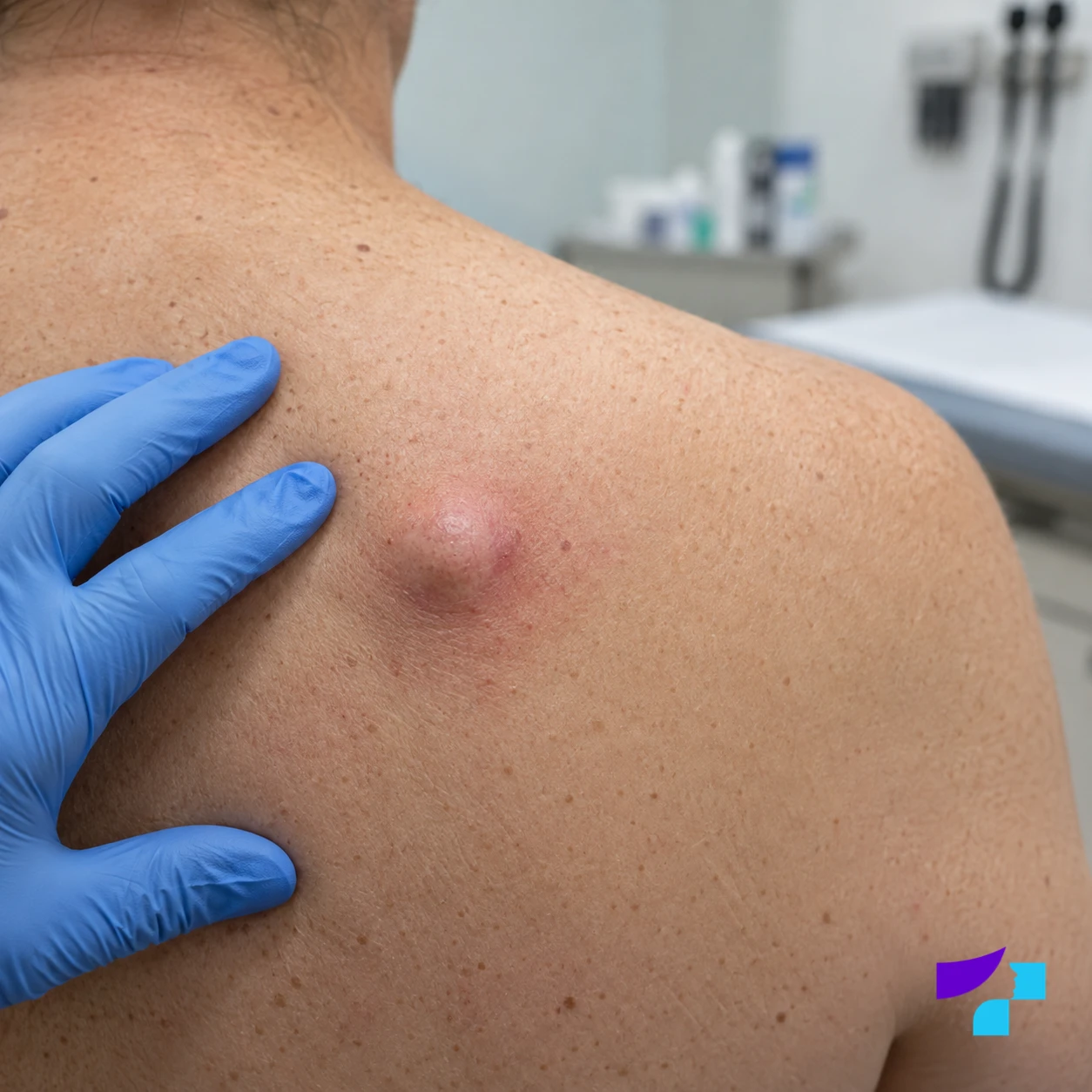
An inflamed cyst may become red, swollen, warm and painful. It should not be squeezed or punctured because this may worsen inflammation or spread infection.
In such cases, the cyst should not be squeezed or punctured. Incorrect treatment may spread infection and increase the risk of scarring.
Is a skin cyst dangerous?
Most skin cysts are benign and not life-threatening. They may remain for years without causing symptoms. A cyst can, however, become problematic if it becomes inflamed, infected, ruptures, grows, is repeatedly injured or interferes with daily life.
It is important to remember that not every lesion beneath the skin is a cyst. If the diagnosis is unclear, the lesion should be examined by a doctor.
Can a skin or subcutaneous cyst be malignant?
Ordinary skin cysts are almost always benign. In rare cases, however, a cyst-like lesion may prove to be another disease, and malignant changes may very rarely develop in the area of a cyst.
Particular attention should be paid to a lesion that grows rapidly, bleeds, ulcerates, does not heal, changes colour or shape, becomes hard and fixed, or is pigmented. Any new or changing pigmented skin lesion should be shown to a dermatologist.
How does a doctor diagnose a skin or subcutaneous cyst?
Diagnosis begins with a medical history and examination. The doctor asks how long the lesion has been present, whether it is growing, painful or inflamed, whether there has been a previous injury or discharge, and whether the patient or family members have had similar lesions.
The doctor assesses:
- size and shape;
- location;
- skin colour and surface;
- mobility;
- tenderness;
- the presence of a central opening or punctum;
- signs of inflammation;
- attachment to deeper tissues.
Examination alone is sometimes sufficient for diagnosis. Further tests may be needed if the lesion is unclear, deep or atypical.
When are dermoscopy, ultrasound or histology needed?
Dermoscopy examines a skin lesion under magnification with specialised lighting. It is particularly useful when a lesion is pigmented or changing, or needs to be distinguished from another skin lesion.
Soft-tissue ultrasound can help determine whether a lesion contains fluid or solid tissue, how deep it lies, whether it is well defined and whether it is connected to surrounding structures. It may help distinguish a cyst from a lipoma, lymph node or another subcutaneous lesion.
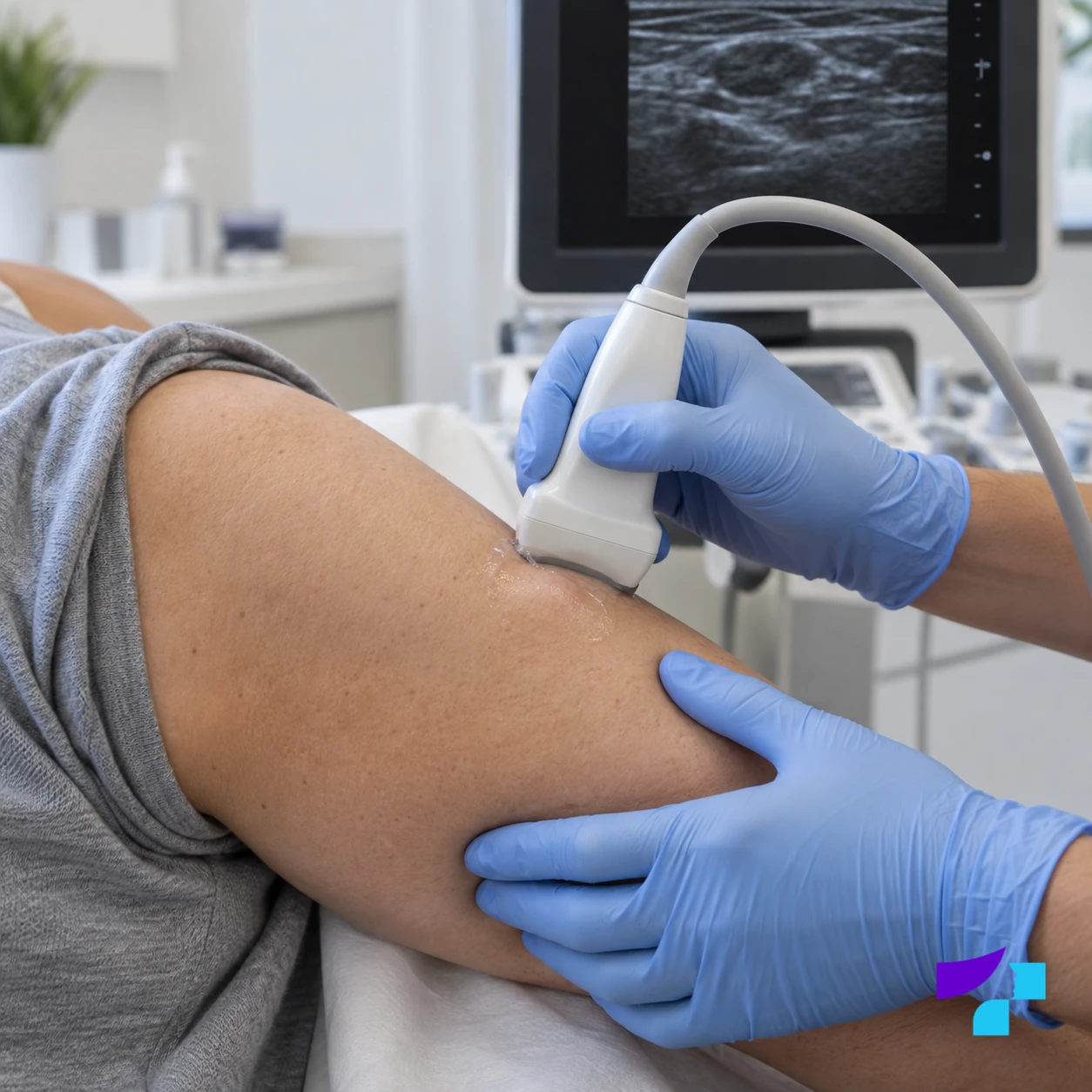
Soft-tissue ultrasound can help assess a subcutaneous lesion’s contents, depth and relationship to surrounding tissues and distinguish a cyst from other lesions.
Histological examination means examining the removed lesion under a microscope. It helps confirm the diagnosis, especially if the lesion is atypical or the diagnosis was not completely clear before the procedure.
How are skin and subcutaneous cysts treated?
Treatment depends on the type, size and location of the cyst, its symptoms and whether it is inflamed. Active treatment is not required in every case.
Possible approaches include:
- observation if the cyst is small, painless and unchanged and the diagnosis is clear;
- treatment of inflammation or infection;
- drainage if purulent material has accumulated or the lesion causes marked pain and pressure;
- surgical cyst removal if the cyst grows, causes discomfort, repeatedly becomes inflamed or the diagnosis needs to be confirmed;
- histological examination of the removed lesion when medically indicated.
Antibiotics may help treat a bacterial infection, but they do not remove the cyst capsule. The cyst may therefore remain or recur after the inflammation subsides.
When is cyst removal needed?
Cyst removal may be considered if the cyst:
- grows;
- hurts or becomes tender;
- repeatedly becomes inflamed or infected;
- discharges contents;
- catches on clothing or interferes with combing the hair or shaving;
- is in a visible location and causes significant cosmetic concern;
- cannot be diagnosed with confidence;
- recurs after previous drainage.
A cyst is often easier to remove electively while it is not inflamed. During inflammation, the capsule may be more difficult to separate completely from the surrounding tissue, and the risk of scarring or recurrence may increase.
What should not be done at home?
A skin or subcutaneous cyst should not be squeezed, punctured with a needle, cut, burned, scratched or emptied at home. Caustic substances, alcohol, lemon, baking soda, toothpaste, apple cider vinegar and other aggressive products should not be applied to the lesion.
Such actions can cause infection, spread inflammation, bleeding, scarring, changes in pigmentation and recurrence of the cyst. They may also delay an accurate diagnosis if the lesion is not actually a cyst.
Skin and subcutaneous cysts in specific patient groups
Children
A new or growing lesion in a child should be assessed carefully because not all skin and subcutaneous lumps in children are simple cysts. Some lesions may be congenital and require specific diagnostic evaluation.
During pregnancy
Pregnant patients should not use medicines or aggressive topical products without medical advice. A doctor should be consulted if a cyst is painful or inflamed or is located in the breast or genital area.
People with weakened immunity
Inflammation and infection may be more severe in people with diabetes, immunosuppression, cancer treatment or another cause of weakened immunity. In this situation, a painful, red or purulent cyst should be assessed without delay.
Common myths about skin and subcutaneous cysts
| Myth | Fact |
|---|---|
| A lump beneath the skin is always a cyst | It may also be a lipoma, fibroma, abscess, lymph node or another lesion. |
| A skin cyst is the same as a lipoma | A cyst is a cavity containing material, whereas a lipoma is a fatty-tissue lesion. |
| A skin cyst is the same as a boil | A boil is an infectious, purulent inflammation of a hair follicle and surrounding tissue. |
| A “sebaceous cyst” is always a true cyst of a sebaceous gland | The term often refers to an epidermal cyst filled mainly with keratin. |
| A skin cyst is contagious | An ordinary skin cyst is not contagious. |
| It is safe to squeeze a cyst | Squeezing may cause inflammation, infection, scarring and recurrence. |
| All cysts must be removed | Some small, painless and unchanged cysts can be monitored. |
| A cyst always goes away on its own | Many cysts persist because they have a capsule. |
| Antibiotics cure a cyst | They may treat a bacterial infection but do not remove the cyst capsule. |
| A painful cyst always means infection | Pain may also be caused by sterile inflammation, rupture or pressure on surrounding tissues. |
| A cyst develops because of poor hygiene | Cyst formation is generally not associated with inadequate hygiene. |
| A cyst on the face should be treated at home | It is safer to show a facial lesion to a doctor to avoid incorrect treatment and scarring. |
Summary
Skin and subcutaneous cysts are often benign, slowly growing lesions that may look like a lump beneath the skin. Such a lump is not always a cyst, however; it may also be a lipoma, fibroma, boil, abscess, enlarged lymph node or another lesion.
A cyst should not be squeezed or punctured at home. A new, growing, painful, inflamed, hard, fixed, pigmented, bleeding or otherwise unexplained lesion requires medical examination.
Important: this information is intended for educational purposes and does not replace a dermatologist consultation, diagnosis or treatment. Do not use prescription medicines, antibiotics, corticosteroids, caustic substances or invasive methods at home without medical advice. Children, pregnant patients, people with weakened immunity and anyone with a lesion on the face, head, neck, genital or breast area should consult an appropriate doctor.
References and authoritative sources
- DermNet: types, features and treatment of cutaneous cysts and pseudocysts
- DermNet: clinical features, diagnosis and treatment of epidermoid cysts
- DermNet: pilar or trichilemmal cysts
- UK National Health Service (NHS): skin cysts, their features and treatment
- Cleveland Clinic: features, diagnosis and treatment of epidermal inclusion cysts
- Mayo Clinic: symptoms and causes of epidermoid cysts
- Merck Manual: principles of diagnosis and treatment for cutaneous cysts
- US National Center for Biotechnology Information medical library: diagnosis and treatment of epidermoid cysts
