Lipoma is one of the most common benign subcutaneous fatty tissue growths. Patients often describe it as a “fatty lump under the skin”, a “soft lump under the skin” or simply a subcutaneous lump that slowly increases over time. In most cases, a lipoma is not dangerous, grows slowly and is soft, movable and painless.
However, it is not always possible to determine by touch alone whether a growth is truly a lipoma. Similar-looking changes may include an atheroma or epidermal cyst, an enlarged lymph node, an inflammatory lesion or, more rarely, another soft tissue tumour. Therefore, any new, growing, painful, firm or fixed lump under the skin should be assessed by a doctor.
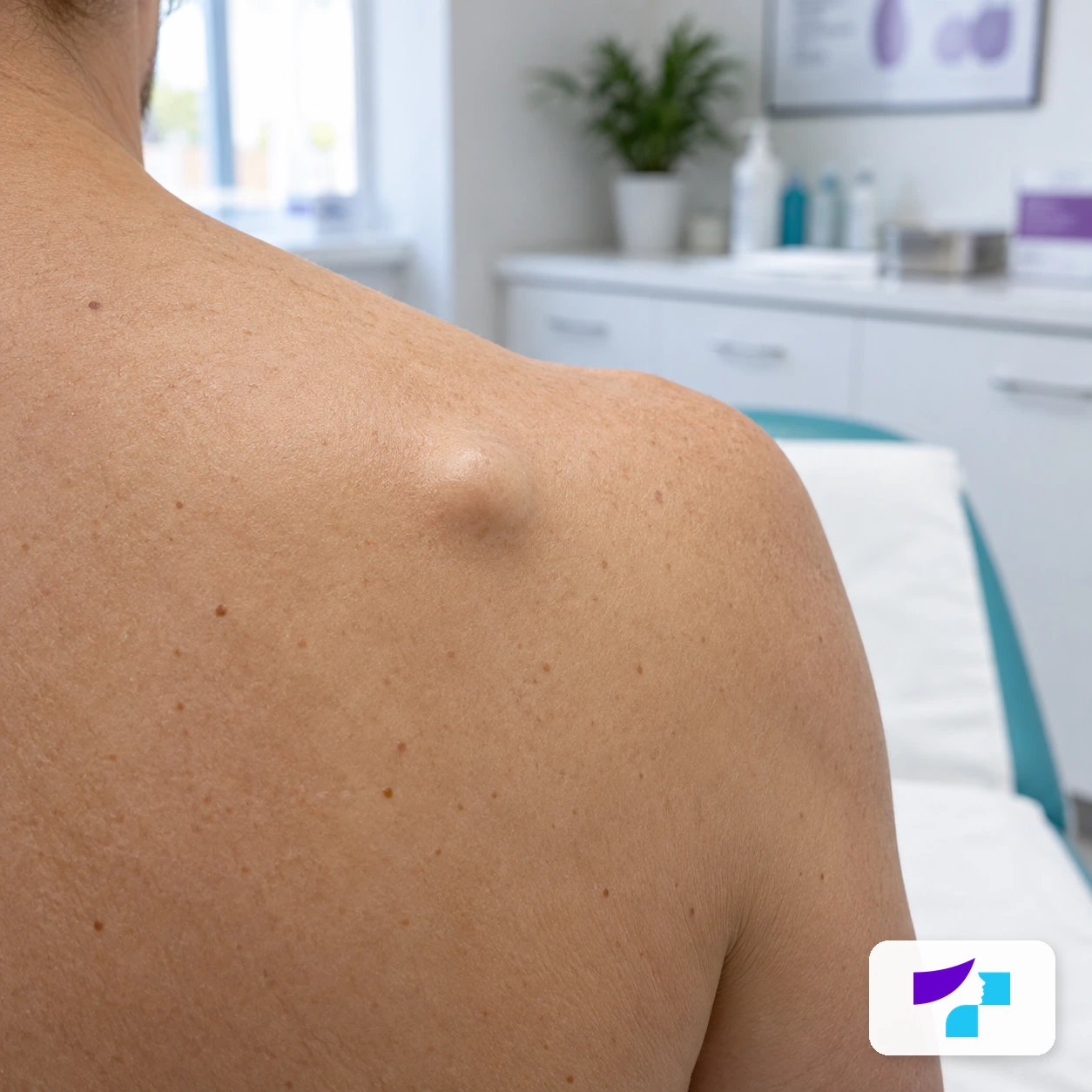
The visual shows a typical soft subcutaneous swelling that may resemble a lipoma. A diagnosis cannot be made reliably from appearance alone, so any new or changing lump should be assessed by a doctor.
In brief: the most important facts about lipomas
- A lipoma is usually a benign fatty tissue growth under the skin.
- It is most often soft, movable, round or oval and painless.
- Lipomas are more common on the back, neck, shoulders, arms, abdomen and thighs, but they may appear elsewhere as well.
- A lipoma usually grows slowly and does not always need to be removed.
- Lipoma removal may be needed if it grows, hurts, restricts movement, is rubbed by clothing or causes cosmetic discomfort.
- The diagnosis is made by a doctor; sometimes ultrasound, MRI, biopsy or histological examination is needed.
- A rapidly growing, firm, deep, fixed or painful subcutaneous lump should be assessed more carefully.
- A lipoma should not be squeezed, punctured, cut or treated with attempts to “dissolve” it at home.
- Creams, massage, compresses and weight loss usually do not make a lipoma disappear.
- After lipoma removal, a scar may remain, and the removed tissue may be sent for histological examination if needed.
What is a lipoma?
A lipoma is a benign growth made up of mature fat cells. It is most often located in the subcutaneous tissue, between the skin and deeper tissues, and is separated from surrounding tissues by a thin capsule. This is why a lipoma often feels movable when gently touched or pushed with the fingers.
In everyday language, a lipoma is often called a fatty lump under the skin. This description is understandable, but it is not enough for a diagnosis. Not every subcutaneous lump is a lipoma, and not every lump should simply be observed without a doctor’s assessment.
A lipoma is usually not cancer and in most cases does not turn into a malignant tumour. However, atypical, deep, large or rapidly growing soft tissue lesions should be assessed more carefully to rule out other diagnoses.
What does a lipoma look and feel like?
A typical lipoma is usually a soft, elastic lump under the skin. It may be round or oval, easily movable, usually painless and covered by unchanged skin. Its size may range from a few millimetres to several centimetres.
A lipoma on the back is often noticed accidentally, for example while washing or during massage. A lipoma on the neck, arm, shoulder or scalp may become noticeable sooner because these areas are more visible or are irritated by clothing. A lipoma on the abdomen or thigh may cause discomfort if it grows or is rubbed.
Sometimes a lipoma may be painful. This can happen if it presses on a nerve, is located near a joint, is repeatedly traumatised, or if it is an angiolipoma — a type of lipoma with more blood vessels that may be more sensitive.
Lipoma symptoms
Many people with a lipoma have no complaints. Most often, the patient notices only a palpable or visible lump under the skin.
Possible symptoms of a lipoma
- a soft lump under the skin;
- slow enlargement of the lump;
- a movable lesion under the skin;
- a feeling of pressure or fullness;
- discomfort if the lipoma is located in an area of friction;
- cosmetic discomfort;
- pain or tenderness in some cases;
- limited movement if the lump is large or located near a joint.
If a subcutaneous lump suddenly starts changing rapidly, becomes painful, firm or fixed, this is no longer a typical “calm” lipoma scenario and a medical assessment is needed.
When can a lump under the skin be dangerous?
Most subcutaneous lumps are benign, but there are signs that should not be ignored. A doctor should be consulted if:
- the lump grows rapidly, especially over weeks or months;
- it is firm or dense;
- it is fixed and seems attached to deeper tissues;
- it is painful or the pain increases;
- the skin over the lump becomes red, hot, swollen or inflamed;
- the lump is deep or larger than approximately 5 cm;
- tingling, numbness or movement problems appear;
- the lump returns after previous removal;
- the patient is not sure whether it is a lipoma, cyst, lymph node or something else.
These signs do not mean that the lump is definitely malignant, but they do mean that medical assessment is needed. If the lesion grows, changes or is unclear, skin lesion examination with dermoscopy or another diagnostic method recommended by a doctor may be useful.
Why do lipomas develop?
The exact reason why lipomas develop is not always known. In some patients, genetic predisposition plays a role — lipomas may also occur in other family members. They are more common in adults, especially in middle age, but may also occur in younger people.
It is important to understand that a lipoma is not simply “excess fat”. It is a separate fatty tissue growth. Therefore, weight loss usually does not make a lipoma disappear. A person may lose weight, while the lipoma remains in the same place.
Some people have multiple lipomas. This is called multiple lipomas or lipomatosis. In such cases, the doctor assesses whether this is an individual pattern, a familial tendency or, more rarely, a syndrome associated with lipomas.
Is a lipoma dangerous?
In most cases, a lipoma is not dangerous. It is a benign subcutaneous growth that usually grows slowly and does not pose a health risk. A lipoma usually does not turn into cancer.
However, self-diagnosis is not safe. In rare cases, a lesion that initially resembles a lipoma may turn out to be another soft tissue tumour. Particular attention should be paid to lesions that are deep, firm, fixed, larger than 5 cm, rapidly growing or painful.
The safest principle is this: if a new lump appears under the skin, it should first be shown to a doctor. After the diagnosis is clarified, it can be decided whether to observe or remove the lesion. If the appearance or behaviour of the lesion is suspicious, the doctor must also rule out other skin and subcutaneous diagnoses, including skin cancer or other soft tissue tumours.
Lipoma or another lesion?
| Lesion | How it usually looks or feels | What helps distinguish it | When to see a doctor |
|---|---|---|---|
| Lipoma | Soft, movable, usually painless subcutaneous mass | Doctor’s examination, sometimes ultrasound | If it grows, hurts, causes discomfort or the diagnosis is unclear |
| Atheroma or epidermal cyst | Round lump under the skin, often closer to the skin surface, sometimes with a central punctum | May become inflamed, red, painful or discharge material | If it enlarges, becomes inflamed, hurts or causes discomfort |
| Enlarged lymph node | Lump in the neck, armpit, groin or another lymph node area | Location, signs of infection, doctor’s examination | If it persists, grows, is firm or painless |
| Abscess or inflammatory lesion | Painful, red, hot, swollen lesion | Signs of inflammation, sometimes fever | Soon, especially if pain and redness increase |
| Fibroma | Firmer skin or subcutaneous lesion | Skin examination, dermoscopy, doctor’s assessment | If it grows, changes, bleeds, hurts or causes discomfort |
| Soft tissue tumour requiring further diagnostics | May be deep, firm, fixed, large or rapidly growing | Ultrasound, MRI, biopsy or histology | If the lesion is atypical, deep, larger than 5 cm or rapidly growing |

During the examination, the doctor assesses the lesion’s size, consistency, mobility, tenderness and the condition of the skin above it.
How is a lipoma diagnosed?
Lipoma diagnosis begins with a medical consultation. A dermatologist or surgeon examines and palpates the lesion, assessing its size, shape, consistency, mobility, tenderness and the skin above it. The doctor asks how long the lump has been present, whether it is growing, whether it hurts, whether there has been trauma and whether similar lesions are present elsewhere.
If the lesion is typical, the diagnosis can often be made clinically. If there is uncertainty, ultrasound can be useful. It helps determine where the lesion is located, how deep it is, what its structure is and whether it is more consistent with a lipoma, cyst or another lesion.
Deep, large or atypical lesions may require MRI. In some cases, the doctor may recommend a biopsy. If the lesion is removed, it may be sent for histological examination to confirm the diagnosis in the laboratory.
When should a lipoma be removed?
Not all lipomas need to be removed. Lipoma removal may be considered if:
- the lipoma grows;
- the lipoma hurts;
- it restricts movement;
- it is repeatedly traumatised or rubbed;
- it causes cosmetic discomfort;
- the lesion is in a visible area;
- the diagnosis is unclear;
- the lesion is atypical;
- the patient wishes to have it removed after medical assessment.
The decision to remove a lipoma is made together with the doctor. During the consultation, the doctor assesses whether the lesion can be safely removed as an outpatient procedure under local anaesthesia or whether additional investigations are needed first.
When can a lipoma simply be observed?
A lipoma can be observed if it is small, soft, movable, painless, stable and the doctor is confident that it is benign. Observation means that the patient monitors the size, sensation and changes of the lesion without active treatment.
If the lipoma begins to grow, becomes painful, changes in consistency or develops skin changes above it, the doctor should be consulted again.
How is lipoma removal performed?
Lipoma surgery, or lipoma excision, is a surgical procedure during which the growth is removed. Many small subcutaneous lipomas can be removed as an outpatient procedure under local anaesthesia. This means that only the specific area is numbed, while the patient remains awake during the procedure.
Lipoma removal usually involves the following steps
- The doctor assesses the lesion and confirms the surgical plan.
- The procedure area is disinfected.
- Local anaesthesia is administered.
- An incision is made in the skin over the lipoma.
- The lipoma is carefully separated from surrounding tissues and removed, preferably together with its capsule.
- The wound is closed with stitches.
- A sterile dressing is applied.
- The removed lesion is sent for histological examination if needed.
The duration of the procedure depends on the size, depth, location and number of lipomas. Removing a small superficial lesion is usually simpler, while larger or deeper lesions may require more extensive planning.
Preparation before lipoma removal
Before the procedure, the patient should tell the doctor about any medications they take, especially blood thinners, as well as allergies, previous reactions to anaesthesia, chronic illnesses and previous operations.
If the doctor recommends ultrasound or another investigation, it should preferably be performed before the procedure. This helps clarify the size, depth and relationship of the lesion to surrounding tissues.
On the day of the procedure, the doctor’s instructions regarding skin preparation, eating, medication and physical activity should be followed. If only local anaesthesia is planned, preparation is usually simpler than for larger operations.
Recovery after lipoma surgery
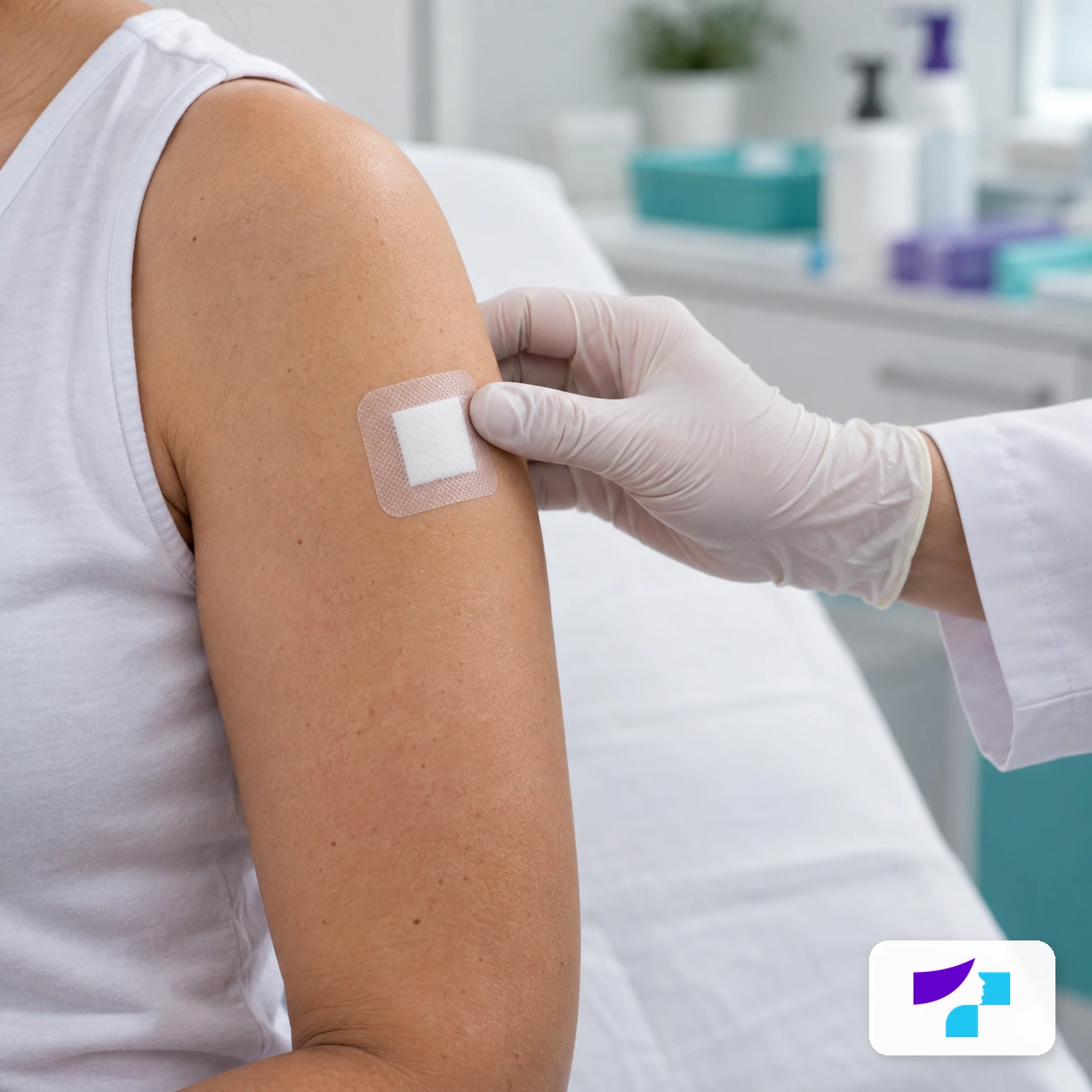
After lipoma removal, the wound is covered with a sterile dressing, and the patient should follow the doctor’s instructions for wound care and follow-up visits.
After lipoma removal, the patient can usually go home on the same day. There may be mild soreness, swelling, bruising or tightness in the procedure area. These sensations usually decrease within a few days.
During recovery, it is important to
- keep the dressing clean and dry according to the doctor’s instructions;
- avoid swimming or soaking the wound until the doctor allows it;
- avoid intensive physical activity if the lesion was large or located in a mobile area;
- avoid picking scabs or traumatising the wound;
- attend a follow-up visit or stitch removal if scheduled;
- contact the doctor if increasing redness, severe pain, discharge, fever or bleeding occurs.
Physical activity restrictions depend on the location of the lipoma and the extent of the procedure. For example, removal of a small lipoma from the back may require fewer restrictions than removal of a larger lesion from an area where the skin constantly moves or stretches.
Will there be a scar after lipoma removal?
Yes, any incision in the skin may leave a scar. Its appearance depends on the size and location of the lipoma, the length of the incision, individual skin characteristics, healing and aftercare.
The doctor plans the incision so that the scar is as gentle and unobtrusive as possible, but it is not correct to promise “no scar”. During the first months, the scar may be pinker or firmer, but over time it usually becomes lighter and less noticeable.
Can a lipoma be removed without surgery?
Complete lipoma removal is usually surgical. Creams, compresses, massage, supplements and “fat-dissolving” products usually do not cure a lipoma.
In some situations, other methods such as liposuction may be considered, but they are not suitable for all lipomas. If the lipoma capsule is not fully removed, the risk of recurrence may be higher. Therefore, the treatment approach should be chosen after a doctor’s examination and clarification of the diagnosis.
A lipoma should not be squeezed, punctured or removed at home. This may cause bleeding, infection, scarring and delayed diagnosis.
How much does lipoma removal cost?
The cost of lipoma removal is not the same in every case. It depends on:
- the size of the lipoma;
- its location;
- the number of lesions;
- the complexity of the procedure;
- the anaesthesia required;
- the need for histological examination;
- the extent of dressing changes and follow-up visits.
The exact price is best clarified during a consultation or in the clinic’s price list. The doctor can determine the cost more accurately after examining the lesion and assessing the necessary investigations.
Can a lipoma grow back after removal?
If a lipoma is removed completely, it usually does not return in the same place. However, recurrence is possible, especially if the lesion was not removed completely or if the patient has a tendency to develop multiple lipomas.
It is important to distinguish two situations: the same lipoma may recur in the same place, or new lipomas may develop elsewhere on the body. If a new subcutaneous lump appears, it should be assessed separately.
Possible risks after lipoma removal
Lipoma removal is usually a safe procedure, but like any surgical manipulation it may involve certain risks:
- pain or tenderness at the procedure site;
- bruising;
- swelling;
- bleeding;
- infection;
- fluid accumulation, or seroma;
- blood collection, or haematoma;
- scar formation;
- temporary or, more rarely, longer-lasting changes in sensation;
- incomplete removal;
- recurrence of the lesion.
To reduce risks, it is important to follow the doctor’s instructions regarding wound care, dressing changes, physical activity and follow-up visits.
What should not be done with a lipoma?
A lipoma should not be experimented with at home. Do not:
- squeeze a lipoma like a pimple;
- puncture or cut the lesion;
- massage the lesion aggressively;
- try to “dissolve” it with unverified products;
- use prescription ointments without a doctor’s instruction;
- ignore rapid growth or pain;
- delay the visit if the lesion is firm, fixed or deep;
- rely only on images found online.
If there is a lump under the skin, the safest step is a doctor’s assessment.
Common myths about lipomas
Myth: every soft lump under the skin is a lipoma
A cyst, inflammatory lesion or another soft tissue lesion may look similar. The diagnosis is made by a doctor.
Myth: a lipoma can be squeezed like a pimple
A lipoma is not a pimple. Squeezing will not help and may traumatise the tissues.
Myth: a lipoma will disappear if a person loses weight
A lipoma is a separate fatty tissue growth. Weight loss usually does not remove it.
Myth: a lipoma always needs surgery
If a lipoma is small, stable and does not cause discomfort, it can often be observed.
Myth: a lipoma never needs examination
If the lesion grows, hurts, is firm, deep or fixed, it should be assessed.
Myth: there will be no scar after lipoma removal
Any incision in the skin can leave a scar. Its appearance may be reduced by correct technique and aftercare, but it cannot be completely ruled out.
Myth: creams and compresses can dissolve a lipoma
There is no reliable evidence that creams or compresses can completely cure a lipoma.
Myth: a lipoma is always only a cosmetic problem
Sometimes a lipoma may hurt, press on a nerve, restrict movement or be diagnostically unclear.
What happens during a dermatologist or surgeon consultation?
During the consultation, the doctor examines and palpates the lesion. Its size, location, shape, mobility, consistency and the condition of the skin above it are assessed. The doctor asks how long the lesion has been present, whether it changes, whether it hurts and whether similar lesions have appeared before.
If necessary, the doctor may recommend ultrasound, MRI, biopsy or another investigation. During the consultation, it is discussed whether the lesion can be observed, whether lipoma removal is needed, what kind of scar may remain, how long recovery may take and whether the removed tissue should be sent for histological examination.
Summary
A lipoma is usually a benign fatty tissue growth located under the skin and is most often soft, movable and painless. Not all lipomas need to be removed — if the lesion is small, stable and not bothersome, observation after medical assessment may be enough.
However, not every lump under the skin is a lipoma. If the lesion grows rapidly, hurts, is firm, fixed, deep or diagnostically unclear, a medical assessment is needed and, if necessary, ultrasound, MRI, biopsy or histological examination. A lipoma should not be squeezed or treated at home. A timely dermatologist consultation helps choose the safest approach — observation or lipoma removal.
References and authoritative sources
- Mayo Clinic: patient information on lipoma symptoms and causes
- Cleveland Clinic: medically reviewed information on lipomas, diagnosis and treatment
- National Health Service (NHS): patient information on lipoma
- DermNet: dermatological overview of lipoma
- American Academy of Orthopaedic Surgeons (AAOS): lipoma and atypical lipomatous tumours
- Healthdirect Australia: patient information on lipoma and when to see a doctor
- Pauls Stradiņš Clinical University Hospital: description of lipoma excision
