A cyst is a closed cavity or sac-like structure within tissue that may contain fluid, keratin, air, pus, mucus or other material. Cysts can develop in the skin, subcutaneous tissue, ovaries, breasts, kidneys, liver, around joints and in other parts of the body.
Most cysts are benign. However, any new, growing, painful, inflamed, bleeding, ulcerated, pigmented or otherwise unexplained lump should always be evaluated by a doctor.
The main objective is not simply to get rid of a cyst, but to determine what the lump is, where it is located, whether there are signs of inflammation or infection, and whether observation, treatment or removal is required.
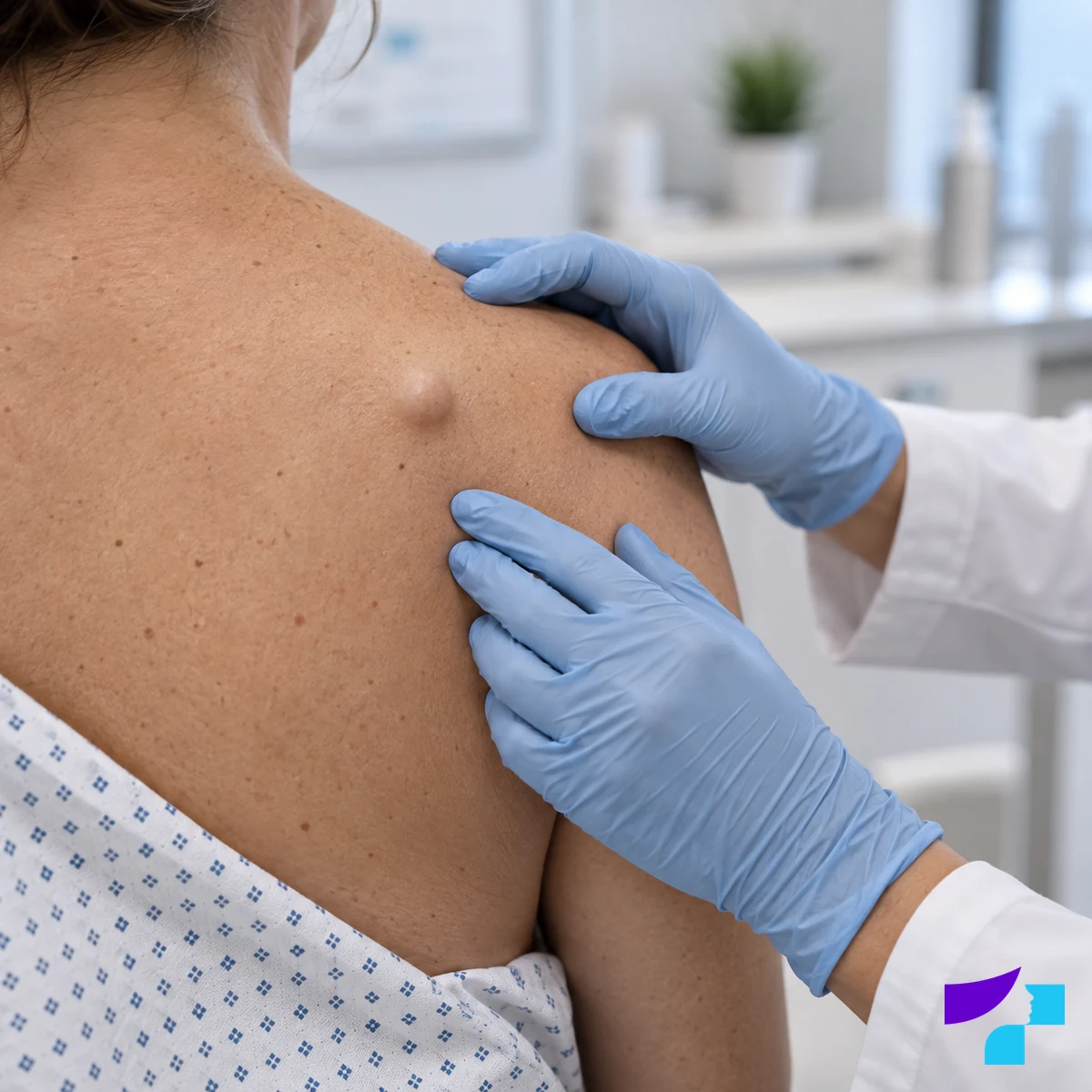
Examining a skin or subcutaneous lump helps the doctor assess its location, size, consistency and any signs of inflammation.
What is a cyst?
A cyst is a confined cavity within tissue. It can be thought of as a capsule or sac whose contents vary depending on the type of cyst. Skin cysts often contain keratin, a protein found in the skin, hair and nails. Cysts in internal organs are more commonly filled with fluid, mucus or other material.
A cyst may be very small and cause no symptoms, or it may become visible or palpable as a lump under the skin. Cysts in internal organs are often discovered incidentally during an ultrasound, computed tomography or magnetic resonance imaging scan.
The word “cyst” describes the structure of a lesion rather than a single diagnosis. A skin cyst, ovarian cyst, kidney cyst and ganglion cyst are not the same condition. They differ in their origin, potential risks, diagnosis and treatment.
There is therefore no single treatment suitable for every cyst. One cyst may be safely monitored, another may require an ultrasound examination, while a third may need to be removed and sent for histological examination.
What does a cyst look and feel like?
A skin or subcutaneous cyst often appears as a round, slowly growing lump beneath the skin. It may be skin-coloured, whitish or yellowish. If inflammation develops, the lump may become red and swollen. Some epidermal cysts have a small dark spot or central opening on their surface.
A cyst may feel soft, elastic or firm. It may move under the skin or be attached to the skin surface. A non-inflamed cyst is often painless, whereas an inflamed or infected cyst may become tender, painful, warm and red. Pus or unpleasant-smelling material may drain from it.
Why do cysts develop?
Cysts can develop for various reasons, and it is often impossible to identify one specific cause.
Common mechanisms involved in cyst formation include:
- blockage of a gland or its duct;
- blockage or structural changes in a hair follicle;
- skin cells being displaced into deeper tissue layers following an injury or surgery;
- accumulation of fluid within tissues;
- chronic inflammation;
- congenital developmental abnormalities;
- hormonal changes or changes in organ function;
- less commonly, infection, parasites, genetic syndromes or tumour-related processes.
Cysts are not usually a sign of poor hygiene. They can also develop in people who take good care of their skin and have no identifiable risk factor.
Common types of cysts
| Type of cyst | Typical location and features | Which doctor should you see? |
|---|---|---|
| Skin and subcutaneous cysts | A visible or palpable lump in or beneath the skin that may be painless, inflamed or repeatedly increase in size. | General practitioner, dermatologist or surgeon |
| Epidermal cysts | Often filled with keratin and may have a visible central opening. They can rupture, become inflamed and cause pain. | Dermatologist or surgeon |
| Pilar cysts | Usually firm, smooth lumps on the scalp. Several may occur at the same time, and they can run in families. | Dermatologist or surgeon |
| Ovarian cysts | May cause no symptoms or may lead to lower abdominal pain, pressure and changes in the menstrual cycle. | Gynaecologist |
| Breast cysts | Fluid-filled lumps in breast tissue. Any new breast lump should be medically examined. | General practitioner, gynaecologist, radiologist or breast specialist |
| Kidney or liver cysts | Often discovered incidentally during imaging. Their significance depends on their structure, size and associated symptoms. | General practitioner and the relevant specialist |
| Bartholin gland or vaginal cysts | May cause swelling, pain and discomfort when walking, urinating or having sexual intercourse. | Gynaecologist |
| Ganglion cysts | Most commonly develop near the wrist, another joint or a tendon and may restrict movement. | Orthopaedic surgeon or hand surgeon |
Skin and subcutaneous cysts
Skin and subcutaneous cysts are among the most common cysts for which patients consult a dermatologist, general practitioner or surgeon. They are usually benign and slow-growing, but they may cause cosmetic concerns, rub against clothing, become inflamed or repeatedly increase in size.
If a new lump appears under the skin and its nature is unclear, it should be examined by a doctor.
Epidermal cysts
An epidermal or epidermoid cyst is a common skin cyst that usually develops from the epidermis or structures of a hair follicle. It is often filled with keratin. These lesions are sometimes referred to as “sebaceous cysts”, but this term is often medically inaccurate because epidermal cysts are not filled with sebum.
An epidermal cyst may appear as a round lump beneath the skin, sometimes with a central spot. If the cyst ruptures or becomes inflamed, redness, swelling and pain may develop. Read more about its features, diagnosis and treatment in the article “Epidermal cysts”.
Pilar cysts on the scalp
Pilar or trichilemmal cysts arise from structures of the hair follicle and most commonly occur on the scalp. They tend to be firm, smooth and round, and several cysts may be present at the same time. Some people have a hereditary predisposition.
A lump on the scalp is not necessarily dangerous, but it should be evaluated if it grows, becomes painful or repeatedly inflamed, interferes with brushing the hair, or its nature is unclear. More information is available in the article “Pilar cysts”.
Cysts in internal organs
Ovarian cysts are evaluated by a gynaecologist. Some functional ovarian cysts disappear within a few menstrual cycles, while persistent, large, symptomatic or suspicious cysts require further investigation.
Any new palpable breast lump should be examined, even if it is later found to be a benign breast cyst.
Kidney and liver cysts are often discovered incidentally during an ultrasound, computed tomography or magnetic resonance imaging scan. Their significance depends on their size, structure, associated symptoms and other findings from the examination.
Can a cyst be dangerous?
Most cysts are benign and are not life-threatening. Nevertheless, even a benign cyst may become medically significant if it:
- grows or changes;
- causes pain;
- becomes inflamed or infected;
- ruptures or bleeds;
- presses on surrounding tissues, nerves or organs;
- is located in a sensitive area or an area exposed to repeated trauma;
- cannot be reliably distinguished from another type of lump.
Common skin cysts are usually not malignant. However, not every lump under the skin is a cyst. A lipoma, abscess, enlarged lymph node, hernia or tumour may be mistaken for a cyst. A reliable diagnosis cannot always be made from appearance or palpation alone.
How can an inflamed or infected cyst be recognised?
A cyst may become inflamed if its contents leak into surrounding tissues after it ruptures and trigger an inflammatory reaction. It may also become infected if bacteria enter the cyst. Inflammation does not always indicate a bacterial infection, so antibiotics are not required in every case.
Signs of inflammation or infection may include:
- redness and swelling;
- pain or marked tenderness;
- warm or hot skin over the lump;
- rapid enlargement of the cyst;
- pus or other discharge;
- fever, chills or feeling generally unwell.
If a cyst becomes painful, red, hot or rapidly increases in size, it should be examined by a doctor. Until the appointment, the skin may be kept gently clean and protected from friction.
What should you not do to a cyst?
A cyst should not be squeezed, pierced with a needle, cut, burned or treated with caustic substances. These actions can cause inflammation, infection, bleeding, scarring and changes in skin pigmentation.
Even if some of the contents can be squeezed out, the cyst capsule usually remains in the tissue. The cyst may therefore fill again. Self-treatment can also delay the correct diagnosis if the lump is not actually a cyst.
Antibiotics, corticosteroids or other prescription medicines should not be started without a doctor’s instructions.
Can a cyst disappear on its own?
Some cysts may become smaller or disappear without treatment. This can occur with some functional ovarian cysts and certain ganglion cysts. Many skin cysts, however, remain because they have a capsule.
If a cyst is small, painless, unchanged and the diagnosis is clear, a doctor may recommend monitoring it. If only the contents are released while the capsule remains in the tissue, the cyst may fill again.
How are cysts diagnosed?
Diagnosis begins with a medical history and physical examination. The doctor evaluates the location, size, shape, consistency, mobility and tenderness of the lump, any changes in the overlying skin and whether it may be connected to deeper tissues.
Depending on the type and location of the cyst, the following examinations may be required:
- examination by a dermatologist or another specialist;
- dermoscopy to evaluate a skin lesion;
- ultrasound examination;
- computed tomography or magnetic resonance imaging;
- puncture or aspiration;
- biopsy;
- histological examination of the removed tissue.
Ultrasound can help determine whether a lump contains fluid or solid tissue, how deep it is and whether it is connected to surrounding structures. Histological examination helps confirm the diagnosis when a lump has been removed, appears atypical or raises concern.
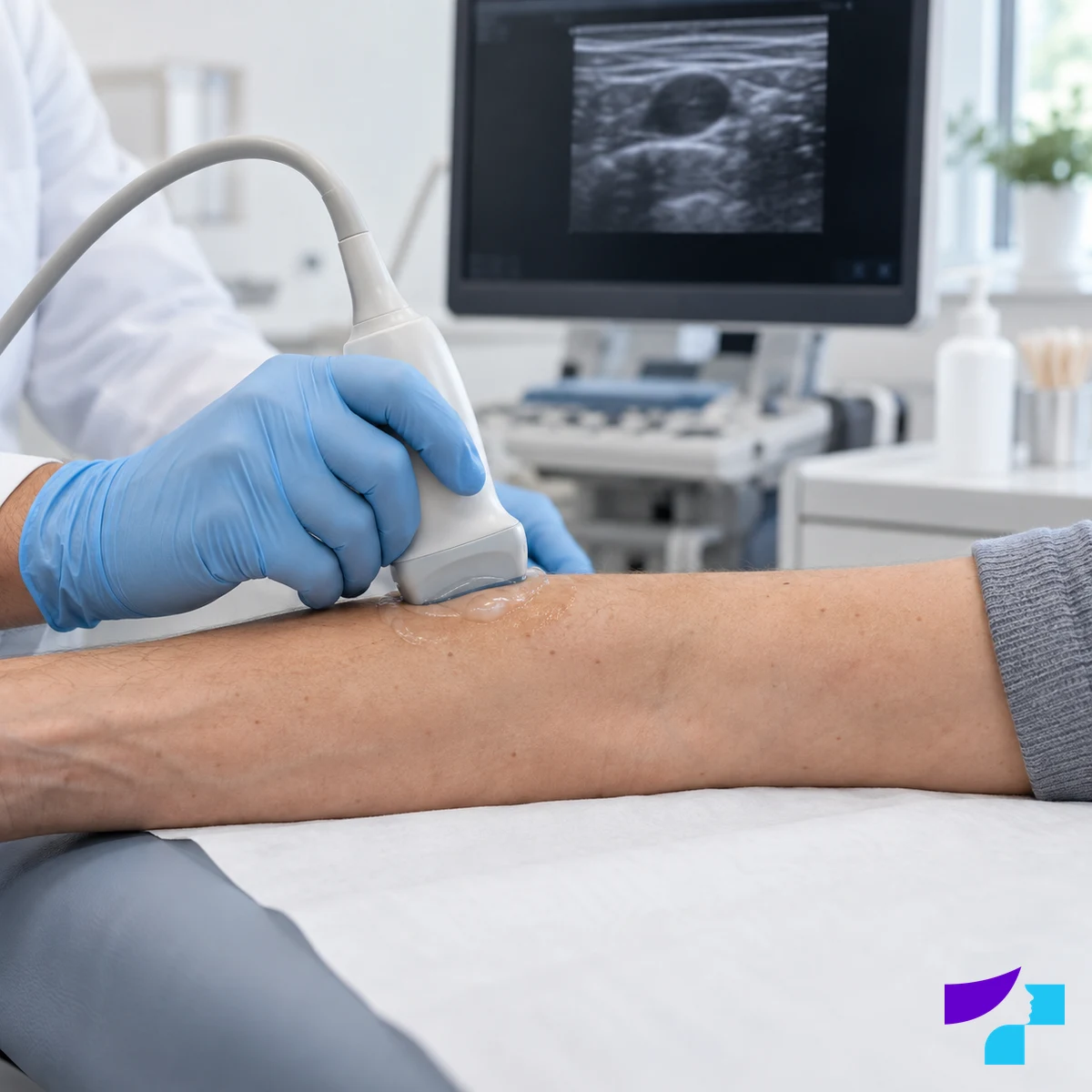
Ultrasound can help assess the contents, borders and depth of a lump, as well as its relationship with the surrounding tissues.
How are cysts treated?
Treatment depends on the type, location and size of the cyst, the symptoms it causes and the potential risk of complications.
Treatment options may include:
- observation;
- treatment of inflammation or infection;
- antibiotics if a doctor identifies a bacterial infection;
- drainage of a painful, pus-filled lesion;
- injections or other procedures appropriate for the specific type of cyst;
- planned surgical removal;
- additional examinations if the lump is deep, atypical or suspicious.
Antibiotics may help treat a bacterial infection, but they do not remove the capsule of a skin cyst. Once the inflammation has resolved, a doctor may therefore recommend planned removal of the cyst.
When is cyst removal necessary?
Cyst removal may be considered if the lump:
- is increasing in size;
- causes pain or a feeling of pressure;
- repeatedly becomes inflamed or infected;
- interferes with movement or everyday activities;
- is repeatedly irritated by clothing, a comb or shaving;
- causes significant cosmetic concern;
- cannot be reliably diagnosed by examination alone;
- needs to be examined histologically.
A skin cyst is often removed under local anaesthesia. To reduce the risk of recurrence, it is important to remove not only the contents but, whenever possible, the entire capsule. Read more about the procedure, anaesthesia, healing, scarring and risk of recurrence in the article “Cyst removal”.
Can a cyst come back?
Yes. A cyst may recur, particularly if only its contents have been drained while the capsule remains in the tissue. The risk of recurrence depends on the type and location of the cyst, previous inflammation or rupture, and whether the capsule was removed completely.
Even after one cyst has been removed successfully, a new cyst may develop elsewhere in the future.

During the consultation, the doctor explains the examination results and recommends monitoring, further diagnostic tests or the most appropriate treatment.
When should you see a doctor?
| Sign or situation | Recommended action |
|---|---|
| A new or unexplained lump | Make an appointment with a general practitioner, dermatologist or the relevant specialist. |
| The lump grows rapidly or becomes hard or fixed | Arrange a medical consultation without delay. |
| The cyst is painful, hot, red, swollen or draining pus | See a doctor because inflammation or infection may be present. |
| Fever, chills or feeling markedly unwell | Seek medical help promptly. |
| The lump bleeds, ulcerates, changes colour or does not heal | A prompt medical examination, particularly by a dermatologist, is required. |
| A new lump in the breast, genital area or deeper tissues | Consult the appropriate specialist rather than waiting to see whether it disappears. |
More urgent evaluation is also required if the lump is associated with unexplained weight loss, marked weakness, bleeding or other general symptoms.
Cysts in children, pregnant women and people with weakened immunity
Children
Any new or growing lump in a child should be evaluated carefully. Some cysts identified during childhood are congenital lesions that may require specific diagnostic tests or treatment.
During pregnancy
Pregnant women should not use medicines or aggressive topical treatments without medical advice. A medical consultation is required if a cyst becomes inflamed or painful, or if it is located in the breast or genital area.
Weakened immunity
Infections may be more severe in people with diabetes, immunosuppression, ongoing cancer treatment or another cause of weakened immunity. In these cases, a painful, red or pus-filled cyst should be evaluated without delay.
Summary
A cyst is a confined cavity within tissue rather than one specific disease. It may occur in the skin, subcutaneous tissue or internal organs. Most cysts are benign, but a new, growing, painful, inflamed, bleeding, pigmented or unexplained lump should not be ignored.
Medical evaluation is the safest approach because appearance or palpation alone cannot always reliably distinguish a cyst from a lipoma, abscess, enlarged lymph node or tumour.
Important: this information is intended for educational purposes and does not replace a dermatologist consultation, diagnosis or treatment. Do not use prescription medicines, antibiotics, corticosteroids, caustic substances or invasive home treatments without medical advice.
References and authoritative sources
- Cleveland Clinic: types, causes, diagnosis and treatment of cysts
- UK National Health Service (NHS): skin cysts, their symptoms and treatment
- Mayo Clinic: symptoms and causes of epidermoid cysts
- DermNet: clinical features, complications and treatment of epidermoid cysts
- DermNet: pilar or trichilemmal cysts
- DermNet: types of cutaneous cysts and pseudocysts
- US National Center for Biotechnology Information medical library: diagnosis and treatment of epidermoid cysts
- US National Institute of Diabetes and Digestive and Kidney Diseases (NIDDK): simple kidney cysts
- American Academy of Orthopaedic Surgeons: ganglion cysts of the wrist and hand
