Cyst removal is a medical procedure in which a doctor treats or removes a cystic lesion. Patients usually use this term to mean the removal of a skin or subcutaneous cyst by a dermatologist or surgeon. Small skin cysts are generally removed as an outpatient procedure under local anaesthesia, allowing the patient to go home the same day.
Not every cyst needs to be removed. A small, painless and unchanged cyst may sometimes only require monitoring. Removal is generally considered if the cyst grows, causes pain, repeatedly becomes inflamed, interferes with everyday activities, is regularly irritated, causes cosmetic concern or cannot be diagnosed with confidence.
A cyst should not be squeezed, pierced or drained at home, as this may cause inflammation, infection, scarring and recurrence.
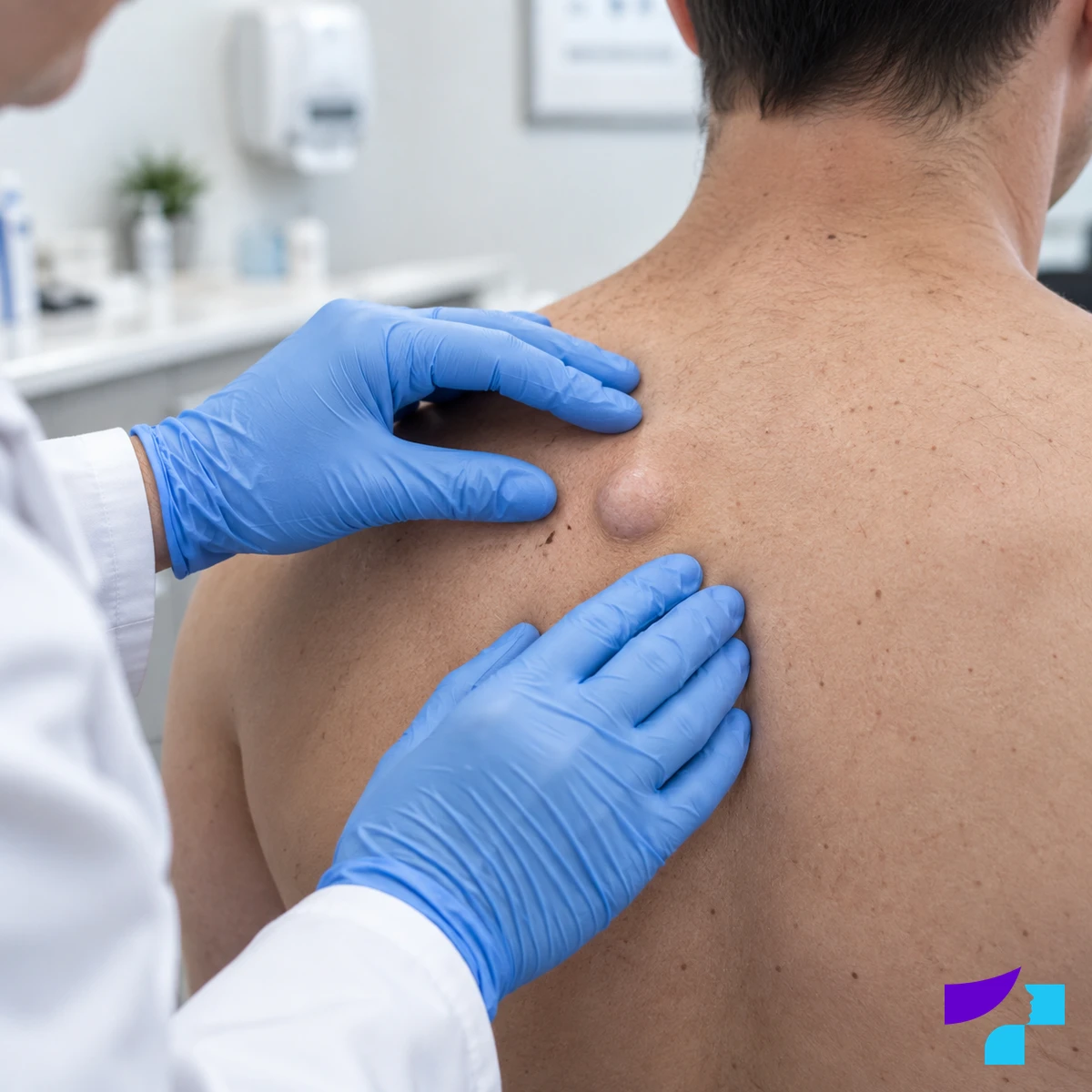
Before removing a cyst, the doctor assesses its size, location and mobility, changes in the overlying skin and any signs of inflammation.
Does this article apply to my cyst?
This article focuses mainly on the removal of skin and subcutaneous cysts. Cysts in different parts of the body are treated differently, so the first step is to determine what type of cyst is present.
| Type of cyst | Which specialist usually evaluates it? | Possible treatment |
|---|---|---|
| Skin or subcutaneous cyst | Dermatologist, surgeon or general practitioner | Monitoring, treatment of inflammation, drainage or surgical removal under local anaesthesia |
| Epidermal cyst | Dermatologist or surgeon | Removal together with the capsule if the cyst causes problems, grows or repeatedly becomes inflamed |
| Pilar cyst | Dermatologist or surgeon | Surgical removal if the cyst grows, causes problems or becomes inflamed |
| Ovarian cyst | Gynaecologist | Monitoring, ultrasound follow-up or surgery in certain circumstances |
| Bartholin gland cyst | Gynaecologist | Drainage, marsupialisation or another treatment selected by the gynaecologist |
| Ganglion cyst | Orthopaedic surgeon, hand surgeon or another relevant specialist | Monitoring, aspiration or surgery depending on the symptoms and location |
| Kidney, liver or breast cyst | The relevant specialist | Diagnostic imaging, monitoring or treatment appropriate to the affected organ |
If a cyst is located in an ovary, breast, kidney, liver or the genital area, this article may help explain the general principles, but the relevant specialist must determine the specific investigation and treatment plan.
What is cyst removal?
Cyst removal may refer to several different treatments. For skin and subcutaneous cysts, a doctor may recommend monitoring, treatment of inflammation or infection, drainage or surgical excision.
During drainage, the doctor opens the cyst and removes its contents. During complete surgical removal, the doctor aims to remove the entire lesion together with its capsule or wall. These methods are not equivalent: after drainage, the capsule generally remains in the tissue and the cyst may fill again.
What is cyst enucleation?
Cyst enucleation is a term used in surgery and gynaecology. It means carefully separating the cyst from the surrounding tissue and removing it. For skin cysts, the terms “excision”, “surgical excision” or “surgical removal” are more commonly used. The aim is to remove both the contents and the cyst capsule.
If the capsule remains in the tissue, it may fill again and the risk of recurrence increases.
When should a cyst be removed?
Cyst removal may be considered if the lesion:
- grows or changes;
- causes pain, itching, tenderness or pressure;
- repeatedly becomes inflamed or infected;
- becomes red or swollen, or begins to drain pus;
- rubs against clothing, a comb, a razor or jewellery;
- interferes with movement or everyday activities;
- is in a visible area and causes significant cosmetic concern;
- has previously been drained and has returned;
- cannot be reliably distinguished from another skin or subcutaneous lesion;
- needs to be examined histologically.
If a cyst is small, painless and unchanged, and the diagnosis is clear, removal may not be necessary.
When can a cyst be monitored?
Monitoring may be appropriate if the cyst causes no symptoms, is not growing or inflamed and the doctor is confident about the diagnosis. The cyst is left untreated while its size, appearance and any associated sensations are observed.
A doctor should reassess it if the cyst begins to grow rapidly, becomes painful, red or warm, starts to drain, changes shape or raises doubt about whether it is a benign lesion.
Cyst removal, excision and drainage: what is the difference?
| Method | What is done? | When is it used? | What should you know? |
|---|---|---|---|
| Monitoring | The cyst is not operated on, but any changes are observed | When it is small, painless and unchanged and the diagnosis is clear | The cyst may remain, enlarge or become inflamed later |
| Drainage | The cyst is opened and its contents are removed | When pus has accumulated or the contents cause significant pressure and pain | The capsule generally remains, so the cyst may return |
| Excision | The cyst is removed together with its capsule | When more definitive treatment or confirmation of the diagnosis is needed | The risk of recurrence is generally lower, but a scar remains |
| Histological examination | The removed lesion is examined under a microscope in a laboratory | When the diagnosis needs to be confirmed or the lesion appears atypical | This is a diagnostic and safety measure, not a separate treatment for the cyst |
How is a skin or subcutaneous cyst removed?
A small skin or subcutaneous cyst is generally removed as an outpatient procedure under local anaesthesia. The technique may vary depending on the type, size and location of the cyst and whether inflammation is present.
The procedure usually includes the following steps:
- the doctor examines the lesion, reviews relevant health information and selects the most appropriate approach;
- the skin is disinfected and prepared for the procedure;
- a local anaesthetic is injected around the cyst;
- once the area is numb, an incision is made in the skin;
- the doctor attempts to remove the cyst together with its capsule;
- depending on its size, the wound is closed with stitches and covered with a dressing;
- when medically indicated, the removed lesion is sent for histological examination;
- the patient receives instructions about wound care and follow-up.
The procedure often takes approximately 30–60 minutes, but it may be shorter or longer depending on the size and location of the cyst, inflammation and the complexity of the procedure.
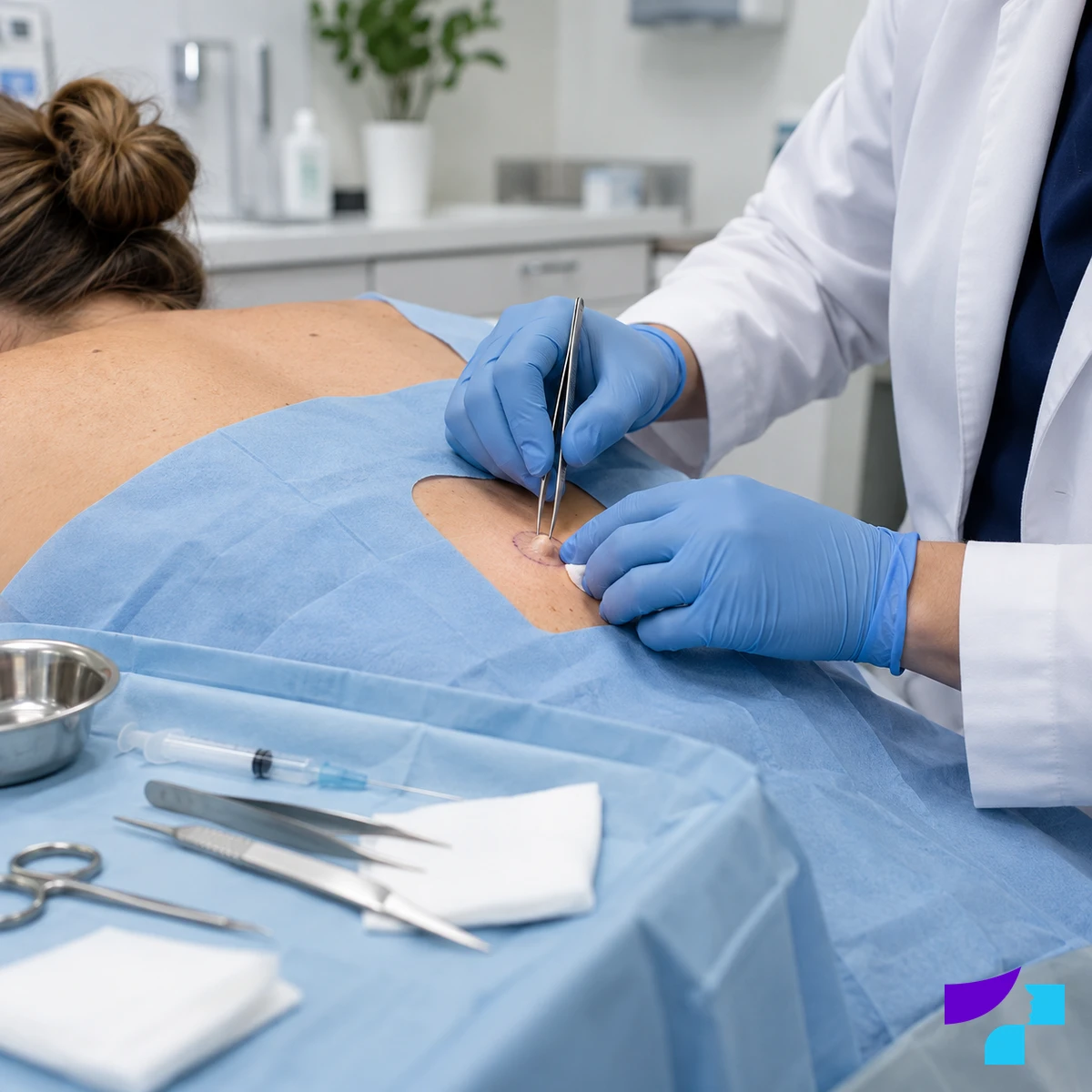
A small skin or subcutaneous cyst is generally removed as an outpatient procedure under local anaesthesia, using sterile technique and aiming to remove the cyst capsule.
Is cyst removal painful?
Local anaesthesia is used during the procedure. There may be a brief sting or burning sensation when it is injected. After the area is numb, sharp pain should not be felt, although pressure, pulling or movement may still be noticeable.
Once the anaesthetic wears off, mild pain, tenderness, swelling or a pulling sensation may occur. The doctor will explain which pain medicines may be used and when the clinic should be contacted.
How should you prepare for cyst removal?
Before the procedure, tell the doctor about:
- all medicines and dietary supplements you take;
- anticoagulants and other medicines that affect blood clotting;
- allergies, particularly to anaesthetics or dressing materials;
- diabetes;
- immunosuppression or cancer treatment;
- bleeding disorders;
- previous problems with wound healing or excessive scarring;
- pregnancy or possible pregnancy.
Special preparation is often unnecessary before the removal of a small skin cyst, but the individual instructions provided by the doctor should be followed. Do not stop prescribed medicines unless a doctor instructs you to do so.
What happens if a cyst is inflamed or infected?
An inflamed cyst may be red, warm, swollen and painful. Keratin, pus or unpleasant-smelling material may drain from it. A ruptured cyst can cause a marked inflammatory reaction even without a bacterial infection, so antibiotics are not required in every case.
Depending on the findings, the doctor may recommend:
- drainage if pus has accumulated or there is significant pressure;
- antibiotics if a bacterial infection is confirmed or reasonably suspected;
- another anti-inflammatory treatment;
- planned cyst removal after the inflammation has settled.
Antibiotics can treat a bacterial infection, but they do not remove the cyst capsule. The cyst may therefore remain or recur after the acute inflammation has been treated.
Can an inflamed cyst be removed immediately?
Sometimes this is possible, but it is not always the most appropriate option. If a cyst is severely inflamed, ruptured or filled with pus, complete removal of the capsule may be more difficult. Inflamed tissue is more fragile, and the risks of bleeding, infection, a more noticeable scar and recurrence may be higher.
The doctor may therefore use a two-stage approach: first treating the acute inflammation or draining the lesion, and then planning complete removal later.
Can a skin cyst be removed with a laser?
Lasers are used in dermatology to treat various skin lesions, but they are not a universal solution for all cysts. If the aim is to reduce the risk of recurrence, removing the cyst capsule is important. If the capsule remains, the cyst can develop again.
Laser treatment, electrosurgery or cryotherapy may be suitable for certain superficial skin lesions, but they are not always appropriate for a true subcutaneous cyst. The doctor selects the most suitable method after establishing the diagnosis.
How should the wound be cared for after cyst removal?
The wound should be cared for according to the doctor’s instructions. These may vary depending on the location and size of the wound, the type of stitches and the dressing.
General recommendations may include:
- keeping the dressing clean and dry for as long as instructed;
- not soaking the wound in a bath, swimming pool or sauna until permitted;
- not touching the wound with unwashed hands;
- not picking at scabs;
- avoiding friction, pressure and movements that stretch the wound;
- following the instructions for washing and changing the dressing;
- attending follow-up and stitch-removal appointments when required.
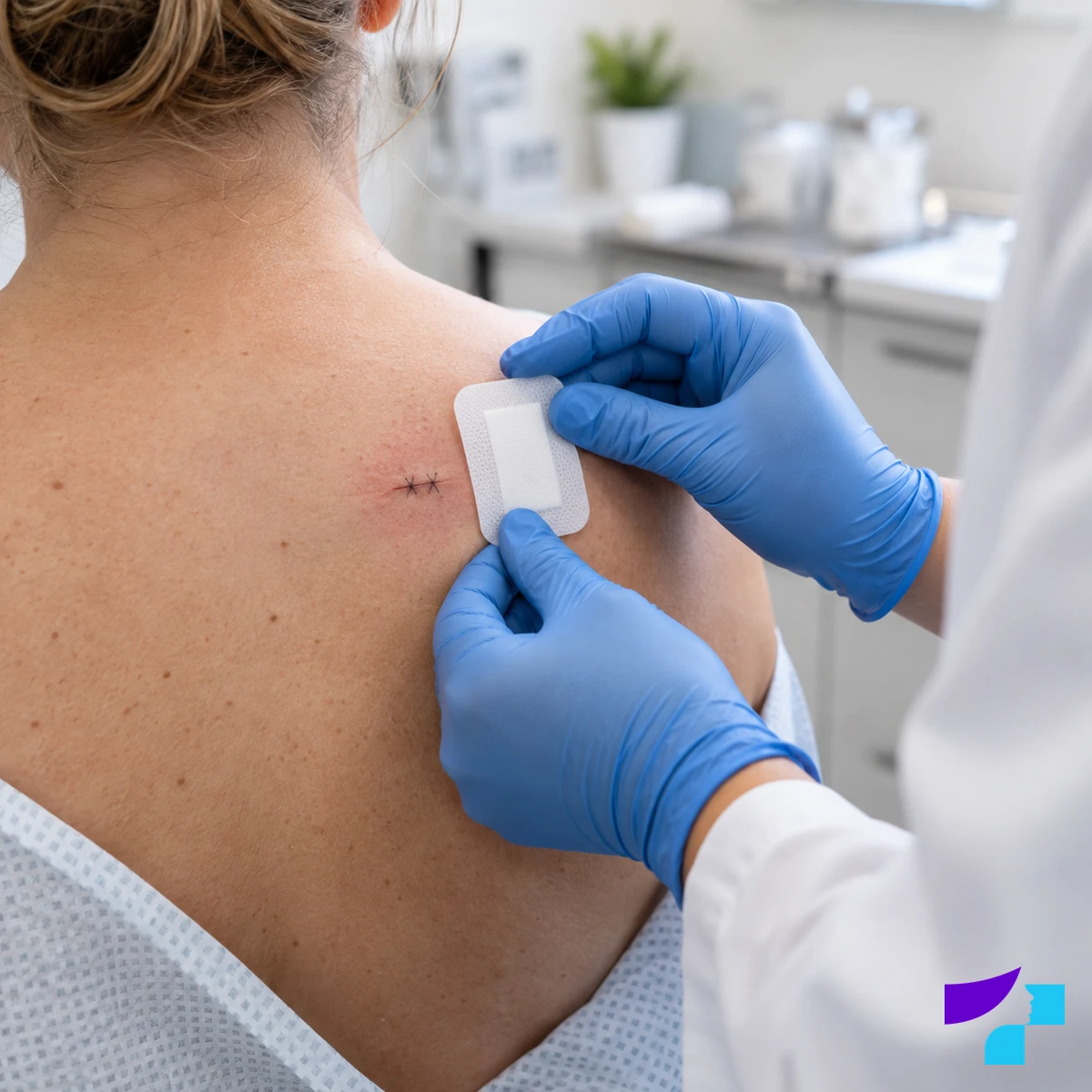
After the cyst has been removed, the wound is closed and dressed as appropriate for the procedure; the doctor's instructions on hygiene, dressing changes and activity restrictions should then be followed.
How long does healing take?
Healing time depends on the size and location of the cyst, inflammation, the way the wound was closed, the patient’s health and wound care. A small wound may heal within several days to a few weeks, while a larger wound may take longer. Scar maturation continues for several months.
Healing may be slower in smokers and in people with diabetes, circulatory problems, weakened immunity or an inflamed cyst.
When are the stitches removed?
The timing of stitch removal depends on the location of the wound, its healing and the suture material used. Stitches are often removed after approximately 7–14 days, but the doctor determines the precise timing. Absorbable stitches do not need to be removed.
Do not remove stitches yourself. Removing them too early or too late may affect healing and the appearance of the scar.
When can you wash, exercise and return to work?
Specific restrictions should be discussed with the doctor, as they depend on the location and size of the wound, the stitches and the demands of daily activities. After a small procedure, many patients can return to light work on the same or following day.
Heavy physical work, intense exercise, saunas, swimming and soaking the wound may need to be postponed. Restrictions may last longer if the cyst was removed from an area that moves or stretches frequently, such as the back, neck, shoulder or near a joint.
Will cyst removal leave a scar?
Any procedure involving an incision in the skin can leave a scar. Its size and appearance are affected by:
- the size and depth of the cyst;
- the location of the cyst;
- previous inflammation, infection or rupture;
- the direction and length of the incision;
- the wound-closure technique;
- an individual tendency to develop hypertrophic or keloid scars;
- wound care and mechanical strain;
- sun exposure during healing.
A scar may be less noticeable if the cyst is removed electively before it becomes inflamed and the patient follows the doctor’s instructions. However, it is not appropriate to promise cyst removal without any scar.
Can a cyst return after removal?
Yes, a cyst can recur. Recurrence is more likely if:
- only drainage was performed;
- only the contents of the cyst were removed;
- the capsule was not removed completely;
- the cyst had previously ruptured or was severely inflamed;
- its anatomical location made complete removal difficult.
Complete removal of the cyst together with its capsule generally reduces the risk of recurrence, but it cannot guarantee that the cyst will never return. New cysts may also develop elsewhere.
When is histological examination necessary?
During histological examination, the removed lesion is examined under a microscope in a laboratory. This helps confirm the diagnosis and exclude other types of lesion.
Histology is particularly important if:
- the diagnosis was not completely clear before the procedure;
- the lesion appears atypical;
- it is growing rapidly;
- it repeatedly becomes inflamed or recurs;
- it bleeds, ulcerates or does not heal;
- it is hard, fixed or deep;
- the doctor suspects that it is not a typical cyst.
The doctor decides whether to send the material for histological examination based on the lesion’s features, the findings during the procedure and the clinic’s practice.
What are the possible complications?
Cyst removal is generally a safe procedure, but any surgical intervention can involve risks.
Possible complications include:
- bleeding;
- bruising or a haematoma;
- wound infection;
- pain or swelling;
- separation of the wound edges;
- a visible, thickened or painful scar;
- temporary or, less commonly, lasting changes in skin sensation;
- recurrence of the cyst;
- the need for another procedure.
The risk of complications may be higher if the cyst is large, deep, ruptured, inflamed, infected or located in an anatomically complex area.
What affects the cost of cyst removal?
The cost of cyst removal may depend on:
- the consultation and diagnostic assessment;
- the size, depth and location of the cyst;
- the presence of inflammation or infection;
- the complexity and duration of the procedure;
- the type of anaesthesia;
- histological examination;
- dressing changes and follow-up visits;
- stitch removal;
- the specialist’s and clinic’s price list.
From a medical perspective, the lowest price is not the only consideration. An accurate diagnosis, an appropriate method, a safe procedure and good wound care are more important.
Which doctor should you see for cyst removal?
Skin and subcutaneous cysts are generally evaluated by a dermatologist, surgeon or general practitioner. If it is unclear whether a lump is a cyst, a dermatologist consultation is an appropriate starting point. A lesion on the face, scalp, neck, genital area or breast, or one located in deeper tissues, may require another specialist.
If it is not a skin or subcutaneous cyst:
- ovarian, vaginal and Bartholin gland cysts are evaluated by a gynaecologist;
- kidney cysts are evaluated by a general practitioner, urologist or nephrologist;
- breast lumps are evaluated by a general practitioner, gynaecologist, radiologist or breast specialist;
- ganglion cysts are evaluated by an orthopaedic surgeon, hand surgeon or another relevant specialist;
- liver cysts are evaluated by a general practitioner, gastroenterologist, hepatologist or surgeon.
What should you not do at home?
Do not squeeze, pierce with a needle, cut, burn, scratch or attempt to drain a cyst yourself. Do not apply caustic substances, alcohol, lemon, baking soda, toothpaste, apple cider vinegar or other aggressive products to it.
These actions can cause inflammation, infection, bleeding, scarring, changes in pigmentation and a delay in diagnosis if the lesion is not actually a cyst.
When should you contact a doctor after the procedure?
Contact a doctor after cyst removal if:
- pain becomes worse instead of gradually improving;
- redness spreads or the wound becomes hot and markedly swollen;
- pus or an unpleasant smell appears;
- you develop a fever or chills;
- the wound continues to bleed or opens;
- the stitches become loose or break;
- healing appears unusual;
- a lump reappears in the same place.
Seek medical help promptly if bleeding is heavy, your general condition deteriorates rapidly or signs of infection are progressing.
Common myths about cyst removal
| Myth | Fact |
|---|---|
| A cyst can be safely squeezed at home | Squeezing can cause inflammation, infection, scarring and recurrence. |
| Drainage is the same as removal | Drainage removes the contents but generally does not remove the capsule. |
| Antibiotics cure a cyst | They can treat a bacterial infection but do not remove the cyst capsule. |
| All cysts must be removed | Some small, painless and unchanged cysts can be monitored. |
| A cyst can never return after removal | Recurrence is possible, particularly if the capsule was not removed completely. |
| Cyst removal is always very painful | Local anaesthesia generally prevents sharp pain during the procedure. |
| A cyst can be removed without leaving a scar | Any incision in the skin can leave a scar. |
| An inflamed cyst is always excised immediately | Sometimes the inflammation must be treated or the cyst drained first. |
| Cyst removal always requires general anaesthesia | Small skin cysts are often removed under local anaesthesia. |
| Laser treatment is always the best option | For a true cyst, removal of the capsule is important, and the doctor selects the most suitable method. |
| Home remedies can replace the procedure | Aggressive home remedies can worsen inflammation and delay the correct diagnosis. |
Summary
Cyst removal is most often an outpatient procedure for a skin or subcutaneous lesion performed under local anaesthesia. A cyst may be monitored if it is small, painless and unchanged and the diagnosis is clear. Removal may be considered if the lesion grows, causes pain, repeatedly becomes inflamed, interferes with everyday life or cannot be diagnosed reliably.
Drainage and complete cyst removal are not the same: drainage removes the contents, but the capsule generally remains and the cyst may recur. Medical evaluation is safer than squeezing or piercing a cyst at home.
Important: this information is intended for educational purposes and does not replace a dermatologist consultation, diagnosis or treatment. A new, growing, painful, bleeding, ulcerated, pigmented, inflamed or otherwise unexplained lesion should be examined by a doctor. Do not use prescription medicines, antibiotics, corticosteroids, caustic substances or invasive home treatments without medical advice. Follow your doctor’s wound-care instructions after the procedure.
References and authoritative sources
- Cleveland Clinic: cyst drainage, surgical removal and recovery
- UK National Health Service (NHS): skin cysts and their treatment
- Mayo Clinic: diagnosis and treatment of epidermoid cysts
- DermNet: features, complications and treatment of epidermoid cysts
- DermNet: pilar or trichilemmal cysts
- DermNet: types and treatment of cutaneous cysts and pseudocysts
- Merck Manual: principles of diagnosis and treatment for cutaneous cysts
- US National Center for Biotechnology Information medical library: diagnosis and treatment of epidermoid cysts
- American Academy of Family Physicians: minimal excision technique for epidermoid cysts
