Pseudoallergy is an allergy-like reaction whose symptoms may resemble a true allergy but are usually not related to a classic allergen-induced immune response or specific IgE antibodies. It may cause itching, skin redness, hives, swelling, a runny nose, cough, abdominal pain, diarrhoea, headache or a general worsening of well-being after certain foods, food additives, alcohol, medicines or other substances.
Negative allergy tests do not mean that the symptoms are imagined. They may indicate that a different mechanism is involved. A doctor should assess whether the symptoms are caused by a true allergy, a pseudoallergic reaction, food intolerance, a histamine-related reaction, a medicine side effect, urticaria, infection, a skin disease or another condition.
Medart already has a comprehensive article about allergy, its symptoms, tests and treatment. This article focuses on allergy-like reactions that are not classic allergies.

Image: an allergy-like skin reaction after a meal. Redness and a rash may be associated with a pseudoallergic reaction, but the diagnosis must be made by a doctor.
In brief
Pseudoallergy can look like an allergy but is usually not an IgE-mediated allergic reaction. Common symptoms include hives, itching, redness, swelling, a runny nose, abdominal pain or diarrhoea. Possible triggers include histamine-rich foods, alcohol, food additives, sulphites, aspirin and other non-steroidal anti-inflammatory drugs.
If there is shortness of breath, swelling of the tongue or throat, fainting, severe dizziness or rapid deterioration, seek emergency medical help immediately.
What is pseudoallergy?
Pseudoallergy, or a pseudoallergic reaction, is a non-allergic hypersensitivity reaction. Histamine and other inflammatory mediators may be released and cause allergy-like symptoms, but the reaction usually does not involve specific immune sensitisation to a particular allergen.
Put simply, a true allergy is an immune response to a specific allergen, such as a food protein, pollen, an animal allergen or a medicine. Pseudoallergy may look similar, but its mechanism is different.
Pseudoallergic reactions are often dose-dependent. A small amount of a product may cause no symptoms, while a larger amount or a combination with alcohol, infection, exercise, stress or medicines may provoke a reaction.
Pseudoallergy and allergy: what is the difference?
| Feature | True allergy | Pseudoallergy |
|---|---|---|
| Mechanism | Immune response, often involving IgE antibodies | Non-allergic reaction, often without IgE antibodies |
| Previous exposure | Sensitisation is usually required | May occur early or on the first known exposure |
| Importance of dose | A very small amount of an allergen may be enough | More often depends on the amount and surrounding factors |
| Tests | May be positive when a true allergy is present | Skin and IgE tests are often negative |
| Common triggers | Milk, eggs, nuts, fish, pollen, latex | Histamine, alcohol, sulphites, salicylates, NSAIDs, contrast media |
| Diagnosis | Clinical history, tests and sometimes a challenge test | Symptom analysis, a diary, elimination and medical assessment |
A positive allergy test alone does not prove disease, and a negative test does not mean there is no real cause for the symptoms. In allergy diagnosis, test results must match the symptoms experienced in real life.
Allergy, pseudoallergy and food intolerance
People often use the word “allergy” for any reaction after eating. Medically, these reactions need to be distinguished.
| Type of reaction | What happens | Examples |
|---|---|---|
| Food allergy | The immune system reacts to a specific food protein | Peanuts, tree nuts, milk, eggs, fish |
| Pseudoallergy | Symptoms resemble allergy but there is no classic IgE reaction | Sulphites, histamine, alcohol, NSAIDs |
| Food intolerance | The body cannot properly digest or process a particular substance | Lactose intolerance, fructose malabsorption |
These differences matter because treatment and dietary restrictions are not the same.
Why does pseudoallergy look like an allergy?
Allergy symptoms are often caused by histamine and other inflammatory mediators. Histamine can dilate blood vessels, increase the permeability of the skin and mucous membranes, irritate nerve endings and affect the airways or digestive tract. This can lead to itching, redness, hives, swelling, a runny nose, cough, abdominal pain or diarrhoea.
In pseudoallergy, similar mediators may be released without classic allergic sensitisation. Reactions may be promoted by food, alcohol, medicines, infection, stress, physical activity, heat, skin irritation or a combination of several factors.
Common symptoms of pseudoallergy
Pseudoallergy may affect the skin, mucous membranes, airways, digestive tract or general well-being.
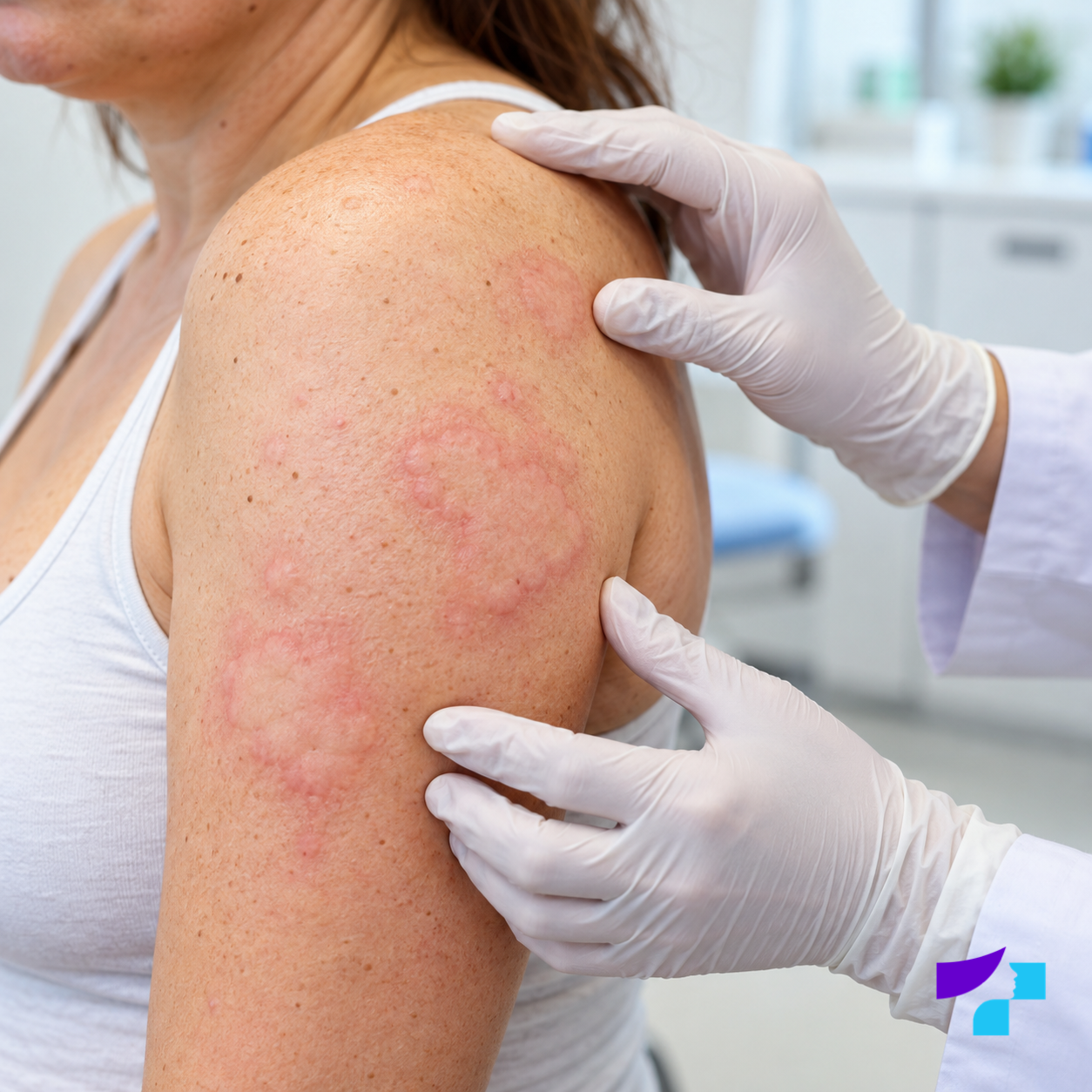
Image: raised, pink, irregularly shaped wheals typical of urticaria. They may occur during both allergic and non-allergic reactions.
| Body system | Possible symptoms |
|---|---|
| Skin | Itching, redness, rash, hives, burning |
| Mucous membranes | Swelling of the lips, eyelids, face or tongue |
| Nose and eyes | Runny or blocked nose, itchy or watery eyes |
| Airways | Cough, wheezing, chest tightness, shortness of breath |
| Digestion | Nausea, abdominal pain, abdominal bloating, diarrhoea and, less often, vomiting |
| General well-being | Headache, flushing, dizziness, fatigue |
Raised, very itchy wheals that change location and disappear within 1–24 hours are more consistent with urticaria, or hives. Swelling of the lips, eyelids, tongue or deeper tissues may be angioedema; it often resolves more slowly and may last for up to about 72 hours. Swelling of the throat, tongue or airways must always be taken seriously.
Why can allergy tests be negative?
Skin prick tests and blood tests for specific IgE are designed to assess IgE-mediated allergies. They may be helpful when a true allergy to a particular allergen is suspected.
In pseudoallergy, the reaction is often not associated with IgE antibodies, so these tests may be negative. Diagnosis is then based on the nature, timing and recurrence of symptoms, possible triggers, diet, medicines and medical assessment.
Unproven “food sensitivity” tests, especially IgG panels, should be avoided because they are not a reliable way to diagnose food allergy or food intolerance.
Common triggers of pseudoallergy
Pseudoallergic reactions may be provoked by:
- foods with higher levels of histamine or other biogenic amines;
- fermented, aged, smoked or long-stored foods;
- alcohol, especially wine, sparkling wine and beer;
- food additives such as sulphites, benzoates and some colourings;
- salicylates in food or medicines;
- aspirin, ibuprofen, naproxen and other non-steroidal anti-inflammatory drugs;
- opioids and some other medicines;
- radiological contrast media;
- infection, heat, physical activity, stress or chronic urticaria.
A single food is not always responsible. A combination of several factors may cause the reaction.

Image: foods and medicines that may promote allergy-like reactions in some people, including wine, aged cheese, cured meats, tuna, tomatoes, strawberries, chocolate and non-steroidal anti-inflammatory drugs.
Foods that may cause allergy-like reactions
There is no universal list of “forbidden foods”. A product that causes symptoms in one person may be well tolerated by another.
Commonly mentioned food groups include:
| Group | Examples |
|---|---|
| Fermented foods | Sauerkraut, fermented soy products, kombucha |
| Aged foods | Hard and aged cheeses, salami |
| Fish and seafood | Tuna, mackerel, sardines and anchovies, especially when not fresh |
| Alcohol | Red wine, white wine, sparkling wine, beer |
| Fruit and vegetables | Strawberries, citrus fruits, tomatoes, spinach, aubergines |
| Other foods | Chocolate, cocoa, smoked and pickled foods |
| Additives | Sulphites, benzoates, colourings, preservatives |
This list is not a reason to start a broad self-imposed diet. It can help identify what to monitor in a food and symptom diary.
Histamine and histamine intolerance
Histamine is a substance naturally present in the body and involved in immune responses, inflammation, stomach acid production and nerve signalling. It is also present in food, particularly fermented, aged, smoked or long-stored products.
Histamine intolerance is a term used when allergy-like symptoms occur after eating foods that contain histamine. It is sometimes described as a pseudoallergy because it is not a classic food allergy.
However, this subject should be approached cautiously. There are no sufficiently reliable objective tests to confirm histamine intolerance, and blood DAO activity does not provide a definitive diagnosis. Similar symptoms may be caused by irritable bowel syndrome, lactose intolerance, coeliac disease, chronic urticaria, mast cell disorders, infections, medicines or other conditions.
A low-histamine diet should not be started “for life”. If tried, it should be short-term, targeted and preferably supervised by a doctor or dietitian.
Food additives, preservatives, colourings and sulphites
In some people, allergy-like symptoms may be provoked by specific food additives, including:
- sulphites, which may be found in wine, dried fruit and some foods;
- benzoates and other preservatives;
- tartrazine and some other colourings;
- salicylates;
- flavour enhancers or combinations of several additives.
However, “E numbers” do not automatically mean illness, and not all food additives are dangerous. If reactions repeatedly occur after similar processed foods, it is useful to record product labels, ingredients and the timing of symptoms.
Medicines and pseudoallergic reactions
Medicines can cause both true allergic reactions and non-allergic allergy-like reactions. Particular attention should be paid to:
- aspirin and other non-steroidal anti-inflammatory drugs;
- ibuprofen, naproxen, diclofenac and similar medicines;
- opioids such as morphine or codeine;
- radiological contrast media;
- some antibiotics;
- ACE inhibitors used to treat high blood pressure, which may cause angioedema without hives.
A reaction after taking a medicine should not be ignored. A doctor should assess whether the medicine can be used again and whether similar medicines should be avoided.
Pseudoallergy in children
Allergy-like symptoms in children may have many causes, including viral infections, acute urticaria, food allergy, food intolerance, reactions to medicines, a flare of atopic dermatitis or skin irritation.
Several food groups should not be removed from a child’s diet simply because a rash appeared after eating. Especially in infants and young children, unnecessarily broad dietary restrictions may cause nutrient deficiencies and affect growth.
Parents should avoid three things: removing many foods “just in case”, challenging a child at home with a food that previously caused swelling or breathing difficulty, and assuming that every rash is a food allergy. The safest approach is to record the symptom pattern and discuss it with a paediatrician, allergist or dermatologist.
How does a doctor identify the cause?
A doctor will usually ask:
- when symptoms begin and how quickly they appear;
- how long the symptoms last;
- whether the reaction recurs after the same food or medicine;
- whether symptoms depend on the amount consumed;
- whether alcohol, exercise, heat, infection or stress were present at the same time;
- which medicines and food supplements are being used;
- whether there is urticaria, angioedema, asthma, chronic bowel symptoms or skin disease.
Depending on the situation, the doctor may order allergy tests, blood tests or investigations to exclude other diseases, or refer the patient to an allergist, dermatologist, gastroenterologist or another specialist.
Food and symptom diary
A food diary is one of the most practical tools when reactions are unclear.
Record:
- what you ate and drank;
- how much you consumed;
- the ingredients if it was a prepared product;
- when the symptoms began;
- which symptoms occurred and how severe they were;
- how long they lasted;
- which medicines or supplements were taken;
- whether alcohol, infection, stress, exercise, heat, menstruation or lack of sleep were present.
After a severe reaction, do not try the suspected food again on your own.
Elimination diet and challenge test
An elimination diet means temporarily excluding a suspected food or food group to see whether symptoms improve. A challenge test means controlled re-exposure to the suspected substance to check whether symptoms return.
If a previous reaction involved shortness of breath, fainting or rapid swelling of the face, tongue or throat, a challenge must not be performed at home. In such cases, a doctor decides how to investigate, and testing may need to take place under medical supervision.
Elimination should be targeted and short-term. Overly broad dietary restrictions can reduce quality of life and cause nutrient deficiencies.
What should you do if itching, hives or swelling occurs after eating?
If symptoms are mild and limited to slight itching or a few wheals, record what was eaten, when symptoms began and whether other factors were present. If reactions recur, make an appointment with a family doctor, allergist or dermatologist.
Do not delay a consultation if there are widespread hives, swelling of the lips or eyelids, recurrent reactions after the same food or a reaction after a medicine.
If there is shortness of breath, swelling of the throat or tongue, difficulty swallowing, fainting, severe dizziness or rapid deterioration, call emergency medical services.
When should you see a doctor?
See a doctor if:
- symptoms recur;
- hives, angioedema or marked itching develops;
- symptoms are linked to a medicine;
- allergy tests are negative but symptoms persist;
- a food-related reaction is suspected in a child;
- an elimination diet is being considered;
- there is chronic urticaria or an unexplained rash;
- symptoms affect sleep, work, school or daily life;
- there is persistent diarrhoea, weight loss or blood in the stool;
- reactions are becoming stronger or more frequent.
When should emergency help be called?
Seek emergency medical help immediately if there is:
- shortness of breath, wheezing or chest tightness;
- rapid swelling of the face, lips, tongue or throat;
- difficulty swallowing or voice changes;
- fainting, altered consciousness or severe dizziness;
- widespread hives together with vomiting, shortness of breath or weakness;
- a sudden drop in blood pressure;
- a rapidly worsening reaction after a medicine, insect sting or food.
A severe reaction should be treated as possible anaphylaxis even if previous allergy tests were negative.
How are pseudoallergy symptoms treated or reduced?
Treatment depends on the severity of symptoms and the possible trigger. The main principle is often to identify and reduce a specific trigger rather than exclude many foods without a clear reason.
Possible approaches include:
- a food and symptom diary;
- identifying and avoiding a clear trigger;
- short-term, targeted elimination;
- antihistamines for itching or hives when recommended by a doctor;
- reviewing medicines if the reaction is medication-related;
- assessment for chronic urticaria, rosacea, digestive disease or other conditions;
- for children, a dietary plan only after consultation with a doctor.
The effectiveness of DAO supplements has not been established with sufficient certainty, so they should not be regarded as the basis of diagnosis or treatment.
Conditions that may resemble pseudoallergy
| Symptoms | Other possible explanations |
|---|---|
| Hives | Infection, chronic spontaneous urticaria, medicine reaction, true allergy |
| Swelling of the lips or face | Histaminergic angioedema, ACE inhibitor reaction, hereditary angioedema |
| Facial flushing | Rosacea, heat reaction, alcohol, menopause |
| Abdominal pain and diarrhoea | Lactose intolerance, coeliac disease, irritable bowel syndrome, foodborne infection |
| Runny nose | Allergic rhinitis, non-allergic rhinitis, infection |
| Shortness of breath | Asthma, anaphylaxis, panic attack, heart or lung disease |
Chronic urticaria does not always mean food allergy. If hives recur for more than six weeks, chronic spontaneous or inducible urticaria, infections, autoimmune factors, medicines and other triggers should be considered.
Common myths about pseudoallergy
Myth: if allergy tests are negative, there are no symptoms
Fact: negative IgE tests may mean that the reaction is not a classic allergy. The symptoms can still be real.
Myth: pseudoallergy is the same as food allergy
Fact: food allergy is an immune response to a specific allergen. Pseudoallergy may look similar, but its mechanism is different.
Myth: histamine intolerance can always be proved with a DAO test
Fact: a blood DAO test is not reliable enough to confirm the diagnosis on its own.
Myth: everyone with a rash needs a low-histamine diet
Fact: broad dietary restrictions can be harmful, especially for children. Any diet should be targeted.
Myth: food additives are always dangerous
Fact: food additives do not cause pseudoallergy in most people, although specific additives may provoke symptoms in some individuals.
Myth: monosodium glutamate always causes pseudoallergy
Fact: some people associate symptoms with flavour enhancers, but the role of a specific compound should be assessed from a repeatable symptom pattern, dose and product ingredients.
Myth: a diagnosis can be made safely online after one rash
Fact: allergy, urticaria, infection, dermatitis, rosacea, medicine reactions and other conditions may look similar.
Summary
Pseudoallergy is an allergy-like reaction that may resemble a true allergy but is usually not related to a classic IgE-mediated immune response. Common symptoms include itching, redness, hives, swelling, a runny nose, digestive symptoms or headache. Possible triggers include histamine-rich foods, alcohol, food additives, some medicines and combinations of several factors.
The key is not to remove many foods immediately, but to understand the symptom pattern, record food and reactions, review medicines and seek medical advice when necessary. Severe symptoms, especially shortness of breath, throat swelling or fainting, always require emergency help.
Medical disclaimer
This information is for educational purposes and does not replace medical consultation, diagnosis or treatment. If allergy-like symptoms recur, remain unexplained or are severe, or if there are hives, swelling, shortness of breath, a reaction after food or medicine, dietary restrictions are being considered for a child, or symptoms worsen, it is advisable to book a dermatologist consultation or contact another appropriate specialist. Call emergency medical services in the event of a severe reaction.
References and authoritative sources
- International Union of Pure and Applied Chemistry (IUPAC): definition of pseudoallergy
- Cleveland Clinic: histamine intolerance, possible symptoms, diagnosis and treatment
- German Society for Allergology and Clinical Immunology (DGAKI) guideline: management of suspected adverse reactions to ingested histamine
- American Academy of Allergy, Asthma & Immunology (AAAAI): food allergy symptoms, diagnosis and treatment
- American Academy of Allergy, Asthma & Immunology (AAAAI): the myth of IgG food panel testing
- DermNet: overview of urticaria, or hives
- DermNet: drug-induced urticaria
- MSD Manual Professional Edition: anaphylaxis
- MSD Manual Professional Edition: angioedema
