Angioedema, also known as Quincke’s edema, is sudden swelling of the deeper layers of the skin, subcutaneous tissues or mucous membranes. It most often affects the lips, eyelids, face, tongue, throat, hands, feet or genital area, but in some cases it can also involve the intestinal wall and cause severe abdominal pain, nausea or vomiting.
Angioedema is not one specific disease. It is a medical term for swelling that can have different causes: an allergic reaction, urticaria, a medication side effect, hereditary angioedema, an acquired immune system disorder or a cause that cannot always be identified.
Important: if the tongue, throat or neck becomes swollen, or if there is difficulty breathing, voice changes, wheezing, a choking sensation, fainting or a rapid worsening of general condition, call 113 or 112 immediately. This type of angioedema can be life-threatening.
What is angioedema?
Angioedema is a localized accumulation of fluid in the deeper layers of the skin or mucous membranes. It occurs when small blood vessels become more permeable and fluid leaks from the bloodstream into the surrounding tissues. As a result, the affected body part becomes swollen, tight and sometimes painful or burning.
Unlike ordinary edema, which may develop gradually, for example in the legs after prolonged standing or due to heart, kidney or venous disease, angioedema usually begins suddenly and may develop within minutes or hours.
Angioedema can be:
- acute - one or a few short-lived episodes;
- recurrent - swelling appears repeatedly;
- chronic - episodes recur over a longer period;
- with urticaria - together with itchy wheals or hives;
- without urticaria - without typical skin wheals, which may suggest another mechanism.
What is Quincke’s edema?
Quincke’s edema is a historical name for angioedema. In everyday language, it often refers to sudden swelling of the lips, eyelids, face, tongue or throat. The more medically accurate term is angioedema, because it includes several types and mechanisms of swelling.
Quincke’s edema can be allergic, but not always. For this reason, it is important not to assume that every sudden swelling is automatically an allergy.
When is swelling dangerous?
The most dangerous location of angioedema is the tongue, throat, larynx and airways. In these cases, swelling can obstruct airflow and create a risk of suffocation. Sometimes angioedema is part of anaphylaxis - a severe allergic reaction that can cause breathing difficulties, a drop in blood pressure and loss of consciousness.
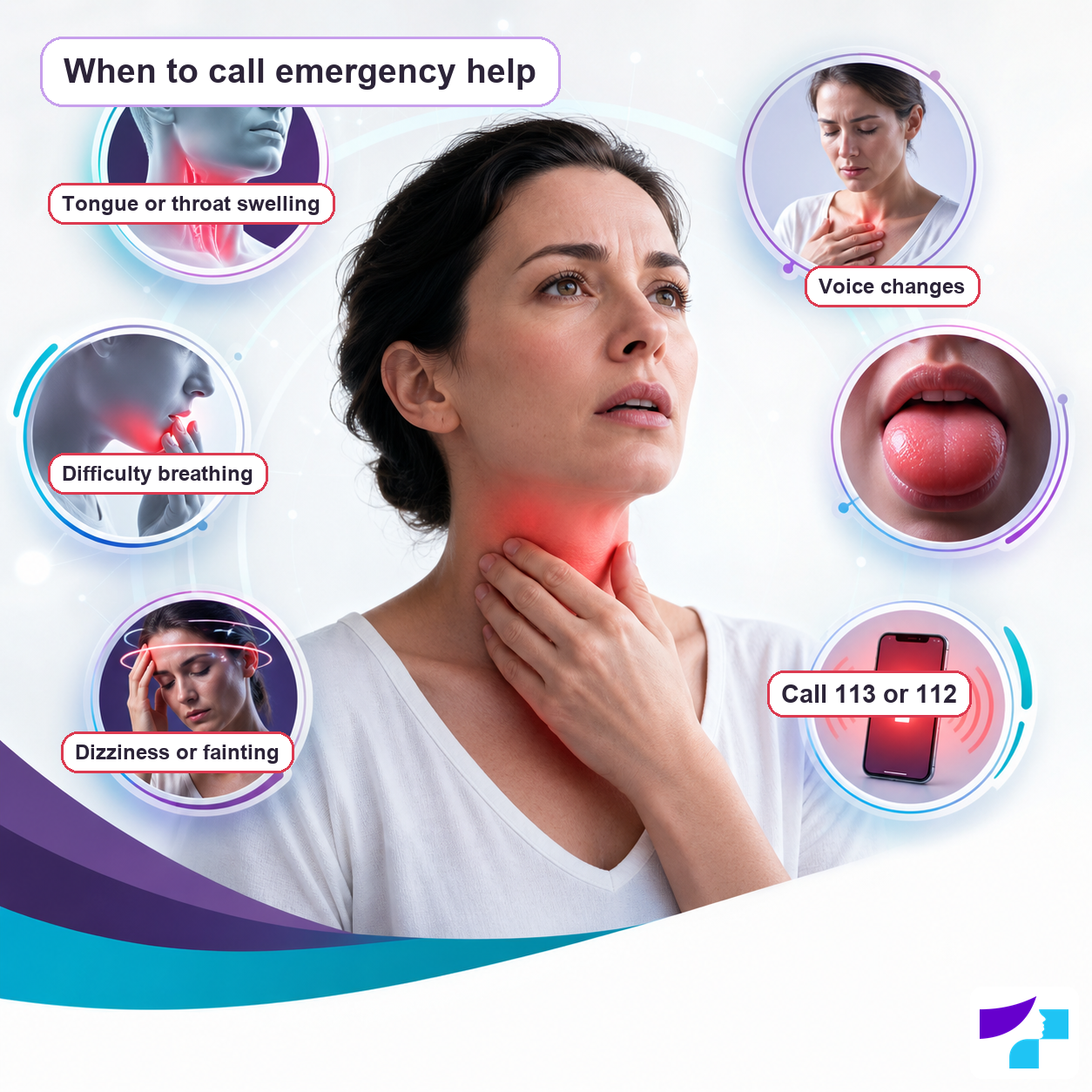
Call 113 or 112 immediately if there is:
- swelling of the tongue, mouth, throat, neck or larynx;
- difficulty breathing, wheezing or a choking sensation;
- hoarseness or difficulty speaking;
- difficulty swallowing saliva;
- dizziness, fainting, confusion or marked weakness;
- rapidly progressing swelling of the face or neck;
- swelling after food, medication, an insect sting or another possible allergen;
- swelling together with widespread hives, vomiting, diarrhea or signs of low blood pressure.
See a doctor in the near future if:
- angioedema recurs;
- swelling occurs without hives and itching;
- the trigger is unclear;
- episodes are associated with abdominal pain;
- symptoms respond poorly to standard anti-allergy medicines;
- someone in the family has similar swelling episodes;
- swelling started after taking a new medication.
Symptoms of angioedema
The main symptom of angioedema is sudden swelling. It may be mild and limited, but it can also progress rapidly.
Commonly affected areas:
- lips;
- eyelids and face;
- tongue and mouth;
- throat, larynx and neck;
- hands and feet;
- genital area;
- gastrointestinal tract.
Possible sensations and signs:
- tightness of the skin or mucous membranes;
- a feeling of pressure;
- pain or burning;
- skin redness;
- itching, if the swelling is related to hives or allergy;
- nausea, vomiting, diarrhea or severe abdominal pain;
- voice changes, difficulty swallowing or breathing.
Angioedema is often asymmetric, for example one side of the lip, one eyelid or one hand may become swollen.
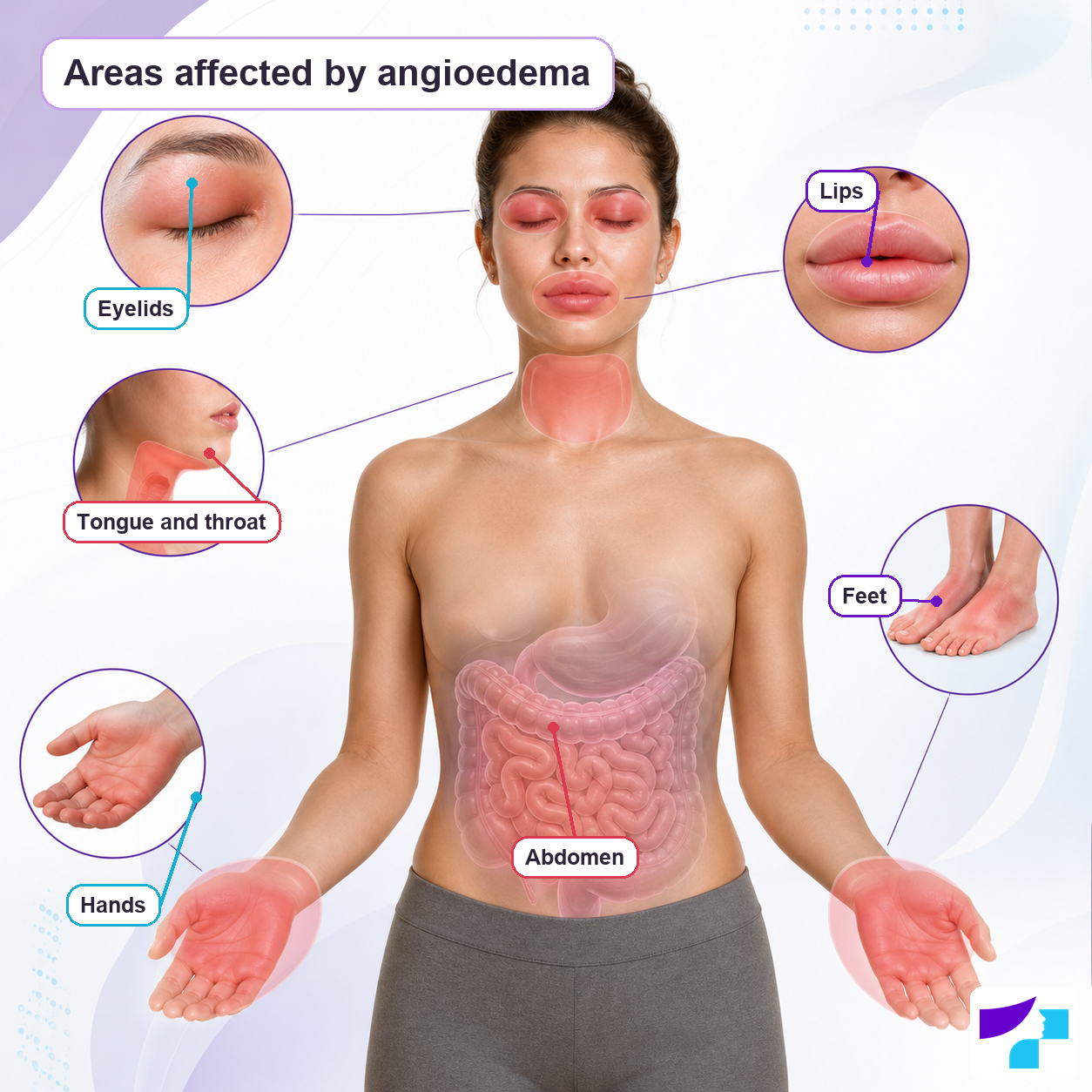
3-5 signs that may suggest angioedema
- Swelling appears suddenly - within minutes or hours.
- The swelling affects deeper tissues, such as the lips, eyelids, tongue, hands or feet.
- The affected area feels tight, pressured or painful, rather than only itchy.
- Swelling may occur without a rash and without itching.
- Episodes recur or appear together with unexplained abdominal pain.
Main types of angioedema
| Type | Typical features | Important note |
|---|---|---|
| Allergic angioedema | Often starts after food, medicines, latex or an insect sting; hives and itching may be present | May be part of anaphylaxis |
| Angioedema with urticaria | Itchy, raised wheals together with deeper swelling | More often related to a histamine mechanism |
| Angioedema without urticaria | No typical itchy wheals | Consider a bradykinin mechanism, medications or HAE |
| Medication-induced angioedema | May be related to blood pressure, pain-relief or other medicines | Sometimes begins even after long-term medication use |
| Hereditary angioedema | Recurrent swelling without hives, possible abdominal pain, family history | Requires specific diagnostic testing |
| Acquired angioedema | May be related to autoimmune or hematological diseases | More often evaluated in adulthood |
| Idiopathic angioedema | The cause is unclear | Diagnosis after other causes have been excluded |
How angioedema develops: the role of histamine, bradykinin and the immune system
Angioedema is based on increased permeability of blood vessels. However, the reason why blood vessels become more permeable may differ.
Histamine or mast-cell mediated angioedema
This is the most common mechanism in allergic reactions and urticaria. Mast cells release histamine and other inflammatory mediators, causing itching, redness, hives and swelling.
This type of angioedema often:
- starts quickly - within minutes to a few hours;
- occurs together with itching or hives;
- may be related to food, medicines, insect stings, latex or infection;
- often responds to antihistamines;
- in severe cases, may be part of anaphylaxis.
Bradykinin-mediated angioedema
Bradykinin is a substance that widens blood vessels and increases their permeability. If too much bradykinin is produced or its breakdown is impaired, pronounced swelling of deeper tissues can occur.
Bradykinin-mediated angioedema often:
- is not associated with hives;
- is usually not markedly itchy;
- may develop more slowly than an allergic reaction;
- may last for several days;
- may affect the intestines and cause severe abdominal pain;
- may respond poorly to antihistamines and corticosteroids.
This group includes hereditary angioedema, acquired C1 inhibitor deficiency angioedema and some cases of medication-induced angioedema.
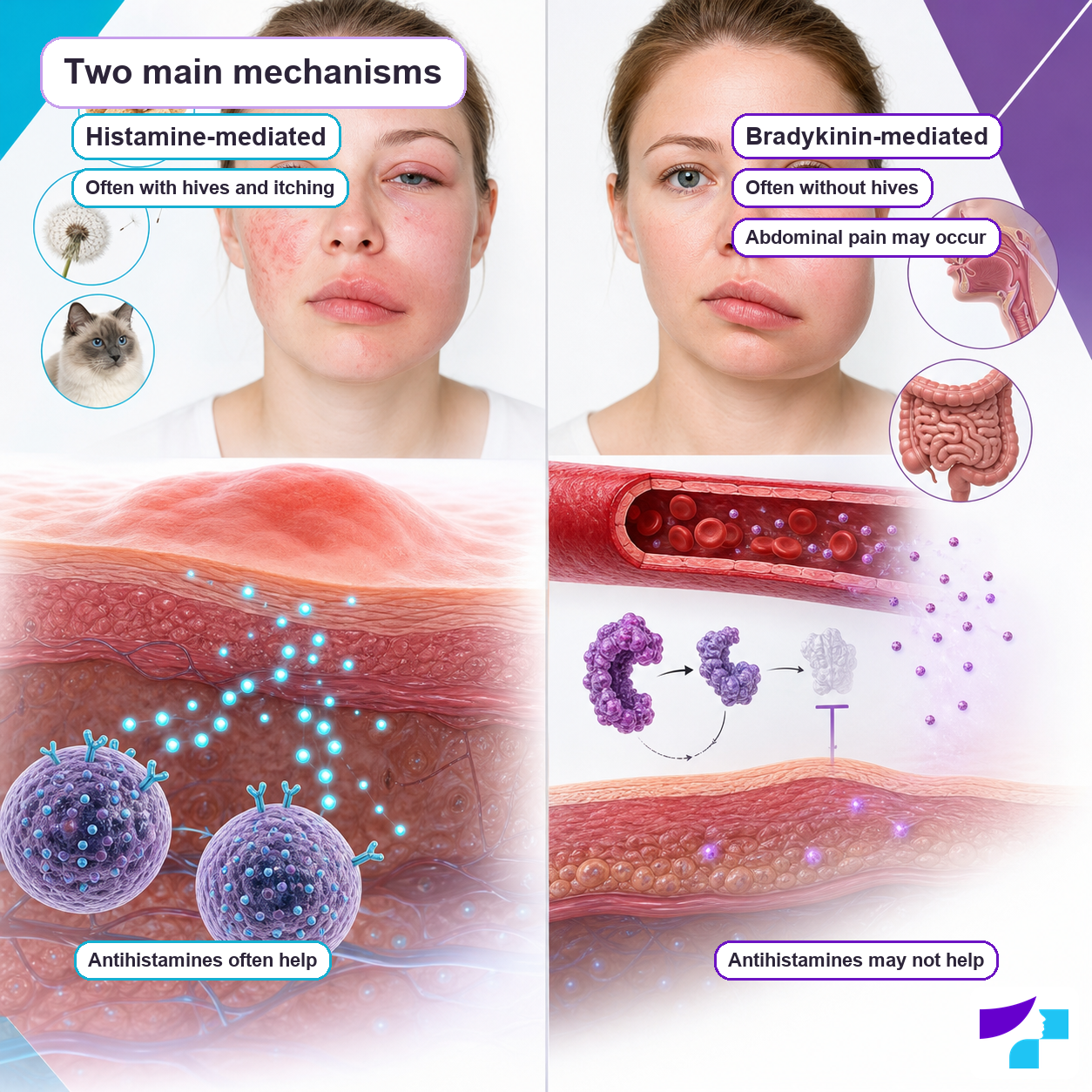
Histamine and bradykinin angioedema: key differences
| Feature | Histamine-mediated angioedema | Bradykinin-mediated angioedema |
|---|---|---|
| Common triggers | Food, medicines, insect stings, latex, infections, chronic urticaria | HAE, ACE inhibitors, C1-INH deficiency, some other medicines |
| Onset | Often minutes to hours | Often hours, may progress more slowly |
| Hives | Often present | Usually absent |
| Itching | Often present | Usually absent |
| Abdominal pain | Less common | Typical in HAE |
| Response to antihistamines | Often helps | May not help |
| Airway risk | Possible | Possible, especially in HAE and ACEI-related angioedema |
Angioedema and urticaria: similarities and differences
Urticaria is a superficial skin reaction with itchy, raised wheals. Angioedema is deeper swelling that affects subcutaneous tissues or mucous membranes. Both can occur together, but angioedema can also occur without urticaria.
| Feature | Urticaria | Angioedema |
|---|---|---|
| Affected tissue level | Superficial skin | Deeper skin layers and mucous membranes |
| Appearance | Raised, itchy wheals | Swelling, often without a clear border |
| Itching | Very common | May be absent |
| Common locations | Body, arms, legs | Lips, eyelids, tongue, throat, hands, feet |
| Duration | A single wheal often disappears within 24 hours | Swelling may last 24-72 hours or longer |
| Airway risk | Less common | May be serious |
Common causes of angioedema
Angioedema can be caused by many different factors. Sometimes the cause is obvious, but in recurrent episodes it must be investigated carefully.
Common causes include:
- food allergy;
- drug allergy or medication side effect;
- insect stings;
- latex;
- infections;
- chronic urticaria;
- physical factors such as pressure, cold, heat or vibration;
- stress;
- hormonal changes;
- autoimmune diseases;
- hematological diseases;
- inherited complement system disorders.
Medication-induced angioedema
Medications are one of the most important causes of angioedema. The reaction may be allergic or non-allergic, and it does not always begin immediately after the first dose.
The following medication groups should be assessed in particular:
- ACE inhibitors - used for high blood pressure and heart failure;
- angiotensin receptor-neprilysin inhibitors, or ARNIs;
- non-steroidal anti-inflammatory drugs, or NSAIDs, including commonly used pain and fever medicines;
- some antibiotics;
- estrogen-containing hormonal preparations;
- DPP-4 inhibitors used in the treatment of diabetes;
- thrombolytic or fibrinolytic medicines used to dissolve blood clots;
- less commonly, other medicines or biological therapy.
ACE inhibitor-induced angioedema is especially important because it may occur even after months or years of medication use. It often affects the face, lips, tongue or upper airways and is usually not associated with hives.
If medication-induced angioedema is suspected, medicines should be reviewed together with a doctor. If airway symptoms are present, emergency help should be sought first.
Hereditary angioedema
Hereditary angioedema, or HAE, is a rare genetic disease in which recurrent swelling occurs in subcutaneous or submucosal tissues. It can affect the skin, airways and digestive tract.
HAE is not a typical allergy. It is most often caused by a deficiency or dysfunction of C1 inhibitor. C1 inhibitor is a protein that helps regulate the complement and bradykinin systems. If this regulation is impaired, excessive bradykinin can form in the body and cause swelling.
When should HAE be considered?
Hereditary angioedema should be considered if:
- swelling recurs;
- there are no hives and no itching;
- episodes respond poorly to antihistamines or corticosteroids;
- there is severe, recurrent abdominal pain;
- there is a family history of similar episodes;
- swelling began in childhood or adolescence;
- episodes are triggered by stress, trauma, infection, menstruation, dental procedures or surgery.
In HAE, swelling may affect the larynx and cause life-threatening airway obstruction. It may also affect the intestines, causing very severe abdominal pain, nausea, vomiting or diarrhea. Sometimes these abdominal attacks can mimic an acute surgical condition.
HAE in children, adults and during pregnancy
In children, HAE symptoms may begin early, but diagnosis is often delayed because swelling is attributed to allergy, infections or trauma. Recurrent swelling episodes without hives in a child are always a reason for further evaluation.
In adults, first-time or recurrent angioedema without hives requires assessment of medications, acquired C1 inhibitor deficiency, autoimmune or hematological diseases.
During pregnancy, the course of HAE may change - symptoms may become more frequent, less frequent or remain unchanged. Interpretation of C1-INH and C4 results during pregnancy may be more complex, so specialist involvement is needed.
Angioedema development timeline
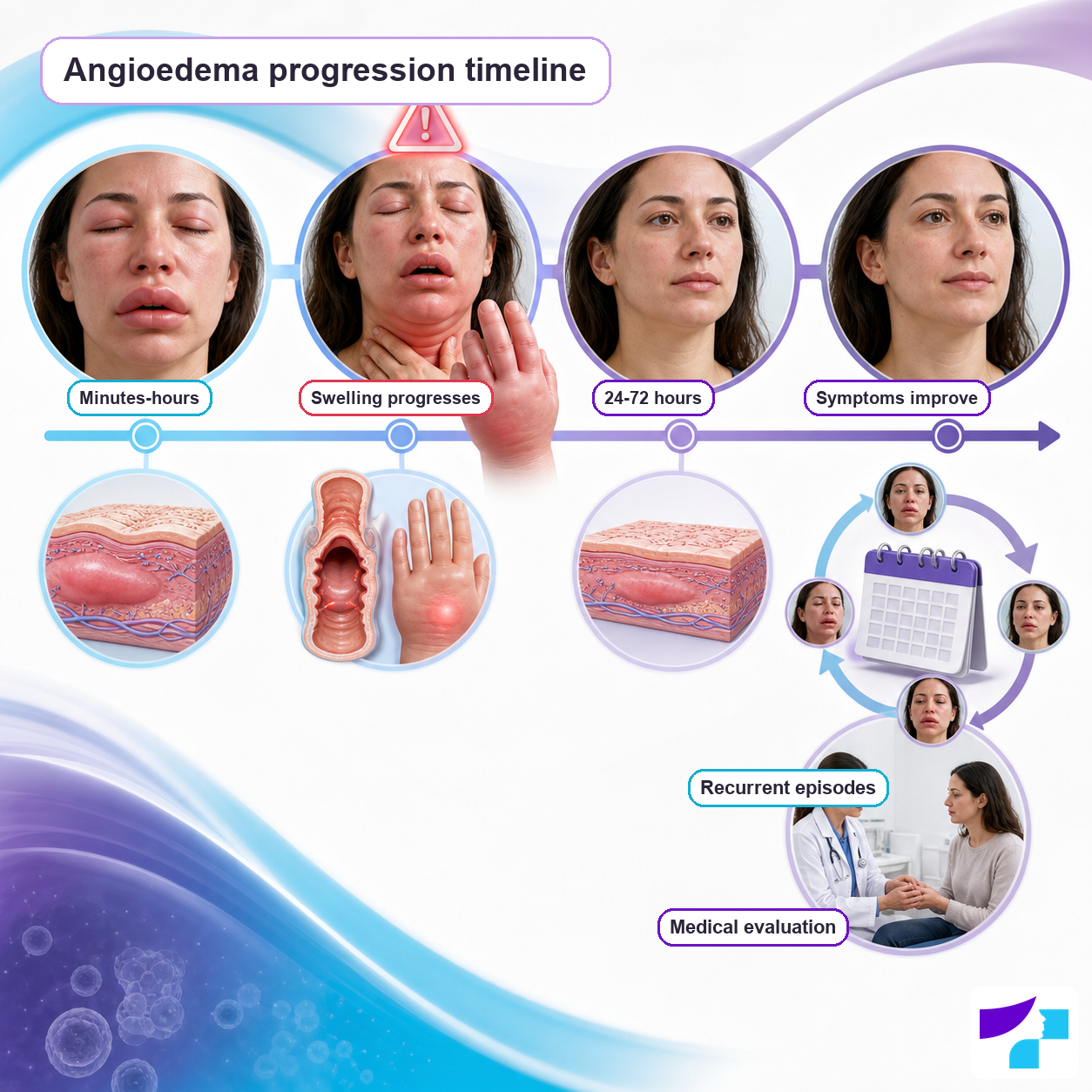
| Time | What may happen |
|---|---|
| Minutes to 2 hours | In allergic angioedema, swelling of the lips, face, tongue or throat, hives and itching may appear |
| Several hours | Swelling may become more pronounced; pain, pressure or airway symptoms may appear |
| 24-72 hours | Some episodes improve; bradykinin-mediated episodes may continue for several days |
| Recurrent episodes | The cause should be investigated: chronic urticaria, medications, HAE, acquired or idiopathic angioedema |
Risk factors
The risk of angioedema is higher in people who have:
- allergies to food, medicines, latex or insect stings;
- a previous history of angioedema or urticaria;
- a family history of hereditary angioedema;
- use of ACE inhibitors or other medications associated with angioedema;
- chronic urticaria;
- autoimmune diseases;
- certain hematological diseases;
- frequent infections or strong triggering factors;
- hormonal fluctuations, for example during menstruation, pregnancy or use of hormonal preparations.
When should emergency medical help be called immediately?
Emergency medical help should always be called if swelling affects the tongue, throat, larynx or neck, or if there is difficulty breathing, voice changes, wheezing, fainting, difficulty swallowing or a sensation that the throat is “closing”.
If a person has been prescribed an adrenaline auto-injector by a doctor due to a risk of severe allergic reaction, it should be used according to the doctor’s action plan and 113 or 112 should be called at the same time.
When should you see an allergist or immunologist?
An allergist or immunologist should be consulted if:
- angioedema recurs;
- the trigger is unclear;
- episodes occur without hives;
- HAE is suspected;
- symptoms respond poorly to anti-allergy therapy;
- swelling is associated with abdominal pain;
- medication-induced angioedema is suspected;
- similar episodes occur in the family.
How is angioedema diagnosed?
Diagnosis begins with a careful medical history and examination. It is important for the doctor to understand not only that swelling occurred, but also its mechanism.
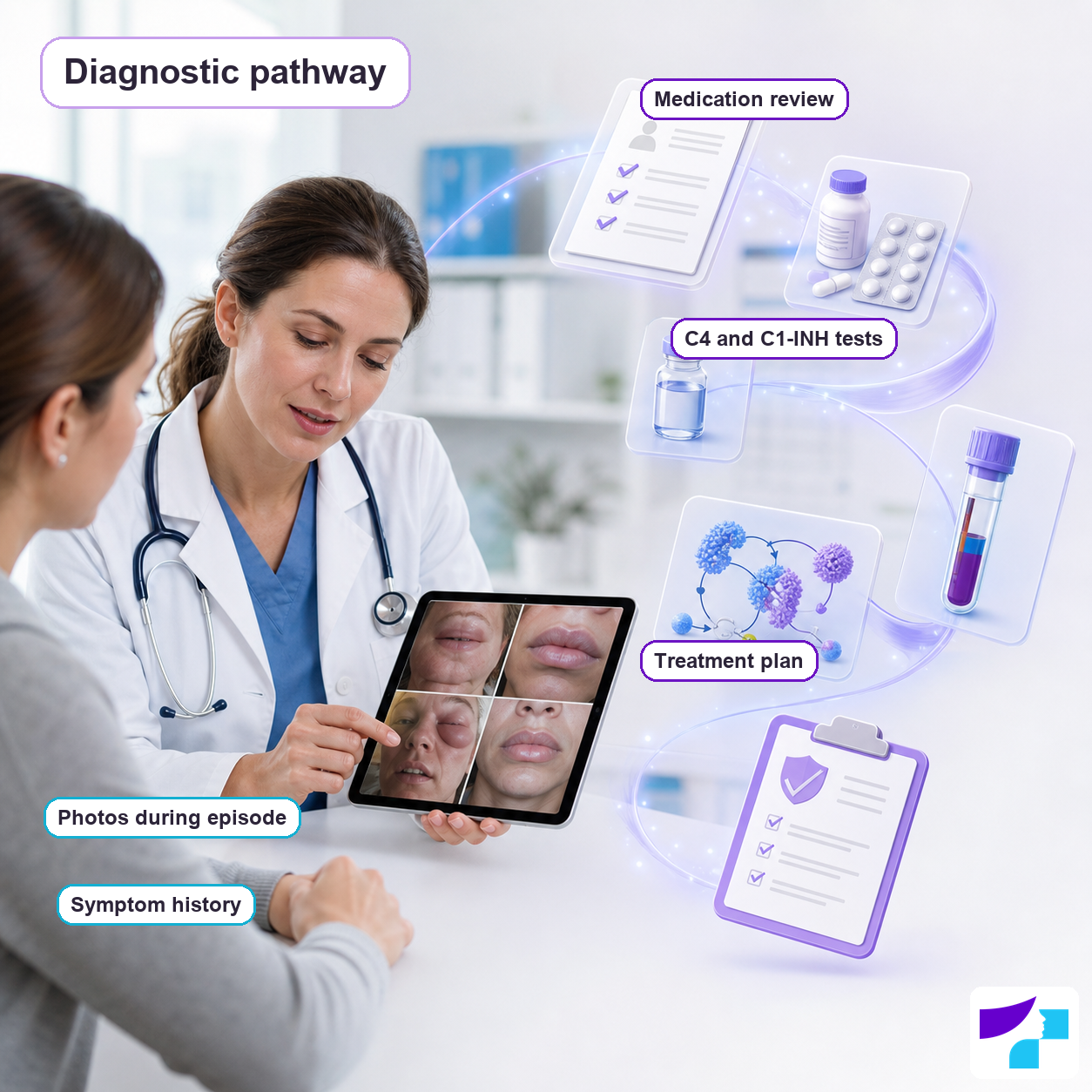
The doctor will ask:
- when the swelling started;
- how quickly it developed;
- which body areas were affected;
- how long the swelling lasted;
- whether there were hives, itching or redness;
- whether there were breathing difficulties or voice changes;
- whether there was abdominal pain, nausea or vomiting;
- which medicines were used;
- whether there was new food, an insect sting, infection, stress or a procedure;
- whether anyone in the family has had similar episodes.
Possible tests:
- allergy tests if an allergic mechanism is suspected;
- complete blood count and inflammatory markers if needed;
- C4 complement level;
- C1 inhibitor level;
- C1 inhibitor functional activity;
- C1q level if acquired angioedema needs to be assessed;
- genetic testing in selected cases;
- additional tests if autoimmune, hematological or other underlying disease is suspected.
In an acute, single and clearly allergic episode, extensive testing is not always necessary. In recurrent, severe or unclear angioedema, identifying the cause is essential.
Differential diagnosis: what can angioedema be confused with?
Angioedema can resemble other conditions, so the doctor also considers other possibilities.
Possible similar diagnoses include:
- urticaria;
- contact dermatitis;
- insect bite or sting;
- skin or soft tissue infection;
- trauma;
- lymphedema;
- swelling caused by venous or heart failure;
- generalized swelling caused by kidney or liver disease;
- acute allergic reaction or anaphylaxis;
- acute abdominal disease if abdominal pain is the main symptom.
It is especially important not to make the mistake of automatically considering swelling without hives to be allergy. In exactly these cases, HAE, ACE inhibitor-induced angioedema or another bradykinin-mediated mechanism should be considered.
How is angioedema treated?
Treatment of angioedema depends on the cause, mechanism and severity.
Allergic or histamine-mediated angioedema
Treatment may include:
- removal of the trigger;
- antihistamines;
- corticosteroids in selected situations;
- adrenaline in severe allergic reaction or anaphylaxis;
- observation in an emergency setting if there is airway risk.
Bradykinin-mediated angioedema
In this case, standard anti-allergy therapy may be insufficient. Treatment may include:
- stopping and replacing the medication causing swelling under medical supervision;
- specific treatment for acute HAE attacks;
- C1 inhibitor replacement therapy or other therapies targeting bradykinin pathways;
- short-term prophylaxis before high-risk procedures;
- long-term prophylaxis in frequent or severe attacks.
Specific medicines, doses and an action plan are determined by a doctor after assessing the diagnosis and the patient’s health status.
What can be done at home?
Home management is appropriate only if the episode is mild, has already been assessed before and does not affect the airways.
The following may help:
- avoiding the known trigger;
- a cool compress;
- rest;
- therapy previously recommended by a doctor;
- monitoring symptoms;
- photographing the episode to show the doctor.
Do not wait at home if the swelling affects the tongue or throat, or if there are breathing difficulties.
What should not be done in angioedema?
You should not:
- wait if the tongue or throat swells or shortness of breath appears;
- start prescription medicines on your own without a doctor’s instruction;
- repeatedly use a suspicious medicine or food without medical evaluation;
- assume that swelling without a rash cannot be serious;
- ignore recurrent abdominal pain and swelling episodes;
- stop heart or blood pressure medicines without a doctor unless it is an emergency situation;
- rely only on antihistamines if episodes recur without hives.
How to prepare for a doctor’s appointment?
Before the visit, it is useful to write down:
- when the swelling started;
- how quickly it developed;
- how long it lasted;
- which body areas were affected;
- whether there were hives, itching, shortness of breath or abdominal pain;
- which medicines and supplements were used;
- which foods, drinks or procedures preceded the episode;
- whether there was infection, stress, trauma or menstruation;
- whether similar cases occur in the family;
- whether antihistamines, corticosteroids or other therapy helped.
Photographs of the episode are very useful, because the swelling may have disappeared by the time of the appointment.
Common myths about angioedema
| Myth | Fact |
|---|---|
| Angioedema is always an allergy | It may also be medication-induced, bradykinin-mediated or hereditary |
| If there is no rash, it is not dangerous | Swelling without hives can affect the airways and be serious |
| Antihistamines always help | They may not help in HAE or ACE inhibitor-induced angioedema |
| Lip swelling will always go away on its own | Sometimes it progresses to tongue or throat swelling |
| HAE is so rare that it does not need to be considered | Recurrent swelling without hives is enough reason to evaluate it |
| Angioedema is contagious | Angioedema is not an infection and is not contagious |
| Abdominal pain is not related to angioedema | In HAE, intestinal swelling can cause severe abdominal pain |
Summary
Angioedema is sudden swelling of deeper skin or mucous membrane tissues. It may be allergic, associated with urticaria, medication-induced, bradykinin-mediated, hereditary, acquired or idiopathic. The most dangerous angioedema affects the tongue, throat, larynx or airways.
The most important task is to distinguish a mild, limited episode from an emergency. If there are breathing difficulties, swelling of the tongue or throat, voice changes or fainting, call 113 or 112. Recurrent swelling without hives, poor response to antihistamines and episodes of abdominal pain are reasons to consider bradykinin-mediated or hereditary angioedema and see a specialist.
Medical disclaimer
This information is intended for educational purposes and does not replace medical consultation, diagnosis or treatment. If you experience a sudden or recurrent episode of swelling of the face, lips, tongue, throat, neck, hands, feet or abdomen, especially if there are breathing difficulties, voice changes, a choking sensation, fainting or rapid worsening of general condition, call 113 or 112 immediately. In case of recurrent or unclear symptoms, consult a doctor, allergist or immunologist. Do not use prescription medicines or stop prescribed treatment without a doctor’s instruction, except in emergency situations when urgent medical help is required.
References and authoritative sources
- National Health Service (NHS): patient information on angioedema, symptoms, causes and treatment
- Mayo Clinic: symptoms and causes of hives and angioedema
- Mayo Clinic: diagnosis and treatment of hives and angioedema
- Cleveland Clinic: types, symptoms, causes, diagnosis and treatment of angioedema
- MedlinePlus: medical encyclopedia information on angioedema for patients
- MSD Manuals Professional Edition: diagnosis and treatment of angioedema
- MSD Manuals Consumer Version: hereditary and acquired C1 inhibitor deficiency and dysfunction
- World Allergy Organization (WAO) and European Academy of Allergy and Clinical Immunology (EAACI): international guideline for the management of hereditary angioedema
- Orphanet: hereditary angioedema with C1 inhibitor deficiency
- Pauls Stradiņš Clinical University Hospital: informational material on angioedema
- angioedema.lv: patient information on hereditary angioedema in Latvia
- medicine.lv: information on HAE, or hereditary angioedema, and recognition of life-threatening swelling
