Foodborne infections are a group of illnesses that develop after consuming food or water contaminated with disease-causing microorganisms or their toxins. They may be caused by bacteria, viruses, parasites and, in some cases, toxins or chemical contamination present in food. In everyday language, these illnesses are often referred to as food poisoning, a stomach infection, an intestinal infection or an acute intestinal infection.
Foodborne infections most commonly cause diarrhoea, nausea, vomiting, abdominal pain, abdominal cramps, fever and weakness. In many cases, symptoms are mild and resolve within a few days, but in some people a foodborne infection may be severe and lead to dehydration, electrolyte imbalance, impaired kidney function or other complications.
Foodborne infections should be assessed especially carefully in children, pregnant women, older adults, people with weakened immunity and patients with chronic illnesses. In these groups, fluid loss and infection-related complications may develop more rapidly.
Key points
A foodborne infection may begin within a few hours or several days after consuming contaminated food or water. The time until symptoms appear depends on the pathogen, the amount of microorganisms or toxin ingested and the person’s overall health.
The most common symptoms are diarrhoea, nausea, vomiting, abdominal pain, abdominal cramps, fever, chills and weakness.
In mild cases, the most important step is to take enough fluids and prevent dehydration. If a person cannot keep fluids down, symptoms worsen or warning signs appear, medical help is needed.
Antibiotics are not always required for foodborne infections. They are used only when there is a doctor-approved indication.
Medical help should be sought if there is bloody diarrhoea, high fever, severe or worsening abdominal pain, repeated vomiting, marked weakness, dizziness, reduced urination, signs of dehydration or symptoms lasting for several days.
Foodborne infections can be prevented by hand washing, safe food storage, separating raw and ready-to-eat foods, adequate cooking and caution with high-risk foods.
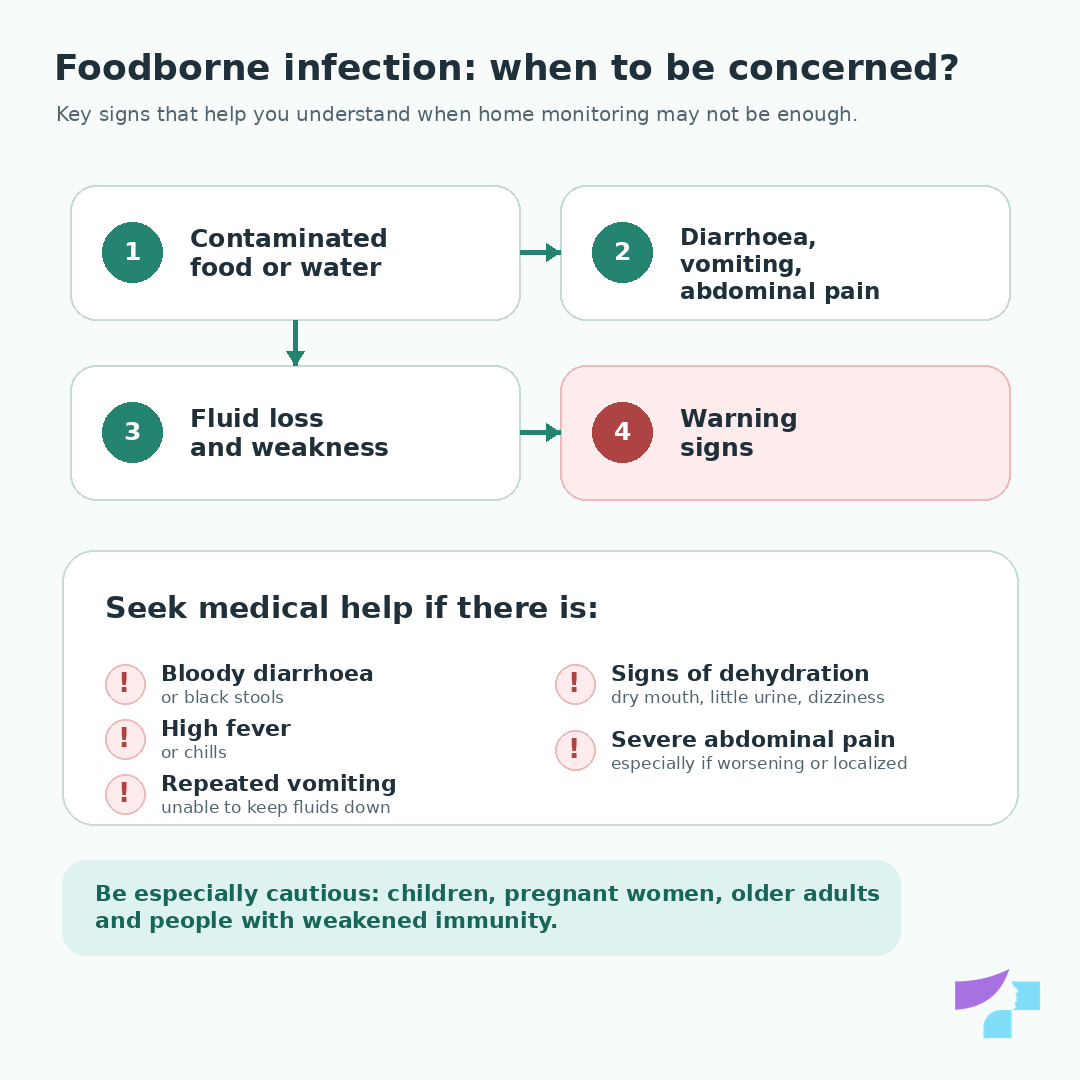
What is a foodborne infection?
A foodborne infection is an illness that develops after a person eats or drinks food or water containing disease-causing microorganisms. These may be bacteria, viruses, parasites or substances produced by these microorganisms.
Foodborne infections most often affect the stomach and intestinal tract. Therefore, the main symptoms are diarrhoea, vomiting, nausea and abdominal pain. However, not all foodborne illnesses are limited to the intestines. Some infections may also cause a general reaction in the body, nervous system symptoms, kidney damage or severe disease in high-risk patients.
The World Health Organization notes that unsafe food containing harmful bacteria, viruses, parasites or chemical substances can cause a wide range of illnesses — from mild diarrhoea to serious and life-threatening diseases. Therefore, foodborne infections are not only a short-term “stomach problem”, but also an important public health issue.
What is food poisoning?
Food poisoning is a commonly used everyday term for illness after eating. People often use this term when vomiting, diarrhoea, nausea or abdominal pain begins after a meal. Medically, however, food poisoning may involve several different mechanisms.
In some cases, a person becomes ill because a live microorganism enters the body with food, multiplies in the intestines and causes inflammation.
In other cases, a toxin has already formed in the food before it is eaten. Then symptoms may begin very quickly, sometimes within a few hours, and sudden nausea and vomiting are often the dominant symptoms.
In other situations, both the microorganism and the substances it produces play a role. Such illnesses are sometimes called foodborne toxicoinfections.
For the patient, the exact term is less important than the severity of symptoms: whether there is dehydration, blood in the stool, high fever, severe abdominal pain, prolonged diarrhoea or risk factors.
Are foodborne infection and food poisoning the same thing?
In everyday language, these terms are often used as synonyms, but medically they are not exactly the same.
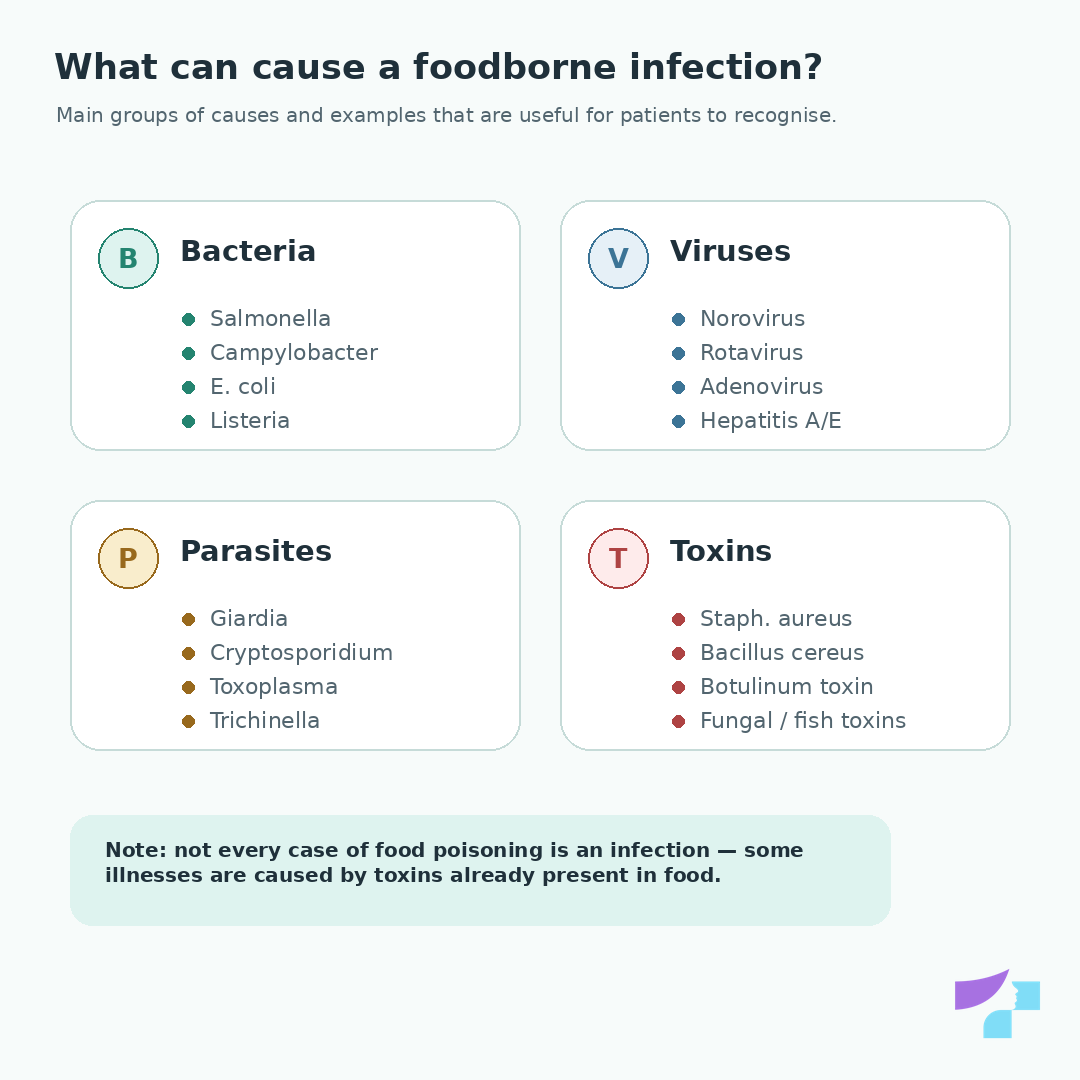
A foodborne infection means that the illness is caused by a microorganism ingested through food or water — for example, Salmonella, Campylobacter, norovirus, certain E. coli strains or Listeria.
Food poisoning may also refer to a situation in which symptoms are caused by a toxin already present in food, not only by the microorganism itself.
Therefore, both terms may be used in the article, but patients should understand that “food poisoning” is a broader everyday term, while “foodborne infection” more precisely indicates an infectious cause.
Foodborne infection, toxicoinfection and intoxication — what is the difference?
Not all illnesses after eating develop in the same way. In some cases, the disease is caused by the microorganism itself, which enters the body through food or water and then multiplies in the intestines. This is called a foodborne infection.
In other cases, a toxin — a harmful substance produced by bacteria or other microorganisms — has already formed in the food before it is eaten. In these cases, symptoms may begin very quickly, often with sudden nausea and vomiting. This situation is more commonly called foodborne intoxication.
Foodborne toxicoinfection is an intermediate situation in which both the microorganism and the substances it produces are important. Patients do not need to distinguish these terms themselves, but for doctors they may help estimate the likely time of symptom onset, the need for investigations and the treatment approach.
Where are foodborne infections common?
Foodborne infections occur worldwide. They are found both in countries with limited sanitation and unsafe water supplies and in developed countries with modern food safety systems. This is because contamination can occur at any stage of the food chain — production, processing, transportation, storage, preparation or serving.
The risk increases if food is stored at an inappropriate temperature, if meat, poultry, fish or eggs are not cooked properly, if hands are not washed or if raw foods come into contact with ready-to-eat foods.
Outbreaks of foodborne infections are more likely in places where many people eat at the same time — family celebrations, catering establishments, schools, kindergartens, care institutions, workplaces, camps or public events. This does not mean that such places are always unsafe, but if several people become ill at the same time, a common source of infection is possible.
Why does the risk of foodborne infections increase in summer?
Foodborne infections can occur in any season, but the risk often increases in warm weather. In heat, bacteria can multiply more rapidly in food, especially if ready-made meals, dairy products, meat dishes, salads or cream-containing desserts remain outside the refrigerator for a long time. In summer, picnics, grilling, public events and transporting food are more common, which increases the likelihood of storage and preparation mistakes.
Public health sources often emphasise that winter is more commonly associated with viral intestinal infections, while summer is more associated with bacterial intestinal infections, because bacteria multiply especially quickly in warm temperatures. Fresh foods, unwashed hands and contaminated water are also important risk factors.
Mechanism of infection
A foodborne infection begins when a person eats or drinks contaminated food or water. The development of the illness then depends on the pathogen.
Some bacteria enter the intestines and multiply there. The body responds with inflammation, increased intestinal movement and increased fluid secretion into the intestines. This results in diarrhoea, abdominal cramps and sometimes fever.
Some pathogens damage the intestinal lining. In such cases, diarrhoea may be more severe and may contain mucus or blood. Blood in the stool is a warning sign and should not be explained only as “ordinary food poisoning”.
Viruses, such as norovirus, may spread not only through food but also from person to person, through unwashed hands or contaminated surfaces. In these cases, not only food safety but also hand hygiene and surface cleaning are important.
In some cases, symptoms are caused by toxins that formed in the food before it was eaten. Then symptoms often begin quickly and nausea and vomiting may dominate.
The food chain: where can contamination occur?
Food contamination can occur at any stage of the food chain — from animal farming, crop production and raw material collection to processing, transportation, storage, retail, preparation and serving. Therefore, food safety is not only a question of the home kitchen, but of the entire food chain control system.
The aim of food hygiene is to protect consumers from infection or poisoning caused by food through hazard analysis, identification of contamination sources and control measures throughout the food chain. Food hygiene includes biological and chemical hazards and is part of public health.
For patients, the most practical contamination points are improper food storage, insufficient cooking, contact between raw and ready-to-eat foods, unwashed hands, contaminated water, unclean surfaces or food preparation by someone who has symptoms of an intestinal infection.
Timeline from infection to symptoms
The course of a foodborne infection is not the same for everyone, but it can typically be divided into several stages.
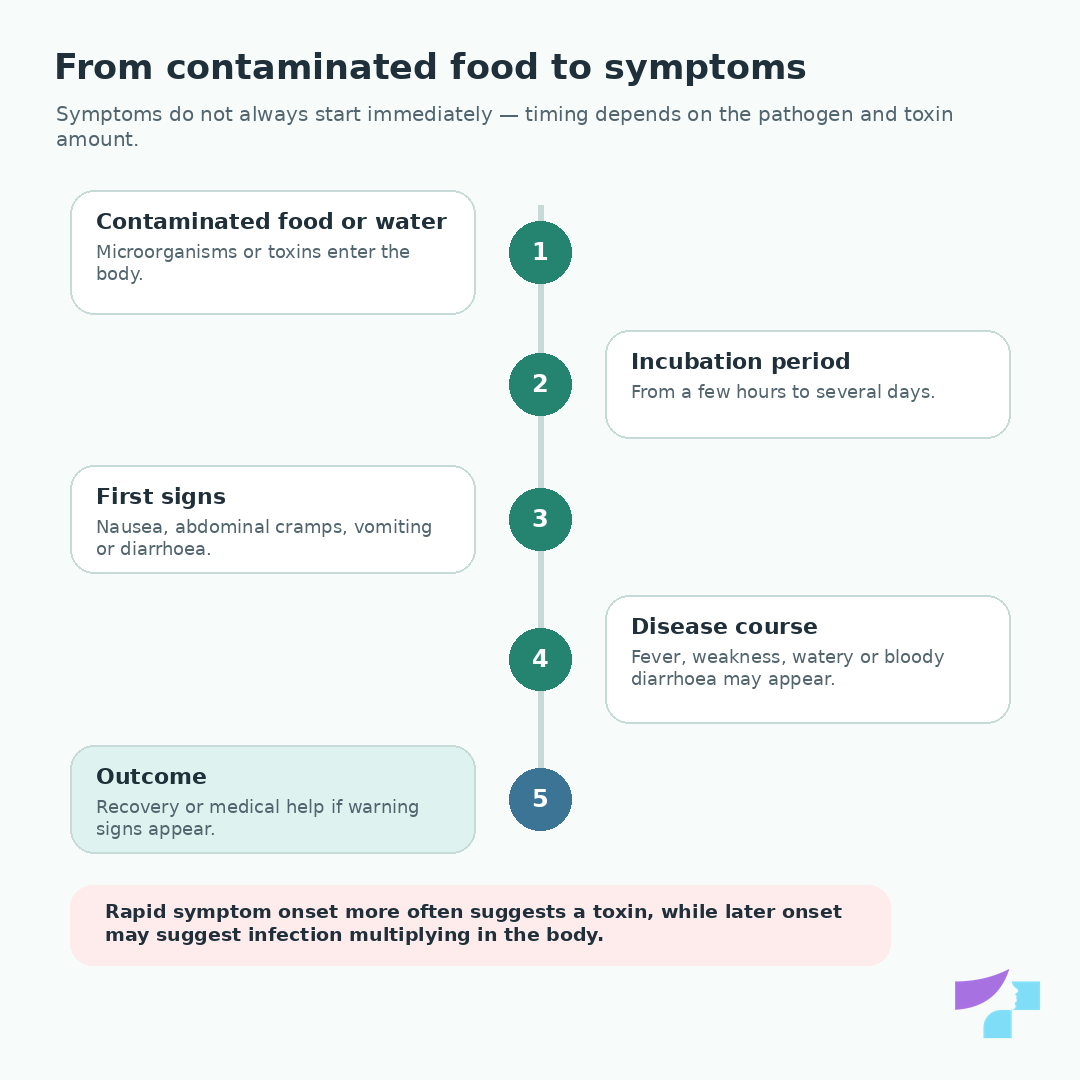
First, a person eats or drinks a contaminated product. This may be insufficiently cooked food, improperly stored food, contaminated water, unwashed fruit or vegetables, unpasteurised products or food contaminated during preparation by hands, surfaces or raw products.
Then comes the incubation period — the time between consuming contaminated food and the first symptoms. With some toxins, symptoms may begin very quickly, while bacterial or viral infections may appear after one or more days.
The first signs may include nausea, abdominal discomfort, abdominal cramps, weakness, vomiting or diarrhoea.
Later, some patients may develop fever, chills, headache, muscle aches, watery diarrhoea or bloody diarrhoea.
In mild cases, symptoms gradually improve, the person starts tolerating fluids better and appetite returns.
In more severe cases, dehydration, marked weakness, dizziness, reduced urination, impaired kidney function or the need for hospital treatment may develop.
Common causes of foodborne infections
Foodborne infections may be caused by many different microorganisms. In clinical practice and public health surveillance, Salmonella, Campylobacter, norovirus, certain E. coli strains, Listeria, as well as some parasites and toxin-producing bacteria are often mentioned.
| Pathogen | Common possible sources | Typical signs | What to keep in mind |
|---|---|---|---|
| Salmonella | Eggs, poultry, meat, unpasteurised products, cross-contaminated food | Diarrhoea, fever, abdominal cramps, nausea | More severe disease is possible in children, older adults and people with weakened immunity |
| Campylobacter | Undercooked poultry, cross-contamination, unpasteurised products | Diarrhoea, abdominal pain, fever, sometimes bloody diarrhoea | May cause severe abdominal pain and mimic other acute abdominal conditions |
| Norovirus | Contaminated food, surfaces, unwashed hands, close contact with an infected person | Sudden vomiting, watery diarrhoea, nausea, abdominal cramps | Highly contagious and easily spreads in families and groups |
| E. coli, including STEC | Undercooked meat, contaminated vegetables, unpasteurised products | Abdominal pain, diarrhoea, possible bloody diarrhoea | Bloody diarrhoea is a warning sign; kidney complications are possible. In children, severe cases may lead to life-threatening complications, especially due to dehydration or kidney damage |
| Listeria monocytogenes | Unpasteurised dairy products, ready-to-eat chilled foods, food stored for a long time | Fever, weakness, diarrhoea, flu-like symptoms | Especially dangerous for pregnant women, newborns, older adults and people with weakened immunity. Severe complications, including nervous system infections, are possible in these groups |
| Staphylococcus aureus toxins | Improperly stored ready-to-eat foods, creams, salads, food prepared by an infected person | Rapid nausea and vomiting, usually within a few hours after eating | Symptoms may begin quickly because the toxin is already present in the food. In more severe cases, medical help or hospitalisation may be needed |
| Bacillus cereus | Rice, cereals and starchy foods stored improperly | Vomiting or diarrhoea | The risk increases if food is kept at room temperature for a long time |
| Clostridium perfringens | Meat dishes, sauces and stews prepared in large amounts and cooled slowly | Abdominal cramps, diarrhoea | More often associated with catering for large groups |
| Clostridium botulinum | Improperly prepared or stored preserved foods | Vision, swallowing and speech problems, muscle weakness | Rare, but an emergency situation; without medical help, a fatal outcome is possible |
| Vibrio spp. | Seafood, especially raw or undercooked seafood | Diarrhoea, abdominal pain, sometimes severe infection | The risk may increase in warmer climates and coastal areas |
Foodborne infections and foodborne illnesses
Bacterial foodborne infections
- Salmonellosis
- Campylobacteriosis
- E. coli infection, including STEC / EHEC infection
- Listeriosis
- Yersiniosis
- Shigellosis
- Vibrio infections
- Cholera
- Brucellosis
- Typhoid and paratyphoid fever
- Mycobacterium bovis infection associated with unpasteurised dairy products
Illnesses caused by bacterial toxins and toxicoinfections
- Food poisoning caused by Staphylococcus aureus toxin
- Food poisoning caused by Bacillus cereus
- Foodborne toxicoinfection caused by Clostridium perfringens
- Botulism
Viral foodborne and waterborne infections
- Norovirus infection
- Rotavirus infection
- Enteric adenovirus infection
- Astrovirus infection
- Sapovirus infection
- Hepatitis A
- Hepatitis E
- Enterovirus-related intestinal infections — less commonly considered classic foodborne infections, but faecal-oral transmission is possible
Parasitic foodborne and waterborne infections
- Giardiasis
- Cryptosporidiosis
- Amoebiasis
- Toxoplasmosis
- Trichinellosis
- Taeniasis, or tapeworm infection
- Cysticercosis
- Anisakiasis
- Cyclosporiasis
- Isosporiasis / cystoisosporiasis
- Fascioliasis
- Diphyllobothriasis
- Echinococcosis — not a typical acute foodborne infection, but may be associated with contaminated food, water or hands
Foodborne poisoning caused by fungi, algae and natural toxins
- Poisoning caused by poisonous mushrooms
- Mycotoxin-related illness, for example aflatoxin exposure
- Ciguatera fish poisoning
- Scombroid, or histamine fish poisoning
- Shellfish toxin poisoning
- Tetrodotoxin poisoning
Foodborne illnesses caused by chemical contamination
- Heavy metal poisoning
- Toxic effects of pesticide residues
- Toxic effects of nitrates and nitrites
- Food contamination caused by industrial or environmental pollution
- Adverse reactions caused by food additives or contaminants
Which foods most often pose a risk?
Many different foods may pose a risk if they are contaminated, undercooked or stored incorrectly.
Higher-risk foods include:
- undercooked poultry;
- undercooked meat;
- raw or undercooked eggs;
- unpasteurised milk and dairy products;
- seafood;
- unwashed fruit and vegetables;
- ready-made salads;
- cream-containing desserts;
- foods kept at room temperature for too long;
- food past its expiry date;
- home-preserved foods if safe preparation rules have not been followed.
It is important to understand that food may look and smell normal even when it contains disease-causing microorganisms. Therefore, appearance or smell alone is not a reliable way to determine whether food is safe.
Symptoms of foodborne infections
Symptoms of foodborne infections may be mild, moderate or severe. They may begin suddenly or develop gradually.
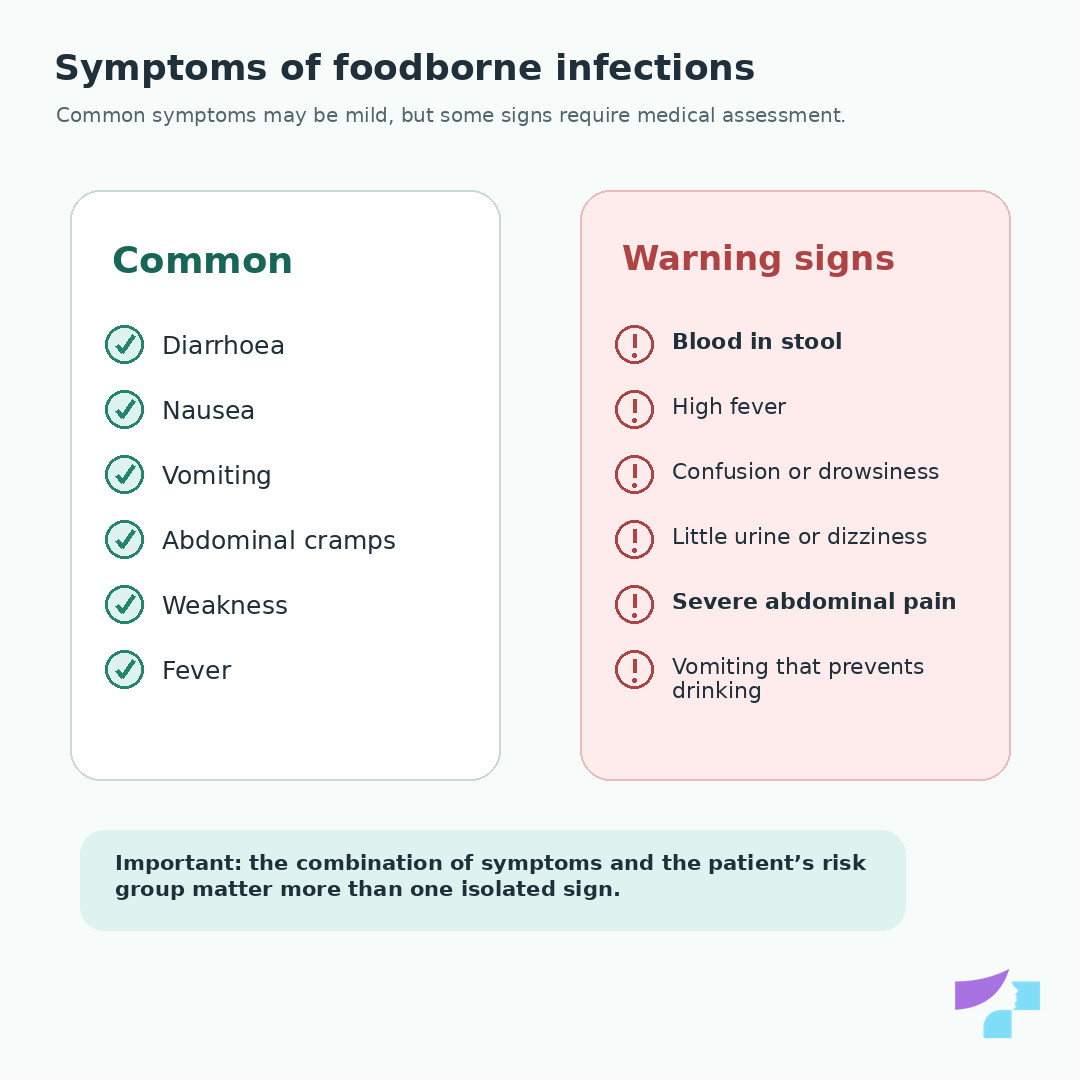
The most common symptoms are:
- diarrhoea;
- nausea;
- vomiting;
- abdominal pain;
- abdominal cramps;
- fever;
- chills;
- weakness;
- headache;
- muscle aches;
- loss of appetite;
- bloating.
Early symptoms
Early symptoms often include nausea, abdominal discomfort, vomiting, diarrhoea, weakness and cramp-like abdominal pain. If the illness is caused by a toxin, symptoms may begin rapidly and with pronounced vomiting. If the cause is a bacterium or virus, symptoms more often appear after a longer incubation period.
At the early stage, it is important to monitor fluid intake. Even if the illness seems mild at first, repeated vomiting or frequent diarrhoea may quickly lead to dehydration.
Late symptoms and warning signs
Later, marked weakness, dizziness, dry mouth, reduced urination, drowsiness, confusion, bloody diarrhoea, high fever or severe abdominal pain may appear.
Warning signs that require medical attention include:
- blood in the stool;
- high or persistent fever;
- severe or worsening abdominal pain;
- repeated vomiting that prevents fluid intake;
- diarrhoea lasting several days;
- marked weakness or dizziness;
- reduced urination;
- dry mouth and thirst;
- confusion or drowsiness;
- symptoms in a child, pregnant woman, older adult or person with weakened immunity.
Typical symptom combinations
Sudden vomiting and nausea a few hours after eating may suggest toxin-related food poisoning.
Diarrhoea, abdominal cramps and fever after consuming a high-risk food may suggest a bacterial intestinal infection.
Watery diarrhoea and vomiting, especially if others nearby are also ill, often fit viral gastroenteritis, such as norovirus infection.
Bloody diarrhoea, severe abdominal pain and marked weakness are signs that require medical assessment.
Three to five key signs that may suggest a foodborne infection
A foodborne infection may be suggested by sudden diarrhoea after eating, nausea or vomiting, cramp-like abdominal pain, fever together with diarrhoea and several people becoming ill after the same food.
These signs are not completely specific, because similar symptoms may be caused by other illnesses. However, they help determine when a connection with food should be considered and when the course of illness should be monitored carefully.
Dehydration in foodborne infections
Dehydration means that the body loses more fluid than it is able to take in. In foodborne infections, this happens due to diarrhoea, vomiting, sweating and insufficient fluid intake.
Signs of dehydration in adults may include:
- marked thirst;
- dry mouth;
- rare or small amounts of urine;
- dark urine;
- dizziness;
- weakness;
- palpitations;
- drowsiness;
- confusion in more severe cases.
Signs of dehydration in children may include:
- dry lips and mouth;
- crying without tears;
- drowsiness or unusual apathy;
- less frequent urination;
- fewer wet nappies;
- sunken eyes;
- refusal to drink.
Dehydration is one of the main reasons why foodborne infections may become dangerous, even if at first they seem like a short-term stomach or intestinal problem.
Who is at higher risk?
A foodborne infection can affect anyone, but the risk of a more severe course is higher in certain patient groups.
Children
Children have smaller fluid reserves, so dehydration may develop more rapidly than in adults. Infants and young children should be assessed especially carefully. Severe dehydration may develop within 24–48 hours or even faster.
Medical help should be sought if a child has repeated vomiting, frequent diarrhoea, blood in the stool, high fever, drowsiness, dry lips, reduced urination or is unable to drink.
Pregnant women
Foodborne infections should be assessed especially carefully during pregnancy, because some infections may pose a risk not only to the mother but also to the foetus. Listeriosis is particularly important.
If a pregnant woman develops fever, diarrhoea, vomiting, flu-like symptoms or marked weakness after consuming a potentially risky food, she should consult a doctor.
Older adults
Foodborne infections may be more severe in older adults due to chronic illnesses, medication use, reduced body reserves and changes in the immune system. Even moderate diarrhoea or vomiting may cause significant fluid loss.
People with weakened immunity
In people with weakened immunity, infection may be more severe, last longer or spread beyond the intestinal tract. This includes patients after transplantation, during cancer treatment, with severe chronic illnesses or receiving immunosuppressive therapy.
People with chronic illnesses
Diabetes, kidney disease, liver disease, heart disease and other chronic conditions may increase the risk of complications. These patients should consult a doctor earlier if symptoms are pronounced or do not resolve.
Can a foodborne infection cause complications?
Yes. Most foodborne infections are mild, but complications are possible.
The most common complication is dehydration. It may cause dizziness, weakness, low blood pressure, impaired kidney function and the need for intravenous fluids.
Electrolyte disturbances may also occur in some cases. Electrolytes are important minerals, such as sodium and potassium, that are needed for the normal function of nerves, muscles, the heart and fluid balance. Electrolyte imbalance may be a serious clinical condition and, without correction under medical supervision, may cause life-threatening consequences.
Some infections may cause bloody diarrhoea, kidney damage, infection spreading into the bloodstream, prolonged digestive symptoms or post-infectious irritable bowel symptoms.
Post-infectious irritable bowel symptoms mean that bloating, changes in bowel habits, pain or discomfort may persist for some time after the acute infection has resolved.
Can a foodborne infection cause kidney damage?
Yes, in some cases this is possible. Most commonly, kidney function may worsen because of dehydration if the body loses a lot of fluid and salts. More rarely, certain E. coli strains may be associated with a more severe complication that affects kidney function.
If there is bloody diarrhoea, marked weakness, reduced urination or worsening condition, medical assessment is needed.
Can a foodborne infection be life-threatening?
Yes, depending on the cause and consequences. A life-threatening course is possible in severe dehydration, spreading infection, the effects of severe toxins or serious complications. The risk is higher in children, pregnant women, older adults and people with weakened immunity.
Emergency medical help is needed if there is confusion, fainting, breathing difficulty, marked drowsiness, inability to drink, severe dehydration, severe abdominal pain or neurological symptoms.
Is immunity possible after a foodborne infection?
After some infections, the body may develop partial or short-term immune protection, but it is usually not complete or long-lasting. Foodborne infections are caused by many different microorganisms and strains, so a person can become ill again.
For example, after one norovirus infection there may be short-term protection against a similar strain, but it does not reliably protect against other strains. In bacterial infections, previous illness usually does not provide reliable future protection either.
Therefore, prevention remains important even if a person has already had a foodborne infection before.
How to distinguish a foodborne infection from a stomach virus?
A foodborne infection and a stomach virus may look very similar. In both cases, diarrhoea, vomiting, nausea, abdominal pain and weakness may occur.
A food-related cause is more likely if several people become ill after the same meal, symptoms start after a specific high-risk food or there is a connection with undercooked food.
A viral infection is more likely if there has been contact with someone who already had vomiting or diarrhoea, or if illness is spreading in a family, kindergarten, school or workplace.
However, the boundary is not absolute, because viruses can also spread through food, and foodborne infections can then spread through hands and surfaces.
How to distinguish a foodborne infection from rotavirus or norovirus?
Symptoms are not specific. To distinguish a foodborne infection from rotavirus or norovirus, a doctor’s or infectologist’s consultation and, if necessary, laboratory tests may be required.
How to distinguish a foodborne infection from gastritis?
Gastritis is inflammation of the stomach lining. It more often causes burning, pain or discomfort in the upper abdomen, which may radiate towards the chest area, nausea, a feeling of fullness and sometimes vomiting.
Foodborne infection is more typically associated with diarrhoea, abdominal cramps, fever and several people becoming ill after the same food. However, symptoms may overlap, so severe or persistent symptoms require medical consultation.
How to distinguish a foodborne infection from appendicitis?
Appendicitis may begin with nausea, vomiting and abdominal pain, so at first it may be confused with an intestinal infection. However, appendicitis often causes pain that worsens and localises in the lower right part of the abdomen. The pain may become stronger when moving, coughing or touching the abdomen.
If abdominal pain is severe, worsening or localised in one area, it should not be explained only as food poisoning. In this situation, urgent medical assessment is needed.
How to distinguish a foodborne infection from a food allergy?
A food allergy is an immune system reaction to a specific food. It may cause hives, itching, swelling of the lips, eyelids or face, shortness of breath, wheezing, vomiting, abdominal pain or, in severe cases, anaphylaxis.
A foodborne infection usually causes diarrhoea, vomiting, abdominal cramps and fever, but not typical allergic swelling or hives.
If shortness of breath, throat swelling, facial swelling, marked weakness or fainting occurs after eating, emergency medical help is needed.
How to distinguish a foodborne infection from food intolerance?
Food intolerance is not an infection. It may be related to difficulty digesting certain substances, such as lactose, or to intestinal sensitivity to specific foods.
Food intolerance more often causes bloating, gas, discomfort and diarrhoea after a specific food, but usually does not cause high fever, bloody diarrhoea or several people becoming ill at the same time after one meal.
Does diarrhoea after eating always mean a foodborne infection?
No. Diarrhoea after eating may be caused by a foodborne infection, but also by food intolerance, irritable bowel syndrome, stress, medications, bile acid problems, chronic intestinal diseases or other causes.
An infection is more likely if onset is sudden, there is a link with high-risk food, fever, vomiting, abdominal cramps or several people becoming ill after the same food.
Foodborne infection or stress — how to understand the cause?
Stress can affect intestinal function and cause diarrhoea, abdominal cramps or nausea. However, stress usually does not cause high fever, bloody diarrhoea or several people becoming ill after the same meal.
If symptoms begin after a specific food, there is vomiting, fever or several people are ill, an infectious cause should be considered more strongly.
How is a foodborne infection diagnosed?
Diagnosis begins with a conversation and symptom assessment. The doctor asks when the symptoms began, what the patient ate in recent days, whether anyone else is ill, whether there has been travel, and whether there is blood in the stool, fever, vomiting or signs of dehydration.
In mild cases, tests are not always necessary. If symptoms are severe, prolonged, include blood in the stool, if the patient belongs to a risk group or an outbreak is possible, the doctor may order additional investigations.
These may include stool tests, bacterial culture, molecular tests, blood tests, inflammatory markers, kidney function tests and electrolyte assessment.
Are stool tests needed for a foodborne infection?
Stool tests are not required for all patients. They may be needed if there is bloody diarrhoea, high fever, severe or prolonged diarrhoea, suspicion of a specific pathogen, illness in a high-risk patient or several people becoming ill at the same time.
Stool tests help identify the pathogen and assess whether specific treatment or epidemiological investigation is needed.
When are blood tests needed?
Blood tests may be needed if there are signs of dehydration, marked weakness, high fever, suspected inflammation, electrolyte disturbances, impaired kidney function or infection spreading beyond the intestines.
Blood tests do not identify the pathogen itself, but they help assess the patient’s overall condition and risk of complications.
Can a foodborne infection be diagnosed by symptoms?
Sometimes symptoms may suggest a foodborne infection, especially if there is a clear link with a specific food or several people are ill. However, symptoms alone cannot always reliably identify the cause.
Similar symptoms may be caused by different infections and also by non-infectious diseases. Therefore, severe, prolonged or unusual symptoms require medical assessment.
When is it necessary to identify the specific pathogen?
Identifying the specific pathogen may be necessary if the disease is severe, there is bloody diarrhoea, the patient belongs to a risk group, symptoms last for several days, an outbreak is suspected or specific treatment needs to be considered.
Pathogen identification is also important for public health surveillance if the infection may be linked to a specific food product, catering establishment or event.
What should you tell the doctor if a foodborne infection is suspected?
It is important to tell the doctor:
- when symptoms began;
- what you ate during the last 24–72 hours;
- whether the food was eaten at home, in a restaurant, at an event or while travelling;
- whether anyone else is ill;
- whether there is fever;
- whether there is blood or mucus in the stool;
- how frequent diarrhoea and vomiting are;
- whether you can take fluids;
- whether there is dizziness, weakness or reduced urination;
- whether the patient is a child, pregnant woman, older adult or person with weakened immunity;
- what chronic illnesses and medications are present.
Is it useful to know what I ate in the last 24–72 hours?
Yes, this is very useful. Different foodborne infections have different incubation periods, so information about foods consumed in recent hours and days may be important for the doctor.
It is especially important to know whether undercooked meat, poultry, eggs, seafood, unpasteurised products, ready-made salads, preserved foods or foods kept at room temperature for a long time were consumed.
When should a foodborne infection be reported to epidemiologists?
If several people become ill after the same food, catering place, event, kindergarten, school or workplace meal, an epidemiological investigation may be needed.
In such cases, it is important to keep information about the food, time of eating, onset of symptoms, number of affected people, food packaging and place of purchase. In Latvia, infectious disease surveillance and prevention information is provided by the Centre for Disease Prevention and Control.
How to recognise a possible foodborne infection outbreak?
A possible foodborne infection outbreak should be considered if several people develop diarrhoea, vomiting, abdominal pain or fever at a similar time after the same meal, event, restaurant, kindergarten, school, workplace or care institution catering.
In this situation, it is important to record:
- what was eaten and when;
- when symptoms began;
- how many people became ill;
- whether everyone ate the same food;
- whether food packaging, a receipt or food leftovers are available;
- whether any ill person works with food, children, patients or in a care institution.
This information can help doctors and epidemiologists identify the source of infection and prevent other people from becoming ill. People with symptoms of an acute intestinal infection should not prepare or transport food or attend organised groups, especially children’s institutions.
How are foodborne infections treated?
Treatment depends on the severity of symptoms, the likely pathogen and the patient’s risk factors.
In mild cases, the main measures are fluid intake, replacement of salts, rest and monitoring. In many cases, the body overcomes the infection on its own.
If there is vomiting, it is better to drink often and in small amounts. A large amount of fluid at once may trigger further vomiting. Oral rehydration solutions may be used to replace fluids and electrolytes.
In more severe cases, doctor-prescribed treatment, laboratory tests, prescription medicines or intravenous fluids may be needed. Specific therapy is determined by a doctor.
What can you drink during a foodborne infection?
The most important step is fluid intake. Water, oral rehydration solutions and other well-tolerated fluids may be used.
If there is vomiting, fluids should be taken in small sips but frequently. If fluids cannot be kept down, a doctor should be contacted.
Alcohol should be avoided. Sweet drinks may worsen diarrhoea in some people. Caffeinated drinks may irritate the stomach and contribute to fluid loss.
What to eat after food poisoning?
When vomiting decreases and fluids can be kept down, food can be restarted gradually. Initially, light foods are suitable, such as rice, boiled potatoes, porridge, bananas, toast, light soups or other well-tolerated foods.
A very strict diet is not always necessary, but it is advisable to avoid fatty, heavy, very spicy foods and alcohol until digestion normalises.
A normal diet is usually resumed gradually, depending on how the person feels.
Should probiotics be used for foodborne infections?
Probiotics are live microorganisms that may help restore the balance of the gut microbiome in certain situations. However, their effect depends on the specific probiotic strain, dose, patient age and cause of illness.
Probiotics are not the main treatment for foodborne infections and do not replace fluid intake. People with severely weakened immunity should discuss probiotic use with a doctor.
Can anti-diarrhoeal medicines be used?
Anti-diarrhoeal medicines should not be used automatically. In some situations, they may help reduce symptoms, but in others they may be unsuitable and worsen the course of illness.
Anti-diarrhoeal medicines should not be used without medical advice if there is bloody diarrhoea, high fever, severe abdominal pain or suspicion of a severe bacterial infection. In such situations, excessive slowing of bowel activity may be dangerous.
Do antibiotics help with foodborne infections?
Antibiotics help only in certain bacterial infections and are not necessary for all patients. They do not help in viral infections.
Unnecessary antibiotic use may contribute to side effects, disruption of the gut microbiome and antimicrobial resistance. Therefore, antibiotics should be used only when prescribed by a doctor.
When are intravenous fluids needed?
Intravenous fluids may be needed if a person cannot drink or keep fluids down due to vomiting, has marked dehydration, low blood pressure, confusion, severe weakness, reduced urination, impaired kidney function or a high risk of complications.
In this situation, treatment should be provided in a medical facility.
How long should a gentle diet be followed after a foodborne infection?
A gentle diet should be followed as long as nausea, vomiting, diarrhoea or abdominal discomfort persists. When symptoms improve, the diet can be expanded gradually.
If pain, diarrhoea, fever or weakness returns after apparent recovery, a doctor should be consulted.
Can a foodborne infection be treated at home?
A mild foodborne infection can often be treated at home if the person can take fluids, there is no blood in the stool, no high fever, no severe abdominal pain and no signs of dehydration.
Home treatment is not suitable if the patient is an infant, young child, pregnant woman, older adult, person with weakened immunity or chronic illness and symptoms are pronounced.
How to protect yourself from foodborne infections?
Prevention is based on four main principles: cleanliness, separation of foods, adequate cooking and proper storage.
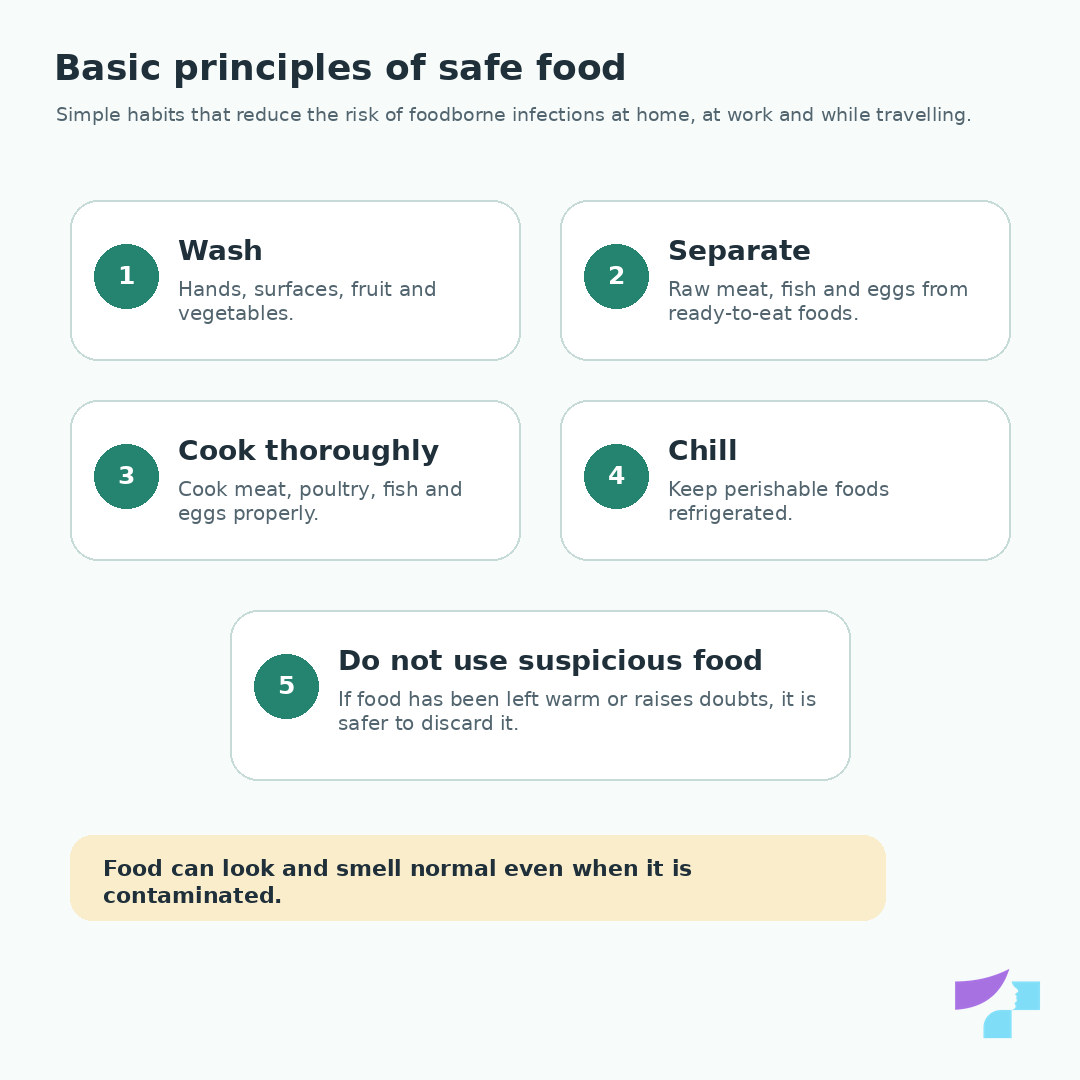
Hands should be washed before preparing food, after using the toilet, after contact with raw meat, eggs or fish, after changing nappies, after touching animals and before eating.
Raw meat, poultry, fish and eggs should be separated from ready-to-eat foods. It is advisable to use separate cutting boards and knives for raw and ready-to-eat products.
Food should be cooked thoroughly. This is especially important for poultry, minced meat, eggs and seafood.
Perishable foods should be kept refrigerated. Ready-made food should not be left at room temperature for a long time.
If a product is spoiled, has been stored incorrectly or raises doubts, it is safer not to eat it.
How should food be stored correctly?
Perishable foods should be stored in the refrigerator, following the manufacturer’s instructions and expiry date. Ready-made food should not be kept at room temperature for long periods.
Raw meat, fish and eggs should be stored so that their liquids do not come into contact with ready-to-eat foods. In the refrigerator, raw products should preferably be kept separately and below ready-made foods.
Food that has been kept warm for a long time should not be reheated and eaten only because it still looks normal.
Why is it important to separate raw meat from ready-to-eat foods?
Raw meat, especially poultry, may contain bacteria. If these bacteria get onto salads, bread, fruit, ready-made foods, kitchen surfaces or hands, cross-contamination may occur.
Cross-contamination is one of the common reasons why a person may become ill even if the final food itself is not considered “risky”.
How to cook chicken, meat and eggs safely?
Chicken, meat, minced meat and eggs should be cooked thoroughly to destroy disease-causing microorganisms. This is especially important for poultry and minced meat, because bacteria may be present not only on the surface but also inside the product.
Raw or undercooked eggs should be avoided in foods served to children, pregnant women, older adults or people with weakened immunity.
Can food be reheated?
Food can be reheated if it has been stored correctly and is reheated thoroughly. However, reheating is not a guarantee of safety if the food has been kept at room temperature for a long time or has been repeatedly cooled and reheated.
If there are doubts about food safety, it is better not to eat it.
How long can cooked food be kept at room temperature?
Cooked food should not be kept at room temperature for a long time. The longer food stays warm, the greater the risk that bacteria will multiply. Particular care is needed with meat dishes, dairy products, salads, creams, seafood and foods containing eggs.
The key practical principle is that if food is perishable, it should be cooled and refrigerated as soon as possible.
Should fruit and vegetables be washed even if they will be peeled?
Yes. Fruit and vegetables should be washed even if they will be peeled, because microorganisms from the peel can get onto hands, the knife or the food itself during peeling.
Foods eaten raw and not cooked should be washed especially carefully.
How to avoid foodborne infections while travelling?
When travelling, it is important to choose safely prepared food and be cautious with water, ice cubes, raw seafood, undercooked meat, unwashed fruit and vegetables.
In places with unsafe water supplies, it is advisable to use safe bottled water, avoid ice cubes and eat food that has just been cooked and is served hot.
What to do if diarrhoea and vomiting start after visiting a restaurant?
If symptoms are mild, fluids should be taken, rest is needed and the condition should be monitored. If symptoms are severe, there is blood in the stool, high fever, severe abdominal pain or signs of dehydration, medical help is needed.
If several people become ill after visiting the same restaurant or event, it is important to keep information about the food, the time of the visit and the onset of symptoms. This may be important for epidemiological investigation.
What to do if the whole family becomes ill after the same food?
If several people become ill after the same food, a common foodborne outbreak is possible. Symptom severity should be assessed, fluids should be taken and a doctor should be contacted if warning signs are present.
If possible, food packaging, purchase information or food leftovers should be kept, as they may help identify the source of infection.
Should food be thrown away if spoilage is suspected?
Yes. If there is suspicion that food is spoiled, stored incorrectly or may be contaminated, it should not be eaten. It is not safe to rely only on taste, smell or appearance.
Particular caution is needed with perishable foods, preserved foods with damaged packaging, food past its expiry date or food kept warm for a long time.
Can you become ill from food that smells and looks normal?
Yes. Food may look, smell and taste normal but still contain disease-causing microorganisms. Many microorganisms do not change the smell or appearance of food in a way that people can reliably notice.
Therefore, safe food handling, storage and hygiene are more important than smell alone.
Is a foodborne infection contagious to other people?
Some foodborne infections can be contagious. This is especially true for viral infections such as norovirus. Infection can spread through hands, surfaces, shared objects and close contact.
If a person has diarrhoea or vomiting, they should not prepare food for others until symptoms have resolved and a safe recovery period has passed, especially when children, older adults or people with weakened immunity are involved.
When can a person return to work or school after a foodborne infection?
Returning to work or school depends on symptoms and the type of work. If a person still has diarrhoea or vomiting, they should not go to work, school or kindergarten because there is a risk of spreading infection.
This is especially important for people working with food, in healthcare, childcare or care institutions. In these cases, the safety requirements set by a doctor or workplace should be followed.
Can a child with diarrhoea go to kindergarten?
A child with diarrhoea or vomiting should not attend kindergarten or school while symptoms continue. This protects other children and allows the child to recover.
If the child has signs of dehydration, high fever, blood in the stool or marked weakness, a doctor should be contacted.
When can normal eating be resumed after vomiting and diarrhoea?
Normal eating may be resumed gradually when vomiting has decreased, fluids can be kept down and appetite starts returning. Initially, it is advisable to choose easily tolerated foods and avoid heavy, fatty or very spicy foods.
If symptoms return after eating, the diet should be expanded more slowly.
What is clearly proven in medicine?
It is clearly proven that foodborne infections may be caused by specific microorganisms, their toxins or contaminated water and food. It is also proven that hand washing, safe food storage, separating raw and ready-to-eat foods and adequate cooking reduce the risk of illness.
Medically, preventing dehydration is also one of the main treatment principles in acute diarrhoea and vomiting. Fluid and electrolyte loss often determines whether the illness remains mild or becomes dangerous.
It is also clear that antibiotics are not required for all foodborne infections. Unnecessary antibiotic use may cause side effects and contribute to antimicrobial resistance.
What is medicine currently working on?
Modern medicine and public health are actively developing faster diagnostics for foodborne infections. Molecular tests can identify pathogens faster than traditional methods, which may help in severe cases and outbreak investigations.
Another important area is antimicrobial resistance. This means that bacteria become resistant to antibiotics. Therefore, doctors increasingly emphasise the need to use antibiotics only when they are truly necessary.
Food chain surveillance and genetic tracing of infections are also developing. This helps identify common food sources and cross-border outbreaks more quickly. This is especially important because food products are often produced, transported and sold across several countries.
Climate change and the risk of foodborne infections
Climate change may affect the risk of foodborne infections because changes in temperature, humidity, rainfall and extreme weather events affect food production, storage, water safety and the spread of microorganisms. Warmer and more humid conditions may promote the spread of some bacteria, viruses and toxin-producing microorganisms, and may also change risks related to seafood and plant-based foods.
The European Climate and Health Observatory notes that climate change is already affecting many aspects of the food system and may influence the frequency, severity and spread of some foodborne diseases. Mycotoxins — toxic compounds produced by certain fungi — are also mentioned, and their distribution may be affected by temperature and humidity.
For patients, this means that food safety habits become even more important: maintaining the cold chain, adequate cooking, safe water, hand hygiene and caution with seafood, unpasteurised products and food kept warm for long periods.
References and authoritative sources
Centre for Disease Prevention and Control of Latvia (SPKC): Infectious disease descriptions
Centre for Disease Prevention and Control of Latvia (SPKC): Salmonellosis and its prevention
World Health Organization (WHO): Food safety
World Health Organization (WHO): Foodborne diseases
Centers for Disease Control and Prevention (CDC): Food poisoning symptoms
Centers for Disease Control and Prevention (CDC): Foods that can cause food poisoning
European Centre for Disease Prevention and Control (ECDC): Campylobacteriosis
European Food Safety Authority (EFSA): Biological hazards and foodborne diseases
Disclaimer
The information in this article is intended for informational and educational purposes only and does not replace medical consultation, diagnosis or treatment. Symptoms of foodborne infections may resemble other acute abdominal, digestive or infectious diseases, therefore self-diagnosis and self-treatment may be inaccurate and dangerous. If you or your child have bloody diarrhoea, high fever, repeated vomiting, marked weakness, signs of dehydration, severe or worsening abdominal pain, symptoms during pregnancy, in older age or in the case of weakened immunity, contact a doctor, general practitioner, infectologist, gastroenterologist or paediatrician without delay. In the case of severe, rapidly worsening or high-risk symptoms, emergency medical help should be called.
