Meteorism, or abdominal bloating, is a very common complaint. People usually describe it as a bloated abdomen, a feeling of fullness or pressure, abdominal rumbling, belching, or increased passing of gas. In most cases, abdominal bloating is not dangerous and is related to diet, eating habits, constipation, or swallowing air. However, meteorism can sometimes also be a symptom of a digestive disorder or another health problem.
It is important to understand that meteorism is not one specific disease. It is a symptom with many possible causes. For this reason, treatment is not the same for everyone. One person may benefit from changing eating habits, another from treating constipation, while someone else may need assessment for lactose intolerance, irritable bowel syndrome, coeliac disease, pancreatic function, or another condition.
In brief: the most important facts about meteorism
- Meteorism means increased gas production, gas accumulation in the intestines, or a feeling of abdominal bloating.
- A small amount of gas in the digestive tract is normal.
- Common causes include eating too quickly, carbonated drinks, overeating, legumes, cabbage, lactose intolerance, and constipation.
- Bloating after meals is often related to foods that ferment in the intestines.
- Stress and anxiety can worsen abdominal discomfort and air swallowing.
- If bloating is persistent, progressive, or accompanied by other symptoms, medical assessment is recommended.
- Weight loss, blood in the stool, vomiting, fever, severe pain, or inability to pass gas are warning signs.
- Probiotics, simethicone, lactase, or activated charcoal may help in some situations, but they are not universal solutions.
- The best treatment depends on the cause of meteorism.
What is meteorism?
Meteorism is the accumulation of gas or increased gas production in the gastrointestinal tract. A person may feel it as abdominal bloating, pressure, rumbling, cramp-like pain, or a need to pass gas more often.
Gas in the digestive tract forms in two main ways. First, some air is swallowed during eating, drinking, talking, chewing gum, or smoking. Second, gas forms in the intestines when bacteria break down nutrients, especially carbohydrates that have not been fully digested in the small intestine.
The feeling of bloating does not always mean that there is objectively a very large amount of gas. In some people, the intestines are more sensitive, so even a normal amount of gas can cause significant discomfort. This is often seen in irritable bowel syndrome.
Symptoms of meteorism
The most common symptoms of meteorism include:
- a bloated abdomen;
- a feeling of fullness or pressure in the abdomen;
- abdominal discomfort;
- abdominal rumbling or gurgling;
- belching;
- increased passing of gas, or flatulence;
- cramp-like abdominal pain;
- an increase in abdominal size during the day;
- a feeling that the abdomen is full of gas, but the gas does not pass.
In some people, bloating is more noticeable in the evening because digestion products and gas accumulate in the intestines during the day. In others, symptoms appear soon after specific foods, such as milk, bread, legumes, or sweeteners.
Is gas in the abdomen normal?
Yes. Gas is a normal part of digestion. It forms both from swallowed air and from the activity of intestinal bacteria. It becomes a problem when it causes pain, pressure, social discomfort, visible abdominal distension, or appears together with other symptoms.
If bloating is rare, mild, and clearly linked to a particular food, adjusting eating habits is usually enough. If symptoms recur often, become worse, or occur together with diarrhoea, constipation, weight loss, or blood in the stool, a medical cause should be considered.
Why does the abdomen bloat?
The causes of abdominal bloating may be functional, diet-related, or associated with disease.
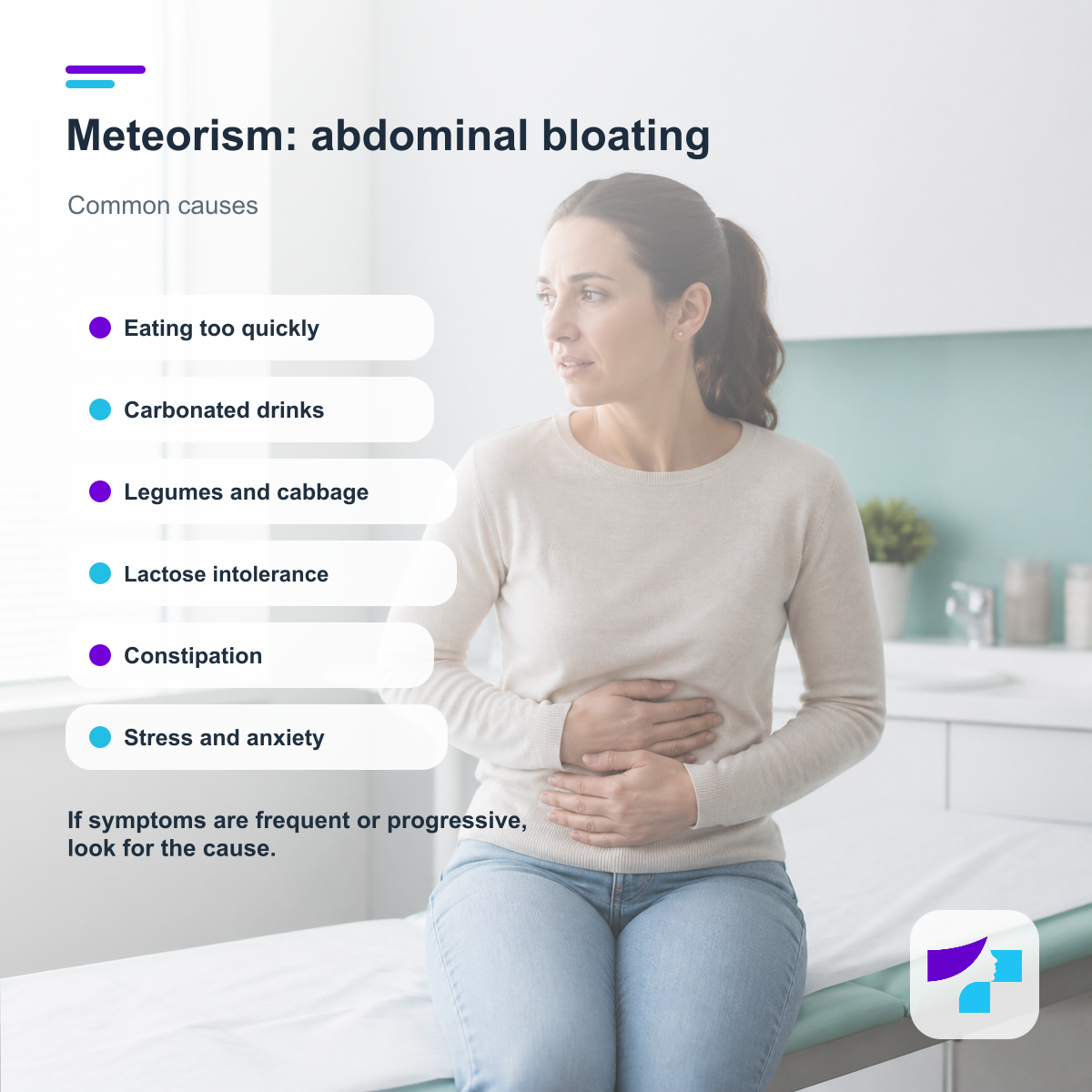
Common causes include:
- eating too quickly and not chewing food properly;
- swallowing air while eating or talking;
- carbonated drinks;
- overeating;
- large meals late in the evening;
- legumes, cabbage, onions, garlic, and other fermentable foods;
- dairy products in people with lactose intolerance;
- fructose or sorbitol intolerance;
- constipation;
- irritable bowel syndrome;
- changes in intestinal microbiota after antibiotics;
- low physical activity;
- stress and anxiety;
- pregnancy;
- hormonal changes during the menstrual cycle;
- coeliac disease;
- exocrine pancreatic insufficiency;
- less commonly, inflammatory bowel disease, bowel obstruction, tumours, or other serious conditions.
Aerophagia, or swallowing air
Aerophagia means excessive swallowing of air. It is one of the common causes of meteorism. A person may swallow more air when eating in a hurry, talking while eating, drinking through a straw, drinking carbonated beverages, chewing gum, smoking, or experiencing frequent anxiety.
In some patients, abdominal bloating decreases when simple habits are changed: eating more slowly, avoiding eating “on the run”, not talking with a full mouth, reducing carbonated drinks, and avoiding chewing gum if it triggers symptoms.
How to understand the possible cause based on the situation?
| Situation | Possible cause | What can be done | When to see a doctor |
|---|---|---|---|
| Bloating after dairy products | Lactose intolerance | Observe the link, try lactose-free products, ask about testing | If there is diarrhoea, weight loss, or symptoms persist |
| Bloating after bread or flour products | Wheat FODMAPs, coeliac disease, gluten sensitivity | Do not stop gluten before coeliac testing without medical advice | If there is persistent diarrhoea, anaemia, or weight loss |
| Bloating is worse in the evening | Diet, constipation, intestinal sensitivity | Smaller portions, movement, improving bowel habits | If symptoms progress or new pain appears |
| Bloated abdomen and constipation | Slow bowel function, lack of fluids or fibre, medications | Water, movement, gradual increase in fibre | If constipation is new, severe, or accompanied by blood |
| Bloating with diarrhoea | Infection, irritable bowel syndrome, intolerance, coeliac disease, inflammation | Monitor duration, take fluids, consider medical assessment | If diarrhoea persists, or there is blood, fever, or weight loss |
| Bloating after antibiotics | Changes in intestinal microbiota | Gentle diet, probiotics after advice from a doctor or pharmacist | If diarrhoea is severe or prolonged |
| The abdomen is bloated, but gas does not pass | Constipation, bowel motility problems, rarely obstruction | Assess pain and bowel movements | Urgently if there is severe pain, vomiting, or no bowel movement |
| Bloating with fatty stools | Possible pancreatic or absorption problem | Medical diagnosis is needed | See a doctor in the near future |
Foods that often increase gas production
Some foods more often cause increased gas production because they contain carbohydrates that intestinal bacteria ferment. This does not mean that these foods are harmful. Many of them are healthy, but in sensitive people or in larger amounts they may cause bloating.
Common foods include:
- beans, peas, lentils;
- cabbage, broccoli, cauliflower;
- onions and garlic;
- apples, pears, plums, dried fruit;
- milk and dairy products in people with lactose intolerance;
- wheat products in sensitive people;
- sweeteners such as sorbitol, mannitol, and xylitol;
- carbonated drinks;
- alcohol;
- fatty and highly processed foods.
These foods should not automatically be excluded by everyone. It is better to observe individual reactions, portion size, and whether symptoms recur.
How to reduce abdominal bloating in everyday life?

Recommendations:
- eat more slowly and chew food thoroughly;
- choose smaller, more regular meals;
- reduce carbonated drinks;
- avoid overeating;
- avoid large meals late in the evening;
- reduce chewing gum if it triggers air swallowing;
- keep a record of food, symptoms, and bowel movements;
- increase fibre gradually;
- drink enough water;
- move regularly;
- treat constipation if it is one of the causes;
- reduce stress and eat in a calmer rhythm.
The question “what should I eat if my abdomen bloats?” does not have the same answer for everyone. One person may benefit from reducing lactose, another from treating constipation, and another from smaller portions or a short-term low FODMAP diet under specialist guidance.
What should you avoid if bloating is frequent?
It is not recommended to:
- use activated charcoal for a long time without advice from a doctor or pharmacist;
- exclude large food groups without a clear reason;
- start very strict elimination diets without a plan;
- ignore weight loss, blood in the stool, fever, or severe pain;
- assume that all symptoms are “just stress”;
- stop eating gluten before coeliac disease testing if the necessary tests have not yet been performed.
Diagnosis: how does a doctor assess meteorism?
If bloating is frequent, prolonged, or accompanied by other symptoms, a doctor can help identify the possible cause. The extent of testing depends on age, symptoms, medical history, and warning signs.
The doctor usually asks:
- when the symptoms started;
- whether bloating occurs after meals;
- which foods make it worse;
- whether there is diarrhoea, constipation, or pain;
- whether bowel habits have changed;
- whether there is weight loss, fever, vomiting, or blood in the stool;
- which medicines are being used;
- whether antibiotics have been used recently;
- whether there is a family history of coeliac disease, inflammatory bowel disease, or tumours.
Possible tests include:
- blood tests;
- inflammatory markers;
- stool tests;
- coeliac disease tests;
- assessment for lactose or fructose intolerance;
- abdominal ultrasound;
- gastroscopy or colonoscopy, if indicated;
- assessment of pancreatic function, if symptoms suggest it.
When should you see a doctor for abdominal bloating?

You should see a doctor if bloating is regular, does not go away, becomes worse, or interferes with daily life. It is especially important not to delay assessment if meteorism is a new symptom after the age of 50.
Warning signs include:
- unexplained weight loss;
- blood in the stool;
- black stool;
- prolonged or repeated vomiting;
- fever;
- severe or progressive abdominal pain;
- persistent diarrhoea;
- anaemia;
- night-time symptoms;
- loss of appetite;
- inability to pass gas or stool;
- sudden, severe abdominal distension and pain;
- bloating together with shortness of breath or fainting.
If there is very severe pain, vomiting, blood, black stool, or inability to pass gas or stool, urgent medical care is needed.
Treatment of meteorism
Treatment of meteorism depends on the cause. There is no single remedy that helps everyone.
Possible approaches include:
- changing eating habits;
- reducing carbonated drinks;
- limiting foods that trigger symptoms;
- treating constipation;
- limiting lactose if lactose intolerance is present;
- a low FODMAP diet in selected cases;
- probiotics, if there is a reason to try them;
- simethicone for symptom relief;
- lactase preparations in lactose intolerance;
- activated charcoal for short-term use and with caution;
- enzyme preparations only when there are appropriate indications;
- treatment of the underlying condition if meteorism is caused by coeliac disease, irritable bowel syndrome, pancreatic insufficiency, or another disease.
Low FODMAP diet: when can it help?
A low FODMAP diet may help some patients with irritable bowel syndrome, especially when bloating, pain, and variable bowel habits are prominent. FODMAPs are fermentable carbohydrates that are poorly absorbed in some people and may increase gas production in the intestines.
This diet is not intended as a permanent, highly restrictive eating pattern. It is usually done in stages: short-term restriction, gradual reintroduction of foods, and individual diet adjustment. It is best done under the guidance of a gastroenterologist or dietitian.
Meteorism in children
In children, bloating is often related to diet, constipation, swallowing air, eating too quickly, or intestinal infections. In infants, gas and abdominal discomfort may be related to an immature digestive system or feeding-related factors.
A doctor should be consulted if a child has:
- severe pain;
- vomiting;
- fever;
- blood in the stool;
- poor weight gain;
- persistent diarrhoea;
- severe constipation;
- apathy or refusal to drink.
Children should not use medicines long term or follow strict diets without medical advice.
Meteorism during pregnancy
Abdominal bloating is common during pregnancy. It can be caused by hormonal changes, slower bowel function, constipation, and pressure from the growing uterus on the digestive tract.
Smaller meals, enough fluids, gentle physical activity, and constipation prevention may help. A pregnant woman should seek medical care if she has severe pain, vomiting, bleeding, fever, or a sudden worsening of general well-being.
Common myths about meteorism
Myth: abdominal bloating always means a serious disease.
Usually it is related to diet or eating habits, but prolonged and progressive symptoms should be assessed.
Myth: if the abdomen bloats, all dairy and flour products must be excluded.
Unnecessary restrictions may worsen diet quality. Foods should be assessed individually.
Myth: probiotics help everyone in the same way.
The effect of probiotics depends on the specific product, dose, duration of use, and the patient’s situation.
Myth: activated charcoal is safe for long-term daily use.
It can interfere with medicine absorption and does not solve the cause of meteorism.
Myth: gas in the abdomen is caused only by poor diet.
It may also be related to constipation, irritable bowel syndrome, stress, medicines, or disease.
Myth: meteorism can be cured with one medicine.
Treatment depends on the cause.
Myth: fibre always immediately reduces abdominal bloating.
A rapid increase in fibre can temporarily worsen bloating.
Myth: bloating after meals is always an allergy.
More often it is intolerance, fermentation, a large portion, or intestinal sensitivity rather than allergy.
Summary
Meteorism, or abdominal bloating, is a common and usually manageable complaint. Most often it is related to diet, eating habits, swallowing air, constipation, or intestinal sensitivity. However, persistent, new, or progressive bloating should be assessed by a doctor, especially if warning signs are present.
The best approach is not simply to “take something for gas”, but to understand the cause. Once it is clear whether the problem is related to diet, constipation, lactose intolerance, irritable bowel syndrome, microbiota changes, or another condition, the most appropriate treatment can be chosen.
References and authoritative sources
- National Health Service (NHS): bloating
- Mayo Clinic: gas and gas pains - symptoms and causes
- Mayo Clinic: gas and gas pains - diagnosis and treatment
- Cleveland Clinic: bloated stomach and abdominal bloating
- National Institute of Diabetes and Digestive and Kidney Diseases (NIDDK): lactose intolerance
- American College of Gastroenterology: clinical guideline for the diagnosis and management of irritable bowel syndrome
- American College of Gastroenterology: low FODMAP diet
- American Gastroenterological Association: the role of diet in irritable bowel syndrome
