Erythrodermic psoriasis, also known as exfoliative psoriasis, is a rare but very severe form of psoriasis in which inflammation affects a large area of the skin and may involve not only the skin but the entire body. It is not an ordinary psoriasis flare-up. If the skin becomes extensively red, painful, burning and peels over large areas, while chills, fever, swelling, weakness or a rapid deterioration in general wellbeing occur at the same time, urgent medical assessment is required.
Erythrodermic psoriasis can develop in people who already have known psoriasis, but in some cases it may also be the first manifestation of very severe psoriatic inflammation. Before this form develops, people often notice that their existing psoriasis is worsening rapidly, no longer responding to their usual treatment or beginning to spread unusually widely.
This article provides an in-depth explanation of erythrodermic, or exfoliative, psoriasis. It does not replace medical consultation, but it can help explain why this form is dangerous, which symptoms should be taken seriously, which conditions it may resemble and why treatment should not be changed or discontinued without medical supervision.
Important: if extensive redness and peeling of the skin are accompanied by fever, chills, severe weakness, swelling, palpitations, dizziness, confusion or a rapid deterioration in condition, this may be a medical emergency. In such cases, you should not wait for a routine dermatologist appointment — urgent medical care should be sought.
What is erythrodermic psoriasis?
Erythrodermic psoriasis is a severe form of psoriasis in which the skin becomes extensively red, inflamed, hot, painful and burning, and begins to peel markedly. The term “erythroderma” refers to widespread redness of the skin. In psoriasis, this is caused by an uncontrolled inflammatory process in the skin.
Unlike the most common form of psoriasis — plaque psoriasis — in which separate red, scaly plaques are usually visible, erythrodermic psoriasis can affect a very large proportion of the body surface. The skin may appear “burnt”, become painful and cracked, peel over extensive areas and no longer perform its protective function effectively.
This form is important not only from a dermatological perspective but also in terms of general health. The skin is the largest organ of the human body. It helps maintain fluid balance and body temperature and protects against infection. When a large area of skin is inflamed and damaged, fluid loss, impaired temperature regulation, an increased risk of infection and additional strain on the heart may occur.
Are exfoliative psoriasis, erythrodermic psoriasis and psoriatic erythroderma synonyms?
Several similar terms may be used in practice:
- erythrodermic psoriasis — the preferred main term;
- exfoliative psoriasis — emphasises pronounced peeling of the skin;
- psoriatic erythroderma — a descriptive medical term.
These terms generally describe the same severe form of psoriasis: widespread, diffuse skin inflammation with redness, peeling and possible involvement of the whole body.
Why is erythrodermic psoriasis a severe form of psoriasis?
Erythrodermic psoriasis is severe because it can disrupt the skin’s essential functions. The skin may no longer adequately protect the body from fluid loss, microorganisms and temperature fluctuations. In severe cases, this can lead to a condition requiring urgent medical care or hospitalisation.
The level of danger depends not only on how severe the visible skin changes are, but also on the person’s general condition. If widespread redness and peeling are accompanied by fever, chills, palpitations, swelling, weakness, dizziness, confusion or rapid deterioration, the situation should be regarded as high risk.
How common is erythrodermic psoriasis?
Erythrodermic psoriasis is a rare form of psoriasis. Most people with psoriasis have plaque, guttate, inverse, nail or other more localised forms. However, its rarity does not mean that the condition can be ignored. On the contrary, because erythrodermic psoriasis is potentially dangerous, widespread redness and peeling of the skin require timely medical assessment.
Is erythrodermic psoriasis contagious?
No. Erythrodermic psoriasis is not contagious. It cannot be passed from one person to another by touching, living together, sharing objects or being in the same room.
It is not a fungal infection, a bacterial infection or a viral disease. It is an immune-mediated inflammatory disease in which changes in immune system activity cause widespread inflammation in the skin. Infection may act as a trigger for a flare-up in some people, but erythrodermic psoriasis itself is not infectious.
What does erythrodermic psoriasis look like?
Erythrodermic psoriasis can vary considerably in appearance, but typical features include:
- widespread redness of the skin;
- pronounced peeling or shedding of the skin;
- burning, hot or painful skin;
- marked dryness;
- cracks or skin tenderness;
- itching;
- swelling, particularly in the legs, feet, hands or face;
- chills, fever, weakness or feeling generally unwell.
Sometimes the skin changes may resemble a severe burn, an allergic reaction or widespread dermatitis. This is why self-diagnosis is not safe. In cases of widespread erythroderma, the doctor must consider not only psoriasis but also other possible causes.
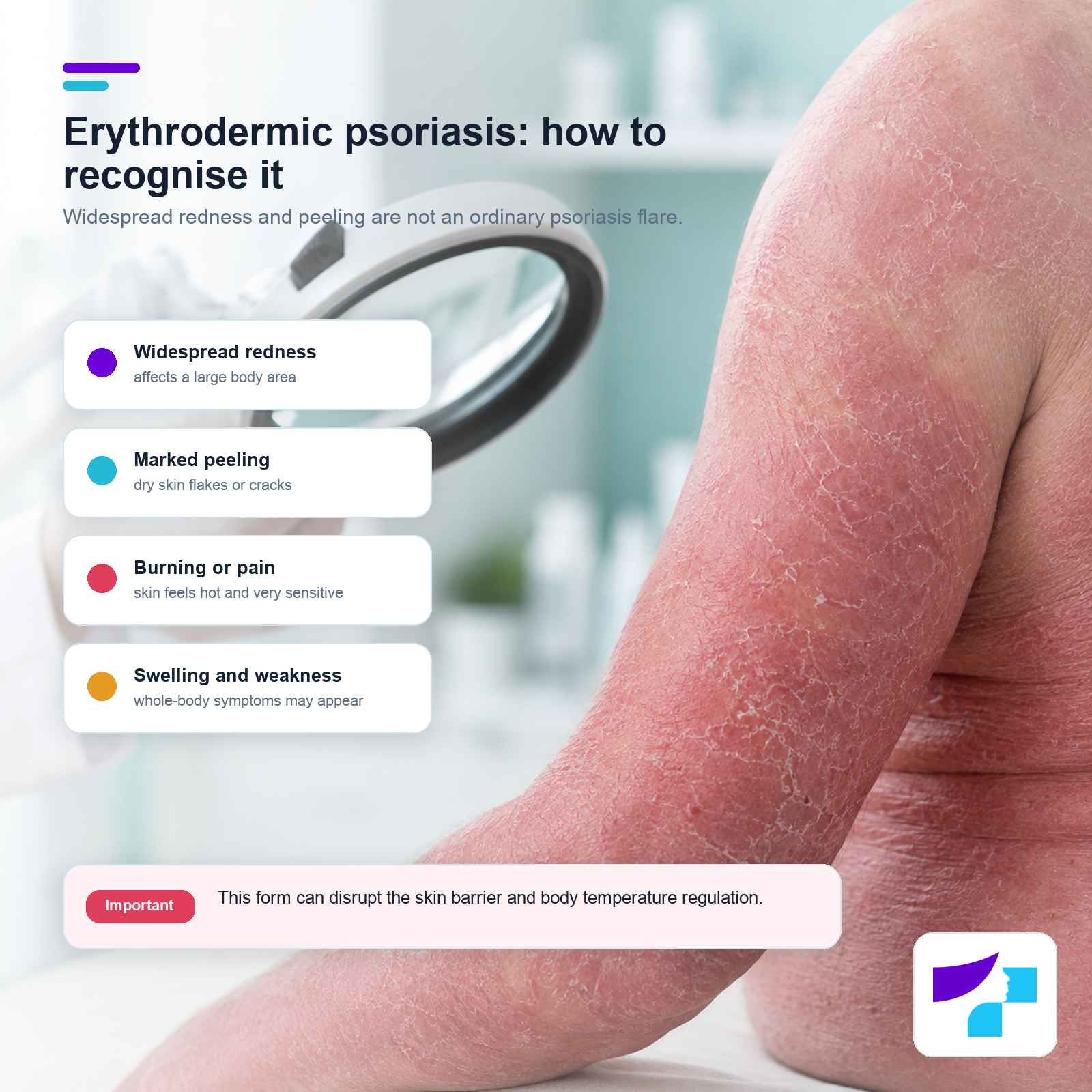
3–5 main signs that may indicate erythrodermic psoriasis
A combination of the following signs may indicate erythrodermic or exfoliative psoriasis:
- Widespread redness affecting a large part of the body.
- Marked skin peeling, dryness or shedding.
- Burning, pain or very sensitive skin rather than ordinary itching alone.
- Systemic symptoms — chills, fever, weakness, dizziness or feeling generally unwell.
- Swelling or rapid deterioration, particularly in a person with known psoriasis.
If these signs occur, you should not simply wait for the symptoms to resolve on their own. It is especially important not to delay seeking help if the skin changes are spreading rapidly or the person feels unwell.
When is erythrodermic psoriasis dangerous?
Erythrodermic psoriasis becomes dangerous when widespread skin inflammation affects the body’s general condition. In this situation, the skin may lose its ability to retain fluids normally, regulate temperature and protect against infection.
The risk is increased by:
- extensive skin involvement;
- fever or chills;
- rapid deterioration of the skin condition;
- marked swelling;
- weakness, dizziness or confusion;
- palpitations or shortness of breath;
- severe pain or burning;
- signs suggesting infection;
- older age;
- heart, kidney or other chronic diseases;
- immunosuppressive treatment or other serious comorbidities.
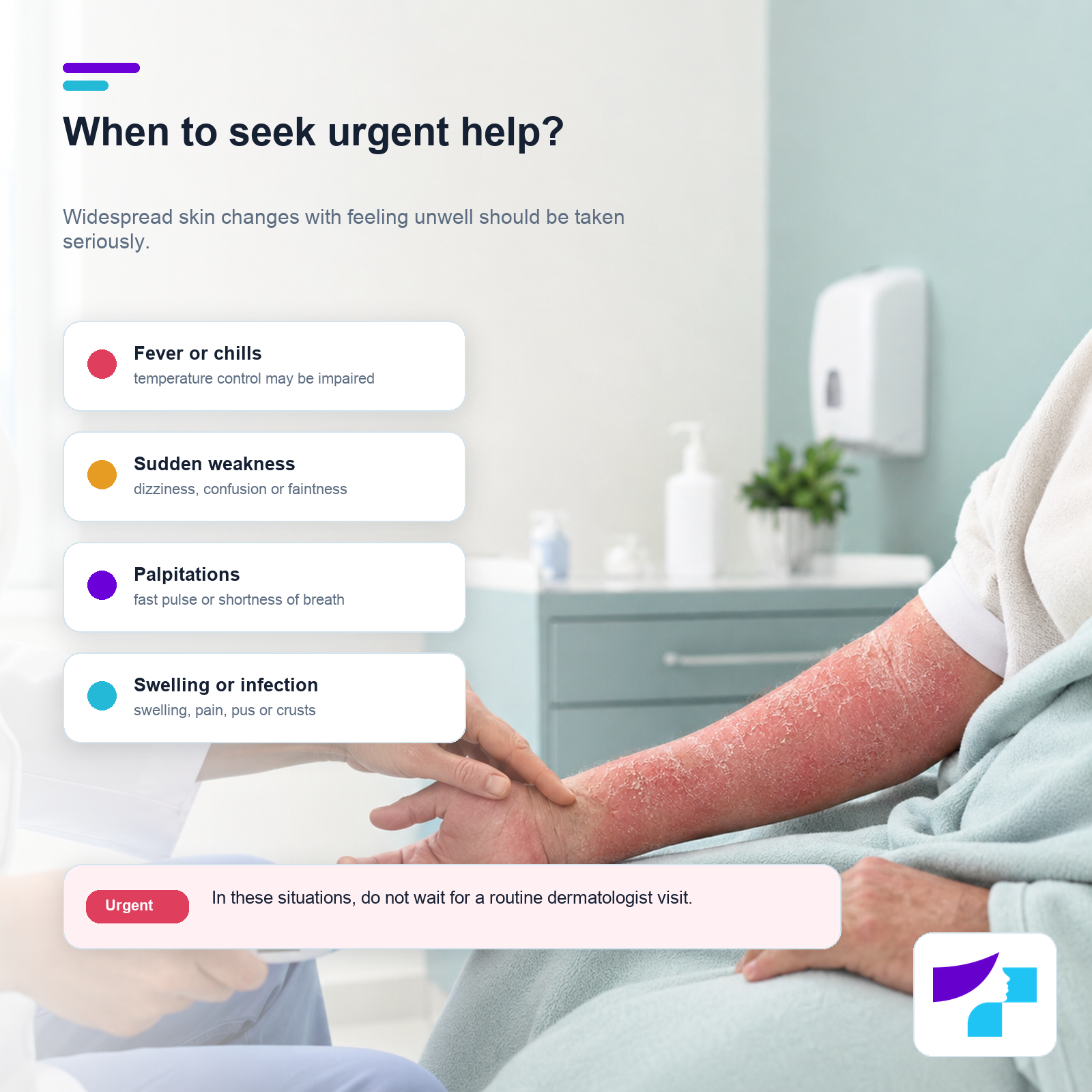
Red flags — when should urgent medical help be sought?
Urgent medical help should be sought if a person with psoriasis or widespread skin inflammation has:
- widespread, rapidly progressing redness of the skin;
- peeling over large areas;
- fever;
- chills;
- severe burning or skin pain;
- marked weakness;
- dizziness, confusion or a feeling of faintness;
- palpitations;
- shortness of breath;
- rapidly increasing swelling;
- signs that may indicate infection;
- an inability to take in fluids or signs of significant dehydration;
- rapid deterioration after stopping medication or changing treatment.
If widespread skin redness is accompanied by fever, chills or feeling generally unwell, this is not merely a cosmetic skin problem. It may be a situation requiring emergency medical care.
Why can widespread skin inflammation affect the whole body?
The skin helps the body maintain several vital functions. It:
- protects against microorganisms;
- reduces fluid loss;
- helps regulate body temperature;
- contributes to immune defence;
- protects deeper tissues from irritation and injury.
When inflammation affects a large skin surface, the skin barrier becomes compromised. The body may lose fluid and heat through damaged skin, while bacteria can enter more easily. This may increase the risk of infection, cause electrolyte disturbances and place additional strain on the cardiovascular system.
Who is at greater risk of developing erythrodermic psoriasis?
Erythrodermic psoriasis can develop in anyone with psoriasis, but the risk may be higher in people who have:
- severe or unstable psoriasis;
- extensive plaque psoriasis;
- a history of severe psoriasis flare-ups;
- treatment that is stopped or changed without medical advice;
- an infection or severe physical stress;
- sunburn or extensive skin injury;
- excessive alcohol consumption;
- smoking;
- chronic stress;
- other serious diseases;
- medications or conditions that affect the immune system.
Risk factors do not mean that erythrodermic psoriasis will definitely develop. They help identify people for whom it is especially important to monitor psoriasis flare-ups and avoid making treatment changes without medical supervision.
How erythrodermic psoriasis develops
Erythrodermic psoriasis develops as a result of excessive activation of the immune system. In psoriasis, immune signals promote inflammation in the skin and accelerate the division of skin cells. In an ordinary psoriasis plaque, this causes a thickened, red and scaly skin lesion. In erythrodermic psoriasis, the inflammation becomes widespread and diffuse.
The process can be explained simply as follows:
- The immune system becomes excessively active.
- Inflammatory signals in the skin increase.
- Skin cells divide and renew too quickly.
- The skin barrier becomes fragile and inflamed.
- The skin becomes widely red, peels, hurts or burns.
- In severe cases, fluid balance, temperature regulation and the risk of infection are affected.
Timeline of the development and flare-up of erythrodermic psoriasis
Erythrodermic psoriasis may develop gradually or more rapidly. It is not always possible to identify a single cause, but the following sequence is often seen:
Existing psoriasis or predisposition to psoriasis
A person may already have skin psoriasis, nail psoriasis or a history of more severe flare-ups.
A triggering factor
This may be an infection, severe stress, skin injury, sunburn, alcohol use or a sudden change in treatment.
Rapid increase in skin inflammation
More extensive redness, itching or burning develops, or existing lesions begin to merge.
Widespread erythroderma
The skin becomes red over a large part of the body, peels, hurts or burns. Swelling, chills, fever and weakness may develop.
Medical assessment and treatment
Depending on severity, urgent dermatological assessment, outpatient treatment or hospitalisation may be required.
Stabilisation and long-term control
After an acute flare-up, a safe long-term treatment plan should be established to reduce the risk of recurrence.
Symptoms of erythrodermic psoriasis: early, later and typical combinations
Early symptoms
Early symptoms may include:
- rapid enlargement of psoriasis lesions;
- red areas merging into larger areas;
- more pronounced itching;
- a burning sensation in the skin;
- skin tenderness;
- increased peeling;
- reduced effectiveness of the current treatment.
Later or more severe symptoms
In more severe stages there may be:
- very widespread redness of the skin;
- peeling over large areas;
- pain or burning;
- swelling;
- chills;
- fever;
- weakness;
- dizziness;
- palpitations;
- shortness of breath;
- confusion;
- signs of infection.
Typical combinations of symptoms
The following combinations require particular attention:
- widespread redness + peeling + weakness;
- psoriasis flare-up + fever or chills;
- burning skin + swelling + feeling generally unwell;
- rapid deterioration of the skin after treatment has been stopped;
- widespread erythroderma + palpitations or dizziness.
Causes and triggering factors of erythrodermic psoriasis
There is no single cause of erythrodermic psoriasis. It usually develops through an interaction between genetic predisposition, immune-mediated inflammation and external factors.
A flare-up may be promoted by:
- sudden discontinuation of psoriasis treatment;
- inappropriate treatment;
- infections;
- severe stress;
- skin injury;
- sunburn;
- alcohol consumption;
- smoking;
- the effects of certain medicines;
- incorrect use or sudden discontinuation of systemic corticosteroids;
- severe physical stress on the body;
- poorly controlled psoriasis.
It is not always possible to identify a specific trigger. However, it is very important not to change treatment independently and not to delay seeking help if the condition is deteriorating rapidly.
Stopping psoriasis treatment and the risk of a severe flare-up
People with psoriasis should not discontinue prescribed treatment without consulting their doctor. Sudden withdrawal of systemic therapy, inappropriate use of medicines or changing treatment independently may contribute to a severe flare-up.
This does not mean that every treatment change will cause erythrodermic psoriasis. However, in patients with severe or unstable psoriasis, treatment changes should only be made under medical supervision. If medication causes side effects, does not work or needs to be changed, this should be discussed with a dermatologist rather than stopping treatment independently.
What can erythrodermic psoriasis be mistaken for?
Widespread redness of the skin, or erythroderma, can be caused by conditions other than psoriasis. The doctor therefore also considers other diseases and conditions.
Erythrodermic psoriasis may be confused with:
- severe eczema;
- atopic dermatitis;
- an allergic reaction;
- a drug-induced skin reaction;
- a skin infection;
- seborrhoeic dermatitis;
- a burn;
- pityriasis rubra pilaris;
- cutaneous T-cell lymphoma or other rarer conditions.
Erythrodermic psoriasis or another form of erythroderma?
| Condition | Typical features | What helps distinguish it |
|---|---|---|
| Erythrodermic psoriasis | Widespread redness, peeling, burning, history of psoriasis | Previous psoriasis, merging of psoriasis lesions, severe flare-up |
| Eczema / dermatitis | Itching, dryness, cracks, areas typical of eczema | History of atopy, irritants, different distribution |
| Drug reaction | Widespread redness after starting new medication, fever, swelling | Association with a new medicine or recent treatment change |
| Skin infection | Pain, pus, crusting, fever, feeling generally unwell | Signs of infection, swabs, laboratory tests |
| Burn or irritation | Association with sun exposure, chemicals, heat or an irritant | A clear external triggering factor |
| Cutaneous lymphoma or another rare disease | Persistent, atypical or unexplained erythroderma | Biopsy and specialist assessment |
This table is intended as a guide and does not replace medical diagnosis. Self-diagnosis is not safe in cases of widespread erythroderma.
Erythrodermic psoriasis or eczema?
Eczema is more commonly associated with pronounced itching, dry skin, cracks and a distribution typical of eczema. Erythrodermic psoriasis more often develops in a person with a history of psoriasis and may be associated with widespread scaling, merging of psoriasis lesions and systemic symptoms. However, these conditions can look similar, so the diagnosis should be made by a doctor.
Erythrodermic psoriasis or a drug reaction?
A drug reaction may begin after a new medicine is started and may be accompanied by fever, rash, facial swelling or signs of internal organ involvement. It can be serious. If widespread skin redness develops after starting a new medication, urgent medical assessment is required.
Erythrodermic psoriasis or infection?
A skin infection can cause redness, pain, pus, crusting, fever and general weakness. In erythrodermic psoriasis, infection may be both a differential diagnosis and a complication. In severe cases, the doctor may therefore order tests to assess for signs of infection.
How is erythrodermic psoriasis diagnosed?
Diagnosis is based on medical examination, medical history, the appearance of the skin changes, history of psoriasis, medications being used and assessment of the person’s general condition.
The doctor may ask:
- whether the patient has previously had psoriasis;
- how quickly the rash spread;
- whether there is fever, chills, weakness or swelling;
- whether treatment has recently been changed or stopped;
- whether any new medicines have been started;
- whether there has been an infection, injury or sunburn;
- whether the skin is painful, burning or cracked;
- whether there is joint pain;
- whether there are other chronic diseases.
Investigations may include:
- blood tests;
- inflammatory markers;
- assessment of electrolyte and fluid balance;
- kidney and liver function tests;
- assessment for signs of infection;
- skin swabs or cultures if infection is suspected;
- skin biopsy if the diagnosis is unclear;
- other investigations as determined by the doctor.
Normal or non-specific test results alone do not necessarily exclude a serious skin disease. Diagnosis is made by combining the clinical picture, symptoms and investigation results.
When is hospitalisation necessary?
Hospitalisation may be necessary if erythrodermic psoriasis is extensive, progressing rapidly or affecting general health.
Hospital care may be required if there is:
- widespread skin inflammation;
- fever or chills;
- marked weakness;
- a risk of fluid loss or dehydration;
- a risk of electrolyte disturbances;
- signs of infection;
- swelling;
- palpitations or shortness of breath;
- severe pain;
- an inability to care for the skin safely at home;
- older age or significant comorbidities;
- a child or another high-risk situation.
Erythrodermic psoriasis and immunity
Erythrodermic psoriasis is not an infection, so recovering from it does not produce immunity in the way that recovery from a viral or bacterial infection may. A person cannot have erythrodermic psoriasis once and then become immune to it.
Psoriasis is a chronic inflammatory disease. It may have periods of remission, when the disease is well controlled, and periods of flare-up, when inflammation becomes active. The aim of treatment is to achieve the most stable control possible, reduce flare-ups and prevent severe exacerbations.
Possible consequences and complications
Untreated or severe erythrodermic psoriasis can cause serious complications:
- fluid loss;
- electrolyte disturbances;
- impaired body temperature regulation;
- infections;
- secondary skin infection;
- risk of sepsis in severe cases;
- swelling;
- increased cardiovascular strain;
- risk of deterioration in kidney function;
- marked weakness;
- sleep disturbances;
- psychological burden;
- reduced quality of life.
Severity depends on the extent of skin involvement, the patient’s age, comorbidities, risk of infection and how quickly appropriate treatment is started. Latvian clinical recommendations emphasise that exfoliative psoriatic erythroderma can be fatal as a result of complications.
Treatment of erythrodermic psoriasis
The aim of treating erythrodermic psoriasis is to stabilise the patient’s condition, reduce inflammation, restore the skin barrier, prevent complications and establish a safe long-term management plan.
Treatment is determined by a doctor. It depends on the severity of the disease, extent of skin involvement, general condition, risk of infection, previous treatment, comorbidities and the patient’s age.
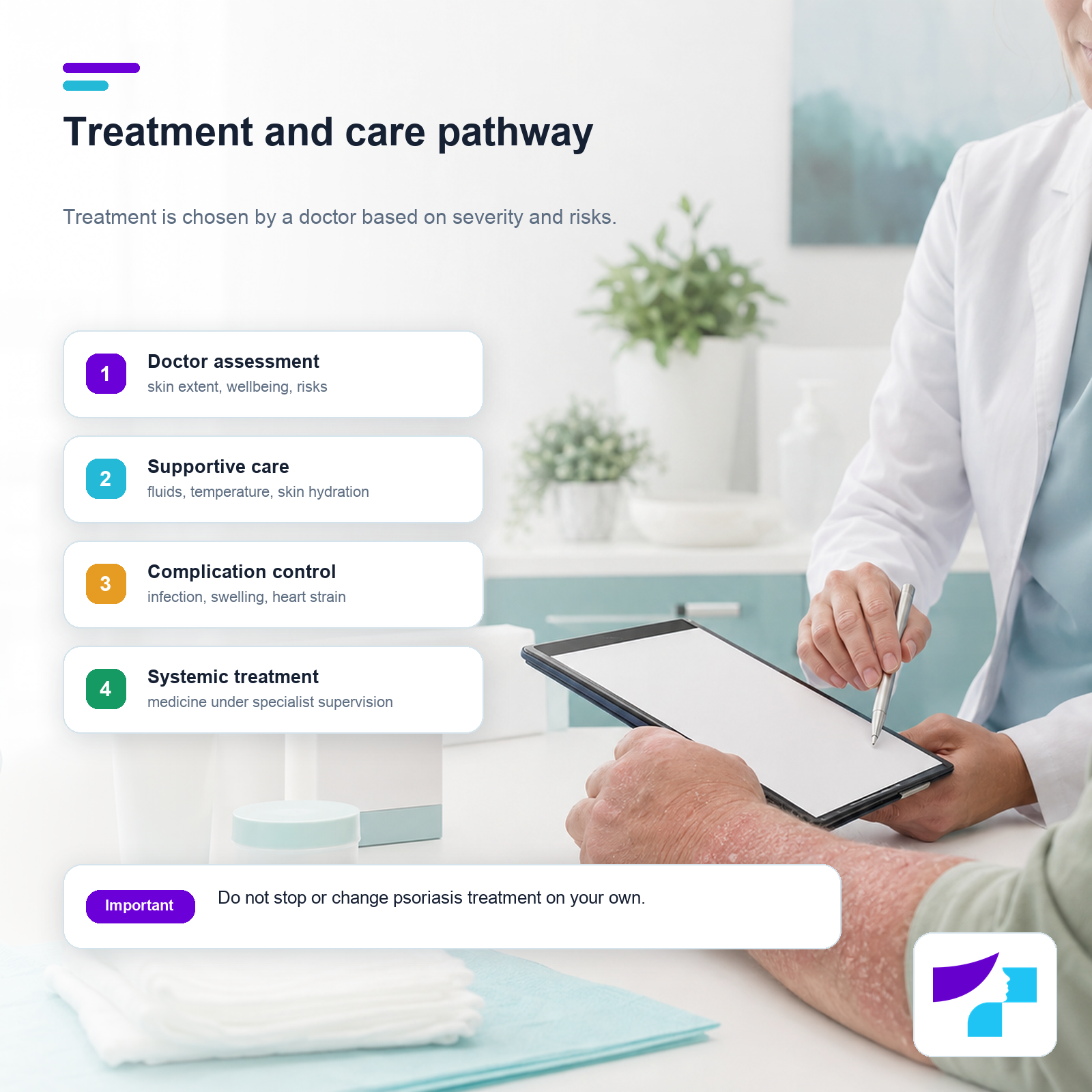
Assessment and stabilisation of the acute condition
In severe cases, the general condition should first be assessed, including:
- temperature;
- pulse;
- blood pressure;
- fluid balance;
- electrolytes;
- signs of infection;
- severity of pain;
- degree of swelling;
- overall physiological strain on the body.
If systemic symptoms are present, treatment in hospital may be necessary.
Skin care and restoration of the skin barrier
Skin care is important, but in severe erythrodermic psoriasis it is not the only treatment. Skin barrier-restoring products, gentle cleansing, avoidance of irritants and doctor-prescribed topical therapy may be required.
The patient should not aggressively rub, scratch or mechanically remove peeling skin. This may worsen skin damage and increase the risk of infection.
Systemic therapy
Systemic therapy acts on the inflammatory process throughout the body. It may be required when skin inflammation is extensive, progresses rapidly or cannot be controlled with topical treatments alone.
The appropriate type of therapy and its safety are assessed by the doctor. Specific doses or prescription medicine regimens are not provided in this article because self-treatment in this condition may be dangerous.
Biologic and targeted therapy
Biologic and targeted therapies are modern treatment approaches that act on specific inflammatory pathways. They may be important for patients with severe psoriasis or an inadequate response to other treatments. The doctor selects the appropriate treatment taking into account the form and severity of the disease, comorbidities, risk of infection and previous treatment.
Control of infection, fluids and electrolytes
In severe erythrodermic psoriasis, the doctor may need to monitor:
- fluid intake and loss;
- electrolytes;
- kidney function;
- signs of infection;
- body temperature;
- cardiovascular strain.
This is one reason why treatment at home may not be safe in severe cases.
Long-term disease control after a flare-up
After an acute flare-up, it is important to establish a long-term plan that includes:
- regular dermatology follow-up;
- safe continuation of treatment;
- reduction of flare-up risk factors;
- skin barrier care;
- assessment of comorbidities;
- reduction of psychological burden;
- a clear plan for what to do if the disease worsens again.
What should not be done during a severe psoriasis flare-up?
During a severe psoriasis flare-up, you should not:
- stop prescribed treatment independently;
- start prescription medicines on your own;
- use systemic medicines without medical advice;
- remain at home waiting if there is fever, chills or weakness;
- aggressively scratch or rub the skin;
- mechanically pull off skin scales;
- treat widespread inflammation only with cosmetic creams;
- use irritating products;
- overheat in a sauna, hot bath or solarium;
- ignore rapid deterioration.
It is particularly dangerous to stop or change systemic treatment without medical supervision in a patient with severe or unstable psoriasis.
How can the risk of another severe flare-up be reduced?
The risk of another severe flare-up may be reduced if:
- treatment is continued as advised by the doctor;
- medicines are not stopped independently;
- infections are treated promptly;
- skin injuries and sunburn are avoided;
- alcohol consumption is limited;
- smoking is stopped;
- chronic stress is reduced;
- comorbidities are managed;
- regular dermatology follow-up is maintained;
- the patient has a clear action plan for a flare-up.
Not every flare-up can be prevented, but well-controlled psoriasis and timely medical involvement reduce the risk of a severe exacerbation.
Lifestyle, skin care and medical follow-up after a flare-up
Lifestyle measures alone do not cure erythrodermic psoriasis, but they can support overall disease control.
Important factors include:
- regular dermatology follow-up;
- moisturising the skin and restoring the skin barrier;
- avoiding irritating skin-care products;
- stopping smoking;
- limiting alcohol consumption;
- getting sufficient sleep;
- reducing stress;
- eating a balanced diet;
- reducing excess weight where relevant;
- treating infections promptly.
After a severe flare-up, the patient should know which signs indicate renewed deterioration and when to seek medical help.
Psoriasis as a systemic disease and its association with joints
Psoriasis is not only a skin disease. It is a chronic immune-mediated inflammatory disease that in some patients may also be associated with nail changes, joint symptoms and other comorbidities. If a person with severe psoriasis develops joint pain, swelling, morning stiffness, heel pain or a “sausage-shaped” finger or toe, psoriatic arthritis should also be considered.
This article focuses on erythrodermic psoriasis rather than all systemic manifestations of psoriasis. More information about the overall course of the disease, comorbidities and treatment approaches can be found in the main psoriasis article.
What is established, what requires an individual approach and what is medicine working on?
What is well established
It is well established that erythrodermic psoriasis is a severe form of psoriasis that may require urgent dermatological assessment and treatment. Widespread skin inflammation can affect fluid balance, temperature regulation, the risk of infection and overall health.
It is also well established that psoriasis is not an infection and is not contagious, but is a chronic immune-mediated inflammatory disease.
What requires an individual approach
Treatment selection requires an individual approach. One patient may require hospital care, while another may be managed with close outpatient monitoring. Treatment depends on disease severity, previous treatment, infection risk, comorbidities and the patient’s general condition.
Whether a biopsy, additional investigations, exclusion of infection or a change in systemic therapy is required must also be assessed individually.
What is medicine working on?
Modern dermatology is developing personalised psoriasis treatment, biologic and targeted therapies, earlier recognition of severe flare-ups, improved assessment of disease severity and quality of life, and safer long-term control for patients with severe psoriasis.
When should you see a dermatologist?
You should see a dermatologist if:
- psoriasis is worsening rapidly;
- the rash is spreading extensively;
- the skin becomes markedly red and begins to peel;
- burning or pain develops;
- swelling develops;
- treatment is no longer effective;
- there are signs suggesting infection;
- the patient is considering stopping or changing treatment;
- there are repeated severe flare-ups;
- joint pain or nail changes are also present.
Emergency medical help should be sought immediately if widespread skin redness and peeling are accompanied by fever, chills, weakness, dizziness, palpitations, shortness of breath, confusion, marked swelling or rapid deterioration.
References and authoritative sources
- Latvian Association of Dermatovenereologists: Latvian clinical recommendations for the diagnosis and treatment of psoriasis
- Centre for Disease Prevention and Control of Latvia (SPKC)
- National Institute for Health and Care Excellence (NICE): assessment and management of psoriasis
- National Institute for Health and Care Excellence (NICE): recommendations for the diagnosis and treatment of psoriasis and assessment of erythroderma
- American Academy of Dermatology Association (AAD): signs and symptoms of psoriasis
- American Academy of Dermatology Association (AAD): clinical guidelines for psoriasis
- DermNet: erythrodermic psoriasis
- DermNet: erythroderma
- DermNet: acute forms of psoriasis
- DermNet: psoriasis
- DermNet: treatment of psoriasis
- British Association of Dermatologists (BAD): information about psoriasis for patients and specialists
- Doctus: psoriasis and comorbidities from the perspective of a dermatologist and rheumatologist
- European Alliance of Associations for Rheumatology (EULAR): recommendations for the treatment of psoriatic arthritis
- PubMed: scientific publications on erythrodermic psoriasis
- PubMed: scientific publications on the treatment of erythrodermic psoriasis
- PubMed: scientific publications on biologic therapy for severe psoriasis
Medical disclaimer
The information provided in this article is intended for informational and educational purposes and does not replace a dermatologist consultation, diagnosis or treatment. If a person has widespread skin redness, peeling, burning, skin pain, fever, chills, swelling, weakness, rapid worsening of psoriasis or other symptoms, they should consult a dermatologist or another appropriate healthcare professional. Do not attempt to self-treat and do not discontinue prescribed psoriasis treatment without medical advice. In the event of severe, rapidly worsening or high-risk symptoms, such as widespread skin redness accompanied by fever, chills, marked weakness, dizziness, palpitations, shortness of breath, confusion, rapidly developing swelling or suspected infection, emergency medical help should be sought immediately.
