Psoriatic arthritis is a chronic inflammatory joint disease that can develop in people with psoriasis. It is not just “joint pain with psoriasis”. Psoriatic arthritis can affect the joints, tendon and ligament attachment sites, fingers, toes, feet, back, nails and can significantly affect a person’s mobility, ability to work and quality of life.
The disease can begin gradually — with morning stiffness, joint swelling, heel pain or a finger or toe that becomes swollen along its whole length like a “sausage”. In some people, skin psoriasis has been visible for years, while in others joint symptoms may appear before pronounced skin changes or together with nail psoriasis.
Psoriatic arthritis is not contagious. It cannot be caught from another person. It is an immune-mediated inflammatory disease in which changes in immune system activity cause inflammation in the joints, tendon attachment sites and other tissues. Early recognition is very important, because untreated or insufficiently controlled inflammation can contribute to joint damage, pain and restricted movement.
Psoriatic arthritis in brief
- Psoriatic arthritis is an inflammatory joint disease associated with psoriasis.
- It can affect the fingers, toes, feet, hands, knees, ankles, back, pelvis, heels, Achilles tendon, tendon attachment sites and nails.
- Typical signs include joint pain, swelling, morning stiffness, dactylitis or a “sausage” digit, enthesitis or inflammation at tendon attachment sites, nail changes and fatigue.
- The disease is not contagious and is not an infection.
- Psoriatic arthritis can appear in a person with skin psoriasis, nail psoriasis or even before pronounced skin symptoms.
- Blood tests may be normal, so the disease cannot be reliably ruled out by blood tests alone.
- Early collaboration between a dermatologist and a rheumatologist helps diagnose the disease in time, control inflammation and reduce the risk of joint damage.
- Treatment is determined by a doctor, taking into account skin, nail, joint, back and tendon involvement, disease severity and the patient’s general health.
What is psoriatic arthritis?
Psoriatic arthritis is a chronic inflammatory disease that belongs to the spondyloarthritis group. This means that the disease can affect not only classic joints, but also the spine, the sacroiliac joints of the pelvis, and tendon and ligament attachment sites near the bone.
In simple terms, psoriatic arthritis is a condition in which the inflammatory process of psoriasis affects not only the skin, but also the musculoskeletal system. The disease can differ greatly between patients. In one person it may appear as a few swollen finger joints, while in another it may cause heel pain, back stiffness, nail changes or several inflamed joints at the same time.
Psoriatic arthritis is not the same as rheumatoid arthritis, osteoarthritis or gout. All of these diseases can cause joint pain, but their causes, inflammatory mechanisms, diagnosis and treatment approaches differ.
How is psoriatic arthritis related to psoriasis?
Psoriasis is a chronic inflammatory skin disease, while psoriatic arthritis is one of the most important systemic manifestations of psoriasis. This means that the inflammation of the disease is not always limited to the skin.
In some people, skin psoriasis appears first and joint symptoms develop later. In others, nail changes such as pits in the nails, nail lifting or thickening may be an especially important signal of a higher risk of joint involvement. More rarely, joint symptoms can appear before clear skin psoriasis.
That is why a person with psoriasis should not ignore joint pain, joint swelling, prolonged morning stiffness, heel pain, Achilles tendon pain, inflammatory back pain or swelling of a whole finger or toe. These signs may indicate that rheumatologist assessment is needed.
Is psoriatic arthritis contagious?
No, psoriatic arthritis is not contagious. It cannot be caught from another person by touching, living together, using shared items, doing sports or being in the same room.
It is not infectious arthritis and it is not a disease that spreads through bacteria, viruses or fungi. However, infections may be one of the factors that can trigger a flare in some people with inflammatory disease. This does not mean that the disease itself is infectious.
How does psoriatic arthritis begin?
Psoriatic arthritis may begin subtly. At first, a person may notice that the joints are stiff in the morning, the fingers feel swollen, the foot or heel hurts after rest, but discomfort partially improves with movement. Sometimes one or a few joints hurt, while in other cases symptoms occur in several areas of the body.
Early signs are often non-specific:
- morning stiffness;
- joint pain or swelling;
- pain in the heel or Achilles tendon area;
- swelling of a whole finger or toe;
- nail pits, lifting or thickening;
- fatigue;
- lower back or pelvic pain, especially in the morning or at night.
An important sign is the difference between inflammatory and mechanical pain. Inflammatory pain is more often worse in the morning, after rest or at night, and it may improve with movement. Mechanical pain more often worsens during activity and improves with rest.
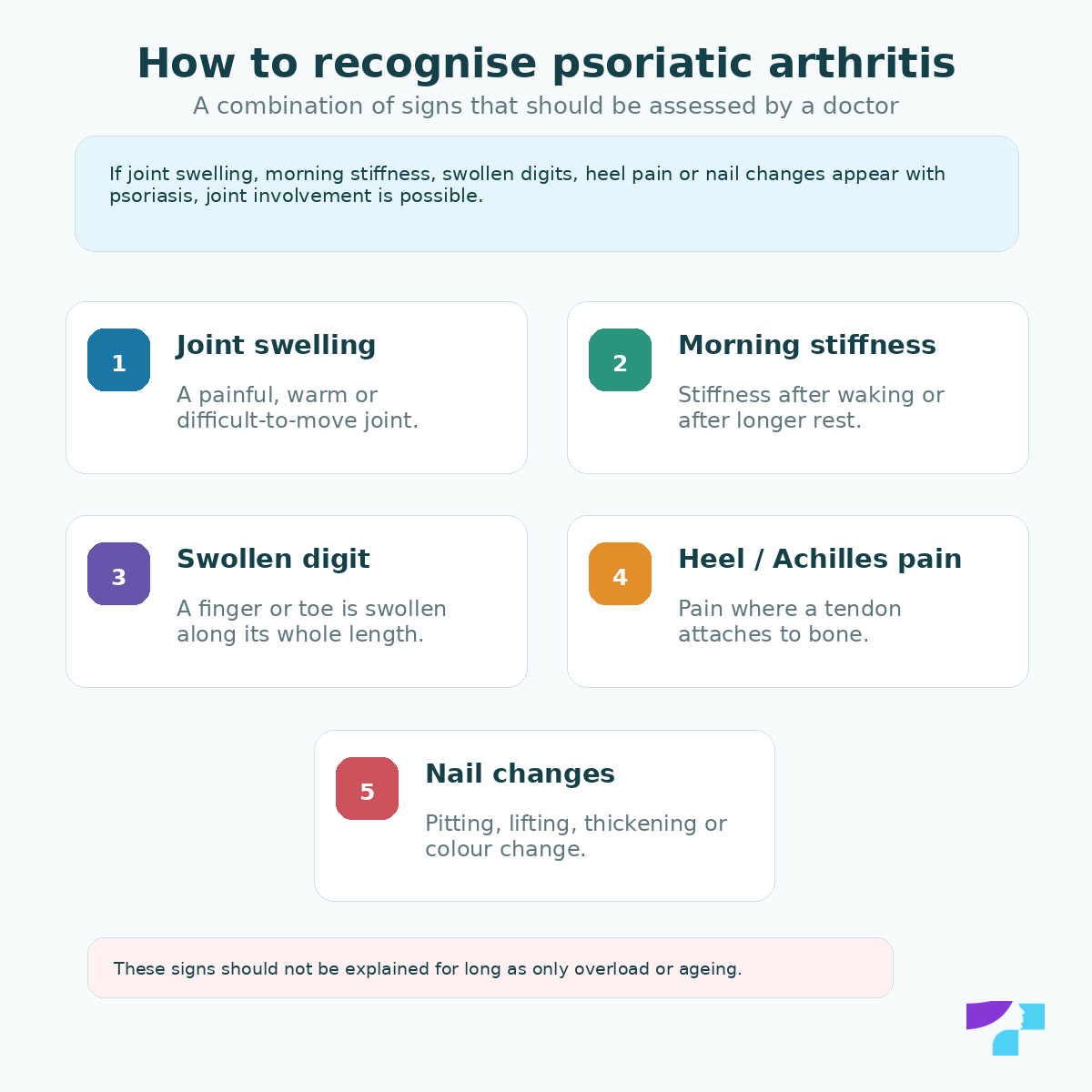
3–5 key signs that may suggest psoriatic arthritis
The following signs may suggest psoriatic arthritis:
- joint pain, swelling or warmth in a joint in a person with psoriasis;
- morning stiffness that recurs and is not just brief “rustiness”;
- a swollen finger or toe along its whole length — dactylitis or a “sausage” digit;
- pain in the heel, Achilles tendon area or another tendon attachment site — possible enthesitis;
- nail changes together with joint pain or stiffness.
If a person with psoriasis develops these signs, especially if they last for several weeks, recur or worsen, medical assessment is needed.
Below are signs that deserve particular attention if a person has psoriasis or nail changes. A combination of these symptoms may suggest possible joint involvement.
Which joints and body areas does psoriatic arthritis affect?
Psoriatic arthritis can affect different joints and tissues. The disease may be peripheral, axial or combined.
Peripheral disease means that the arms, legs and their joints are affected. Axial disease means that the spine or the sacroiliac joints of the pelvis are affected.
More commonly affected areas include:
- finger and toe joints;
- hands;
- feet;
- ankles;
- knees;
- elbows;
- shoulders;
- lower back;
- sacroiliac joints of the pelvis;
- Achilles tendon attachment site;
- heel area;
- nails.
Psoriatic arthritis may appear in different areas of the body. In some patients, finger or foot joints dominate; in others, back symptoms, heel pain, Achilles tendon involvement or nail changes are more prominent.
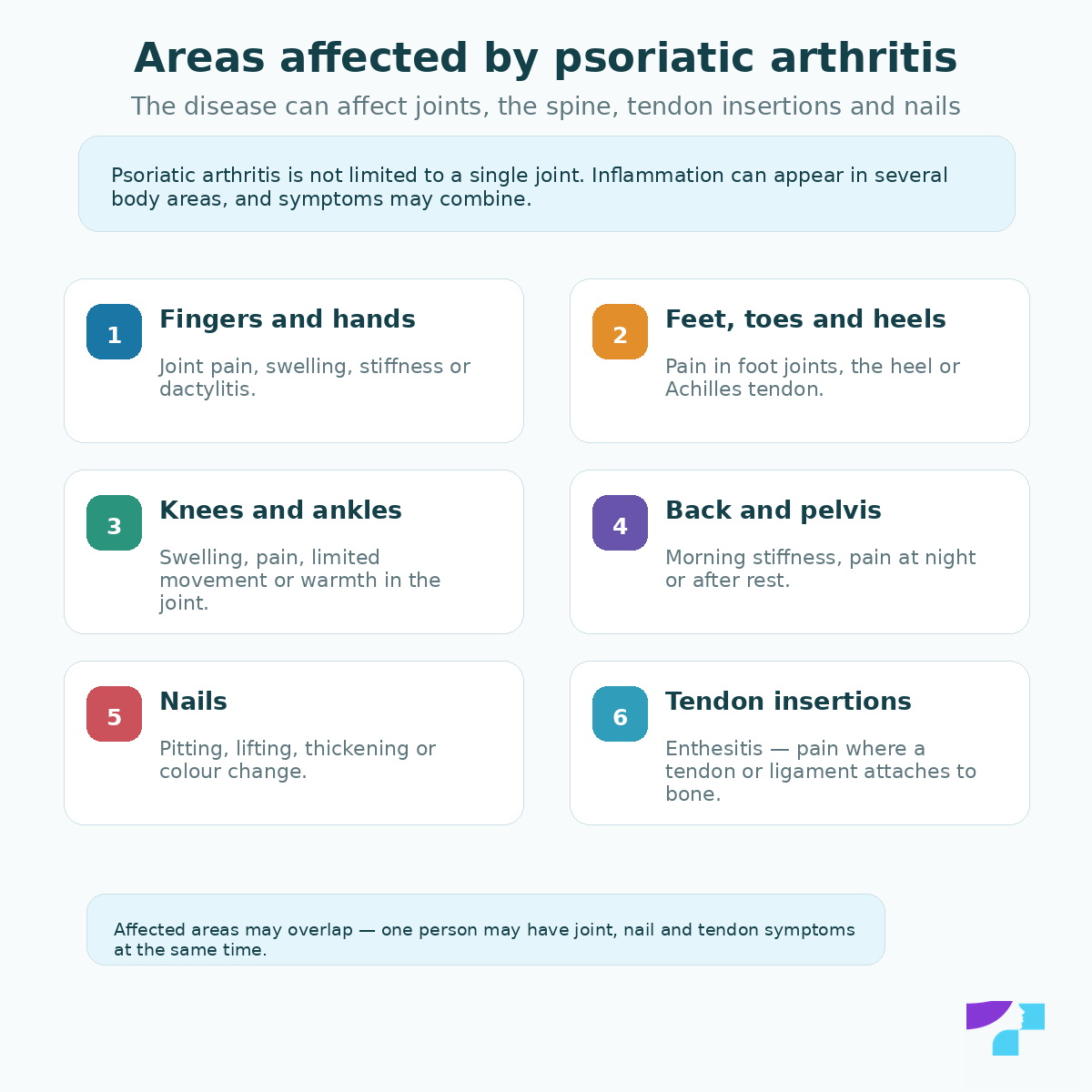
Psoriatic arthritis is often characterised by asymmetric symptoms, for example one knee and several finger joints on one side of the body may be affected. However, symmetrical joint involvement is also possible and may resemble rheumatoid arthritis.
Symptoms of psoriatic arthritis
Symptoms of psoriatic arthritis can vary, because the disease may affect joints, tendon attachment sites, the spine and nails.
Joint pain, swelling and stiffness
An inflamed joint may be painful, swollen, warmer and more difficult to move. In some people, pain is mild; in others it significantly interferes with daily activities.
It is important not to explain every joint pain as “age”, “overload” or “salt deposits” if a person has psoriasis. Swelling, prolonged morning stiffness and recurring symptoms should be assessed especially carefully.
Morning stiffness and inflammatory pain
Morning stiffness is one of the signs of inflammatory arthritis. It may feel as if the joints are “stuck” after waking, making it difficult to bend the fingers, start walking or move normally.
Inflammatory pain is often worse after rest, at night or in the morning. It may improve after movement, unlike mechanical pain, which more often worsens with activity.
Dactylitis or a “sausage” digit
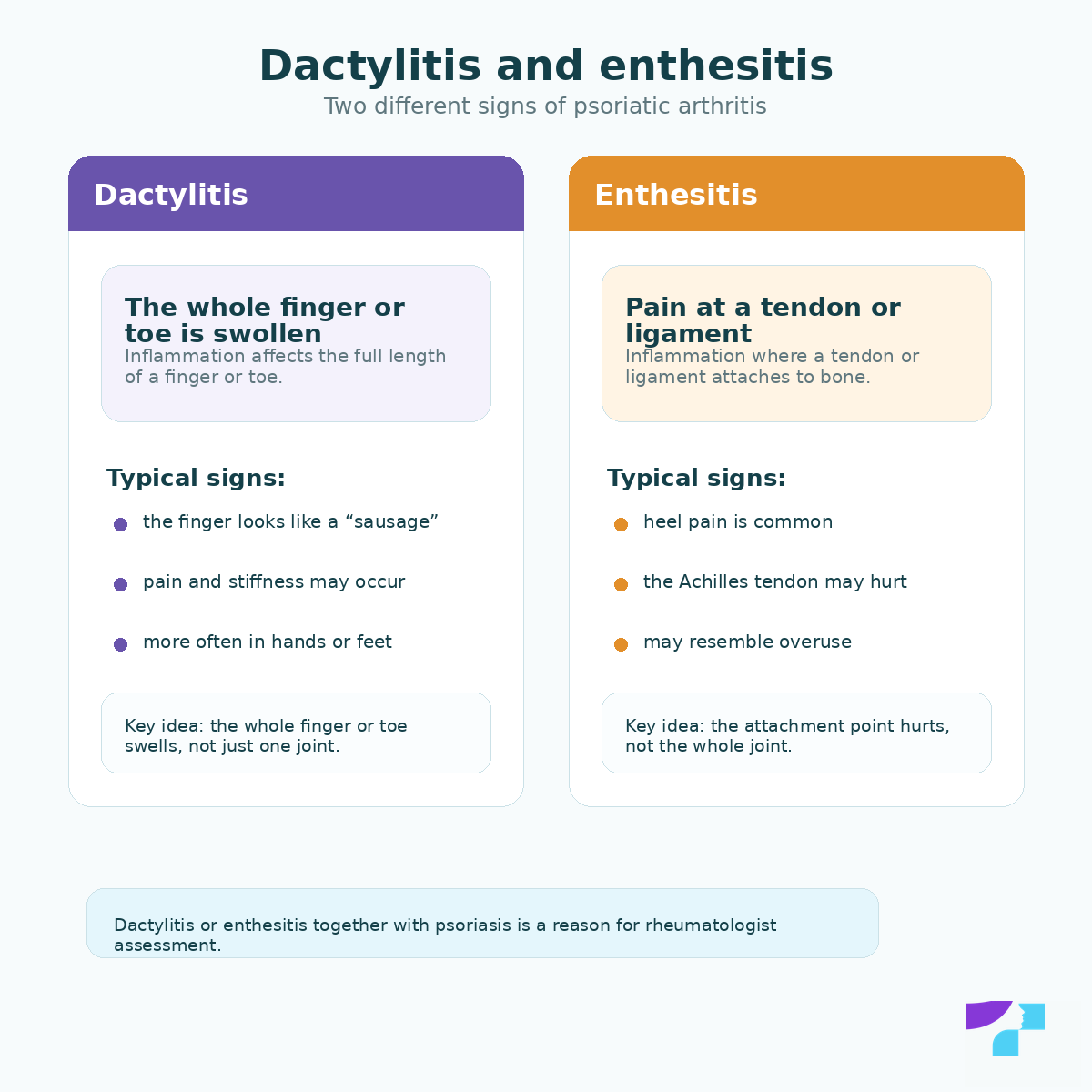
Dactylitis is swelling of an entire finger or toe along its whole length. This is why it is often called a “sausage” digit. It is not just swelling of one joint — the whole digit may be involved together with tendons, joints and surrounding tissues.
Dactylitis is a very characteristic sign of psoriatic arthritis. If a person with psoriasis suddenly or gradually develops swelling of a whole finger or toe, this is a reason to consult a doctor.
Enthesitis or inflammation of tendon and ligament attachment sites
Enthesitis is inflammation where a tendon or ligament attaches to the bone. For the patient, it may appear as pain in the heel, Achilles tendon area, sole of the foot, elbow, knee area or another attachment site.
For example, a person may think that heel pain is caused by shoes, overload or plantar fasciitis, but sometimes this pain may be related to psoriatic arthritis. This should be considered especially if psoriasis, nail changes or other inflammatory signs are present.
Dactylitis and enthesitis are two signs that often help a doctor recognise psoriatic arthritis. Dactylitis means swelling of the whole digit, while enthesitis means pain where a tendon or ligament attaches to bone.
Back, pelvic and sacroiliac joint pain
In some patients, psoriatic arthritis can affect the spine or sacroiliac joints, which are located in the pelvic area. Such pain may resemble other types of back pain, but inflammatory back pain is more often characterised by the fact that it:
- begins gradually;
- is worse in the morning or at night;
- is associated with stiffness;
- improves with movement;
- does not always improve with rest alone.
If a person with psoriasis has prolonged lower back or pelvic pain, especially together with morning stiffness, they should consult a doctor.
Nail changes and their link with psoriatic arthritis
Nail psoriasis may appear as pits in the nails, nail lifting, thickening, colour change or brittleness. Nail changes are an important signal because they are often associated with a higher risk of joint involvement.
The nail and the end joint of the finger are anatomically very close, so nail psoriasis and inflammation of the distal finger joints may be connected. If nail changes are accompanied by finger pain, swelling or stiffness, assessment by a dermatologist or rheumatologist is needed.
Fatigue and reduced quality of life
Psoriatic arthritis can cause not only pain, but also fatigue. Chronic inflammation, sleep disturbance, pain, restricted movement and the impact of skin psoriasis on wellbeing can significantly reduce quality of life.
That is why disease control is not only about “reducing pain”. The aim is to reduce inflammation, preserve movement, prevent joint damage and help the person return to as full a daily life as possible.
Nail psoriasis as an important signal of joint involvement
Nail changes in psoriasis are not just a cosmetic problem. Nail pits, nail lifting, thickening, brittleness or yellowish colour changes may be associated with a higher risk of psoriatic arthritis.
This is especially important if finger pain, tenderness of the end joints of the fingers, swelling, morning stiffness or pain that interferes with gripping objects appears at the same time. In such cases, assessment by a dermatologist or rheumatologist is needed, because nail changes may help the doctor recognise the joint form of psoriatic disease.
It is important to remember that nail changes may also have other causes, such as fungal infection, trauma or other nail diseases. Therefore, the appearance of the nail alone does not determine the diagnosis, but together with psoriasis and joint symptoms it is an important clinical clue.
Can psoriatic arthritis occur without skin psoriasis?
Yes, this is possible. Although psoriatic arthritis most often develops in people with skin psoriasis, joint symptoms may sometimes appear before pronounced skin changes. In some people, skin manifestations may be very mild, unnoticed or located in places where they are harder to see, such as the scalp, behind the ears, the navel, skin folds or the genital area.
Sometimes nail psoriasis or psoriasis in the family is an important clue. That is why a rheumatologist may ask not only about joints, but also about skin rashes, nail changes and family history.
Who has a higher risk of developing psoriatic arthritis?
Psoriatic arthritis can develop in any person with psoriasis, but some factors may increase the risk.
The risk may be higher in people who have:
- skin psoriasis;
- nail psoriasis;
- psoriasis of the scalp or skin folds;
- psoriasis in the family;
- more severe or long-standing psoriasis;
- joint pain or swelling;
- excess weight;
- smoking;
- chronic stress;
- previous joint or tendon injuries;
- other inflammatory diseases.
Risk factors do not mean that the disease will definitely develop. They help identify who should monitor joint and nail symptoms especially carefully.
How psoriatic arthritis develops
Psoriatic arthritis develops due to changes in immune system activity. The immune system, which normally protects the body, begins to maintain excessive inflammation in the skin, joints, tendon attachment sites and other tissues.
Several factors are involved in disease development:
- genetic predisposition;
- inflammatory signals of the immune system;
- skin inflammation caused by psoriasis;
- strain at tendon and ligament attachment sites;
- environmental factors such as infections, trauma, stress or smoking;
- metabolic factors such as excess weight.
In simplified terms, in a person predisposed to psoriasis, immune system signals may activate inflammation not only in the skin, but also in the joints and in areas where tendons and ligaments attach to bone. This inflammation causes pain, swelling and stiffness and, over time, may damage joint structures.
Timeline of psoriatic arthritis development and flares
Psoriatic arthritis is not an infection, so it does not have an “infection period”. The disease may develop gradually, with periods of remission and flare-ups.
Psoriatic arthritis usually does not appear as a one-day problem. Often psoriasis or nail changes are present first, followed by joint pain, morning stiffness, swelling, dactylitis or enthesitis.
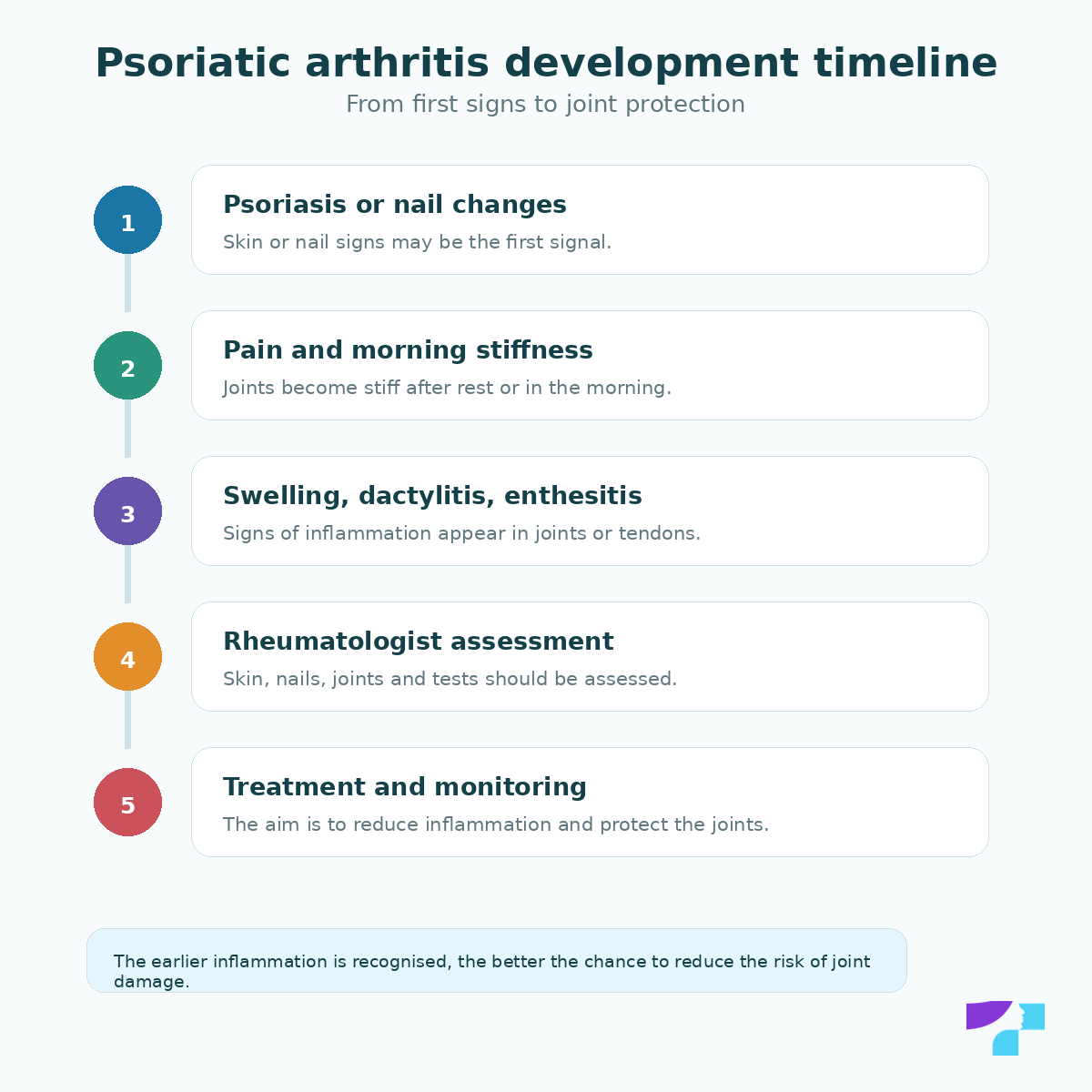
A possible disease development timeline:
- Psoriasis, nail changes or family predisposition — a person may have skin psoriasis, nail psoriasis or psoriasis in the family.
- First joint or tendon signs — pain, morning stiffness, heel pain, swelling of a finger or toe, or discomfort in the lower back appears.
- Inflammatory signs become established — the joint may become swollen, painful and more difficult to move. Dactylitis or enthesitis may also appear.
- Medical assessment — a dermatologist or family doctor may refer the patient to a rheumatologist. Symptoms, skin, nails, joints and necessary investigations are assessed.
- Treatment and disease control — the aim is to reduce inflammation, preserve movement, reduce flares and prevent joint damage.
Causes and flare triggers of psoriatic arthritis
Psoriatic arthritis does not have one simple cause. It develops as a result of the interaction between genetic predisposition, immune inflammation and environmental factors.
Flares may be promoted by:
- stress;
- infection;
- skin or joint trauma;
- smoking;
- excess weight;
- insufficiently controlled psoriasis;
- stopping treatment without a doctor’s instruction;
- excessive load on inflamed joints;
- lack of sleep and general overload of the body.
Not all patients are able to identify a specific trigger for a flare. Sometimes the disease becomes active without a clearly identifiable factor.
Forms and manifestations of psoriatic arthritis
Psoriatic arthritis can appear in several ways. In one patient, one form may dominate, while another may have several forms at the same time.
Peripheral psoriatic arthritis
Peripheral psoriatic arthritis affects the arms, legs and their joints. It may involve only a few affected joints or more widespread inflammation of multiple joints.
Fingers, hands, feet, ankles or knees may often be affected. The pattern of involvement may be asymmetric or symmetric.
Axial psoriatic arthritis
Axial psoriatic arthritis affects the spine and sacroiliac joints in the pelvis. It may appear as lower back pain, stiffness and pain at night or in the morning.
This form may be confused with mechanical back pain, disc problems or overload, which is why medical assessment is important.
Dactylitis
Dactylitis means swelling of an entire finger or toe. It is one of the most characteristic symptoms of psoriatic arthritis.
Enthesitis
Enthesitis is inflammation of a tendon or ligament attachment site. A typical location is the heel or Achilles tendon, but enthesitis may also occur in other areas of the body.
Distal finger joint involvement
Psoriatic arthritis can affect the end joints of the fingers, which are located close to the nails. This form is often associated with nail psoriasis. A person may notice pain at the fingertips, nail changes, swelling or difficulty performing fine hand movements.
Nail involvement
Nail psoriasis may be closely linked with psoriatic arthritis. Nail pits, lifting, thickening or colour change together with joint symptoms are an important sign that should not be ignored.
What can psoriatic arthritis be confused with?
Psoriatic arthritis can be confused with several other diseases, because joint pain and stiffness are common symptoms.
Psoriatic arthritis or osteoarthritis
Osteoarthritis is a disease of joint wear and mechanical changes. It more often worsens with activity and improves with rest. Psoriatic arthritis is more typically associated with inflammatory signs — swelling, morning stiffness, pain after rest and enthesitis or dactylitis.
Psoriatic arthritis or rheumatoid arthritis
Rheumatoid arthritis often affects joints symmetrically and has a different immunological profile. Psoriatic arthritis is more often associated with psoriasis, nail changes, dactylitis, enthesitis and may be more asymmetric. However, in some cases distinguishing between them is not simple, so rheumatologist assessment is needed.
Psoriatic arthritis or gout
Gout often causes sudden, very severe pain in one joint, for example at the base of the big toe. Psoriatic arthritis may be more chronic and associated with psoriasis, nails, dactylitis or enthesitis. Sometimes both problems may exist at the same time, so self-diagnosis is not safe.
Psoriatic arthritis or mechanical joint pain
Mechanical pain is usually related to load, trauma or overload. Inflammatory pain is more often present in the morning, after rest, at night or together with swelling and stiffness.
Psoriatic arthritis or spinal disc problems
Disc problems often cause pain related to specific movements, load or nerve irritation. Axial psoriatic arthritis more often appears as inflammatory back pain, morning stiffness and improvement with movement. The exact cause is determined by a doctor.
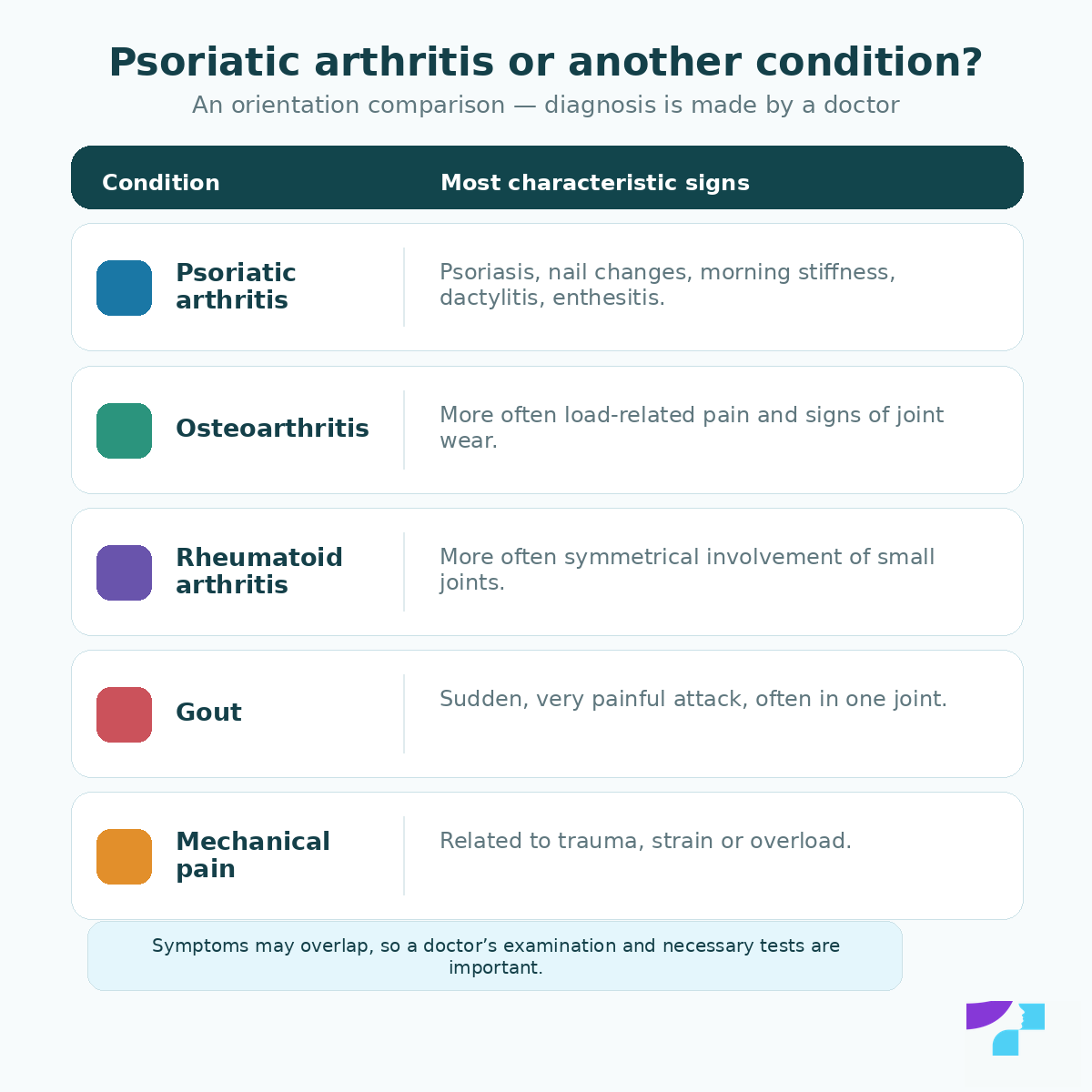
Psoriatic arthritis or another joint condition?
| Condition | Most characteristic signs | What helps distinguish it |
|---|---|---|
| Psoriatic arthritis | Morning stiffness, joint swelling, dactylitis, enthesitis, nail changes | Association with psoriasis, heel pain, “sausage” digit, nail psoriasis |
| Osteoarthritis | Load-related pain, signs of wear, restricted movement | More often worsens with activity and improves with rest |
| Rheumatoid arthritis | Often symmetrical involvement of small joints | Different clinical picture and blood test profile |
| Gout | Sudden, very painful attack, often in one joint | Often begins suddenly, for example at the base of the big toe |
| Mechanical joint pain | Related to trauma, overload or movement | Usually no pronounced morning stiffness, dactylitis or enthesitis |
This table helps with orientation, but it does not replace medical diagnosis. Sometimes disease signs overlap, and one person may have several joint problems at the same time.
How is psoriatic arthritis diagnosed?
Diagnosis of psoriatic arthritis is based on symptom assessment, examination of the skin and nails, joint examination, blood tests and imaging if needed. There is no single test that always confirms psoriatic arthritis.
Medical examination and disease history
The doctor asks:
- whether the patient has psoriasis;
- whether there are nail changes;
- whether psoriasis runs in the family;
- which joints hurt or swell;
- whether there is morning stiffness;
- whether there is heel, Achilles tendon or back pain;
- whether a “sausage” digit has occurred;
- how long the symptoms have lasted;
- whether there is fatigue, eye inflammation or other systemic signs;
- which medicines have been used and what diseases the patient has had before.
Blood tests
Blood tests can help assess inflammatory activity and rule out other diseases. Inflammatory markers such as CRP and ESR may be evaluated, as well as other indicators depending on the doctor’s assessment.
Important: normal inflammatory markers do not completely rule out psoriatic arthritis. In some patients, blood tests may be only slightly changed or even within the normal range despite symptoms.
Rheumatoid factor is often negative in psoriatic arthritis, but it is not the only diagnostic criterion. HLA-B27 may be relevant, especially if axial disease or sacroiliac joint involvement is present.
Can psoriatic arthritis be present if blood tests are normal?
Yes, this is possible. There is no single specific blood test for psoriatic arthritis that reliably confirms or rules out the disease. Inflammatory markers such as CRP and ESR may be raised, but in some patients they may be within the normal range even when joint pain, swelling, morning stiffness, dactylitis or enthesitis is present.
Therefore, the diagnosis is based not only on blood tests, but on the overall pattern of symptoms, skin and nail examination, joint assessment, family history and, if necessary, imaging — ultrasound, X-ray or magnetic resonance imaging.
This is especially important for patients who have psoriasis and joint symptoms, but no pronounced inflammatory markers in blood tests. In such a situation, symptoms should not automatically be explained only by overload or age.
X-ray
X-ray can help assess structural changes in the joints, especially in longer-standing disease. In early disease, X-ray does not always show inflammation, so a normal X-ray does not always rule out psoriatic arthritis.
Ultrasound
Ultrasound of joints and tendons can help detect synovitis, enthesitis, fluid accumulation and inflammation of tendon sheaths. It may be useful when symptoms are present but external swelling is not very pronounced.
Magnetic resonance imaging
Magnetic resonance imaging can help assess early inflammation in joints, tendon attachment sites, the spine or sacroiliac joints. It may be especially useful if axial psoriatic arthritis is suspected.
Collaboration between a dermatologist and a rheumatologist
Psoriatic arthritis sits between dermatology and rheumatology. The dermatologist assesses the skin and nails, while the rheumatologist assesses the joints, back, enthesitis and systemic disease activity. The best results are often achieved through collaboration between both specialists.
Psoriatic arthritis and immunity
Psoriatic arthritis is not an infection, so after “having it” a person does not develop immunity as after an infectious disease. A person cannot have psoriatic arthritis once and then become immune to it.
The disease may have periods of remission and flare-ups. Remission means that inflammation is well controlled and symptoms are minimal or not pronounced. A flare means that inflammation becomes active and symptoms worsen.
The aim of treatment is to achieve the lowest possible disease activity, preserve movement function and prevent joint damage.
Consequences and possible complications
Untreated or insufficiently controlled psoriatic arthritis may cause:
- persistent joint pain;
- joint damage;
- restricted movement;
- worsening hand or foot function;
- restricted back movement;
- reduced ability to work;
- fatigue;
- sleep disturbance;
- emotional burden;
- reduced quality of life.
In severe cases, prolonged inflammation may cause irreversible structural changes in the joints. That is why early diagnosis and treatment are important.
Psoriatic arthritis and general health
Psoriatic arthritis can affect more than the joints. Chronic inflammation, pain and reduced physical activity may be associated with a higher risk of metabolic, cardiovascular and psychological burden.
Therefore, in a patient with psoriatic arthritis, the doctor may also assess:
- blood pressure;
- body weight;
- glucose metabolism;
- cholesterol levels;
- sleep quality;
- fatigue;
- signs of anxiety or depression;
- smoking and alcohol habits;
- physical activity level.
This comprehensive approach helps treat not only joint pain, but also the impact of the disease on a person’s overall health and quality of life. Psoriatic arthritis is a systemic inflammatory disease, so good disease control means not only less pain, but also better long-term health management.
When is psoriatic arthritis dangerous?
Psoriatic arthritis can become dangerous if inflammation is active, progresses rapidly or affects important functions.
Medical help should be sought urgently if there is:
- sudden joint swelling and severe pain;
- a joint becomes hot, very painful or difficult to move;
- fever together with joint swelling;
- rapid swelling of a finger or toe;
- marked restriction of movement;
- severe back pain with neurological symptoms;
- eye pain, redness or visual disturbances;
- rapid worsening of symptoms;
- inability to walk normally, grip objects or perform everyday movements.
It is especially important not to wait if joint pain and swelling appear in a person with psoriasis or nail changes.
Treatment of psoriatic arthritis
The aim of psoriatic arthritis treatment is to reduce inflammation, control pain and stiffness, preserve joint mobility, prevent structural damage and at the same time control skin and nail psoriasis.
Treatment is determined by a doctor. It depends on disease severity, the number of affected joints, back or enthesitis involvement, the severity of skin psoriasis, nail changes, comorbidities, the patient’s age and previous treatment.
Anti-inflammatory and symptom-relieving treatment
In milder cases or for short-term symptom control, the doctor may use anti-inflammatory treatment. It can reduce pain and stiffness, but it is not always enough to control disease progression.
Long-term self-treatment only with painkillers or anti-inflammatory medicines is not safe, because inflammation may continue to damage the joints.
Systemic therapy
Systemic therapy acts on the inflammatory process of the disease in the body. It may be needed if several joints are inflamed, inflammation is active, there is a risk of joint damage or the response to milder treatment is insufficient.
Systemic therapy requires medical supervision and sometimes regular blood tests.
Biological therapy and targeted therapy
Biological therapy and targeted therapy are modern treatment approaches that act on specific inflammatory mechanisms. These therapies may be important for patients with active psoriatic arthritis, especially when both the skin and joints are involved or when previous therapy has not been sufficient.
The specific choice of therapy is made by a doctor, taking into account disease manifestations — peripheral arthritis, axial disease, enthesitis, dactylitis, skin psoriasis, nail involvement and comorbidities.
Local therapy and joint injections
In some cases, a doctor may use local treatment in a specific joint or tendon area. Such treatment must be performed only by a specialist, after assessing the diagnosis, infection risk and other factors.
Physiotherapy, exercise and preserving movement
Physiotherapy and appropriate physical activity are an important part of treatment. Their aim is to preserve range of motion, strengthen muscles, reduce stiffness and help the person move safely.
During active inflammation, the load must be adapted. During remission or better disease control, regular gentle activity may be very important for joint function and general health.
Coordinating treatment of skin psoriasis and joint disease
In psoriatic arthritis treatment, it is important to consider the skin, nails and joints at the same time. Sometimes a therapy that helps the skin well may not be sufficient for the joints, or the opposite may be true. Therefore, treatment should be planned together with a dermatologist and a rheumatologist.
What to do during a psoriatic arthritis flare?
During a flare, it is important not to overload painful joints, but also not to become completely immobile without a doctor’s recommendation. Prolonged immobility may increase stiffness, while excessive load may worsen pain.
It is advisable to:
- contact a doctor if symptoms are new, pronounced or worsening;
- not ignore joint swelling;
- not rely only on self-treatment;
- adjust physical load;
- continue the treatment prescribed by the doctor;
- not stop medicines without a doctor’s instruction;
- pay attention to skin and nail changes;
- write down which joints hurt, how long stiffness lasts and what worsens or improves symptoms.
Lifestyle, diet, weight and physical activity
Lifestyle does not cure psoriatic arthritis, but it can significantly affect disease control and general health.
Important factors include:
- weight control;
- regular, adapted physical activity;
- stopping smoking;
- sleep quality;
- stress reduction;
- control of cardiovascular risk factors;
- a balanced diet;
- limiting alcohol if it promotes flares or interferes with treatment.
There is no single universal diet that cures psoriatic arthritis. However, a balanced diet, reduction of excess weight and limiting habits that promote inflammation may help improve overall disease control and reduce load on the joints.
What is proven, what is still debated and what medicine is working on
What is well established
It is well established that psoriatic arthritis is a chronic inflammatory disease that can affect joints, entheses, fingers and toes, the spine and nails. It is clear that early diagnosis and treatment help reduce inflammation and the risk of joint damage.
It is also well known that dactylitis, enthesitis and nail psoriasis are important signs that help recognise psoriatic arthritis.
Where an individual approach is needed
An individual approach is needed in choosing treatment. In one patient, skin symptoms dominate; in another, the joints; in another, the back, enthesitis or dactylitis. Therefore, treatment must be adapted to the specific manifestations of the disease.
Comorbidities, age, weight, infection risk, pregnancy plans, previous treatment and the patient’s lifestyle must also be assessed individually.
What medicine is working on
Modern rheumatology and dermatology are developing early recognition approaches, treat-to-target principles, personalised therapy selection, biological and targeted therapies, as well as better tools for assessing quality of life and disease activity. The aim is not only to reduce pain, but also to prevent joint damage and help the patient maintain a full everyday life.
When should a person with psoriasis see a rheumatologist?
A rheumatologist should be consulted if a person with psoriasis or nail changes develops joint pain, joint swelling, prolonged morning stiffness, swelling of a whole finger or toe, heel or Achilles tendon pain, back pain that is worse in the morning or at night, or restricted movement.
Some signs in a person with psoriasis or nail changes should not be explained for a long time only by overload, age or footwear problems. In such cases, rheumatologist assessment is needed.
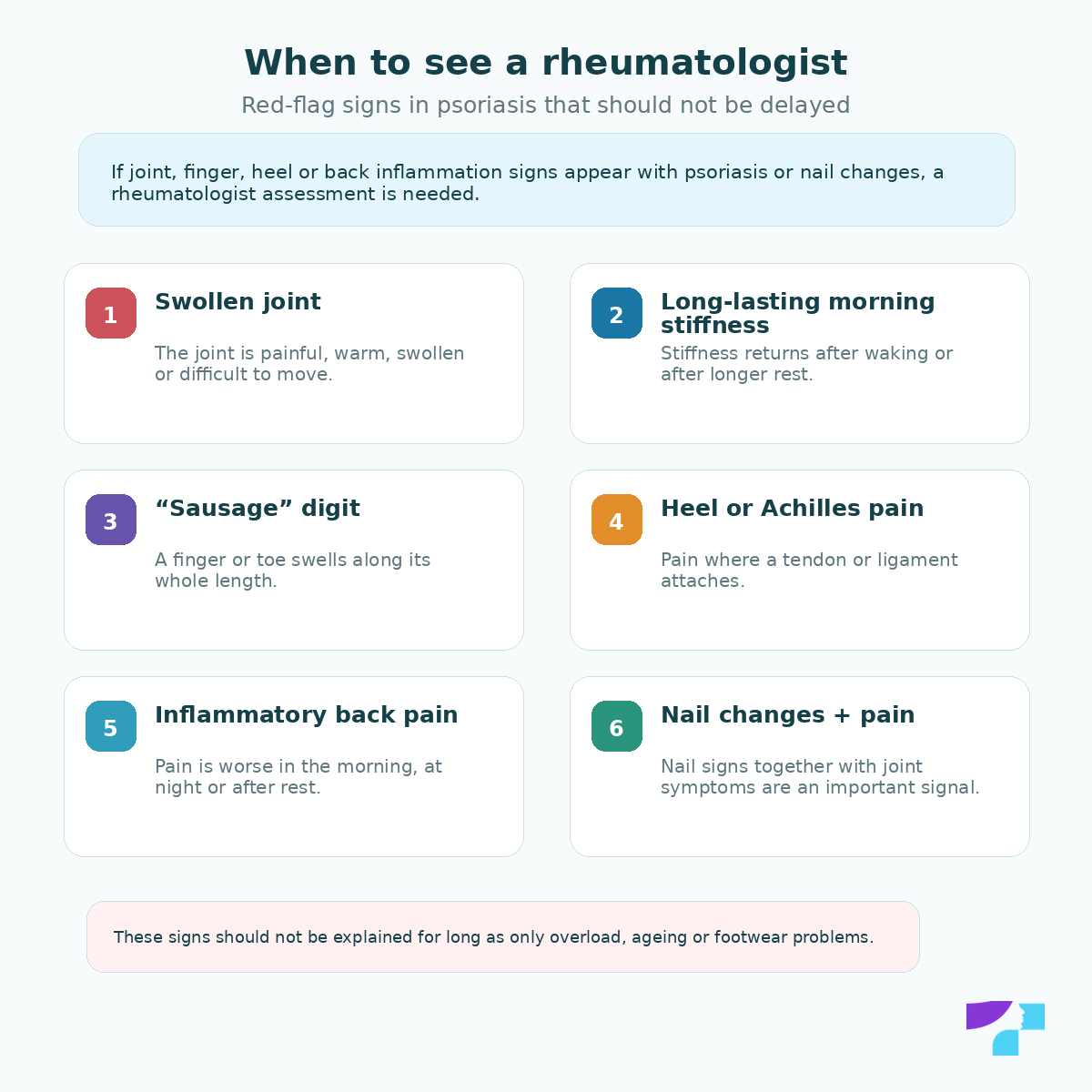
It is especially important not to wait if symptoms recur, last for several weeks or interfere with walking, gripping objects, working or sleeping.
A rheumatology appointment should be especially considered if there is:
- psoriasis and a swollen joint;
- psoriasis and morning stiffness;
- psoriasis and a “sausage” digit;
- psoriasis and heel or Achilles tendon pain;
- psoriasis and inflammatory back pain;
- nail psoriasis and joint symptoms;
- joint pain that recurs or progresses;
- symptoms that cannot be explained only by trauma or overload.
A dermatologist can help assess skin and nail psoriasis, while a rheumatologist assesses joint, back, enthesitis and dactylitis involvement. If symptoms overlap, the best approach is collaboration between both specialists.
References and authoritative sources
- Latvian clinical recommendations: Psoriasis. Latvian Association of Dermatovenerologists
- Centre for Disease Prevention and Control of Latvia
- National Institute for Health and Care Excellence (NICE): Psoriasis — assessment and management
- National Institute for Health and Care Excellence (NICE): Spondyloarthritis in over 16s — diagnosis and management
- NICE Clinical Knowledge Summaries: Spondyloarthritis and psoriatic arthropathy
- American College of Rheumatology and National Psoriasis Foundation: Psoriatic arthritis treatment guidelines
- European Alliance of Associations for Rheumatology (EULAR): Recommendations for the pharmacological treatment of psoriatic arthritis
- GRAPPA: Updated treatment recommendations for psoriatic arthritis
- American Academy of Dermatology Association (AAD): Psoriasis clinical guidelines
- DermNet: Psoriatic arthritis
- DermNet: Psoriasis
- DermNet: Nail psoriasis
- British Association of Dermatologists: Psoriasis — patient and specialist information
- Arthritis Foundation: Psoriatic arthritis
- NCBI Bookshelf / StatPearls: Psoriatic arthritis
- PubMed: Pathogenesis, diagnosis and treatment of psoriatic arthritis
- PubMed: Dactylitis and enthesitis in psoriatic arthritis
- PubMed: Treat-to-target approach in psoriatic arthritis treatment
Medical disclaimer
The information provided in this article is intended for informational and educational purposes and does not replace a medical consultation, diagnosis or treatment. If a person has psoriasis, nail changes, joint pain, joint swelling, morning stiffness, back or heel pain, a “sausage” digit, restricted movement or other signs, they should consult a dermatologist, rheumatologist or another appropriate specialist. Self-diagnosis and self-treatment may be incorrect and may delay the start of appropriate treatment, especially if joint swelling, morning stiffness, dactylitis, enthesitis or inflammatory back pain are treated for a long time only with painkillers without medical assessment. In cases of severe, rapidly worsening or high-risk symptoms, such as a very painful and swollen joint, fever, marked restriction of movement, eye pain, visual disturbances, neurological symptoms or sudden deterioration, urgent medical help should be sought immediately.
