Guttate psoriasis is a form of psoriasis characterised by many small, drop-like or point-like red, pink, brownish or violet spots on the skin. They often appear suddenly, especially in children, teenagers and young adults, often a few weeks after a throat infection, tonsillitis or streptococcal infection. The rash most commonly appears on the trunk, back, abdomen, arms and legs, but it may sometimes also affect the scalp or other areas of the body.
Guttate psoriasis is not contagious. It cannot be caught from another person. It is not a fungal infection, not a simple allergy and not a viral rash, although at first it may look similar to several other skin conditions. This is why an accurate diagnosis is important, especially if the rash appears suddenly, spreads quickly or occurs in a child after a throat infection.
In some people, guttate psoriasis resolves within a few weeks or months, while in others it may recur or later develop into a more chronic form of psoriasis, such as plaque psoriasis. Dermatological assessment, an accurate diagnosis and an individually tailored treatment plan are therefore important.
Guttate psoriasis in brief
- Guttate psoriasis is a form of psoriasis with many small, drop-like spots on the skin.
- It often appears suddenly, frequently after a throat infection, tonsillitis or streptococcal infection.
- The rash most commonly appears on the trunk, back, abdomen, arms and legs. The palms and soles are usually not the most typical locations for this form.
- The spots may be red or pink on lighter skin, while on darker skin they may look brownish, violet, greyish or darker.
- Guttate psoriasis is not contagious and cannot be caught from another person.
- It can resemble an allergy, viral rash, pityriasis rosea, fungal infection, eczema, seborrhoeic dermatitis or a medication-related rash.
- The diagnosis is usually made by a dermatologist after examining the skin and reviewing the medical history; sometimes a streptococcal test, throat swab, blood tests or skin biopsy may be needed.
- Treatment may include skin care, topical therapy, phototherapy, assessment of infection and, in more severe cases, broader treatment prescribed by a dermatologist.
What is guttate psoriasis?
Guttate psoriasis is an inflammatory skin disease and one of the forms of psoriasis. In this condition, many small spots or papules — small raised skin lesions — appear on the skin. They are usually smaller and finer than the lesions seen in classic plaque psoriasis.
This form is called guttate psoriasis because the word “guttate” means “drop-like”. Its typical appearance resembles many small drops or dots on the skin.
Guttate psoriasis often starts suddenly. A person, or the parents of a child, may notice that after a recent sore throat, tonsillitis or another infection, many small red or scaly spots appear on the skin. This sudden onset is one of the reasons why guttate psoriasis is often confused with an allergy or viral rash.
Why is it called guttate psoriasis?
The name “guttate psoriasis” is related to the shape of the rash. The spots are often small, round or oval, and may look like drops of water on the skin. They are usually smaller than the lesions of plaque psoriasis and tend to be numerous — not just one or two spots, but many small elements.
The guttate form can be very noticeable on the trunk, where the spots are scattered across the back, abdomen, chest or sides. Sometimes they also appear on the arms and legs. Less commonly, the rash may affect the face or scalp.
How is guttate psoriasis classified?
In medical classification, guttate psoriasis is recognised as a separate form of psoriasis. In the International Classification of Diseases, it belongs to the psoriasis group and is described as guttate psoriasis.
For the patient, the most important point is not the classification code itself, but the fact that this form has a distinct appearance, a more frequent link with throat infection and a different course compared with classic plaque psoriasis. This is why guttate psoriasis should be explained in a separate article, rather than only mentioned briefly in a general overview of psoriasis.
Is guttate psoriasis contagious?
No, guttate psoriasis is not contagious. It cannot be caught by touching someone, sharing towels, being in the same room, exercising together or living in the same household.
It is important to understand the difference: guttate psoriasis may be triggered by an infection, especially a streptococcal throat infection, but psoriasis itself is not an infection. This means that a throat infection may trigger a flare in someone who is predisposed to psoriasis, but the skin rash itself is not contagious.
Guttate psoriasis is also not a fungal infection and not a simple allergic reaction, although externally it may sometimes resemble these conditions.
What does guttate psoriasis look like?
Guttate psoriasis usually appears as many small red, pink, brownish or violet spots on the skin. The spots may be slightly raised above the skin surface and covered with fine scaling. In guttate psoriasis, the scales are often thinner and finer than in classic plaque psoriasis.
On lighter skin, the spots often look pink or red. On darker skin, they may be brownish, violet, greyish or darker than the surrounding skin. After the inflammation settles, pigment changes may remain — lighter or darker areas of skin.
Typical guttate psoriasis rashes:
- are small and numerous;
- may be drop-like, round or oval;
- often appear on the trunk, back, abdomen, arms and legs;
- may have mild scaling;
- may itch, but not always;
- often appear suddenly;
- may begin after a throat infection.
Guttate psoriasis is characterised by many small papular, scaly elements. It more often affects the trunk and limbs, while the palms and soles are usually not the most typical locations for this form. This feature can help the doctor distinguish guttate psoriasis from several other skin conditions.
3–5 main signs that may suggest guttate psoriasis
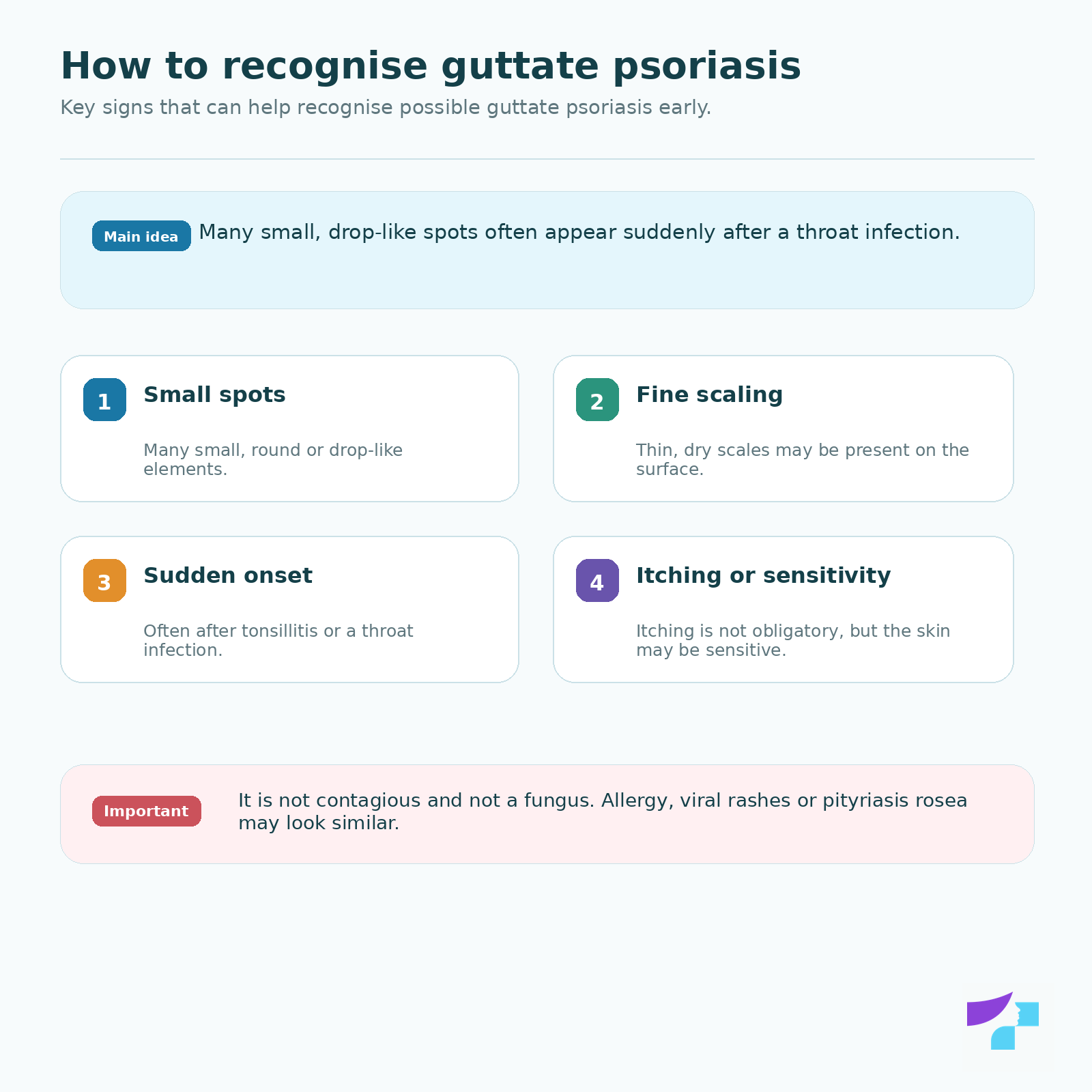
Guttate psoriasis may be suggested by a combination of the following signs:
- many small red, pink, brownish or violet spots on the body;
- fine scaling on the surface of the rash;
- sudden onset of the rash, especially after a throat infection, tonsillitis or streptococcal infection;
- rash on the back, abdomen, chest, arms or legs;
- itching or skin sensitivity, which may be mild or more pronounced.
If such a rash appears in a child or teenager after a throat infection, guttate psoriasis is one of the diagnoses that should be considered. However, several other skin conditions may look similar, so assessment by a dermatologist is needed.
The visual below summarises the main signs that may help recognise possible guttate psoriasis early, especially when small scaly spots appear suddenly after a throat infection or tonsillitis.
Where on the body does guttate psoriasis most often appear?
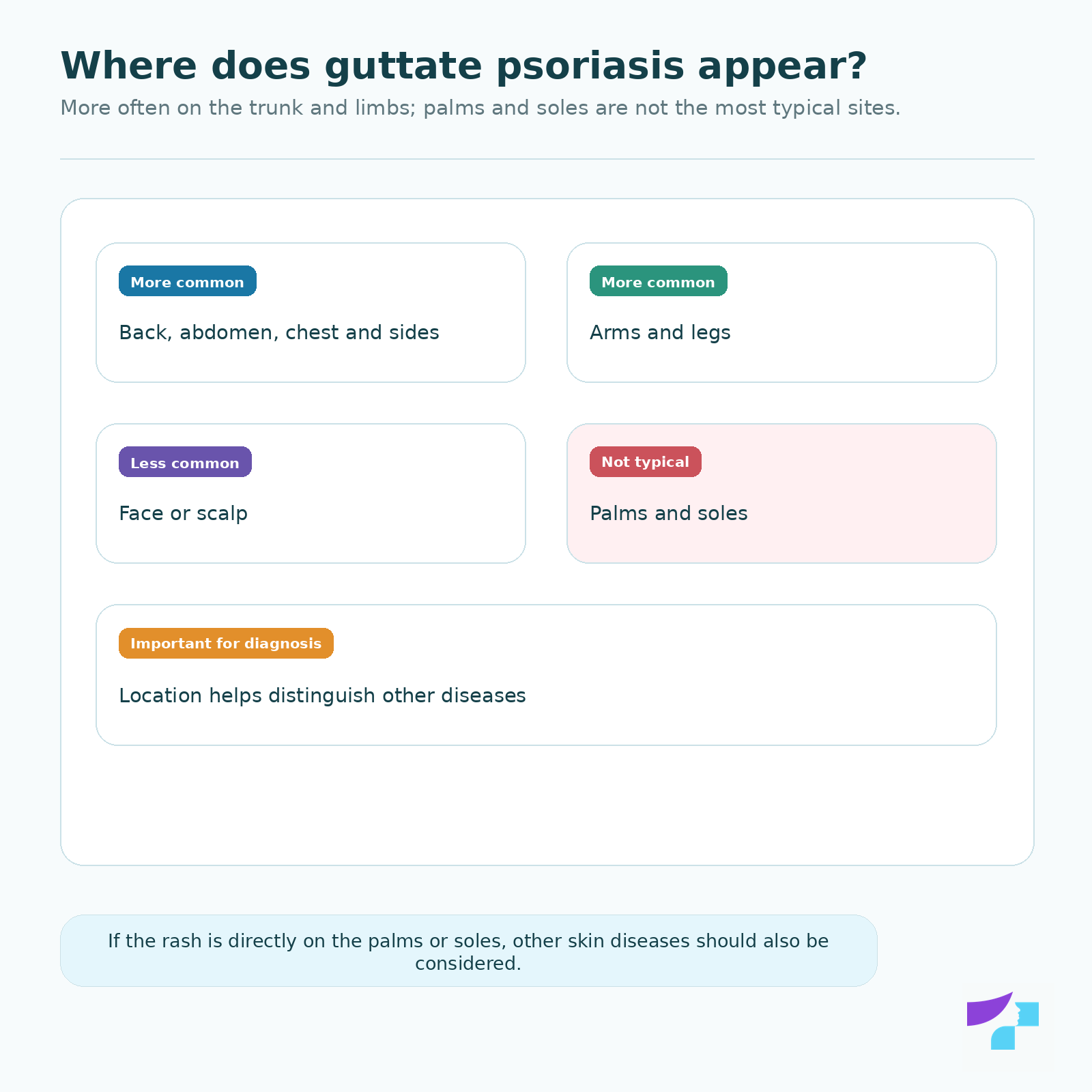
Guttate psoriasis most often appears on the trunk and limbs. Typical locations include:
- back;
- abdomen;
- chest;
- sides;
- upper arms;
- forearms;
- thighs;
- lower legs;
- sometimes the scalp;
- less commonly the face.
The rash is often symmetrical or widely scattered. There may be many spots, but each individual spot is usually small. This is one reason why guttate psoriasis differs from plaque psoriasis, where lesions are more often larger, thicker and more clearly defined.
Can guttate psoriasis affect the palms and soles?
Guttate psoriasis usually affects the trunk, back, abdomen, arms and legs, while the palms and soles are not the most typical locations for this form. If the main rash is directly on the palms or soles, the dermatologist should also consider other forms of psoriasis or other skin diseases.
In such cases, the differential diagnosis may include palm and sole psoriasis, eczema, fungal infection, contact dermatitis or other inflammatory skin diseases. This is one reason why the location of the rash is an important part of the diagnosis.
Guttate psoriasis has typical body areas. The rash is most often on the trunk, back, abdomen, arms and legs, while the palms and soles are usually not the most typical location.
Symptoms of guttate psoriasis
The symptoms of guttate psoriasis can vary in severity. In some people the rash is mild and causes little discomfort, while in others it is widespread, visible and itchy.
Small red or pink spots
The main sign is many small spots or papules. They may look like small drops on the skin. The spots are usually smaller than the lesions of plaque psoriasis.
The colour can vary depending on skin tone. Guttate psoriasis should therefore not be assessed only by whether the spots are “red”. In some people, they may be darker, brownish or violet.
Scaling
There may be fine scales on the surface of the spots. They are often thinner than in plaque psoriasis. Sometimes the scaling is so mild that it is not very noticeable at first.
Scaling can be worsened by dry skin, scratching, irritating cleansers or unsuitable skin care.
Itching and skin sensitivity
Guttate psoriasis may itch, but itching is not always present. In some patients, the main concern is the appearance of the skin; in others, it is itching, dryness or sensitivity.
Strong scratching can injure the skin and worsen inflammation. If the rash becomes painful, purulent, very warm or changes rapidly, the possibility of infection should also be assessed.
Rapid onset after infection
Guttate psoriasis often appears suddenly. A typical history is that the person recently had a sore throat, tonsillitis, fever or another upper respiratory tract infection, followed by the appearance of many small spots on the skin.
The patient does not always remember the infection. Sometimes the throat infection was mild or was not diagnosed. This is why the doctor may ask about a recent history of sore throat, fever, tonsillitis or contact with someone who was ill.
Difference from plaque psoriasis
Plaque psoriasis usually forms larger, thicker, more clearly defined patches with more pronounced scaling. Guttate psoriasis more often appears as many small, scattered spots.
However, the two forms may be related. In some people, guttate psoriasis may be the first manifestation of psoriasis, while later plaque psoriasis elements may develop or persist.
Guttate psoriasis in children and teenagers
Guttate psoriasis is more common in children, teenagers and young adults than in older people. In children, it often appears after a throat infection or tonsillitis.
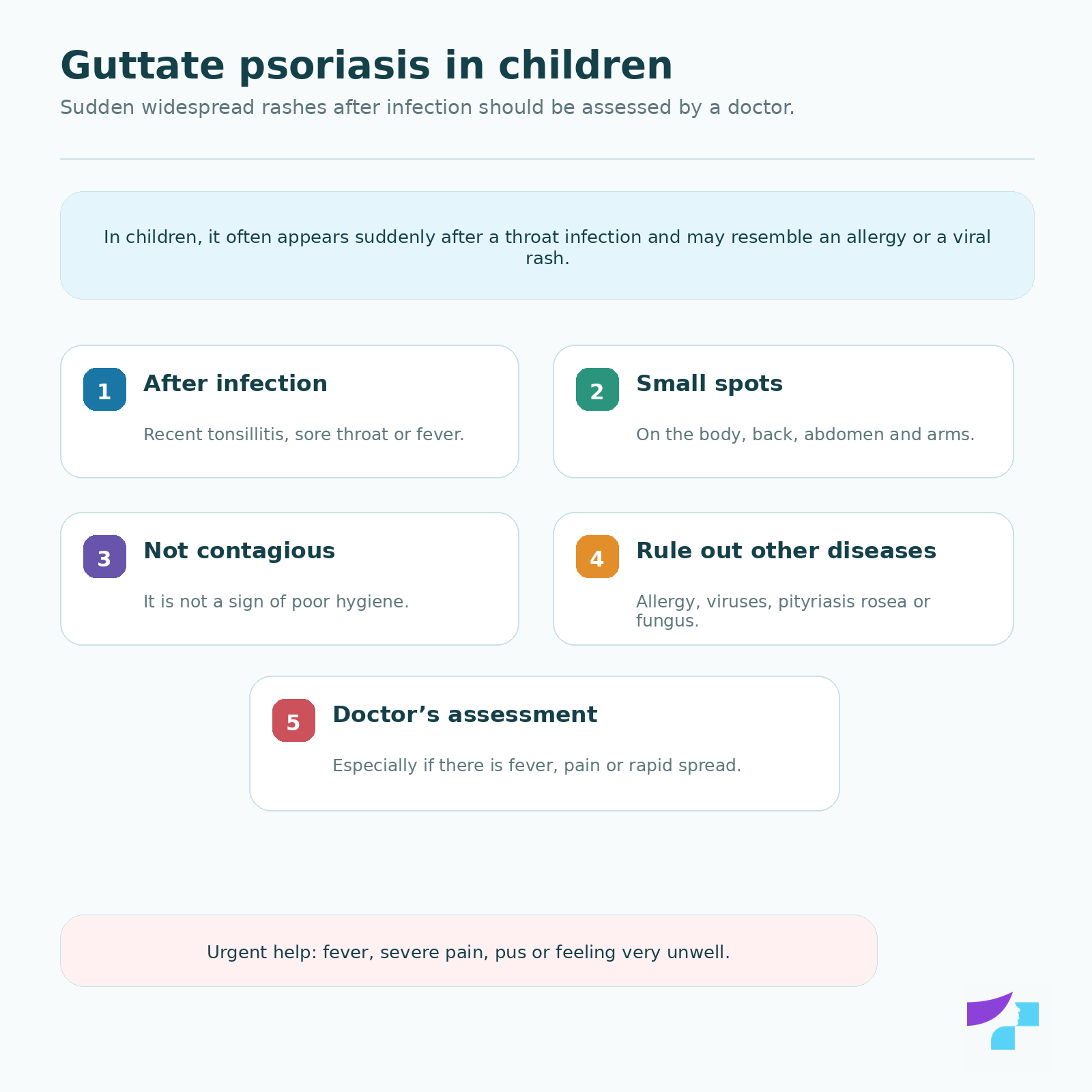
Parents may notice that a child suddenly develops many small spots on the body. At first, these may be mistaken for an allergy, viral rash, pityriasis rosea or another childhood skin condition. A child with a widespread or unclear rash therefore needs medical assessment.
In children, guttate psoriasis can be particularly worrying because the rash may appear suddenly and widely. This can cause anxiety for both the child and the parents. The child should not be told that it is “contagious”, “a sign of poor hygiene” or something to be ashamed of — guttate psoriasis is not contagious and is not related to poor personal hygiene.
At the same time, in a child with a rash after a throat infection, both the skin condition and the possible link with infection should be assessed. The doctor may decide whether a throat examination, streptococcal test, throat swab or other investigation is needed.
It is especially important to seek medical help if the child has:
- fever;
- feeling unwell;
- a rapidly spreading rash;
- severe itching or pain;
- suspicion of tonsillitis or streptococcal infection;
- a rash that does not clear or recurs;
- purulent signs or very painful skin.
In children, guttate psoriasis is often sudden and worrying for parents. It is especially important not to miss the link with a recent throat infection while also remembering that the disease is not contagious.
Guttate psoriasis in adults
Guttate psoriasis can also occur in adults. In adults, it may appear after infection, stress, skin trauma or other triggering factors. Sometimes it is the first manifestation of psoriasis in someone who has not previously had a clear diagnosis of psoriasis.
In adults, it is important to distinguish guttate psoriasis from other skin conditions, including pityriasis rosea, fungal infection, allergic rashes, medication-related rashes or other inflammatory dermatoses.
Why does guttate psoriasis often occur after tonsillitis or throat infection?
Guttate psoriasis is often linked to an immune system reaction after infection. Streptococcal throat infection, such as tonsillitis, is most often mentioned. In a person with a genetic or immunological predisposition, such an infection may “switch on” inflammatory processes in the skin.
This does not mean that psoriasis is caused by bacteria located in the skin. Rather, the infection may act as a trigger for immune system activation. This is why the rash often appears after the infection, not necessarily on the first day of the infection.
It is also important to understand that antibiotics may be needed if there is an active bacterial throat infection, but they do not automatically treat the psoriasis rash itself. The treatment decision is made by the doctor after assessing both the throat infection and the skin condition.
Streptococcus and guttate psoriasis
Streptococcal infection is one of the best-known triggers of guttate psoriasis. A typical situation is that a child, teenager or young adult has had a sore throat or tonsillitis, and after a few weeks many small scaly spots appear on the skin.
If the doctor suspects a link with streptococcus, a throat swab, streptococcal test or blood tests may be needed. The choice of investigations depends on symptoms, signs of infection, age and the clinical situation.
A streptococcal test is not needed in every case of guttate psoriasis, but the doctor should definitely be told about a recent throat infection.
Guttate psoriasis is often not noticed immediately during the throat infection. The rash may appear later, when the infection symptoms have already improved, so it is important for the patient or the child’s parents to connect a recent throat infection with the sudden appearance of small spots.
Who has a higher risk of developing guttate psoriasis?
The risk may be higher in people who have:
- a family history of psoriasis;
- previous psoriasis;
- a recent streptococcal infection or tonsillitis;
- frequent throat infections;
- childhood, teenage or young adult age;
- a strong immune response after infection;
- stress or other psoriasis flare triggers;
- skin trauma or irritation.
Risk factors do not mean that the disease will definitely develop. They help explain why one person develops no rash after a throat infection, while another may develop guttate psoriasis.
Development mechanism of guttate psoriasis
Guttate psoriasis occurs because of an inflammatory immune reaction. In a person predisposed to psoriasis, the immune system may activate inflammatory processes in the skin after certain triggers, such as infection. As a result, skin cell renewal and inflammation become too active, and small psoriatic spots appear on the skin.
In simple terms, this can be explained as follows:
- the person has a tendency towards psoriatic inflammation;
- an infection or another factor activates the immune system;
- immune system signals affect the skin;
- many small inflammatory spots form on the skin;
- the spots may scale, itch or become visible over a large skin area.
Development and flare-up timeline of guttate psoriasis
Guttate psoriasis is not an infection, so it does not have an “incubation period”. However, a certain sequence is often seen.
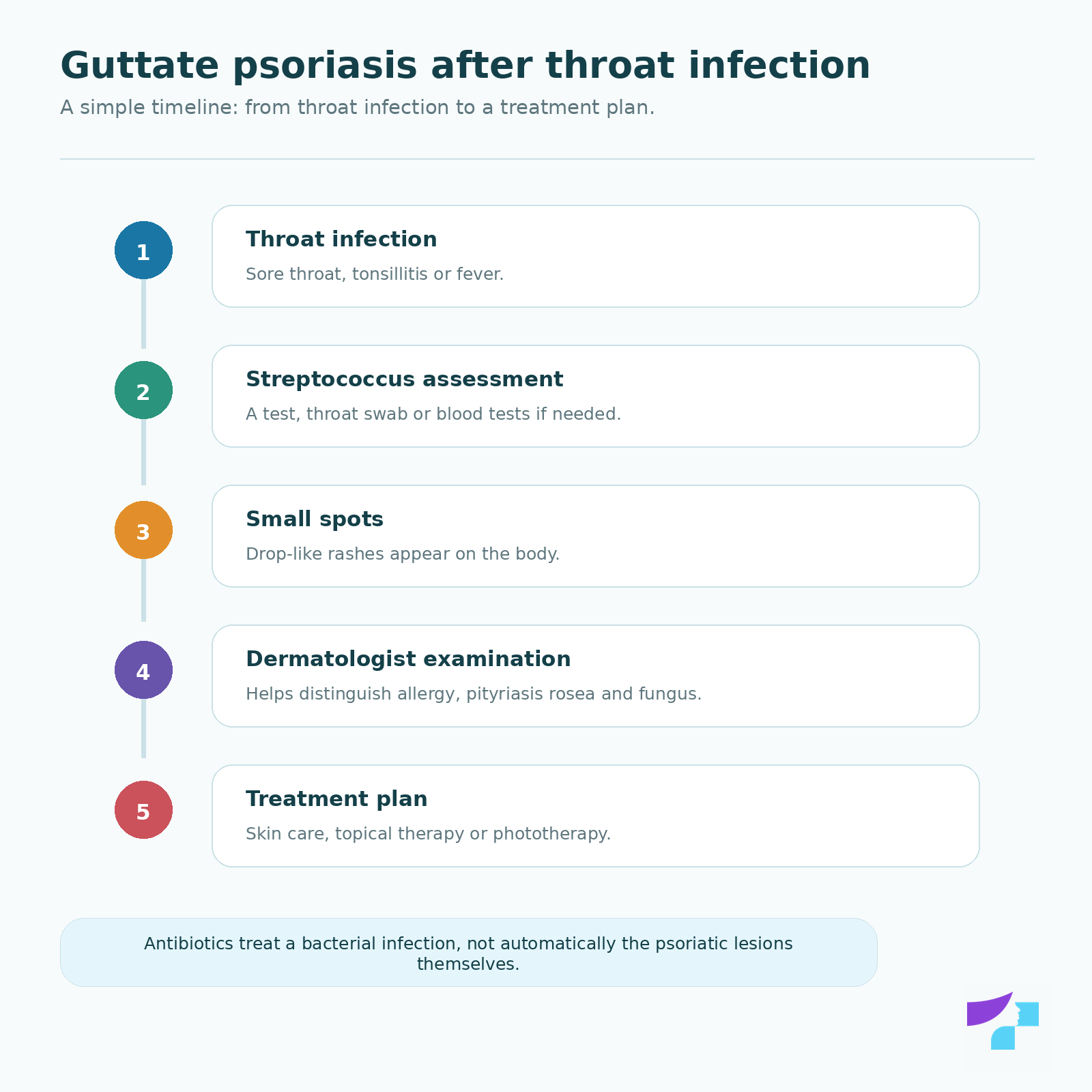
A possible timeline:
- Throat infection or tonsillitis — the person has a sore throat, fever, tonsillitis or another upper respiratory tract infection.
- Immune system activation — after the infection, the immune system continues to react actively, and skin inflammation may begin in a predisposed person.
- Appearance of small spots — after some time, many small red, pink, brownish or violet spots with scales appear on the skin.
- Dermatologist assessment — the doctor assesses the skin, the medical history and, if needed, the possible link with a throat infection.
- Treatment plan — treatment may include skin care, topical therapy, phototherapy, assessment of infection and other measures prescribed by a doctor.
Causes and flare-up factors of guttate psoriasis
Guttate psoriasis does not have one single cause. It develops through an interaction between the immune system, genetic predisposition and triggering factors.
Possible triggering factors include:
- streptococcal throat infection;
- tonsillitis;
- other upper respiratory tract infections;
- stress;
- skin trauma or irritation;
- some medications;
- immune system activation;
- previous or family history of psoriasis.
A clear trigger is not always found. Sometimes the person does not remember a throat infection, or the infection was very mild.
Can guttate psoriasis go away on its own?
In some people, guttate psoriasis may gradually improve and resolve within a few weeks or months. This is especially possible when the flare is linked to a single infection episode and the skin inflammation is not very severe.
However, it does not always go away on its own. In some patients, the rash persists for longer, recurs or develops into another form of psoriasis. For this reason, it is not advisable to rely only on waiting if the rash is widespread, itchy, occurs in a child, appears after infection, is unclear or persists for a long time.
Can guttate psoriasis recur or become chronic?
Yes, guttate psoriasis can recur. In some people, each new throat infection or other inflammatory episode may trigger a similar flare.
In some patients, guttate psoriasis may later develop into a more chronic form of psoriasis, such as plaque psoriasis. This does not happen in everyone, but the risk exists. Monitoring is therefore important, especially if the rash does not clear, recurs or larger, thicker psoriatic plaques appear.
Can guttate psoriasis turn into plaque psoriasis?
Yes, in some people guttate psoriasis can be the first manifestation of psoriasis, after which plaque psoriasis later develops. In plaque psoriasis, the patches are usually larger, thicker, more scaly and more often located on the elbows, knees, scalp or lower back.
In some patients, guttate psoriasis is a one-off flare, while in others it may become the beginning of a more chronic psoriasis course. In practical terms, after the guttate rash improves, it is important to watch for larger, thicker, persistent scaly lesions that look more like plaque psoriasis.
If individual larger or chronic patches remain on the skin after an episode of guttate rash, dermatological follow-up is needed.
What can guttate psoriasis be confused with?
Guttate psoriasis can resemble several other skin conditions. This is one reason why self-diagnosis is not reliable.
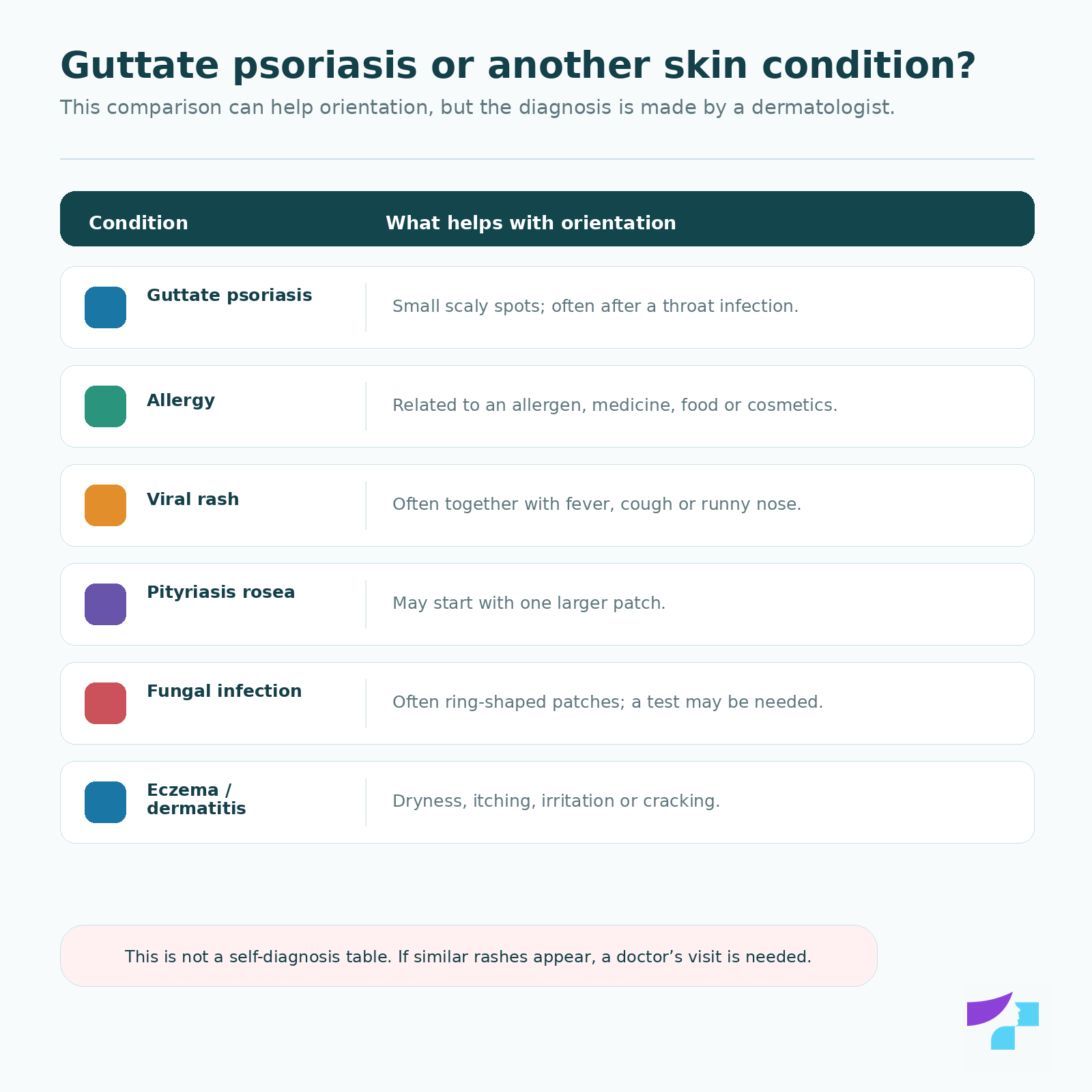
Guttate psoriasis or allergy
Allergic rashes are often related to a new food, medication, cosmetic product, household chemical or contact with an allergen. They may be very itchy and sometimes changeable.
Guttate psoriasis is more characterised by small scaly spots, often after infection, with a typical distribution on the trunk. However, it is not always possible to distinguish the two conditions by appearance alone.
Guttate psoriasis or viral rash
Viral rashes often appear together with fever, runny nose, cough, diarrhoea or other infection symptoms. Some viral rashes have a very typical appearance, while others can be non-specific.
Guttate psoriasis may begin after an infection, but it is not itself a viral rash. If a child has fever and a rash, medical assessment is needed.
Guttate psoriasis or pityriasis rosea
Pityriasis rosea can cause pink, scaly spots on the trunk and sometimes starts with one larger “herald patch”, followed by several smaller rashes. It may resemble guttate psoriasis.
The dermatologist assesses the shape, distribution, scaling, course of the disease and other symptoms to determine the correct diagnosis.
Guttate psoriasis or fungal infection
A fungal infection often forms ring-shaped lesions with a more active edge and may be contagious. Guttate psoriasis is not a fungal infection and is not contagious.
If the rash is ring-shaped, scaly or unclear, the doctor may order a fungal test. Incorrect self-treatment with unsuitable products may delay the diagnosis.
Guttate psoriasis or eczema
Eczema is more often associated with dryness, itching, skin irritation, cracking and a link with irritants or atopy. Guttate psoriasis is more characterised by many small scaly spots, often after infection.
Sometimes the two conditions can be difficult to distinguish, and a dermatologist’s examination is needed.
Guttate psoriasis or seborrhoeic dermatitis
Seborrhoeic dermatitis more often affects the scalp, face, eyebrows, nasal folds and the middle of the chest, where redness and greasier scaling appear. Guttate psoriasis is more often characterised by many small scattered spots on the trunk and limbs.
If the rash is on the scalp, face or middle of the chest, the dermatologist should consider both seborrhoeic dermatitis and psoriasis.
Guttate psoriasis or medication-related rash
Some rashes may appear after starting a new medication and can externally resemble inflammatory skin diseases. The doctor should therefore always be told what medications or food supplements have been used in recent weeks.
It is especially important not to try to determine on your own whether the rash is a “drug allergy” or psoriasis, because the treatment approach may differ.
Guttate psoriasis or plaque psoriasis
Guttate psoriasis is characterised by many small drop-like spots. Plaque psoriasis is characterised by larger, thicker and more clearly defined plaques.
Both forms can occur in the same person at different stages of the disease. This is why the shape of the rash, the medical history and the course of the disease are all important.
Because guttate psoriasis can resemble several other skin conditions, the visual comparison below helps explain why the diagnosis should not be made only from pictures found online.
How is guttate psoriasis diagnosed?
Guttate psoriasis is most often diagnosed by a dermatologist, who assesses the appearance of the skin, the distribution of the rash, the onset of the disease and the patient’s recent health history.
The doctor may ask:
- when the rash started;
- whether it appeared suddenly;
- whether there was a recent throat infection, tonsillitis or fever;
- whether there is psoriasis in the family;
- whether the rash itches or hurts;
- whether similar rashes have occurred before;
- whether new medications have been used;
- whether the rash is spreading;
- whether there are other symptoms.
Dermatologist examination
Skin examination is the main diagnostic step. The dermatologist assesses the shape, size, scaling and distribution of the spots and compares them with other possible diagnoses.
Sometimes the diagnosis is clear after examination, especially if the appearance is typical and there has been a recent throat infection.
Streptococcal test and throat swab
If guttate psoriasis is suspected to be linked to streptococcal infection, the doctor may order a streptococcal test or throat swab. This is especially important if the patient still has a sore throat, fever, enlarged lymph nodes or other infection symptoms.
Blood tests
Blood tests may help assess signs of inflammation or the possibility of a recent streptococcal infection. They are not needed for every patient, but may be useful in certain situations.
Skin biopsy
A skin biopsy means taking a small piece of skin for microscopic examination. In guttate psoriasis, a biopsy is not always needed, but it may be used if the diagnosis is unclear or the rash does not fit the typical picture.
Does guttate psoriasis affect the body’s immunity?
Guttate psoriasis is not an infection, so it does not create “immunity after illness” in the way some infectious diseases do. A person cannot “have” guttate psoriasis once and then become fully protected from it.
However, the course of the disease can vary. In some people, it appears once and gradually resolves, while in others it may recur after infections or develop into a more chronic form of psoriasis.
Consequences and possible complications
Guttate psoriasis is often not life-threatening, but it can be unpleasant, widespread and psychologically distressing. Sudden rashes on the body can be especially frightening for children and teenagers and may cause anxiety or embarrassment.
Possible consequences include:
- itching and skin irritation;
- sleep disturbance if itching is pronounced;
- skin damage from scratching;
- secondary infection in damaged areas of skin;
- pigment changes after inflammation;
- recurrent flares;
- transition to a more chronic form of psoriasis in some patients;
- psychological discomfort.
If a person with psoriasis develops joint pain, swelling, morning stiffness or “sausage-like” fingers or toes, the possibility of psoriatic arthritis should also be assessed.
When can guttate psoriasis be dangerous?
Guttate psoriasis is usually not an emergency condition, but in certain situations prompt medical assessment is needed.
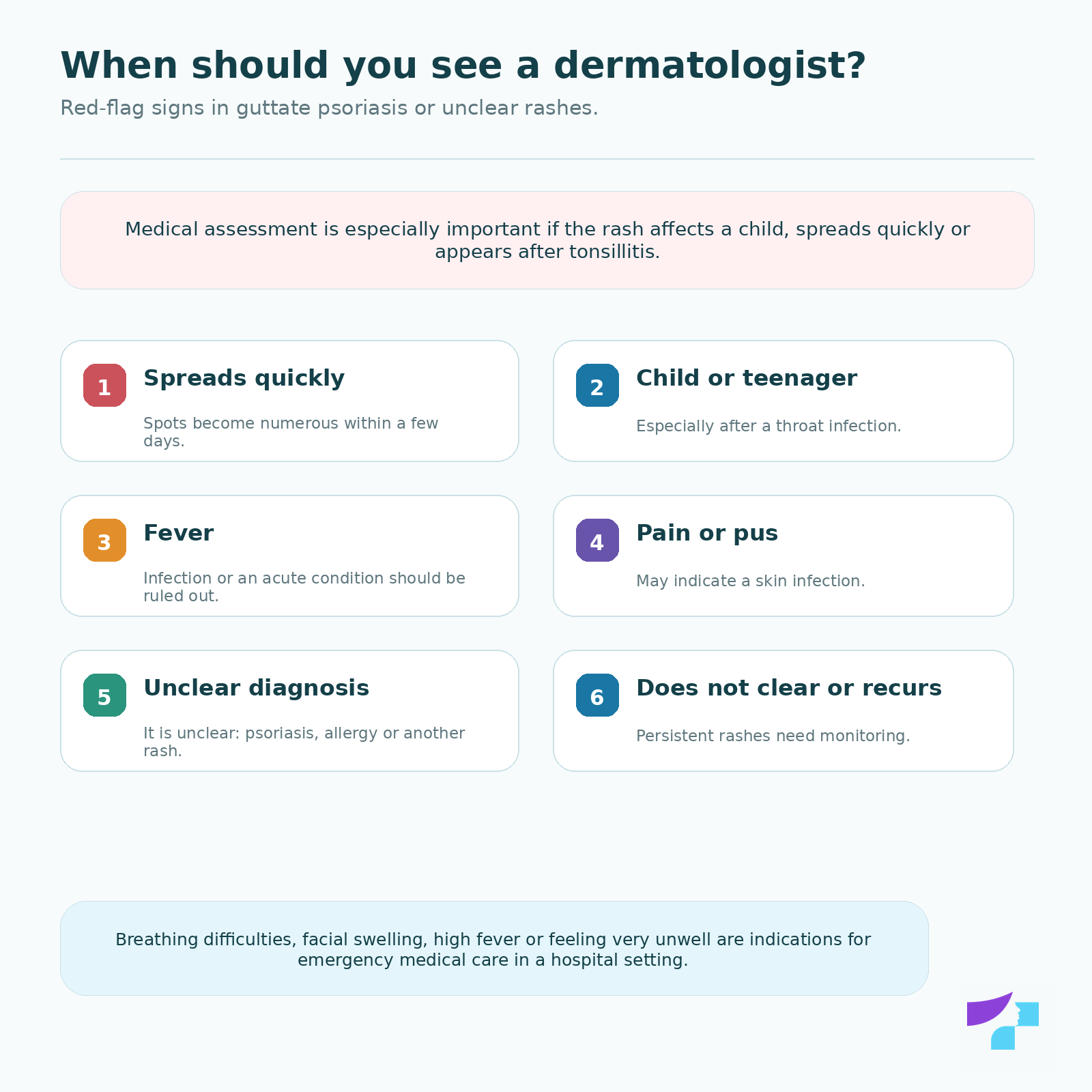
Seek medical help urgently if:
- the rash spreads quickly;
- the rash occurs in a child together with fever;
- there is severe pain or marked skin sensitivity;
- there are signs of pus;
- the skin becomes very hot, painful or swollen;
- a severe allergic reaction is suspected;
- there is difficulty breathing or swelling of the face or lips;
- the person feels very unwell;
- the rash appears after a severe infection;
- the diagnosis is unclear;
- the rash does not clear or recurs.
In children, pregnant women, people with weakened immunity or severe underlying conditions, rashes should be assessed especially carefully.
Treatment of guttate psoriasis
Treatment of guttate psoriasis depends on the extent of the rash, itching, the patient’s age, skin condition, signs of infection and whether the disease recurs.
Treatment is prescribed by a dermatologist or another doctor after assessment. The aim is to reduce inflammation, itching and scaling, improve the skin barrier, assess any possible link with infection and prevent worsening of the disease.
Skin care and topical therapy
In milder cases, gentle skin care, moisturising and topical treatment prescribed by a doctor may be important. Topical therapy means treatment that is applied directly to the skin.
It is important to avoid irritating cleansers, aggressive rubbing, frequent scratching and the use of strong products without a diagnosis.
Phototherapy or light therapy
If the rash is more widespread or topical therapy is not sufficient, the dermatologist may consider phototherapy, or medical light therapy. This is not the same as uncontrolled sunbathing or using a tanning bed. Phototherapy is given in specific doses and under medical supervision.
Phototherapy is not a tanning bed and not uncontrolled sun exposure. It is a medical procedure with a specific type of radiation, dose and frequency chosen by a doctor. Using a tanning bed on your own as treatment for psoriasis is not a safe alternative to phototherapy.
Phototherapy may be useful in guttate psoriasis, but it is not suitable for everyone. The decision is made by the dermatologist.
Systemic therapy in more severe cases
In more severe, very widespread or long-lasting cases, systemic therapy may be needed. This is treatment that acts on the inflammatory process in the body. Such therapy is prescribed only by a doctor after assessing benefits, risks and the need for monitoring.
In a patient education article, it is not safe to provide specific prescription medication regimens or doses, because therapy must be tailored individually.
Assessment and treatment of throat infection
If there is an active streptococcal infection or tonsillitis, it should be assessed and treated according to the doctor’s instructions. Treating the infection is important for the patient’s overall health and may help prevent infection-related complications.
However, antibiotics alone do not always rapidly clear the psoriasis rash. They are used when the doctor has a reason to treat a bacterial infection, not simply because any rash is present.
Do antibiotics help guttate psoriasis?
Antibiotics are not a universal treatment for guttate psoriasis. They may be needed if the doctor has reason to suspect an active bacterial infection, such as streptococcal tonsillitis. However, antibiotics do not always directly and quickly clear the psoriasis rash itself.
Antibiotics should therefore not be taken on one’s own “for the rash”. The decision is made by the doctor after assessing throat symptoms, a streptococcal test, throat swab or other information.
What should not be done as self-treatment?
In guttate psoriasis, it is not recommended to:
- self-treat for a long time without a diagnosis;
- use prescription medicines without a doctor’s instructions;
- take antibiotics on your own;
- rub or scratch the rash;
- use harsh disinfectants on large areas of skin;
- use a tanning bed as “treatment”;
- assume that all rashes after infection are allergies;
- delay medical consultation for a child with a widespread rash.
What to do during a guttate psoriasis flare?
If small scaly rashes appear, especially after a throat infection, it is advisable to:
- note when the rash started;
- remember whether there was recent tonsillitis, sore throat or fever;
- not make a diagnosis based only on pictures online;
- avoid rubbing or scratching the skin;
- use gentle skin care;
- avoid irritating cosmetic products;
- book an appointment with a dermatologist;
- in a child, consult a paediatrician or family doctor;
- seek urgent help if there is fever, pain, pus or rapid worsening.
Lifestyle, skin care, stress and infection control
Lifestyle does not cure guttate psoriasis, but it may help reduce the risk of flares and improve the skin condition.
Important steps include:
- washing the skin gently;
- moisturising regularly;
- avoiding skin trauma;
- treating throat infections according to the doctor’s instructions;
- not ignoring recurrent tonsillitis;
- reducing stress;
- not stopping treatment prescribed by a doctor without consultation;
- avoiding smoking;
- maintaining general health and a regular sleep routine.
There is no single special diet that cures guttate psoriasis. A balanced diet can support general health, but it should not be presented as a substitute for treatment prescribed by a dermatologist.
What is proven, what still needs individual assessment, and what is medicine working on?
What is well established
It is well established that guttate psoriasis is a form of psoriasis with small drop-like rashes and that it may often follow a streptococcal throat infection. It is also well established that the disease is not contagious and must be distinguished from infections, allergic rashes and other skin conditions.
Phototherapy and doctor-prescribed topical therapy are important treatment options depending on disease severity.
Where an individual approach is needed
It must be assessed individually whether a streptococcal test, throat swab, blood tests or skin biopsy are needed. Treatment must also be chosen individually — for some patients, skin care and topical therapy are enough, while others need phototherapy or broader dermatological supervision.
The role of antibiotics also requires individual assessment: they are important in treating an active bacterial infection, but they are not an automatic treatment for the rash of guttate psoriasis.
What medicine is working on
Medicine continues to work on better early recognition of psoriasis forms, clarification of the role of infections, monitoring of psoriasis in children and teenagers, assessment of the risk of transition to chronic psoriasis, and personalised treatment.
When should you see a dermatologist?
You should see a dermatologist if:
- many small scaly spots suddenly appear on the skin;
- the rash appears after a throat infection or tonsillitis;
- the rash is in a child;
- the rash spreads quickly;
- the rash itches, hurts or disturbs sleep;
- the diagnosis is unclear;
- the rash does not clear;
- the rash recurs;
- psoriasis is suspected;
- psoriasis needs to be distinguished from a fungal infection, allergy, pityriasis rosea or viral rash;
- joint pain, swelling or morning stiffness appears.
A dermatologist can help establish the diagnosis, assess disease severity and choose the most appropriate treatment.
These signs help clarify when a rash should not be monitored at home for too long and when assessment by a dermatologist, paediatrician or family doctor is needed.
References and authoritative sources
- Latvian clinical recommendations: Psoriasis. Latvian Association of Dermatovenerologists
- Centre for Disease Prevention and Control of Latvia
- National Institute for Health and Care Excellence (NICE): Psoriasis — assessment and management
- NICE Clinical Knowledge Summaries: Psoriasis
- American Academy of Dermatology Association (AAD): Clinical guidelines for psoriasis
- American Academy of Dermatology Association (AAD): Guidelines for psoriasis in children
- DermNet: Guttate psoriasis
- DermNet: Psoriasis
- DermNet: Pityriasis rosea
- Primary Care Dermatology Society: Guttate psoriasis
- National Psoriasis Foundation: Guttate psoriasis
- National Psoriasis Foundation: Psoriasis causes and triggers
- British Association of Dermatologists: Psoriasis — information for patients and professionals
- Mayo Clinic: Psoriasis
- Cleveland Clinic: Guttate psoriasis
- PubMed Central: Systematic review of guttate psoriasis treatment
- PubMed: Guttate psoriasis and streptococcal infection
- PubMed: Guttate psoriasis in children
- PubMed: Guttate psoriasis and phototherapy
- Doctus: Less well-known forms of psoriasis. Recognition and treatment
- Riga 1st Hospital: Psoriasis Centre
Medical disclaimer
The information in this article is intended for informational and educational purposes only and does not replace a doctor’s consultation, diagnosis or treatment. If an adult or child has small red, pink, brownish, violet or scaly rashes, a rash after a throat infection, itchy skin, rapid spread of a rash, suspected psoriasis, allergy, infection or another skin condition, it is necessary to consult a dermatologist, paediatrician, family doctor or another appropriate specialist. Self-diagnosis and self-treatment may be incorrect and may delay appropriate treatment, especially in children, widespread rashes, fever, pain, signs of pus, suspected infection or unclear diagnosis. In severe, rapidly worsening or high-risk symptoms — such as breathing difficulties, swelling of the face or lips, high fever, feeling very unwell, rapid spread of the rash, severe pain or signs of a severe allergic reaction — emergency medical help should be sought immediately.
