Plaque psoriasis, also commonly referred to as psoriasis vulgaris, is the most common form of psoriasis. It appears as clearly defined, red or pink, thickened skin patches covered with dry, white or silvery scales. These patches are often called psoriatic plaques.
Plaque psoriasis is not an infection, not a fungal disease and not contagious. It cannot be passed from one person to another. The disease is caused by immune system dysregulation, which makes skin cells renew too quickly, forming thickened and scaly areas of skin. It is typically characterised by symmetrical, clearly defined, red, thickened patches with silvery scales. Chronic plaque psoriasis is the most common form of psoriasis and accounts for more than 80% of cases.
This article explains plaque psoriasis as a separate form of psoriasis in detail. For a broader overview of psoriasis in general, its types, treatment principles and associated conditions, see the Medart article “Psoriasis”.
In brief: plaque psoriasis
- Plaque psoriasis is the most common form of psoriasis.
- It appears as clearly defined, red, thickened and scaly skin patches.
- The disease most often affects the elbows, knees, scalp and lower back.
- It is not contagious, not a fungal disease and not an infection.
- Psoriatic plaques may itch, crack, hurt or bleed after scratching.
- The disease usually follows a wave-like course, with flare-ups and periods of remission.
- Treatment may include topical medicines, phototherapy, systemic therapy or biological/targeted therapy.
- If there is joint pain, nail changes or extensive, painful rashes, a dermatologist’s consultation is needed.
What is plaque psoriasis?
Plaque psoriasis is a chronic inflammatory skin disease in which thickened, scaly inflammatory patches develop on the skin. Medically, this form is often called plaque psoriasis, vulgar psoriasis or psoriasis vulgaris.
Plaque psoriasis may be mild, moderate or severe. In some people, it appears only as small patches on the elbows or scalp, while in others it affects large areas of the body, cracks, itches, hurts and significantly affects quality of life.
Why is this disease also called plaque psoriasis?
The term “plaque psoriasis” is a clear and medically accurate description of the typical form of the disease. A psoriatic plaque is a thickened, inflamed area of skin with a scaly surface. It may be small, for example coin-sized, or larger if several patches merge together.
Different sources may use several names for this disease:
- plaque psoriasis;
- chronic plaque psoriasis;
- vulgar psoriasis;
- psoriasis vulgaris;
- papular psoriasis.
In practice, these terms most often refer to the same form of psoriasis — the most common chronic type of psoriasis with red, thickened and scaly skin patches.
How common is plaque psoriasis?
Plaque psoriasis is the most common form of psoriasis. Most people diagnosed with psoriasis have this form. However, its severity and presentation can vary greatly. One patient may have only a few small scaly areas on the elbows, while another may have widespread patches on the legs, back, scalp, palms, soles or other areas.
It is important to understand that the severity of psoriasis is not determined only by the size of the affected skin area. A small patch on the face, genital area, palms, soles, nails or scalp may cause much more discomfort than a larger but less disruptive lesion elsewhere on the body.
Is plaque psoriasis contagious?
Plaque psoriasis is not contagious. It is not an infection, not a fungal disease and not caused by bacteria or viruses. Plaque psoriasis cannot be caught by touching, hugging, sharing household items, being in the same room, swimming pool, gym or sauna.
This explanation is important because visible skin patches may create the false impression that the disease is transmissible. Even if the skin is red, scaly, cracked or bleeds after scratching, psoriasis itself is not infectious.
If signs of infection also appear on the skin, such as pus, pronounced warmth, severe pain, rapidly increasing redness or fever, this should be assessed by a doctor. It does not mean that psoriasis has become contagious, but it may mean that an infection has developed in damaged skin.
What does plaque psoriasis look like?
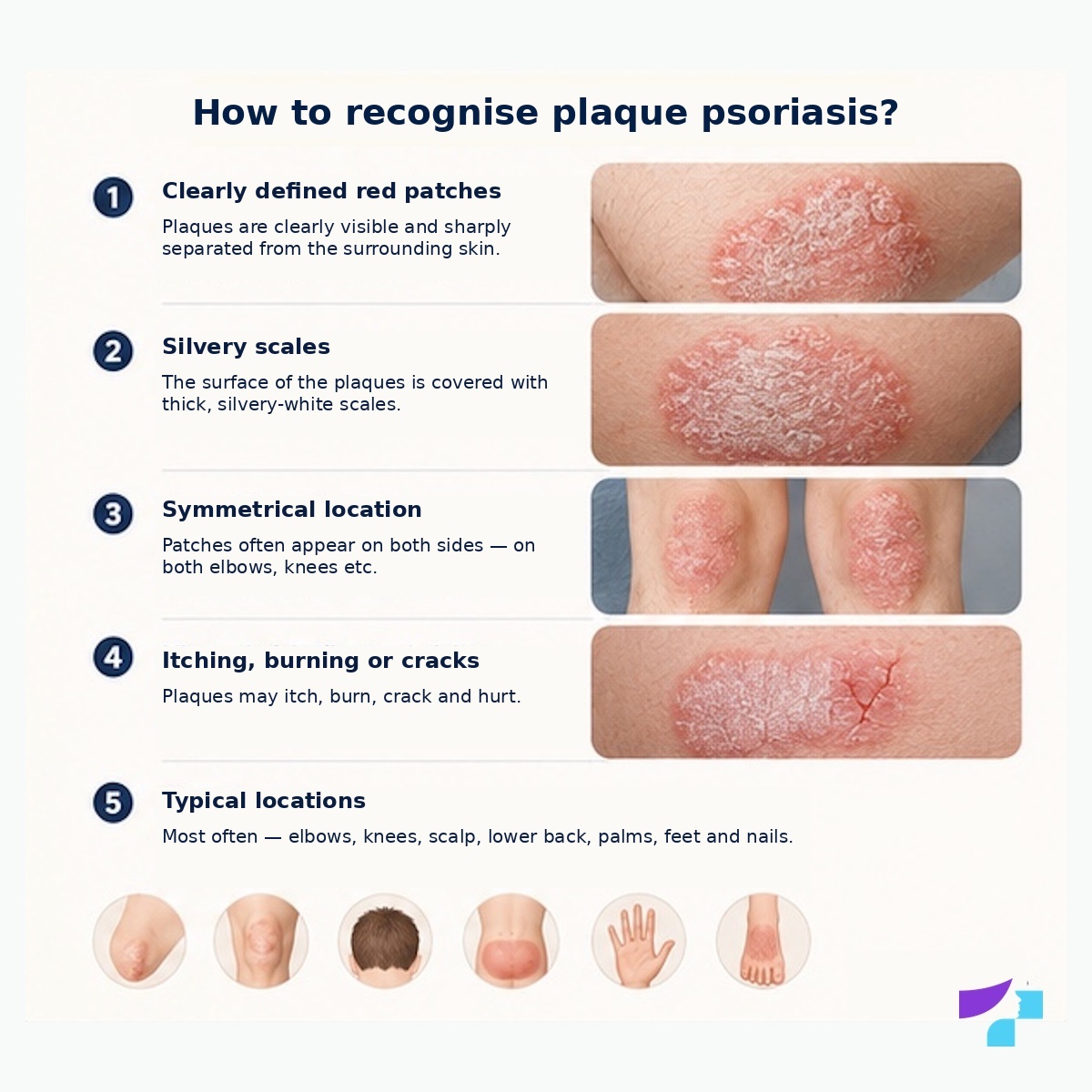
Plaque psoriasis most often appears as clearly defined, red or pink, raised areas of skin with dry white or silvery scales. On lighter skin, the patches more often look red or pink, while on darker skin they may appear purple, brownish or greyish. The scales are usually dry, layered and may flake off.
Typical signs include:
- the patches have clear borders;
- the skin is thickened and raised above the surrounding skin;
- the surface is covered with dry white or silvery scales;
- the patches are often symmetrical — for example, on both elbows or both knees;
- there may be itching, burning, cracks or pain;
- after scratching or removing scales, the skin may bleed.
Psoriatic plaques can vary in size. They may be small at first, but over time they can enlarge or merge together. If the patches are traumatised, scratched or rubbed, the skin inflammation may worsen.
3–5 main signs that may suggest plaque psoriasis
The following signs may suggest plaque psoriasis:
- clearly defined red or pink skin patches;
- dry white or silvery scales on the surface of the patches;
- symmetrical location, for example on both elbows, knees or similar areas;
- itching, dry skin, cracking or bleeding after scratching;
- typical locations — elbows, knees, scalp, lower back, palms, soles or nails.
These signs may help recognise possible psoriasis, but the diagnosis is made by a doctor. Eczema, fungal infection, seborrhoeic dermatitis, contact dermatitis and other skin diseases may look similar.
Below are the most common signs that may help recognise plaque psoriasis, but an accurate diagnosis is always made by a dermatologist.
Where does plaque psoriasis most often appear?
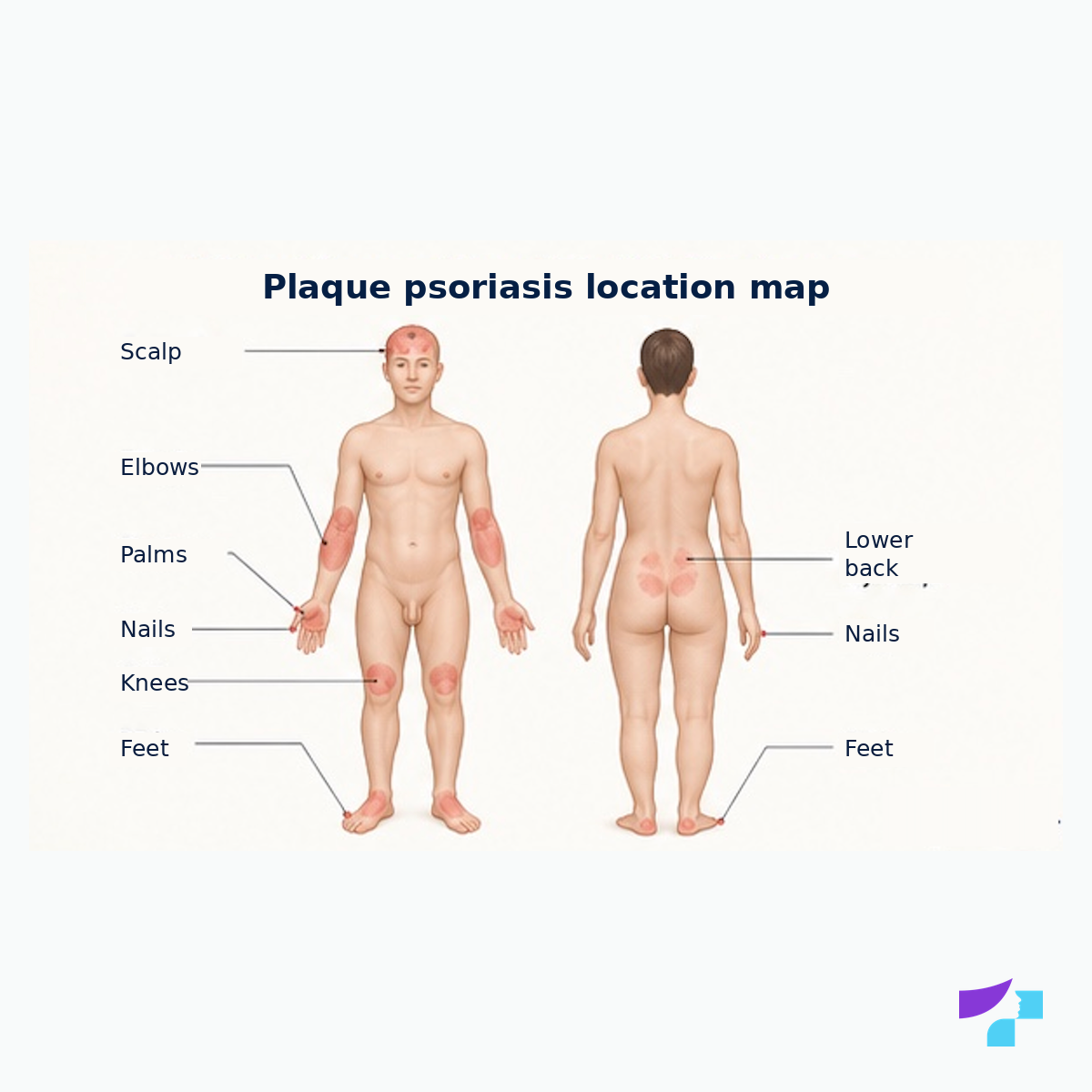
Plaque psoriasis most often appears in areas where the skin is exposed to friction, pressure or mechanical stress. Classic locations are the elbows, knees, scalp and lower back.
The most common locations are:
- elbows;
- knees;
- scalp;
- lower back;
- area behind the ears;
- navel;
- buttock area;
- palms and soles;
- nails;
- sometimes the face, skin folds or genital area.
The elbows and knees are typical sites because these areas are often mechanically irritated and exposed to pressure. Psoriatic patches often appear symmetrically, for example on both elbows or both knees.
If the patches are located on the face, genital area, palms, soles, nails or scalp, the disease may be especially troublesome even when the affected area is not large.
Plaque psoriasis often appears symmetrically and in characteristic body areas — especially on the elbows, knees, scalp and lower back.
How does plaque psoriasis differ from other forms of psoriasis?
Plaque psoriasis is the most common form of psoriasis, but it is not the only one. Its most characteristic sign is clearly defined, thickened, scaly skin patches or plaques. Other forms of psoriasis may look different and require a different diagnostic or treatment approach.
Guttate psoriasis is more often characterised by many small, drop-like lesions that may appear suddenly, especially in children and young people after an infection. Read more about this form in the Medart article “Guttate psoriasis”.
In pustular psoriasis, pus-like but usually sterile blisters form on red skin. This form may be localised or severe and widespread. Read more in the Medart article “Pustular psoriasis”.
Inverse, or flexural, psoriasis more often affects skin folds — the groin, armpits, skin under the breasts or genital area — and may be less scaly but painful or burning.
Erythrodermic psoriasis is a rare but potentially dangerous form in which inflammation affects a very large area of skin. If there is widespread skin redness, pain, fever or weakness, urgent medical care is needed.
Who has a higher risk of developing plaque psoriasis?
Plaque psoriasis can develop in anyone, but some people have a higher risk. Genetic predisposition, immune system activity and triggering factors all play a role in the development of the disease.
Risk may be higher in people who:
- have a family history of psoriasis;
- have previously had psoriasis symptoms or other forms of psoriasis;
- have chronic stress or frequent flare-ups after stress;
- often have infections, especially upper respiratory tract infections;
- have excess weight or signs of metabolic syndrome;
- smoke;
- regularly consume alcohol;
- often have skin trauma or irritation;
- have certain associated diseases or take medicines that may worsen psoriasis in some patients.
This does not mean that everyone with these factors will definitely develop psoriasis. These are risk and flare-up factors, not a simple chain of causes.
The development mechanism of plaque psoriasis
Plaque psoriasis is based on an excessively active inflammatory immune response in the skin. The immune system maintains inflammatory signals that affect skin cells, or keratinocytes. Keratinocytes begin to divide and move towards the skin surface much faster than normal.
Normally, skin cell renewal takes place gradually. In psoriasis, this process is accelerated, so immature cells accumulate in the upper layer of the skin. They form thickened, scaly patches.
In simple terms, the disease mechanism can be described as follows:
- immune system activation;
- inflammatory signals in the skin;
- accelerated skin cell division;
- skin thickening;
- dry scales and psoriatic plaques.
In a simplified diagram, the development of plaque psoriasis can be shown as accelerated skin cell renewal caused by excessive immune activity.
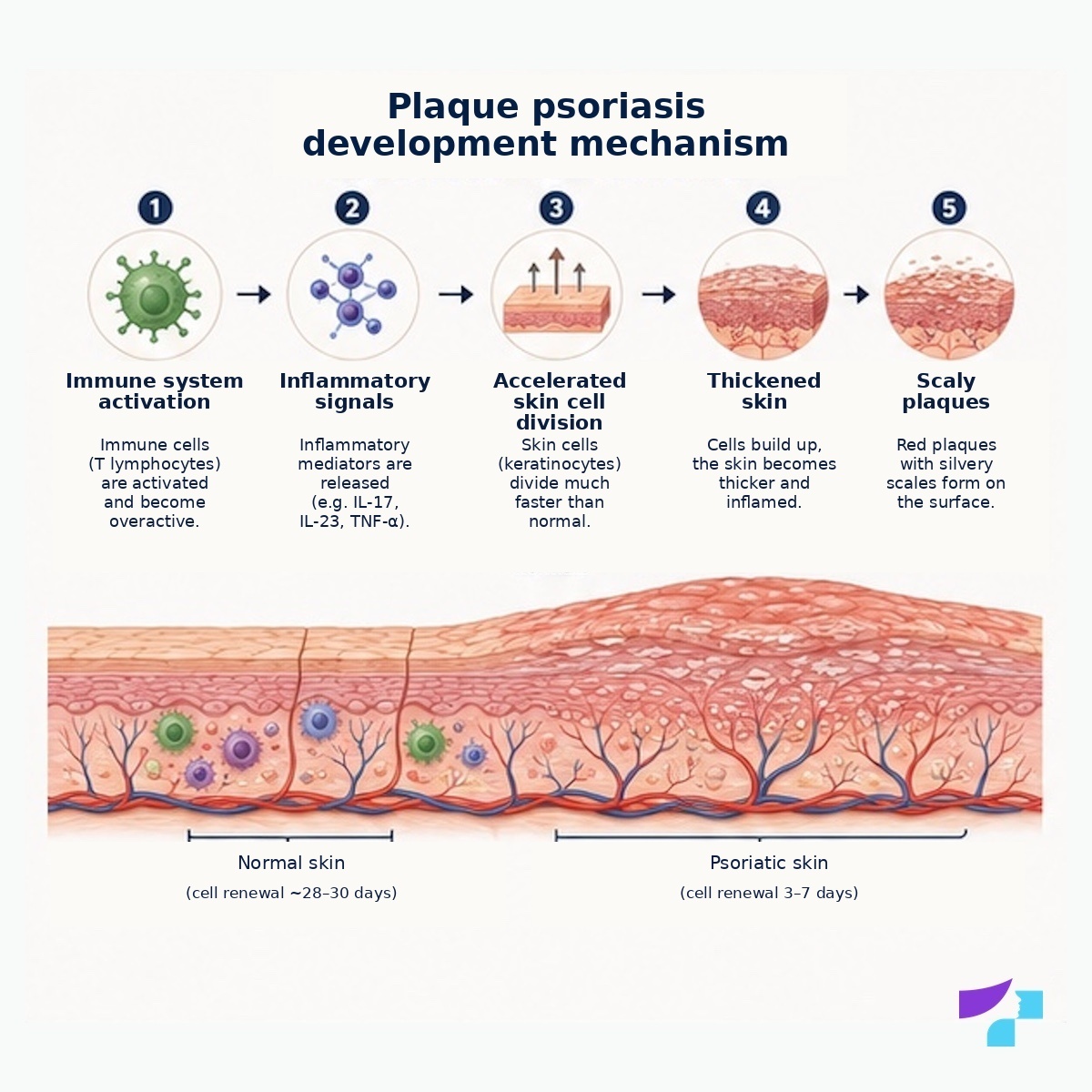
Modern research pays particular attention to specific inflammatory pathways, including the IL-17 and IL-23 signalling systems. These are inflammatory mediators that help explain why modern targeted therapies and biological therapies can be effective in moderate to severe psoriasis. Treatment choice is always determined by a doctor, taking into account disease severity, associated diseases and safety factors.
Plaque psoriasis development and flare-up timeline
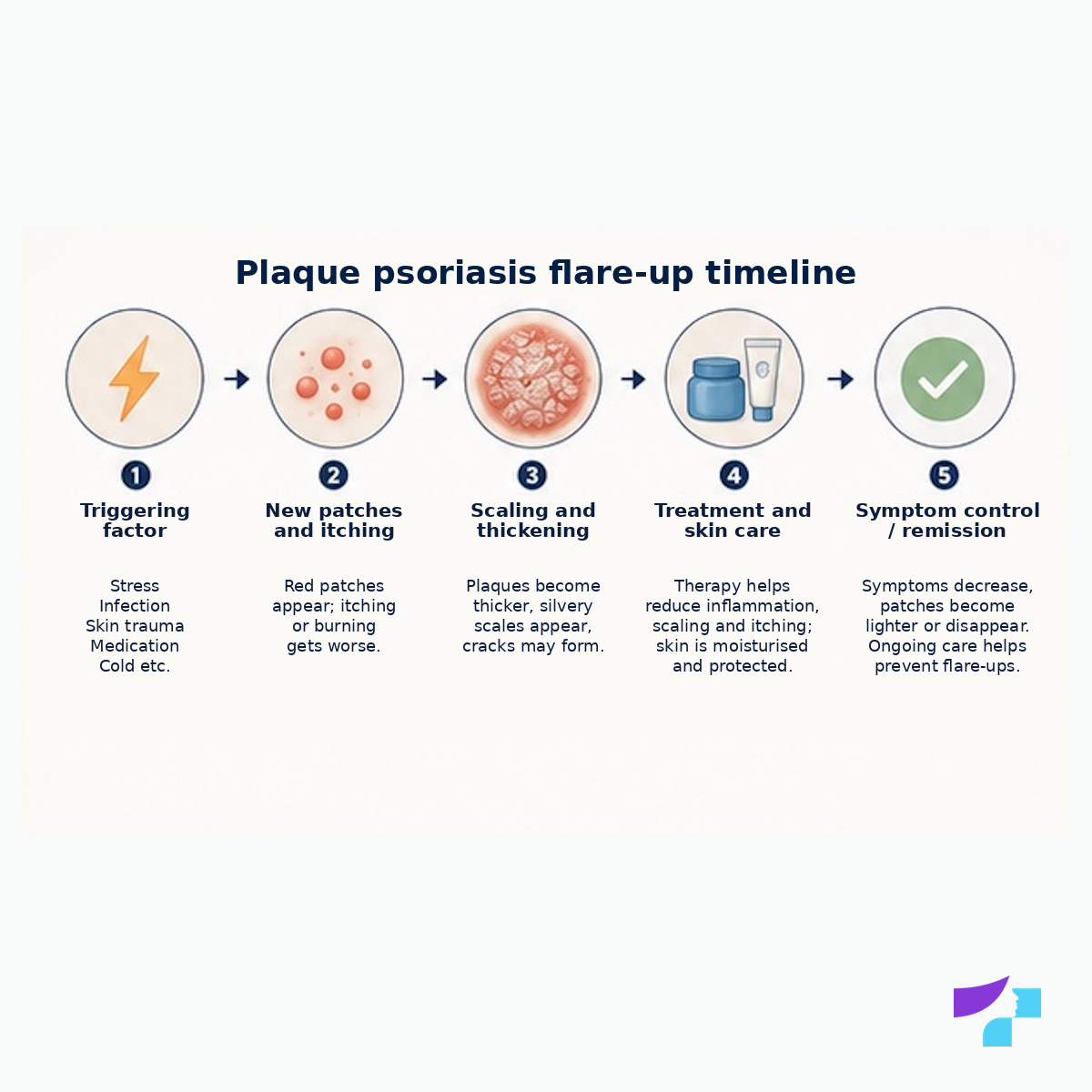
Plaque psoriasis is not an infection, so it does not have an “infection timeline”. It is more accurate to speak about the development and flare-up timeline of the disease.
A typical psoriasis flare-up sequence may be as follows:
- Triggering factor — for example, stress, infection, skin trauma, cold and dry weather, alcohol, smoking, medicine changes or another factor.
- Early skin changes — pink or red areas appear, with itching, dryness, skin sensitivity or small papules.
- Plaque formation — the patch becomes thicker, more clearly defined, and white or silvery scales appear on the surface.
- Marked flare-up — itching, scaling, cracks, pain or bleeding after scratching may increase. New patches may appear.
- Treatment and skin care — dermatologist-prescribed therapy, regular skin moisturising and reducing triggering factors help control inflammation.
- Symptom reduction or remission — patches become less red, less scaly, thinner or almost disappear for a time. However, a tendency to flare-ups may remain.
Plaque psoriasis symptoms: early, later and typical combinations
Plaque psoriasis may develop gradually. Early symptoms can be mild and mistaken for dry skin, irritation, eczema or dandruff.
Early symptoms
- small pink or red areas on the skin;
- dry, rough or flaky skin;
- itching or mild burning;
- small raised elements that later merge into larger patches;
- scaling on the scalp or on the elbows/knees.
Later symptoms
- thicker psoriatic plaques;
- pronounced white or silvery scales;
- cracks and pain;
- bleeding after scratching or traumatising the scales;
- wider spread of patches;
- nail changes;
- joint pain or stiffness if psoriatic arthritis develops.
Typical symptom combinations
- Elbows and knees: clearly defined red patches with silvery scales.
- Scalp: thick scaling, itching, patches near the hairline or behind the ears.
- Palms and soles: thickened skin, cracks, pain when walking or working with the hands.
- Nails: pits, colour changes, thickening or separation of the nail.
- Skin and joints: psoriatic patches together with joint pain, swelling or morning stiffness.
Causes and flare-up factors of plaque psoriasis
Plaque psoriasis does not have one simple cause. It develops when genetic predisposition and immune system characteristics meet triggering factors. The disease may follow a wave-like course, with flare-ups and periods of remission.
The most common flare-up factors are:
- stress;
- infections;
- skin trauma;
- cold and dry weather;
- smoking;
- alcohol use;
- excess weight;
- lack of sleep;
- skin irritation;
- some medicines;
- hormonal changes;
- sudden or unsupervised discontinuation of previously prescribed therapy.
In some patients, a specific triggering factor is clearly noticeable, while in others a flare-up begins without an obvious reason. A symptom diary may therefore help: when the patches appear, what happened in the previous days or weeks, what skin care was used, whether there was stress, infection, alcohol use or medicine changes.
Koebner phenomenon — why can psoriasis appear at the site of skin trauma?
The Koebner phenomenon means that psoriatic patches may appear in areas where the skin has previously been injured or irritated. This may happen after scratches, abrasions, cuts, burns, surgical scars, tattoos, strong friction or prolonged mechanical irritation.
This phenomenon helps explain why psoriasis often appears on the elbows and knees — areas where the skin is more often stressed and injured. It also explains why psoriatic patches should not be scratched, picked or aggressively rubbed.
Traumatising the skin may temporarily seem like a way to remove scales, but in the long term it can worsen inflammation and promote the development of new patches.
Mild, moderate and severe plaque psoriasis
The severity of plaque psoriasis is not determined only by how large an area of skin is affected. The doctor also assesses plaque thickness, redness, scaling, itching, pain, location, quality of life, nail involvement and joint symptoms.
Mild plaque psoriasis usually affects a small area of skin and has less impact on everyday life. However, even mild psoriasis can be very troublesome if it is located on the face, palms, soles, genital area, scalp or nails.
Moderate plaque psoriasis usually affects a larger skin area or causes significant symptoms — itching, discomfort, cracks, visible patches or reduced quality of life.
Severe plaque psoriasis may be widespread, painful, difficult to control, associated with a significant reduction in quality of life or require phototherapy, systemic therapy, biological or targeted therapy.
How is plaque psoriasis diagnosed?
Plaque psoriasis is most often diagnosed by a dermatologist based on examination of the skin, the course of the disease and assessment of symptoms. In many cases, the diagnosis is clinical, meaning it can be made from characteristic signs.
The doctor may assess:
- what the patches look like;
- where they are located;
- whether they are symmetrical;
- whether there are white or silvery scales;
- whether there is itching, pain, cracks or bleeding;
- whether the scalp or nails are involved;
- whether there is joint pain, swelling or morning stiffness;
- whether there is a family history of psoriasis;
- whether triggering factors have been present.
Tests are not always needed to diagnose plaque psoriasis. They may be needed if other diseases must be ruled out, associated conditions assessed or a particular treatment planned.
A skin biopsy — examination of a small skin sample under a microscope — may be useful if the diagnosis is unclear. If a fungal infection is suspected, the doctor may order a test for fungus.
Psoriasis cannot be reliably diagnosed from a photograph alone, especially if the rash is atypical. Photographs may help the doctor see the course of a flare-up, but they do not replace a full dermatological examination.
What can plaque psoriasis be confused with?
Plaque psoriasis can resemble several other skin diseases. This is one reason why self-diagnosis is often inaccurate.
Plaque psoriasis may be confused with:
- eczema;
- atopic dermatitis;
- contact dermatitis;
- seborrhoeic dermatitis;
- fungal skin infection;
- nail fungus;
- allergic rashes;
- other inflammatory skin diseases.
Psoriasis more often forms clearly defined, thicker plaques with dry white or silvery scales. Eczema may more often be weeping, very itchy and have less clear borders, but this difference is not always sufficient. A fungal infection may form scaly patches with a more active edge and a different pattern of spread, but it also cannot always be reliably distinguished without tests.
On the scalp, plaque psoriasis may resemble seborrhoeic dermatitis or dandruff. Nail lesions may resemble nail fungus. On the palms and soles, psoriasis may resemble eczema or contact dermatitis.
An accurate diagnosis is important because treatment differs. Incorrect self-treatment may not only fail to help, but may also worsen the skin condition or delay appropriate therapy.
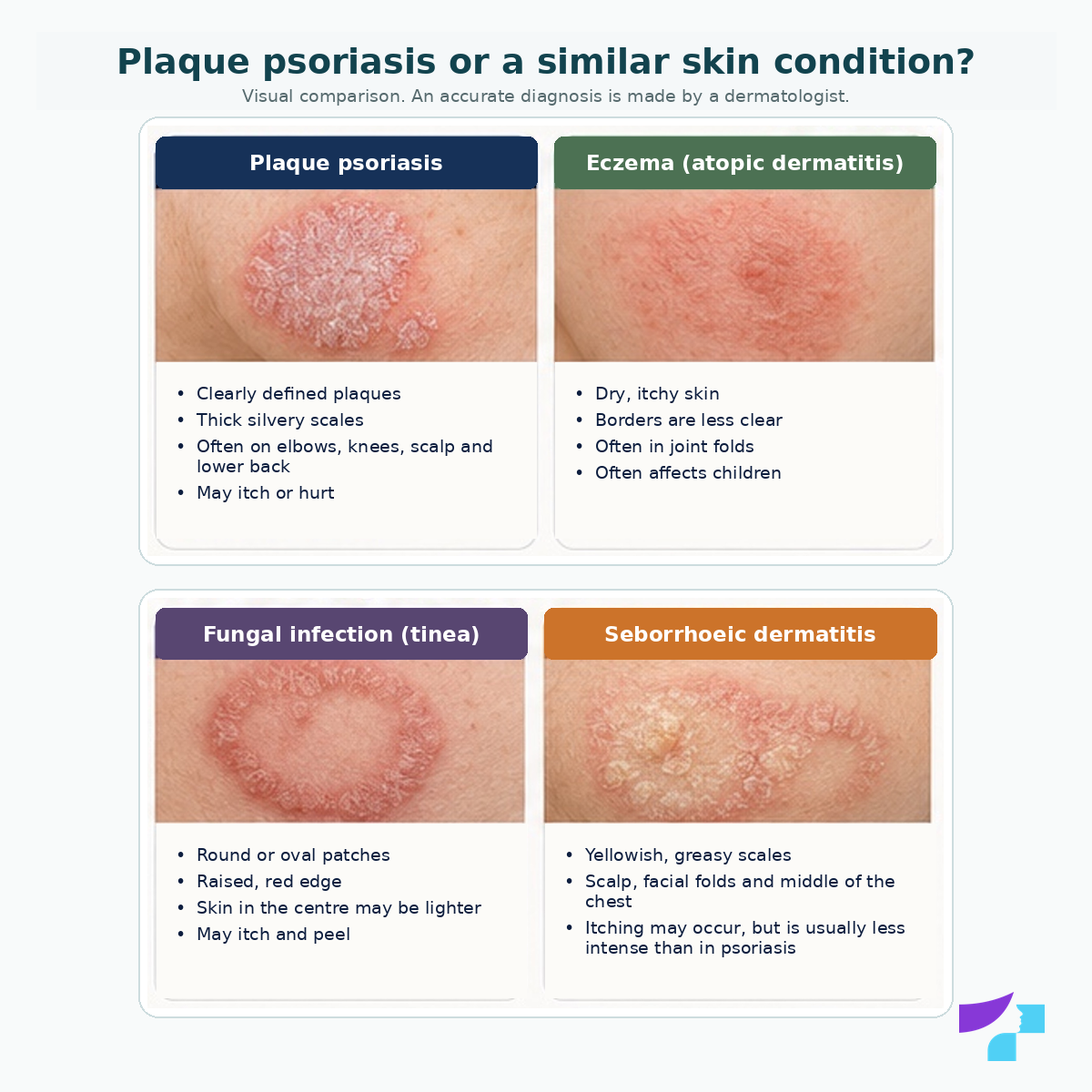
How does plaque psoriasis differ from eczema, fungus and seborrhoeic dermatitis?
Plaque psoriasis most often forms clearly defined, thickened, red or pink patches with dry white or silvery scales. The patches are often symmetrical and located on the elbows, knees, scalp or lower back.
Eczema is more often very itchy, with less clear borders, dryness, scratch marks or weeping. However, chronic eczema can also scale and thicken, so distinguishing between the conditions is not always simple.
A fungal infection may form scaly patches with a more active edge, a different pattern of spread or changes between the toes, on the feet or nails. If a fungal infection is suspected, the doctor may order a mycological test.
Seborrhoeic dermatitis more often affects the scalp, face, eyebrows, folds around the nose and the area behind the ears. The scales may be greasier and yellowish, but on the scalp it can look very similar to psoriasis.
Therefore, if the rash does not go away, recurs or it is unclear whether it is psoriasis, fungus, eczema or dermatitis, a dermatologist’s examination is needed.
Different skin diseases can look similar, so the comparison below helps show the main differences, but it does not replace a doctor’s examination.
Plaque psoriasis and immunity
Because plaque psoriasis is not an infection, immunity does not develop against it in the same way as after an infectious disease. A person cannot “recover from” psoriasis once and then become immune.
In psoriasis, it is more accurate to speak about remission and flare-ups. Remission means that symptoms decrease or almost disappear for a time. A flare-up means that the disease becomes more active — new patches appear, scaling, itching, redness or pain increases.
Modern treatment can help achieve good disease control and longer periods with minimal symptoms. However, this is not the same as immunity to the disease. A predisposition to psoriasis may remain.
Consequences and possible complications
Plaque psoriasis can affect more than the skin. It may cause physical discomfort, social stress, sleep disturbance, anxiety, reduced self-esteem and poorer quality of life.
Possible consequences and associated problems include:
- chronic itching and skin irritation;
- cracks, pain and bleeding;
- risk of skin infection due to damaged skin;
- nail damage;
- psoriatic arthritis;
- emotional burden, anxiety or depressive feelings;
- sleep disturbance due to itching or pain;
- difficulties at work, in sport or in social situations;
- increased risk of certain associated diseases in moderate to severe psoriasis.
Psoriasis is a systemic inflammatory disease, and Latvian clinical recommendations view it as a disease in which not only skin lesions matter, but also disease severity, quality of life and associated conditions.
Plaque psoriasis and psoriatic arthritis
Some patients with psoriasis may develop psoriatic arthritis — an inflammatory joint disease. It can cause joint pain, swelling, stiffness and, in the long term, joint damage if not recognised and treated.
Possible signs of psoriatic arthritis include:
- joint pain;
- joint swelling;
- morning stiffness;
- swollen fingers or toes;
- heel pain or pain where tendons attach;
- back pain with stiffness;
- nail psoriasis together with joint symptoms.
If a patient with plaque psoriasis develops joint pain or stiffness, it should not simply be explained by overuse or age. A doctor’s assessment is needed. Read more about this topic in the Medart article “Psoriatic arthritis”.
Treatment of plaque psoriasis
The aim of plaque psoriasis treatment is to reduce inflammation, scaling, itching, cracks and pain, improve the skin condition and quality of life, and reduce the frequency of flare-ups. Psoriasis cannot currently be cured completely, but modern treatment allows most patients to achieve long-term remission and a significant improvement in quality of life.
Treatment is chosen by a dermatologist, taking into account:
- disease severity;
- the affected skin area;
- the location of the patches;
- itching, pain, cracks and bleeding;
- scalp or nail involvement;
- joint symptoms;
- results of previous treatment;
- associated diseases;
- the patient’s age, lifestyle and practical aspects of treatment.
The treatments mentioned below are therapy groups, not an individual treatment plan. Specific treatment is prescribed by a doctor.
Topical treatment
Topical treatment means medicines or products applied directly to the skin. It is often the first choice for mild or localised plaque psoriasis.
Topical therapy groups may include:
- skin moisturisers and emollients;
- topical anti-inflammatory medicines;
- vitamin D analogues;
- combined topical medicines;
- keratolytic agents that help reduce scaling;
- solutions, foams, gels or shampoos suitable for the scalp;
- gentler products for sensitive areas.
Prescription topical anti-inflammatory medicines can be effective, but they should be used according to a doctor’s instructions. The face, skin folds, genital area and other sensitive areas require particular care, because incorrect or overly long use of strong topical medicines can cause side effects.
Softening scales and scalp care
If psoriatic plaques are thick and scaly, it is important not to try to remove the scales mechanically. A dermatologist may recommend products that help soften and gradually reduce the thickened outer skin layer. Such products are called keratolytic agents — they help remove cornified skin cells and may improve the effect of other topical medicines.
In scalp psoriasis, special shampoos, solutions, foams or other products suitable for the scalp may be needed. The doctor chooses the product depending on scale thickness, inflammation, itching and the practical possibilities of caring for the hair-bearing area.
Patients should not aggressively rub, scratch or tear off scales themselves, because this may injure the skin, cause bleeding and promote the formation of new patches.
Phototherapy
Phototherapy is medically controlled treatment using a specific spectrum of ultraviolet radiation. In plaque psoriasis, it may be suitable if topical treatment is not sufficient or the disease affects a wider area of skin.
Important: a tanning bed is not medical phototherapy. Phototherapy uses a controlled radiation spectrum, a defined dose and medical supervision. A tanning bed is not adapted for psoriasis treatment and may increase the risk of skin damage and skin cancer.
Phototherapy is not suitable for all patients, so a dermatologist’s assessment is needed.
Prescription medicines and systemic therapy
Systemic therapy means treatment that affects the whole body, not only the skin. It may be needed in moderate or severe plaque psoriasis if topical treatment and phototherapy are not sufficient or are not suitable.
This group includes prescription medicines whose choice, safety checks and monitoring are determined by a doctor. Patients should not start, stop or change systemic therapy independently, because blood tests, infection risk assessment, liver, kidney, blood pressure or other health monitoring may be required.
Biological and targeted therapy
Biological and targeted therapy is a modern treatment approach for moderate to severe psoriasis. These therapies act on specific inflammatory mechanisms involved in the development of psoriasis.
They may be highly effective in suitable patients, but careful assessment is needed before treatment. The doctor considers infection risk, associated diseases, vaccination status, other medicines and the patient’s overall health.
Biological therapy is not a “cosmetic” treatment. It is a serious medical therapy for specific indications, and it is used under medical supervision.
Skin care and flare-up control
Skin care is important at all stages of plaque psoriasis. It does not replace treatment, but it helps reduce dryness, itching, cracking and irritation.
In everyday life, it is recommended to:
- moisturise the skin regularly;
- use gentle washing products;
- avoid hot water;
- apply a moisturiser after washing;
- avoid scratching or picking scales;
- avoid skin trauma;
- follow the treatment plan prescribed by the doctor.
If treatment does not help, it is not advisable simply to continue an ineffective product or change therapy independently. The correct approach is to consult a dermatologist again.
What to do during a plaque psoriasis flare-up?
During a flare-up, skin inflammation becomes more active. New patches may appear, existing patches become redder, thicker, more scaly, itchy, cracked or painful.
During a flare-up, it is recommended to:
- use the treatment prescribed by the doctor according to instructions;
- moisturise the skin regularly;
- wash with lukewarm, not hot, water;
- avoid rubbing or scratching the patches;
- avoid pulling scales off by force;
- avoid new irritating cosmetic products;
- assess possible triggering factors;
- contact a dermatologist if the flare-up is widespread, painful or not controlled by usual measures.
If the patches crack or bleed, the skin should be protected and mechanical trauma avoided. If signs of infection, severe pain, fever or rapid worsening appear, medical help is needed.
Common mistakes in plaque psoriasis
Plaque psoriasis is a chronic disease, so controlling it depends not only on correct treatment but also on everyday habits. Some patients unintentionally worsen their skin condition or delay effective therapy.
Common mistakes include:
- scratching psoriatic plaques or tearing off scales by force;
- long-term self-treatment without a diagnosis;
- using fungal or eczema products when the diagnosis is unclear;
- stopping treatment as soon as improvement appears without the doctor’s instruction;
- rubbing the skin too aggressively while washing;
- using hot water, which dries the skin even more;
- using a tanning bed as “treatment”;
- insufficient skin moisturising;
- ignoring joint pain;
- assuming that a small skin lesion always means mild disease.
The correct approach is an accurate diagnosis, dermatologist-prescribed treatment, regular skin care and recognition of flare-up factors.
Lifestyle, diet and skin care
Lifestyle cannot replace treatment prescribed by a dermatologist, but it may help reduce the risk of flare-ups and improve overall health.
In plaque psoriasis, it is important to:
- not smoke;
- limit or avoid alcohol;
- maintain a healthy body weight;
- be physically active according to health status;
- reduce chronic stress;
- take care of sleep quality;
- treat infections promptly;
- care for and moisturise the skin regularly.
There is no single universal diet that cures plaque psoriasis. A healthy, balanced diet may support overall health, weight control and reduction of inflammatory risk factors, but it does not replace medical therapy.
If a person wants to make major dietary changes, especially to exclude large food groups, it is advisable to consult a doctor or dietitian.
What is proven, what is still debated and what is medicine working on?
What is well proven
It is well established that plaque psoriasis is a chronic inflammatory disease based on the interaction between the immune system and skin cells. It is not a contagious infection. It is proven that treatment should be tailored to disease severity, location, quality of life, associated diseases and the patient’s needs.
Well-established treatment approaches include topical therapy, phototherapy, systemic therapy and biological/targeted therapy in suitable patients.
What is still debated or requires an individual approach
An individual approach is needed in questions of diet, lifestyle, complementary therapies, treatment sequencing and therapy choice. For example, a healthy diet and weight control may be important, but there is no universal diet that suits all patients.
It is also necessary to assess individually when to move from topical treatment to phototherapy or systemic therapy, how to take special locations into account, and how to choose therapy in patients with associated diseases.
What medicine is working on
Modern dermatology is working towards increasingly precise and personalised psoriasis treatment. Particular attention is being paid to:
- targeted therapy;
- biological therapy;
- research into inflammatory pathways such as IL-17 and IL-23;
- quality of life assessment;
- early recognition of psoriatic arthritis;
- safer long-term therapy;
- better patient adherence to treatment;
- digital monitoring of disease severity and treatment results.
When should you see a dermatologist?
You should see a dermatologist if plaque psoriasis is suspected, especially if the rash does not go away, recurs, spreads or interferes with daily life.
A dermatologist’s consultation is especially needed if:
- the patches are widespread;
- there is severe itching, pain, cracks or bleeding;
- the rash is located on the face, scalp, palms, soles, genital area or nails;
- there is joint pain, swelling or morning stiffness;
- treatment does not help;
- rapid worsening appears;
- infection in damaged skin is suspected;
- psoriasis significantly affects sleep, work, relationships or emotional wellbeing.
Urgent help is needed if the skin becomes widely red and painful, fever, weakness, extensive peeling, signs of fluid loss or blisters on widespread red skin appear.
References and authoritative sources
- Latvian clinical recommendations: Psoriasis. Latvian Association of Dermatovenerologists
- Rīga Stradiņš University publication record: Psoriasis — Latvian clinical recommendations
- Centre for Disease Prevention and Control of Latvia
- National Institute for Health and Care Excellence (NICE): Psoriasis — assessment and management
- American Academy of Dermatology Association (AAD): Clinical guidelines for psoriasis
- DermNet: Chronic plaque psoriasis
- DermNet: Psoriasis
- DermNet: Treatment of psoriasis
- British Association of Dermatologists: Psoriasis — patient information
- European Dermatology Forum / EuroGuiDerm: Psoriasis guideline
- European Alliance of Associations for Rheumatology (EULAR): Recommendations for psoriatic arthritis treatment
Medical disclaimer
The information in this article is intended for informational and educational purposes and does not replace a doctor’s consultation, diagnosis or treatment. In the case of skin rashes, scaly patches, nail changes, joint pain or suspicion of papular or plaque psoriasis, it is necessary to see a dermatologist; in the case of joint symptoms, a rheumatologist’s consultation may also be needed. Self-diagnosis and self-treatment may be incorrect and may delay appropriate treatment. In the case of severe, rapidly worsening or high-risk symptoms, such as widespread skin redness, painful peeling, fever, marked weakness, widespread blisters, rapidly increasing pain or signs of infection, urgent medical help should be sought immediately.
