Pustular psoriasis is a rare, inflammatory form of psoriasis characterised by white or yellowish pus-like blisters, called pustules, on red, inflamed skin. Although these blisters can visually resemble a purulent infection, in pustular psoriasis they are usually sterile — this means that the pustules contain inflammatory cells rather than a typical bacterial infection. However, a similar appearance can also occur with infections, fungal diseases, eczema, contact dermatitis, drug reactions and other skin conditions, so an accurate diagnosis must be made by a doctor.
Pustular psoriasis is not contagious. It cannot be passed from another person by touching the skin, sharing household items or being in the same room. It is an immune-mediated inflammatory disease in which changes in immune system activity cause marked inflammation and pustules to develop in the skin.
It is important to distinguish localised pustular psoriasis, for example on the palms and soles, from generalised pustular psoriasis, which can affect large areas of skin and cause systemic symptoms — fever, chills, weakness, pain and a general inflammatory reaction in the body. Generalised pustular psoriasis can be a potentially life-threatening condition, especially if it is not treated in time.
In brief: pustular psoriasis
- Pustular psoriasis is a rare form of psoriasis with white or yellowish pus-like blisters on inflamed skin.
- These blisters, or pustules, are usually sterile and are not the same as a typical bacterial purulent infection.
- Pustular psoriasis is not contagious, is not a fungal infection and is not an allergy, although it can resemble other skin diseases.
- The disease may be localised, for example on the palms and soles, or widespread — generalised pustular psoriasis.
- Generalised pustular psoriasis is sometimes also called von Zumbusch psoriasis.
- Generalised pustular psoriasis can be a serious condition, especially if there is fever, chills, weakness, severe pain, nausea, widespread skin involvement or rapid spread.
- Treatment is determined by a dermatologist, taking into account the type, severity, location and the patient’s general condition.
- Pustules should not be burst, scratched or treated with antibiotics without a doctor’s advice.
What is pustular psoriasis?
Pustular psoriasis is a form of psoriasis in which pustules develop on the skin — small white or yellowish blisters that may look like pus. In medicine, the term “pustule” means a blister that contains inflammatory cells. In pustular psoriasis, this content is usually not infectious, so the pustules are called sterile pustules.
This disease can present in different ways. In some people, pustules appear only on the palms and soles; in others, they may affect the fingertips or nails; and in more severe cases, pustules may spread over large areas of skin. Pustular psoriasis may occur as a separate form of the disease or develop in a person who already has another type of psoriasis, such as plaque psoriasis.
Pustular psoriasis differs from the most common form of psoriasis — plaque psoriasis. Plaque psoriasis is characterised by red, scaly, thickened plaques, whereas the main feature of pustular psoriasis is pustules on inflamed skin. Sometimes both features may occur together, so the diagnosis should not be made from internet images alone.
Is pustular psoriasis contagious?
No, pustular psoriasis is not contagious. It cannot be passed from another person. It is not a fungal infection, not a typical bacterial infection and not a disease that spreads by touch.
You cannot catch pustular psoriasis by:
- touching the affected skin;
- sharing household items;
- being in the same room;
- exercising or working together;
- visiting a swimming pool or public places.
However, a doctor may examine the pustules or take a skin sample if it is necessary to rule out a bacterial infection, fungal infection or another disease. This is important because pustular psoriasis and infection can look similar, but the treatment is different.
What does pustular psoriasis look like?
Pustular psoriasis most often appears as white or yellowish blisters on red, inflamed skin. The skin may be painful, burning, sensitive, hot or swollen. Pustules may appear in groups, merge into larger areas or repeatedly develop in the same place.
On lighter skin, pustular psoriasis often looks like red skin with white or yellowish blisters. On darker skin, redness may be less visible; the skin may look purple, brownish, greyish or darker than usual.
Pustular psoriasis may look like:
- small white blisters on red skin;
- yellowish blisters on the palms or soles;
- painful, burning patches;
- skin peeling after the pustules disappear;
- thick, dry or cracked areas on the palms and soles;
- widespread inflamed skin with fever and weakness in more severe cases.
Below are the main signs that may help you understand when skin changes could resemble pustular psoriasis. An accurate diagnosis is made by a dermatologist.
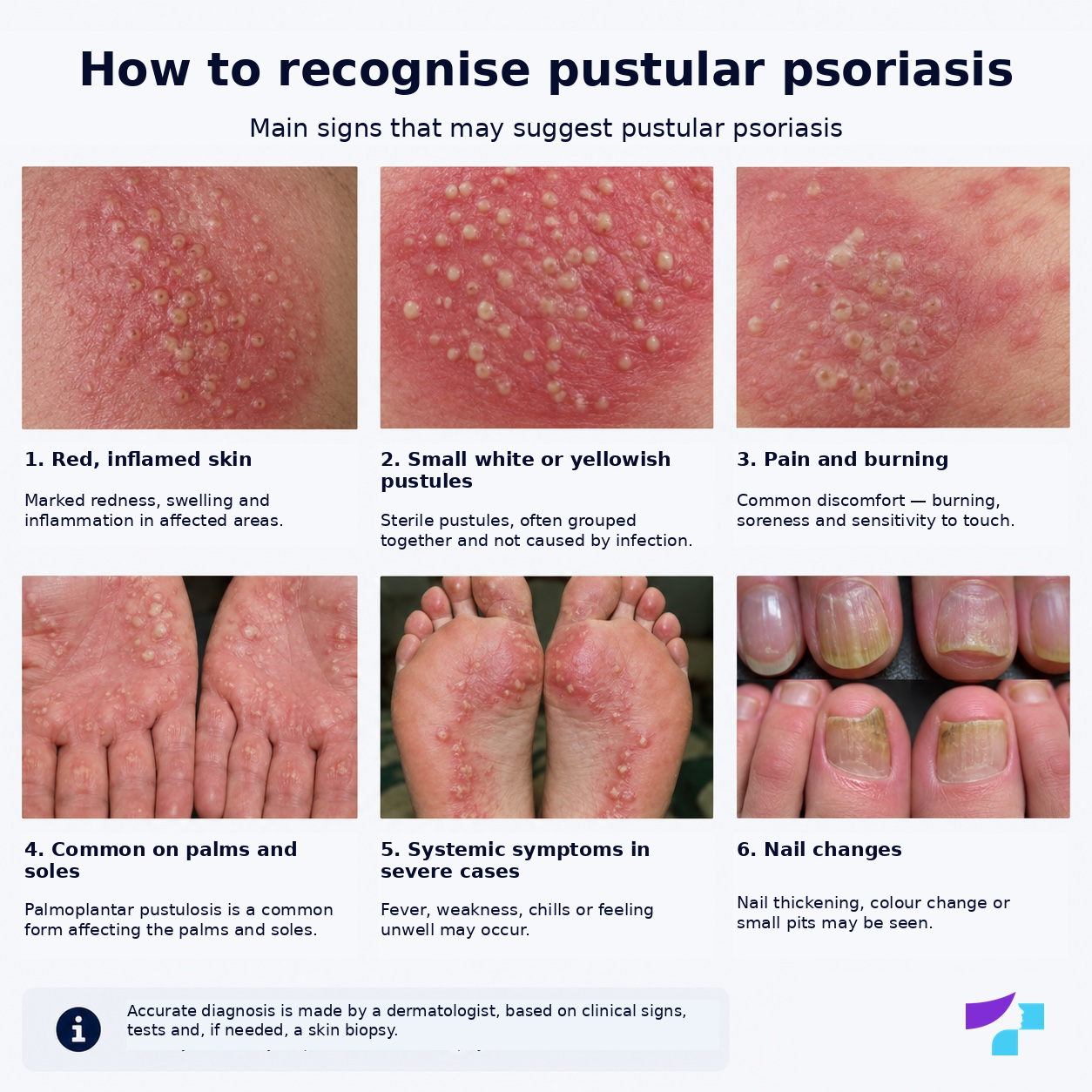
3–5 main signs that may suggest pustular psoriasis
Pustular psoriasis may be suggested by the following signs:
- white or yellowish blisters on red, inflamed skin;
- pustules on the palms, soles, fingertips or larger areas of skin;
- pain, burning, skin sensitivity or marked discomfort;
- recurrent pustular flare-ups in the same areas;
- fever, chills, weakness, nausea, mucous membrane inflammation or rapid spread — dangerous symptoms requiring urgent medical assessment.
These signs do not mean that a person definitely has pustular psoriasis. Similar symptoms may occur with infection, fungal disease, eczema, contact dermatitis, acute drug reactions or other skin conditions.
Why are pustules in psoriasis not a typical purulent infection?
The word “pustule” may create the impression that it always means infection or pus. However, in pustular psoriasis the pustules are usually sterile. This means that they contain inflammatory cells, but they are not a typical bacterial infection.
This is very important because pustular psoriasis should not be self-treated as a “purulent skin infection”. Incorrect treatment may delay the correct diagnosis, worsen the skin condition or increase the risk of side effects.
However, in some cases a doctor may order a swab, microbiological test, fungal test, skin biopsy or blood tests to make sure that the pustules are not related to infection or that infection has not developed in already damaged skin. This is especially important if there is fever, severe pain, skin warmth, rapid worsening or immunosuppression.
Types of pustular psoriasis
Pustular psoriasis is not one identical disease in all patients. It is a group, or phenotypic spectrum, of pustular inflammatory skin diseases with different clinical presentations. In one patient, the disease may affect only the palms and soles; in another, the fingertips and nails; while in more severe cases it may present as a widespread generalised flare-up.
Pustular psoriasis can present in different forms — from localised involvement of the palms and soles to widespread generalised disease that may require urgent treatment.
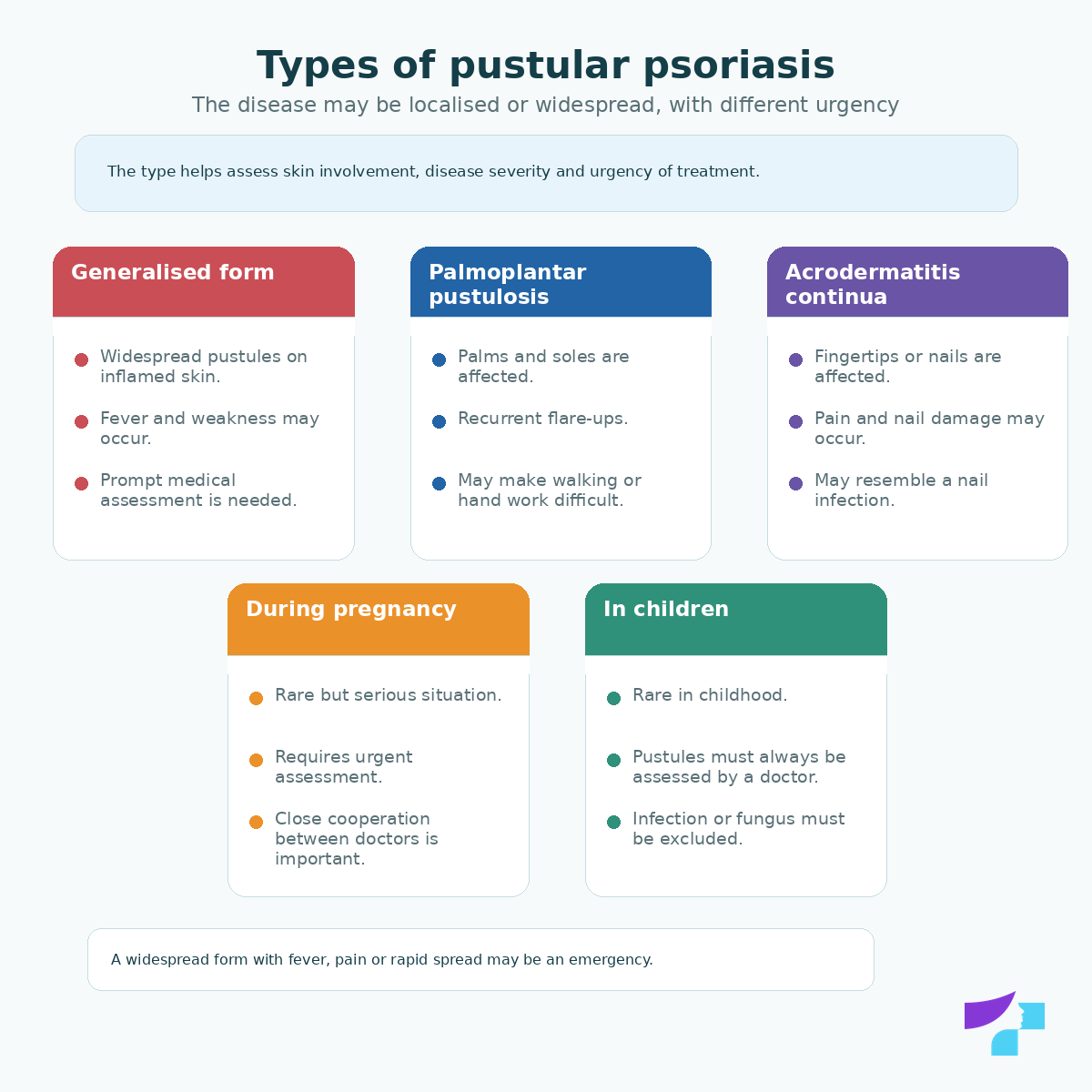
Generalised pustular psoriasis
Generalised pustular psoriasis is a rare but severe form of pustular psoriasis. It is sometimes also called von Zumbusch psoriasis. It may begin suddenly with widespread skin redness, pain and the development of many sterile pustules. The pustules may merge into larger areas, after which the skin may peel.
The disease may be accompanied by systemic symptoms — this means that inflammation affects not only the skin, but the whole body. Fever, chills, weakness, nausea, severe fatigue, mucous membrane inflammation, dehydration, pain or a general worsening of the condition may occur.
This form may be life-threatening and requires urgent medical care. If widespread pustules are accompanied by fever, chills, severe pain, confusion, shortness of breath or marked weakness, emergency medical help should be sought.
Palmoplantar pustulosis, or pustular psoriasis of the palms and soles
Palmoplantar pustulosis is a chronic disease characterised by sterile pustules on the palms and soles. It may present with recurrent pustular flare-ups, redness, thickening of the skin, scaling, cracks and pain when walking or working with the hands.
Palmoplantar pustulosis is often considered within the spectrum of pustular psoriasis, although there are nuances in its medical classification. Some authors consider it a variant of psoriasis, while others view it as a separate clinical entity that may be associated with psoriasis.
This form has a particularly strong impact on quality of life because the palms and soles are constantly used in daily life. Cracking and pain may interfere with walking, work, sport and everyday movement.
Acrodermatitis continua
Acrodermatitis continua, or acrodermatitis continua of Hallopeau, is a rare localised form of pustular psoriasis that usually begins at the tips of the fingers or toes. It may also affect the nails and nail folds. The disease can cause persistent pustular lesions, nail damage, pain and chronic inflammation.
This form may be confused with a nail infection, paronychia, fungal infection or contact dermatitis. If pustules recur around the nails or fingertips, especially together with nail deformity, a dermatologist’s assessment is needed.
Pustular psoriasis during pregnancy
Pustular psoriasis during pregnancy is rare, but potentially serious. If a pregnant woman develops widespread pustular rashes, fever, weakness, nausea, pain or a rapid worsening of her condition, urgent medical assessment is needed. In this situation, cooperation between a dermatologist and gynaecologist is important.
During pregnancy, prescription medicines should not be chosen independently, and previously prescribed treatment should not be stopped without a doctor’s advice, because treatment safety must be assessed for both the woman and the foetus.
Pustular psoriasis in children
Pustular psoriasis in children is rare. Pustules on a child’s skin should be assessed especially carefully, because infections, fungal diseases, viral rashes, eczema, allergic reactions or other dermatological conditions may be more common.
If a child has pustules, fever, widespread rashes, pain, weakness, rapid worsening or signs of skin infection, urgent medical help is needed. More information about psoriasis in children is available in the Medart article on psoriasis in children.
Where does pustular psoriasis most often appear?
Pustular psoriasis can appear in different parts of the body, but the location is often related to the type of disease.
Common locations include:
- palms;
- soles;
- fingertips;
- toes;
- nails and nail folds;
- large areas of body skin in generalised disease;
- less commonly, other skin areas together with plaque psoriasis.
Pustular psoriasis of the palms and soles may be especially painful because these areas are exposed to pressure, friction and movement. Involvement of the soles may make walking difficult, while involvement of the palms may interfere with work and daily activities.
Who is at higher risk of developing pustular psoriasis?
Pustular psoriasis may also develop without a clear cause, but certain factors can increase the risk or trigger a flare-up.
Risk or flare-up factors may include:
- existing psoriasis;
- family predisposition to psoriasis;
- smoking, especially in palmoplantar pustulosis;
- infections;
- stress;
- skin trauma or irritation;
- certain medicines;
- rapid withdrawal of certain anti-inflammatory medicines without a doctor’s advice;
- pregnancy;
- hormonal changes;
- changes in immune system activity.
Most patients with palmoplantar pustulosis are current or former smokers, and smoking may be a factor that worsens the disease. This does not mean that smoking is the only cause, but it may be an important factor in flare-ups and persistent disease.
How pustular psoriasis develops
Pustular psoriasis is an immune-mediated inflammatory disease. This means that the disease is based on abnormal or excessive activation of immune system signals. Intense inflammation develops in the skin, attracting inflammatory cells and causing sterile pustules to form.
In recent years, special attention has been paid to the IL-36 inflammatory pathway. IL-36 is one of the inflammatory signalling mechanisms that may be especially important in generalised pustular psoriasis. This is one reason why modern targeted therapies are being developed to act on specific inflammatory mechanisms.
In simple terms, the mechanism of pustular psoriasis can be explained as follows:
- the immune system becomes overactive;
- inflammatory signals are activated in the skin;
- inflammatory cells accumulate in the upper layers of the skin;
- sterile pustules form;
- the skin becomes red, painful, sensitive and may peel.
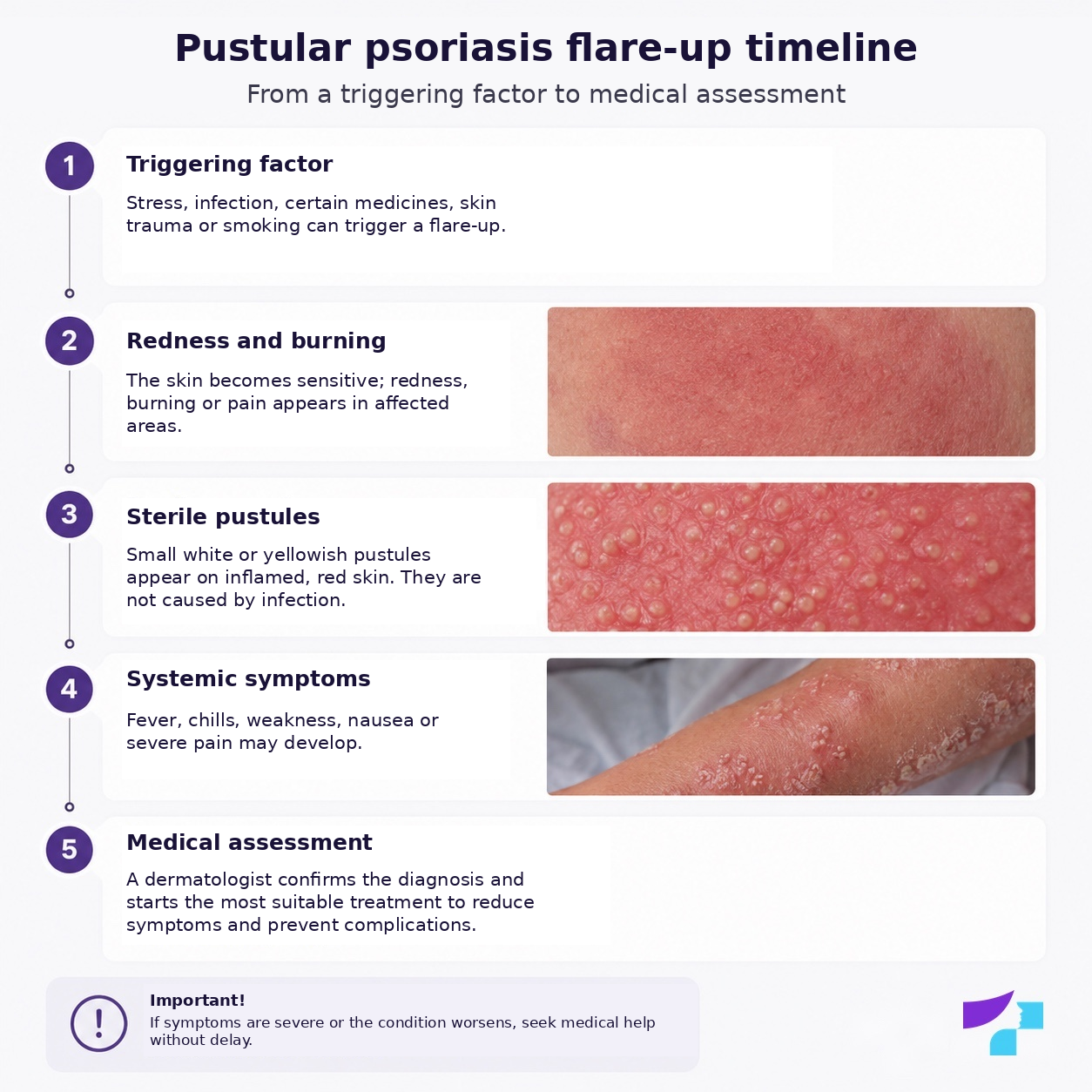
Pustular psoriasis flare-up timeline
Pustular psoriasis is not an infection, so it does not have an incubation period. However, a flare-up may develop in a certain sequence.
A possible flare-up timeline:
- Triggering factor — stress, infection, change in medication, skin trauma, smoking, pregnancy or another burden on the body.
- Skin redness and burning — the skin becomes sensitive, painful, hot or burning.
- Pustule formation — white or yellowish blisters appear, either in groups or across larger areas.
- Skin peeling or cracking — after the pustules disappear, the skin may peel, become dry, painful or cracked.
- Systemic symptoms in more severe cases — fever, chills, weakness, nausea, severe pain, mucous membrane inflammation or a general worsening of the condition may occur.
- Medical assessment and treatment — the doctor assesses whether local, systemic, biological treatment or hospital care is needed.
Pustular psoriasis symptoms: early, later and dangerous signs
Pustular psoriasis symptoms may be mild and localised or severe and widespread. It is especially important to distinguish localised pustular psoriasis from a dangerous generalised form of the disease.
Early symptoms
- skin redness;
- burning;
- sensitivity;
- small white or yellowish blisters;
- itching or pain;
- pustules on the palms or soles;
- recurrent lesions in the same areas.
Later symptoms
- pustules merging together;
- skin peeling;
- cracks on the palms or soles;
- difficulty walking or working with the hands;
- nail damage;
- recurrent flare-ups;
- marked reduction in quality of life.
Dangerous symptoms
- widespread skin redness;
- fever;
- chills;
- severe pain;
- rapid spread of pustules;
- marked weakness;
- nausea or vomiting;
- mucous membrane inflammation, such as a painful mouth, lips or eye irritation;
- shortness of breath;
- signs of dehydration;
- reduced urine output;
- confusion or a severe general condition;
- pregnancy together with pustular rashes;
- a child with widespread pustular rashes;
- immunosuppression or severe comorbidities.
In these cases, urgent medical help is needed.
Causes and flare-up factors of pustular psoriasis
Pustular psoriasis does not have one simple cause. It develops through the interaction of immune system characteristics, genetic predisposition and triggering factors.
A flare-up may be promoted by:
- infection;
- stress;
- smoking;
- skin trauma;
- friction or irritation;
- certain medicines;
- sudden withdrawal of certain medicines;
- pregnancy;
- hormonal changes;
- systemic inflammation in the body;
- inappropriate self-treatment.
It is not always possible to identify a specific trigger. In some people, the disease recurs without a clearly identifiable reason.
How does pustular psoriasis differ from plaque psoriasis?
Plaque psoriasis is the most common form of psoriasis. It is characterised by red, thickened, scaly plaques, often on the elbows, knees, scalp and lower back.
In pustular psoriasis, the main feature is pustules — white or yellowish pus-like blisters on inflamed skin. It may be more painful, more burning and, in some forms, more dangerous than typical plaque psoriasis.
Key differences:
- plaque psoriasis — scaly, thickened plaques;
- pustular psoriasis — sterile pustules on inflamed skin;
- the plaque form is often chronic and localised;
- the generalised pustular form may develop suddenly and severely;
- the pustular form more often requires urgent assessment if there is fever or widespread skin involvement.
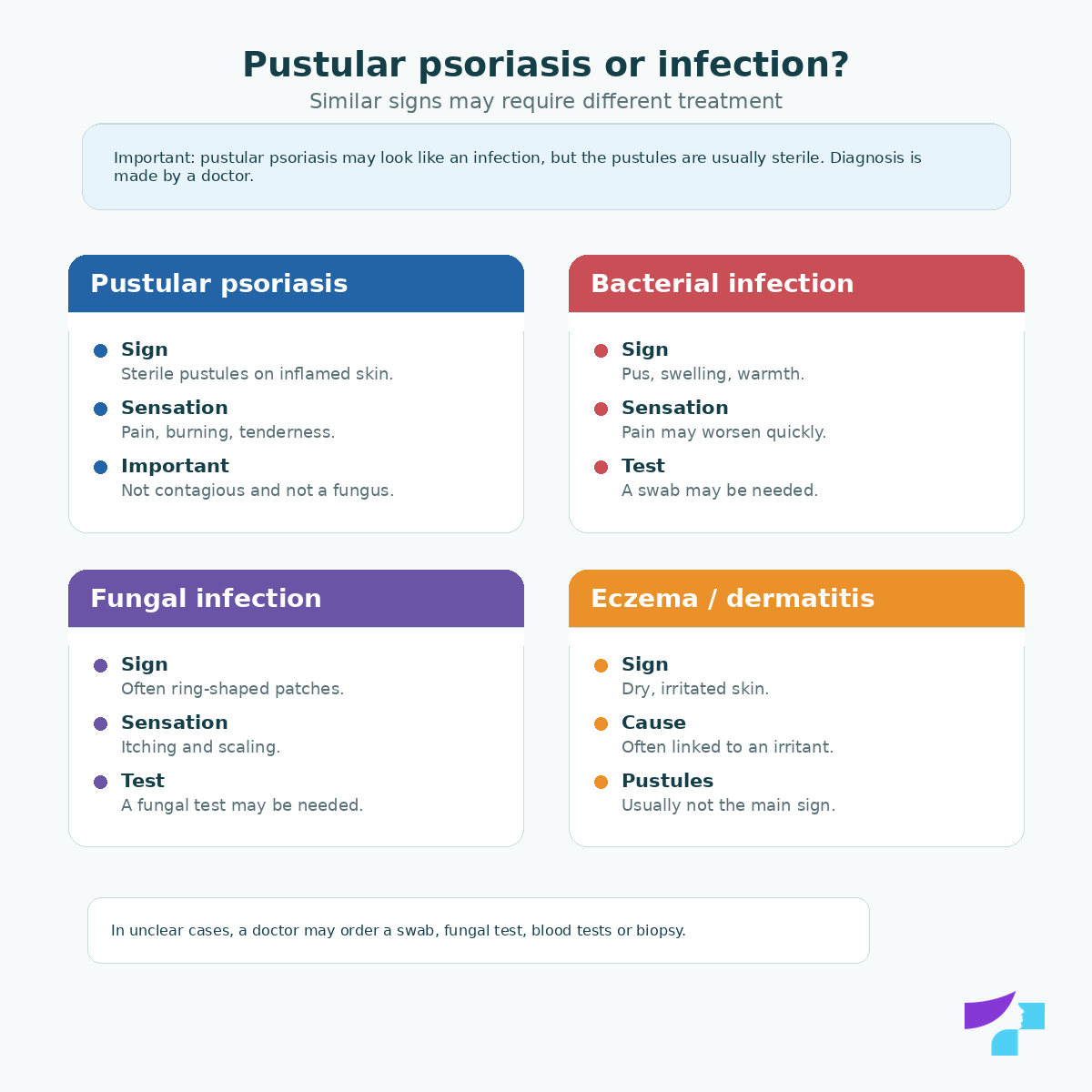
What can pustular psoriasis be confused with?
Pustular psoriasis can be confused with several skin diseases because pustules, redness and pain may also be signs of other conditions.
Similar conditions may include:
- bacterial skin infection;
- impetigo;
- folliculitis;
- fungal infection;
- eczema;
- contact dermatitis;
- dyshidrotic eczema;
- allergic reaction;
- nail fold infection;
- viral rashes;
- drug-induced skin eruptions;
- acute generalised exanthematous pustulosis, or AGEP.
In some cases, pustular rashes may be related to a drug reaction, such as acute generalised exanthematous pustulosis. AGEP can look similar to generalised pustular psoriasis, so it is important for the doctor to know which medicines have been taken in the last days or weeks. In such cases, diagnosis may require tests, a skin biopsy and careful assessment of medication history. Studies indicate that AGEP and generalised pustular psoriasis can be difficult to distinguish both clinically and histologically.
Pustular psoriasis and infection may look similar, but treatment differs significantly. Infection may require antimicrobial therapy, while in pustular psoriasis the main goal is inflammation control. Therefore, a doctor may order tests to rule out infection.
Pustular psoriasis can visually resemble infection, fungal disease or dermatitis. These conditions may require completely different treatment, so self-diagnosis is not safe.
How is pustular psoriasis diagnosed?
Pustular psoriasis is diagnosed by a dermatologist, who assesses the appearance of the skin, the location of pustules, the course of the disease, general symptoms, the patient’s psoriasis history, medicines, pregnancy, infections and other possible triggering factors.
The doctor may ask:
- when the pustules appeared;
- whether there is pain, burning or itching;
- whether there is fever, chills or weakness;
- whether there is nausea, vomiting, mucous membrane inflammation or shortness of breath;
- whether the pustules are on the palms, soles, fingertips or widespread on the body;
- whether the patient has previously had psoriasis;
- whether any medicines have been used or stopped;
- whether the patient smokes;
- whether there has been an infection;
- whether the patient is pregnant;
- whether there are nail changes or joint pain.
Investigations may include:
- skin examination;
- pustule swab or culture to rule out infection;
- fungal testing;
- skin biopsy in unclear cases;
- blood tests if there is fever or systemic symptoms;
- other tests based on the doctor’s assessment.
If pustular psoriasis needs to be distinguished from infection, the doctor may take a swab from a pustule or the surface of the lesion, order microbiological testing, fungal testing, blood tests to assess inflammation markers or a skin biopsy. This does not mean that pustular psoriasis is an infection; these tests help avoid missing diseases that may look similar.
A biopsy is not needed for every patient, but it may help if the diagnosis is unclear or if pustular psoriasis must be distinguished from infection, eczema, drug reaction or another disease.
Pustular psoriasis and immunity
Pustular psoriasis is not an infection, so after an episode a person does not develop immunity in the same way as after an infectious disease. A person cannot “have” pustular psoriasis once and then become immune to it.
The disease may have periods of remission and flare-up. Remission means that symptoms decrease or temporarily disappear. A flare-up means that pustules, inflammation, pain or other symptoms appear again.
The aim of treatment is to reduce inflammation, control flare-ups, prevent complications and improve quality of life.
Consequences and possible complications
Pustular psoriasis may affect both the skin and general health, especially in more severe forms.
Possible consequences include:
- pain and burning;
- difficulty walking if the soles are affected;
- impaired ability to work if the palms are affected;
- skin cracks;
- risk of secondary infection in damaged skin;
- nail damage;
- sleep disturbance;
- emotional stress;
- frequent flare-ups;
- severe systemic inflammatory reaction in the generalised form.
Generalised pustular psoriasis may be associated with serious complications and requires rapid treatment. In medical literature, it is described as a rare and severe inflammatory skin disease with sudden episodes of sterile pustules and systemic inflammation, which can be life-threatening if untreated.
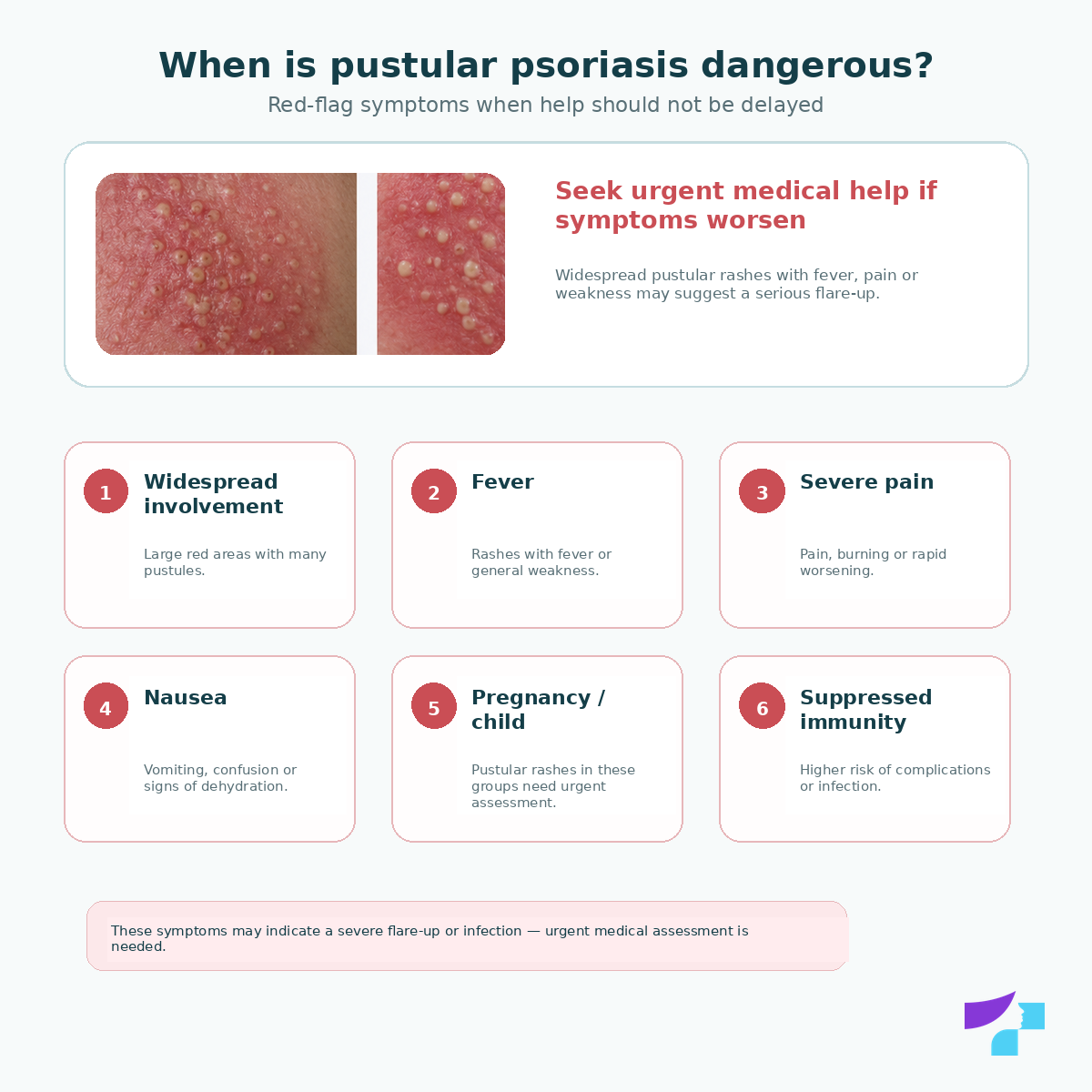
When is pustular psoriasis dangerous?
Pustular psoriasis is especially dangerous if the pustules spread widely, fever develops or the person’s general condition rapidly worsens.
Urgent medical help should be sought if there is:
- widespread skin involvement;
- fever;
- chills;
- marked weakness;
- severe pain;
- rapid spread of the rash;
- nausea or vomiting;
- mucous membrane inflammation in the mouth, on the lips or around the eyes;
- shortness of breath;
- reduced urine output;
- signs of dehydration;
- confusion or a severe general condition;
- pustular rash during pregnancy;
- widespread pustular rash in a child;
- immunosuppression;
- suspicion of infection.
It is especially important not to wait if a person has never had psoriasis before and suddenly develops a widespread pustular rash with fever or pain.
Treatment of pustular psoriasis
Treatment of pustular psoriasis depends on the type of disease, severity, location, the patient’s age, comorbidities, pregnancy, previous treatment and general condition. Treatment may be local, systemic, biological or, in severe cases, hospital-based.
It is important to understand that localised palm and sole pustulosis is not the same as generalised pustular psoriasis with fever and widespread skin involvement. The palm and sole form may require long-term local or systemic treatment led by a dermatologist, while a generalised flare-up with fever, severe pain or widespread skin involvement may be an emergency and requires rapid treatment, sometimes in hospital.
The aims of treatment are to:
- reduce inflammation;
- reduce pustules;
- reduce pain, burning and itching;
- prevent complications;
- control recurrent flare-ups;
- improve quality of life.
Local treatment and skin care
Local treatment may be suitable for milder and localised forms, such as palm and sole pustulosis. It may include doctor-prescribed local anti-inflammatory medicines, skin care, moisturising and measures to reduce cracking.
Skin care may include:
- gentle cleansing products;
- regular moisturising;
- protecting the skin from friction;
- reducing irritation of the palms and soles;
- suitable footwear if the soles are affected;
- avoiding bursting or scratching pustules.
Local products must not replace medical assessment, especially if the disease is widespread, if there is fever, pain or rapid spread.
Systemic therapy
Systemic therapy means treatment that acts on the whole body. It may be needed in moderate, severe or widespread pustular psoriasis, and also when local treatment is not sufficient.
Systemic therapy requires medical supervision, possible tests and regular safety monitoring. The patient should not start, stop or change such treatment independently.
Biological and targeted therapy
Biological and targeted therapy is a modern treatment approach that acts on specific inflammatory mechanisms. Some psoriasis therapies influence specific immune system signals, while in generalised pustular psoriasis special attention is paid to the IL-36 inflammatory pathway.
This type of treatment is not needed for every patient. It is assessed by a dermatologist, taking into account disease severity, flare-up frequency, danger and the patient’s overall health.
When is hospital treatment needed?
Hospital treatment may be needed if there is generalised pustular psoriasis or a severe flare-up with systemic symptoms.
Hospital care may be required if there is:
- widespread skin redness;
- many pustules over large skin areas;
- fever;
- chills;
- dehydration;
- severe pain;
- severe weakness;
- nausea, vomiting or confusion;
- mucous membrane inflammation;
- pregnancy;
- a child with widespread disease;
- suspicion of infection;
- need for intensive monitoring.
What should not be done as self-treatment?
In pustular psoriasis, you should not:
- burst pustules;
- scratch or rub the skin;
- use antibiotics without a doctor’s advice;
- use antifungal products if a fungal infection has not been confirmed;
- use another person’s prescription ointments;
- suddenly stop treatment prescribed by a doctor;
- change systemic treatment independently;
- ignore fever or rapid spread;
- treat widespread pustular disease only with cosmetic products.
What to do during a pustular psoriasis flare-up?
During a flare-up, the most important thing is not to delay medical assessment, especially if pustules are spreading, there is pain or systemic symptoms.
During a flare-up, it is recommended to:
- not burst pustules;
- not scratch the skin;
- wash the skin gently;
- avoid irritating products;
- continue treatment prescribed by the doctor;
- record possible triggers;
- contact a dermatologist;
- seek urgent help if there is fever, severe pain, nausea, weakness or rapid spread.
If pustules are on the palms or soles, it may be necessary to reduce friction and mechanical stress, choose suitable footwear or protect the skin from irritation. However, specific treatment steps are determined by a doctor.
Lifestyle, smoking, stress and skin care
Lifestyle does not cure pustular psoriasis, but it may influence the frequency of flare-ups and disease control. In palmoplantar pustulosis in particular, stopping or reducing smoking is important because smoking is often associated with this form of the disease.
Recommended measures include:
- not smoking or seeking help to stop smoking;
- reducing chronic stress;
- protecting the skin from friction and trauma;
- avoiding harsh cleansing products;
- moisturising the skin;
- following the doctor’s treatment plan;
- not stopping treatment without medical advice;
- treating infections in time;
- visiting a dermatologist regularly if the disease recurs.
What is proven, what requires individual assessment and what medicine is working on?
What is well proven
It is well proven that pustular psoriasis is not a contagious infection and that pustules in psoriasis are usually sterile. It is also well known that generalised pustular psoriasis is a rare, severe form of the disease that may be associated with systemic inflammation and requires rapid medical care.
It is also well established that palmoplantar pustulosis is a chronic, relapsing disease affecting the palms and soles and may be closely associated with smoking.
Where an individual approach is needed
An individual approach is needed when choosing treatment. For one patient, local treatment and skin care may be sufficient; another may need systemic therapy; while in severe generalised forms, emergency hospital treatment may be required.
Pregnancy, childhood, smoking, comorbidities, infection risk, previous treatment, medication history and flare-up frequency must also be assessed individually.
What medicine is working on
Modern dermatology is especially studying the inflammatory mechanisms of pustular psoriasis, including the IL-36 pathway, targeted therapy for generalised pustular psoriasis, early recognition of dangerous flare-ups and personalised treatment. This is an area where treatment options continue to develop, especially for severe and rare forms of the disease.
When should you see a dermatologist or seek emergency help?
You should see a dermatologist if white or yellowish blisters repeatedly appear on the skin, especially on the palms, soles, fingertips, nails or on red and painful skin. Medical assessment is also needed if it is unclear whether the condition is an infection, fungal disease, eczema or pustular psoriasis.
You should see a dermatologist if:
- pustules recur;
- pustules are on the palms or soles;
- there is pain or burning;
- the skin cracks or peels;
- there are nail changes;
- treatment does not help;
- the disease interferes with walking or working;
- psoriasis is suspected.
Emergency help should be sought if:
- pustules spread rapidly;
- there is widespread skin redness;
- there is fever or chills;
- there is marked weakness;
- there is severe pain;
- there is nausea, vomiting or confusion;
- there is mucous membrane inflammation;
- there is shortness of breath;
- the person is pregnant;
- the disease affects a child and worsens quickly;
- there is dehydration or a severe general condition;
- a severe infection is suspected.
References and authoritative sources
- Latvian clinical recommendations: Psoriasis. Latvian Association of Dermatovenerologists
- Centre for Disease Prevention and Control of Latvia: ICD-10 classification — papulosquamous disorders L40–L45
- Rīga Stradiņš University: pustular psoriasis, its phenotypes and differences from psoriasis vulgaris
- National Institute for Health and Care Excellence (NICE): psoriasis assessment and management
- American Academy of Dermatology Association: clinical guidelines for psoriasis
- American Academy of Dermatology Association: treatment of pustular psoriasis
- DermNet: generalised pustular psoriasis
- DermNet: palmoplantar pustulosis
- DermNet: pustular skin conditions
- DermNet: psoriasis of the palms and soles
- DermNet: psoriasis treatment
- British Association of Dermatologists: psoriasis information for patients and specialists
- British Association of Dermatologists: palmoplantar pustulosis patient information
- European Dermatology Forum and EuroGuiDerm: psoriasis guideline
- Doctus: less well-known forms of psoriasis — recognition and treatment
- Journal of the American Academy of Dermatology: generalised pustular psoriasis — expert consensus statement
- PubMed: differential diagnosis of AGEP and generalised pustular psoriasis
- PubMed: pustular psoriasis pathogenesis, IL-36 inflammatory pathway and targeted therapy
- PubMed: reviews and studies on generalised pustular psoriasis
- PubMed Central: generalised pustular psoriasis — disease burden, pathogenesis and treatment approaches
Medical disclaimer
The information in this article is intended for informational and educational purposes only and does not replace medical consultation, diagnosis or treatment. If a person has pustules, painful or rapidly spreading skin rashes, fever, weakness, widespread skin redness, nausea, mucous membrane inflammation, shortness of breath, nail changes, joint pain or other symptoms, they should consult a dermatologist or another appropriate specialist. Self-diagnosis and self-treatment may be incorrect and may delay appropriate treatment, especially if pustules are burst or antibiotics or prescription medicines are used without medical advice. In the case of severe, rapidly worsening or high-risk symptoms, such as widespread skin redness, fever, chills, marked weakness, severe pain, rapid spread of pustules, pregnancy, childhood or immunosuppression, emergency medical help should be sought immediately.
