Night sweats are episodes of heavy sweating during sleep that may soak nightclothes, a pillow or bed linen and wake a person up. Sometimes they are simply caused by an overly warm bedroom, a heavy duvet, synthetic clothing, alcohol, spicy food or a fever during an acute infection. However, recurrent, severe night sweats or sweating accompanied by other symptoms may indicate an underlying process that should be assessed by a doctor.
Night sweats are not a diagnosis in themselves. They are a symptom with a wide range of possible causes, from menopause, stress, anxiety, medicine side effects and sleep apnoea to thyroid disorders, fluctuations in blood glucose, infections or, less commonly, cancer. The key is to determine whether sweating can be explained by the sleeping environment and everyday factors or whether it is new, recurrent, severe and associated with other signs. To learn more about excessive sweating while awake and its different types, read our article on excessive sweating, or hyperhidrosis.
In brief: if you sweat at night because the room is hot or the duvet is too warm, it is usually not dangerous. If you regularly wake up drenched in sweat, need to change your pyjamas or sheets, or have fever, unexplained weight loss, a persistent cough, swollen lymph nodes, palpitations, tremor, shortness of breath or pronounced fatigue, you should consult a doctor.
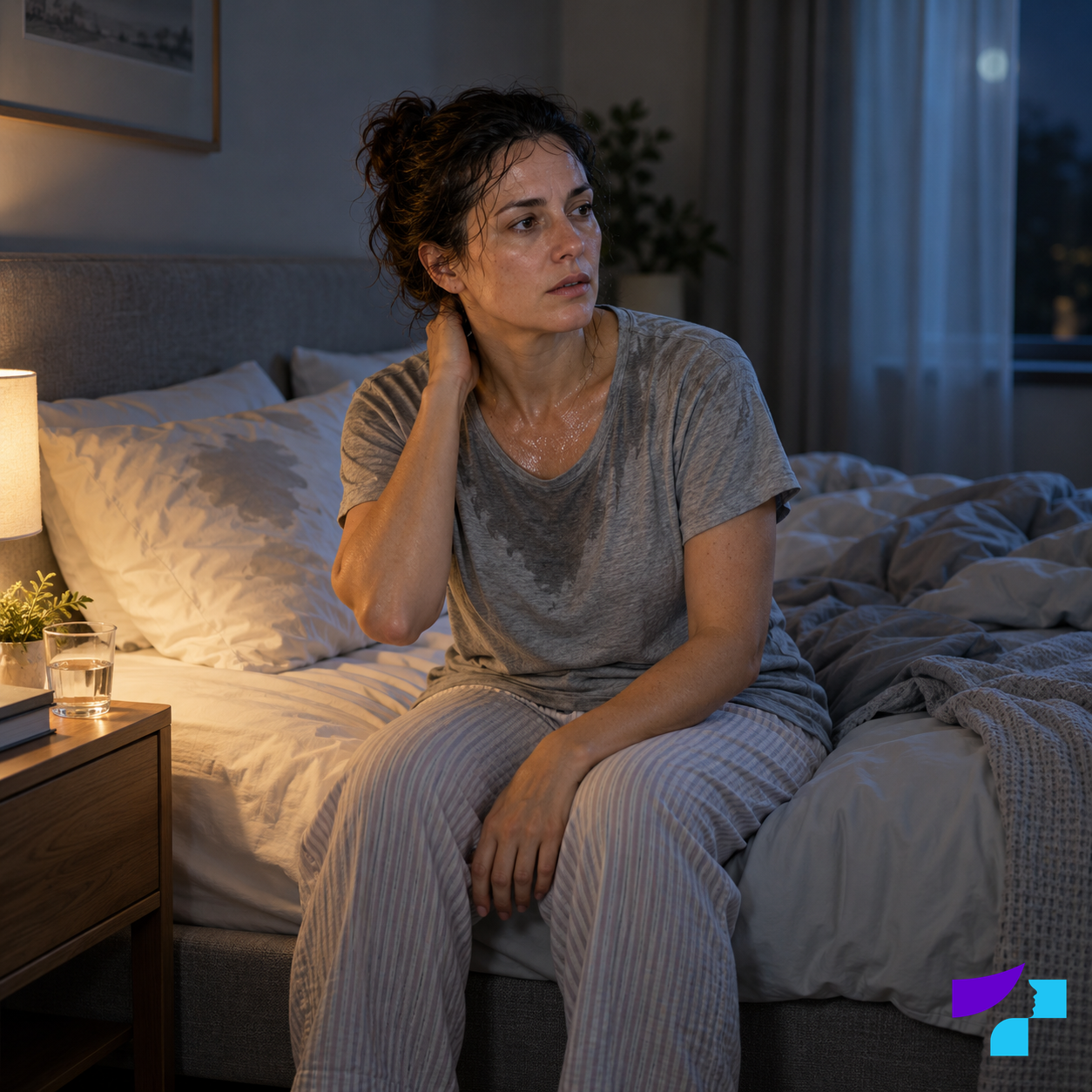
Severe night sweats may soak nightclothes and bedding and repeatedly disrupt sleep.
What are night sweats?
In medical terms, night sweats generally refer to recurrent episodes of heavy sweating during sleep that cannot be fully explained by an overly warm environment. A person may wake up with wet pyjamas, damp hair, a wet pillow or soaked bedding. Chills may sometimes follow an episode because sweat cools on the skin.
Mild sweating at night is normal. Body temperature changes during sleep, and the body adjusts how it releases heat. It is therefore important to distinguish ordinary overheating in bed from night sweats that may be a sign of a health problem.
| Situation | More likely explained by the environment | May require medical assessment |
|---|---|---|
| The room is warm, the duvet is heavy or clothing is synthetic | Yes | Less often |
| Sweating occurs after alcohol, spicy food or vigorous exercise in the evening | Yes | Sometimes |
| Sweating recurs in a cool room | Less often | Yes |
| Nightclothes or sheets are regularly soaked | Less often | Yes |
| Fever, weight loss, cough or swollen lymph nodes are also present | No | Yes |
| Sweating begins after starting a new medicine | Possible | Discuss with a doctor |
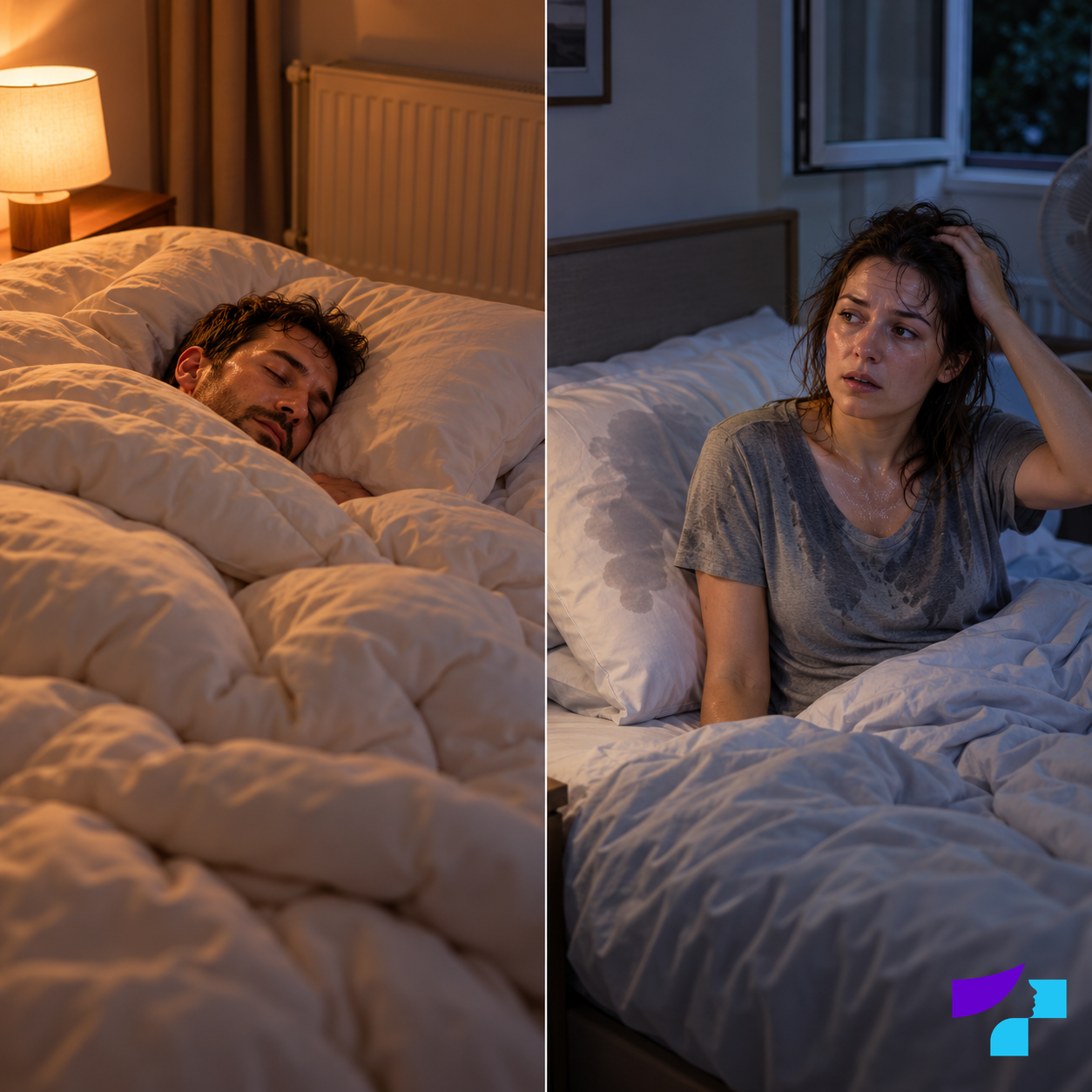
Unlike overheating in an overly warm room, medically significant night sweats may recur in a cool bedroom and soak nightclothes or bedding.
When is sweating at night normal?
Sweating at night may be normal or temporary when there is a clear cause. Common factors that are easy to address include:
- an overly warm bedroom;
- a heavy duvet or several bed covers;
- synthetic pyjamas or non-breathable bedding;
- a mattress or mattress topper that retains too much heat;
- alcohol in the evening;
- spicy food or a very heavy meal before bedtime;
- vigorous exercise late in the evening;
- a short-lived fever during a viral infection;
- emotional stress or anxiety;
- hot flushes during perimenopause or menopause.
In these situations, adjusting the sleeping environment and monitoring symptoms may help. If sweating resolves after cooling the bedroom, using a lighter duvet, reducing alcohol or recovering from an infection, it is often not a sign of serious disease.
When can night sweats indicate a health problem?
Night sweats are more likely to be medically significant when they are new, recurrent or severe, wake you from sleep or occur without an obvious external cause. Other accompanying symptoms are particularly important.
Consult a doctor if night sweats occur together with:
- fever or chills;
- unexplained weight loss;
- a persistent cough, shortness of breath or blood in the sputum;
- swollen lymph nodes in the neck, armpits or groin;
- pronounced fatigue, weakness or pallor;
- palpitations, tremor, nervousness or weight loss;
- recurrent diarrhoea or abdominal pain;
- a rash, joint pain or signs of inflammation;
- fainting, confusion or severe weakness;
- recurrent infections;
- symptoms that began after starting a new medicine;
- symptoms that begin months or years after menopausal hot flushes have ended.
Seek urgent medical help if sweating is accompanied by chest pain, severe shortness of breath, confusion, fainting, a very high temperature or feeling extremely unwell.
How does the body regulate temperature during sleep?
Sweating is one of the ways the body releases excess heat. Sweat glands release fluid onto the skin, and the body cools as this fluid evaporates. The process is controlled by the autonomic nervous system – the part of the nervous system that is not under conscious control.
Body temperature naturally falls slightly during sleep. If the body senses that it is too warm, it dilates blood vessels in the skin and activates the sweat glands. This response may be normal, but in some conditions temperature regulation becomes more sensitive. This can happen because of hormonal fluctuations, fever, low blood glucose, an overactive thyroid, anxiety or certain medicines.
Common causes of night sweats
The causes of night sweats can be divided into several groups.
| Cause category | Examples | Typical accompanying signs |
|---|---|---|
| Environment and habits | Warm room, heavy duvet, alcohol, spicy food | Sweating improves after changing habits |
| Hormones | Perimenopause, menopause, pregnancy, the postpartum period, hypogonadism | Hot flushes, menstrual changes, sleep problems |
| Infections | Viral infections, tuberculosis, HIV, endocarditis | Fever, cough, chills, fatigue, weight loss |
| Metabolic and endocrine conditions | Hyperthyroidism, hypoglycaemia, diabetes | Palpitations, tremor, hunger, weight changes |
| Medicines | Antidepressants, corticosteroids, painkillers, hormone therapy | Symptoms begin after starting a medicine or changing the dose |
| Sleep and breathing disorders | Sleep apnoea | Snoring, pauses in breathing, daytime sleepiness |
| Less common serious causes | Lymphoma, leukaemia and other diseases | Fever, weight loss, swollen lymph nodes, weakness |
Bedroom, bedding and clothing: environmental factors
Before considering illness, it is worth checking the simplest explanations. Many people sweat at night because their sleeping environment is too warm. Contributing factors can include a high room temperature, poor ventilation, a warm duvet, synthetic pyjamas, non-breathable sheets or a mattress that traps heat.
Practical steps include:
- keeping the bedroom cooler and well ventilated; approximately 16–19 °C is comfortable for many people, although the ideal temperature varies individually;
- choosing breathable cotton or linen nightwear;
- using a lighter duvet or bedding that can be adjusted in layers;
- choosing breathable or moisture-wicking bedding if sweating is mild and there are no warning signs;
- avoiding very heavy meals, alcohol and spicy food before sleep;
- checking whether sweating improves after adjusting the sleeping environment for 1–2 weeks.
If sweating continues in a cool room with light bedding, other causes should be considered.
Stress, anxiety, alcohol and everyday habits
Anxiety and stress activate the sympathetic nervous system, which is responsible for the body’s alarm response. This may cause palpitations, tension, light sleep, waking at night and sweating. Some people sweat during a panic attack or after intense emotional distress.
Alcohol can dilate blood vessels, disrupt sleep architecture and affect temperature regulation. Caffeine, nicotine, certain substances and withdrawal from them may also contribute to sweating. If night sweats often occur after drinking alcohol, it is important to consider both the amount consumed and overall sleep quality.
Menopause, perimenopause and night-time hot flushes
Perimenopause and menopause are among the most common causes of night sweats in women. Hormonal fluctuations, particularly changes in oestrogen levels, can make the temperature-regulating centre in the brain more sensitive to small changes in body temperature. This may trigger a hot flush: a sudden feeling of heat in the face, neck, chest or throughout the body, followed by sweating and sometimes chills.
Night-time hot flushes can disrupt sleep and, over time, cause fatigue, irritability and difficulty concentrating. Menopause-related night sweats are common, but this does not mean that every episode in a woman aged around 45–55 is automatically due to menopause. If sweating is very severe, begins suddenly or occurs with weight loss, fever, cough, pain or swollen lymph nodes, medical assessment is needed.
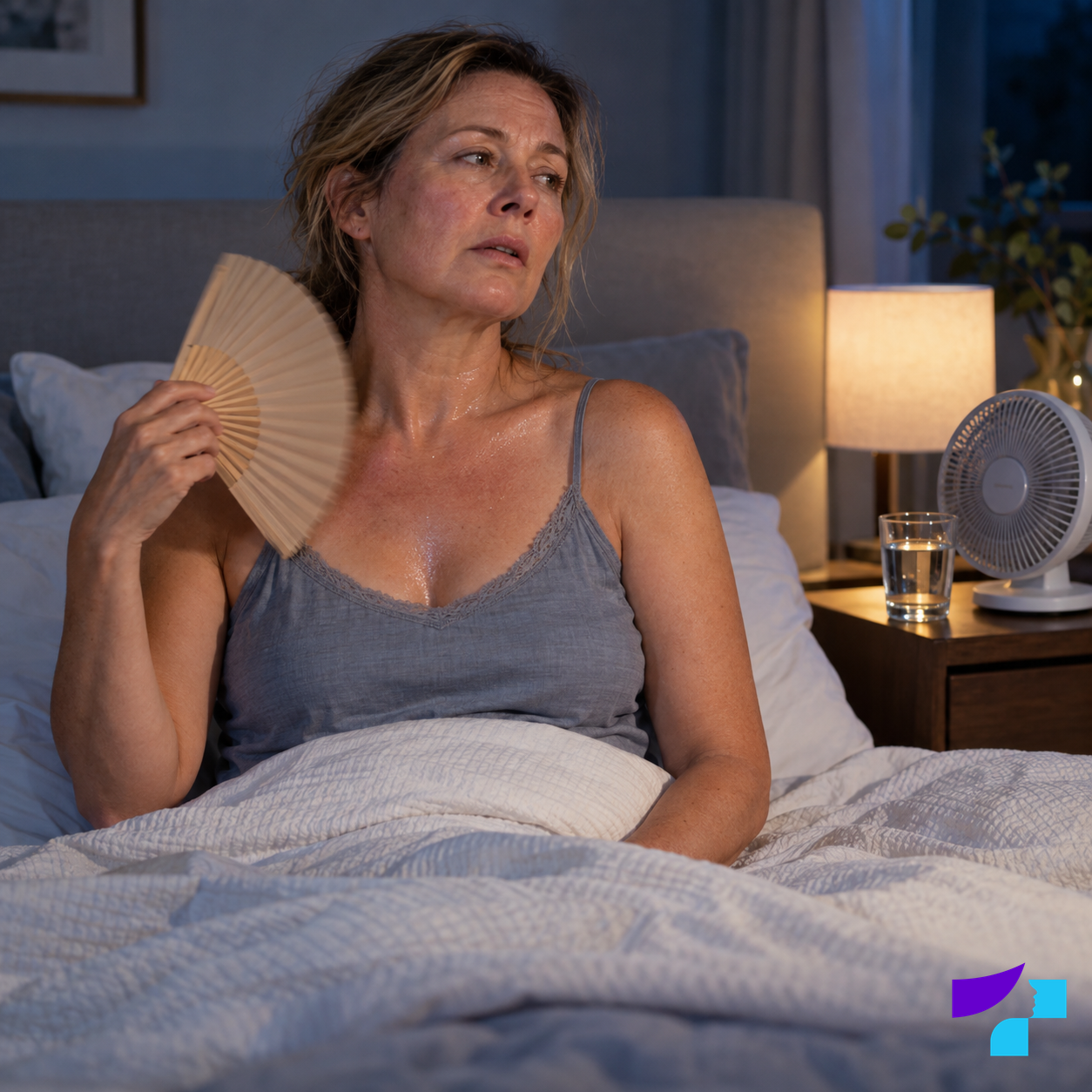
During menopause, night-time hot flushes may cause a sudden feeling of heat, sweating and disrupted sleep.
Night sweats during pregnancy and after childbirth
Hormone levels, blood volume, metabolism and fluid balance change during pregnancy and after childbirth. These changes can increase sweating, including at night. During the postpartum period, the body gradually removes excess fluid, and sweating may be more pronounced in some women.
Pregnant and postpartum women with night sweats should nevertheless seek medical advice if they also have fever, pain, foul-smelling discharge, cough, shortness of breath, pronounced weakness or other signs of infection.
Night sweats in men
Night sweats in men can have the same causes as in any adult, including the sleeping environment, alcohol, stress, infections, thyroid dysfunction, low blood glucose, medicines or sleep apnoea.
In some men, sweating and hot flushes may be associated with low testosterone or treatments that affect sex hormones, such as prostate cancer therapy. New or recurrent night sweats, particularly when accompanied by weight loss, fever, swollen lymph nodes or urinary symptoms, should be discussed with a doctor.
Infections, fever and night sweats
Many infections can cause night sweats. Acute viral infections, such as influenza, COVID-19 and other respiratory infections, may cause fever and sweating, especially when the temperature falls. In such cases, sweating usually improves as the infection resolves.
A more serious infection should be considered when night sweats are persistent or occur with:
- fever lasting several days or recurring;
- a chronic cough;
- blood in the sputum;
- shortness of breath;
- unexplained weight loss;
- swollen lymph nodes;
- travel to regions with specific infection risks;
- immunosuppression or risk factors for HIV;
- a heart murmur, persistent fever or risk factors that may suggest endocarditis.
Tuberculosis, HIV and endocarditis are not the most common causes of night sweats, but they are important considerations when relevant signs or risk factors are present.
Thyroid disorders, diabetes and other hormonal causes
An overactive thyroid, or hyperthyroidism, can accelerate metabolism and cause sweating, heat intolerance, palpitations, tremor, nervousness, weight loss, diarrhoea or changes in the menstrual cycle. If night sweats occur with these signs, a doctor may order TSH and other thyroid tests.
In people with diabetes, night sweats may sometimes be related to low blood glucose during sleep, particularly in those who use insulin or certain glucose-lowering medicines. Nocturnal hypoglycaemia may also cause restlessness, palpitations, nightmares, morning headaches or waking with intense hunger. Treatment should then be adjusted together with a doctor.
Medicines that can cause night sweats
Night sweats can be a side effect of medicines. Possible contributors include:
- antidepressants, particularly selective serotonin reuptake inhibitors (SSRIs) and serotonin-noradrenaline reuptake inhibitors (SNRIs);
- tricyclic antidepressants;
- corticosteroids;
- non-steroidal anti-inflammatory drugs and some painkillers;
- opioids;
- diabetes medicines if they cause hypoglycaemia;
- thyroid hormone preparations if the dose is too high;
- some blood-pressure medicines;
- hormone therapy;
- antiandrogens;
- tamoxifen and aromatase inhibitors;
- some types of cancer treatment.
Important: do not stop prescription medicines on your own. If sweating began after starting a new medicine or changing a dose, note the medicine, dose and timing of symptom onset and discuss them with your doctor. It may sometimes be possible to change the dose, timing or preparation, but this decision should be made with a healthcare professional.
Sleep apnoea, reflux and other frequently overlooked causes
Sleep apnoea is a condition in which breathing repeatedly stops or becomes shallow during sleep. It may be associated with snoring, waking while gasping for air, morning headaches, daytime sleepiness, high blood pressure and sometimes night sweats. If a person snores, sleeps restlessly and feels sleepy during the day, night sweats should not be attributed only to bedding or stress.
Gastroesophageal reflux disease (GERD) can disturb sleep and, in some people, be associated with waking, chest discomfort, a sour taste in the mouth, coughing or sweating. Obesity, chronic pain, restless legs syndrome and other sleep disorders may also reduce sleep quality and contribute to waking with sweating.
Can night sweats be a sign of cancer?
Night sweats can occur with some cancers, particularly lymphoma and leukaemia. However, night sweats alone do not mean that a person has cancer. They are more medically significant when they occur with the so-called B symptoms: unexplained fever, drenching night sweats and unexplained weight loss.
A haematological or oncological cause is more concerning when there are:
- enlarged, painless lymph nodes;
- unexplained weight loss;
- recurrent or persistent fever;
- pronounced fatigue;
- unusual bruising or bleeding;
- frequent infections;
- bone pain or persistent pain without a clear cause.
These signs do not mean that the diagnosis will necessarily be cancer, but they are a reason not to delay medical consultation.
Night sweats in children
In children, night sweats are often related to overly warm clothing or bedding, room temperature, fever or active sleep. Some children sweat more than others, particularly around the head and neck.
A child’s night sweating may occasionally be associated with night terrors, vivid dreams or sleep disorders. If a child snores loudly, sleeps with their mouth open, moves restlessly in sleep, seems unrefreshed, is sleepy during the day, finds it harder to concentrate or develops behavioural changes, sleep-related breathing disorders, including obstructive sleep apnoea, should also be considered.
A child should be assessed by a doctor if night sweats are recurrent and severe or occur together with:
- fever;
- poor weight gain or weight loss;
- a persistent cough;
- pauses in breathing or pronounced snoring;
- swollen lymph nodes;
- pronounced fatigue;
- frequent infections;
- poor appetite;
- pain or a general decline in well-being.
Red flags: when should you definitely see a doctor?
Consult a doctor about night sweats if they:
- recur regularly and cannot be explained by a warm environment;
- wake you from sleep;
- soak your pyjamas, sheets or duvet;
- disrupt sleep or affect how you feel during the day;
- begin suddenly without a clear cause;
- begin after starting a new medicine or changing the dose;
- begin months or years after menopausal hot flushes have ended;
- occur with fever, chills or a persistent low-grade fever;
- occur with unexplained weight loss;
- occur with a persistent cough, shortness of breath or blood in the sputum;
- occur with swollen lymph nodes;
- occur with palpitations, tremor, diarrhoea or weight loss;
- occur in a child, pregnant woman, older adult or person with a weakened immune system;
- occur in someone receiving cancer treatment, hormone therapy or immunosuppressive treatment.
How does a doctor determine the cause of night sweats?
A doctor will usually begin by taking a medical history and performing an examination. It is helpful to be ready to answer the following questions:
- how long the night sweats have been present;
- how often they occur;
- whether pyjamas or bedding need to be changed;
- whether the bedroom may be too warm;
- whether there is fever, weight loss, cough, diarrhoea, pain or swollen lymph nodes;
- whether there are palpitations, tremor, heat intolerance or weight changes;
- which medicines and dietary supplements are being used;
- whether a medicine dose has recently changed;
- whether alcohol, caffeine or other substances are used;
- whether a woman has menstrual changes, is pregnant or postpartum, or has menopausal symptoms;
- whether there is snoring, pauses in breathing during sleep or daytime sleepiness;
- whether there has been travel, exposure to infection or contact with tuberculosis;
- whether thyroid, autoimmune or cancer-related conditions occur in the family.
During the examination, the doctor may assess temperature, pulse, blood pressure, body weight, the thyroid gland, lymph nodes, lungs, heart, skin and abdomen.

During a consultation, the doctor assesses the duration and frequency of symptoms, accompanying signs, medicines and relevant risk factors.
Which tests and investigations may be needed?
Investigations are not the same for everyone. They should be selected according to symptoms, age, risk factors and examination findings. If there is no clear cause, a doctor may consider:
- a full blood count;
- C-reactive protein (CRP) or erythrocyte sedimentation rate (ESR);
- TSH and other thyroid tests;
- blood glucose or HbA1c;
- liver and kidney function tests;
- an HIV test when there are relevant risks or clinical signs;
- assessment for tuberculosis when there is a cough, relevant risk or known contact;
- a chest X-ray;
- a urine test;
- a pregnancy test when relevant;
- additional investigations, such as ultrasound, computed tomography, a sleep study or specialist consultation, if the initial assessment points in a particular direction.
Extensive testing without medical indications is not always necessary. If the initial assessment is normal and there are no warning signs, the doctor may recommend monitoring and reassessment if symptoms continue or change.
Which doctor should you see?
A general practitioner or family doctor is usually the best place to start because night sweats have many possible causes. The doctor can assess overall health, medicines, signs of infection and possible hormonal or metabolic disorders, and arrange initial tests when needed.
Depending on the situation, you may need:
- a gynaecologist if night sweats are associated with perimenopause, menopause, pregnancy or the postpartum period;
- an endocrinologist if a thyroid disorder, diabetes, hypoglycaemia or another hormonal cause is suspected;
- an infectious diseases specialist if there is persistent fever, cough or a risk of tuberculosis, HIV or another infection;
- a haematologist if there are swollen lymph nodes, unexplained weight loss, abnormal blood results or concern about a blood disorder;
- a sleep specialist if there is snoring, pauses in breathing during sleep or pronounced daytime sleepiness;
- a paediatrician if night sweats occur in a child.
How are night sweats treated?
Treatment depends on the cause. There is no single method that is suitable for everyone.
Possible treatment approaches include:
- if the sleeping environment is responsible, cooling the room, using a lighter duvet and wearing breathable clothing may help;
- if alcohol, caffeine or spicy food is responsible, changing these habits may help;
- if stress or anxiety is responsible, psychological support, a regular sleep schedule and treatment assessed by a doctor may help;
- if menopause is responsible, a doctor can discuss non-hormonal and hormonal treatment options after considering benefits and risks;
- if a medicine is responsible, a doctor may consider changing the dose or preparation;
- if an infection is responsible, the specific infection is treated;
- if hyperthyroidism, diabetes or hypoglycaemia is responsible, the underlying condition needs treatment;
- if sleep apnoea is responsible, diagnosis and treatment of the sleep disorder are needed;
- if a haematological or oncological disease is suspected, targeted investigations and specialist-led treatment are needed.
What can you do at home if there are no warning signs?
If night sweats are mild, there are no red flags and they appear to be related to the environment or habits, you can try:
- keeping the bedroom cooler;
- using a lighter duvet;
- wearing breathable nightwear;
- using bedding made from breathable materials;
- reducing or avoiding alcohol in the evening;
- limiting caffeine in the afternoon and evening;
- avoiding spicy food before bedtime;
- maintaining a regular sleep schedule;
- using relaxation techniques before bed;
- keeping a symptom diary.
In a symptom diary, record nights with sweating, bedroom temperature, alcohol use, evening meals, medicines, the menstrual cycle, fever, cough, weight changes and other symptoms. If sweating does not improve after 1–2 weeks or additional symptoms appear, consult a doctor.
What should you not do if you have night sweats?
If you have night sweats, you should not:
- stop prescription medicines on your own;
- start hormones without medical advice;
- take antibiotics without a medical indication;
- rely on “detox” remedies or unproven folk treatments;
- ignore fever, weight loss, swollen lymph nodes or a persistent cough;
- attribute everything to stress if symptoms recur or worsen;
- delay medical advice for a child, pregnant woman, older adult or person with a weakened immune system;
- try to determine on your own that the sweating is definitely not related to a serious condition.
Common myths about night sweats
| Myth | Fact |
|---|---|
| Night sweats always mean cancer. | No. In most cases, the cause is not cancer, but warning signs should be assessed. |
| Night sweats are always caused by menopause. | Menopause is a common cause, but it is not the only one. |
| If there is no fever, everything is fine. | Sweating without fever can also be associated with medicines, hormones, anxiety, sleep apnoea or other causes. |
| Deodorant solves night sweats. | Deodorant may reduce odour, but it does not address the cause of sweating. |
| Antidepressants cannot cause sweating. | In some people, antidepressants can contribute to sweating, including at night. |
| If a medicine causes sweating, it should be stopped immediately. | Medicines should not be stopped without a doctor’s advice. |
| Everyone with night sweats needs cancer tests. | Tests are selected according to symptoms, examination findings and risk factors. |
| Night sweats in a child are always dangerous. | The cause is often the environment or fever, but recurrent sweating with other symptoms should be assessed. |
| Night sweats always resolve on their own. | They sometimes resolve, but persistent or unexplained sweating should be discussed with a doctor. |
Summary
Night sweats are a common symptom and do not always indicate a serious illness. First consider the sleeping environment, bedding, clothing, alcohol, stress, an acute infection and medicines. Perimenopause and menopause are common causes in women. However, recurrent, severe, new or unexplained night sweats, especially when accompanied by fever, weight loss, cough, swollen lymph nodes, palpitations, tremor, shortness of breath or pronounced fatigue, should be assessed by a doctor.
Medical disclaimer
This information is intended for educational purposes and does not replace medical consultation, diagnosis or treatment. Recurrent, severe, new or unexplained night sweats, or sweating associated with fever, weight loss, cough, swollen lymph nodes, pain, shortness of breath, fainting, pronounced fatigue, bleeding, diarrhoea or other concerning symptoms, should be assessed by a doctor. Do not start or stop prescription medicines, hormone preparations, antibiotics, corticosteroids or other medicines without medical advice. Medical help should be sought promptly for children, pregnant women, older adults and people with weakened immune systems.
References and authoritative sources
- UK National Health Service (NHS): night sweats
- Cleveland Clinic: causes, diagnosis and treatment of night sweats
- Mayo Clinic: night sweats and possible causes
- Mayo Clinic: symptoms and causes of hot flashes
- U.S. National Cancer Institute (NCI): definition of night sweats
- American Family Physician: diagnostic evaluation of persistent night sweats
- MedlinePlus: causes and medical assessment of excessive sweating
- MedlinePlus: sweating and sweat gland function
- MedlinePlus: hot flashes and night sweats during cancer treatment
- U.S. National Institute on Aging (NIA): menopause, hot flashes and night sweats
- Merck Manual Professional Edition: hyperhidrosis and causes of generalised sweating
