Gastroesophageal reflux disease, or GERD, is a chronic condition in which stomach contents repeatedly flow back into the esophagus and cause troublesome symptoms or damage to the lining of the esophagus. Occasional acid reflux can also occur in healthy people, for example after a large meal or lying down soon after eating. It is usually considered a disease when symptoms recur, affect well-being, or increase the risk of complications.
The most common GERD symptoms are heartburn, burning behind the breastbone, a sour taste in the mouth, and the return of food or liquid into the mouth. However, reflux disease does not always present only as burning. In some patients, the main complaints are chronic cough, hoarseness, throat irritation, a lump-in-the-throat sensation, or damage to tooth enamel.
Important: chest pain should not automatically be considered reflux. If the pain is severe, associated with shortness of breath, sweating, weakness, or radiates to the arm, shoulder, back, or jaw, urgent medical help is needed.
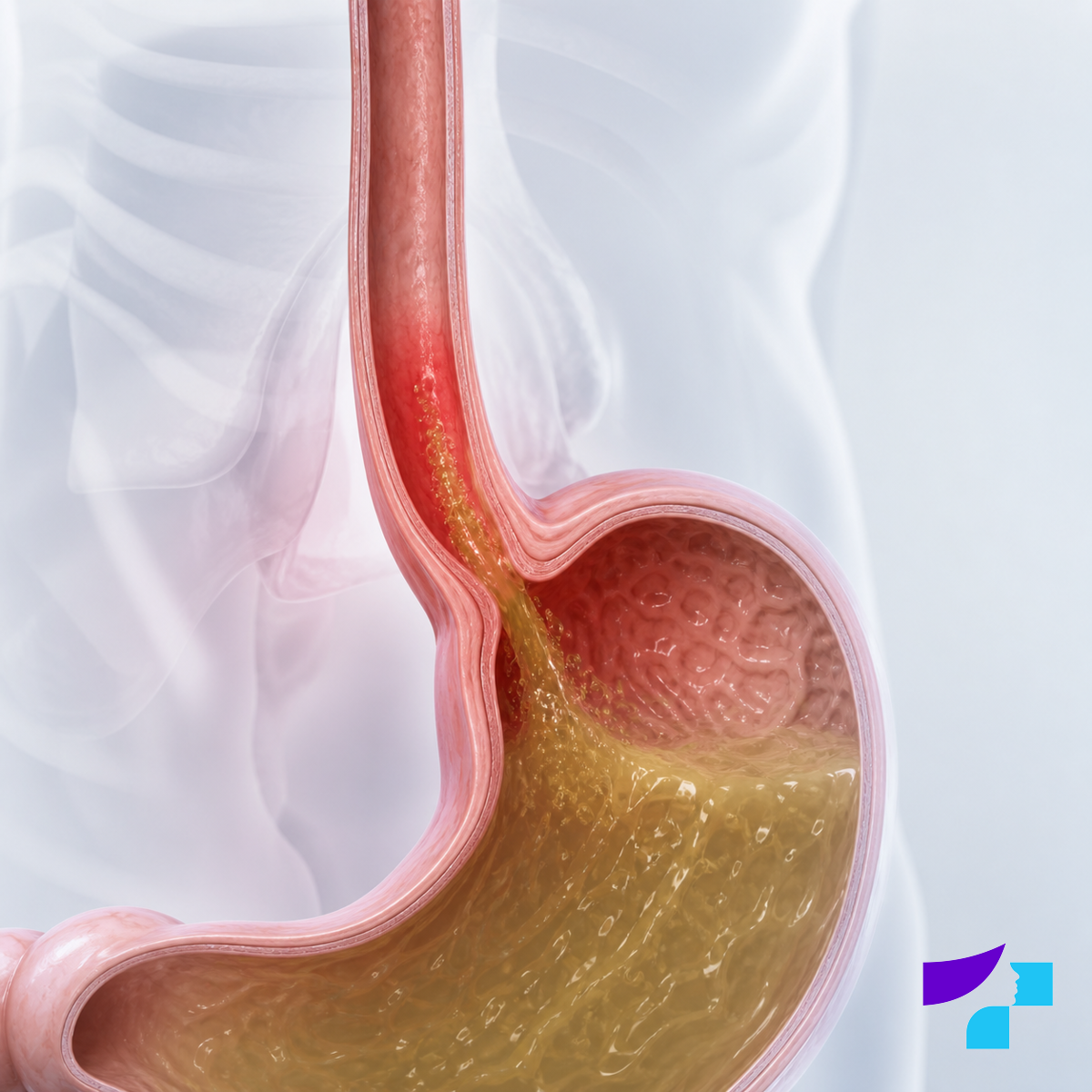
The image shows stomach acid flowing back into the esophagus, which can cause burning behind the breastbone and irritation of the esophageal lining.
In Brief: The Most Important Points About GERD
- GERD occurs when stomach contents repeatedly flow back into the esophagus.
- The most common symptoms are heartburn, burning behind the breastbone, and regurgitation.
- GERD may also cause cough, hoarseness, throat irritation, or a lump-in-the-throat sensation.
- Sometimes reflux is “silent” and occurs without obvious heartburn.
- Lifestyle changes are an important part of treatment, but they do not always replace medication.
- There is no single universal reflux diet for all patients.
- Proton pump inhibitors, such as omeprazole, pantoprazole, or esomeprazole, should be taken correctly and according to a doctor’s or pharmacist’s instructions.
- Long-term self-treatment with antacids, baking soda, or acid-reducing medicines is not recommended.
- Difficulty swallowing, bleeding, black stools, weight loss, or persistent vomiting are warning signs.
- Untreated or severe GERD can sometimes lead to reflux esophagitis, narrowing of the esophagus, or Barrett’s esophagus.
What Is GERD?
Gastroesophageal reflux means the backflow of stomach contents into the esophagus. Stomach acid and digestive enzymes are suitable for breaking down food, but the lining of the esophagus is not designed for prolonged contact with such contents. Repeated acid reflux can therefore irritate the esophagus and cause burning, pain, or inflammation.
Between the esophagus and the stomach is the lower esophageal sphincter. It works like a valve: during eating, it allows food to enter the stomach, and afterward it helps prevent stomach contents from flowing back. If this mechanism is weaker, relaxes at the wrong time, or if the anatomy of the junction between the esophagus and stomach is altered, reflux occurs more easily.
Reflux, GERD, Silent Reflux, and Bile Reflux: How Do They Differ?
| Condition | What it means | Common symptoms | What is important |
|---|---|---|---|
| Occasional reflux | Reflux from time to time, for example after overeating | Short-term heartburn, belching | Does not always mean disease |
| GERD | Repeated reflux that causes symptoms or damage | Heartburn, burning, sour taste, regurgitation | If symptoms are frequent or long-lasting, medical evaluation is needed |
| Atypical GERD | Reflux with throat, voice, or airway symptoms, sometimes without heartburn | Hoarseness, cough, lump-in-the-throat sensation | Symptoms are not specific; other causes should also be excluded |
| Bile reflux | Bile enters the stomach or esophagus | Bitter taste, burning, nausea | It is not the same as acid reflux; medical evaluation is needed |
GERD Symptoms
Typical Symptoms
The most common symptoms of gastroesophageal reflux disease are burning behind the breastbone, heartburn after eating, a sour or bitter taste in the mouth, belching, nausea, and the feeling that food or liquid is coming back into the mouth. Symptoms often worsen after large meals or when lying down.
The burning sensation is usually felt behind the breastbone and may move upward toward the throat. In some patients it is mild and occasional, while in others it is frequent, troublesome, and associated with poorer sleep quality.
Atypical Symptoms
GERD can also appear outside the esophagus. Possible symptoms include chronic cough, hoarseness, a lump-in-the-throat sensation, burning in the throat, bad breath, tooth enamel damage, and even asthma-like symptoms.
These symptoms are not specific to reflux. They may also be caused by allergy, chronic rhinitis, asthma, voice strain, smoking, infections, or other conditions.
When Can Symptoms Be Dangerous?

If heartburn, burning behind the breastbone, or acid reflux occurs frequently, a doctor’s consultation helps evaluate the cause of symptoms and choose appropriate treatment.
| Symptom | Why it matters | Action |
|---|---|---|
| Chest pain with shortness of breath, sweating, or weakness | May indicate heart disease | Seek medical help immediately |
| Pain radiating to the arm, shoulder, back, or jaw | May not be reflux | Urgent evaluation |
| Difficulty swallowing | Possible narrowing, inflammation, or another disease of the esophagus | See a doctor |
| Painful swallowing | May indicate inflammation or damage | See a doctor |
| Vomiting blood or vomit resembling coffee grounds | Possible bleeding in the digestive tract | Urgent help |
| Black, tar-like stools | Possible bleeding | Urgent evaluation |
| Unexplained weight loss | May indicate a more serious condition | See a doctor |
| Persistent vomiting | Risk of dehydration and other conditions | See a doctor |
Why Does GERD Occur?
GERD usually develops due to a combination of factors. Common causes and risk factors include weakness of the lower esophageal sphincter, hiatal hernia, excess body weight, pregnancy, smoking, large meals, eating before bedtime, alcohol, and certain medications.
In some patients, delayed stomach emptying, increased esophageal sensitivity, or impaired protective mechanisms of the esophagus may also play a role. Stress is not always a direct cause of GERD, but it can increase symptom perception and affect eating habits, sleep, and digestive sensitivity.
Diet in GERD

Smaller portions, lighter dinners, and observing individual dietary triggers may help reduce GERD symptoms.
There is no single universal “reflux diet” that helps everyone equally. In some patients, symptoms are worsened by fatty and fried foods, chocolate, peppermint, coffee, alcohol, citrus fruits, tomatoes, spicy foods, onions, garlic, or carbonated drinks.
Often helpful:
- smaller portions;
- regular meals 3-4 times a day;
- not eating 3-4 hours before bedtime;
- avoiding overeating;
- limiting alcohol;
- lighter dinners;
- adequate fluid intake during the day;
- avoiding hard-to-digest foods and foods that promote bloating.
The diet should be adequate, balanced, and adapted to the individual patient.
How Is GERD Diagnosed?
GERD diagnosis begins with a discussion about symptoms, their frequency, duration, relationship to food, sleep, body position, medication use, and lifestyle. The doctor also evaluates warning signs and other possible causes of symptoms.
Diagnostic Pathway
| Situation | Possible approach |
|---|---|
| Typical heartburn and regurgitation without warning signs | The doctor may recommend lifestyle changes and a trial of treatment |
| Symptoms do not improve with treatment | Medication use should be checked and further tests considered |
| Difficulty swallowing, bleeding, weight loss, or persistent vomiting | Gastroscopy is needed |
| Cough, hoarseness, or throat symptoms without heartburn | ENT, lung, allergy, and other causes should also be evaluated |
Gastroscopy
Gastroscopy allows the doctor to examine the esophagus, stomach, and duodenum. It can help detect reflux esophagitis, ulcers, narrowing, Barrett’s esophagus, or other causes of symptoms.
Not all patients with heartburn need gastroscopy immediately. However, it is especially important if warning signs are present, symptoms are long-lasting, response to treatment is insufficient, or complications are suspected.
pH Monitoring, Impedance, and Manometry
Esophageal pH monitoring helps assess acid exposure in the esophagus. Impedance testing can also help detect non-acid reflux. Manometry evaluates esophageal movement and sphincter function. These tests are not usually needed for everyone, but they may be important in unclear, complex, or treatment-resistant cases.
GERD Treatment
The goal of GERD treatment is to reduce symptoms, improve quality of life, heal inflammation of the esophagus if present, and reduce the risk of complications. Treatment should be tailored to symptom severity, frequency, test results, and patient risk factors.
Lifestyle Changes
Common recommendations:
- do not eat 3-4 hours before bedtime;
- eat smaller portions;
- reduce excess body weight if relevant;
- raise the head of the bed in case of night-time symptoms;
- avoid tight clothing that puts pressure on the abdomen;
- stop smoking;
- limit alcohol;
- avoid physical activity immediately after eating;
- do not lie down right after a meal.
For night-time reflux, extra pillows under the head do not always help, because they can bend the body and increase abdominal pressure. Raising the head of the bed or using a wedge support for the upper body may be more effective.
Antacids and Alginates
Antacids neutralize stomach acid and may help with short-term heartburn. Alginates form a mechanical barrier that can reduce the backflow of stomach contents into the esophagus after meals.
They may be suitable for occasional symptoms, but if they are needed often, a doctor or pharmacist should be consulted.
H2 Blockers
H2 blockers reduce stomach acid production. They may help in milder cases or in certain situations, such as night-time symptoms. In more severe inflammation of the esophagus, they are usually less effective than proton pump inhibitors.
Proton Pump Inhibitors
Proton pump inhibitors, or PPIs, are commonly used and effective medicines for GERD treatment. They include omeprazole, pantoprazole, esomeprazole, lansoprazole, and rabeprazole.
They reduce stomach acid production, help relieve symptoms, and may promote healing of esophageal inflammation. For PPIs to work properly, they should be taken according to the specific medicine and the instructions of a doctor or pharmacist.
Important to know:
- PPIs are not immediate “burning relievers” like antacids;
- the effect often develops gradually;
- insufficient effect is sometimes related to incorrect timing of use;
- long-term use should be discussed with a doctor;
- the dose should not be increased or several medicines combined without medical advice.
Prokinetic Medicines
In some cases, the doctor may consider medicines that affect stomach emptying or digestive tract movement. They are not a universal GERD treatment and should be used only after medical evaluation.
Surgical and Endoscopic Treatment
Surgical treatment is needed only for some patients. It may be considered if reflux has been objectively confirmed, symptoms persist despite correct treatment, there is a large hiatal hernia, or the patient cannot or does not want to use medication long term.
One of the best-known procedures is fundoplication, which aims to strengthen the barrier between the stomach and the esophagus. Careful evaluation is needed before such a decision, because side effects after surgery may include swallowing difficulties, bloating, or difficulty belching.
What If Reflux Medicines Do Not Help?
If symptoms persist, the dose should not simply be increased without a doctor’s advice. It is necessary to evaluate:
- whether the medicine is being taken correctly;
- whether it has been taken for long enough;
- whether the symptoms are truly related to GERD;
- whether heart, biliary tract, stomach, esophageal motility, or another condition may be present;
- whether gastroscopy, pH monitoring, impedance testing, or a gastroenterologist consultation is needed.
Chest pain requires particular caution, because it may be caused by reflux as well as heart disease.
Possible Complications of GERD
In most patients, GERD is a controllable condition, but long-lasting or severe reflux can sometimes lead to complications.
Reflux esophagitis is inflammation of the esophageal lining, which can cause burning, pain, discomfort when swallowing, and sometimes bleeding.
Narrowing of the esophagus can develop due to long-term inflammation and scarring. It may cause a feeling that food is getting stuck or difficulty swallowing.
Barrett’s esophagus is a change in the lining of the lower esophagus caused by long-term reflux. It is not cancer, but in some patients it increases the risk of esophageal adenocarcinoma and requires monitoring.
Airway and throat symptoms may include chronic cough, hoarseness, throat irritation, and asthma-like complaints. However, other possible causes should always be evaluated.
Tooth enamel damage may occur if acidic contents frequently reach the mouth. In such cases, both a gastroenterologist and a dentist may need to be involved.
GERD in Special Situations
GERD During Pregnancy
Reflux is common during pregnancy. It is promoted by hormonal changes and pressure from the growing uterus. Smaller meals, avoiding eating before bedtime, and changing sleeping position often help. Medication choices during pregnancy should be discussed with a doctor, midwife, or pharmacist.
GERD in Children
Reflux symptoms in children may differ from those in adults. In infants, regurgitation is often physiological, but if there is poor weight gain, feeding difficulties, repeated vomiting, blood, or breathing symptoms, pediatric evaluation is needed.
Night-Time Reflux
Night-time reflux can disturb sleep and worsen cough, hoarseness, or burning. Moving the last meal earlier, limiting alcohol in the evening, raising the head of the bed, and sleeping on the left side may help.
GERD in People With Excess Body Weight
Excess body weight increases pressure in the abdominal cavity and can worsen reflux. Even moderate weight reduction may significantly reduce symptoms in some patients.
What Should Not Be Done in Reflux?
- Do not ignore chest pain.
- Do not rely on baking soda as long-term treatment.
- Do not use antacids regularly without consulting a doctor or pharmacist.
- Do not stop prescribed treatment without consultation if symptoms or complications are severe.
- Do not combine several acid-reducing medicines without professional advice.
- Do not rely only on diet if there is difficulty swallowing, bleeding, or weight loss.
- Do not assume chronic cough or hoarseness is automatically caused by reflux.
- Do not delay medical consultation if symptoms progress.
Common Myths About GERD
Myth: GERD always means too much stomach acid
In reality, the problem is often not the amount of acid, but the fact that it reaches the wrong place: the esophagus.
Myth: If there is no heartburn, there is no reflux
In some patients, reflux presents as cough, hoarseness, or throat irritation.
Myth: Reflux can be cured with diet alone
Diet may help, but some patients need medication or further tests.
Myth: Coffee, tomatoes, and citrus fruits must be avoided by everyone
There are no universal forbidden foods. It is important to observe individual symptom triggers.
Myth: Proton pump inhibitors are always dangerous
They can be very useful when taken correctly. Long-term use should be discussed with a doctor.
Myth: Baking soda is good long-term treatment
Baking soda may reduce acidity briefly, but it does not solve the cause and is not suitable for regular use.
Myth: Chest pain caused by reflux is never dangerous
Chest pain should always be taken seriously because it may also be related to heart disease.
Myth: Everyone with heartburn needs gastroscopy
Not always. The need for testing depends on symptoms, age, risk factors, and warning signs.
Myth: GERD always leads to cancer
Most patients do not develop cancer, but long-term reflux can increase the risk of Barrett’s esophagus in some people.
Myth: Surgery always completely solves reflux
Surgery helps in selected cases, but it is not suitable for everyone and requires careful evaluation.
Summary
Gastroesophageal reflux disease is common, but in most cases it can be well controlled. It may present with heartburn, burning behind the breastbone, a sour taste in the mouth, cough, hoarseness, throat irritation, or tooth enamel damage.
Treatment usually begins with changes in lifestyle and eating habits, but some patients need acid-reducing medicines or further tests. The most important step is not to delay medical consultation if symptoms are frequent, long-lasting, worsening, or warning signs appear.
Correct diagnosis helps distinguish GERD from other conditions and choose a safe, individually appropriate treatment plan.
References and Authoritative Sources
- U.S. National Institute of Diabetes and Digestive and Kidney Diseases (NIDDK): acid reflux and gastroesophageal reflux disease in adults
- U.S. National Institute of Diabetes and Digestive and Kidney Diseases (NIDDK): treatment of acid reflux and gastroesophageal reflux disease
- MedlinePlus: patient information on gastroesophageal reflux disease
- American College of Gastroenterology: clinical guideline for the diagnosis and management of gastroesophageal reflux disease
- National Institute for Health and Care Excellence (NICE): recommendations for the diagnosis and treatment of gastroesophageal reflux disease and dyspepsia in adults
