Hyperhidrosis is excessive sweating that is difficult to control, exceeds the amount needed to cool the body or significantly interferes with daily life. It can affect the underarms, palms, feet, face, scalp or most of the body.
Sweating itself is a normal bodily function. It helps regulate body temperature in hot weather, during physical activity and when you have a fever. Hyperhidrosis may be suspected if sweating regularly occurs in a cool room, at rest or without an obvious external trigger, and causes wet clothing, palms or shoes, skin problems, or limitations at work and in social life.
In brief: primary focal hyperhidrosis most often begins in childhood or adolescence, affects specific and usually symmetrical areas of the body, and decreases during sleep. If excessive sweating starts suddenly, affects the whole body, is one-sided, occurs during sleep or is accompanied by other symptoms, a secondary cause should be assessed.
Could this be hyperhidrosis?
The following signs may suggest hyperhidrosis:
- sweating regularly occurs without heat or physical activity;
- episodes of sweating are difficult to control;
- clothing, palms, socks or shoes become wet;
- sweating makes it difficult to write, use a phone, hold objects or shake hands;
- symptoms affect specific areas of the body, often on both sides;
- clothing or socks need to be changed regularly because of sweating;
- skin irritation, maceration or infections develop;
- sweating affects work, studies, relationships or emotional well-being.
These signs do not confirm the diagnosis on their own, but they can help you recognise when a medical consultation would be useful.
What is hyperhidrosis?
Hyperhidrosis is a medical condition characterised by excessive sweat production that is difficult to control.
In everyday language, increased sweating, excessive sweating and hyperhidrosis are often used interchangeably. However, not every episode of heavy sweating is hyperhidrosis. Sweating after exercise, in hot weather, in a sauna or during a fever is usually a normal bodily response.
The significance of hyperhidrosis is not determined by the amount of sweat alone. A doctor also assesses:
- how long the symptoms have been present;
- how often sweating recurs;
- which areas of the body are affected;
- whether sweating is symmetrical;
- whether it also occurs during sleep;
- whether there are other symptoms;
- how sweating affects daily life and quality of life.
Hyperhidrosis is not contagious and is not, in itself, a sign of poor hygiene.
How does sweating help regulate body temperature?
Sweating is one of the body's main cooling mechanisms. When body temperature rises, the nervous system activates the sweat glands. Sweat reaches the skin surface and helps cool the body as it evaporates.
Eccrine sweat glands play the most important role in temperature regulation. They are found throughout almost all of the skin, with particularly high numbers on the palms and soles.
Sweat gland activity is regulated by the autonomic nervous system, which operates independently of conscious control. Eccrine sweat glands are activated by signals from the sympathetic nervous system, with acetylcholine acting as the chemical messenger.
In primary hyperhidrosis, the sweat glands are usually neither damaged nor anatomically enlarged. The problem is more closely related to overactive nerve signalling, which causes the glands to produce more sweat than is needed in a particular situation.
When is sweating no longer considered normal?
Normal sweating may increase:
- in hot weather;
- during physical activity;
- during a fever;
- during emotional stress;
- after eating spicy food;
- after drinking alcohol;
- during certain hormonal changes.
Hyperhidrosis is more likely if sweating occurs:
- in a cool or comfortable room;
- while sitting at rest;
- without physical activity;
- without an elevated body temperature;
- in amounts that soak clothing or cause sweat to drip from the palms;
- so regularly that it interferes with everyday activities.
There is no single universal amount of sweat that establishes the diagnosis in everyone. Its effect on daily life is particularly important.
What are the types of hyperhidrosis?
Hyperhidrosis is most accurately classified using two separate criteria: its cause and the distribution of sweating.
| Criterion | Type of hyperhidrosis | Typical features |
|---|---|---|
| By cause | Primary hyperhidrosis | No other disease or medication is identified that explains the sweating |
| By cause | Secondary hyperhidrosis | Sweating is associated with another health condition, physiological changes, medication or substance use |
| By distribution | Focal or localised hyperhidrosis | Affects specific areas, such as the underarms, palms, feet or face |
| By distribution | Generalised hyperhidrosis | Affects most or all of the body |
The terms primary and focal are not exact synonyms. "Primary" describes the cause of sweating, while "focal" describes its distribution. Primary hyperhidrosis is most often focal, whereas secondary hyperhidrosis can be either generalised or localised.
Primary focal hyperhidrosis
In primary focal hyperhidrosis, no other disease or medication is identified that explains the sweating.
Typically, the sweating:
- begins in childhood, adolescence or early adulthood;
- affects the underarms, palms, feet, face or scalp;
- is usually bilateral and relatively symmetrical;
- recurs regularly;
- may occur in several family members;
- interferes with everyday activities;
- usually decreases or stops during sleep.
Symptoms may worsen in hot weather or during stress or anxiety, but primary hyperhidrosis is not solely a psychological problem.
Secondary hyperhidrosis
Secondary hyperhidrosis results from another health condition, physiological changes, a medication or a substance.
It is more likely to:
- start suddenly;
- first appear in adulthood or older age;
- affect a larger part of the body;
- be asymmetrical;
- occur during sleep;
- begin after starting a new medication or changing a dose;
- occur alongside other symptoms.
Possible groups of causes include:
- disorders of glucose metabolism;
- thyroid disorders;
- menopausal hot flushes;
- fever and infections;
- certain neurological conditions;
- side effects of some medications;
- alcohol or other substance use and withdrawal;
- other systemic health conditions.
Excessive sweating alone does not confirm any of these diagnoses. The cause is determined by assessing the overall pattern of symptoms.
Focal and generalised hyperhidrosis
Focal hyperhidrosis affects one or more specific areas of the body.
Generalised hyperhidrosis affects most of the body. If sweating has started recently, is pronounced during sleep or occurs alongside other symptoms, it is particularly important to assess the possibility of secondary hyperhidrosis.
Which areas of the body are most commonly affected?
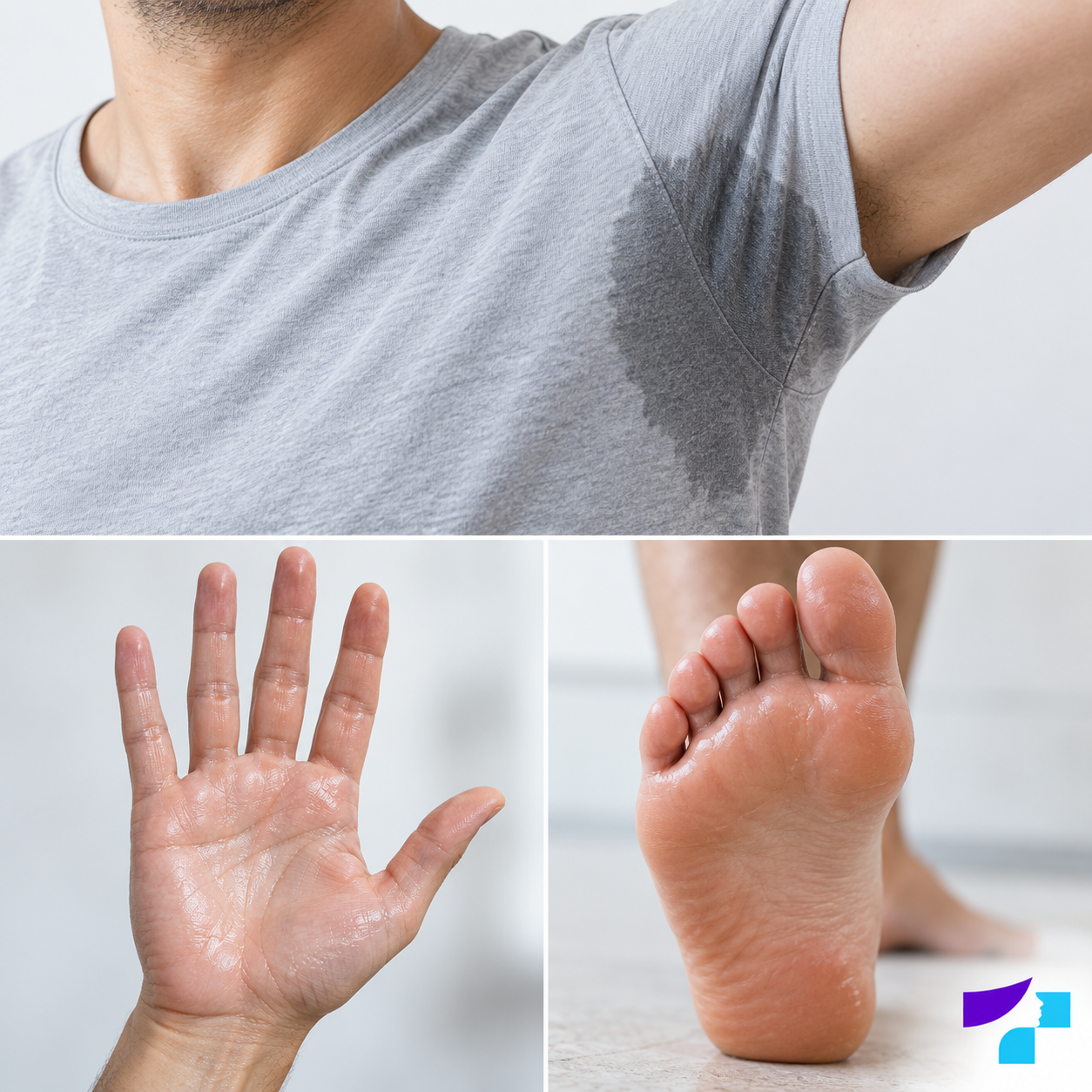
The image shows three common areas affected by hyperhidrosis: the underarms, palms and feet. A wet patch is visible on clothing under the arm, along with perspiration on the palm and sole.
Underarm hyperhidrosis
Underarm, or axillary, hyperhidrosis can quickly produce visible wet patches on clothing.
A person may need to:
- change clothes several times a day;
- avoid certain clothing colours or fabrics;
- use underarm sweat pads;
- limit physical closeness or social activities.
Prolonged moisture in skin folds can contribute to friction, skin maceration, intertrigo and irritation.
Palmar hyperhidrosis
Palmar hyperhidrosis, or excessive sweating of the palms, can make it difficult to:
- write;
- work with paper;
- hold tools or small objects;
- use a touchscreen;
- use a keyboard;
- shake hands;
- perform precise tasks at work.
Sweating can be so severe that the palms are constantly damp or sweat drips from them.
Plantar hyperhidrosis
Plantar hyperhidrosis, or excessive sweating of the feet, can cause:
- constantly damp socks;
- wet shoes;
- maceration of the skin on the feet;
- friction and chafing;
- stronger foot odour;
- a higher risk of fungal and bacterial skin problems.
Moisture can contribute to athlete's foot or pitted keratolysis, but these conditions are not hyperhidrosis itself.
Facial and scalp hyperhidrosis
Craniofacial hyperhidrosis affects the face, forehead or scalp.
Sweat may:
- run down the face;
- get into the eyes;
- wet the hair;
- affect make-up;
- become particularly noticeable at work or in social situations.
Treatment for the face and scalp must be chosen carefully because of the nearby eyes, mouth and facial muscles.
A separate condition is gustatory sweating, which occurs while eating. In a mild form, this can be a normal response to spicy or hot food. However, pronounced, one-sided or recently developed sweating during meals can sometimes be associated with nerve damage or previous surgery.
Whole-body sweating
When almost the entire body sweats heavily, secondary hyperhidrosis is more likely to need assessment.
It is important to establish:
- when the sweating began;
- whether it occurs during sleep;
- whether there is fever, palpitations, tremor or weakness;
- whether body weight has changed;
- whether a new medication has been started;
- whether there are other symptoms.
What causes excessive sweating?
In primary hyperhidrosis, overactive nerve signalling to the eccrine sweat glands plays the main role. Some people also have a family predisposition.
Possible causes of secondary sweating include:
- infections and fever;
- low blood glucose;
- diabetes and related conditions;
- an overactive thyroid;
- menopausal hot flushes;
- certain nervous system disorders;
- medication side effects;
- alcohol or other substance use or withdrawal;
- other systemic health conditions.
The list of causes is broad, so the origin of sweating cannot be reliably determined from a single symptom.
Can hyperhidrosis be hereditary?
Primary focal hyperhidrosis occurs in several relatives in some families, so a genetic predisposition may play a role.
However:
- the absence of a family history does not rule out hyperhidrosis;
- not everyone with a family predisposition experiences symptoms of the same severity;
- secondary sweating is usually not explained by this family predisposition.
Do stress and anxiety cause hyperhidrosis?
Stress, worry and emotional tension can activate the nervous system and increase sweating, particularly on the palms, feet, underarms and face.
However, primary hyperhidrosis is not simply the result of nervousness or psychological problems.
A vicious cycle often develops:
- a person worries that they will start sweating;
- the worry increases sweating;
- visible sweating increases anxiety;
- the person starts avoiding certain situations.
In this situation, treating hyperhidrosis and reducing its emotional burden may both be important.
Can medications cause excessive sweating?
Excessive sweating can be a side effect of various medications. It may be promoted by:
- some antidepressants;
- certain antipsychotic medications;
- opioids and other pain medicines;
- systemic corticosteroids;
- thyroid hormone preparations;
- some diabetes medications;
- certain medications for neurological conditions;
- other medicines that affect the nervous system or temperature regulation.
Stopping alcohol or other substances can also cause generalised sweating in certain situations.
Do not stop or change a prescribed medication on your own. If sweating begins after starting a new medication or changing its dose, discuss this with the prescribing doctor.
Hyperhidrosis and night sweats: what is the difference?
Primary focal hyperhidrosis is usually more pronounced while awake and decreases during sleep.
Pronounced sweating during sleep, on the other hand, more often warrants assessment of:
- medication effects;
- hormonal changes;
- infections;
- sleeping conditions;
- other health conditions.
Night sweats alone do not indicate a single specific disease. However, unexplained and recurrent episodes should be discussed with a doctor.
This topic is addressed in more detail in the separate Medart article "Night sweats: possible causes and when to see a doctor".
Is hyperhidrosis dangerous?
Primary focal hyperhidrosis is not usually life-threatening in itself.
However, it can:
- significantly limit daily life;
- cause skin damage;
- contribute to skin infections;
- create a substantial emotional burden;
- affect work, education and social relationships.
The significance of secondary hyperhidrosis depends on the underlying cause. Sudden, generalised or asymmetrical sweating, or sweating during sleep, is a reason for medical assessment.
How does excessive sweating affect the skin?
Constant moisture can contribute to:
- maceration, or softening of the skin from prolonged moisture;
- chafing;
- intertrigo in skin folds;
- irritant contact dermatitis;
- worsening of hand or foot eczema;
- fungal infections;
- bacterial skin problems;
- unpleasant foot odour.
If the skin becomes red, painful, cracked, itchy or scaly, or a strong odour develops, controlling sweating alone may not be enough. Dermatitis or an infection may also need treatment.
How does hyperhidrosis affect daily life?
Hyperhidrosis can make it difficult to:
- shake hands;
- write or sign documents;
- use a phone or touchscreen;
- hold tools;
- work with a computer;
- choose clothing;
- take part in sports;
- attend social events;
- have physical contact with other people.
Some people begin to avoid certain professions, meetings or relationships. Hyperhidrosis can reduce self-confidence, but it is not a character weakness or a sign of inadequate hygiene.
Does hyperhidrosis cause unpleasant body odour?
Hyperhidrosis and unpleasant body odour are not the same thing.
Fresh sweat from eccrine glands usually has no strong smell. Odour develops when skin microorganisms break down sweat, skin oils, keratin and other substances.
Bromhidrosis is the medical term for strong or unpleasant body odour. It may occur alongside hyperhidrosis, but it can also occur without excessive sweating.
| Condition or product | Main characteristic or purpose |
|---|---|
| Hyperhidrosis | Excessive sweat production |
| Bromhidrosis | Strong or unpleasant body odour |
| Antiperspirant | Reduces sweat production |
| Deodorant | Reduces or masks body odour |
How does a doctor diagnose hyperhidrosis?
Diagnosis of hyperhidrosis usually begins with a discussion and examination.
A doctor may ask:
- when the sweating began;
- which areas of the body are affected;
- whether sweating occurs on both sides;
- how often it recurs;
- whether it also occurs during sleep;
- what makes the sweating worse;
- whether relatives have similar symptoms;
- which medications and supplements are being taken;
- whether there are other symptoms;
- how sweating affects daily life.
Features that support typical primary focal hyperhidrosis include:
- long-standing focal sweating without a clear secondary cause;
- bilateral and relatively symmetrical sweating;
- regular episodes;
- interference with everyday activities;
- onset in childhood or adolescence;
- a family history;
- reduced sweating during sleep.
These features help the doctor, but they are not a self-diagnosis questionnaire that can replace medical assessment.
How is the severity of hyperhidrosis assessed?
One of the most practical tools is the Hyperhidrosis Disease Severity Scale, or HDSS: a four-point scale that assesses how much sweating interferes with everyday activities.
| HDSS score | Description |
|---|---|
| 1 | Sweating is not noticeable and does not interfere with daily life |
| 2 | Sweating is tolerable but sometimes interferes with daily life |
| 3 | Sweating is difficult to tolerate and frequently interferes with daily life |
| 4 | Sweating is intolerable and always interferes with daily life |
The HDSS helps assess symptom severity and monitor treatment results, but it does not identify the cause of sweating.
The Dermatology Life Quality Index, or DLQI, may also be used.
What is Minor's starch-iodine test?
Minor's test helps identify the boundaries of the actively sweating area.
During the test:
- an iodine solution is applied to the skin;
- it is allowed to dry;
- starch is applied;
- the sweating areas turn dark blue or black.
The test can be useful when planning local treatment or injections, for example. It does not usually identify the underlying cause of hyperhidrosis.
What is gravimetry?
Gravimetry measures the amount of sweat produced over a defined period. An absorbent material is placed on the sweating area and its change in weight is measured.
This method provides an objective measurement, but it is not necessary for every patient. The pattern of symptoms and their effect on daily life remain important in diagnosing hyperhidrosis.
When are blood tests or other investigations needed?
An extensive set of laboratory tests is not always necessary in typical primary focal hyperhidrosis.
A doctor is more likely to consider further investigations if:
- sweating started suddenly;
- it first appeared in adulthood or older age;
- almost the entire body is affected;
- sweating is markedly asymmetrical;
- sweating occurs during sleep;
- there is a fever;
- there are unexplained weight changes;
- there is tremor, palpitations or pronounced weakness;
- there are neurological symptoms;
- the symptom began after starting a new medication;
- a glucose or thyroid disorder is suspected.
Depending on the symptoms, a doctor may assess:
- a full blood count;
- inflammatory markers;
- blood glucose;
- thyroid function;
- other targeted investigations.
There is no universal set of tests for all patients.
How is hyperhidrosis treated?
Treatment is selected according to:
- the cause of hyperhidrosis;
- the affected areas of the body;
- symptom severity;
- the patient's age;
- coexisting medical conditions;
- previous treatments;
- possible side effects;
- the patient's needs and preferences.
In secondary hyperhidrosis, it is important to treat or control the underlying cause where possible.
Treatment of primary hyperhidrosis usually begins with less invasive methods and is gradually adjusted according to the response. Sometimes a combination of methods is needed.
If excessive sweating regularly interferes with daily life or its cause is unclear, a dermatologist consultation is recommended. The doctor will assess whether primary hyperhidrosis is likely and whether further investigations are needed.
What can you do today?
- Apply antiperspirant to completely dry, intact skin.
- Change damp clothing and socks.
- Allow shoes to dry completely.
- Note when and where sweating occurs.
- Make a list of medications and supplements you take.
- Observe whether caffeine, alcohol, spicy food or stress makes sweating worse.
- Record other symptoms, such as palpitations, tremor, weight changes or fever.
This information can help the doctor understand the likely pattern of sweating more quickly.
Everyday measures
Everyday measures do not always eliminate hyperhidrosis, but they can reduce its practical impact:
- choose loose, breathable clothing;
- use moisture-absorbing socks;
- change damp socks and clothing regularly;
- rotate shoes and allow them to dry;
- use underarm sweat pads;
- dry the skin and skin folds carefully;
- avoid staying in damp clothing for long periods;
- keep track of your individual sweating triggers;
- treat skin irritation or infections promptly.
The same foods and drinks do not increase sweating in everyone, so there is no need to exclude broad food groups without a reason.
Antiperspirants and deodorants
Antiperspirants and deodorants have different purposes.
| Product | Main purpose | Does it reduce sweat? | Does it reduce odour? |
|---|---|---|---|
| Antiperspirant | Temporarily reduces sweat production | Yes | May help indirectly |
| Deodorant | Reduces or masks body odour | Usually not | Yes |
Antiperspirants often contain aluminium salts, which temporarily reduce sweat production in the treated area.
An antiperspirant is usually applied:
- to completely dry skin;
- in the evening, when sweating is reduced;
- according to the specific product instructions;
- more frequently at first, then less often once the desired effect is achieved.
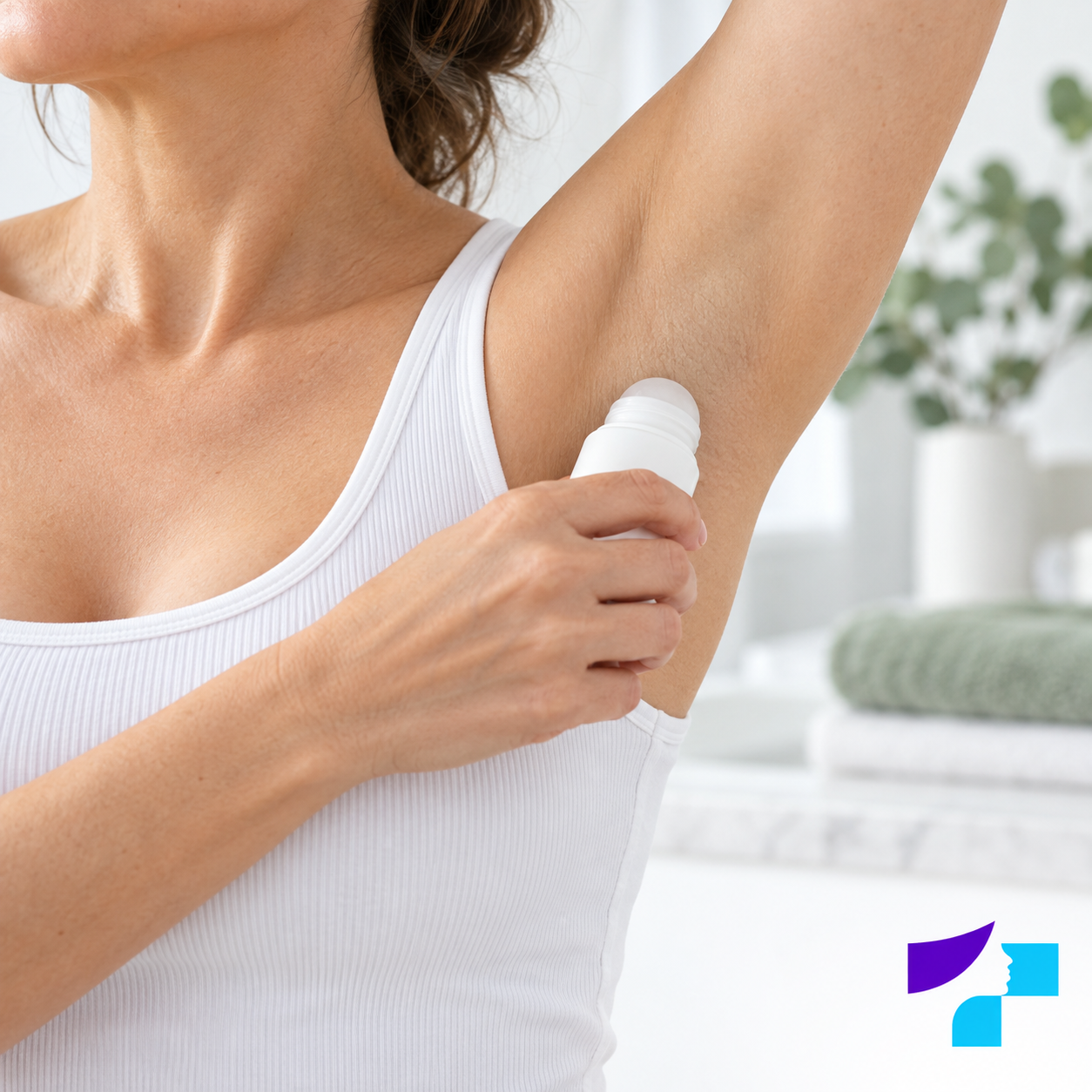
The image shows a roll-on antiperspirant being applied to dry, intact underarm skin. Antiperspirants help reduce sweat production in the treated area.
Do not apply the product to inflamed, damaged or freshly shaved skin. If marked redness, burning or peeling occurs, stop using it and consult a doctor or pharmacist.
No single concentration of aluminium salts or application schedule is suitable for all patients and all body areas. Do not cover treated skin with an airtight plastic covering unless instructed by a doctor.
Topical medications
In some countries, topical anticholinergic medicines are available for certain forms of hyperhidrosis. They reduce the effect of nerve signals on sweat glands.
Possible side effects include:
- skin irritation;
- dry mouth;
- dilated pupils;
- blurred vision if the product accidentally gets into the eyes.
The availability and approved indications of specific products vary between countries. Treatment should be selected together with a doctor.
Iontophoresis
Iontophoresis is most commonly used to treat hyperhidrosis of the palms and feet.
During the procedure, the hands or feet are placed in water through which a weak electrical current is passed. The exact mechanism is not fully understood, but treatment can reduce sweat production in the treated area.
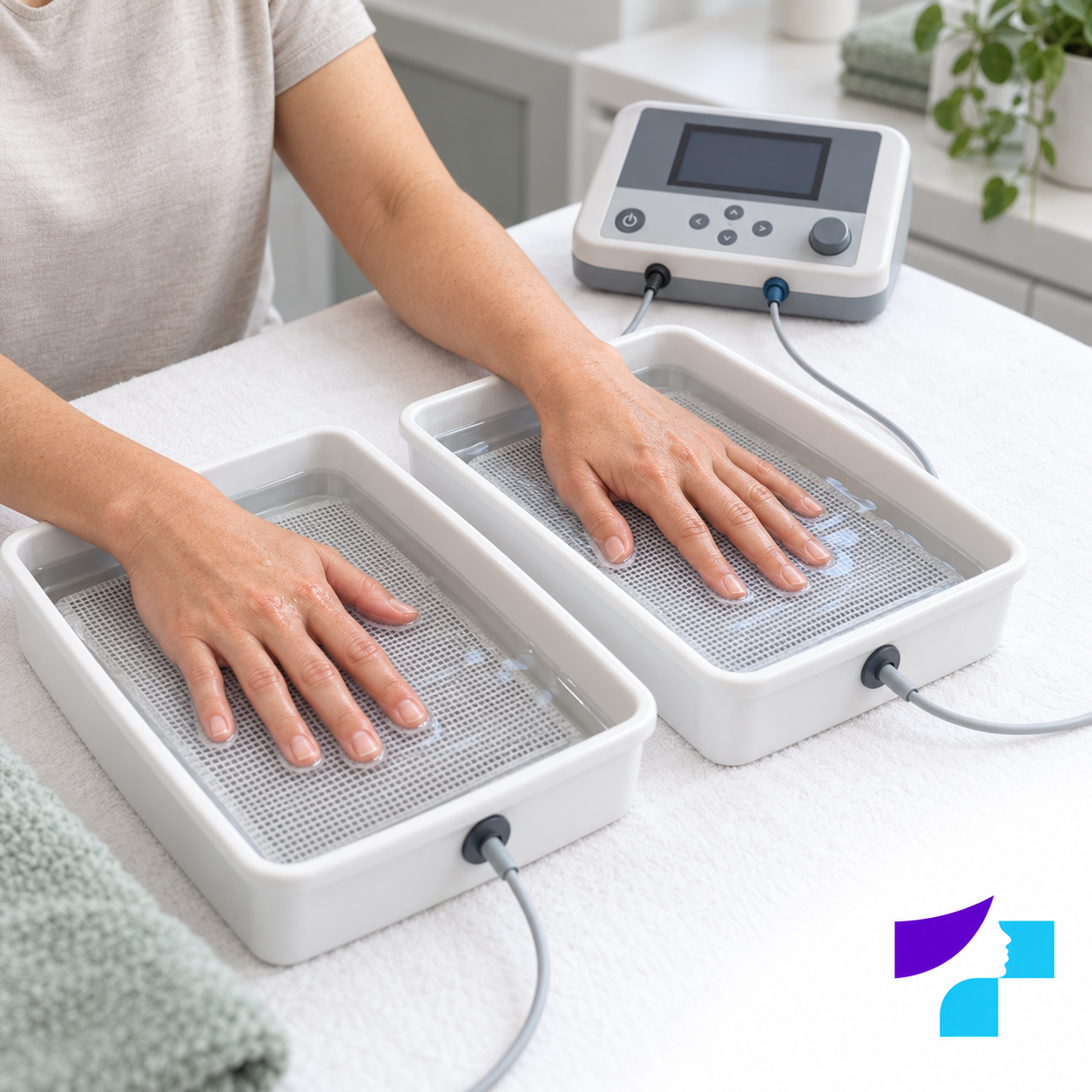
The image illustrates iontophoresis for the palms: the hands are placed in two shallow water trays connected to a medical device. The procedure uses a weak electrical current to reduce sweating of the palms.
It usually requires:
- an initial course of treatments;
- subsequent maintenance sessions;
- adjustment of treatment frequency according to the patient's response.
Possible side effects include:
- tingling;
- discomfort;
- dryness;
- skin irritation;
- a mild burn if the device is used incorrectly.
The manufacturer's contraindications must be assessed before using the device. Do not use homemade or unverified electrical devices.
Botulinum toxin injections
Botulinum toxin is injected into the skin at several points in the affected area. It temporarily inhibits the release of acetylcholine from nerve endings and reduces the transmission of nerve signals to sweat glands.
The procedure is most commonly used for underarm hyperhidrosis. In certain situations, it may also be used for:
- the palms;
- the feet;
- the face;
- the scalp.
The effect is not permanent. It usually lasts for several months, but the duration varies between patients and treated areas.
Possible side effects include:
- pain or tenderness at the injection site;
- bruising;
- itching;
- headache;
- temporary muscle weakness in the treated area.
When treating the palms, the possibility of temporary reduction in grip strength or fine motor control requires particular consideration.
Procedures on the face and scalp should be performed by a doctor with appropriate knowledge of anatomy and experience with the technique.
Botulinum toxin does not cure hyperhidrosis permanently, and the outcome of the procedure cannot be guaranteed.
Oral medications
If local treatments are unsuitable or sweating affects several body areas, a doctor may consider systemic anticholinergic medications in selected cases.
Possible side effects include:
- dry mouth;
- constipation;
- blurred vision;
- drowsiness;
- headache;
- difficulty urinating;
- changes in heart rate;
- a reduced ability to cool down in hot conditions.
If sweating is substantially reduced, the risk of overheating can increase in hot weather, during a fever or during physical activity.
These medications are not suitable for everyone and should only be used after medical assessment.
Local and device-based procedures
Some medical centres may offer methods that reduce underarm sweat gland activity:
- microwave energy;
- sweat gland curettage;
- suction-based techniques;
- local removal of sweat glands;
- other energy-based procedures.
These methods differ in:
- availability;
- the quality of supporting evidence;
- cost;
- the duration of results;
- the risk of side effects.
Pain, swelling, changes in sensation, scarring, bleeding and infection are possible.
Surgical treatment and sympathectomy
Endoscopic thoracic sympathectomy is an operation that interrupts the transmission of certain sympathetic nerve signals.
It is considered only for carefully selected patients when:
- hyperhidrosis is severe;
- it significantly limits daily life;
- appropriate less invasive methods have not helped;
- the patient is fully informed about the possible risks.
The most important long-term risk is compensatory sweating: increased sweating in other areas of the body, such as the back, abdomen or legs.
Compensatory sweating may be mild in some patients, but pronounced and difficult to tolerate in others. Other risks related to surgery, anaesthesia and nerve damage are also possible.
Sympathectomy is not a first-line treatment for hyperhidrosis.
How is treatment chosen for different body areas?
| Affected area | Commonly considered methods | Special considerations |
|---|---|---|
| Underarms | Antiperspirants, topical treatments, botulinum toxin, selected device-based or local procedures | Skin irritation, wet clothing and skin fold problems |
| Palms | Antiperspirants, iontophoresis, botulinum toxin, and systemic medications in selected cases | Handling objects, procedural pain and the risk of temporary muscle weakness |
| Feet | Antiperspirants, iontophoresis, botulinum toxin and careful foot skin care | Skin maceration, athlete's foot and bacterial skin problems |
| Face and scalp | Individually selected topical or systemic treatment, with injections in selected cases | Proximity to the eyes, mouth and facial muscles |
| Whole body | Assessment and treatment of the underlying cause, with systemic therapy in selected cases | Secondary hyperhidrosis should be assessed first |
The treatment sequence is not exactly the same for every patient.
What is compensatory sweating?
Compensatory sweating is increased sweating in other areas of the body after surgical interruption of sympathetic nerves.
It is mainly associated with sympathectomy rather than routine antiperspirant use or botulinum toxin injections.
Before sympathectomy, the doctor and patient should discuss in detail:
- the potential benefit;
- the irreversible nature of the procedure;
- the risk of compensatory sweating;
- other surgical risks.
Can hyperhidrosis be completely cured?
There is no single universal treatment for primary hyperhidrosis that provides a permanent cure for all patients.
However, symptoms can often be substantially reduced with:
- correctly used antiperspirants;
- iontophoresis;
- botulinum toxin injections;
- topical or systemic medications;
- other individually selected methods.
Some methods work only while they are being used, whereas others provide results for several months or longer.
In secondary hyperhidrosis, the outcome depends on whether the underlying cause can be treated or controlled.
What can you do at home to reduce sweating?
- Apply a suitable antiperspirant only to completely dry, intact skin.
- Follow the instructions for the specific product.
- Choose loose, breathable clothing.
- Wear moisture-absorbing socks.
- Change damp clothing and socks regularly.
- Rotate shoes and allow them to dry completely.
- Dry the skin and skin folds carefully after washing.
- Use underarm sweat pads to protect clothing.
- Keep a record of your individual sweating triggers.
- Seek help promptly if signs of dermatitis or infection develop.
What should you avoid doing at home?
You should avoid:
- starting prescription medications on your own;
- stopping a medication prescribed by a doctor;
- using highly concentrated chemicals;
- applying lemon, vinegar, baking soda or toothpaste to the skin;
- burning or injuring the skin;
- performing injections yourself;
- using homemade electrical devices;
- wrapping antiperspirant-treated skin in an airtight covering;
- restricting fluid intake to reduce sweating;
- relying on unproven home remedies as a cure.
Aggressive skin treatments can cause irritant dermatitis, chemical burns or infection.
When should you see a doctor about excessive sweating?
A routine medical consultation is recommended if:
- sweating regularly interferes with daily life;
- it makes working, studying or socialising difficult;
- clothing needs to be changed regularly;
- sweating causes skin irritation or infections;
- self-care measures do not help;
- sweating started suddenly;
- it first appeared in adulthood or older age;
- almost the whole body is affected;
- sweating is markedly one-sided or asymmetrical;
- sweating occurs during sleep;
- the symptom began after starting a new medication;
- there is fever, weight change, tremor, palpitations or other symptoms;
- a child has excessive sweating;
- sweating causes a substantial emotional burden.
You can initially contact your family doctor or book a dermatologist consultation. Depending on the symptoms, an endocrinologist, neurologist, gynaecologist, paediatrician or another specialist may be needed.
When can sweating be an emergency symptom?
Urgent medical help is needed if sudden, pronounced sweating is accompanied by:
- chest pain or pressure;
- pain radiating to the arm, shoulder, back, neck or jaw;
- shortness of breath;
- fainting;
- severe dizziness;
- cold, clammy skin;
- confusion;
- a very fast or irregular pulse;
- sudden, pronounced weakness;
- other signs of an acute medical condition.
Do not wait for a routine dermatologist appointment in this situation.
Hyperhidrosis in children and adolescents
Primary focal hyperhidrosis often begins in childhood or adolescence.
It can make it difficult to:
- write;
- hold a pen;
- use learning materials;
- take part in sports;
- use a phone;
- socialise with peers.
A child may hide symptoms because of embarrassment or other children's reactions.
Treatment should be adapted to:
- the child's age;
- the affected area;
- symptom severity;
- possible side effects.
Not all procedures and medicines used for adults are suitable for children.
If a child's sweating starts suddenly, affects the whole body, occurs during sleep or is accompanied by fever, weight changes or weakness, medical assessment is needed.
Hyperhidrosis during pregnancy and breastfeeding
Hormonal and physiological changes can increase sweating during pregnancy.
Discuss sweating with a doctor if it:
- is new;
- is very pronounced;
- started suddenly;
- is accompanied by other symptoms.
The suitability of medications, iontophoresis and injection procedures during pregnancy and breastfeeding must be assessed individually. Do not start prescription treatments or procedures without a doctor's advice.
Common myths about hyperhidrosis
| Myth | Fact |
|---|---|
| Hyperhidrosis is caused by poor hygiene | It is related to sweating regulation or a secondary cause, rather than uncleanliness |
| Everyone with hyperhidrosis has a strong body odour | The amount of sweat and body odour are separate issues |
| Hyperhidrosis is contagious | It is not an infection and is not contagious |
| Hyperhidrosis is just nervousness | Stress can worsen symptoms, but it is not the only cause |
| Primary hyperhidrosis continues during sleep | Primary focal hyperhidrosis usually decreases during sleep |
| Deodorant stops sweating | Deodorant mainly controls odour |
| Antiperspirants and deodorants are the same | Antiperspirants reduce sweating, while deodorants mainly reduce odour |
| Antiperspirants containing aluminium salts are always dangerous | When used correctly, they are standard products for controlling hyperhidrosis; skin irritation is the most common problem |
| Botulinum toxin cures hyperhidrosis permanently | Its effect is temporary |
| After botulinum toxin treatment, sweating always shifts to another area | Pronounced compensatory sweating is mainly associated with sympathectomy |
| Sympathectomy is the simplest solution | It is an invasive method with significant long-term risks |
| You simply have to live with hyperhidrosis | Several options for symptom control and treatment are available |
Summary
Hyperhidrosis is excessive sweating that is difficult to control and can occur even when the body does not need cooling.
Primary focal hyperhidrosis most often:
- begins in childhood or adolescence;
- affects the underarms, palms, feet or face;
- is symmetrical;
- decreases during sleep;
- may be associated with a family predisposition.
Secondary hyperhidrosis can be associated with medications, hormonal changes or other health conditions.
Diagnosis is mainly based on the patient's symptoms, the pattern of sweating and an examination. Further tests are needed when features suggest a secondary cause.
Treatment options include:
- everyday measures;
- antiperspirants;
- topical medications;
- iontophoresis;
- botulinum toxin injections;
- systemic medications;
- surgical treatment in carefully selected cases.
If excessive sweating interferes with daily life or its cause is unclear, a dermatologist consultation is recommended.
Medical disclaimer
The information in this article is intended for informational and educational purposes and does not replace medical consultation, diagnosis or treatment. Excessive sweating can have various causes, so sudden, generalised, markedly asymmetrical sweating or sweating during sleep should be assessed by a doctor. Do not start, change or stop prescription medications without a doctor's instructions. Investigations and treatment should be adapted individually for children, pregnant women, older adults and people with serious coexisting conditions. If pronounced sweating is accompanied by chest pain, shortness of breath, fainting, confusion, cold skin, a rapid pulse or sudden, severe weakness, seek emergency medical help immediately.
References and authoritative sources
- American Academy of Dermatology (AAD): overview of hyperhidrosis, symptoms and effects on daily life
- American Academy of Dermatology (AAD): diagnosis and treatment options for hyperhidrosis
- Mayo Clinic: hyperhidrosis symptoms, causes and when to see a doctor
- Mayo Clinic: hyperhidrosis diagnosis, tests and treatment
- UK National Health Service (NHS): excessive sweating, self-care and medical treatment options
- DermNet: hyperhidrosis classification, diagnosis, complications and treatment
- DermNet: drug-induced hyperhidrosis
- DermNet: bromhidrosis and the causes of unpleasant body odour
- International Hyperhidrosis Society: diagnostic criteria for primary focal hyperhidrosis and the HDSS
- International Hyperhidrosis Society: treatment algorithms for hyperhidrosis by body area
- NCBI Bookshelf: systematic review of the effectiveness of treatments for hyperhidrosis
- NCBI Bookshelf: treatment evidence for hyperhidrosis and consideration of surgical treatment
- European Medicines Agency: botulinum toxin for primary axillary hyperhidrosis
