Merkel cell carcinoma is a rare but aggressive form of skin cancer. It usually appears as a rapidly growing, often painless skin nodule that may be red, pink, violet, bluish or skin-coloured. At first, it may look like an ordinary pimple, cyst, boil or benign lump, which is why the disease is often noticed late.
Merkel cell carcinoma is a malignant skin tumour. It is also called a neuroendocrine carcinoma of the skin because the tumour cells have neuroendocrine features. This means that, by their cellular structure and certain markers, the tumour cells resemble cells linked to nervous-system and hormone-regulation mechanisms. For the patient, the most important point is to understand that this is not a “regular skin lump” — Merkel cell carcinoma can grow quickly, spread to lymph nodes and return after treatment.
This disease is much rarer than basal cell carcinoma, squamous cell carcinoma or melanoma, but because of its aggressiveness it requires prompt diagnosis and treatment. If a new nodule appears on the skin and enlarges over a few weeks or months, especially on the face, scalp, neck, ear, hands or other sun-exposed areas, it should not be watched for a long time or treated as an ordinary pimple.
The main warning sign is a new, rapidly growing, often painless red, pink, violet, bluish or skin-coloured nodule. Such a lesion should not be left for months — especially if it is located on sun-exposed skin or the patient has a weakened immune system.
Merkel cell carcinoma is not contagious. It cannot be caught from another person. In some cases, Merkel cell polyomavirus is involved in tumour development, but this does not mean that a person “catches cancer”. Most people who have encountered this virus during their lifetime never develop Merkel cell carcinoma. Tumour development is influenced by a combination of several factors: age, UV radiation, immune-system function, skin type and the effect of the virus or DNA damage.
What is Merkel cell carcinoma?
Merkel cell carcinoma is a rare form of skin cancer that usually develops in the skin or subcutaneous tissue and can grow rapidly. It is a malignant disease that can spread to nearby lymph nodes and other parts of the body.
The name is linked to Merkel cells — cells in the skin that are located close to nerve endings and take part in the sense of touch. However, the exact origin of this tumour is still being studied in medicine. The tumour is called Merkel cell carcinoma because its cells have features similar to Merkel cells, including certain neuroendocrine markers.
Medically, this tumour may also be called:
- Merkel cell cancer;
- Merkel cell tumour;
- neuroendocrine carcinoma of the skin;
- primary cutaneous neuroendocrine tumour.
For a broader overview of skin cancer types, see the article Skin cancer.
Is Merkel cell carcinoma a skin cancer?
Yes. Merkel cell carcinoma is a skin cancer. It usually starts in the skin, most often in sun-exposed areas, but it can also appear elsewhere. Unlike basal cell carcinoma, which usually grows slowly and rarely metastasises, Merkel cell carcinoma is much more aggressive. It can spread to lymph nodes more quickly and return after treatment.
Therefore, this tumour should not be treated as a simple skin lesion. Even if the nodule is painless and looks smooth or “harmless”, rapid growth is a serious warning sign.
Is Merkel cell carcinoma malignant?
Yes. Merkel cell carcinoma is a malignant tumour. This means that tumour cells can grow uncontrollably, invade surrounding tissues, spread through lymphatic pathways to lymph nodes and later also to other parts of the body.
For this reason, delaying diagnosis can be dangerous. If Merkel cell carcinoma is suspected, biopsy and further assessment are usually needed, not just visual observation.
Is Merkel cell carcinoma rare and aggressive?
Yes. Merkel cell carcinoma is a rare but aggressive form of skin cancer. It is much less common than basal cell carcinoma, squamous cell carcinoma or melanoma, but its biological behaviour can be very serious. The tumour can grow quickly and spread early, especially to lymph nodes.
Because it is rare, patients and even doctors may initially confuse it with other skin problems. However, due to its aggressiveness, this tumour requires prompt, accurate diagnosis and a treatment plan.
Is Merkel cell carcinoma a neuroendocrine tumour?
Yes. Merkel cell carcinoma is considered a neuroendocrine carcinoma of the skin. This means that the tumour cells have certain features similar to neuroendocrine cells. This characteristic is also used in diagnosis, as histological and immunohistochemical testing can identify markers typical of the tumour.
The patient does not need to know every laboratory marker, but it is important to understand that the diagnosis cannot be made reliably from appearance alone. Tissue examination under a microscope and special staining, known as immunohistochemistry, are required.
Is Merkel cell carcinoma the same as melanoma?
No. Merkel cell carcinoma is not melanoma. Both are aggressive types of skin cancer, but they arise from different cells and often look different.
Melanoma arises from pigment cells, or melanocytes. It is often associated with changes in a mole, irregular borders, multiple colours or a new unusual pigmented lesion.
Merkel cell carcinoma more often appears as a rapidly growing, smooth, shiny or dome-shaped nodule that may be red, pink, violet, bluish or skin-coloured. It is often painless and may initially resemble a pimple, cyst or benign skin lump.
For a related topic, see the article Melanoma.
How does Merkel cell carcinoma differ from basal cell carcinoma and squamous cell carcinoma?
Basal cell carcinoma is the most common type of skin cancer. It usually grows slowly and very rarely spreads through the body, but it can damage tissues locally.
Squamous cell carcinoma is a type of non-melanoma skin cancer often linked to sun-damaged skin, actinic keratosis, rough or scaly patches, ulcerating or bleeding lesions. It can spread, especially in high-risk cases.
Merkel cell carcinoma is rarer but usually more aggressive. It more often appears as a rapidly growing nodule and can spread early to lymph nodes.
For related topics, see the articles Basal cell carcinoma and Squamous cell carcinoma.
Is Merkel cell carcinoma a non-melanoma skin cancer?
Yes, Merkel cell carcinoma is not melanoma, so in a broad sense it can be classified as a non-melanoma skin cancer. However, it differs significantly from the more common non-melanoma skin cancers — basal cell carcinoma and squamous cell carcinoma. For this reason, patient information usually describes Merkel cell carcinoma separately, as a rare and aggressive form of skin cancer.
Is Merkel cell carcinoma contagious?
No. Merkel cell carcinoma is not contagious. This cancer cannot be caught from another person. It develops as a result of genetic and biological changes in tumour cells.
Merkel cell polyomavirus is associated with some cases, but the virus itself is very common, and most people with the virus never develop cancer. Additional factors are usually needed for tumour development, such as impaired immune control or UV-related damage.
What does Merkel cell carcinoma look like?
Merkel cell carcinoma most often looks like a rapidly growing skin nodule. It may be smooth, shiny, firm, dome-shaped or felt under the skin. The colour may vary: red, pink, violet, bluish or skin-coloured.
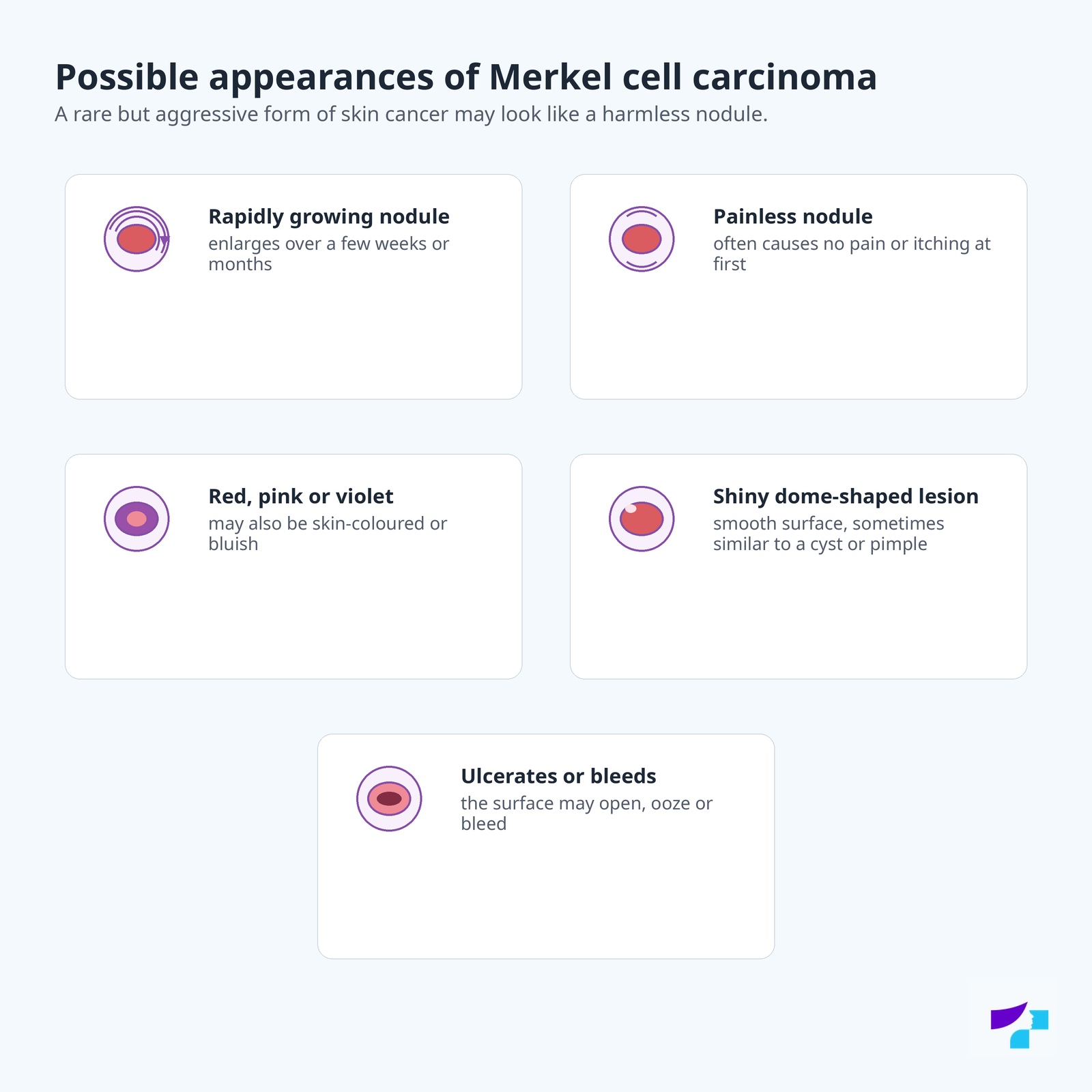
Typical signs:
- a rapidly growing nodule;
- a painless nodule;
- a red, pink, violet or bluish lesion;
- a skin-coloured shiny nodule;
- a smooth or dome-shaped raised skin lesion;
- a nodule resembling a cyst, pimple or boil;
- a nodule that ulcerates, oozes or bleeds;
- a lesion on the face, scalp, neck, ear, hands or other sun-exposed areas.
In the early stage, Merkel cell carcinoma can look very harmless. It may not be dark, may not hurt and may not itch. However, rapid growth is an important warning sign.
Can Merkel cell carcinoma look like a pimple or cyst?
Yes. Merkel cell carcinoma can look like an ordinary pimple, cyst, boil or benign skin lump. This is exactly why it may be underestimated.
Unlike an ordinary pimple or inflammatory lump, a suspicious lesion is one that does not go away, continues to grow, becomes larger over a few weeks or months, ulcerates, bleeds or appears in a person at increased risk — an older patient, a person with fair skin, chronic sun damage or a weakened immune system.
If a lesion that initially seems like a pimple, cyst or boil does not go away and continues to grow over a few weeks or months, it should not be repeatedly treated as inflammation without a diagnosis. In this situation, a dermatologist’s examination and often a biopsy are needed.
Does Merkel cell carcinoma hurt or itch?
Merkel cell carcinoma often does not hurt or itch at first. This is one reason why a person may delay seeing a doctor. However, a painless skin nodule is not automatically safe. If the nodule grows quickly, changes, ulcerates or bleeds, it should be assessed.
Pain, itching, bleeding or ulceration may appear later, but their absence does not rule out a tumour.
Can a rapidly growing skin nodule be dangerous?
Yes. A rapidly growing skin nodule should always be taken seriously, especially if it grows over a few weeks or months. It may be inflammation or a benign lesion, but it may also be an aggressive skin cancer, including Merkel cell carcinoma.
If the nodule is red, pink, violet, skin-coloured, shiny, painless and growing rapidly, a dermatologist’s appointment should be arranged as soon as possible.
Three to five key signs that may suggest Merkel cell carcinoma
Rapidly growing skin nodule
The most important sign is a nodule that enlarges over a few weeks or months.
Painless lesion
Merkel cell carcinoma often does not hurt at first, so pain is not a required warning sign.
Red, pink, violet or skin-coloured appearance
The tumour is not always dark. It can also be skin-coloured and look relatively harmless.
Shiny or dome-shaped surface
The lesion may be smooth, shiny, round or dome-shaped.
Ulceration or bleeding
If the surface of the nodule opens, oozes, ulcerates or bleeds, it should be examined without delay.
The AEIOU principle for recognising Merkel cell carcinoma
The AEIOU principle helps remember features that are often seen in Merkel cell carcinoma. It does not replace a doctor’s examination, but it can help the patient understand when a nodule should be shown to a dermatologist.
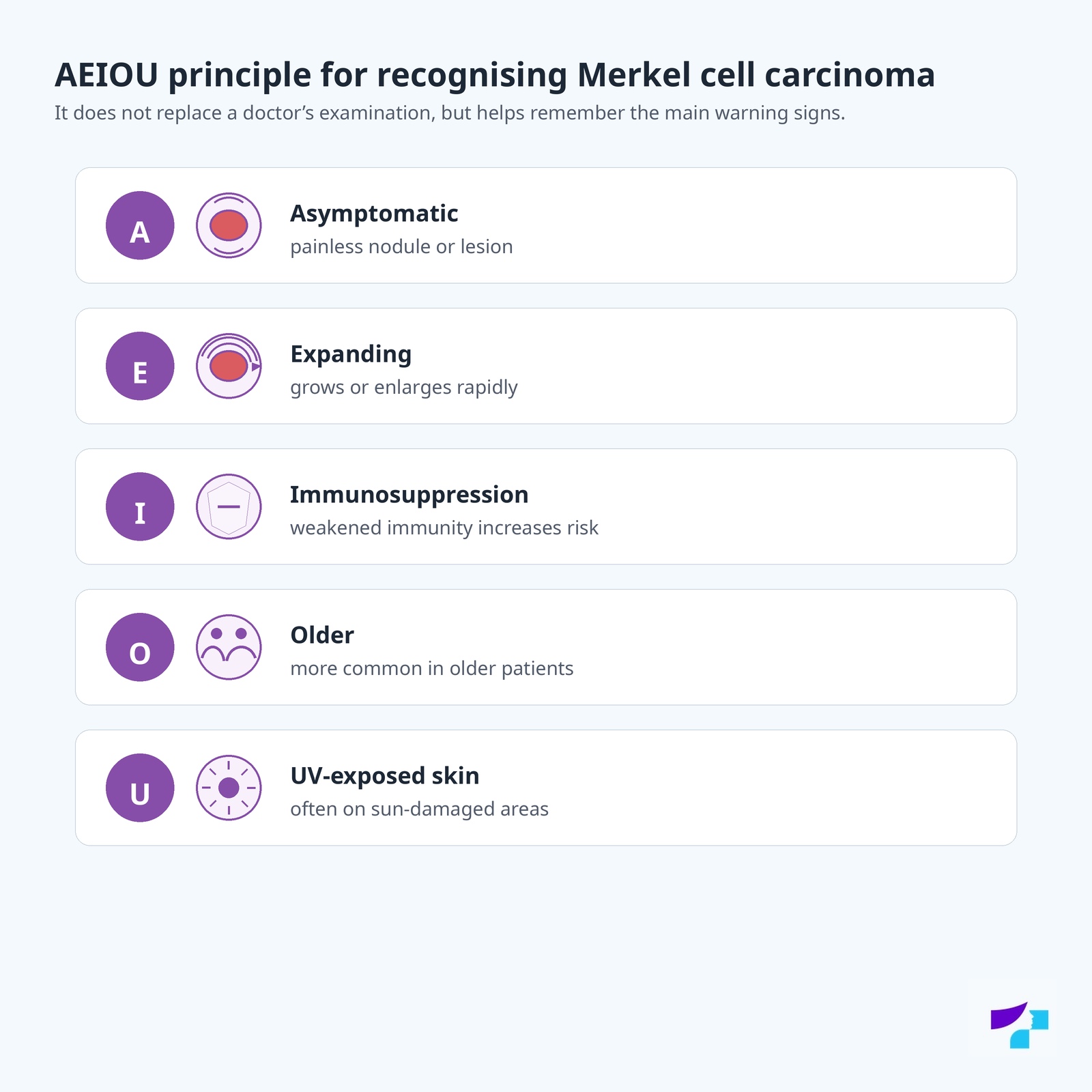
A — asymptomatic or painless
The tumour often does not hurt at first and does not cause pronounced sensations.
E — expanding or rapidly growing
The nodule enlarges over a few weeks or months.
I — immunosuppression
The risk is higher in people with weakened immunity, for example after organ transplantation, with HIV infection or during certain immunosuppressive therapies.
O — older patient
Merkel cell carcinoma occurs more often in older people.
U — ultraviolet-exposed skin
The tumour often occurs on sun-damaged areas, such as the face, scalp, neck, ears or hands.
If a skin nodule has several AEIOU features, it should not be ignored — a dermatologist’s examination is needed.
Where does Merkel cell carcinoma most often occur?
Merkel cell carcinoma most often appears on sun-exposed areas. Typical sites include:
- face;
- scalp;
- neck;
- ears;
- hands;
- forearms;
- legs;
- trunk.
Although typical lesions occur on the face, scalp and neck, Merkel cell carcinoma can also develop on the arms, legs, trunk and areas that are not obviously sun-exposed. Therefore, not only the location but also the behaviour of the lesion should be assessed — especially rapid growth.
Can Merkel cell carcinoma be a deep lump under the skin?
Yes. Sometimes Merkel cell carcinoma can be felt as a deeper subcutaneous lump rather than only a superficial skin lesion. In this case, the skin surface may initially show little change, but a rapidly growing, firm lump can be felt beneath it.
Such a lump should not be considered an ordinary cyst for a long time without medical assessment, especially if it is growing.
Why does Merkel cell carcinoma develop?
Merkel cell carcinoma develops when changes accumulate in cells that allow them to grow uncontrollably. The exact cause may differ from patient to patient. The main known associated factors are ultraviolet radiation, weakened immunity, age, fair skin and Merkel cell polyomavirus.
In some cases, tumour development is more strongly linked to the virus, while in other cases it is linked to UV-induced DNA damage. Medicine continues to study how these mechanisms interact.
How Merkel cell carcinoma develops
Merkel cell carcinoma is not an infection, so it does not have a “mechanism of infection” like classic contagious diseases. It is more accurate to speak about a mechanism of tumour development.
In simplified terms, it may happen as follows:
- UV radiation damages the DNA of skin cells.
- In some cases, Merkel cell polyomavirus is involved in tumour cells.
- The immune system normally helps control damaged or atypical cells.
- If this control is insufficient, cells can start growing uncontrollably.
- A skin nodule forms — Merkel cell carcinoma.
- The tumour can spread to lymph nodes or other parts of the body.
Is Merkel cell polyomavirus contagious?
The virus itself can spread between people, but Merkel cell carcinoma is not contagious. A person cannot “catch” Merkel cell carcinoma from another person. Also, the presence of Merkel cell polyomavirus in the body does not mean that a tumour will definitely develop.
This distinction is important so that patients do not misunderstand the disease as a classic infection.
Who has a higher risk of developing Merkel cell carcinoma?
Risk is higher in people who have:
- older age;
- fair skin;
- long-term sun exposure during life;
- sun-damaged skin;
- use of tanning beds;
- weakened immunity;
- organ transplantation and immunosuppressive therapy;
- HIV infection or other immunodeficiency states;
- certain haematological or immune-system-related diseases;
- a previous skin cancer;
- Merkel cell polyomavirus involvement in tumour cells.
Merkel cell carcinoma can also occur in people without obvious risk factors, so a rapidly growing nodule should be assessed regardless of the patient’s age or skin type.
Can Merkel cell carcinoma occur in a young person or a child?
It can, but it is very rare in children and young people. At a younger age, it is more relevant to consider it in the presence of specific risk factors, such as significant immunosuppression or other serious immune-system disorders. However, at any age, a rapidly growing, unusual skin nodule should be shown to a doctor.
Can Merkel cell carcinoma be inherited?
Most cases are not directly inherited. However, a person can inherit skin type, sensitivity to UV radiation or immune-system characteristics that indirectly affect risk. If there are many skin cancers in the family or if the person has had several skin tumours, dermatological follow-up is especially important.
When should you see a dermatologist?
You should see a dermatologist as soon as possible if there is:
- a new skin nodule that is growing rapidly;
- a painless red, pink, violet or skin-coloured nodule;
- a shiny or dome-shaped lesion;
- a nodule that resembles a cyst but does not go away;
- a nodule that ulcerates, oozes or bleeds;
- a lesion on the face, scalp, neck, ear or hands;
- a skin nodule in a person with weakened immunity;
- a skin nodule together with enlarged lymph nodes.
It is not advisable to wait for months to see whether the nodule “goes away by itself”. In Merkel cell carcinoma, early biopsy can be decisive.
How is Merkel cell carcinoma diagnosed?
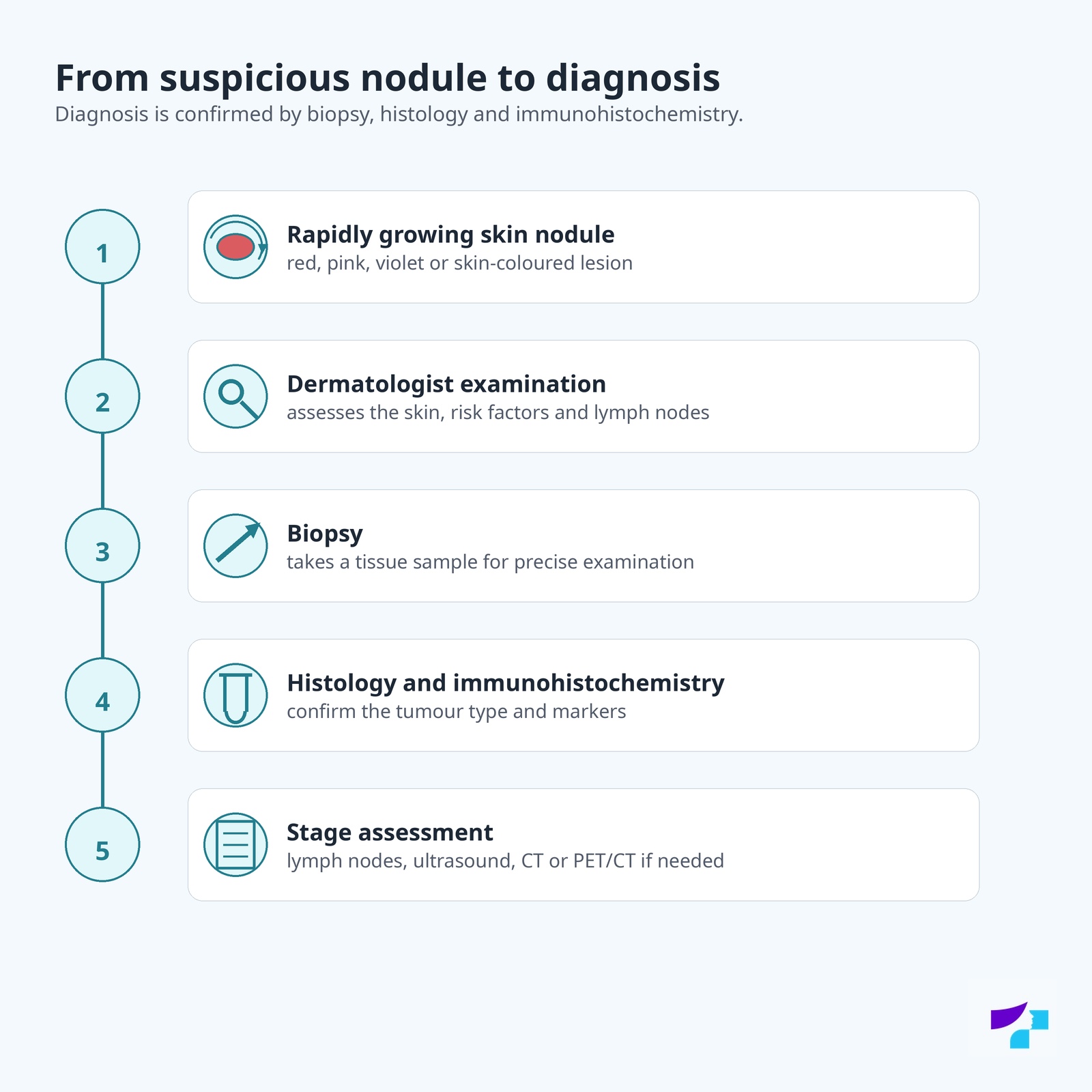
Diagnosis starts with a doctor’s examination. The dermatologist assesses the lesion’s appearance, growth rate, colour, surface, location, patient risk factors and nearby lymph nodes.
Dermatoscopy can help assess a skin lesion, but it cannot reliably confirm Merkel cell carcinoma. A final diagnosis requires a biopsy — taking a tissue sample and examining it in the laboratory.
In Merkel cell carcinoma, it is not enough simply to remove the visible nodule. After diagnosis, it is necessary to assess whether the tumour has spread to lymph nodes or other parts of the body, as this significantly changes the treatment plan.
For related topics, see the articles Dermatoscopy and Skin lesion check.
When is a biopsy needed?
A biopsy is needed if a skin nodule is suspicious in appearance or behaviour. In Merkel cell carcinoma, rapidly growing, painless, red, pink, violet or skin-coloured nodules are especially suspicious.
A biopsy helps to:
- confirm or rule out cancer;
- identify the tumour type;
- distinguish Merkel cell carcinoma from a cyst, basal cell carcinoma, melanoma, lymphoma, metastasis or another tumour;
- plan further treatment and staging.
What are histology and immunohistochemistry?
Histology is the examination of tissue under a microscope. It allows the pathologist to see the structure of tumour cells.
Immunohistochemistry is a special laboratory method in which certain markers are searched for in tumour cells. These markers help confirm that the tumour is specifically Merkel cell carcinoma, not another skin tumour or a metastasis from another organ.
The key point for the patient is this: the diagnosis of Merkel cell carcinoma is not just a “visual diagnosis”. It is confirmed by tissue examination.
Can Merkel cell carcinoma be diagnosed from a photo alone?
No. A photograph may help show that a nodule looks suspicious, but it cannot establish the diagnosis reliably. Merkel cell carcinoma can look like a cyst, pimple, basal cell carcinoma, melanoma, squamous cell carcinoma, lymphoma or a skin metastasis from another tumour.
Therefore, a suspicious nodule should be assessed in person and, if necessary, biopsied.
What can Merkel cell carcinoma be confused with?
Merkel cell carcinoma can be confused with:
- a cyst;
- a pimple;
- a boil;
- a benign skin lump;
- basal cell carcinoma;
- squamous cell carcinoma;
- amelanotic melanoma;
- lymphoma;
- a skin metastasis from another tumour;
- an inflammatory skin lesion.
If a lesion grows quickly or does not go away, it should not be treated for a long time as inflammation without a diagnosis.
When should lymph nodes be examined?
Lymph nodes should be assessed at the beginning of diagnosis because Merkel cell carcinoma can spread to nearby lymph nodes. The doctor may examine lymph nodes by touch, but if needed may recommend ultrasound, sentinel lymph node biopsy, computed tomography, PET/CT or other tests.
Lymph node assessment is important even if the patient does not feel any swelling, because microscopic spread may not be obvious at first.
What is a sentinel lymph node biopsy?
The sentinel node is the first lymph node or group of lymph nodes to which lymph is most likely to drain from the tumour area. Sentinel lymph node biopsy helps determine whether tumour cells have already spread microscopically to lymph nodes.
In Merkel cell carcinoma, this information can be very important for staging and treatment planning. The procedure will not be suitable for every patient, and the decision is made by the treating team.
When are ultrasound, CT or PET/CT needed?
Additional tests are used to determine whether the disease is localised only to the skin or has spread to lymph nodes or other organs. The choice of tests depends on tumour size, location, biopsy results, lymph node status and the patient’s general health.
- Ultrasound can help assess lymph nodes.
- Computed tomography can help assess the chest, abdomen, pelvis or other areas.
- PET/CT can help detect active tumour sites in the body.
These tests are ordered by a doctor, not by the patient independently.
Merkel cell carcinoma stages and spread
Stage describes how far the disease has spread. In simplified terms, three main situations can be distinguished.
Localised disease
The tumour is in the skin and no spread to lymph nodes or distant organs has been detected.
Regional disease
The tumour has spread to nearby lymph nodes or surrounding tissues.
Metastatic disease
The tumour has spread to distant organs or more distant lymph nodes.
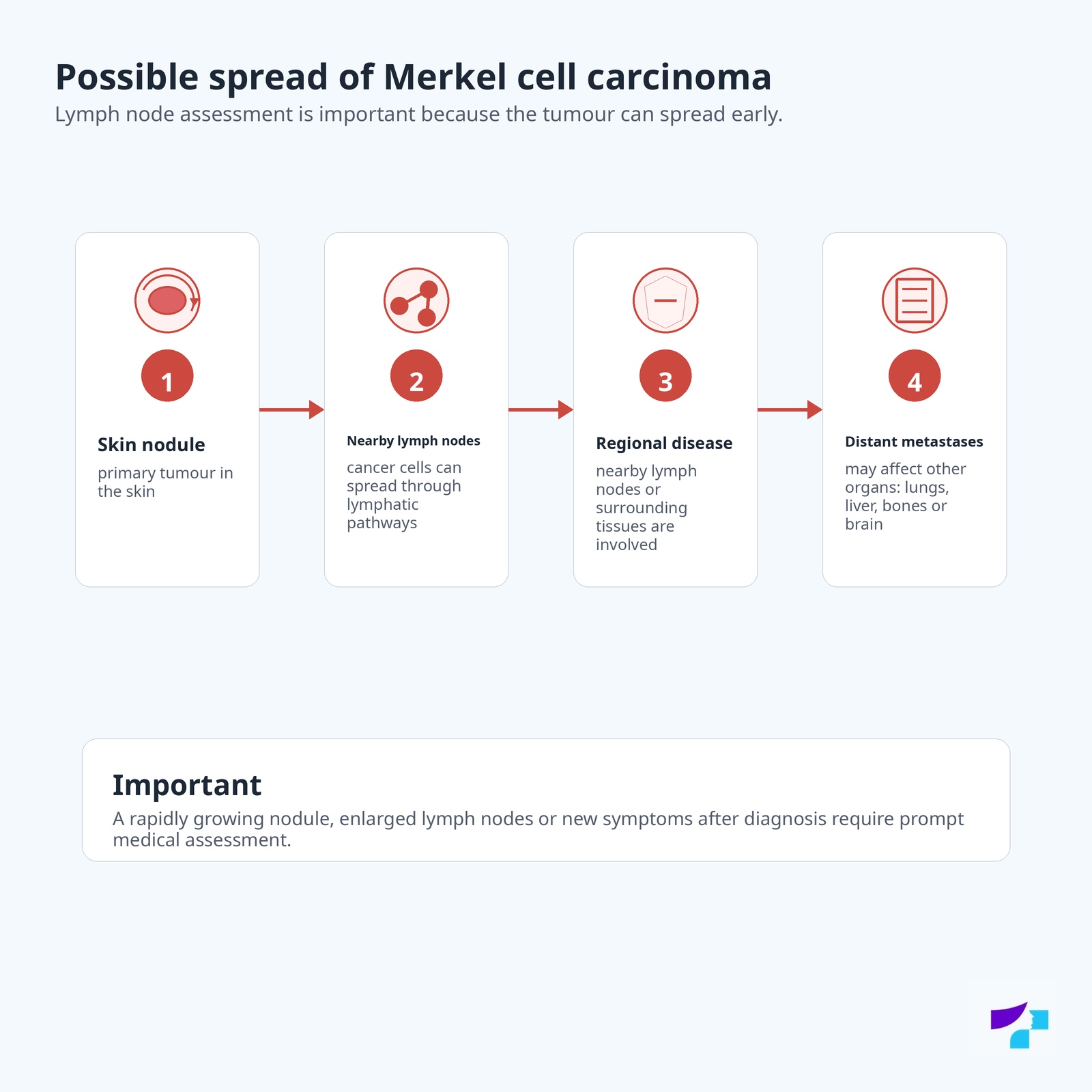
Stage is important because it affects the treatment plan, follow-up frequency and prognosis.
Can Merkel cell carcinoma metastasise?
Yes. Merkel cell carcinoma can metastasise. It often spreads to nearby lymph nodes, but in advanced cases it can also affect other organs, such as the lungs, liver, bones or brain.
This is why lymph node assessment and staging are an essential part of treatment.
How quickly can Merkel cell carcinoma spread?
Merkel cell carcinoma can grow and spread relatively quickly. The exact speed differs from patient to patient. However, if a nodule becomes larger over a few weeks or months, this is enough reason not to wait and to see a dermatologist.
How is Merkel cell carcinoma treated?
Treatment of Merkel cell carcinoma depends on tumour stage, location, lymph node involvement, the patient’s age, immune-system status and general health. Treatment should usually be planned by a multidisciplinary team, involving a dermatologist, surgeon, oncologist, radiation therapist, pathologist and other specialists.
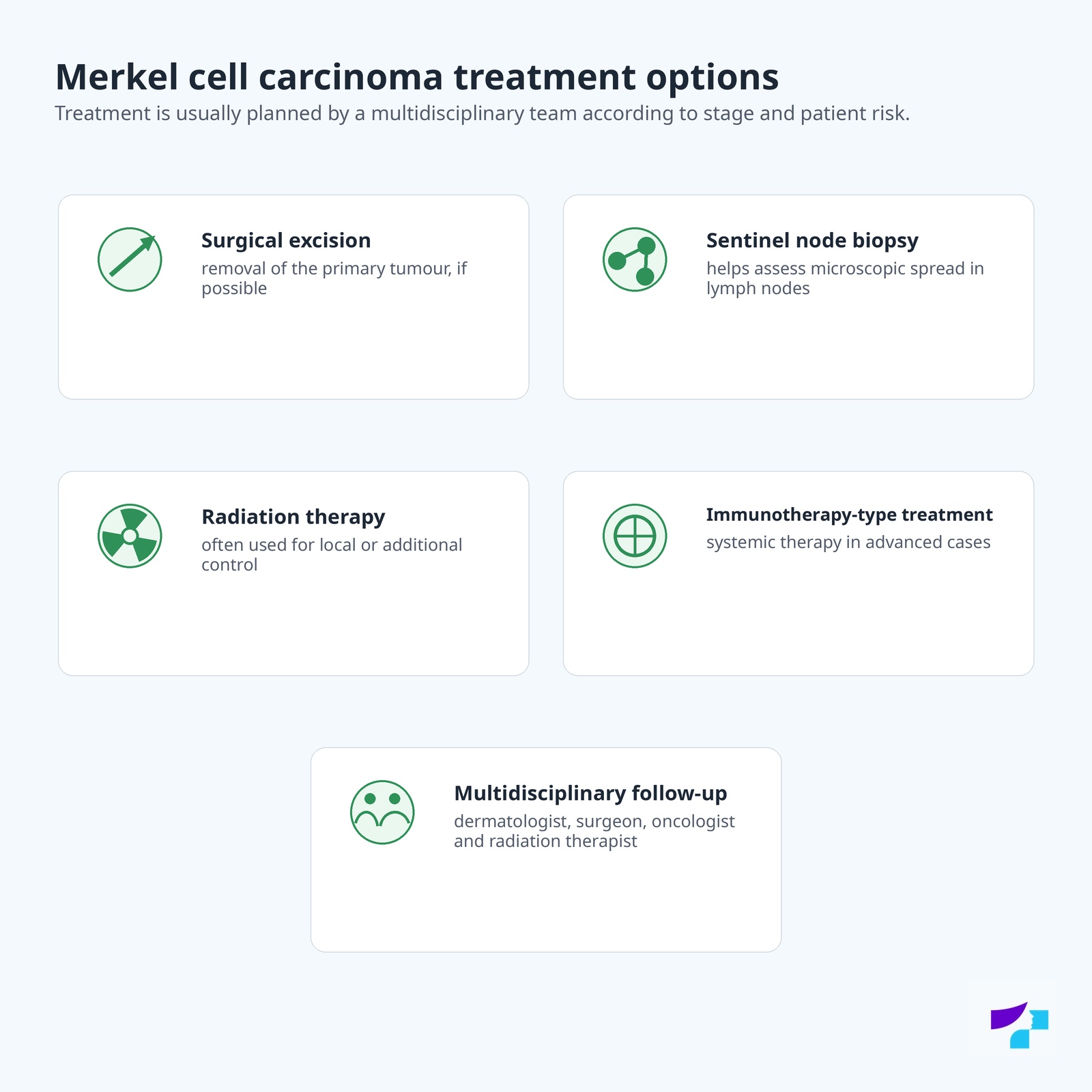
Main treatment options include:
- surgical excision of the tumour;
- sentinel lymph node biopsy or lymph node assessment;
- radiation therapy;
- systemic therapy in advanced or metastatic cases;
- immunotherapy-type treatment in certain situations;
- follow-up after treatment for early detection of recurrence.
This article does not list specific prescription medicine names. Specific therapy is determined by the oncologist or treating medical team.
Can Merkel cell carcinoma be cured?
Early-detected and fully treated Merkel cell carcinoma can be cured in some cases. However, the disease is aggressive, and even after treatment there is a risk of recurrence. Prognosis is better if the tumour is detected early, has not spread to lymph nodes and treatment is started promptly.
If the disease has already spread, treatment becomes more complex and systemic therapy is more often needed.
Is surgery always needed for treatment?
In localised disease, surgical excision of the tumour is often one of the main treatment methods. The aim of surgery is to remove the tumour completely with safe margins, if this is anatomically and medically possible.
However, treatment is not always limited to surgery alone. Lymph nodes often need to be assessed, radiation therapy considered and follow-up planned. If the disease is widespread, systemic therapy may play an important role.
When is radiation therapy used?
Radiation therapy may be used after surgery to reduce the risk of local recurrence, or as part of treatment when the tumour is in a complex location, lymph nodes are involved or surgery is not sufficient. Radiation therapy may also be used for symptom control in advanced disease.
The decision about radiation therapy is made by the treating team.
When is immunotherapy used?
Immunotherapy-type treatment may be used in advanced, recurrent or metastatic Merkel cell carcinoma. Immunotherapy helps the immune system recognise and control tumour cells. It is not needed for every patient, and its suitability is determined by the oncologist.
The patient should not interpret on their own which therapy would be “right” for them. The decision is based on stage, tumour spread, health status and treatment aim.
When is chemotherapy used?
Chemotherapy was historically used to treat advanced disease, but today in many cases immunotherapy-type systemic treatment may be preferred if it is suitable. Chemotherapy may still be an option in certain situations, for example if other therapies are not appropriate or the disease progresses.
The specific type of therapy is determined by the oncologist.
Can Merkel cell carcinoma be treated with cream, laser or at home?
No. Merkel cell carcinoma must not be treated at home, with creams, laser without a diagnosis, folk remedies or cosmetic procedures. It is an aggressive form of skin cancer that requires biopsy, staging and specialist-led treatment.
A suspicious nodule should not be burnt, squeezed, cut, massaged, pierced or “cleaned out” like a cyst.
Why is a multidisciplinary team needed?
Merkel cell carcinoma can be a complex disease because the primary tumour, lymph nodes, possible spread, treatment extent and recurrence risk must all be assessed. Therefore, treatment is usually planned by several specialists.
The team may include:
- dermatologist;
- surgeon;
- oncologist;
- radiation therapist;
- pathologist;
- radiologist;
- nuclear medicine specialist;
- family doctor for follow-up and general health monitoring.
This approach helps choose the safest and most appropriate treatment.
Is regular follow-up needed after treatment?
Yes. Regular follow-up is needed after Merkel cell carcinoma treatment because there is a risk of recurrence and metastases. The follow-up plan is determined by the treating team. It may include skin checks, lymph node checks, imaging and other tests as needed.
The patient should monitor the treated area, the whole skin and nearby lymph nodes.
Is Merkel cell carcinoma dangerous?
Yes. Merkel cell carcinoma is dangerous because it can grow rapidly, spread to lymph nodes, metastasise and recur after treatment. Its rarity should not create a false sense of safety — because of its aggressiveness, a suspicious nodule must be examined quickly.
Is Merkel cell carcinoma more dangerous than melanoma?
Both tumours can be life-threatening. A simple comparison is not entirely correct because prognosis depends on stage, location, patient health, immune system and treatment. However, Merkel cell carcinoma is very aggressive and can spread early, so it should be taken just as seriously as other high-risk forms of skin cancer.
Can a person die from Merkel cell carcinoma?
Yes, a person can die from Merkel cell carcinoma, especially if the disease is detected late or has already spread. However, early diagnosis, proper staging and timely treatment can significantly improve outcomes.
What does the prognosis depend on?
Prognosis is influenced by:
- tumour size;
- tumour location;
- whether lymph nodes are involved;
- whether distant metastases are present;
- the patient’s immune-system status;
- age and general health;
- whether the tumour has been completely removed;
- whether radiation therapy or systemic therapy has been performed if needed;
- whether the disease recurs.
What happens if Merkel cell carcinoma is not treated?
Untreated Merkel cell carcinoma can continue to grow, ulcerate, bleed and spread to lymph nodes and other organs. The longer treatment is delayed, the greater the risk that the disease will become more complex and harder to treat.
Can Merkel cell carcinoma return after treatment?
Yes. Merkel cell carcinoma can return, or recur. Recurrence can appear at the treated site, in nearby lymph nodes or in other parts of the body. Regular follow-up after treatment is therefore essential.
Which Merkel cell carcinoma cases are high risk?
Higher-risk features may include:
- a large tumour;
- rapid growth;
- lymph node involvement;
- metastases;
- immunosuppression;
- recurrence after treatment;
- a tumour in the head and neck area;
- incomplete tumour removal;
- limitations related to the patient’s general health.
In high-risk cases, treatment and follow-up are usually more intensive.
How can the risk of Merkel cell carcinoma be reduced?
The risk of Merkel cell carcinoma cannot be reduced to zero, but some risk factors can be lowered and early detection can be improved.
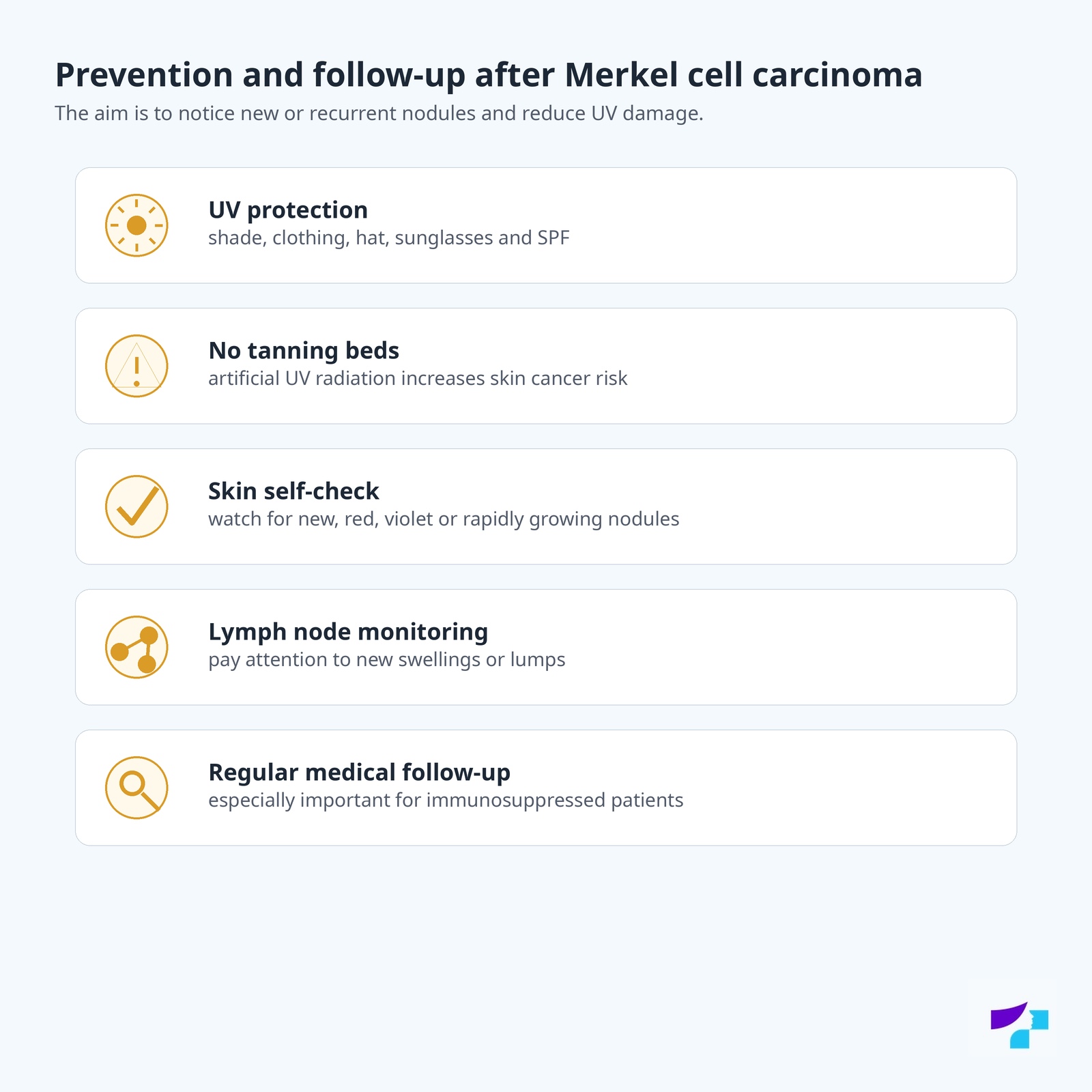
Key principles:
- avoid sunburn;
- do not use tanning beds;
- use broad-spectrum SPF;
- wear a hat, sunglasses and clothing that covers the skin;
- protect the face, ears, scalp, neck and hands especially carefully;
- check the skin regularly;
- react quickly to new or growing nodules;
- people with weakened immunity should have more regular dermatological checks;
- after treatment, follow the dermatologist’s and oncologist’s follow-up plan.
Does SPF help reduce risk?
SPF helps reduce UV-related skin damage, but it is not the only protective measure. The safest approach is to combine several layers of protection: shade, clothing, hat, sunglasses, SPF and avoiding tanning beds.
Can a person sunbathe after a Merkel cell carcinoma diagnosis?
Intentional sunbathing is not recommended. After diagnosis, the skin should be protected especially carefully. This does not mean that the person cannot go outside, but sunburn, tanning beds and prolonged intense UV exposure should be avoided.
How to perform a skin self-check at home?
During a skin self-check, it is important to look not only for changes in moles, but also for new or growing nodules.
Check:
- face;
- scalp;
- ears;
- neck;
- hands and forearms;
- legs;
- trunk;
- the treated area after a previous diagnosis;
- nearby lymph node areas, if the doctor has shown how to do this.
Pay special attention to nodules that grow, are red, pink, violet, shiny, painless, ulcerating or bleeding.
Should lymph nodes also be checked?
Yes, according to the doctor’s instructions, it may be important to pay attention to lymph nodes. Enlarged, hard, painless or new lumps in the neck, armpits, groin or other areas should be shown to a doctor. However, lymph node self-check does not replace medical follow-up and imaging if it has been prescribed.
What is well established in medicine today?
It is medically well supported that Merkel cell carcinoma is a rare, aggressive form of skin cancer with a tendency to spread to lymph nodes and recur. Well-established risk factors include age, UV radiation, fair skin and weakened immunity. Merkel cell polyomavirus is important in some cases.
Evidence-based diagnosis includes biopsy, histology, immunohistochemistry and staging. Important treatment elements include surgery, radiation therapy, lymph node assessment and systemic therapy in advanced cases.
What is still being discussed and studied in medicine?
Medicine continues to study how best to determine the risk of recurrence and metastases, how to use imaging optimally, how to monitor patients after treatment and how to choose the most appropriate systemic therapy in advanced cases.
Immunotherapy-type treatment is developing especially rapidly. Tumour virus status, immune-response indicators and other biomarkers are also being studied, as they may help tailor treatment more precisely to the individual patient in the future.
Experimental or commercially advertised immune-cell therapies should not be seen as a replacement for standard treatment. The patient should discuss any non-standard therapy with an oncologist, assessing evidence, safety and possible interactions with the main treatment.
References and authoritative sources
- US National Cancer Institute (NCI): Merkel Cell Carcinoma Treatment — Patient Version
- US National Cancer Institute (NCI): Merkel Cell Carcinoma Treatment — Health Professional Version
- American Cancer Society: Merkel Cell Skin Cancer
- American Cancer Society: Signs and Symptoms of Merkel Cell Carcinoma
- American Cancer Society: Risk Factors for Merkel Cell Carcinoma
- DermNet: Merkel Cell Carcinoma
- DermNet: Merkel Cell Carcinoma Pathology
- Mayo Clinic: Merkel Cell Carcinoma — Symptoms and Causes
- NCCN Guidelines for Patients: Merkel Cell Carcinoma
- NCCN Guidelines Version 2.2025 for Merkel Cell Carcinoma
- European Medicines Agency (EMA): Zynyz — Medicine Overview
- PubMed: Diagnosis and Treatment of Merkel Cell Carcinoma
- PubMed Central: Merkel Cell Carcinoma — Update on Diagnosis, Management and Future Perspectives
- PubMed Central: Histological, Immunohistological and Clinical Features of Merkel Cell Carcinoma
- StatPearls / NCBI Bookshelf: Merkel Cell Carcinoma of the Skin
- Centre for Disease Prevention and Control of Latvia (SPKC): Necepies! Izvēlies dzīvot!
- Centre for Disease Prevention and Control of Latvia (SPKC): Safe Sun Exposure
Disclaimer
The information in this article is intended for informational and educational purposes and does not replace medical consultation, diagnosis or treatment. Self-assessment of skin lesions can be wrong, because Merkel cell carcinoma can resemble a pimple, cyst, boil, basal cell carcinoma, melanoma, squamous cell carcinoma, lymphoma or another skin or subcutaneous lesion. If you notice a new, rapidly growing, red, pink, violet, skin-coloured, shiny, painless, ulcerating, bleeding or otherwise suspicious skin nodule, contact a dermatologist, dermato-oncologist, surgeon or oncologist without delay. Do not try to squeeze, cut, burn, pierce, massage, remove with laser without diagnosis or treat such nodules with self-selected remedies. If the skin nodule enlarges rapidly, bleeds noticeably, ulcerates, enlarged lymph nodes appear, severe pain, signs of infection or general symptoms occur, urgent medical assessment is needed.
