Melanoma is a malignant skin tumour that develops from melanocytes — pigment cells that produce melanin and give colour to the skin, hair and moles. Melanoma is one type of skin cancer, but it is not the same as all skin cancers in general. The group of skin cancers also includes basal cell carcinoma, squamous cell carcinoma and rarer skin tumours.
Melanoma is less common than basal cell carcinoma and squamous cell carcinoma, but it is particularly important because it can spread to the lymph nodes and other organs if it is not detected early. This is why early recognition, examination by a dermatologist, dermoscopy and histological examination are crucial in melanoma.
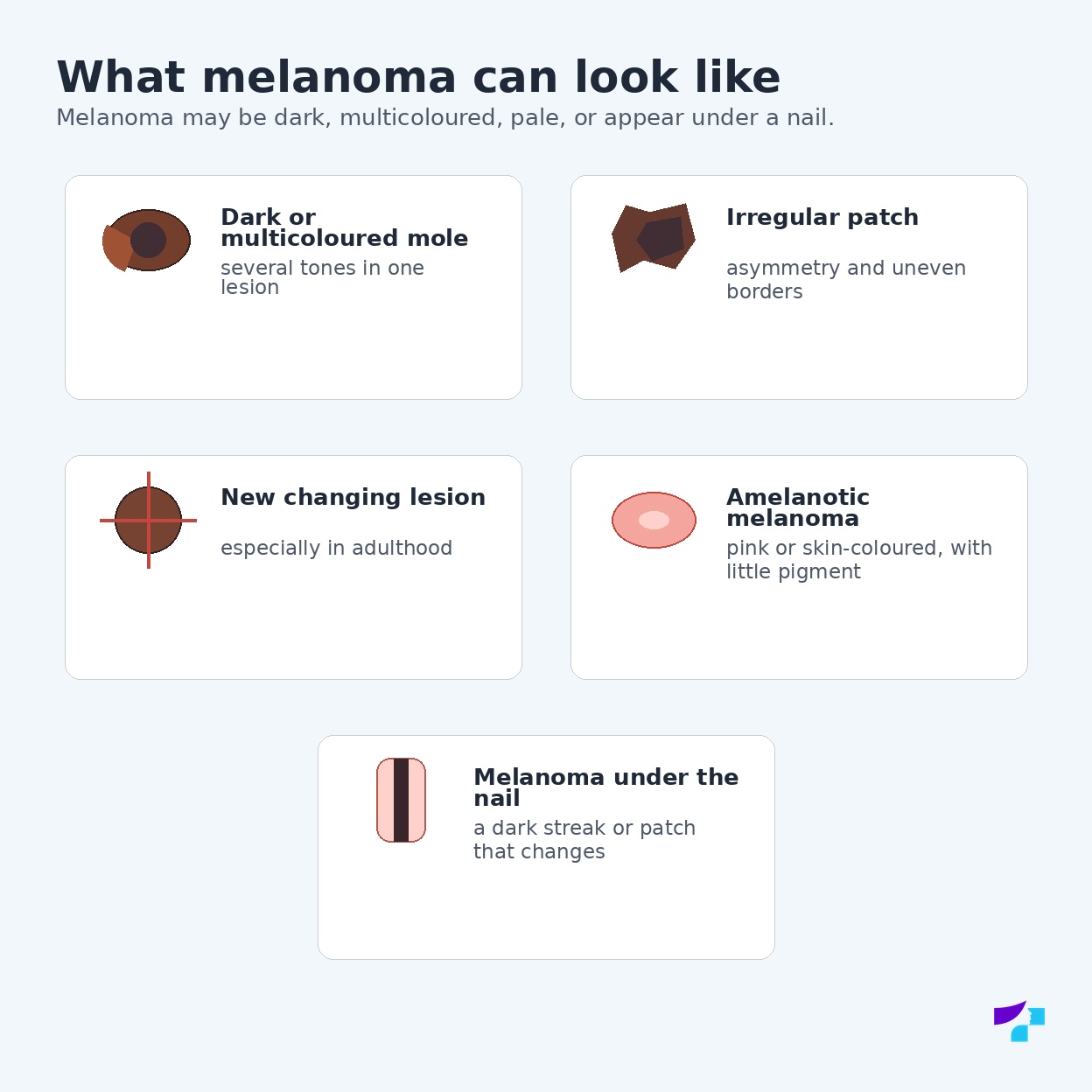
Melanoma does not always look like a black mole. It may be dark, multicoloured, brown, black, greyish, red, pink or even pale. It may be flat or raised above the skin, develop from an existing mole or appear as a completely new lesion on previously normal skin. Melanoma can also develop under a nail, on the foot, palm, scalp, mucous membranes or in the eye.
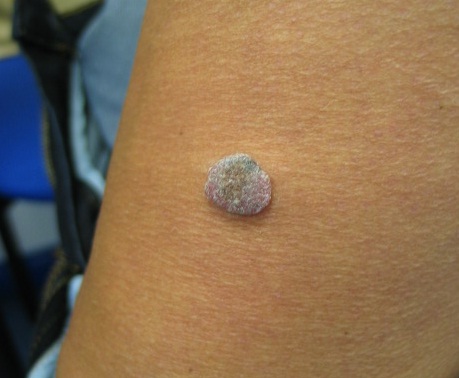
At first, melanoma may look very small and cause no symptoms. The most dangerous warning sign is often not pain, but change over time — growth of the lesion, a change in colour, irregular borders, bleeding, itching or a difference from other moles.
Melanoma is not an infection and is not contagious. It cannot be passed from one person to another. It develops when DNA damage accumulates in melanocytes, the cells lose normal growth control and begin to multiply uncontrollably. Important risk factors include ultraviolet radiation from the sun and tanning beds, sunburn, fair skin, many moles, atypical moles, a family history of melanoma, weakened immunity, and a previous melanoma or another type of skin cancer.
What is melanoma?
Melanoma is a skin cancer that develops from melanocytes. Melanocytes are cells that produce melanin — the pigment that determines the colour of the skin and moles. If genetic damage accumulates in melanocytes and the cells begin to divide uncontrollably, melanoma can develop.
Melanoma is a malignant tumour. This means that tumour cells can grow into surrounding tissues and, in certain cases, spread beyond the original site. Spread to the lymph nodes or other organs is called metastasis. The risk of metastasis is the main reason why melanoma is considered one of the most dangerous types of skin cancer.
Melanoma is not non-melanoma skin cancer. The group of non-melanoma skin cancers usually includes basal cell carcinoma and squamous cell carcinoma. Melanoma is a separate type of tumour with a different origin, diagnostic approach, staging and treatment strategy.
For a broader overview of different types of skin cancer, see the article “Skin cancer”.
Why is melanoma dangerous?
Melanoma is dangerous because it can spread in the body. Melanoma detected early is often treatable with surgical excision, but melanoma diagnosed at a later stage may spread to the lymph nodes, lungs, liver, brain, bones or other organs. The deeper melanoma grows into the skin and the more widely it has spread, the more complex the treatment becomes and the more serious the prognosis.
It is important to understand that melanoma does not always hurt, itch or bleed at first. Often the first sign is a visual change: a mole changes in size, shape, colour or borders, a new lesion appears, or one lesion looks different from the person’s other moles.
Early melanoma may be very thin and visually subtle. This is why the main principle for the patient is simple: if a lesion changes, looks different or raises concern, it should be shown to a dermatologist rather than observed for a long time at home.
Is melanoma the same as basal cell carcinoma or squamous cell carcinoma?
No. Melanoma, basal cell carcinoma and squamous cell carcinoma are different types of skin cancer.
Basal cell carcinoma develops from basal skin cells. It usually grows slowly and rarely spreads in the body, but it can locally damage the skin and surrounding tissues. Squamous cell carcinoma develops from squamous skin cells and can be more aggressive than basal cell carcinoma, especially in certain locations or in people with weakened immunity. Melanoma develops from pigment cells, or melanocytes, and is particularly important because of the risk of metastasis.
Related topics are covered in the articles “Basal cell carcinoma” and “Squamous cell carcinoma”.
What does melanoma look like?
Melanoma can look very different from one person to another. It may be flat or raised, dark or multicoloured, pink or pale, with clear or indistinct borders. Sometimes it resembles an ordinary mole but differs because it changes over time.
Melanoma may appear as:
- a dark or multicoloured mole;
- an irregular brown, black, grey, pink or red patch;
- a new skin lesion in adulthood;
- enlargement of an existing mole;
- a lesion with irregular borders;
- a lesion with several colours;
- a lesion that bleeds, ulcerates, itches or becomes tender;
- a pale or pink melanoma without obvious pigment;
- a dark streak or patch under the nail;
- a lesion on the foot, palm, mucous membrane or another less visible area.
In its early stage, melanoma may be small and seem harmless. This is why the most important thing is to notice change, rather than waiting until the lesion becomes large, black or painful.
Is melanoma always dark?
No. Melanoma is often dark or multicoloured, but it is not always black. Some melanomas may be pink, red, skin-coloured or pale. This is called amelanotic melanoma — melanoma with little pigment or without obvious pigment.
Amelanotic melanoma can be especially difficult to recognise because it may resemble a spot, inflammation, a scar, a vascular lesion or a benign skin change. Therefore, a suspicious lesion should be assessed according to change over time, growth, bleeding, tenderness and how different it looks from other lesions, not only according to colour.
Can melanoma hurt, itch or bleed?
Melanoma may not hurt and may cause no symptoms at first. However, it may also itch, tingle, become tender, hurt, bleed or form a crust. Itching or bleeding of a mole does not by itself mean that it is definitely melanoma, but it is a sign that should not be ignored, especially if the size, shape, colour or borders of the lesion are also changing.
If a mole bleeds without a clear injury, repeatedly forms a crust, grows rapidly or becomes painful, it should be examined by a dermatologist.
Three to five key signs that may indicate melanoma
Melanoma is most often noticed not because of one isolated sign, but because of a combination of changes. The most practical warning signs for patients are the following.
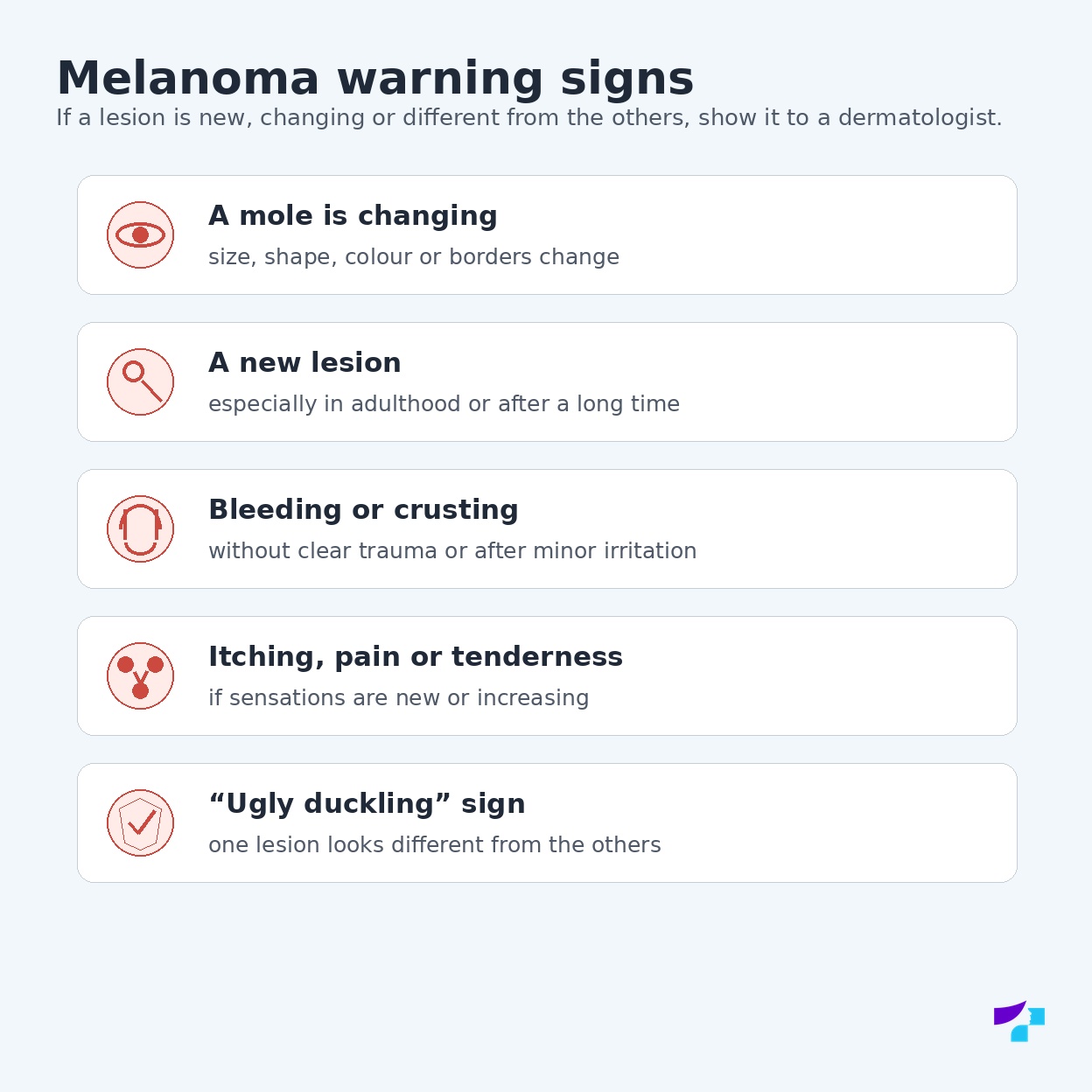
A mole is changing
Changes in size, shape, colour, borders, surface or sensation are among the most important warning signs of melanoma.
A new lesion appears in adulthood
If an adult develops a new pigmented or otherwise unusual skin lesion, especially if it grows or changes, it should be shown to a dermatologist.
The lesion is asymmetrical or has irregular borders
Melanoma often does not look like a symmetrical, even mole. One half may differ from the other, and the borders may be jagged, blurred or uneven.
The lesion has several colours
Brown, black, grey, red, pink, white or bluish colour within one lesion may be a suspicious sign.
The “ugly duckling” sign
If one mole or patch looks clearly different from the person’s other skin lesions, it should be assessed by a doctor.
Why should a new lesion in adulthood be taken seriously?
In childhood and adolescence, new moles may appear more often because the skin and body are still developing. During pregnancy, moles may also sometimes become more noticeable because of hormonal changes. However, in adulthood, a new pigmented or unusual skin lesion should be treated with caution, especially if it grows, changes, becomes multicoloured, bleeds or looks different from the others.
This does not mean that every new lesion in adulthood is melanoma. Many skin lesions are benign. However, melanoma can often appear as a new lesion, not necessarily as a change in an existing mole. This is why the safest approach is examination by a dermatologist and, if necessary, dermoscopy.
The ABCDE rule in melanoma detection
The ABCDE rule is a simple way to notice moles or skin lesions that may be suspicious. It does not replace examination by a dermatologist, but it helps patients understand when they should not wait.
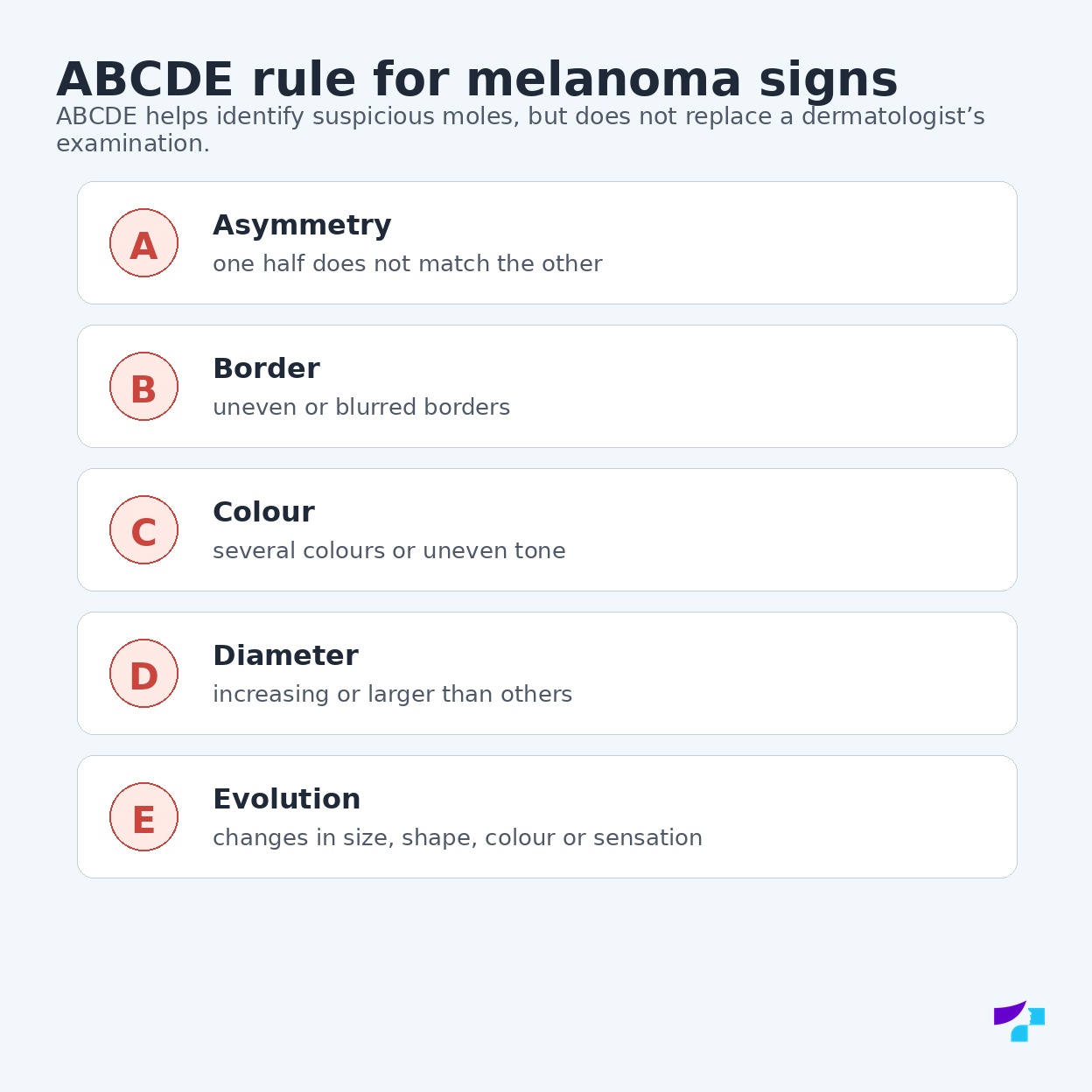
A — asymmetry
One half of the lesion does not look like the other. An ordinary mole is often fairly symmetrical, whereas melanoma may have an irregular shape.
B — borders
The borders are uneven, jagged, blurred or irregular. If the edges of the lesion are not clear or become increasingly irregular, this is a warning sign.
C — colour
The lesion has several colours or an uneven tone. Brown, black, grey, red, pink, white or bluish areas within one lesion may be suspicious.
D — diameter
A large mole is not necessarily melanoma in itself, but a lesion that is increasing in size or is larger than the person’s other moles should be assessed. What matters most is not only the absolute size, but growth over time.
E — evolution, or change over time
This is one of the most important signs. If a lesion changes in size, shape, colour or surface, begins to bleed, itch, hurt or otherwise behaves differently than before, it should be examined by a dermatologist.
What is the “ugly duckling” sign?
The “ugly duckling” sign means that one skin lesion looks different from the others. Many people have their own “pattern” of moles — similar colour, shape and size. If one mole differs clearly from this pattern, it should be considered suspicious until it has been assessed by a dermatologist.
This principle is particularly useful for people with many moles, because not all moles can be easily compared with an ideal description of a “normal mole”. What matters is noticing the lesion that is different on that person’s skin.
Related topics are covered in the articles “Mole examination” and “Dermoscopy”.
How to tell an ordinary mole from melanoma?
An ordinary mole is usually stable — it does not change for a long time, has a fairly even colour, clear borders and a symmetrical shape. Melanoma is more likely to change over time, become asymmetrical, develop several colours, have irregular borders, enlarge, bleed, itch or look different from the person’s other moles.
However, it is not always possible to reliably distinguish an ordinary mole from melanoma on your own. Some melanomas look calm at the beginning, while some benign lesions may look suspicious. Therefore, the main principle is this: if a mole or skin lesion changes, it should be shown to a dermatologist.
Are all dark or large moles dangerous?
No. Not all dark moles are melanoma, and not all large moles are dangerous. Many moles are benign and may be dark or larger than others. However, a mole that becomes darker, changes colour, enlarges, develops irregular borders or begins to bleed should be assessed.
It is important to compare the lesion with its previous appearance and with the person’s other moles.
What can melanoma be confused with?
Melanoma can be difficult to distinguish from other skin lesions, especially at the beginning. It may resemble both a benign mole and other skin tumours or inflammatory skin changes.
Melanoma can be confused with:
- a benign mole;
- an atypical mole;
- seborrhoeic keratosis, or a benign “age wart”;
- pigmented basal cell carcinoma;
- squamous cell carcinoma;
- actinic keratosis;
- dermatofibroma;
- a vascular lesion;
- bleeding under the nail after trauma;
- an inflamed or injured skin lesion.
This is why a suspicious lesion should not be assessed only by comparing it with photographs on the internet. Sometimes even an experienced doctor can make the final diagnosis only after histological examination, when a tissue sample is examined under a microscope.
See the related topic in the article “Skin lesion examination”.
Where can melanoma develop?
Melanoma can develop anywhere on the skin. It is more often noticed on areas that are visible or have received UV exposure, but it can also develop in places where the sun rarely reaches.
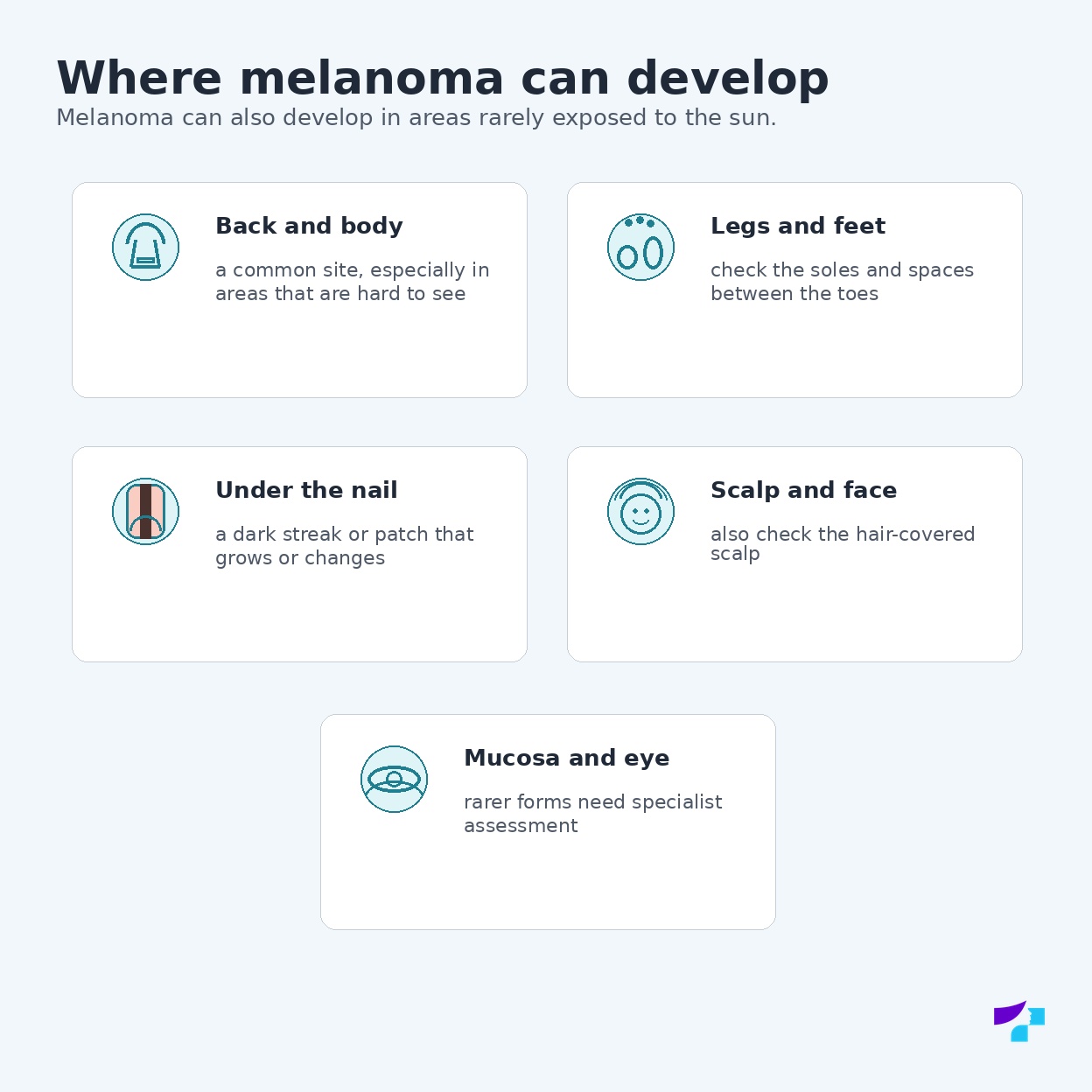
Melanoma can occur:
- on the back;
- on the chest or abdomen;
- on the leg or lower leg;
- on the foot or sole;
- on the palm;
- under the nail;
- on the face;
- on the scalp;
- on the ears or neck;
- on mucous membranes;
- in the genital area;
- in the eye.
Melanoma under the nail may look like a dark vertical streak, a patch or a pigment change in the nail area. Not every dark streak under the nail is melanoma, but if it enlarges, becomes wider, changes or there is no clear trauma, medical assessment is necessary.
Melanoma on the foot, palm, under the nail or on mucous membranes may be diagnosed later because people check these areas less often. Therefore, during skin self-examination, the soles, spaces between the toes, nails and hard-to-see areas should also be checked.
Why does melanoma develop?
Melanoma develops when DNA damage accumulates in melanocytes and the cells begin to grow uncontrollably. One of the most important causes of DNA damage is ultraviolet radiation. UV radiation can damage the genetic material of cells, and if the damage is not fully repaired, it can contribute to the development of malignant cells.
The risk of melanoma is also influenced by skin type, the number of moles, atypical moles, family history, the state of the immune system and previous skin cancer. Sometimes melanoma also develops in people without obvious risk factors.
Mechanism of melanoma development
Melanoma is not an infection. It is not contagious and does not pass from one person to another. Therefore, the more accurate term is the mechanism of melanoma development, not a mechanism of infection.
In simple terms, melanoma development can be described as follows:
- DNA damage accumulates in melanocytes;
- the body repairs some of the damage, but some remains;
- cells lose normal growth control;
- a malignant tumour of pigment cells develops;
- the tumour can grow deeper into the skin;
- later, it can spread to the lymph nodes or other organs.
This process is not the same for every patient. Some melanomas develop gradually, while others may change more rapidly. Therefore, if a lesion is suspicious and visible changes are already present, it is not advisable to “watch it for a long time”.
Timeline of melanoma development
The course of melanoma over time can vary greatly. It can develop from an existing mole or on previously normal skin.
Exposure to risk factors
UV radiation, sunburn, tanning beds, genetic predisposition or other factors may contribute to DNA damage in melanocytes.
Early cellular changes
Damage accumulates in the cells, but the person may notice nothing. The skin may look normal.
Early melanoma
A new patch or mole may appear and begin to change. At this stage, melanoma may be very thin and treatable with local surgical excision.
Invasive melanoma
The tumour grows deeper into the skin. At this stage, Breslow thickness — the depth of the tumour in millimetres — becomes particularly important.
Advanced melanoma
The tumour may spread to the lymph nodes or other organs. In such cases, an oncologist is usually involved in treatment and systemic therapy may be needed.
Who has a higher risk of developing melanoma?
Melanoma can develop in anyone, but the risk is higher in certain groups.
The risk is increased in people who have:
- fair skin, fair or red hair, light-coloured eyes;
- skin that burns easily and tans poorly;
- repeated or severe sunburn, especially in childhood and adolescence;
- used tanning beds;
- many moles;
- atypical moles;
- a first-degree relative with melanoma;
- a previous melanoma;
- a previous other type of skin cancer;
- weakened immunity;
- long-term or intense UV exposure;
- certain rare genetic predispositions.
Having many moles does not mean that a person will definitely develop melanoma, but it increases the need for regular skin checks. Atypical moles also increase the risk because they can be more difficult to distinguish from early melanoma.
Can melanoma be hereditary?
Most cases of melanoma are not directly hereditary. However, an increased risk can run in families — skin type, the number of moles, a tendency to develop atypical moles or certain genetic changes. If several close relatives have had melanoma or melanoma was diagnosed at a young age, individual risk should be discussed with a dermatologist or another specialist.
Can melanoma occur in a young person or a child?
Yes, melanoma can also occur in a young person. Melanoma is rare in children, but it is possible. If a child or teenager has a mole that changes rapidly, bleeds, hurts, becomes very different or a new unusual lesion appears, medical assessment is needed. In children, moles can change as they grow, but suspicious or rapid changes should not be ignored.
Can melanoma occur in people with darker skin?
Yes. Melanoma can also occur in people with darker skin, although the risk is usually lower than in people with fair skin. In people with darker skin, melanoma may be noticed later more often, because it can develop on the feet, palms, under the nails or in other less frequently checked areas. Therefore, everyone should watch for new and changing lesions regardless of skin colour.
Does the risk of another melanoma increase after one melanoma?
Yes. A person who has already had melanoma has an increased risk of developing another melanoma or another type of skin cancer in the future. Therefore, after melanoma treatment, structured follow-up, skin self-examination and regular medical check-ups are important.
When should you see a dermatologist?
You should see a dermatologist if:
- a mole changes in size, shape, colour or borders;
- a new pigmented or unusual lesion appears;
- a lesion bleeds, itches, hurts or forms a crust;
- a lesion looks different from the other moles;
- there is a dark streak under the nail that enlarges or changes;
- there is a lesion on the foot, palm, mucous membrane or another hard-to-check area;
- the person has many moles or atypical moles;
- there is a family history of melanoma;
- the person has previously had melanoma or another type of skin cancer.
A suspicious mole should not be removed, burned, treated with creams or treated with laser without a diagnosis.
How is melanoma diagnosed?
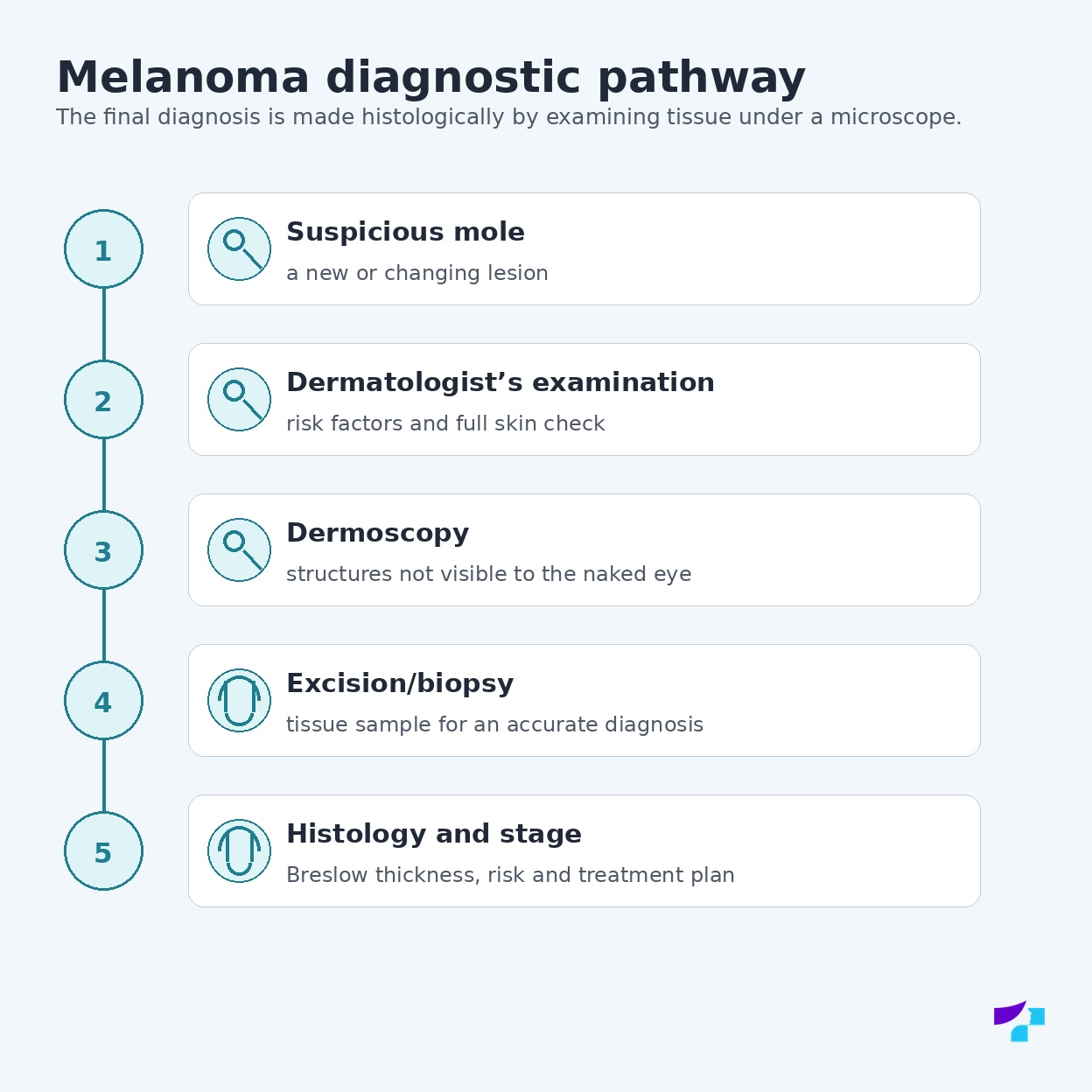
Melanoma diagnosis begins with an examination by a dermatologist. The doctor assesses the entire skin, the suspicious lesion, the pattern of moles, risk factors and the patient’s history of changes over time. Dermoscopy is often used.
Dermoscopy is the examination of a skin lesion with a special optical device — a dermatoscope. It allows the doctor to see structures that are not visible to the naked eye. Dermoscopy helps the doctor decide whether the lesion is benign, should be monitored or should be removed for histological examination.
Digital dermoscopy and skin mapping can be useful for people with many moles or an increased risk of melanoma. They allow lesions to be compared over time and changes to be detected.
When is mole excision necessary?
If a mole or skin lesion is suspicious for melanoma, it is usually removed in a way that allows the tissue to be fully examined under a microscope. This helps determine whether the lesion is melanoma, how deeply it has grown into the skin and whether additional treatment is needed.
A suspicious mole should not be removed with a laser or methods that destroy the tissue and do not allow full histological examination. In melanoma, histology is critically important for diagnosis and staging.
What is a biopsy in melanoma?
Biopsy means taking a tissue sample for examination. In suspected melanoma, complete excision of the lesion with a small safety margin is often chosen so that the entire lesion can be assessed in the laboratory. The specific method is selected by the doctor, taking into account the size and location of the lesion and the clinical suspicion.
What is histological examination?
Histological examination is the examination of tissue under a microscope. It confirms the diagnosis and provides important information for treatment. In melanoma, histology assesses tumour thickness, ulceration, cell division activity and other features that help determine risk and stage.
What is Breslow thickness?
Breslow thickness is the depth of melanoma in millimetres, determined histologically. It shows how deeply melanoma has grown into the skin. The greater the Breslow thickness, the higher the usual risk of spread and the more carefully further treatment and follow-up need to be planned.
Breslow thickness is one of the most important indicators for melanoma prognosis and staging.
What is Clark level?
Clark level describes how deeply melanoma has grown into the anatomical layers of the skin. Historically, it was widely used in melanoma assessment. Today, Breslow thickness usually has greater importance in determining prognosis, but Clark level can still provide additional information in certain cases.
What is sentinel lymph node biopsy?
The sentinel lymph node is the first lymph node or group of lymph nodes to which tumour cells could spread from the original tumour. Sentinel lymph node biopsy is a procedure in which this lymph node is identified and examined to understand whether melanoma has started to spread through the lymphatic system.
Sentinel lymph node biopsy is not needed for all melanoma patients. It is considered in certain situations, for example if melanoma thickness or other risk features suggest a higher risk of spread. The decision is made by a specialist after evaluating the histology and the patient’s individual situation.
Can melanoma be diagnosed only from a picture?
No. A photograph can help assess whether a lesion looks suspicious, but it does not replace examination by a dermatologist, dermoscopy and histology. Melanoma cannot be reliably confirmed or ruled out from an image alone. Pale melanomas, pigmented basal cell carcinomas, seborrhoeic keratoses and inflamed benign lesions can be particularly misleading.
Can artificial intelligence detect melanoma?
Artificial intelligence can help analyse skin images and highlight suspicious lesions, but it does not replace a doctor. AI tools may have a role as an aid, especially in digital dermoscopy and skin mapping, but diagnosis requires clinical context, medical experience and, if necessary, histological examination.
What should not be done if a mole looks suspicious?
If a mole or skin lesion looks suspicious, the most important thing is not to damage the possibility of making an accurate diagnosis. In melanoma, doctors often need tissue for histological examination to determine the tumour type, thickness and further treatment strategy.
A suspicious lesion must not be:
- burned;
- cut out by yourself;
- treated with self-selected products;
- removed with laser without a diagnosis;
- “burned off” with acids or folk remedies;
- observed for a long time if it is already changing;
- assessed only using internet images or artificial intelligence.
If the lesion turns out to be melanoma, delay or incorrect removal can make accurate staging more difficult and postpone treatment.
Melanoma stages and spread
The stage of melanoma describes how deeply the tumour has grown into the skin and whether it has spread. Staging is based on histology, clinical examination and any necessary additional tests.
Melanoma in situ
Melanoma in situ means that malignant cells are located only in the upper layer of the skin and have not grown deeper. This is the earliest form of melanoma.
Early invasive melanoma
Melanoma has grown deeper into the skin, but no spread to the lymph nodes or other organs has been detected. At this stage, Breslow thickness is particularly important.
Locally or regionally advanced melanoma
Melanoma may have spread to nearby lymph nodes or the surrounding skin. In this situation, an oncologist is often involved in treatment and additional tests may be needed.
Metastatic melanoma
Metastatic melanoma means that the tumour has spread to distant organs. At this stage, treatment usually includes systemic therapy, such as immunotherapy-type or targeted therapy-type treatment, and is determined by an oncologist.
Where does melanoma most often spread?
Melanoma can spread through the lymphatic system or the bloodstream. It may first affect the nearest lymph nodes. Later, it can spread to the lungs, liver, brain, bones, skin or other organs. The risk of spread depends on melanoma thickness, ulceration, stage and other tumour features.
Symptoms that may suggest spread are not specific. They may include enlarged lymph nodes, long-lasting fatigue, unexplained weight loss, pain, cough, neurological symptoms or other symptoms depending on the affected organ. Such symptoms require medical assessment.
How quickly can melanoma spread?
The speed of melanoma growth and spread is not the same for everyone. Some melanomas develop more slowly, while others may progress more rapidly. Therefore, it is not safe to assume that “it can wait”. If a lesion is changing or looks suspicious, it should be assessed in time.
Is thin melanoma dangerous?
Thin melanoma usually has a better prognosis than thicker melanoma, but it is still a malignant tumour. Thin melanoma also requires correct treatment and follow-up. Prognosis is determined not only by thickness, but also by other features such as ulceration, cell division activity, location and the patient’s individual risk factors.
How is melanoma treated?
Melanoma treatment depends on the stage, Breslow thickness, spread, molecular tumour features and the patient’s health condition. The treatment plan is determined by a doctor, often involving a dermatologist, surgeon, oncologist and other specialists.
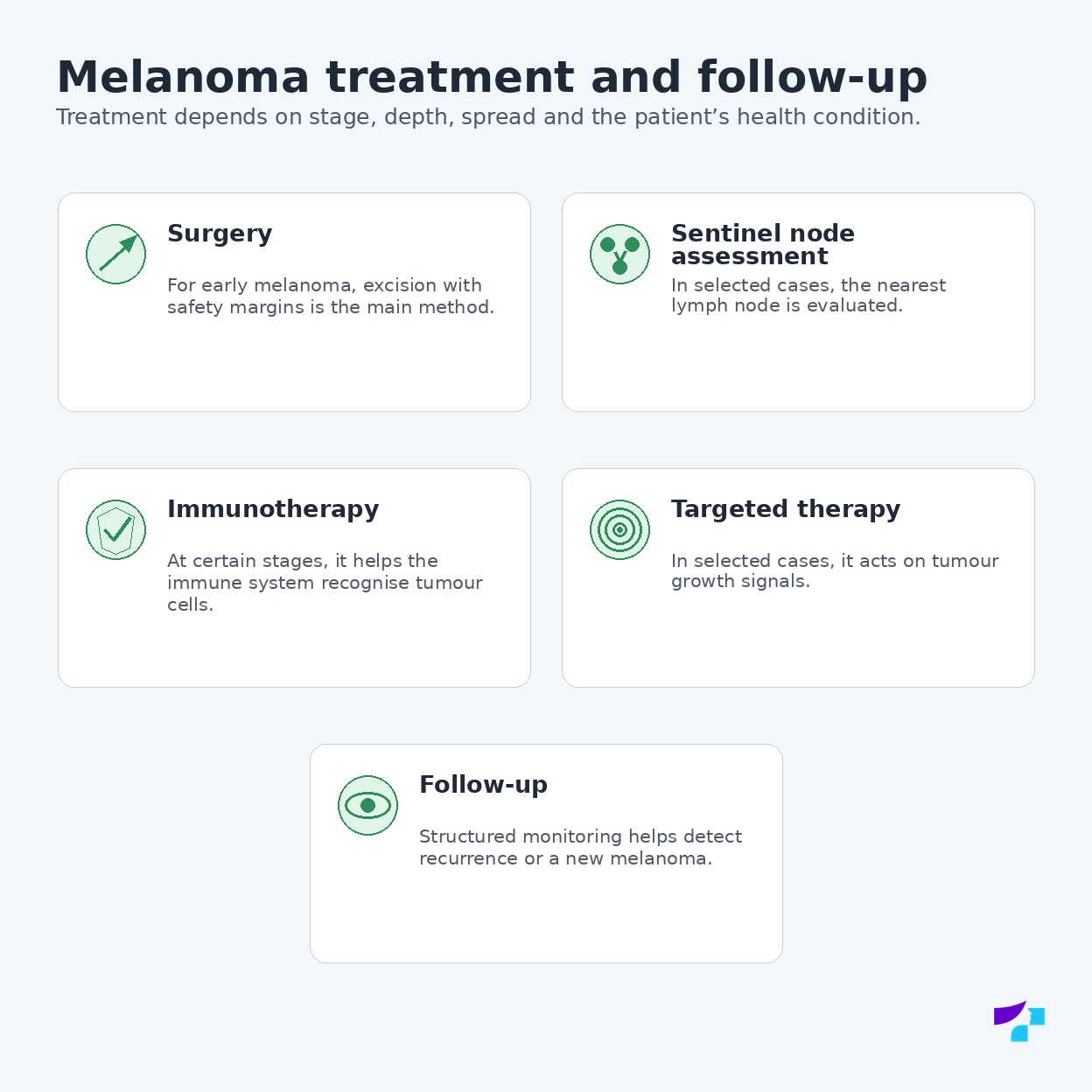
The main treatment directions are:
- surgical excision;
- wider repeat excision with safety margins after histology;
- sentinel lymph node biopsy in selected cases;
- lymph node assessment or treatment if there is spread;
- immunotherapy-type treatment at certain stages;
- targeted therapy-type treatment in the presence of certain molecular tumour changes;
- radiotherapy in selected situations;
- systemic treatment in metastatic melanoma;
- structured follow-up after treatment.
This article does not list specific prescription medicine names. Melanoma therapy may only be determined by a doctor after evaluating the diagnosis, stage, histology, molecular tests and the patient’s health condition.
Does melanoma treatment always require surgery?
In early melanoma, surgical excision is usually the main treatment method. After initial histology, the doctor may recommend a wider repeat excision with appropriate safety margins. Safety margins mean that a certain area of healthy tissue is removed together with the tumour site to reduce the risk of local recurrence.
If melanoma has spread, oncological treatment may be needed in addition to surgery. The decision depends on the stage and the individual situation.
Can melanoma be treated with cream or laser?
Suspected melanoma must not be treated with cream, laser or self-selected methods. In melanoma, it is very important to obtain tissue for histological examination. If the lesion is destroyed with a laser or treated incorrectly, the opportunity to accurately determine the diagnosis, thickness and stage may be lost.
Creams, acids, folk remedies, burning or cutting a suspicious mole by yourself are dangerous. If melanoma is suspected, a dermatologist should be consulted.
What is immunotherapy in melanoma treatment?
Immunotherapy is a treatment approach that helps the immune system recognise and attack tumour cells. In melanoma treatment, immunotherapy-type therapy can be important at certain stages, especially when there is a higher risk of recurrence or the disease has spread.
Immunotherapy is not needed for all melanoma patients. In early melanoma, treatment is often limited to surgery and follow-up. The decision about immunotherapy is made by an oncologist.
What is targeted therapy in melanoma treatment?
Targeted therapy is a type of treatment that acts on specific growth signals in tumour cells. Some melanomas have certain molecular changes that can be used when choosing treatment. To understand whether targeted therapy may be suitable, molecular testing may be performed at certain stages.
Targeted therapy is not universal for all melanomas. It is prescribed by a doctor according to the tumour’s features and the stage of the disease.
When is radiotherapy used?
Radiotherapy may be used in melanoma treatment in selected situations, for example when local disease control is needed, when there is spread to certain sites or when the medical team considers it appropriate for a particular patient. Radiotherapy is not the main method for all melanomas, but it may be part of the overall treatment plan.
Is melanoma treated with chemotherapy?
Today, chemotherapy has a smaller role in many melanoma treatment situations than in the past, because more effective systemic treatment approaches are available, such as immunotherapy-type and targeted therapy-type treatment. However, the specific therapy is chosen by an oncologist, taking into account the stage of the disease, tumour features and the patient’s health condition.
Does a scar remain after melanoma surgery?
A scar usually remains after surgical excision. The size of the scar depends on the size and location of the lesion, safety margins, the need for repeat excision, individual wound healing and postoperative care. The main aim of treatment is complete tumour removal and safety, while also aiming to preserve a good functional and aesthetic result.
How long is follow-up needed after melanoma treatment?
The duration and frequency of follow-up are determined by the doctor according to melanoma stage, risk factors and the type of treatment. After melanoma treatment, it is important to detect a possible recurrence, a new melanoma or another type of skin cancer in time. Follow-up may include skin checks, lymph node assessment and, at certain stages, imaging or other tests.
Is melanoma dangerous?
Yes, melanoma can be dangerous because it can spread in the body. However, melanoma does not always mean a poor prognosis. Melanoma detected early is often successfully treatable. Prognosis is strongly influenced by how early melanoma is diagnosed and how deeply it has grown into the skin.
Can you die from melanoma?
Yes, melanoma can be fatal, especially if it is diagnosed late and has spread. However, early diagnosis significantly improves treatment options. Therefore, the most important thing in melanoma is not to wait, but to check suspicious lesions in time.
What does melanoma prognosis depend on?
Melanoma prognosis depends on several factors:
- Breslow thickness;
- ulceration;
- tumour stage;
- spread to lymph nodes or other organs;
- tumour location;
- the patient’s age and general health condition;
- molecular tumour features;
- completeness of treatment;
- follow-up and monitoring.
The thinner and earlier melanoma is detected, the better the prognosis usually is.
What happens if melanoma is not treated?
Untreated melanoma can continue to grow deeper into the skin and spread in the body. At first, it may look like a changing mole or patch, but later it can affect lymph nodes and distant organs. Delaying melanoma treatment can be life-threatening, so a doctor should be consulted if a lesion looks suspicious.
Can melanoma return after treatment?
Yes, melanoma can return, or recur. Recurrence may occur at the original site, in the nearest lymph nodes or elsewhere in the body. The risk of recurrence depends on the stage, thickness, ulceration, spread and treatment result of the original melanoma.
After melanoma treatment, a doctor-defined follow-up programme and regular skin self-examination are important.
Can another melanoma develop after melanoma?
Yes. A person who has already had melanoma has an increased risk of developing melanoma in the future. Therefore, follow-up checks should assess not only the previously treated site, but the entire skin.
How to reduce the risk of melanoma?
The risk of melanoma cannot be reduced to zero, but it can be lowered by limiting UV exposure and checking skin changes in time.
The most important prevention principles are:
- avoid sunburn;
- do not use tanning beds;
- seek shade during periods of intense UV radiation;
- use a broad-spectrum sunscreen with appropriate SPF;
- wear a hat, sunglasses and clothing that covers the skin;
- protect children’s skin especially carefully;
- perform regular skin self-examination;
- undergo preventive dermatological checks if there is increased risk;
- also check the back, feet, nails, scalp and mucous membranes if there are suspicious lesions.
Does SPF help reduce the risk of melanoma?
Correctly used SPF helps reduce UV-related skin damage. However, SPF is not the only form of protection and it is not permission to sunbathe for longer. The best protection is combined: shade, clothing, a hat, sunglasses, sunscreen and avoiding tanning beds.
Should children use sun protection?
Yes. Children’s skin is especially sensitive to sunburn. Sunburn in childhood and adolescence can increase the risk of melanoma later in life. Children should be protected with shade, clothing, a hat and age-appropriate sunscreens. Babies and young children should be protected from direct sun especially carefully.
How to perform skin self-examination at home?
Skin self-examination should be performed in good lighting. A mirror should be used or help from a close person requested to check hard-to-see areas.
Check:
- the face, ears and neck;
- the scalp;
- the chest, abdomen and sides;
- the back;
- the arms, palms, spaces between the fingers and nails;
- the legs, feet and soles;
- the spaces between the toes;
- the genital area if there is a suspicious lesion;
- any scar or previously treated area.
It is especially important to look for new or changing lesions and the “ugly duckling” sign. A close person can help check the back, scalp and feet. Sometimes suspicious changes in hard-to-see areas are noticed by a hairdresser, physiotherapist, massage therapist or another specialist who regularly sees skin areas that the person does not check themselves. However, any suspicious lesion must always be assessed by a doctor.
Can you sunbathe after a melanoma diagnosis?
Intentional sunbathing is not recommended after a melanoma diagnosis. A person should avoid sunburn, tanning beds and long-lasting intense UV exposure. This does not mean that going outdoors is forbidden, but safe sun protection and regular skin monitoring should be planned.
What is currently well established in medicine?
It is medically well established that early detection of melanoma significantly improves treatment options. The association between UV radiation, tanning beds and an increased risk of melanoma is also well supported. Dermatologist examination, dermoscopy and histological examination are central elements of diagnosis.
Breslow thickness is one of the most important prognostic indicators in melanoma. Treatment should be planned according to the stage, tumour features and the patient’s individual situation.
What is still being discussed and developed in medicine?
In the field of melanoma, digital dermoscopy, total-body photography, artificial intelligence-assisted skin image analysis and personalised risk assessment are developing rapidly. AI can help select suspicious lesions, but it does not replace a dermatologist or histology.
In oncology, immunotherapy and targeted therapy approaches continue to improve. Research is ongoing into how best to choose therapy according to the molecular features of the tumour, how to reduce the risk of recurrence in high-risk patients and how to detect disease recurrence earlier. Medicine is also working to provide effective treatment with a lower risk of side effects and better quality of life.
References and authoritative sources
- Centre for Disease Prevention and Control of Latvia (SPKC): Don’t get burnt! Choose to live!
- Centre for Disease Prevention and Control of Latvia (SPKC): Safe sun exposure
- National Cancer Institute (NCI): Melanoma Treatment — Patient Version
- National Cancer Institute (NCI): Melanoma Treatment — Health Professional Version
- National Health Service (NHS): Melanoma skin cancer — overview, symptoms and treatment
- Cancer Research UK: Melanoma symptoms, stages and treatment
- American Academy of Dermatology Association (AAD): Melanoma signs and symptoms
- American Academy of Dermatology Association (AAD): Melanoma diagnosis and treatment
- Skin Cancer Foundation: Melanoma warning signs and images
- DermNet: Melanoma
- DermNet: ABCDE/ABCDEFG of melanoma
- European Association of Dermato-Oncology (EADO): European melanoma guidelines
- European Journal of Cancer / PubMed: European consensus-based interdisciplinary guideline for melanoma — diagnostics and treatment updates
- European Journal of Cancer / PubMed: European consensus-based interdisciplinary guideline for melanoma — diagnostics and treatment updates
- Macmillan Cancer Support: Melanoma
Disclaimer
The information in this article is intended for informational and educational purposes only and does not replace a doctor’s consultation, diagnosis or treatment. Self-assessment of moles and skin lesions can be misleading, as melanoma may resemble a benign mole, seborrhoeic keratosis, pigmented basal cell carcinoma, an inflamed lesion or other skin changes. If you notice a new, changing, bleeding, painful, itchy, non-healing or otherwise suspicious skin lesion, consult a dermatologist, dermato-oncologist or another appropriate specialist. Do not try to treat, burn, cut or remove suspicious lesions by yourself. If a lesion grows rapidly, bleeds significantly, ulcerates, becomes painful, enlarged lymph nodes appear or general symptoms develop, urgent medical assessment is required.
