Basal cell carcinoma is the most common type of skin cancer. It develops from basal cells — cells located in the deeper part of the epidermis, the outer layer of the skin. Basal cell carcinoma belongs to the group of non-melanoma skin cancers and is not the same as melanoma.
Basal cell carcinoma usually grows slowly and rarely spreads to lymph nodes or other organs. However, it is not a harmless skin lesion. If left untreated, basal cell carcinoma can gradually grow deeper into the skin and damage surrounding tissues, especially when it is located on the face, nose, ear, eyelid, lip or another anatomically sensitive area. This is why basal cell carcinoma should be diagnosed and treated in time.
Patients often describe basal cell carcinoma as “a small sore”, “a bump”, “a crust”, “a small scar”, “a pink patch” or “a skin lesion that sometimes bleeds”. Sometimes it grows slowly for years, causes no pain and is not taken seriously. However, a long-lasting non-healing wound, a recurring crust, a pearly shiny nodule or a skin lesion that bleeds without clear trauma are signs that should be examined by a dermatologist.
Basal cell carcinoma is not contagious. It cannot be passed from one person to another. It develops when DNA damage accumulates in skin cells and the cells begin to grow uncontrollably. One of the main risk factors is ultraviolet radiation — sunlight and tanning beds. The risk is higher in people with fair skin, frequent sunburns, prolonged sun exposure, weakened immunity or a previous history of skin cancer.
What is basal cell carcinoma?
Basal cell carcinoma is a malignant skin tumour that develops from basal cells. Basal cells are located in the deeper part of the epidermis. The epidermis is the outer layer of the skin, which constantly renews itself. If damage occurs in the genetic material of basal cells and the cells lose normal growth control, basal cell carcinoma may develop.
Basal cell carcinoma is also known as BCC. The word “carcinoma” means a malignant tumour that develops from epithelial cells — the cells that form the surfaces of the skin and mucous membranes. For this reason, basal cell carcinoma is medically considered skin cancer, even though it usually grows more slowly and spreads less often than melanoma.
Basal cell carcinoma belongs to the group of non-melanoma skin cancers. Non-melanoma skin cancer is a general term for skin cancers that are not melanoma. The most common types in this group are basal cell carcinoma and squamous cell carcinoma. Basal cell carcinoma is usually less aggressive than squamous cell carcinoma and melanoma, but it should not be ignored.
For a more detailed overview of all types of skin cancer, see the article Skin cancer.
Is basal cell carcinoma the same as melanoma?
No, basal cell carcinoma is not melanoma. Basal cell carcinoma develops from basal skin cells, while melanoma develops from melanocytes — pigment cells that produce melanin and give colour to the skin, hair and moles.
Basal cell carcinoma usually grows slowly and rarely metastasises. Melanoma is less common but potentially much more dangerous because it can spread through the body if it is not detected early. These tumours also differ in appearance. Melanoma is often associated with changes in a mole, a dark or multicoloured lesion, asymmetry and irregular borders. Basal cell carcinoma more often looks like a pearly nodule, a non-healing sore, a pink patch, a scar-like area or a repeatedly bleeding crust.
In practice, however, some lesions can be difficult to distinguish without a doctor’s examination. Pigmented basal cell carcinoma can resemble melanoma, while melanoma can sometimes be pale or pink. This is why suspicious skin lesions should not be diagnosed only by looking at pictures online.
What is the difference between basal cell carcinoma and squamous cell carcinoma?
Basal cell carcinoma and squamous cell carcinoma both belong to the group of non-melanoma skin cancers, but they develop from different skin cells and have different risk profiles.
Basal cell carcinoma develops from basal cells and usually grows slowly. It rarely spreads to other parts of the body, but it can damage tissues locally. Squamous cell carcinoma develops from squamous skin cells. It more often appears as a rough, scaly, thickened, painful or bleeding skin lesion. The risk of spread is generally higher for squamous cell carcinoma than for basal cell carcinoma, especially in high-risk locations or in people with weakened immunity.
See the related article Squamous cell carcinoma.
What does basal cell carcinoma look like?
Basal cell carcinoma can look different, and it is not always dark. It may be skin-coloured, pink, red, pearly, brownish or pigmented. Sometimes it resembles a bump, ulcer, scar, dry patch or a wound that “seems to heal” but then opens again.
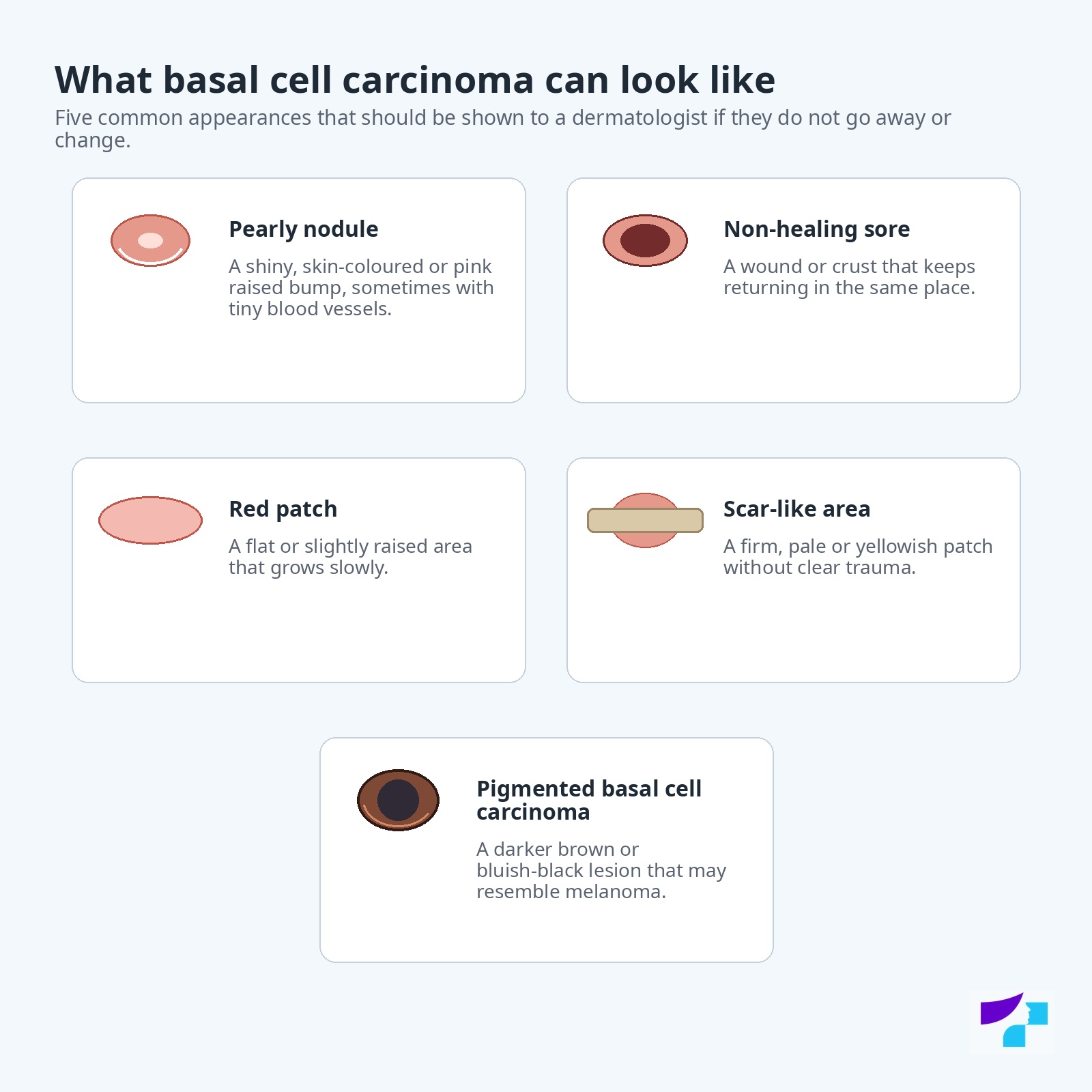
Typical appearances of basal cell carcinoma include:
Pearly or shiny nodule
It may be skin-coloured, pink or translucent. Small blood vessels may sometimes be visible on its surface.
Non-healing sore
It may bleed, become covered with a crust, temporarily heal and then open again.
Pink or reddish patch
It may be flat or slightly raised, sometimes with scaling or irritation.
Scar-like area
Some basal cell carcinomas may have a whitish, yellowish, firm, shiny or sunken surface, as if there were a scar on the skin without previous trauma.
Pigmented basal cell carcinoma
In some cases, basal cell carcinoma may be brown, bluish-black or darker, which is why it may be confused with melanoma or a pigmented mole.
Basal cell carcinoma can be very small in the early stage. This is why changes over time are important — if a skin lesion does not go away, grows slowly, bleeds, repeatedly becomes covered with a crust or looks different from other skin lesions, it should be shown to a dermatologist.
Types of basal cell carcinoma: why it can look so different
Basal cell carcinoma does not always look the same. Its type can influence appearance, diagnosis and treatment choice. Several types of basal cell carcinoma are commonly described.
Nodular basal cell carcinoma
Nodular basal cell carcinoma is one of the most common types. It may look like a skin-coloured, pink or pearly shiny nodule. Small blood vessels may sometimes be visible on the surface. The lesion may bleed easily after minor trauma, for example during shaving, washing or wiping.
Superficial basal cell carcinoma
Superficial basal cell carcinoma more often looks like a pink, red or brownish patch with scaling. It may resemble eczema, psoriasis or a fungal infection, especially on the body or back. If a “dry patch” persists for a long time or does not respond to usual treatment, it should be examined by a dermatologist.
Ulcerated basal cell carcinoma
Ulcerated basal cell carcinoma appears as a sore or wound that does not heal. It may bleed, become covered with a crust, seem to heal and then open again.
Scar-like or sclerosing basal cell carcinoma
Scar-like or sclerosing basal cell carcinoma may look like a whitish, yellowish, firm or sunken area of skin without clear previous trauma. This type can be more difficult to notice because it does not always look like a typical nodule.
Pigmented basal cell carcinoma
Pigmented basal cell carcinoma contains more pigment and may be brown, dark or bluish-black. It may resemble a mole or melanoma, which is why dermoscopy and, if necessary, histological examination are especially important in such cases.
What are the first signs of basal cell carcinoma?
The first signs of basal cell carcinoma are often subtle. Many patients initially notice only a small “bump”, “dry area”, “scratch”, “crust” or “small wound” that does not go away for a long time. Because basal cell carcinoma usually grows slowly and often does not hurt, a person may postpone seeing a doctor.
Early signs that may indicate basal cell carcinoma include:
- a small shiny or pearly nodule;
- a pink patch that does not go away;
- a sore or wound that does not heal;
- a crust that repeatedly appears in the same place;
- a lesion that bleeds easily;
- an area of skin that looks like a scar without previous trauma;
- a slowly enlarging skin lesion on the face, nose, ear, eyelid, neck or scalp.
Important: basal cell carcinoma can also occur on the back, chest, arms or other areas, so the whole skin should be assessed, not only the face.
Does basal cell carcinoma hurt, itch or bleed?
Basal cell carcinoma often does not hurt. Pain is usually not the first sign. However, basal cell carcinoma may itch, become sensitive, bleed or repeatedly become covered with a crust. If a lesion bleeds without clear trauma or after very minor irritation, for example during washing, shaving or wiping, this is a reason to consult a dermatologist.
The absence of symptoms does not mean that a lesion is safe. A painless skin lesion can also be basal cell carcinoma, especially if it does not go away or changes slowly.
Three to five key signs that may indicate basal cell carcinoma
For patients, it is most practical to remember five signs that mean a skin lesion should not be observed for a long time without medical assessment.
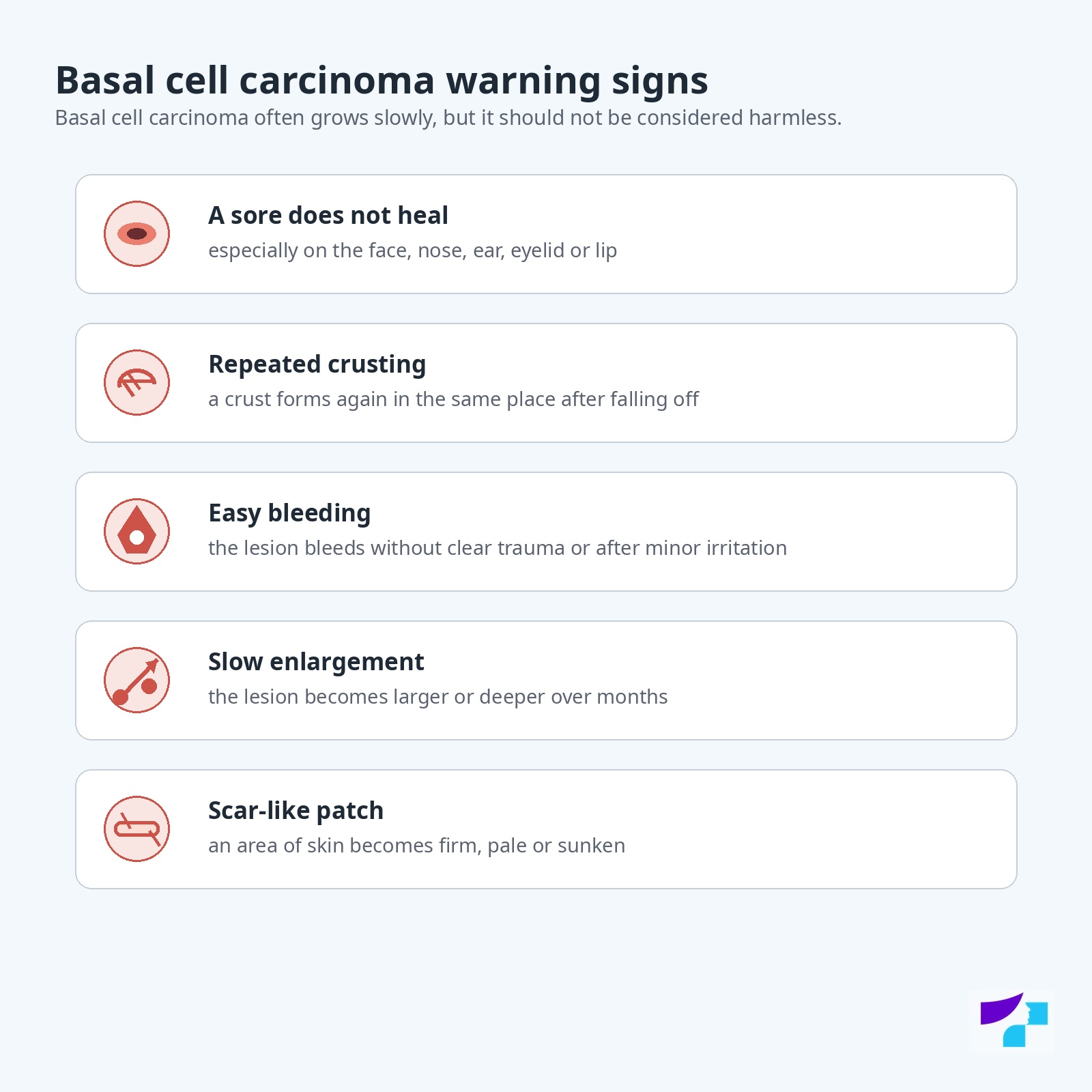
Non-healing sore or wound
If there is a wound on the skin that does not heal for several weeks, repeatedly opens or becomes covered with a crust, it should be examined by a dermatologist.
Pearly shiny nodule
A shiny, skin-coloured or pink nodule, especially on the face, nose, ear or eyelid, may be a sign of basal cell carcinoma.
Repeated bleeding
A lesion that bleeds without a clear reason or after minor irritation should be examined.
Pink patch that does not go away
Basal cell carcinoma may also be a flat or slightly raised pink area that persists for a long time and slowly enlarges.
Scar-like area
A whitish, firm, shiny or sunken area of skin without previous trauma may be a specific form of basal cell carcinoma that requires careful diagnosis.
Where does basal cell carcinoma most often develop?
Basal cell carcinoma most often develops in areas that have received a lot of ultraviolet radiation over a lifetime. Typical locations include the face, nose, forehead, ears, eyelids, lips, neck, scalp, shoulders, back, chest, hands and forearms.
Basal cell carcinomas on the face are especially important. Even if they grow slowly, they can create greater treatment challenges because the face is an anatomically and aesthetically sensitive area. Basal cell carcinoma on the nose, ear, eyelid or lip may grow deeper and damage structures that are important for both function and appearance.
Basal cell carcinoma on the nose, nasal wing, eyelid, ear or lip is not “just a simple bump”. In these areas, even a small, slowly growing tumour can lead to more complicated treatment, a higher risk of scarring and functionally important tissue damage. Lesions in these locations should therefore not be observed for a long time without a doctor’s assessment.
Basal cell carcinoma may also occur on the back or chest, especially superficial types. For this reason, skin self-checks should also include areas that a person does not see in daily life. If needed, a mirror can be used or help can be requested from a family member.
Basal cell carcinoma can also develop in areas that are rarely exposed to the sun, but this is less common. Therefore, any new, changing, bleeding or non-healing lesion should be assessed by its signs, not only by its location.
Why does basal cell carcinoma develop?
Basal cell carcinoma develops when genetic damage accumulates in skin cells and the cells begin to divide uncontrollably. Ultraviolet radiation is an important cause of this damage. UV radiation can damage the DNA of skin cells — the cell’s “instructions” that regulate cell division and renewal. If the damage is not fully repaired, over time it can contribute to tumour development.
Basal cell carcinoma is not an infection. It does not spread from person to person, is not contagious and is not associated with everyday contact, shared towels, swimming pools, touch or household items.
Basal cell carcinoma can also develop on previously completely normal skin. A person does not always notice precancerous changes or early tumour development. Therefore, a new lesion in adulthood, especially on sun-damaged skin, should be assessed carefully.
How basal cell carcinoma develops
In basal cell carcinoma, it is more accurate to speak about a development mechanism rather than a mechanism of infection. It is not a disease that can be caught from someone else.
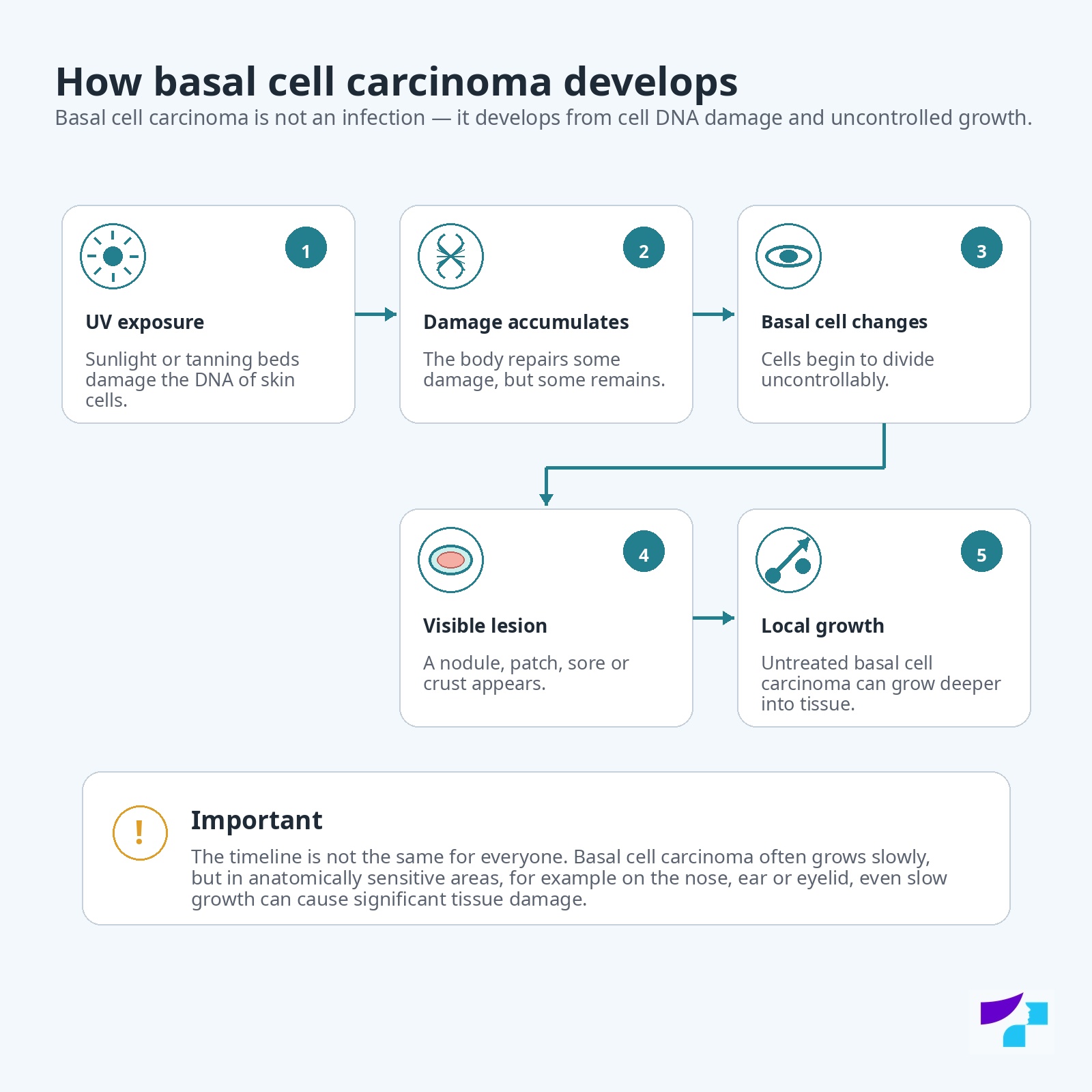
In simplified terms, the development of basal cell carcinoma can be described as follows:
- UV radiation damages the DNA of skin cells;
- the body repairs some of the damage, but some may remain;
- if the damage affects mechanisms that control cell growth, cells may begin to divide uncontrollably;
- a local skin tumour develops — basal cell carcinoma;
- if untreated, basal cell carcinoma can grow wider and deeper, damaging surrounding tissues.
This process is usually gradual, but the speed is not the same for everyone. It is influenced by tumour type, location, the patient’s immunity, previous skin damage and other factors.
Basal cell carcinoma development timeline
Basal cell carcinoma usually develops slowly, but this should not be seen as a reason to wait. Slow growth may mean that the tumour remains unnoticed for a long time, especially if it does not hurt.
UV exposure and risk factors
Over the years, sunlight or tanning beds damage the DNA of skin cells. The skin may look normal or show signs of sun damage — pigment spots, roughness, small blood vessels and signs of skin ageing.
Accumulation of cell damage
Some damaged cells are repaired, but mutations remain in others. At this stage, a person usually does not feel anything unusual.
Early basal cell carcinoma
A small shiny nodule, pink patch, sore, crust or scar-like area appears on the skin. The lesion may be painless.
Visible and growing basal cell carcinoma
The lesion slowly enlarges, bleeds, ulcerates or repeatedly becomes covered with a crust. It may become deeper or wider.
Locally advanced basal cell carcinoma
Untreated basal cell carcinoma may grow into surrounding tissues. In the area of the face, nose, ear or eyelid, this can lead to more complicated treatment and a higher risk of functional or aesthetic damage.
Who has a higher risk of developing basal cell carcinoma?
Basal cell carcinoma can develop in anyone, but the risk is higher in certain groups. Risk factors do not mean that basal cell carcinoma will definitely develop, but they increase the likelihood that damage will accumulate in skin cells over a lifetime.
The risk of basal cell carcinoma is higher in people who have:
- fair skin, fair or red hair, light-coloured eyes;
- skin that burns easily and tans poorly;
- frequent or severe sunburns during life;
- long-term outdoor work or hobbies;
- use of tanning beds;
- older age, because UV damage accumulates over a lifetime;
- a previous basal cell carcinoma or another skin cancer;
- a family history of skin cancer;
- weakened immunity, for example after organ transplantation or due to certain diseases and treatments;
- previous radiotherapy to a specific skin area;
- certain rare genetic syndromes that increase the risk of basal cell carcinomas.
Fair skin increases risk because it contains less melanin — the pigment that partly protects the skin from UV radiation. However, basal cell carcinoma can also occur in people with darker skin, and in such cases diagnosis may be delayed if skin cancer is not considered in time.
Can basal cell carcinoma occur in several places at the same time?
Yes. Some people may develop several basal cell carcinomas during their lifetime. They may appear at different times or, less commonly, in several places at the same time. This is especially possible in people with significant sun damage, fair skin, weakened immunity or a previous basal cell carcinoma.
If one basal cell carcinoma has been diagnosed, it does not mean that others will definitely develop, but skin monitoring becomes especially important. After treatment for basal cell carcinoma, the doctor’s recommended follow-up plan should be followed and the entire skin should be checked regularly.
Can basal cell carcinoma be hereditary?
Most basal cell carcinomas are not hereditary in a simple sense. However, a person can inherit features that increase risk — fair skin, sensitivity to sunburn or a certain genetic predisposition. There are also rare genetic syndromes in which basal cell carcinomas can develop in larger numbers and at a younger age.
If several family members have had basal cell carcinomas, if they appear at an unusually young age or if one person has many basal cell carcinomas, this should be discussed with a dermatologist.
Does one basal cell carcinoma increase the risk of future basal cell carcinomas?
Yes, after one basal cell carcinoma has been diagnosed, a person has a higher risk of developing another basal cell carcinoma or another skin cancer in the future. This is related to shared risk factors — skin type, accumulated UV damage, immune system status and individual predisposition.
Therefore, after treatment, it is important to monitor not only the treated area but also the entire skin surface.
When should you see a dermatologist?
You should see a dermatologist if there is a skin lesion that:
- does not heal;
- repeatedly becomes covered with a crust;
- bleeds without clear trauma;
- slowly enlarges;
- looks like a shiny or pearly nodule;
- looks like a scar without previous trauma;
- is a pink patch that does not go away;
- is located on the face, nose, ear, eyelid, lip or scalp;
- appears in a person who has previously had skin cancer.
You should not wait until pain appears before seeing a doctor. Basal cell carcinoma may remain painless for a long time while gradually growing.
How does a dermatologist examine basal cell carcinoma?
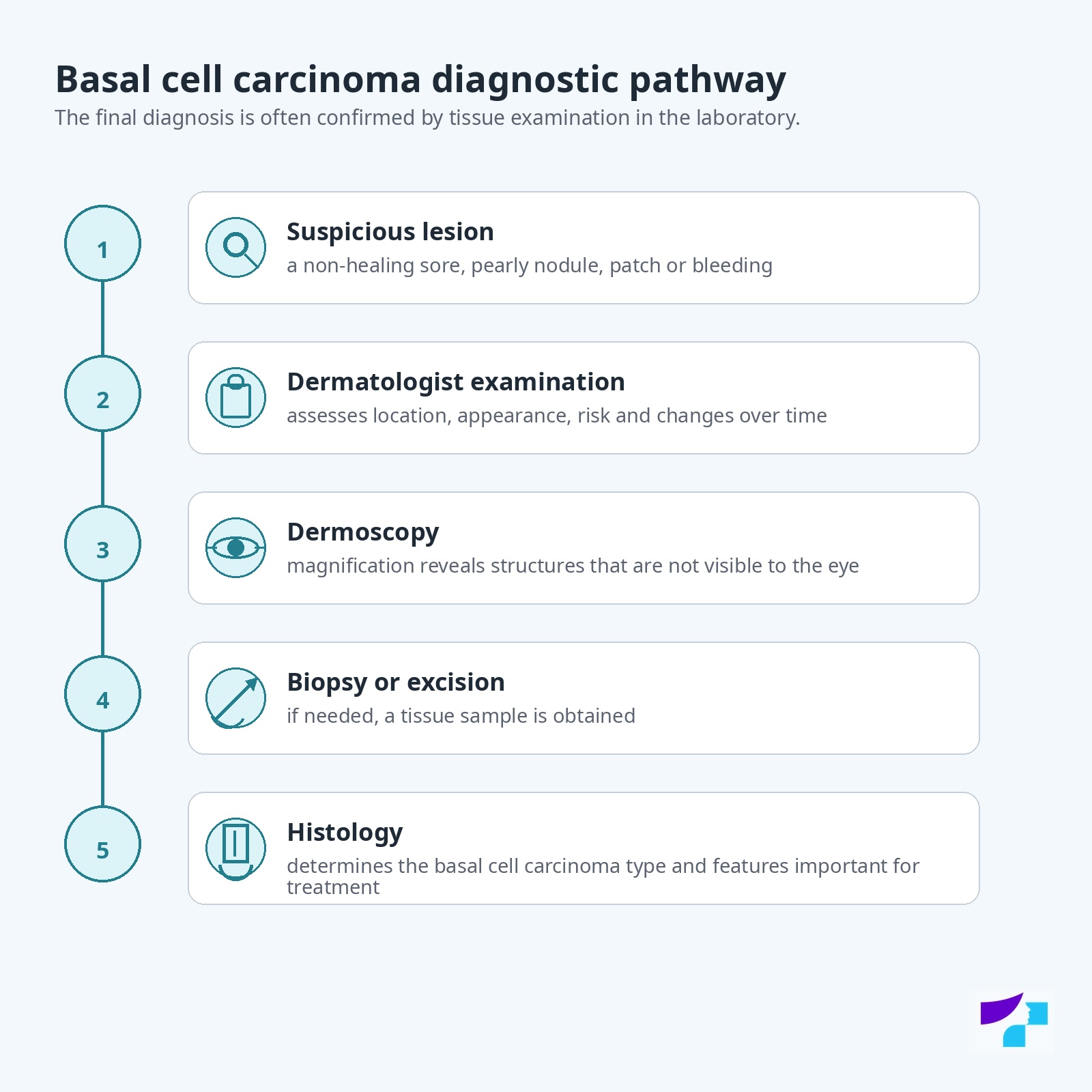
The dermatologist first examines the skin and assesses the lesion’s appearance, location, size, borders, surface, colour, bleeding, ulceration and changes over time. Information about how long the lesion has been present, whether it is changing, whether there have been sunburns, tanning bed use, previous skin cancer or weakened immunity is also important.
Dermoscopy is often performed. Dermoscopy is examination of a skin lesion with a special optical device — a dermatoscope. It allows the doctor to see structures under magnification that are not visible to the naked eye. Dermoscopy can help recognise features typical of basal cell carcinoma and distinguish it from other skin lesions.
However, in many cases, a final diagnosis requires histological examination — examination of tissue under a microscope.
See the related article Dermoscopy.
When is a biopsy or excision needed?
A biopsy means taking a tissue sample for laboratory examination. It may be needed if the doctor wants to confirm the diagnosis, determine the subtype of basal cell carcinoma or choose the most appropriate treatment method.
In some cases, the doctor may recommend removing the entire lesion immediately. In other situations, a small tissue sample is taken first. The approach depends on the size and location of the lesion, the degree of suspicion, the planned treatment and the patient’s individual situation.
What is histological examination?
Histological examination is the examination of tissue under a microscope. It helps determine whether the lesion is basal cell carcinoma, what subtype it is and whether the tumour has been completely removed if excision has been performed.
Histology is important because different skin lesions can look similar. Basal cell carcinoma may be confused with benign lesions, scars, inflammatory processes, squamous cell carcinoma or even melanoma. Without tissue examination, in some cases it is not possible to establish the diagnosis safely.
Can basal cell carcinoma be diagnosed from a photo only?
No, basal cell carcinoma usually cannot be diagnosed reliably from a photo alone. A photograph may help the doctor understand whether the lesion looks suspicious, but it does not replace an in-person examination, dermoscopy and, if necessary, histological examination.
Images on the internet can be misleading because basal cell carcinoma can look very different. In addition, benign lesions or other types of skin cancer may look similar.
What can basal cell carcinoma be confused with?
Basal cell carcinoma can be difficult to recognise because it often resembles benign or inflammatory skin conditions. Sometimes a patient thinks for a long time that it is a pimple, scratch, eczema, dry skin or a small wound.
Basal cell carcinoma may be confused with:
- eczema;
- psoriasis;
- fungal skin infection;
- seborrhoeic keratosis;
- wart;
- papilloma;
- acne or an inflamed pimple;
- scar;
- benign mole;
- pigmented mole;
- squamous cell carcinoma;
- melanoma.
If a lesion does not go away, repeatedly bleeds, forms a crust, enlarges or does not respond to usual skin care or treatment, it should be shown to a dermatologist. Dermoscopy and, if necessary, histological examination often help determine the precise diagnosis.
How is basal cell carcinoma treated?
Treatment of basal cell carcinoma depends on the tumour type, size, depth, location, histological subtype, previous treatment, risk of recurrence and the patient’s general health. The aim is to cure the tumour completely, preserve function and achieve the best possible aesthetic result.
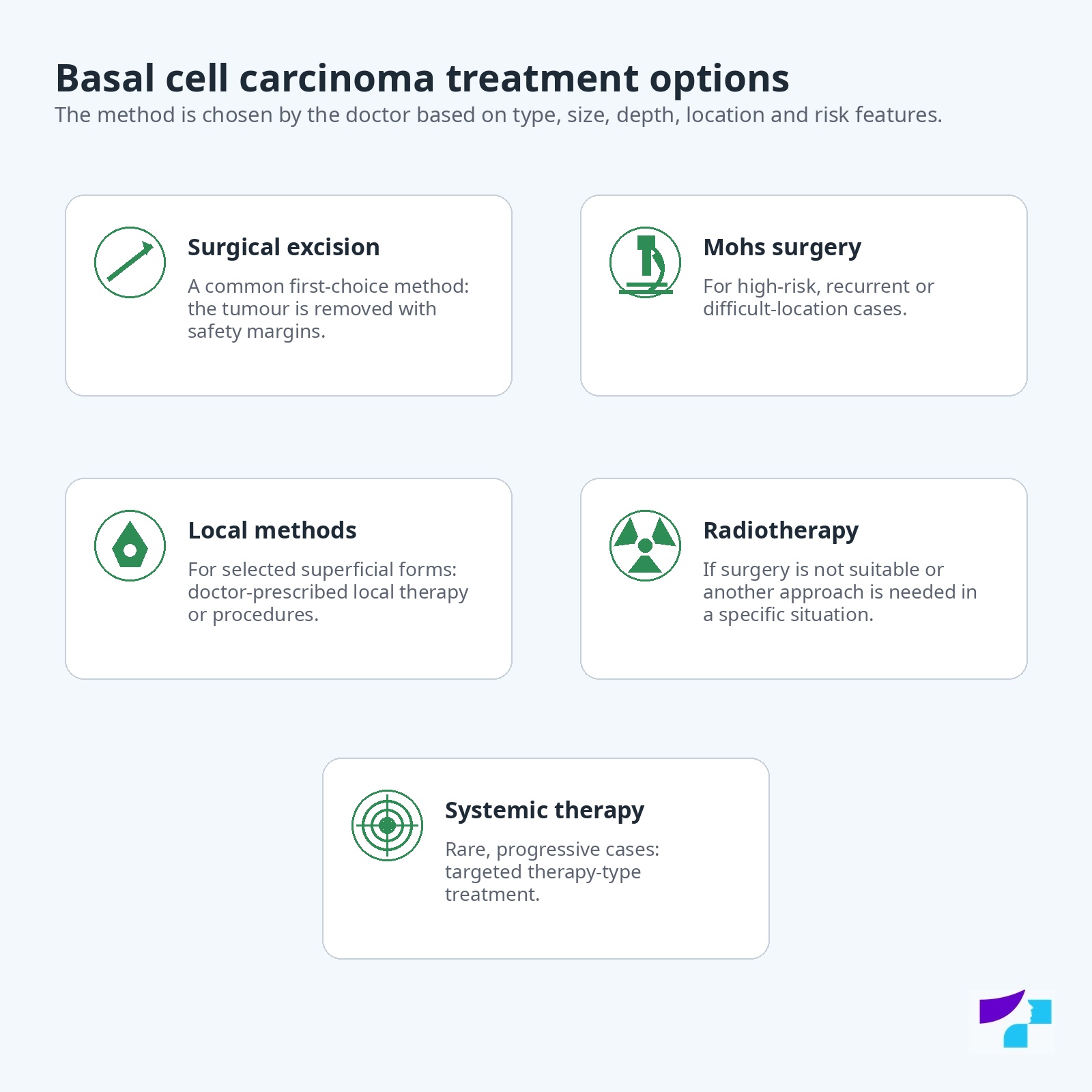
The most common treatment options are:
- surgical excision;
- Mohs micrographic surgery or another microscopically controlled surgery in selected situations;
- curettage with electrocautery in selected cases;
- cryotherapy for certain superficial lesions;
- photodynamic therapy for certain superficial forms of basal cell carcinoma;
- local treatment with prescription medicines prescribed by a doctor in selected cases;
- radiotherapy if surgery is not suitable or another approach is needed in a specific situation;
- systemic therapy in advanced, locally extensive or rare complicated cases.
This article does not list specific prescription medicine names. The choice of therapy is made by a doctor after diagnosis, histology and assessment of the patient’s individual situation.
Can basal cell carcinoma be cured?
Yes, most basal cell carcinomas detected early can be treated successfully. The prognosis is usually very good if the tumour is diagnosed and fully treated in time.
However, delaying treatment may increase the risk of tissue damage and make treatment more complicated. This especially applies to basal cell carcinomas in the central part of the face, on the nose, ears, eyelids, lips and in areas where there is little tissue reserve.
Is surgery always needed to treat basal cell carcinoma?
No, not always. Surgery is a very common and effective treatment method, but in some cases, especially for superficial and low-risk basal cell carcinomas, the doctor may recommend another approach. However, self-treatment of a suspicious lesion is not acceptable because incorrect treatment may delay diagnosis, fail to cure the tumour completely or interfere with further histological assessment.
If basal cell carcinoma is high-risk, located in a difficult area, has recurred or has a more aggressive histological subtype, preference is more often given to methods that allow the tumour margins to be controlled as safely as possible.
How is basal cell carcinoma excision performed?
Excision of basal cell carcinoma means that the doctor surgically removes the tumour together with a certain safety margin of healthy tissue. The tissue is then sent for histological examination to confirm the diagnosis and assess whether the tumour has been completely removed.
The extent of the procedure depends on the size and location of the tumour. For small basal cell carcinomas, excision may be relatively simple. In the area of the face, nose, eyelids, ear or lip, planning may be more complex because both function and aesthetics need to be preserved.
When is Mohs surgery needed?
Mohs micrographic surgery is a special surgical method in which the tumour is removed gradually and tissue margins are examined under a microscope during treatment. This method allows the tumour to be removed as precisely as possible while preserving as much healthy tissue as possible.
Mohs surgery or another microscopically controlled surgery may be especially important for:
- basal cell carcinomas on the face, nose, eyelid, ear or lip;
- recurrent basal cell carcinomas;
- high-risk basal cell carcinomas;
- tumours with unclear margins;
- tumours in areas where it is important to preserve as much healthy tissue as possible.
The availability and suitability of this method must be assessed by a doctor; however, this method is currently not available in Latvia.
Can basal cell carcinoma be treated with a cream?
Some superficial basal cell carcinomas can be treated in certain situations with topical prescription therapy prescribed by a doctor. However, this is not suitable for all basal cell carcinomas. Deeper, nodular, more aggressive or high-risk basal cell carcinomas are generally not treated with cream alone.
It is important not to use self-treatment with products found online or purchased without a doctor’s recommendation. Incorrect treatment may create the impression that the lesion is improving, while tumour cells may remain deeper in the skin.
Can basal cell carcinoma be treated with laser?
Laser is not a treatment method for basal cell carcinoma. In some dermatological procedures, laser may be used for certain skin problems, but in basal cell carcinoma complete tumour control and, if necessary, histological examination are essential. Therefore, basal cell carcinoma must not simply be “removed with laser” without a clear diagnosis and treatment plan.
If a lesion is suspicious, the diagnosis must first be clarified. Only a doctor can determine which method is safe in a specific case.
Can basal cell carcinoma be treated with cryotherapy?
Cryotherapy means freezing tissue with a very low temperature. It may be suitable for certain superficial or low-risk skin changes, but not for all basal cell carcinomas. A limitation of cryotherapy is that it is not always possible to histologically examine all tumour margins if the tumour is not surgically removed.
Therefore, the suitability of cryotherapy is determined by a doctor, taking into account the tumour type, location and risk.
Can basal cell carcinoma be treated with photodynamic therapy?
Photodynamic therapy is a method that uses a special substance and light to damage abnormal cells. It may be suitable for certain superficial forms of basal cell carcinoma and precancerous lesions, but it is not suitable for all tumours. Deeper, aggressive or high-risk basal cell carcinomas usually require other treatment methods.
When is radiotherapy used in basal cell carcinoma treatment?
Radiotherapy may be considered if surgical treatment is not suitable, if the tumour is located in a difficult area, if the patient’s health condition does not allow surgery or if a multidisciplinary medical team considers it appropriate in a specific situation. The choice of radiotherapy is individual and depends on tumour and patient factors.
Will there be a scar after basal cell carcinoma removal?
After surgical excision, a scar usually remains. The appearance of the scar depends on the size and location of the tumour, the extent of excision, individual wound healing and postoperative care. In the facial area, the doctor plans the incision and closure to preserve function and aesthetics as much as possible.
It should be remembered that the main aim of treatment is complete tumour removal. The aesthetic result is very important, but it must not be more important than safe tumour treatment.
How long does the skin take to heal after basal cell carcinoma removal?
Healing time depends on the extent of the procedure, the site, the patient’s age, health status, medicines, smoking, blood circulation and wound care. Smaller wounds usually heal faster, while larger or more complex operations, especially on the face or in areas with more movement, may require a longer healing time.
Precise instructions about wound care, stitch removal, physical activity and follow-up visits are given by the treating doctor.
Can basal cell carcinoma be treated at home?
No. Basal cell carcinoma must not be treated at home with homemade remedies, acids, “burning”, mechanical cutting, compresses or preparations recommended online. Such actions may cause infection, scarring, tissue damage and, most importantly, delay the correct diagnosis and treatment.
If a lesion is basal cell carcinoma, it must be treated in a medically justified way.
What should not be done if a lesion may be basal cell carcinoma?
If there is a non-healing sore, recurring crust, pearly nodule, scar-like area or a lesion that bleeds, it should not be treated by the patient themselves. Incorrect actions may delay diagnosis and make treatment more complicated.
A suspicious lesion must not be:
- burned with acids or folk remedies;
- cut or traumatised by yourself;
- treated for a long time as eczema if there is no improvement;
- removed with laser without a clear diagnosis;
- “dried out” with self-selected products;
- assessed only by comparing it with internet images;
- left without assessment if it is located on the nose, ear, eyelid, lip or scalp.
A suspicious lesion should first be assessed by a dermatologist. If needed, the doctor will perform dermoscopy and recommend a biopsy or excision with histological examination.
Is basal cell carcinoma dangerous?
Basal cell carcinoma is usually less aggressive than melanoma and less often spreads to other parts of the body. However, it is a malignant tumour and can be dangerous locally. If left untreated, basal cell carcinoma can grow wider and deeper, damaging the skin, subcutaneous tissues, cartilage or bone.
Basal cell carcinoma on the nose, ear, eyelid or lip can be especially serious because even a small tumour in these areas can cause greater functional and aesthetic problems. Therefore, the statement that “basal cell carcinoma rarely metastasises” does not mean that it can be left untreated.
Does basal cell carcinoma metastasise?
Basal cell carcinoma metastasises very rarely. This is one reason why its prognosis is often good. However, in very rare cases spread is possible, especially in very large, long-untreated, aggressive or recurrent tumours.
For patients, it is more important to understand that the main risk of basal cell carcinoma is usually local tissue invasion — the tumour can grow into surrounding tissues and damage them.
Can you die from basal cell carcinoma?
People die from basal cell carcinoma very rarely because it usually rarely spreads through the body. However, very advanced, aggressive or complicated cases can be serious, especially in people with weakened immunity or very delayed diagnosis. Timely diagnosis and treatment are the main way to prevent complications.
What happens if basal cell carcinoma is not treated?
If basal cell carcinoma is not treated, it usually continues to grow. In some people, growth is slow, while in others the tumour may become wider, deeper, bleed, ulcerate or damage surrounding tissues.
Untreated basal cell carcinoma can:
- increase in size;
- bleed repeatedly;
- form an ulcer;
- grow deeper into the skin;
- damage cartilage or bone;
- cause a larger scar after treatment;
- recur more often if treatment becomes more complicated;
- require a wider surgical procedure.
Therefore, basal cell carcinoma should not be postponed only because it does not hurt or grows slowly.
Can basal cell carcinoma turn into melanoma?
Basal cell carcinoma does not turn into melanoma because these are different types of skin cancer that develop from different cells. However, a person who has basal cell carcinoma may also have risks for other skin cancers, including squamous cell carcinoma or melanoma, because risk factors partly overlap — especially UV radiation exposure and skin type.
Therefore, if basal cell carcinoma has been diagnosed, the entire skin should be checked, not only the specific lesion.
Can basal cell carcinoma return after excision?
Yes, basal cell carcinoma can return, or recur. The risk of recurrence depends on the tumour type, size, location, histological subtype, selected treatment method and whether the tumour has been completely removed.
The risk of recurrence may be higher for basal cell carcinomas in the central part of the face, on the nose, ear, eyelids and lips, as well as for recurrent, large or more aggressive basal cell carcinomas. This is why follow-up visits after treatment are important.
What is the prognosis for basal cell carcinoma?
The prognosis for basal cell carcinoma is usually good if it is detected and treated in time. Early diagnosed basal cell carcinoma can often be completely cured with local treatment.
The prognosis is influenced by:
- tumour size;
- location;
- histological subtype;
- whether basal cell carcinoma is primary or recurrent;
- whether it has been completely removed;
- the patient’s immune system status;
- follow-up and prevention after treatment.
How can the risk of basal cell carcinoma be reduced?
The risk of basal cell carcinoma cannot be reduced to zero, but it can be lowered by limiting UV-related skin damage and checking the skin regularly.
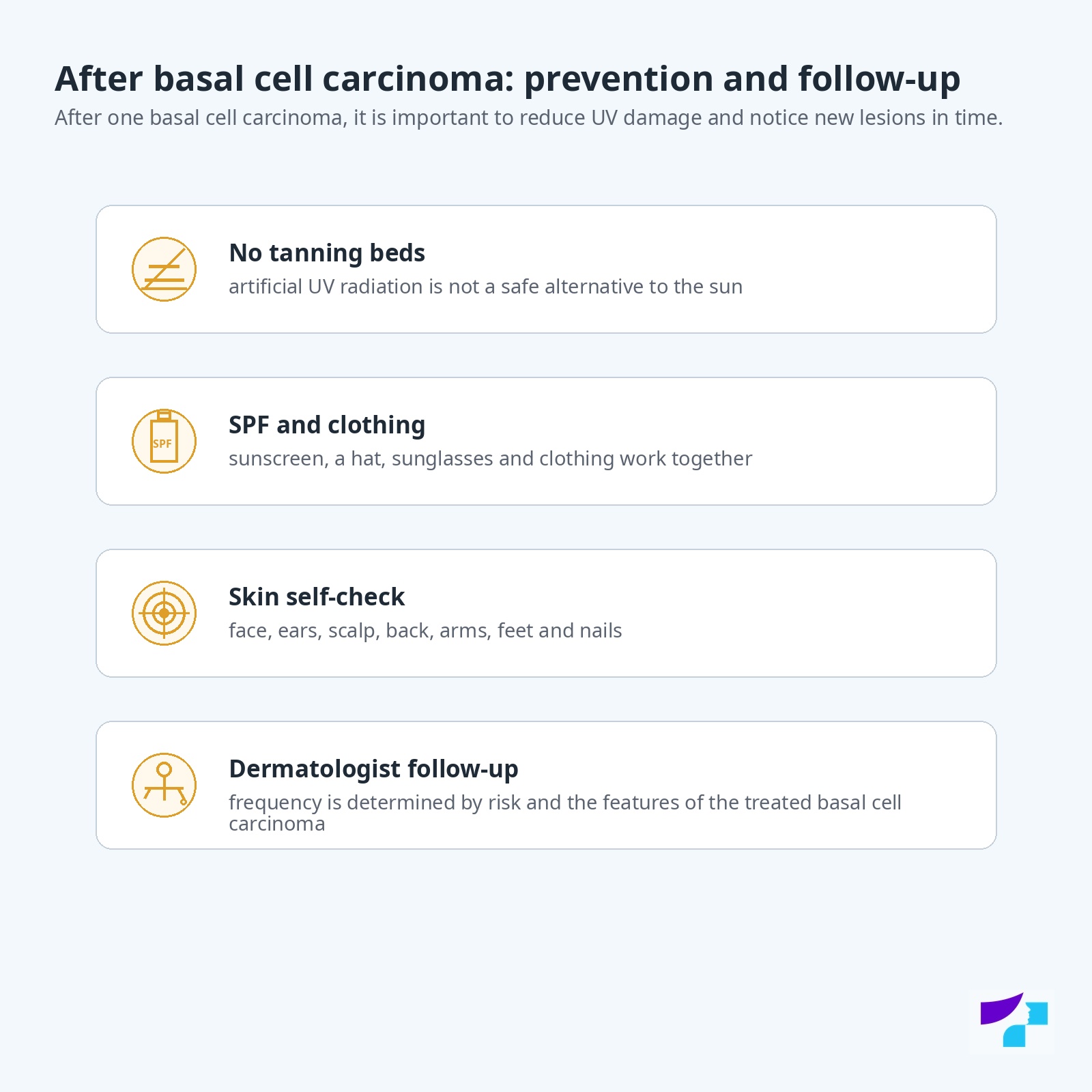
The most important prevention principles are:
- avoid prolonged exposure to direct sunlight;
- seek shade, especially in the middle of the day and during intense UV radiation;
- wear a wide-brimmed hat, sunglasses and clothing that covers the skin;
- use a broad-spectrum sunscreen with appropriate SPF;
- apply enough sunscreen and reapply it after swimming, sweating or wiping;
- do not use tanning beds;
- protect children’s skin from sunburn;
- check the skin regularly at home;
- have preventive dermatologist check-ups if there is increased risk.
Does SPF help reduce the risk of basal cell carcinoma?
Sunscreens help reduce the effect of UV radiation on the skin when used correctly. However, SPF is not the only form of protection and is not permission to sunbathe longer. The most effective approach is combined: shade, clothing, hat, sunglasses, sunscreen and avoidance of tanning beds.
People with a previous basal cell carcinoma or high risk should consult a dermatologist about the most suitable SPF and frequency of use.
Can you sunbathe after a basal cell carcinoma diagnosis?
After a basal cell carcinoma diagnosis, protecting the skin from UV radiation becomes especially important. This does not mean that a person cannot go outside, but intentional sunbathing, tanning beds and sunburn should be avoided.
In everyday life, outdoor time should be planned in a way that reduces intense UV exposure, protective clothing and sunscreens should be used, and the skin should be checked regularly.
How often should the skin be checked after basal cell carcinoma?
The frequency of follow-up is determined by the doctor. It depends on the type of basal cell carcinoma, location, treatment method, risk of recurrence and the patient’s overall risk of skin cancer.
For some patients, periodic dermatologist check-ups are sufficient, while others need closer monitoring. It is important to examine the skin regularly and contact a doctor promptly if a new or changing lesion appears.
How to check the skin yourself after basal cell carcinoma treatment?
After treatment for basal cell carcinoma, both the treated area and the rest of the skin should be monitored. Skin self-checks should be performed in good lighting, using a mirror.
The following areas should be checked:
- face, nose, lips, ears and eyelids;
- scalp;
- neck and shoulders;
- chest, abdomen and back;
- arms, palms and spaces between the fingers;
- legs, feet and nails;
- the treated area and scar.
A doctor should be consulted if a new nodule, sore, bleeding, crust, hardening or new patch appears in the scar area. Any new lesion elsewhere that grows, changes or does not heal should also be checked.
How to distinguish basal cell carcinoma from a wart, papilloma or mole?
Patients often cannot reliably distinguish basal cell carcinoma from a wart, papilloma, mole or another skin lesion on their own. Warts are usually rough and associated with a viral infection, papillomas are often soft stalk-like lesions, and moles are usually pigmented. In practice, however, the boundaries are not so simple.
Basal cell carcinoma may resemble a pimple, scar, ulcer, mole or benign skin lesion. Therefore, the most important thing is not to try to diagnose it yourself, but to notice warning signs: the lesion does not go away, bleeds, grows, ulcerates, forms a crust or looks different than before.
See the related article Skin lesion examination.
What is currently well proven in medicine?
It is medically well established that ultraviolet radiation from the sun and tanning beds is an important risk factor for basal cell carcinoma. The importance of early diagnosis is also well proven — the earlier basal cell carcinoma is detected, the more often it can be treated with less tissue loss and a better cosmetic result.
An evidence-based approach includes dermatologist examination, dermoscopy, histological confirmation if needed, and selection of treatment according to tumour risk. Precise control of tumour margins is especially important for high-risk, recurrent or difficult-location basal cell carcinomas.
What is still being discussed and developed in medicine?
In basal cell carcinoma treatment, medicine continues to look for a balance between complete tumour cure, tissue preservation, aesthetic outcome and the patient’s quality of life. This is especially important in the face and head area.
Digital dermoscopy, skin lesion photography and long-term monitoring are developing. Artificial intelligence solutions may help identify suspicious lesions, but they do not replace clinical assessment by a dermatologist and histology.
For advanced or locally extensive basal cell carcinoma, targeted therapy-type treatment is developing, acting on tumour cell growth signalling pathways. It is not needed for most patients with early basal cell carcinoma, but it may be important in complicated cases where surgical treatment is not possible or not sufficient.
References and authoritative sources
- Centre for Disease Prevention and Control of Latvia (SPKC): Don’t get burned — choose life
- Centre for Disease Prevention and Control of Latvia (SPKC): safe sun exposure
- American Academy of Dermatology Association (AAD): basal cell carcinoma overview, symptoms and treatment
- American Academy of Dermatology Association (AAD): basal cell carcinoma clinical guidelines
- American Academy of Dermatology Association (AAD): possible appearances and images of basal cell carcinoma
- American Academy of Dermatology Association (AAD): follow-up and life after basal cell carcinoma treatment
- DermNet: basal cell carcinoma
- DermNet: clinical types, risk features and treatment approaches for basal cell carcinoma
- National Health Service (NHS): symptoms of non-melanoma skin cancer
- National Health Service (NHS): diagnosis and next steps in non-melanoma skin cancer
- National Health Service (NHS): treatment of non-melanoma skin cancer
- American Cancer Society: explanation of basal and squamous cell skin cancer
- American Cancer Society: signs and symptoms of basal cell carcinoma and squamous cell carcinoma
- American Cancer Society: causes and risk factors of basal and squamous cell skin cancers
- American Cancer Society: treatment options for basal cell carcinoma
- American Cancer Society: topical and non-surgical treatments for basal and squamous cell skin cancers
- Skin Cancer Foundation: basal cell carcinoma overview
- Skin Cancer Foundation: basal cell carcinoma warning signs and images
- Skin Cancer Foundation: basal cell carcinoma treatment options
- British Association of Dermatologists: basal cell carcinoma — patient information
- National Comprehensive Cancer Network (NCCN) / PubMed: clinical practice guidelines in oncology for basal cell carcinoma
Disclaimer
The information provided in this article is intended for informational and educational purposes and does not replace a doctor’s consultation, diagnosis or treatment. Self-assessment of skin lesions can be incorrect, because basal cell carcinoma can resemble benign skin lesions, a scar, a small sore, a wart, a mole or another type of skin cancer. If you notice a new, changing, bleeding, painful, itchy, non-healing or otherwise suspicious skin lesion, consult a dermatologist, dermato-oncologist or another appropriate specialist. Do not try to treat, burn, cut or remove suspicious lesions yourself. If a lesion grows rapidly, bleeds significantly, becomes painful, ulcerates, shows signs of infection or enlarged lymph nodes appear, urgent medical assessment is needed.
