Contact urticaria is a rapid, usually temporary skin reaction that occurs after direct contact with a specific substance. It most often causes itching, burning, tingling, redness, swelling, or hive-like raised patches exactly where the skin has touched the trigger.
Symptoms usually begin within a few minutes to about one hour and often disappear within several hours or within 24 hours after contact has stopped. In most cases, the reaction is local, but in allergic contact urticaria it may spread and, rarely, cause a severe allergic reaction called anaphylaxis.
What is contact urticaria?
Contact urticaria is a type of inducible urticaria, also known as hives. This means that the reaction is triggered by a specific external factor: direct contact of the skin or mucous membrane with a particular substance.
A typical reaction is sudden and short-lived. The skin may become red, itchy, swollen, or develop raised hive-like patches. In some people, visible rash is minimal, while burning, stinging, or tingling is more noticeable.
It is important to understand that contact urticaria is not the same as any “allergy bump”. It is a specific, rapid contact reaction where the timing of symptoms and their relationship to a particular substance are especially important.
If hives appear suddenly but are not clearly linked to direct skin contact with a specific substance, read more about this condition in the article on acute urticaria, also known as acute hives.
How does contact urticaria develop?
Contact urticaria may develop through several mechanisms.
Allergic, or immunological, contact urticaria occurs when the immune system has become sensitized to a specific allergen. After repeated contact, mast cells are activated and release histamine and other inflammatory substances, causing itching, redness, hives, and swelling. This form may be associated with an IgE-mediated allergic reaction and can sometimes cause symptoms beyond the skin.
Non-allergic, or non-immunological, contact urticaria may occur without previous sensitization. It is more often a local reaction to a substance that acts directly on the skin. In these cases, burning, warmth, stinging, or redness may dominate, and systemic reactions are usually not typical.
Sometimes the mechanism is not fully clear. Medical literature also describes contact urticaria reactions that cannot be precisely classified as only allergic or non-allergic.
Symptoms of contact urticaria
The most common symptoms of contact urticaria are:
- skin itching;
- burning or tingling;
- redness;
- local swelling;
- raised hive-like patches;
- warmth or stinging sensation;
- discomfort at the contact site.
The rash often appears on the hands, around the mouth, on the face, or in other areas where direct contact with the trigger has occurred. For example, food-related contact urticaria may appear around the mouth or on the hands, while latex reactions often affect the palms or areas where latex products have been used.
In more severe cases, symptoms outside the skin may also occur: runny nose, watery eyes, cough, wheezing, shortness of breath, swelling of the lips or throat, nausea, vomiting, diarrhea, abdominal cramps, dizziness, or fainting.
How quickly do symptoms appear and how long do they last?
Contact urticaria usually begins quickly: within a few minutes to about one hour after contact with the trigger. This is one of the most important ways to distinguish it from contact dermatitis.
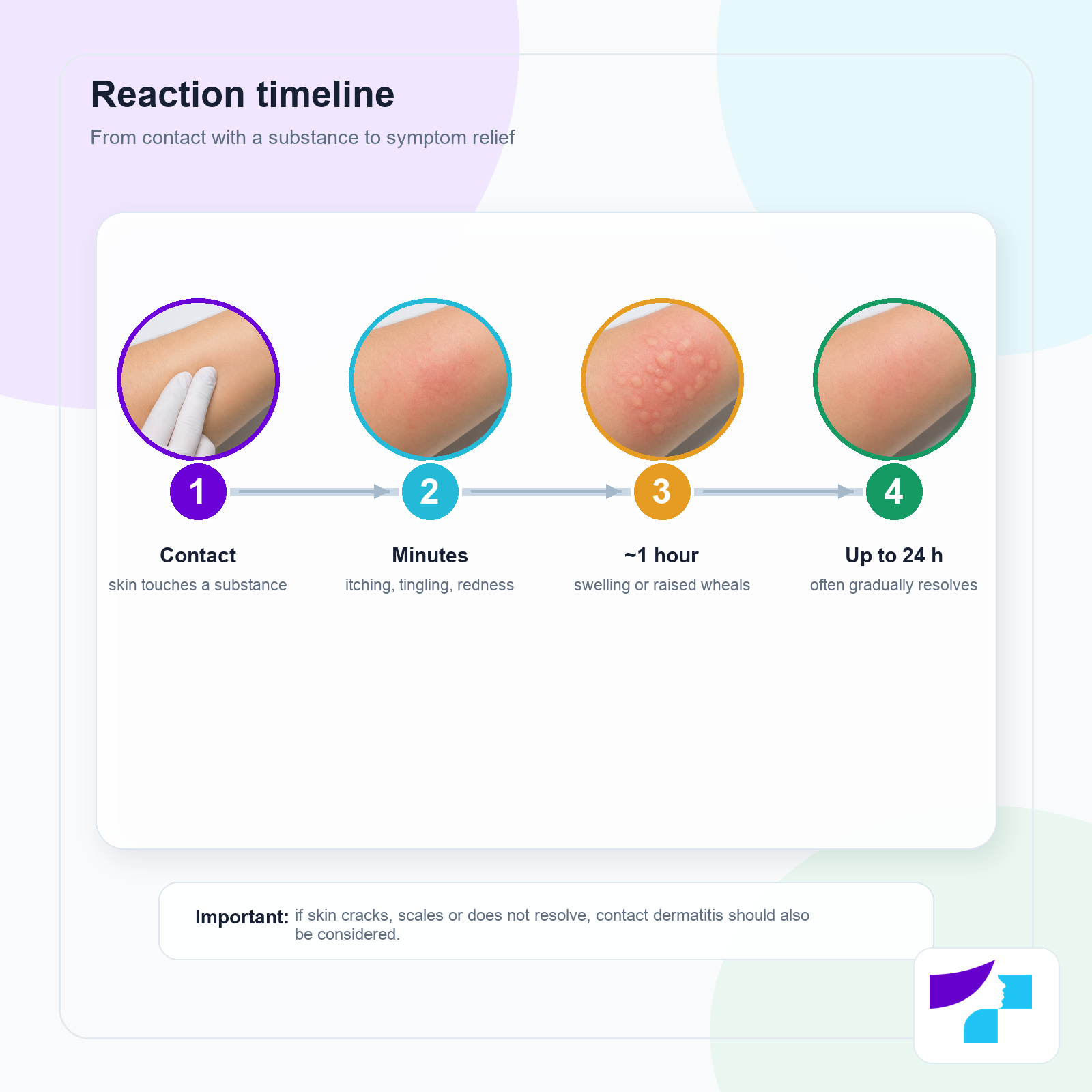
Mild reactions often disappear within several hours. In many cases, the skin returns to normal within 24 hours. If skin changes last longer, become dry, scaly, cracked, weeping, or blistered, allergic contact dermatitis, irritant contact dermatitis, or another skin condition should also be considered.
Common causes of contact urticaria
Contact urticaria can be triggered by various substances in everyday life and in the workplace.
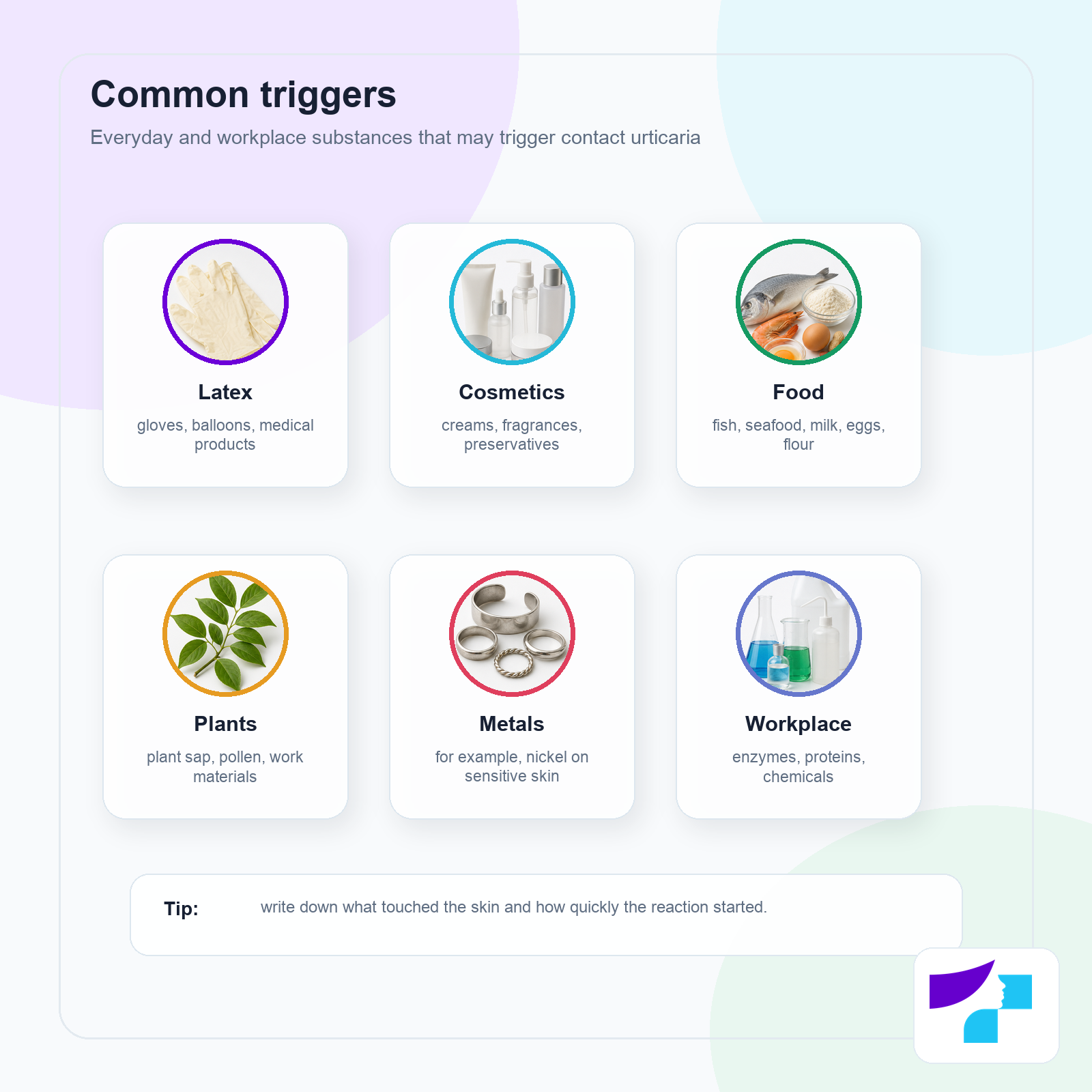
Common triggers include:
- natural rubber latex;
- foods such as fish, seafood, eggs, milk, fruit, flour, and wheat;
- preservatives such as sorbic acid or benzoic acid compounds;
- cosmetics and skincare products;
- fragrances and aromatic substances;
- medications and medicated creams;
- plants and plant sap;
- animal products;
- metals such as nickel;
- workplace proteins, chemicals, enzymes, or dust.
The risk is higher in people with atopic dermatitis, asthma, allergic rhinitis, or other allergic diseases. Risk may also increase when the skin barrier is damaged, for example by frequent washing, disinfectants, friction, or chronic hand dermatitis.
Allergic and non-allergic contact urticaria
| Feature | Allergic contact urticaria | Non-allergic contact urticaria |
|---|---|---|
| Mechanism | Immune reaction, often IgE-mediated | Direct local reaction to a substance |
| Previous contact | Sensitization is usually required | May occur even on first contact |
| Symptoms | Itching, hives, swelling; sometimes systemic symptoms | Burning, stinging, redness, local swelling |
| Risk of spreading | May spread beyond the contact area | Usually remains at the contact site |
| Risk of severe reaction | Anaphylaxis is possible | Anaphylaxis is usually not typical |
Contact urticaria, hives and contact dermatitis: what is the difference?
Contact urticaria differs from spontaneous hives because the reaction is caused by direct contact with a specific substance. By contrast, acute urticaria, or acute hives, may appear suddenly and is not always linked to a specific contact site.
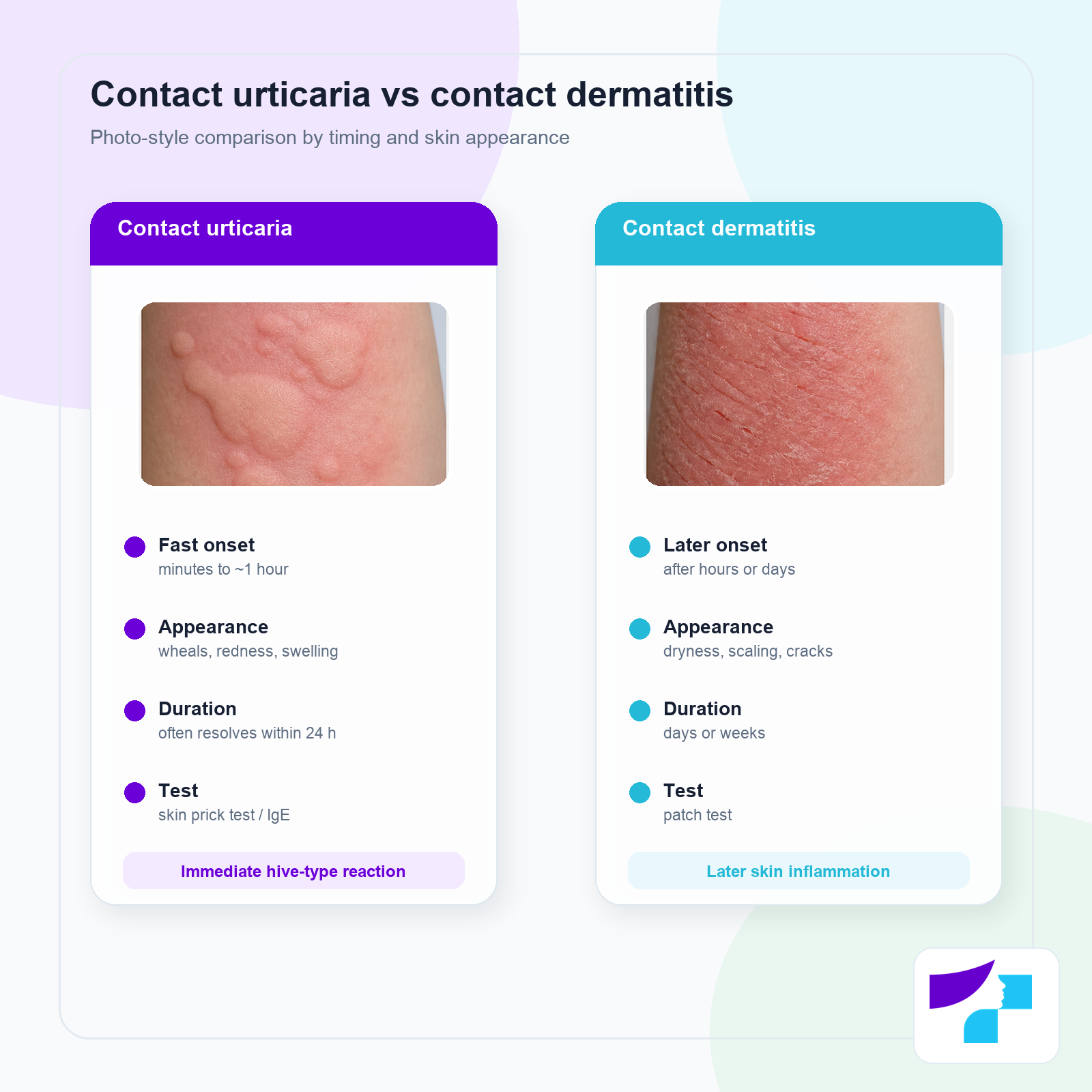
Contact urticaria and contact dermatitis can both occur after the skin touches a substance, but they are not the same condition.
| Feature | Contact urticaria | Contact dermatitis | Acute hives |
|---|---|---|---|
| Onset | Within minutes to about 1 hour | Often after several hours or days | Sudden, for various reasons |
| Link to contact | Direct contact with a substance | Direct contact with an allergen or irritant | The contact trigger is not always clear |
| Appearance | Raised hives, redness, swelling | Eczema, dryness, scaling, cracks, blisters | Raised hives on different body areas |
| Duration | Often up to 24 hours | May last days or weeks | Individual wheals usually disappear within 24 hours |
| Diagnosis | History, skin prick test, specific IgE, provocation tests | History, patch test | History and examination; tests only in selected cases |
| Risk | Allergic forms may cause systemic reactions | Usually not life-threatening, but may become chronic | Rarely may be linked to a severe allergic reaction |
In practice, these conditions may overlap. For example, a person may have both an immediate reaction to latex and delayed irritation or dermatitis from chemical additives in gloves.
Latex allergy and contact urticaria
Latex is one of the best-known triggers of allergic contact urticaria. It may be found in medical gloves, balloons, condoms, rubber bands, some medical devices, and other natural rubber products.
Latex allergy may cause:
- itching and hives at the contact site;
- redness and swelling;
- runny nose or sneezing;
- watery eyes;
- cough, wheezing, or shortness of breath;
- swelling of the lips, face, or throat;
- dizziness or fainting in severe reactions.
Not every rash from gloves means latex allergy. Sometimes the skin is irritated by sweating, friction, frequent handwashing, disinfection, or chemicals in the gloves. This is why it is important to distinguish latex contact urticaria from irritant dermatitis and allergic contact dermatitis.
People with confirmed latex allergy usually need to choose latex-free materials, such as nitrile, vinyl, or neoprene gloves.
Contact urticaria in the workplace
Contact urticaria may be an occupational skin disease. It can develop in people who repeatedly come into contact with allergens or irritants in their daily work.
Commonly affected professions and workplaces include:
- healthcare and veterinary workers;
- dental staff;
- chefs, pastry cooks, and food production workers;
- hairdressers;
- agricultural and dairy workers;
- laboratory workers;
- cleaning workers;
- chemical industry workers.
If symptoms appear during work, recur after using specific materials, and improve on days off or during holidays, this is an important sign that the workplace may be involved.
Can contact urticaria be dangerous?
Mild local contact urticaria is often not dangerous and improves after contact stops. However, allergic contact urticaria can be serious if the reaction spreads beyond the contact area or involves the airways, digestive system, or circulation.
Particular caution is needed if the reaction is related to latex, foods, medications, or if the person has previously had severe allergic reactions.
When is urgent medical help needed?
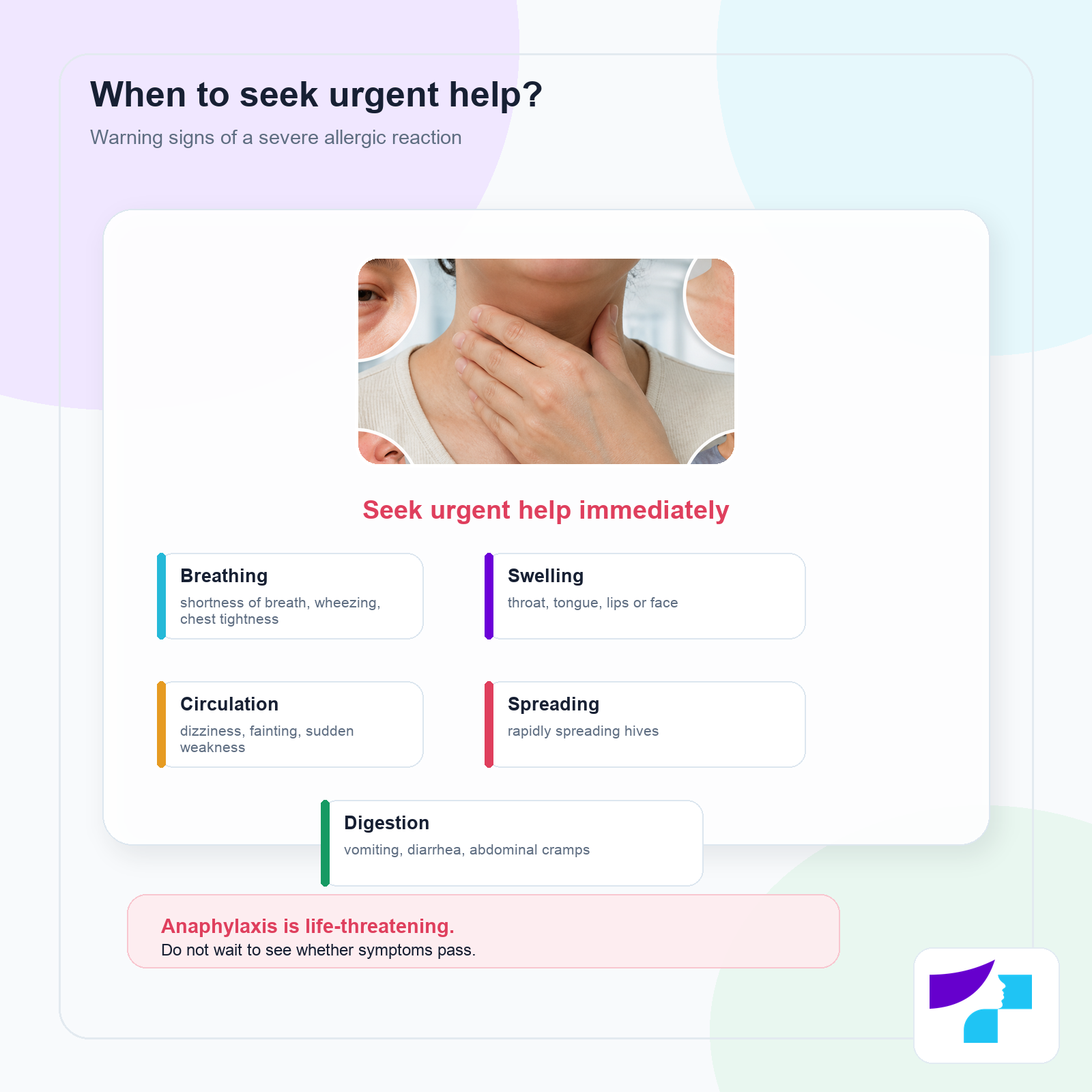
Seek urgent medical help immediately if, after contact with a possible allergen, any of the following symptoms appear:
- shortness of breath;
- wheezing or chest tightness;
- swelling of the throat, tongue, lips, or face;
- hoarse voice;
- difficulty swallowing;
- dizziness or fainting;
- rapidly spreading hives;
- nausea, vomiting, diarrhea, or abdominal cramps;
- sudden weakness or confusion.
These signs may indicate anaphylaxis. Anaphylaxis is a life-threatening allergic reaction that requires immediate treatment.
How does a doctor diagnose contact urticaria?
Diagnosis begins with a detailed discussion and skin examination. The doctor needs to know what the skin touched, how quickly symptoms appeared, how long they lasted, whether the reaction recurs, and whether symptoms appeared beyond the skin.
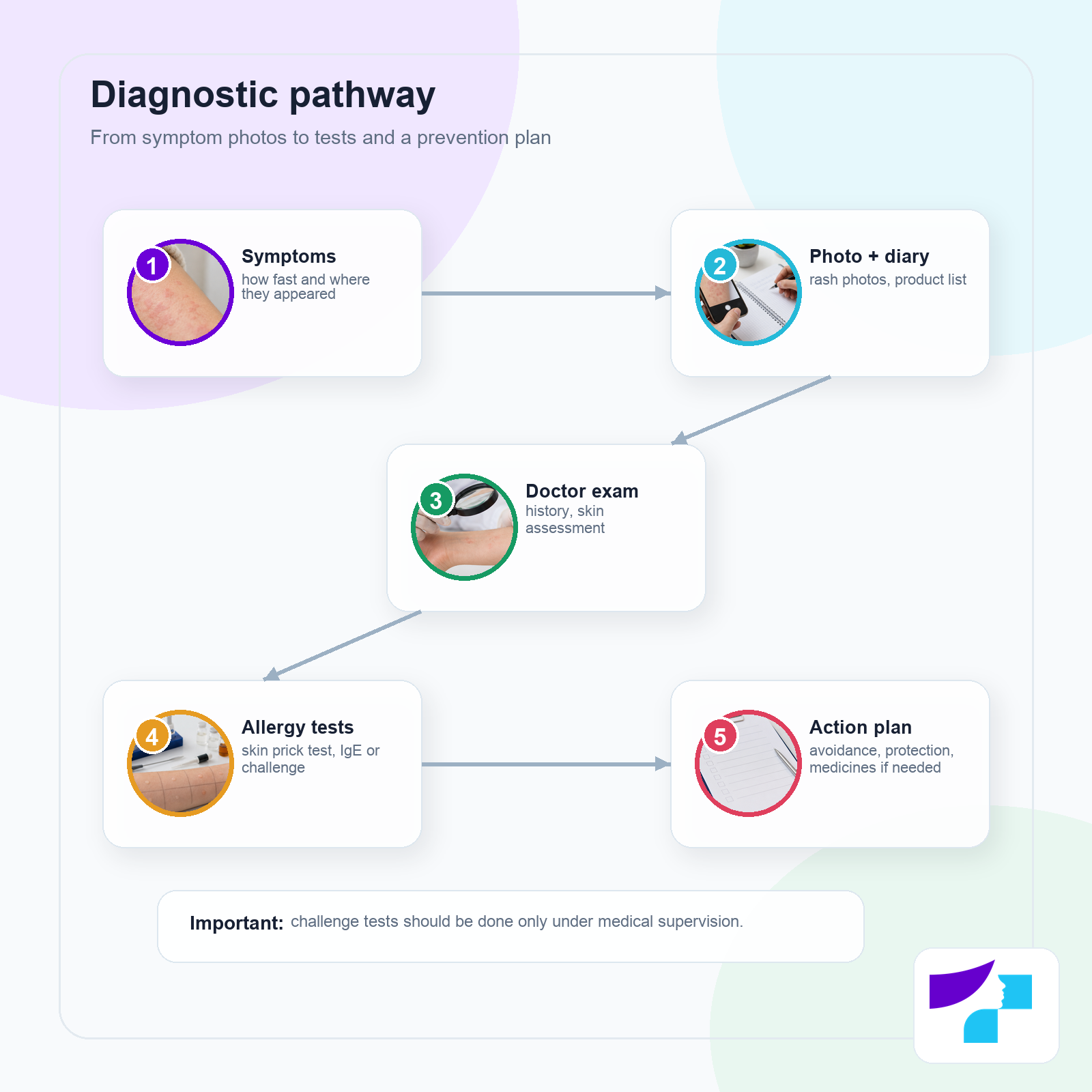
Useful information for the appointment includes:
- photos of the rash;
- packaging or ingredient lists of suspected products;
- names of workplace materials or gloves;
- a list of medications;
- description of foods involved;
- a symptom diary;
- information about asthma, eczema, allergic rhinitis, or other allergies.
If allergic contact urticaria is suspected, the doctor may recommend a skin prick test, specific IgE blood test, or controlled provocation test. These tests should be performed under medical supervision because a stronger allergic reaction is theoretically possible.
If contact dermatitis is more likely, a patch test may be more appropriate, as it checks for delayed-type contact allergy.
Treatment of contact urticaria
The main treatment principle is identifying the trigger and avoiding it. If possible, contact with the suspected substance should be stopped and the skin gently washed with water.
For a mild local reaction, the following may help:
- stopping contact with the trigger;
- rinsing the skin;
- a cool compress;
- avoiding irritation and scratching;
- doctor- or pharmacist-recommended antihistamines to reduce itching and hives.
In allergic contact urticaria, second-generation H1 antihistamines are often used, such as cetirizine, loratadine, desloratadine, fexofenadine, or similar medicines. The specific medicine and dose should be chosen according to age, other health conditions, pregnancy, drug interactions, and medical advice.
Antihistamines do not replace adrenaline in anaphylaxis. If a person has previously had a severe allergic reaction, the doctor may prescribe an adrenaline auto-injector and an individual action plan.
How can repeated reactions be prevented?
Prevention depends on the trigger. The following often help:
- avoiding the known trigger;
- choosing latex-free gloves and materials;
- checking product ingredients;
- using protective gloves if they do not cause a reaction;
- using cotton liners under protective gloves if the hands sweat or rub;
- adjusting the workplace environment;
- protecting the skin barrier;
- reducing fragrances and irritating products;
- keeping a symptom diary in repeated episodes.
If the reaction has been significant, the suspected substance should not be “tested” again at home.
When should you see a doctor?
You should see a family doctor, dermatologist, or allergist if:
- the reaction recurs;
- the trigger is unclear;
- symptoms are pronounced;
- latex, food, or medication allergy is suspected;
- the reaction is work-related;
- angioedema appears;
- symptoms beyond the skin have occurred;
- the rash does not disappear within 24 hours;
- the skin becomes dry, scaly, cracked, painful, or weeping.
An allergist can help clarify an allergic mechanism and the necessary tests. A dermatologist can assess skin diseases, contact dermatitis, and other similar diagnoses.
What should not be done at home?
You should not:
- diagnose contact urticaria only from internet images;
- reapply a suspected product to “test” the reaction;
- ignore shortness of breath, throat swelling, or fainting;
- use someone else’s prescription medicines;
- treat a severe reaction only with cream or home remedies;
- continue working with the suspected substance without protection if reactions recur.
How to prepare for a doctor’s appointment?
Before the appointment, it is useful to prepare:
- photos of the rash at different stages;
- a list of products that touched the skin;
- names of cosmetics, gloves, disinfectants, or workplace materials;
- information on how quickly symptoms started;
- information on how long they lasted;
- details of similar previous episodes;
- information about allergies, asthma, eczema, or medications.
Questions to ask the doctor
- Could this be contact urticaria?
- Should contact dermatitis be ruled out?
- Is a skin prick test needed?
- Is a specific IgE blood test needed?
- Which products or substances should I avoid?
- What should I do if the reaction happens again?
- Do I need an adrenaline auto-injector?
- Could the reaction be work-related?
Common myths about contact urticaria
| Myth | Fact |
|---|---|
| Contact urticaria is always an allergy. | It may be allergic or non-allergic. |
| Contact urticaria and contact dermatitis are the same. | They are different reactions with different timing and appearance. |
| If the reaction is only on the skin, it cannot become serious. | Allergic contact urticaria may also cause systemic symptoms. |
| Antihistamines always solve the problem. | They may reduce symptoms, but identifying and avoiding the trigger is most important. |
| Latex rashes are always contact dermatitis. | Latex may also cause immediate contact urticaria and a severe allergic reaction. |
| Contact urticaria can be safely tested at home. | Repeated contact with an allergen may be risky. |
Summary
Contact urticaria is an immediate skin reaction after contact with a specific substance. It most often causes itching, burning, redness, swelling, or raised hives. The reaction usually begins within minutes to about one hour and often disappears within 24 hours.
The most important steps are to distinguish contact urticaria from contact dermatitis and other forms of hives, identify the possible trigger, and recognize warning signs. If shortness of breath, throat or facial swelling, dizziness, fainting, or rapidly spreading hives occur, urgent medical help is needed.
Medical disclaimer
This information is for educational purposes and does not replace medical consultation, diagnosis, or treatment. The significance of contact urticaria depends on the trigger, symptom severity, and the person’s overall health. If shortness of breath, swelling of the throat, tongue, lips, or face, dizziness, fainting, rapidly spreading hives, or other signs of a severe allergic reaction occur, seek urgent medical help immediately. If reactions recur, the trigger is unclear, or skin assessment is needed, book a dermatologist consultation.
References and authoritative sources
- DermNet: clinical information on contact urticaria, its types, symptoms, diagnosis, and treatment
- NCBI Bookshelf / StatPearls: Contact Urticaria medical review on pathogenesis, diagnosis, and treatment
- DermNet: overview of urticaria, symptoms, and clinical forms
- DermNet: signs of anaphylaxis, risks, and the importance of urgent care
- American Academy of Allergy, Asthma & Immunology: latex allergy symptoms, risks, and prevention
- American Academy of Allergy, Asthma & Immunology: contact dermatitis overview and differences from other skin reactions
- Pauls Stradins Clinical University Hospital: patient information on hives
