Polynucleotide injections
Polynucleotide injections are an aesthetic medical treatment used to improve skin quality. A preparation containing purified DNA fragments is injected to gradually improve skin texture and elasticity and reduce the appearance of fine lines. Some studies have also reported improvements in skin hydration.
Treatment is most often considered for the face and eye area, while certain preparations are also used on the neck, décolletage and backs of the hands. Results depend on the specific concern, the product selected and the individual response. Polynucleotides show promising potential, but clinical evidence remains limited.
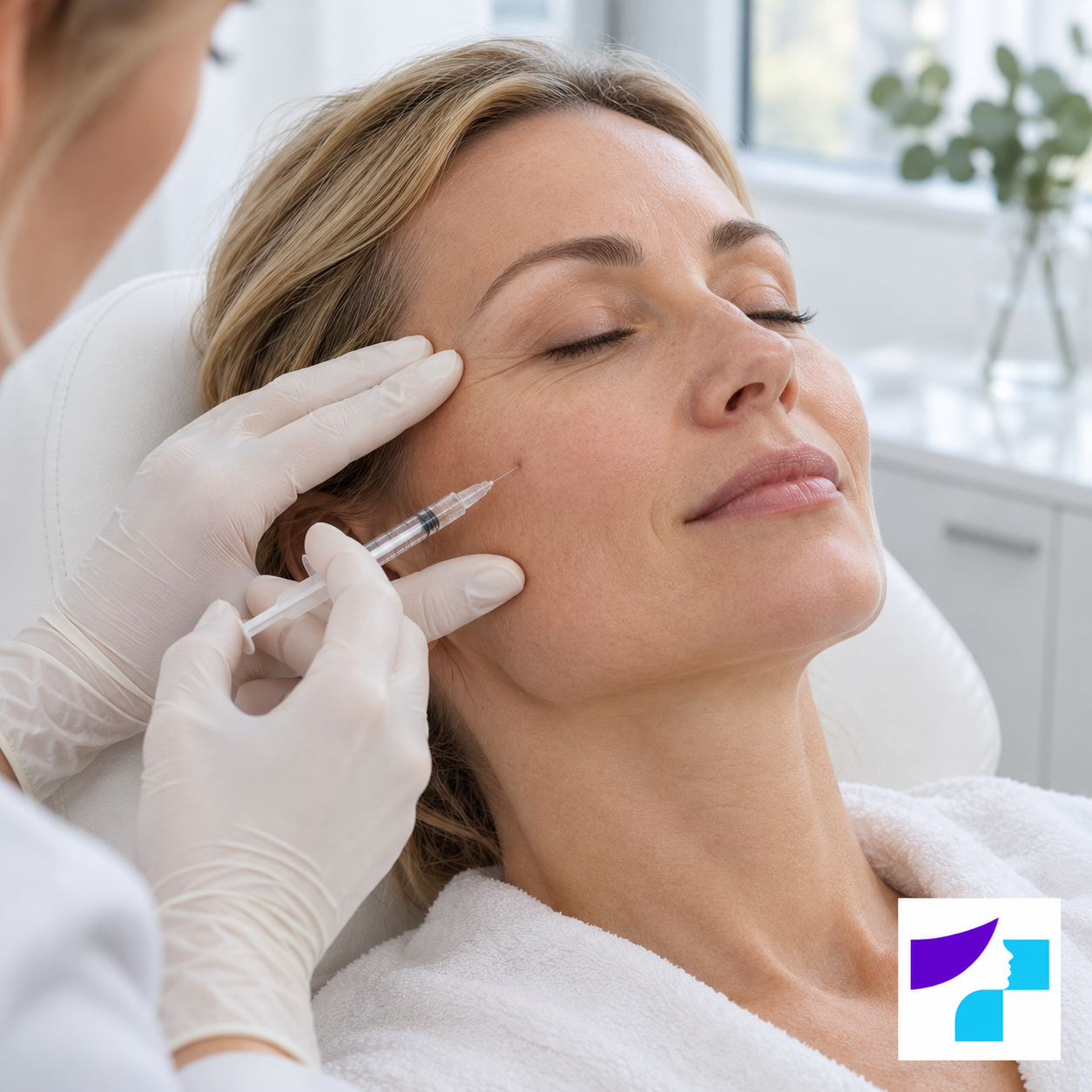
Illustration of a polynucleotide injection procedure: a gloved practitioner performs an injection in the cheek area.
Treatment at a glance
| Question | What you should know |
|---|---|
| What is the aim? | Gradual improvement in skin quality, particularly fine lines and changes in texture |
| Which areas can be treated? | The face and eye area; other areas depend on the preparation’s intended use |
| Is a consultation necessary? | Yes. Skin, medical history and treatment expectations must be assessed before injections |
| Is treatment painful? | Stinging and burning sensations are possible; pain relief is selected individually |
| Is a course of treatment needed? | Several sessions are often planned. Some protocols use 3–4 sessions at intervals of 2–4 weeks |
| When are results assessed? | Over the following weeks and after the course, once the immediate skin reaction has settled |
| What can happen after injections? | Redness, papules, tenderness, swelling and bruising |
| How long do the effects last? | No single duration has been established for all preparations and patients |
The course outlined in the table is an example, not a universal protocol or an individual treatment plan.
What are polynucleotides?
Polynucleotides are chains of linked nucleotides. Nucleotides are the building blocks of nucleic acids, including DNA. The properties of injectable preparations depend on molecular length, concentration, purification and other ingredients.
Many preparations contain purified DNA fragments obtained from fish-derived materials, such as salmon or trout. This explains the informal term “salmon DNA injections”. It is not a precise name for the whole product group, and the ingredients of the specific preparation should be clarified before treatment.
Polynucleotide injections are not gene therapy. The preparations are not intended to rewrite the human genetic code or transfer genetic characteristics from fish.
What is the difference between PN and PDRN?
PN stands for polynucleotides, while PDRN stands for polydeoxyribonucleotides. In aesthetic medicine literature, PN more often describes longer-chain materials whose physical properties are important to the gel’s behaviour. PDRN is more often discussed in relation to mixtures of shorter DNA fragments and their biological effects on tissue repair.
Terminology is not fully standardised. An abbreviation alone is insufficient to establish whether two preparations are equivalent or what results to expect. Some products also contain hyaluronic acid, so the effect of a combined preparation cannot automatically be attributed to polynucleotides alone.
How do polynucleotide injections affect the skin?
Potential effects relate both to the preparation’s physical properties, including water binding, and to its influence on skin cell activity. Laboratory studies have examined fibroblast activity, collagen production and inflammatory signalling pathways. Fibroblasts are connective tissue cells. PDRN research has also explored adenosine receptor-related signalling and the recycling of nucleotides in cellular metabolism.
These mechanisms help explain interest in the treatment, but laboratory findings alone do not predict visible improvements in human skin. Clinical effectiveness must be assessed separately for each preparation and application.
Who may be suitable for treatment?
Treatment may be discussed for:
- fine lines, including around the eyes;
- uneven skin texture;
- reduced skin elasticity;
- thin skin where improvement in skin quality is desired;
- signs of dryness or dehydration, after their cause has been assessed.
Dry or sensitive skin does not in itself mean that injections are needed. If dermatitis, unsuitable skincare or another condition is responsible, the cause should be addressed first. Polynucleotide treatment does not replace daily moisturising, sun protection or treatment of skin disease.
What can polynucleotides not address?
Improving skin quality does not necessarily correct deep folds, pronounced tissue sagging or structural volume loss. Polynucleotides also do not reduce muscle activity in the same way as botulinum toxin.
Treatment can be considered for both women and men. There is no set age at which injections must be started for prevention. For an adult patient, the decision depends on the specific need and the product’s conditions of use.
Polynucleotide injections under the eyes
Thin skin, wrinkles, pigmentation, swelling and anatomical hollows may coexist around the eyes. These changes have different causes and should be assessed separately.
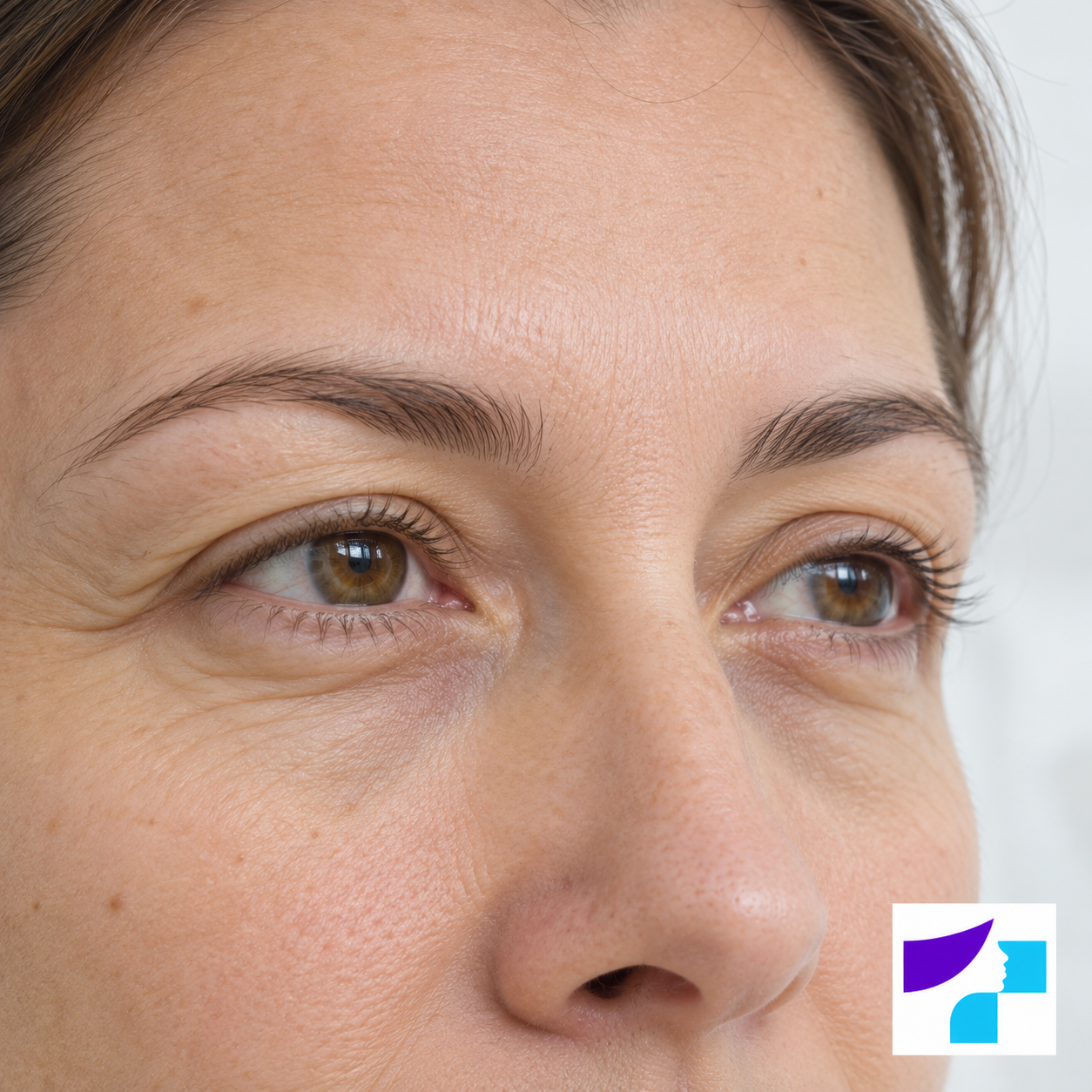
A close-up of the eye area showing natural skin texture and fine lines. Illustrative image.
Fine lines and thin skin
Clinical studies have reported improvements in some wrinkle and skin-quality measures. This supports discussing suitability for selected patients, but does not mean that all wrinkles will disappear or that skin thickening is guaranteed.
The eye area requires an appropriate preparation and injection technique. A product intended for another part of the face is not automatically suitable for the skin under the eyes.
Can they help with dark circles?
Dark circles may be caused by pigment, blood vessels visible through thin skin or shadows created by a tear-trough hollow. Several factors often contribute at the same time.
If skin quality is a contributing factor, a doctor may assess whether polynucleotide injections are suitable. If pigmentation or an anatomical hollow predominates, injections alone may be insufficient. It is therefore not appropriate to promise the elimination of dark circles in general.
Can they help with eye bags and swelling?
Polynucleotide injections do not remove protruding fat and are not intended to treat every cause of swelling. Swelling may also temporarily increase after injections.
Correcting tear-trough volume is a separate treatment goal. A PN treatment intended to improve skin quality does not automatically replace a volumising filler or other treatment methods.
Other areas and potential uses
Face, neck, décolletage and hands
Depending on the preparation’s intended use, treatment may also be considered for these areas. Skin thickness, anatomy and the causes of changes differ, so a single injection protocol is not suitable for every area.
Studies of the eye area do not establish the same results for the neck or hands. For example, volume loss in the hands and pronounced neck sagging are not solely matters of skin texture.
Acne scars and pigmentation
Polynucleotides have been studied for atrophic, or depressed, acne scars. Improvements were observed in a small placebo-controlled study involving 20 women, but the short follow-up and small sample do not establish a universal treatment protocol.
The choice of scar treatment depends on scar type and depth. Active acne should be treated separately; polynucleotide injections are not a primary treatment for it.
Pigmentation requires a diagnosis first. Limited evidence for particular types of pigmentation does not justify promises to reduce all pigment spots. Sensitivity, visible facial capillaries or rosacea alone are also insufficient reasons to select the treatment.
The connection with trichology
PDRN injections have also been studied for female pattern hair loss, including in combination with PRP. Evidence for this application is limited, and facial skin studies do not establish a hair-growth effect. In cases of alopecia, the type should first be identified and treatment supported for that diagnosis considered.
What does research show about effectiveness?
Studies use photographs, patient and clinician ratings, and measurements of skin surface topography, elasticity and hydration. These measures help assess changes, but a statistically significant improvement does not necessarily mean an equally noticeable visual result.
In a study involving 27 participants, a PN preparation was used on one side of the eye area and non-crosslinked hyaluronic acid on the other. Some instrument-based measures favoured PN, but overall aesthetic improvement ratings did not differ significantly. This does not establish that polynucleotides are superior across all outcomes.
Overall, the findings are promising, but studies differ in preparations, number of sessions, comparators and follow-up duration. Small studies cannot reliably identify rare complications or establish long-term safety. Nor is there a basis for combining the results of all products into a single guaranteed effect.
Consultation and preparation
A medical assessment is needed before injections. A dermatologist assesses the skin, clarifies the goal and discusses possible alternatives.
Tell the doctor about:
- medical conditions and allergies, especially to fish and ingredients in the preparation;
- all medicines and dietary supplements;
- pregnancy or breastfeeding;
- previous injections, fillers and other procedures;
- episodes of herpes, infection or inflammation in the treatment area;
- previous adverse reactions after aesthetic procedures.
Do not stop medicines affecting blood clotting or other prescribed medicines on your own. If treatment increases risk, the treating doctors decide how to proceed, including whether to postpone the procedure.
Before giving consent, clarify the preparation, planned treatment areas, course of treatment, possible side effects and costs.
How are polynucleotide injections performed?
The skin is cleansed and disinfected. Local pain relief is used if needed. Small amounts of the preparation are injected using a technique appropriate to the product and area. Small raised bumps, or papules, may be visible after superficial microinjections.
Stinging, burning or a feeling of pressure may occur during injections. The eye area may be more sensitive. Pain relief helps reduce discomfort but does not always eliminate it completely.
The total appointment time depends on the area, consultation and pain relief. Clarify this before the visit. The amount of product is determined by need and the instructions for use; a larger volume does not in itself mean a better result.
Treatment course and results
How many sessions are needed?
A course of several sessions is often used. As an example, some protocols involve 3–4 sessions at intervals of 2–4 weeks, but this is not a universal rule for all PN and PDRN preparations.
The doctor determines the number of sessions, intervals and any need for maintenance treatments based on the product’s conditions of use, the area and the response to treatment.
When are results visible?
Changes in skin quality are assessed over the following weeks and after the course. An impression of fuller skin immediately after treatment may partly reflect swelling. This is not evidence of a lasting result.
Changes may not be noticeable after one session. If there is still no improvement after the planned assessment period, the original goal and choice of treatment should be reviewed.
How long do the effects last?
A single duration cannot be given for all patients. Durability depends on the preparation, area and baseline condition; follow-up duration also differs between studies. An improvement observed at a particular study visit does not establish the same duration for every patient.
How should “before and after” results be assessed?
Photographs should be compared under similar lighting, at the same distance and with the same facial expression, without filters and after the immediate reaction has settled. The original treatment goal, such as texture or fine lines, should be assessed specifically.
Other patients’ reviews may help explain the treatment experience, but they do not replace an individual assessment.
When is treatment avoided or postponed?
Contraindications are determined by the current instructions for the specific preparation. Key circumstances to assess include:
- hypersensitivity to ingredients in the preparation;
- active infection, herpes lesions or inflammation in the injection area;
- pregnancy and breastfeeding;
- bleeding disorders and medicines affecting blood clotting;
- autoimmune or other significant medical conditions and immunotherapy.
A known fish allergy may be a direct contraindication to a fish-derived product. Purification is not a reason to disregard the manufacturer’s restrictions.
Autoimmune disease cannot generally be assumed to be compatible with treatment: it is a contraindication for some products. Elective aesthetic polynucleotide injections are not performed during pregnancy or breastfeeding.
Side effects and signs of complications
Redness, tenderness, papules, swelling and bruising may occur after injections. Papules may subside over hours or days; reactions around the eyes may last longer. A precise recovery time cannot be guaranteed.
Contact the practitioner if pain, redness or swelling increases, or if discharge, fever or persistent nodules develop. Symptoms should not automatically be attributed to normal healing if their course differs from what was explained beforehand.
Sudden visual disturbances, unusually severe pain, or whitening or a blue-grey discolouration of the skin after facial injections require immediate medical attention. Difficulty breathing or rapid swelling of the face, lips or tongue requires emergency medical help.
These are general warning signs after injection procedures. They do not establish complication rates for PN preparations; risk figures for other fillers cannot automatically be applied to polynucleotides.
Skincare after treatment
Individual instructions, preferably in writing, should be provided after treatment. While the skin is sensitive, use gentle skincare and do not rub, squeeze or massage injection sites unless instructed.
- Make-up. Do not apply it to fresh injection sites that have not closed. When to resume depends on the skin’s condition and the practitioner’s recommendations.
- Exercise, sauna and swimming. Discuss returning to these activities with the practitioner. Avoid overheating and further irritation or injury while significant irritation or swelling remains.
- Sun exposure. Protect the skin from intense UV exposure and tanning beds. Use a suitable sunscreen as appropriate for the skin’s condition.
- Retinol, acids and peels. Resume irritating products after the skin has recovered. There is no single suitable restart date for every product and patient.
It is advisable not to schedule an important event immediately after treatment, as visible reactions can vary in duration.
Polynucleotides or another treatment?
| Method | Main aim | Key difference |
|---|---|---|
| Biorevitalisation with hyaluronic acid | Hydration and skin quality | Goals may overlap, but ingredients and evidence differ |
| Volumising fillers | Volume and contour correction | A PN skin-quality treatment does not automatically replace structural correction |
| Botulinum toxin | Reducing the activity of specific muscles | A different mechanism of action and treatment goal |
| Mesotherapy | Delivery of various substances through microinjections | A broad term; specific formulations must be compared |
| PRP and PRF | Use of preparations derived from the patient’s blood | Origin, preparation methods and evidence differ |
| Other biostimulators | Influencing tissue quality or structure | Materials, intended areas and risks differ |
No single treatment is best for everyone. The choice depends on the cause of the concern and the desired result, rather than the method’s popularity.
Can treatments be combined?
Polynucleotides are sometimes included in a plan alongside laser treatments, microneedling or other injections. This requires a clear rationale and appropriate sequencing and intervals.
Using several methods does not guarantee a better result. An effect observed in a combination study cannot always be attributed to one component. Combining treatments also does not authorise mixing preparations in the same syringe.
Can PDRN skincare replace injections?
Serums and creams are not equivalent to injectable preparations. Their ingredients, route of delivery and penetration into tissues differ. Injection studies therefore do not establish the same results for skincare products.
A product should be assessed on its specific formula and supporting studies. The label “PDRN” does not in itself make a product equivalent to a medical procedure.
What determines the cost and choice of preparation?
The cost of polynucleotide injections depends on the preparation, volume, area, number of sessions and whether consultation and pain relief are included.
When comparing offers, clarify whether the price is for one syringe, one session or a full course. Eye-area offers may also differ in volume and included services. It is advisable to obtain an estimate of the total cost before starting a course.
Preparations may differ in PN or PDRN characteristics, concentration, the presence of hyaluronic acid and other ingredients, intended treatment areas and contraindications. A higher concentration or volume does not in itself mean a more suitable choice.
When choosing a practitioner, qualifications, experience in the relevant area, medical assessment and clear arrangements for contact after injections are important.
Medical disclaimer
This article provides general information and does not replace an individual medical consultation, diagnosis or treatment. A qualified healthcare professional determines suitability for polynucleotide injections, the preparation and the treatment plan after assessing skin and general health, in accordance with the specific product’s instructions for use. Results and recovery times may vary; a particular effect cannot be guaranteed. Contact the practitioner if unusual or worsening symptoms develop after treatment, and seek immediate medical attention for emergency symptoms.
References and authoritative sources
- Comparison of the effects of polynucleotide and hyaluronic acid fillers on periocular rejuvenation: a randomised, double-blind, split-face trial
- Preliminary prospective and randomised study of highly purified polynucleotide versus placebo in moderate to severe acne scars (2021)
- Polydeoxyribonucleotides and human skin fibroblast proliferation: involvement of A2 purinergic receptors — laboratory study (1999)
- Opposing effects of polydeoxyribonucleotide on ERK activity in human skin keratinocytes and fibroblasts — laboratory study (2023)
- The effectiveness of polynucleotides in aesthetic medicine: a systematic review (published online in 2024; journal issue 2025)
- Polynucleotide injections for enlarged pores: intradermal needle versus subdermal cannula techniques in a randomised split-face trial (2026)
- Efficacy and safety of intradermal versus subdermal polynucleotide injections for facial improvement: a prospective split-face study (2026)
- Autologous platelet-rich plasma and polydeoxyribonucleotide for female pattern hair loss (2015)
- Croma PolyPhil: manufacturer’s answers to frequently asked questions about polynucleotide preparations, treatment courses and restrictions
- US Food and Drug Administration (FDA): dermal fillers and general information on injection risks and warning signs
Content author
Frequently Asked Questions
1. Are polynucleotide injections fillers?
Some publications also use the word “filler”, but a PN treatment intended to improve skin quality cannot automatically be equated with volume correction.
2. Does the treatment change facial features?
Its usual aim is to improve skin quality. Swelling may affect the immediate appearance, while the final outcome depends on the product and how it is administered.
3. Do polynucleotides alter a person’s DNA?
These are not gene therapy injections, and the products are not intended to rewrite a person’s genetic code.
4. Does the treatment help with all types of dark circles?
No. The choice of treatment depends on whether the main factor is pigmentation, thin skin, visible blood vessels, or an anatomical shadow.
5. Can polynucleotides cause swelling?
Yes. Swelling is a possible reaction after the injections. Its duration and severity, especially around the eyes, should be considered when planning the treatment.
6. Is one treatment enough?
A course of treatments may be needed, depending on the product and the goal. A single treatment does not guarantee a visible improvement.
7. How long does the result last?
A single duration has not been established for all products. The specific treatment plan and its rationale should be discussed with a doctor.
8. Are the injections painful?
Stinging, burning, and tenderness are possible. Anaesthesia can help but may not eliminate all discomfort.
9. Can I go to work after the treatment?
This depends on the type of work and the individual reaction. Redness, papules, swelling, or bruising may occur.
10. Can the treatment be performed if I have a fish allergy?
A fish allergy may be a contraindication to a product derived from fish. The doctor must be informed about the allergy before a product is selected.
11. Is the treatment performed during pregnancy or breastfeeding?
Elective aesthetic polynucleotide injections are not performed during pregnancy or breastfeeding.
12. What should I do if there is no effect after the course?
The result should be assessed with a doctor and the plan reviewed. There is no reason to increase the number of injections automatically without reassessing whether the treatment is suitable.
Consultation fee
| Qualification | Clients of the clinic | First visit |
|---|---|---|
| Clinic Director | 76 € | 80 € |
| Dr. Med. | 66.50 € | 70 € |
| Highly qualified doctor | 57 € | 60 € |
| Doctor | 52.25 € | 55 € |



 +1
 +1
 +1 242
 +1 246
 +1 268
 +1 441
 +20
 +212
 +213
 +216
 +218
 +220
 +221
 +222
 +223
 +223
 +224
 +225
 +226
 +227
 +228
 +229
 +230
 +231
 +232
 +234
 +235
 +236
 +237
 +238
 +239
 +239
 +240
 +241
 +242
 +243
 +244
 +245
 +248
 +249
 +250
 +251
 +252
 +253
 +254
 +255
 +256
 +257
 +258
 +260
 +261
 +262
 +263
 +264
 +265
 +266
 +267
 +268
 +269
 +269
 +27
 +284
 +290
 +291
 +297
 +298
 +299
 +30
 +31
 +32
 +33
 +34
 +340
 +345
 +350
 +351
 +352
 +353
 +354
 +355
 +356
 +358
 +359
 +36
 +370
 +371
 +372
 +373
 +374
 +375
 +376
 +377
 +378
 +380
 +385
 +386
 +387
 +389
 +39
 +39
 +40
 +41
 +41
 +420
 +421
 +43
 +45
 +46
 +47
 +473
 +48
 +49
 +500
 +501
 +502
 +503
 +504
 +505
 +506
 +507
 +509
 +51
 +52
 +53
 +54
 +55
 +56
 +57
 +58
 +590
 +591
 +593
 +594
 +594
 +595
 +596
 +597
 +598
 +60
 +61
 +62
 +63
 +64
 +649
 +65
 +66
 +664
 +671
 +672
 +672
 +672
 +673
 +674
 +675
 +676
 +677
 +678
 +679
 +680
 +681
 +682
 +683
 +684
 +686
 +687
 +688
 +689
 +690
 +691
 +692
 +6982
 +7
 +7
 +7
 +7
 +758
 +767
 +784
 +809
 +809
 +81
 +82
 +84
 +850
 +852
 +853
 +856
 +86
 +868
 +869
 +876
 +880
 +885
 +886
 +90
 +91
 +92
 +93
 +94
 +95
 +960
 +961
 +962
 +963
 +964
 +965
 +967
 +968
 +971
 +972
 +973
 +974
 +975
 +976
 +977
 +98
 +993
 +994
 +995
 +996
 +996