Acne vulgaris, or acne, is one of the most common skin diseases among adolescents and young adults, but it can also affect children and adults. In everyday language, acne is often referred to as spots or pimples; however, medically, acne is not just individual bumps on the skin. It is a chronic inflammatory disease of the hair follicles and sebaceous glands, in which pore blockage, increased sebum production, inflammation, hormonal influence, changes in the skin microbiome and individual skin response all play a role.
Acne is not only a cosmetic problem. It can cause pain, discomfort, post-inflammatory marks, permanent scars, and can significantly affect self-esteem, social life and emotional well-being. For some people, acne becomes a long-term problem that recurs for several years or worsens during certain periods of life, such as puberty, before menstruation, during pregnancy, periods of stress or hormonal disorders.
A timely consultation with a dermatologist helps determine the severity of acne, distinguish acne from other similar skin conditions, choose appropriate treatment and reduce the risk of scarring. It is especially important to see a specialist if there are painful nodules, cysts, scars, rapid worsening, adult-onset acne or if previous treatment has not helped.
Key points
- Acne vulgaris, or acne, is a chronic inflammatory disease of the hair follicles and sebaceous glands, not simply “dirty skin”.
- Acne can appear as blackheads, whiteheads, inflamed bumps, pus-filled lesions, painful nodules, cysts, post-inflammatory marks and scars.
- Acne is not contagious — it cannot be passed from one person to another.
- Acne treatment takes time; the first results are usually assessed after several weeks, not after a few days.
- If there are painful nodules, cysts, scars, sudden adult acne, back or chest acne, pregnancy or significant emotional distress, a dermatologist consultation is needed.
- Squeezing pimples, aggressive scrubs, washing too often and frequently changing products can worsen acne and increase the risk of scarring.
- The choice of treatment is individual and depends on acne severity, type of lesions, location, skin sensitivity, the patient’s age, sex, possibility of pregnancy and previous treatment experience.
How to understand whether this article applies to you?
This article may be useful if you have recurring blackheads, whiteheads, inflamed bumps, pus-filled lesions, painful under-the-skin nodules or marks after eruptions on the face, chin, jawline, back, chest or shoulders. The article will help you understand how acne develops, how it differs from other skin problems, when gentle skin care may be enough and when a dermatologist consultation is needed.
If the eruptions are sudden, very painful, widespread, leave scars, appear during pregnancy or in adulthood, self-treatment should not be continued for a long time. In such situations, it is safer to consult a dermatologist in time, because inappropriate treatment can prolong inflammation and increase the risk of scarring.
What is Acne vulgaris, or acne?
Acne vulgaris is a common skin disease that affects the so-called pilosebaceous unit — the hair follicle and the sebaceous gland attached to it. Sebaceous glands produce sebum, or skin oil, which normally helps protect the skin and maintain its elasticity. In acne, this process becomes excessive or improperly regulated: pores become blocked, comedones form, inflammation is activated and different types of lesions may appear.
The medical term “acne” refers to the entire disease process — from closed and open comedones to inflammatory papules, pustules, nodules, cysts, post-inflammatory marks and scars. By contrast, the everyday word “pimples” usually refers to the visible lesions that a person notices on the face or body.
Acne most often appears in areas with many sebaceous glands: on the face, forehead, nose, chin, jawline, back, chest and shoulders. It may be mild, moderate or severe, and one patient may have several types of lesions at the same time.
Are acne and pimples the same thing?
In everyday language, acne and pimples are often used as synonyms, but medically they are not exactly the same. “Pimples” usually refer to individual visible lesions — for example, a red bump, a pus-filled bump or a blackhead. “Acne” is a broader medical term for the disease that includes pore blockage, comedone formation, inflammation, sebaceous gland activity, hormonal influence and a possible risk of scarring.
Therefore, a person may think they have “just pimples”, while a dermatologist may diagnose mild, moderate or severe acne. This distinction is important because treatment should be chosen not only according to how visible the lesions are, but also according to their type, depth, recurrence, location and risk of scarring.
How does acne form?
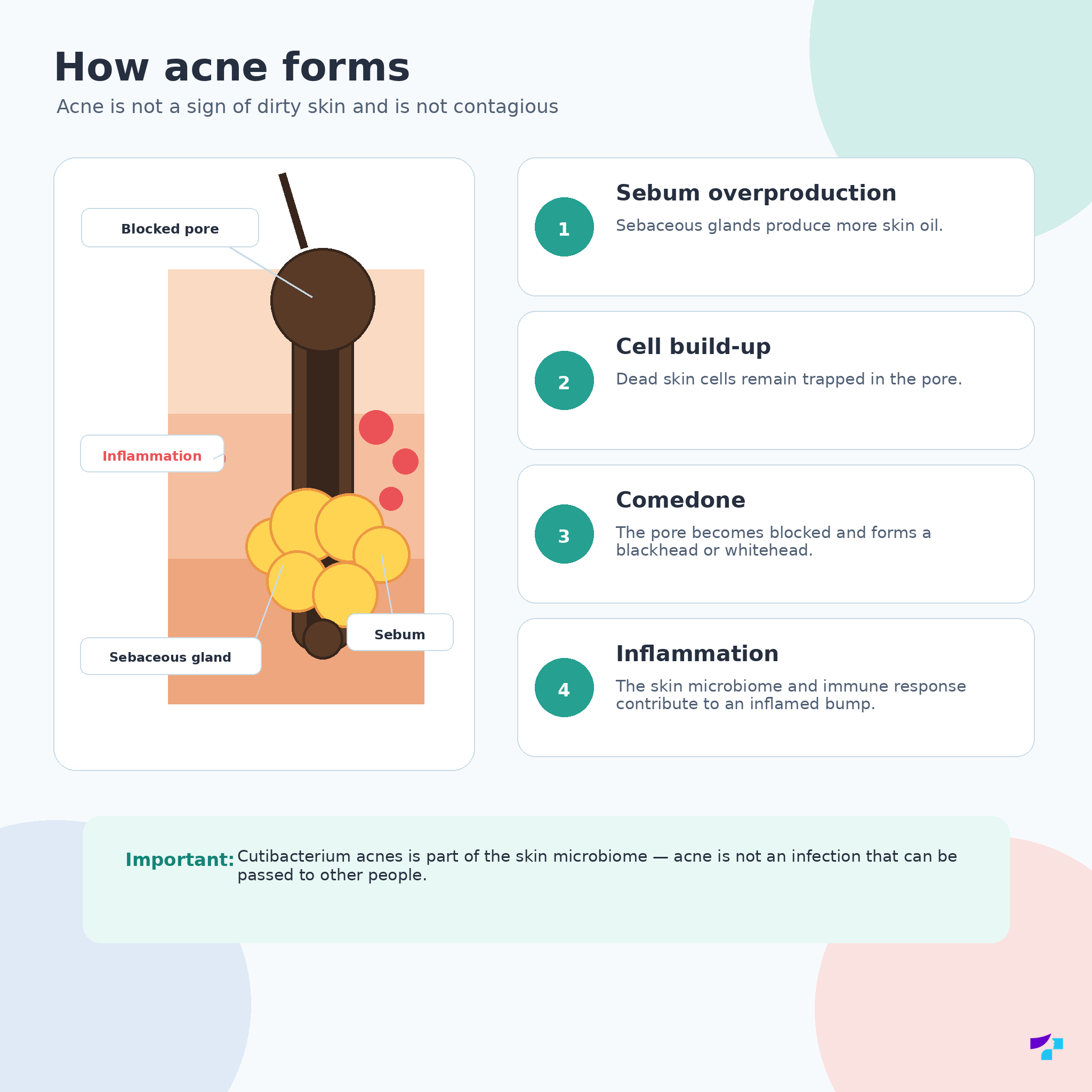
Acne develops gradually. It does not occur simply because the skin is dirty, and it is not a sign of poor hygiene. Washing the skin too often or too aggressively can even damage the skin barrier, increase irritation and make treatment more difficult.
Several interconnected mechanisms are usually involved in the development of acne.
First, sebum, or skin oil, production increases. Sebum itself is not harmful — it is necessary for the skin’s protective function. The problem arises when there is too much sebum or when its composition promotes pore blockage and inflammation.
Second, dead skin cells accumulate in the pores. Normally, the skin renews itself continuously, but in acne, cells at the follicle opening may stick together and remain there longer than they should. This promotes blockage formation.
Third, a microcomedone forms in the blocked pore — an early acne lesion that may not yet be visible to the naked eye. Over time, it may become a blackhead, or open comedone, or a whitehead, or closed comedone.
Fourth, Cutibacterium acnes bacteria play a role. They are part of the normal skin microbiome, not an external infection that a person can “pass on” to others. In acne, the environment inside the follicle changes, and these bacteria may contribute to the inflammatory response.
Fifth, inflammation is activated. It is inflammation that causes red, painful bumps, pustules, deeper nodules and cysts. The deeper and longer-lasting the inflammation, the greater the risk of post-inflammatory marks and scarring.
Sixth, acne is influenced by hormones. Androgens — a group of hormones present in both men and women — can increase sebaceous gland activity. This is why acne often starts during puberty and, in some women, worsens before menstruation, during pregnancy or in cases of hormonal disorders.
Genetic predisposition is also important. If parents have had pronounced, long-lasting or scarring acne, children may also have a higher risk of acne.
Acne development timeline
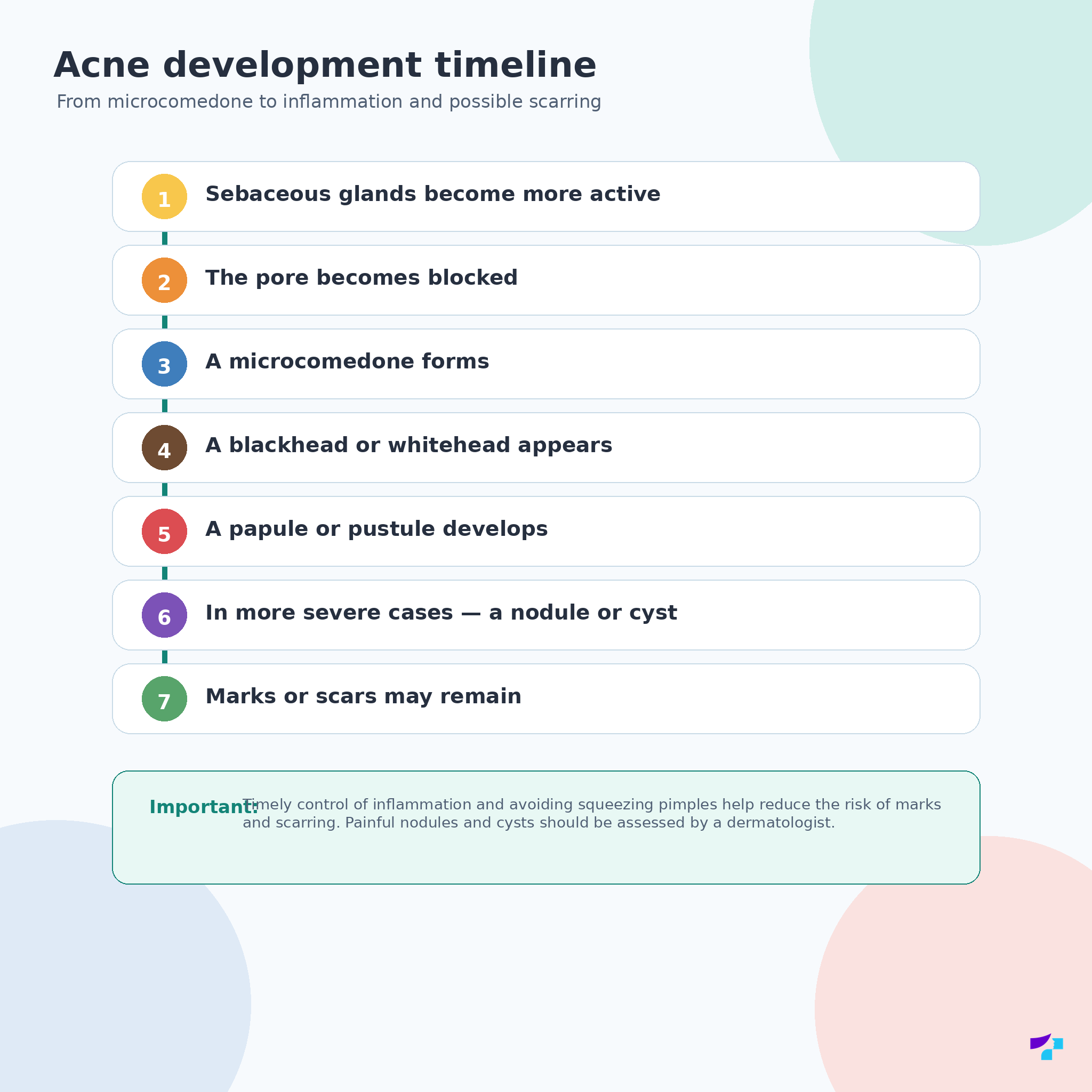
| Stage | What happens in the skin | What the patient may notice |
|---|---|---|
| Increased sebaceous gland activity | Sebaceous glands start producing more sebum | The skin becomes oilier, especially on the forehead, nose, chin or back |
| Pore blockage | Sebum and dead skin cells begin to accumulate in the follicle | Small bumps or “blocked pores” may appear |
| Microcomedone formation | An early acne lesion forms, which may not yet be visible | The skin may feel rough or uneven |
| Blackhead or whitehead | An open or closed pore becomes visible | Blackheads or whiteheads become visible |
| Inflammatory papule or pustule | The inflammatory response is activated | Red bumps or pus-filled bumps appear |
| Deeper nodule or cyst | Inflammation affects deeper skin layers | Painful, deep, long-lasting lesions develop |
| Post-inflammatory marks or scars | The skin heals after inflammation, but pigment changes or texture damage may remain | Red or brownish marks, pits, raised scars |
The earlier acne is controlled, the lower the chance that inflammation will become deep and leave permanent scars.
Who has a higher risk of acne?
Acne can affect anyone, but in some situations the risk is higher.
The most common acne risk and worsening factors are:
- adolescence and hormonal changes during puberty;
- hormonal fluctuations in adulthood;
- genetic predisposition;
- oily skin;
- the menstrual cycle;
- polycystic ovary syndrome or other hormonal disorders, if irregular menstruation, increased hair growth, hair loss or other symptoms are also present;
- stress as a possible worsening factor;
- comedogenic cosmetics, which may promote pore blockage;
- tight clothing, helmets, masks, sports equipment or other occlusive factors;
- certain types of medication, whose effect should be assessed by a doctor;
- work environment involving oils, grease or occlusive substances;
- inappropriate or overly aggressive skin care.
It is important to understand that risk factors do not mean that the person is “to blame” for acne. Acne is a medical condition, not a flaw in character, hygiene or lifestyle.
Where does acne appear most often?
Acne most often appears in areas where there are many sebaceous glands. The most typical areas are the face, forehead, nose, chin, jawline, back, chest and shoulders.
Facial acne is often the most visible and emotionally distressing because it is difficult to hide. Comedones and oiliness are more often seen on the forehead and nose. Acne on the chin and jawline in adult women may indicate a hormonal component, especially if it worsens before menstruation.
Back acne and body acne can be particularly persistent because the skin on the back and shoulders is thicker, topical products are harder to apply, and sweating, sports clothing, backpacks, tight clothing and friction may worsen inflammation. Deeper back acne can leave pronounced scars, so widespread, painful or recurring body acne should not be treated only with cosmetic products.
Acne in adolescents and adults
Acne often begins during adolescence because the influence of hormones on the sebaceous glands increases during puberty. The skin becomes oilier, pores become more easily blocked, and comedones, papules or pustules appear. In some adolescents, acne is mild and decreases over time, while in others it becomes pronounced, painful or scarring.
Acne may continue into adulthood or appear for the first time after adolescence. Adult acne is more often long-lasting, recurrent and associated with hormonal fluctuations, stress, cosmetics, medication or an individual skin response. In women, adult acne often affects the chin and lower jaw.
A hormonal component should be considered if acne regularly worsens before menstruation, appears together with irregular periods, increased hair growth, hair loss, weight changes or other endocrine symptoms. Sudden, pronounced acne in adulthood is a reason to consult a doctor, especially if it is painful, progresses rapidly or appears together with other symptoms of hormonal disorders.
Hormonal acne
Hormonal acne is not a separate disease, but a form of acne or a pattern of acne worsening in which hormonal fluctuations play an important role. Hormones can affect sebaceous gland activity, the amount of sebum and the skin’s inflammatory response.
In women, hormonal acne often worsens before menstruation. It may be more pronounced on the chin, jawline and upper neck. Sometimes it is associated with polycystic ovary syndrome or other hormonal disorders, especially if there is also an irregular menstrual cycle, increased hair growth on the face or body, hair loss on the scalp or difficulty controlling weight.
Contraception can affect acne in different directions. In some patients, certain types of hormonal contraception may improve acne, while in others it may worsen it. During pregnancy, acne may improve, remain unchanged or worsen. Since some acne treatments are not suitable during pregnancy, treatment during this period must always be chosen by a doctor.
Hormonal acne treatment should not be started independently with prescription medicines or hormonal products. The doctor must assess the patient’s age, sex, possibility of pregnancy, symptoms, previous treatment, comorbidities and safety factors.
Does diet affect acne?
Diet is not the only cause of acne, and acne cannot be explained simply by one product. However, for some people, diet may be one of the factors that worsens acne.
The effect of high-glycaemic-index foods is better discussed in the medical literature. These are foods that rapidly raise blood sugar levels, such as sweetened drinks, large amounts of sweets, white flour products and highly processed carbohydrates. In some patients, reducing this type of diet may help decrease acne flare-ups.
The link between dairy products and acne is being studied, but the evidence is not the same for all patient groups. This does not mean that all patients with acne must avoid dairy products. If a person notices a clear link between certain foods and worsening acne, this can be discussed with a doctor or nutrition specialist.
Chocolate itself is not a simple universal cause of acne. The overall dietary pattern, the amount of sugar, highly processed foods and individual response may be more important. Excessively restrictive diets without a justified reason are not recommended, especially for adolescents, pregnant women and people at risk of eating disorders.
The safest approach is a balanced diet, regular meals, sufficient protein and fibre, vegetables, whole grains, high-quality fats and individual observation without extremes.
Does stress cause acne?
Stress is not the only cause of acne, but it can worsen existing acne. During stress, hormonal and inflammatory regulation changes, sleep may worsen, eating and skin care habits may change, and the tendency to touch the face or squeeze pimples may increase.
In some people, acne worsens during exams, intensive work, emotional distress or periods of sleep deprivation. This does not mean that acne is “only caused by nerves”. Acne is a real skin disease, but stress may be one of the factors that maintains or worsens it.
Acne symptoms
Acne symptoms can vary — from a few blackheads to deep, painful nodules. One patient may have both non-inflammatory and inflammatory lesions at the same time.
The most common signs of acne are:
- oily skin;
- blackheads, or open comedones;
- whiteheads, or closed comedones;
- small bumps under the skin;
- red inflamed bumps;
- pus-filled bumps;
- painful nodules;
- cysts;
- post-inflammatory red or brownish marks;
- scars.
3–5 signs that may indicate acne:
- recurring blackheads or whiteheads;
- inflamed bumps on the face, back or chest;
- eruptions that recur in the same areas;
- painful deeper nodules;
- marks or scars after inflammation.
If the lesions are deep, painful, leave scars or significantly affect well-being, a dermatologist consultation should not be postponed.
Types of acne lesions
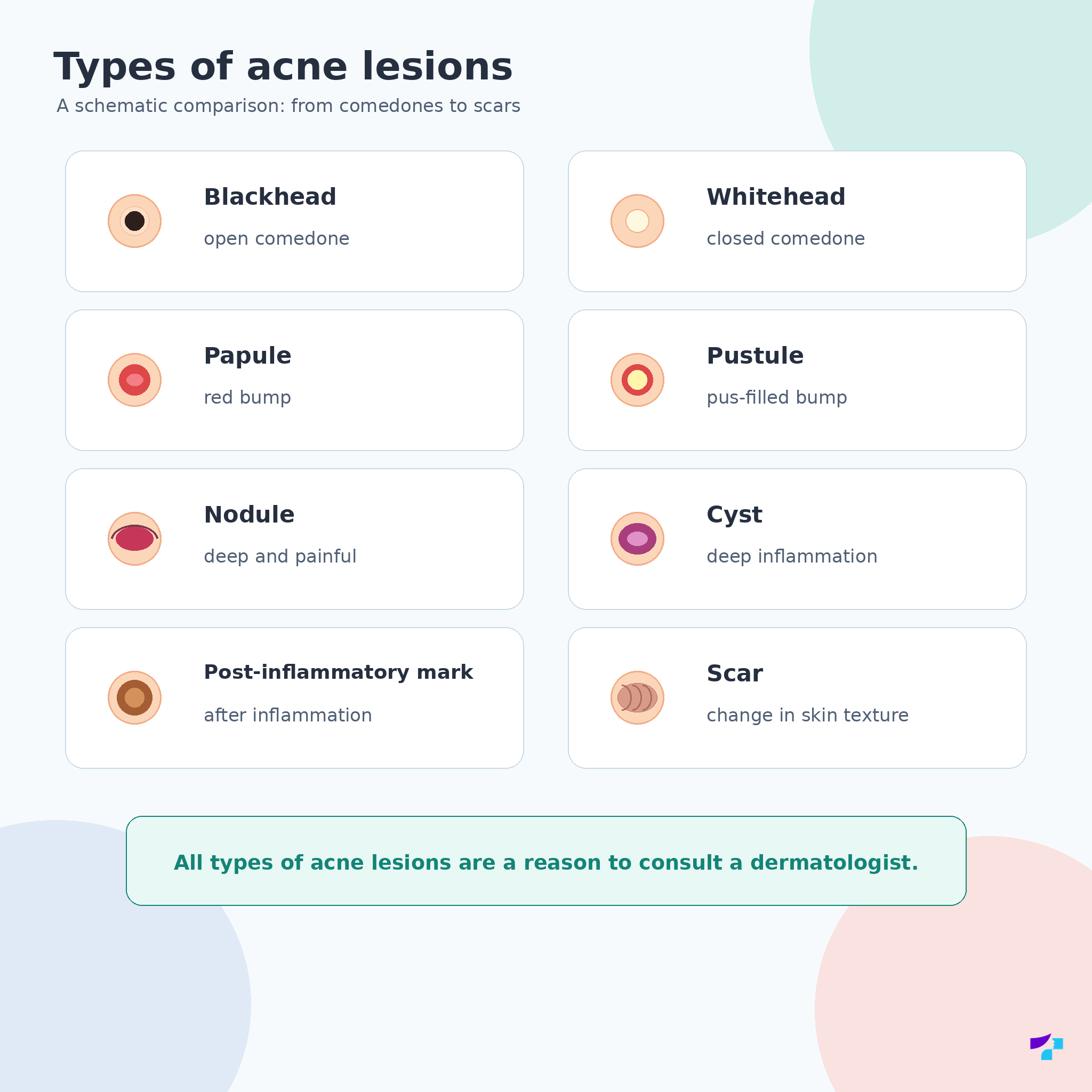
| Type of lesion | What it looks like | What it means |
|---|---|---|
| Blackheads, or open comedones | Small dark dots in the pores | The pore is blocked, but its opening is open; the dark colour is not dirt |
| Whiteheads, or closed comedones | Small white or skin-coloured bumps | The pore is blocked and its opening is closed |
| Papules | Red, inflamed bumps without a visible pus-filled tip | Inflammation has been activated |
| Pustules | Red bumps with a white or yellowish pus-filled tip | An inflammatory acne lesion |
| Nodules | Large, deep, painful lumps under the skin | Inflammation affects deeper layers of the skin |
| Cysts | Deep, painful, sometimes softer formations under the skin | Severe inflammatory acne with a high risk of scarring |
| Post-inflammatory marks | Red, purple or brownish marks after a lesion | The skin is healing after inflammation; the texture is usually not damaged |
| Scars | Pits, uneven skin texture, raised or thickened scars | Inflammation has damaged deeper layers of the skin |
How is acne severity assessed?
The exact severity of acne is determined by a dermatologist, assessing the type and number of lesions, their location, depth of inflammation, risk of scarring and impact on quality of life. Severity is not determined only by how many lesions are visible in the mirror.
| Severity level | Typical signs | Why it matters |
|---|---|---|
| Mild acne | Mainly blackheads or whiteheads, with a few small inflammatory lesions | Often treatment can begin with proper skin care and topical products, but consistency is needed |
| Moderate acne | More papules and pustules, recurring lesions, several areas may be affected | Combined treatment and medical follow-up are often needed |
| Severe acne | Deep, painful nodules, cysts, widespread inflammation | High risk of scarring; dermatologist-guided treatment is needed |
| Acne with a risk of scarring | Any acne after which scars, pits, thickened areas or persistent marks remain | It should be treated in time, even if the number of lesions is not very high |
Acne should also be assessed by its emotional impact. Even seemingly “mild” acne can be very distressing if it affects self-confidence, social life or everyday well-being.
Which conditions can resemble acne?
Not all eruptions on the face or body are acne. Sometimes other skin conditions can look similar and require different treatment. Incorrect self-diagnosis may lead to irritation, ineffective treatment or worsening of the condition.
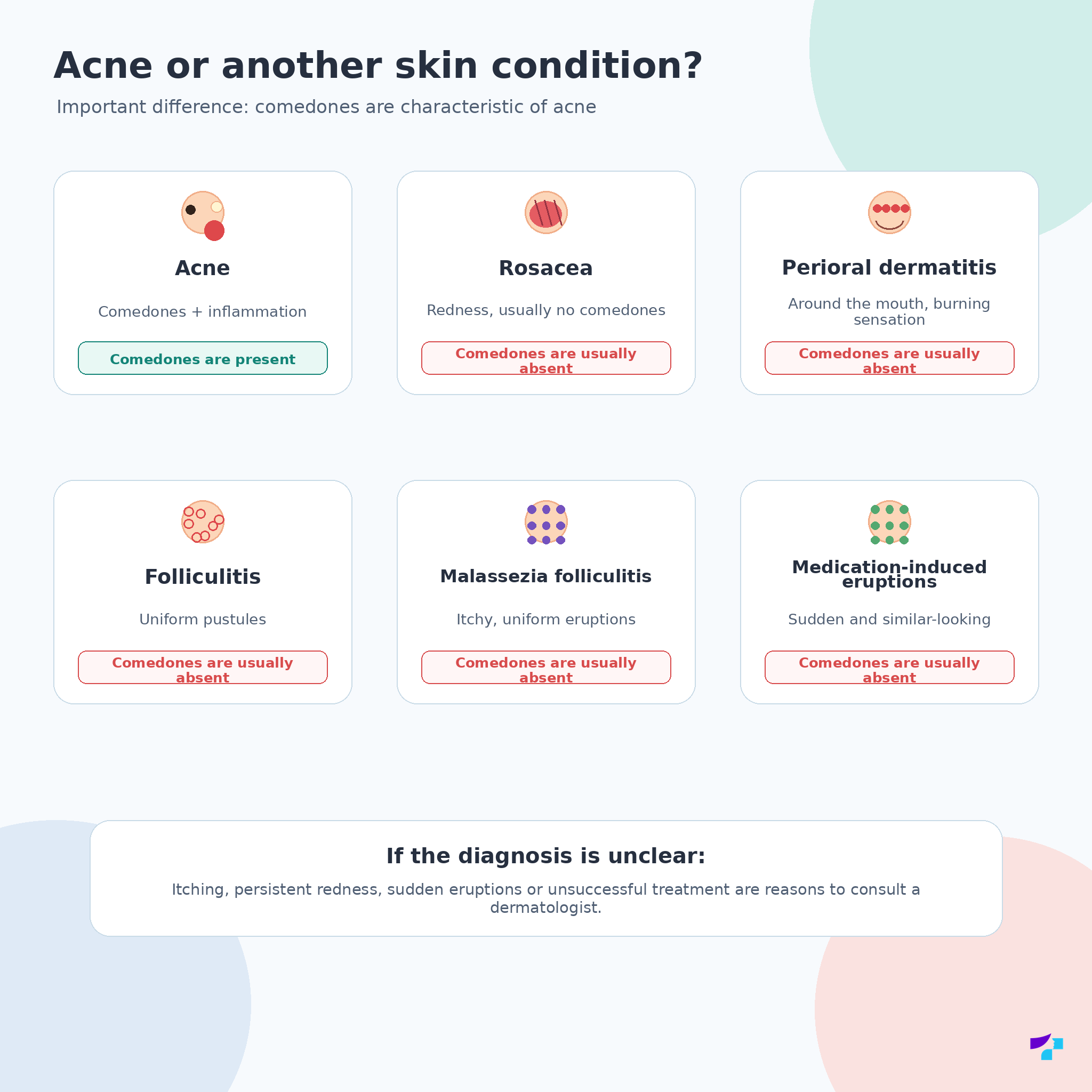
Another skin condition should be considered if the eruptions are very uniform, itch significantly, appear suddenly after starting a new medication or cosmetic product, are concentrated only around the mouth, are associated with persistent facial redness or do not improve with acne treatment. A characteristic sign of acne is comedones — blackheads and whiteheads. If there are no comedones, but there are red bumps, burning, itching or persistent redness, the diagnosis should be checked by a dermatologist.
Acne or another skin problem?
| Condition | Typical signs | What distinguishes it from acne | When to see a doctor |
|---|---|---|---|
| Acne | Comedones, papules, pustules, nodules, oily skin, eruptions on the face, back or chest | Blackheads and whiteheads are often present | If lesions are deep, painful, persistent or leave scars |
| Rosacea | Facial redness, feeling of heat, dilated blood vessels, papules and pustules | Usually no comedones; redness and sensitivity are common | If there is persistent redness, burning or eye symptoms |
| Perioral dermatitis | Small eruptions around the mouth, nose or eyes, burning, dryness | Often associated with irritation or use of certain products; no typical comedones | If eruptions are concentrated around the mouth or worsen from creams |
| Folliculitis | Inflammation of hair follicles, small uniform pustules | May occur on the body after sweating, shaving or friction; comedones are usually not typical | If eruptions are painful, pus-filled, spreading or recurring |
| Malassezia folliculitis, sometimes called “fungal acne” in everyday language | Small, uniform, often itchy eruptions on the chest, back, shoulders or forehead | It is not true acne; it often itches and looks uniform | If “acne” itches and does not improve with standard acne therapy |
| Medication- or steroid-induced acne-like eruptions | Sudden, uniform papular or pustular eruptions after starting certain medicines or supplements | There are often no comedones; eruptions appear rapidly and look similar to each other | If eruptions begin after a new medication, steroid, hormonal product or sports supplement |
| Contact dermatitis | Redness, itching, burning, peeling after contact with an irritant or allergen | Itching and irritation are more prominent than comedones | If cosmetics, a mask or workplace substances may be involved |
| Hidradenitis suppurativa | Painful nodules, abscesses, scars in the armpits, groin, under the breasts or in skin folds | Location in skin folds, deep recurring nodules | A dermatologist should be consulted if lesions are in the armpits or groin, or recur with scarring |
When should you see a dermatologist for acne?
It is recommended to see a dermatologist if:
- acne does not improve with proper over-the-counter skin care;
- eruptions persist or worsen for several weeks;
- there are painful nodules or cysts;
- scars or persistent marks form;
- acne worsens rapidly;
- acne significantly affects well-being, self-esteem or social life;
- hormonal disorders are suspected;
- acne appears suddenly in adulthood;
- acne is present on the back, chest or large areas of the body;
- the patient is pregnant or planning pregnancy;
- previous treatment has not helped or has caused irritation;
- it is unclear whether the eruptions are really acne.
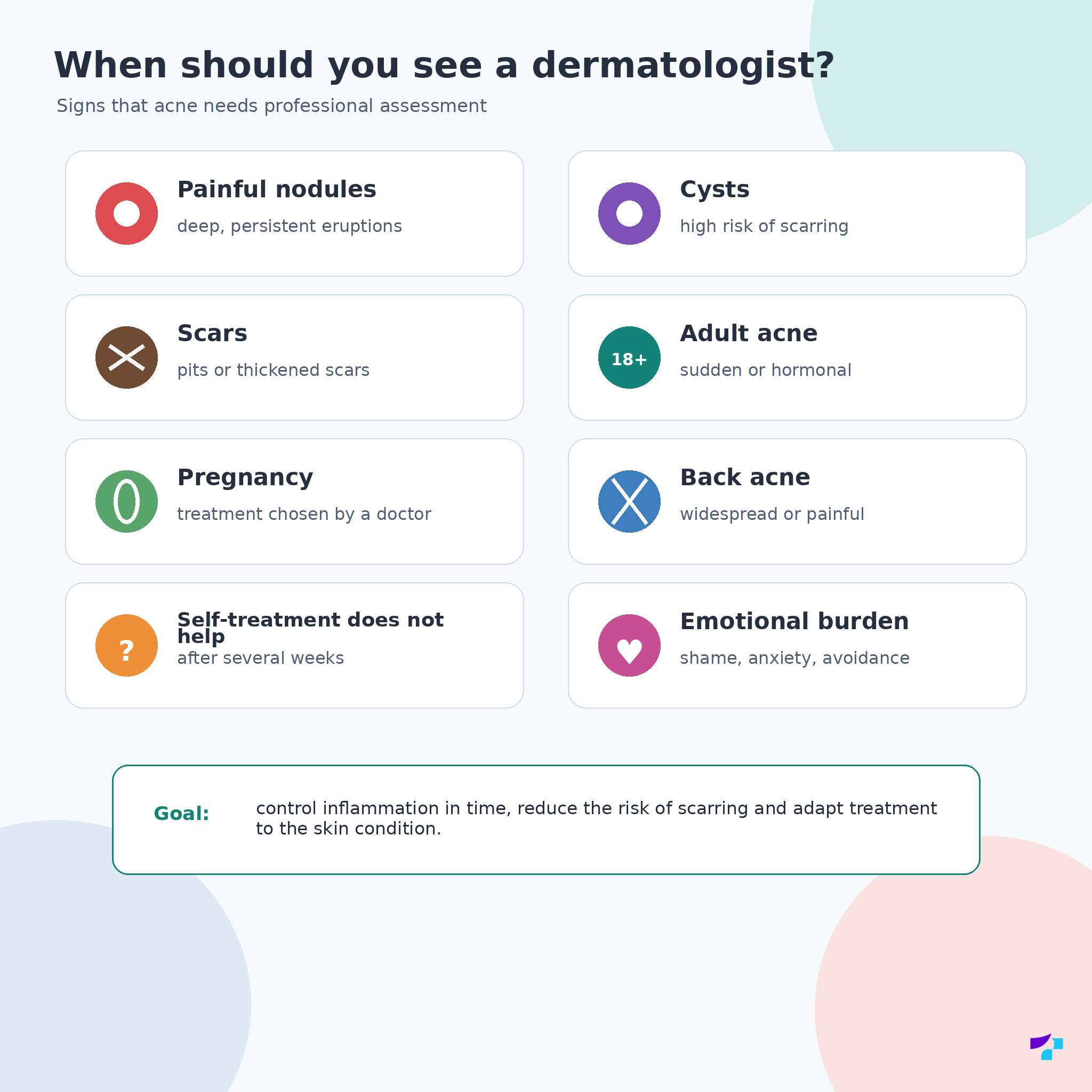
After how long should you see a doctor if over-the-counter products do not help? If proper, gentle skin care and appropriate over-the-counter products do not bring improvement within several weeks, or acne continues to worsen, a dermatologist consultation is recommended. If there are nodules, cysts or scars, you should not wait.
When is urgent medical help needed?
Most cases of acne are not an emergency, but urgent medical assessment is needed if acne suddenly becomes very severe, painful and widespread, if fever, feeling unwell, joint pain appear, or if deep nodules, abscesses, bleeding or ulcerating lesions develop rapidly.
Such signs are not typical of ordinary mild acne and may indicate a severe inflammatory form of acne or another disease. If symptoms progress rapidly or skin changes are accompanied by a general deterioration in well-being, medical help should be sought immediately.
How does a dermatologist diagnose acne?
A dermatologist usually diagnoses acne clinically — based on skin examination and discussion with the patient. A complex set of investigations is usually not required if the lesions are typical.
During the consultation, the doctor assesses:
- the type of lesions — comedones, papules, pustules, nodules, cysts;
- the location of lesions — face, jawline, back, chest, shoulders;
- the duration of acne and frequency of flare-ups;
- the relationship with the menstrual cycle, stress, cosmetics, sport or work environment;
- medications and dietary supplements used;
- previously tried products and their tolerability;
- skin sensitivity, dryness, irritation and the condition of the skin barrier;
- post-inflammatory marks and the risk of scarring;
- the impact on well-being and quality of life.
Tests may be needed if a hormonal cause is suspected, for example irregular periods, increased hair growth, hair loss or other signs that may indicate endocrine disorders. Additional investigations may also be needed if the eruptions are not typical and other diagnoses must be excluded.
Before the consultation, it is useful to note how long acne has been present, what worsens it, which products have been used, whether acne is linked to the menstrual cycle, what cosmetics are used, whether medications have been taken and whether there are scars.
Acne treatment
Acne treatment depends on the severity, type of lesions, skin sensitivity, the patient’s age, sex, possibility of pregnancy, risk of scarring, previous treatment and impact on quality of life. There is no single product that works equally well for everyone.
The goals of treatment are:
- to reduce pore blockage;
- to reduce inflammation;
- to regulate sebum and follicular processes;
- to reduce the formation of new lesions;
- to prevent scars and post-inflammatory marks;
- to improve skin tolerability and the patient’s quality of life;
- to maintain the result after improvement.
Acne treatment requires patience. Many products work gradually, and at the beginning there may be dryness, peeling, sensitivity or a temporary feeling of irritation. This does not always mean that the treatment is wrong, but any pronounced irritation should be discussed with a doctor.
This article does not provide doses of prescription medicines or individual treatment regimens, because these must be determined by a dermatologist after assessing the condition of the skin.
Treatment of mild acne
In mild acne, comedones and a few small inflammatory lesions often predominate. The foundation is gentle, consistent skin care and suitable topical products.
It is important to choose gentle cleansing, a non-comedogenic moisturiser, suitable sun protection and to avoid aggressive scrubs. In mild acne treatment, over-the-counter or doctor-recommended topical products may be used, such as benzoyl peroxide, azelaic acid, keratolytic or other acne-targeted product groups.
The result is not immediate. Products should be used regularly and for a sufficient period of time, unless there is marked irritation or the doctor has advised changing the treatment.
Treatment of moderate acne
In moderate acne, there are more inflammatory lesions — papules and pustules, the eruptions recur and several areas may be affected. In this situation, a combination of topical treatments and medical follow-up is often needed.
A dermatologist may choose combined treatment using products that act on pore blockage, inflammation and microbiome-related factors. In some cases, prescription medicines are needed. The aim is not only to reduce visible lesions, but also to prevent new lesions and scarring.
Treatment of severe acne
Severe acne presents with deep, painful nodules, cysts, widespread inflammation or a pronounced risk of scarring. This type of acne should be treated under the guidance of a dermatologist.
In severe, scarring or treatment-resistant acne, the doctor may assess the need for systemic prescription therapy, including isotretinoin-type treatment. Such therapy requires safety assessment, follow-up visits, blood tests and special precautions. It is not a method of self-treatment.
What to expect during the first weeks of treatment?
Acne treatment is usually not a quick process. During the first weeks, the skin may become drier, more sensitive or slightly irritated, especially when active topical products are started. This does not necessarily mean that the treatment is unsuitable; however, pronounced burning, painful redness, swelling or cracking should not be tolerated — in this case, the doctor should be contacted.
The first visible improvement often appears gradually. It is important not to change treatment too often, because the skin needs time to respond. If there is no improvement after sufficiently consistent treatment, acne worsens or scars appear, the treatment plan should be reviewed with a dermatologist.
| Period | What the patient may notice | What to do |
|---|---|---|
| First 1–2 weeks | Dryness, sensitivity, mild peeling | Use a moisturiser and do not add many new active products at the same time |
| 3–6 weeks | Gradual reduction of inflammation or still incomplete effect | Continue treatment if tolerability is good |
| 8–12 weeks | There should be a clearer understanding of whether the treatment is helping | If the effect is insufficient, follow-up and treatment adjustment are needed |
| After improvement | There may be a temptation to stop everything | Do not stop treatment without a doctor’s instruction, because acne may recur |
Topical products in acne treatment
Topical products are creams, gels, lotions or other preparations applied to the skin. They may be over-the-counter or prescription products. The choice depends on the type and severity of acne and skin tolerability.
Commonly used product groups include:
- benzoyl peroxide — helps reduce inflammatory lesions and acts on microorganisms involved in the acne process; it is important to use it according to instructions, because it may irritate the skin and bleach fabrics;
- topical retinoids — a group of vitamin A derivatives that helps normalise skin cell renewal in the follicle and reduce pore blockage; they are especially important for comedones and prevention of new lesions;
- topical antibiotics — used only as directed by a doctor and usually not as the only long-term solution, in order to reduce the risk of resistance;
- azelaic acid-type products — may help with inflammation, comedones and post-inflammatory pigmentation, but suitability should be assessed individually;
- keratolytic products — help reduce the accumulation of dead cells and pore blockage;
- moisturising and barrier-repairing products — help reduce dryness, irritation and improve treatment tolerability.
At the beginning of acne treatment, the skin may become drier, more sensitive, red or flaky. Sometimes the patient notices a temporary impression of worsening, because the treatment affects processes that had already started in the skin before the product was used. If irritation is pronounced, painful or disturbing, therapy should be discussed with a dermatologist rather than stopped or changed chaotically.
Antibiotics in acne treatment
Antibiotics are used in acne treatment in specific situations, usually in moderate or severe inflammatory acne. They may be topical or systemic, but they are not intended as an uncontrolled, long-term or sole solution.
An important reason for caution is antibiotic resistance — a situation in which bacteria become less sensitive to antibiotics and treatment may be less effective in the future. Therefore, antibiotics in acne treatment should be used only as directed by a doctor, in the correct combination and with a clear treatment plan.
Antibiotics in acne treatment are usually not intended as the only long-term therapy. To reduce the risk of antibiotic resistance, the doctor often chooses to combine them with other products, such as benzoyl peroxide or topical products that act on the pore-blocking process. The exact combination and duration of use are determined by the dermatologist.
The patient should not use antibiotics “based on previous experience”, use leftover medicines or share medicines with other people. Acne is not a contagious infection, and antibiotic use is not simply “killing bacteria”.
Isotretinoin-type therapy
Isotretinoin-type therapy is one option for severe, scarring or treatment-resistant acne. It can be very effective in properly selected patients, but it requires dermatologist supervision and strict adherence to safety requirements.
Before such therapy, the doctor assesses acne severity, scarring risk, previous treatment, health status, possible risks, possibility of pregnancy and necessary blood tests. Isotretinoin is not suitable during pregnancy and requires special caution in patients who may become pregnant.
Isotretinoin-type therapy may be considered by the doctor not only in very severe physical acne, but also when acne causes scarring, significant psychological burden or does not respond to properly used standard treatment for a long time. This does not mean that isotretinoin is suitable for every patient with acne, but it does mean that the decision should take into account not only the number of lesions, but also the risk of scarring, pain, disease duration and impact on quality of life.
The question “is isotretinoin dangerous?” should be assessed precisely. It is not an ordinary cosmetic product and is not a method of self-treatment. It is a prescription medicine with potential risks and side effects, but under medical supervision, in properly selected patients and with safety requirements followed, it may be an important treatment option for severe acne.
Acne treatment during pregnancy
During pregnancy or when planning pregnancy, acne treatment must be coordinated with a doctor. Some acne treatments, including certain retinoid and systemic medicine types, are not suitable during pregnancy.
During pregnancy, acne may worsen due to hormonal changes, but treatment options are more limited. Therefore, it is not safe to start prescription products independently, use regimens found online or continue previously used therapy without a doctor’s approval. A dermatologist or gynaecologist will help choose the safest approach for the specific situation.
Acne treatment in children and adolescents
Adolescent acne is very common, but it should not be ignored. If acne is mild, proper skin care and suitable topical products may help. However, deep, painful, widespread or scarring lesions in adolescents are a reason for timely dermatologist consultation.
Early treatment is important not only for the appearance of the skin. It helps reduce the risk of scarring and emotional burden. A teenager should not be told that acne is something they simply have to “grow out of” if it is painful, pronounced or affects self-esteem.
Treatment of acne on the back, chest and shoulders
Back, chest and shoulder acne can be particularly persistent. In these areas, the skin is thicker, pores can easily become blocked, and topical products are harder to apply evenly. Sweating, sports equipment, tight clothing, backpacks, helmets or work clothing can promote friction and occlusion, worsening the eruptions.
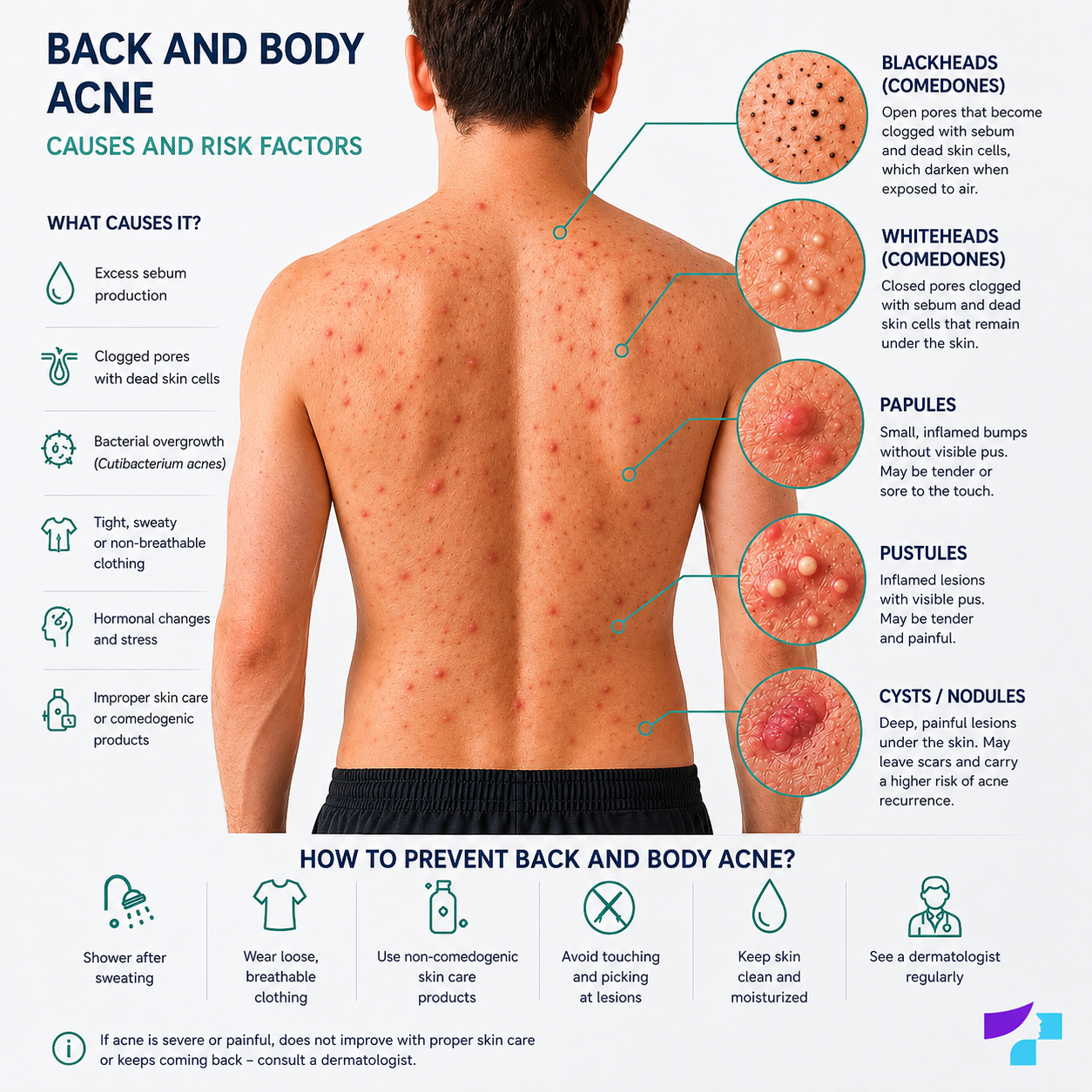
Body acne may also be associated with folliculitis or other conditions, so if the eruptions itch, are uniform, appear after sweating or do not improve with acne treatment, the diagnosis should be reassessed.
Widespread, painful or deep back acne should be assessed by a dermatologist, because it may carry a higher risk of scarring. Treatment may differ from facial acne treatment because skin thickness, the affected area and practical application of products must be taken into account.
Why is back acne often harder to treat than facial acne?
| Reason | What it means for the patient |
|---|---|
| The skin on the back is thicker | Topical products may work more slowly, and lesions may be deeper |
| Difficult access | Products are harder to apply evenly and regularly |
| Sweating and friction | Sports clothing, backpacks, tight shirts and equipment may worsen inflammation |
| Larger affected area | A different treatment approach may be needed than simply applying a small amount of cream |
| Higher risk of scarring in deep acne | Painful nodules and cysts on the back should be treated in time |
| Possible similarity to folliculitis | Itchy, uniform eruptions may not be acne, but folliculitis |
Practical recommendations for body acne
After intense sweating, it is advisable to wash and change sweaty clothing. Sports clothing should be breathable and not too tight. If eruptions develop in areas where the skin rubs against a backpack, helmet, protective equipment or work clothing, prolonged pressure and friction should be reduced as much as possible.
If back or chest eruptions are painful, deep, widespread or leave scars, a dermatologist consultation is needed, because body acne often requires more active treatment than everyday cosmetics alone.
Cosmetics and acne: how to choose products that do not worsen the skin?
Cosmetics themselves are not prohibited in acne, but unsuitable products can worsen pore blockage, irritation and inflammation. Particular caution is needed with very thick, greasy, occlusive textures, heavy layers of make-up, unsuitable oily products, aggressive cleansers and products that are not thoroughly removed after use.
“Non-comedogenic” means that the product has been developed to be less likely to block pores. This label is not an absolute guarantee that the product will suit everyone, but it is a good starting choice for a person with acne. In acne, preference should be given to light moisturisers, sunscreens and make-up products without a greasy feel, intended for oily or acne-prone skin.
Hair care products are also important. Oily hair serums, waxes, pomades or heavy conditioners can promote eruptions on the forehead, temples, back or neck if they come into contact with the skin. If acne is located near the hairline, on the forehead or upper back, the influence of hair products should also be assessed.
What to choose and what to avoid?
| Better choice in acne | Better to avoid or use with caution |
|---|---|
| Non-comedogenic moisturisers | Very thick, greasy ointments for the face without a doctor’s recommendation |
| Light SPF formulas for acne-prone skin | Oily sunscreens that block pores |
| Gentle, pH-balanced cleansers | Alkaline soaps, alcohol solutions, aggressive cleansers |
| Light make-up that is removed at the end of the day | Heavy, multi-layered foundations left on the skin overnight |
| Gradual introduction of active products | Using many active products at the same time |
| Products without pronounced burning and irritation | Scrubs with rough particles, abrasive brushes |
Cosmetologist, laser procedures, light therapy and peels
Cosmetologist procedures, chemical peels, light therapy or laser procedures may in some cases be a useful addition, especially in a treatment plan for comedones, skin texture, post-inflammatory marks or scars. However, they do not replace dermatologist-guided treatment if acne is active, inflammatory, severe, painful or scarring.
A cosmetologist can help with suitable skin care, comedone care and supportive procedures, but procedures alone are usually not enough if acne is based on pronounced inflammation, nodules, cysts or a hormonal component.
The use of laser procedures and light therapy in acne treatment is being studied and is used in some cases, but results and suitability vary. They should be assessed cautiously, without promises of guaranteed cure. Control of active acne is usually the first step; correction of scars and marks is often planned after inflammation has decreased.
Acne scars and post-inflammatory marks
After acne, various skin changes may remain. Not all of them are true scars.
Red marks after acne are post-inflammatory erythema. They are more often visible in lighter skin and may persist for weeks or months. Brownish marks, or post-inflammatory hyperpigmentation, are increased pigmentation after inflammation, especially in people with darker skin phototypes or after sun exposure.
Atrophic scars are depressions or pits in the skin. They form when inflammation damages deeper layers of the skin and insufficient tissue volume forms during healing. Hypertrophic or keloid scars are raised, thickened scars that may more often form on the chest, shoulders, back or in people with a tendency to this type of scarring.
Scar prevention begins with timely acne control. The fewer deep inflammations there are, the lower the risk of scarring. Squeezing, picking and traumatising pimples increases this risk.
Scar treatment may include various procedures — for example, chemical peels, laser procedures, microneedling, injection methods or other dermatological approaches. The method is chosen by a specialist after assessing active acne, skin type, scar type and pigmentation risk.
Skin care in acne
Skin care in acne is the foundation of treatment, but it must be gentle. The goal is not to “dry out” the skin as much as possible, but to reduce pore blockage, decrease irritation, support the skin barrier and help treatment products work.
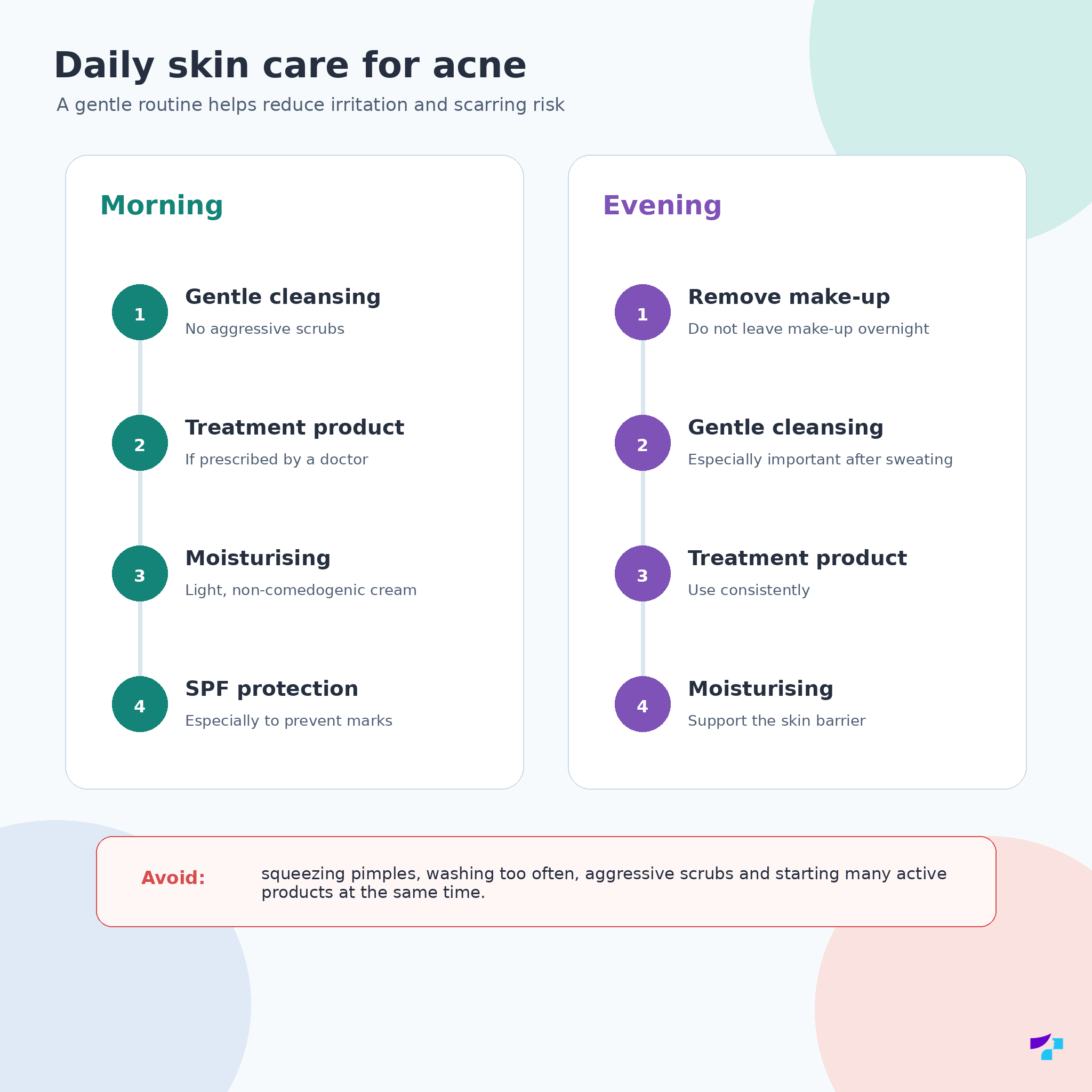
Practical daily routine
| Step | What to do | Why it helps |
|---|---|---|
| Gentle cleansing | Wash the face with a gentle cleanser, usually in the morning and evening | Removes excess sebum, sweat and cosmetics without damaging the skin barrier |
| Treatment product | Use the product recommended by a doctor or pharmacist according to instructions | Acts on acne mechanisms, not only on visible pimples |
| Moisturising | Choose a light, non-comedogenic moisturiser | Reduces dryness and helps tolerate treatment |
| Sun protection | Use an acne-suitable SPF product during the day | Reduces pigmentation risk and protects sensitive skin |
| Non-comedogenic cosmetics | Choose products labelled “non-comedogenic” or products suitable for acne-prone skin | Reduces the risk of pore blockage |
| Avoiding trauma | Do not squeeze or scratch lesions | Reduces the risk of inflammation, marks and scars |
The face should not be washed too often. Twice a day is usually enough, except in special situations, for example after intense sweating. Aggressive scrubs, alcohol solutions, abrasive brushes and excessive product combinations can worsen irritation.
Active products should be introduced gradually, especially in sensitive skin. If the skin becomes very red, burning, painful or peels significantly, the treatment plan should be adjusted.
Can pimples be squeezed?
Squeezing pimples is not recommended. Squeezing can increase inflammation, push inflammatory contents deeper into the skin, promote secondary infection, post-inflammatory marks and scars.
It is especially dangerous to squeeze deep, painful nodules or cysts. These lesions are often located deeper in the skin, and mechanical trauma can only worsen the damage. If there are recurring, deep or painful lesions, it is better to consult a dermatologist or another appropriate specialist rather than try to remove them at home.
Sun, solarium and acne
The sun may sometimes temporarily create the impression that acne has improved, because a tan can mask redness and eruptions. However, in the long term, ultraviolet radiation can worsen the skin condition, promote dryness, irritation, pigmentation, skin ageing and the risk of skin cancer.
A solarium is not an acne treatment method and is not recommended for reducing acne. It may increase the risk of pigmentation, especially if brownish marks are already present after acne or if products that make the skin more sensitive to the sun are being used.
In acne, a suitable sunscreen should be chosen — light, non-comedogenic and broad-spectrum. If a particular SPF cream worsens the skin, it does not mean that SPF is unnecessary; rather, a more suitable formula should be found.
Common mistakes in acne
Common mistakes that can worsen acne or increase the risk of scarring:
- washing the face too often;
- aggressive scrubs and abrasive brushes;
- squeezing and picking pimples;
- frequently changing products without giving treatment time to work;
- stopping treatment too early;
- treating severe acne only with cosmetics;
- using comedogenic cosmetics;
- sunbathing or solarium use as “treatment”;
- using antibiotics without medical supervision;
- using too many active products at the same time;
- not using a moisturiser because the skin is oily;
- ignoring hormonal symptoms in adult acne.
In acne treatment, consistency is important, not aggression. The skin should be treated, not punished.
The impact of acne on self-esteem and emotional health
Acne is not only an aesthetic problem. Visible eruptions on the face, painful nodules, scars and prolonged treatment can affect self-confidence, social life, relationships, work, studies and emotional well-being.
Some people avoid being photographed, attending events, sports, close relationships or public speaking because of acne. For adolescents, acne can be an especially difficult emotional experience because it coincides with an age when self-esteem is still developing.
If a person avoids school, work, sports, relationships, photographs or social events because of acne, this is not an “exaggeration”. It is a real impact of the disease on quality of life. If persistent low mood, anxiety, shame, sleep disturbances or thoughts of reduced self-worth appear, it is advisable to tell the doctor openly about this.
The goal of acne treatment is not only to reduce eruptions, but also to help the person feel more confident in everyday life.
Does acne go away on its own?
In some people, acne decreases over time, especially after adolescence. However, in others it continues for years, recurs in adulthood or leaves scars.
Long-lasting, inflammatory, painful or scarring acne should not simply be left to “go away on its own”. The longer deep inflammation persists, the greater the risk of post-inflammatory marks and scars. Timely treatment helps control the disease and reduce the risk of permanent skin changes.
Can acne be cured completely? In some patients, acne does not recur for a long time after treatment, while others need maintenance therapy or periodic treatment adjustments. A realistic goal is to achieve good control, reduce new lesions, prevent scars and maintain the result.
How to maintain results after acne improves?
Acne treatment should not be stopped immediately once the skin looks better, unless the doctor has advised otherwise. Acne develops gradually, and visible improvement does not mean that the pore-blocking process has completely stopped.
A maintenance approach may include gentle skin care, non-comedogenic cosmetics, suitable moisturising, sun protection and doctor-recommended topical products. Follow-up visits help adjust therapy, reduce irritation and prevent recurrence.
If acne improves but quickly returns after stopping products, this should be discussed with a dermatologist. Maintenance therapy or a change in the treatment plan may be needed.
Acne treatment process with a dermatologist
Dermatologist consultation and skin assessment
The dermatologist examines the skin, determines the type, severity and location of lesions, the risk of scarring, and asks about previous treatment experience, cosmetics use, hormonal factors and other possible worsening factors.
Creating an individual treatment plan
The doctor chooses suitable therapy according to acne severity, skin sensitivity, the patient’s age, sex, possibility of pregnancy, comorbidities and the patient’s daily practical possibilities. The plan may include skin care, topical products, prescription therapy or additional procedures.
Follow-up visits, treatment adjustment and reduction of scarring risk
Acne treatment takes time. During follow-up visits, the dermatologist assesses the effect, tolerability, side effects, scarring risk and adjusts therapy if needed. This helps achieve results more safely and consistently.
Common myths about acne
| Myth | Truth |
|---|---|
| Acne is caused by dirty skin | Acne is caused by pore blockage, sebum, inflammation, hormones and individual skin response. It is not a sign of poor hygiene. |
| Acne affects only adolescents | Acne often starts in adolescence, but it can continue or first appear in adults. |
| The sun treats acne | The sun may temporarily mask redness, but in the long term it can promote pigmentation, irritation and skin damage. |
| Pimples should be squeezed so they go away faster | Squeezing increases the risk of inflammation, marks and scars. |
| Cosmetics always worsen acne | Unsuitable, comedogenic cosmetics can worsen acne, but properly chosen non-comedogenic cosmetics can usually be used. |
| Diet is always the main cause | Diet may affect acne in some people, but it is not the only or universal cause. |
| Acne is not a disease | Acne is a chronic inflammatory skin disease that can cause scars and affect quality of life. |
| Acne can always be solved with one product | A combined, long-term and individually tailored approach is often needed. |
What is well proven, and what is still being studied?
In acne treatment, there is good evidence for the importance of reducing pore blockage, controlling inflammation, using appropriate topical therapy, assessing acne severity and preventing scars. Treatment groups such as benzoyl peroxide, topical retinoids, antibiotics in specific situations, azelaic acid-type products and systemic therapy in more severe cases are widely used in guidelines.
Evidence on dietary factors is moderate or conflicting, especially regarding dairy products and individual food items. Diet may play a role in some patients, but there is no basis for recommending the same strict diet to all patients.
Current research is actively studying the role of the skin microbiome, the importance of different Cutibacterium acnes strains, inflammatory mechanisms, skin barrier dysfunction, new topical therapies, light and laser therapy options, and a personalised approach to acne treatment. These developments are important, but they should be assessed cautiously and distinguished from methods already established in clinical guidelines.
References and authoritative sources
- American Academy of Dermatology Association: clinical guidelines and patient information on acne
- American Academy of Dermatology Association: acne treatment guidelines published in the Journal of the American Academy of Dermatology
- National Institute for Health and Care Excellence (NICE): Acne vulgaris management guideline
- NICE recommendations for acne diagnosis and treatment
- European Dermatology Forum and EuroGuiDerm: European evidence-based acne treatment guidelines
- European evidence-based S3 guideline for the treatment of acne — short version, PubMed
- British Association of Dermatologists: patient information on acne
- DermNet: clinical information on Acne vulgaris, signs, severity, complications and treatment
- DermNet: the role of bacteria and the skin microbiome in acne development
- Mayo Clinic: acne symptoms and causes
- Mayo Clinic: acne diagnosis and treatment
- Cleveland Clinic: acne types, causes, symptoms, treatment and prevention
- Review study on acne pathogenesis, treatment and recent nanotechnology-based approaches
- Scientific review of the skin microbiome and acne treatment perspectives
- Scientific review of the role of the skin microbiome in acne development
- Scientific review of skin barrier dysfunction in Acne vulgaris
- Scientific review of acne-induced scar pathogenesis and treatment options
Medical disclaimer
The information in this article is intended for informational and educational purposes only and does not replace medical consultation, diagnosis or treatment. Acne symptoms and similar skin eruptions may be related to various skin or hormonal conditions, so self-diagnosis and self-treatment may be incorrect and may worsen the skin condition or increase the risk of scarring. If you have long-lasting, painful, rapidly progressing, scarring acne, eruptions in adulthood, eruptions during pregnancy or acne significantly affects your well-being, consult a dermatologist or another appropriate healthcare professional. In the case of severe, rapidly worsening or high-risk symptoms, urgent medical help is required.
