Tick-borne encephalitis is one of the most important tick-borne infectious diseases in Latvia. It is a viral infection that can affect the central nervous system — the brain, the membranes surrounding the brain and spinal cord, and the spinal cord. In some people, the infection is mild or even without pronounced symptoms, while in other cases it can cause meningitis, encephalitis, long-term neurological sequelae or the need for hospital treatment. The U.S. Centers for Disease Control and Prevention notes that in severe cases tick-borne encephalitis may present as inflammation of the brain or inflammation of the membranes surrounding the brain and spinal cord.
The most important point to know is that a vaccine against tick-borne encephalitis is available, but there are no specific medicines that destroy the tick-borne encephalitis virus itself. Treatment is symptomatic and supportive, while vaccination is the main form of specific prevention. The Centre for Disease Prevention and Control of Latvia notes that vaccination against tick-borne encephalitis is possible throughout the year and that the full primary course consists of three vaccine doses.
This article explains what tick-borne encephalitis is, how a person can become infected, what the symptoms are, when to see a doctor, how the disease is diagnosed and treated, how vaccination works and how tick-borne encephalitis differs from Lyme disease.
Key points in brief
- Tick-borne encephalitis is a viral infection that can affect the central nervous system — the brain, the membranes surrounding the brain and spinal cord, and the spinal cord.
- Most often, a person becomes infected after a bite from an infected tick; more rarely, infection may occur through unpasteurised milk from infected animals or products made from it.
- At first, the disease may resemble influenza or another viral infection, with fever, headache, weakness, muscle pain, nausea or vomiting.
- In some patients, after a short period of improvement, a second phase of the disease may develop with involvement of the nervous system.
- Tick-borne encephalitis is not typically associated with an expanding red skin rash — this sign is more closely linked to Lyme disease.
- There are no specific antiviral medicines that destroy the tick-borne encephalitis virus; treatment is symptomatic and supportive.
- Vaccination is the main form of specific prevention against tick-borne encephalitis, but it does not protect against Lyme disease or other tick-borne infections.
What is tick-borne encephalitis?
Tick-borne encephalitis is a viral infectious disease caused by the tick-borne encephalitis virus. Medically, the tick-borne encephalitis virus belongs to the flavivirus group. In humans, the infection is most commonly transmitted through the bite of an infected tick. More rarely, infection is also possible through unpasteurised milk from infected animals or products made from it.
In the name of the disease, the word “encephalitis” means inflammation of the brain. However, tick-borne encephalitis does not necessarily mean that every patient will develop severe brain inflammation. The infection can progress in different ways — from a mild, flu-like illness to severe damage to the central nervous system.
The European Centre for Disease Prevention and Control describes tick-borne encephalitis as an infectious disease that affects the central nervous system and is transmitted by the bite of infected ticks. In Europe, the disease often follows a two-phase course: in the first phase, fever, fatigue, headache, muscle pain and nausea predominate, while in the second phase the nervous system may become involved.
How can a person become infected with tick-borne encephalitis?
Infection most often occurs after an infected tick attaches and feeds. The tick transmits the virus through saliva during the bite. Therefore, the risk of infection is not related only to how long the tick has been attached — viral transmission can occur relatively soon after the bite.
A less common route of infection is unpasteurised milk from infected animals or unpasteurised dairy products. This means that prevention of tick-borne encephalitis involves not only protection against ticks, but also safe food practices, especially in areas where the disease is present.
Tick-borne encephalitis generally does not spread from person to person. The main source of risk is an infected tick.
Where is tick-borne encephalitis found?
Tick-borne encephalitis is found in several European and Asian countries, especially in areas where conditions are suitable for ticks and their animal hosts. The U.S. Centers for Disease Control and Prevention notes that infected ticks carry the tick-borne encephalitis virus in parts of Europe and Asia.
Latvia is one of the countries where the risk of tick-borne encephalitis is significant. Ticks can be found not only in forests, but also in meadows, parks, gardens, shrubs and other green areas. Therefore, the risk is not limited to people who frequently go deep into the forest. An infected tick can also attach in an urban environment if a person spends time in green areas.
The Centre for Disease Prevention and Control of Latvia regularly publishes information on tick activity, incidence and vaccination opportunities in Latvia. In certain higher-risk areas, state-funded vaccination against tick-borne encephalitis is provided for children during specified periods. In its information for 2026, the Centre notes that territories eligible for state-funded childhood vaccination are determined by analysing incidence over a five-year period.
Who is at higher risk of tick-borne encephalitis?
People who live in or regularly spend time in areas where tick-borne encephalitis is present are at higher risk. Particular caution is recommended for people who:
- frequently go to forests, meadows or shrubby areas;
- pick mushrooms or berries, hunt, fish or go hiking;
- work outdoors — in forestry, agriculture, gardening or landscape maintenance;
- live in a private house with a garden or regularly maintain areas with grass and shrubs;
- travel to regions where tick-borne encephalitis is a risk;
- as children, spend a lot of time outdoors, in camps, in rural areas or near bodies of water.
Risk does not depend only on place of residence. Even short periods outdoors may be enough for a tick to attach. In practical terms, the important question is not only “Do I live in a risk area?”, but also “How often do I enter environments where ticks may be present?”.
Mechanism of infection: what happens in the body?
When an infected tick attaches to a person, the virus may enter the body through the tick’s saliva. This is followed by the incubation period — the time from infection to the first symptoms. The U.S. Centers for Disease Control and Prevention notes that symptoms usually appear approximately 4–28 days after exposure, while many sources mention 7–14 days as a common period.
At first, the virus may cause general symptoms — fever, headache, weakness, muscle pain and nausea. At this stage, the disease may resemble influenza or another viral infection. In some patients, a short period of improvement then follows.
If the disease progresses to the second phase, the virus may affect the central nervous system. Signs of meningitis, encephalitis or a combination of both may then appear. Meningitis means inflammation of the membranes surrounding the brain and spinal cord, while encephalitis means inflammation of the brain. The European Centre for Disease Prevention and Control notes that meningitis and/or encephalitis may occur in the second phase.
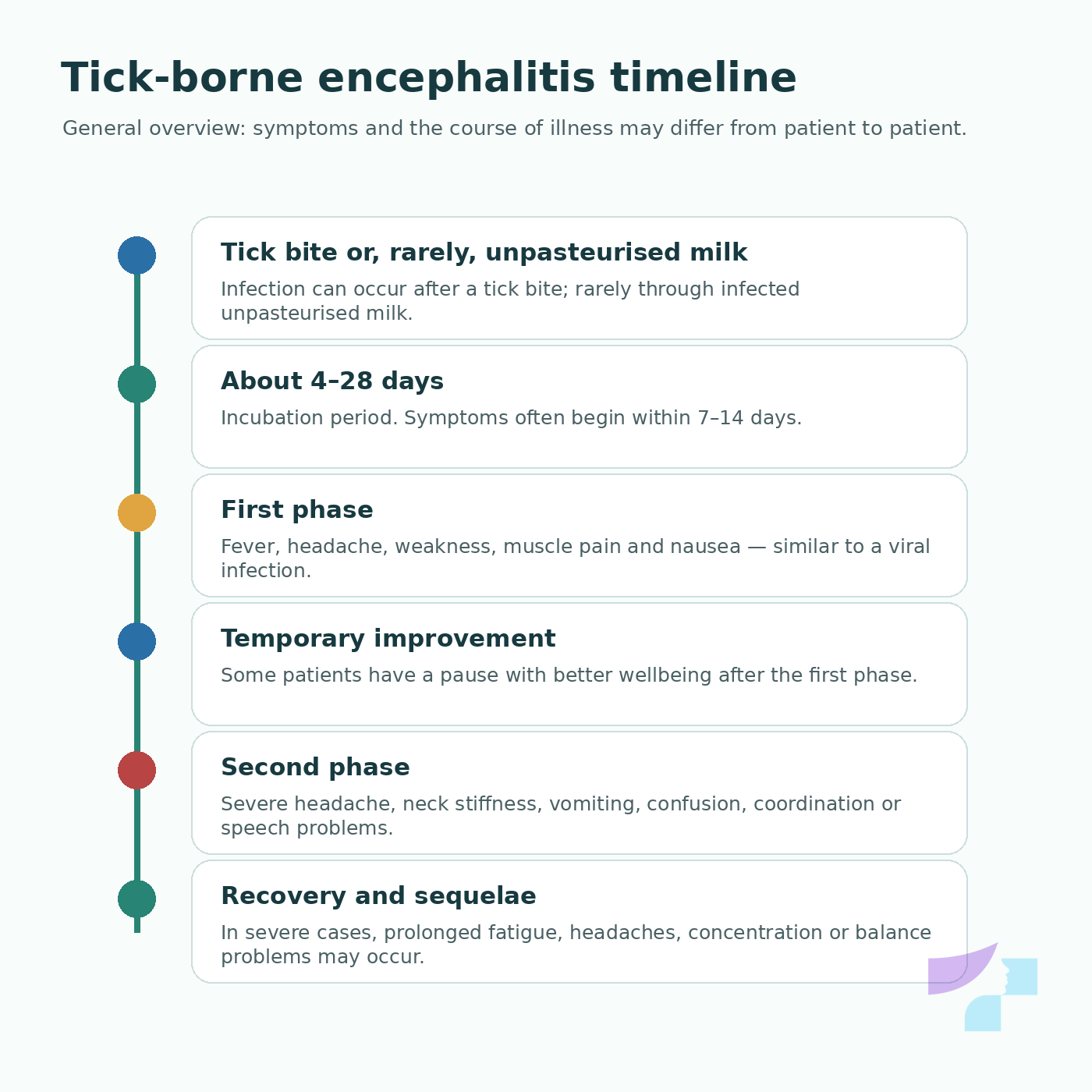
Tick-borne encephalitis timeline
A general timeline helps to understand how the disease may develop after a tick bite. It is not an exact prediction for every patient, because the course of the disease may differ.
Tick bite or, more rarely, consumption of unpasteurised milk
A person may become infected if an infected tick attaches. More rarely, infection may occur through unpasteurised milk from infected animals or products made from it.
Incubation period
Symptoms most often appear after approximately 7–14 days, although a shorter or longer period is also possible. The U.S. Centers for Disease Control and Prevention gives a range of 4–28 days.
First phase
There may be fever, headache, weakness, fatigue, muscle pain, nausea or vomiting. At this stage, the disease may look like an ordinary viral infection.
Temporary improvement
In some patients, wellbeing improves after the first phase. This may create the false impression that the illness has ended.
Second phase
In some patients, the disease progresses to a phase involving the nervous system. Severe headache, neck stiffness, vomiting, confusion, coordination problems, speech disturbances, seizures or limb weakness may appear.
Recovery and long-term sequelae
In milder cases, the person recovers completely. In more severe cases, recovery may be prolonged, and neurological or cognitive sequelae may occur — fatigue, concentration difficulties, balance problems, headaches or weakness.
What are the first symptoms of tick-borne encephalitis?
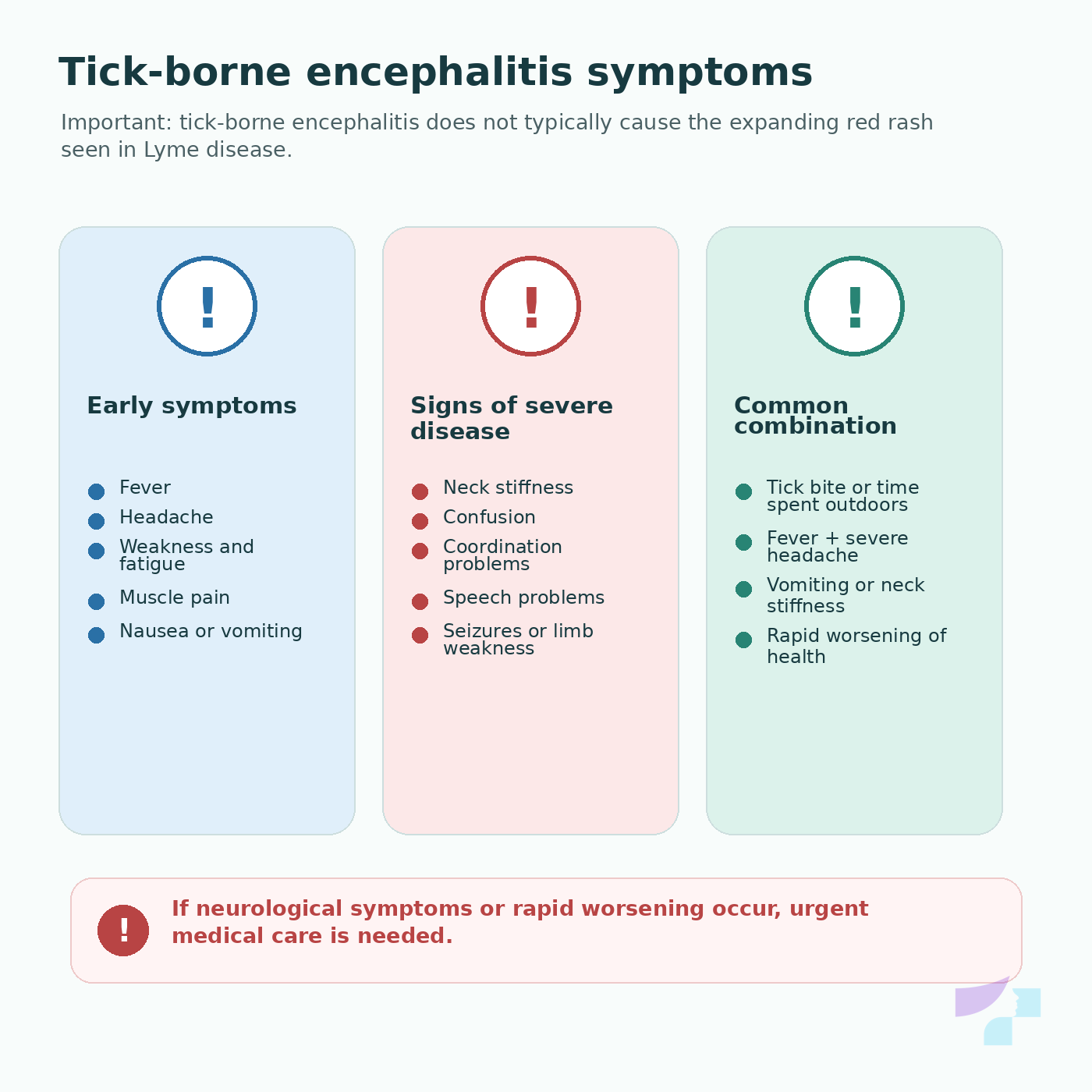
The first symptoms are usually non-specific. This means that, based on them alone, it is not possible to say with certainty that a person has tick-borne encephalitis specifically. Early symptoms may include:
- elevated temperature;
- headache;
- weakness and fatigue;
- muscle pain;
- nausea;
- vomiting;
- general feeling of being unwell.
The U.S. Centers for Disease Control and Prevention lists fever, headache, vomiting and weakness among the initial symptoms.
Important: tick-borne encephalitis is not typically associated with an expanding red rash around the bite site. This sign is more characteristic of Lyme disease. Therefore, the absence of a rash does not rule out tick-borne encephalitis.
3–5 key signs that may suggest tick-borne encephalitis
Tick-borne encephalitis should be considered in particular if the following signs appear after a tick bite or after spending time outdoors:
- fever together with severe headache;
- marked weakness, muscle pain and feeling unwell after being in a tick-risk environment;
- vomiting or nausea together with headache;
- neck stiffness, confusion or unusual sleepiness;
- coordination problems, speech disturbances, seizures or weakness in the arms or legs.
The last signs may indicate nervous system involvement, and in such a situation urgent medical evaluation is needed.
How does tick-borne encephalitis progress?
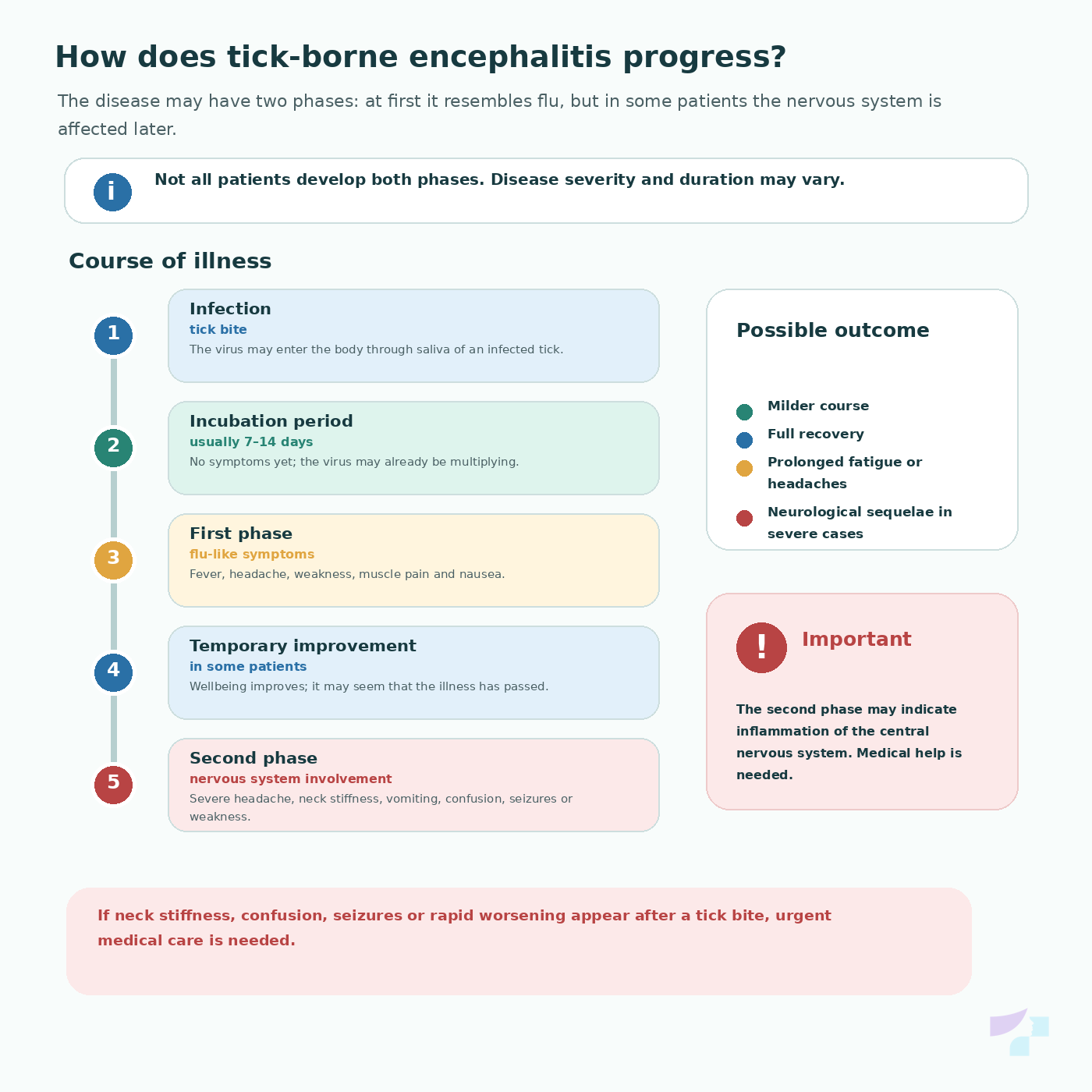
In Europe, tick-borne encephalitis is often described as a two-phase disease. In the first phase, there are flu-like symptoms. This may be followed by temporary improvement, and in some patients the disease ends there. However, some people develop a second phase with involvement of the nervous system.
Clinical literature notes that the European virus subtype often causes meningitis or meningoencephalitis, and that approximately two-thirds of patients with symptomatic disease may have a two-phase course.
In the second phase, the following may develop:
- meningitis — inflammation of the membranes surrounding the brain and spinal cord;
- encephalitis — inflammation of the brain;
- myelitis — inflammation of the spinal cord;
- combined nervous system damage.
For the patient, this may present as severe headache, neck stiffness, sensitivity to light, vomiting, confusion, balance problems, speech disturbances, seizures or limb weakness.
When should you see a doctor after a tick bite?
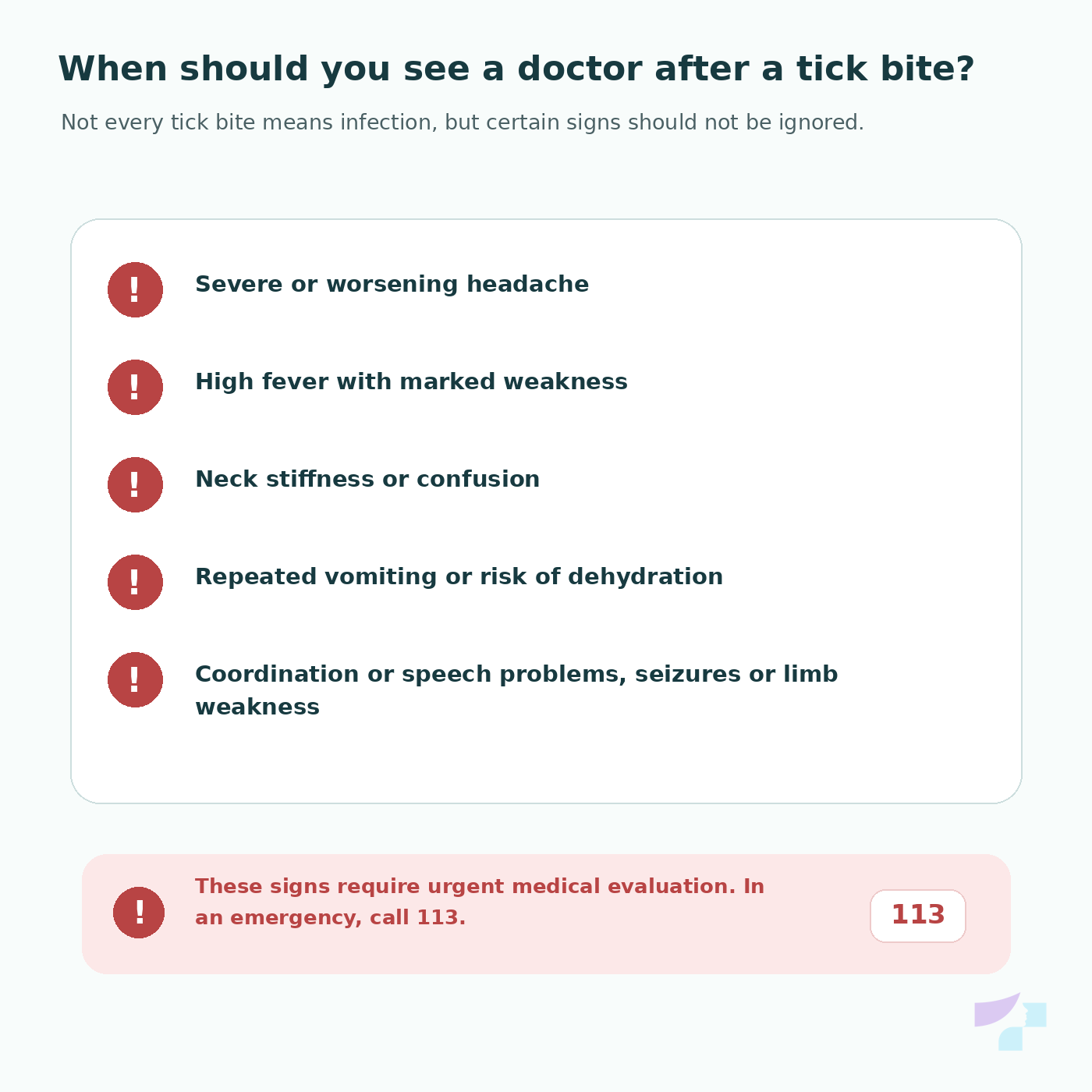
A doctor should be consulted if fever, severe headache, vomiting, marked weakness, neck stiffness, confusion, coordination problems or other unusual complaints appear after a tick bite or after spending time outdoors.
Urgent medical care is needed if there is:
- neck stiffness;
- confusion or impaired consciousness;
- seizures;
- speech disturbances;
- balance or coordination problems;
- weakness in the arms or legs;
- repeated vomiting;
- rapid worsening of wellbeing.
In its information materials, the Centre for Disease Prevention and Control of Latvia lists high fever, severe headache, nausea, vomiting, impaired consciousness, balance problems, paralysis, seizures, impaired concentration and memory problems among more severe signs.
Is tick-borne encephalitis always a severe disease?
No. Some people have an infection without symptoms or with mild symptoms. However, the disease is dangerous because it is not possible to predict in advance which patient will develop the severe form involving the nervous system.
A more severe course is more often associated with involvement of the central nervous system. In such cases, the patient may need hospital treatment, monitoring, fluid balance support, pain and fever control, anti-seizure therapy, breathing support or other supportive treatment prescribed by a doctor. The U.S. Centers for Disease Control and Prevention emphasises that severely ill patients often require hospitalisation to provide respiratory support, hydration or treatment to reduce brain swelling.
Tick-borne encephalitis in children
In children, tick-borne encephalitis may progress in different ways — from a mild febrile illness to involvement of the nervous system. Parents should be alert if a child develops fever, marked fatigue, severe headache, vomiting, sleepiness, neck stiffness, confusion, balance problems or seizures after a tick bite or after spending time outdoors.
In Latvia, childhood vaccination against tick-borne encephalitis is particularly important for families living in or frequently spending time in higher-risk areas. The Centre for Disease Prevention and Control of Latvia publishes information on territories where children are eligible for state-funded vaccination, and this information should be checked with the family doctor or on the Centre’s website.
Diagnosis of tick-borne encephalitis
Tick-borne encephalitis is diagnosed by a doctor, taking into account:
- symptoms;
- a possible tick bite;
- time spent outdoors or in a risk area;
- vaccination status;
- laboratory tests;
- neurological signs, if present.
The U.S. Centers for Disease Control and Prevention notes that diagnosis takes into account signs and symptoms, travel or exposure history and laboratory tests.
Serological tests are often used — detection of antibodies against the tick-borne encephalitis virus. Antibodies are proteins produced by the immune system that help recognise an infectious agent. In more severe cases, cerebrospinal fluid testing may be necessary. Cerebrospinal fluid is the fluid that surrounds the brain and spinal cord.
Immediately after a tick bite, tests for tick-borne encephalitis are not informative, because the body has not yet developed a detectable immune response. The need for testing and its timing are determined by a doctor.
When are tick-borne encephalitis tests informative?
Immediately after a tick bite, tests for tick-borne encephalitis are usually not yet informative, because the body needs time to develop a detectable immune response. This means that a negative test result at a very early stage does not always reliably exclude infection.
The need for testing and the most appropriate timing are determined by a doctor, taking into account symptoms, the time when the disease began, possible tick exposure, time spent in a risk area and vaccination history. If nervous system involvement is suspected, additional tests may be necessary, including cerebrospinal fluid testing.
For the patient, the most important practical point is not to test immediately after every tick bite, but to monitor wellbeing over the following weeks and see a doctor if fever, severe headache, vomiting, neck stiffness, confusion, balance problems or other concerning signs appear.
Diagnostic nuances after vaccination
If a person has recently been vaccinated against tick-borne encephalitis, interpretation of antibody test results may be more complex. Antibodies in the blood may be related both to vaccination and to a past or active infection. Therefore, test results should not be interpreted separately from the clinical situation.
The doctor evaluates the results together with symptoms, the time of disease onset, vaccination history, a possible tick bite, time spent in a risk area and, if necessary, additional tests. This is one reason why self-diagnosis based on test results can be misleading.
Should a tick be taken to a laboratory?
Usually, this is not necessary. Testing a tick can provide information about whether that specific tick carried an infectious agent, but it does not confirm that the person is definitely infected.
The most important practical step is to monitor wellbeing over the following weeks and see a doctor if symptoms appear. Clinical decisions are based on the person’s symptoms, risk situation and tests ordered by a doctor, not only on the result of tick testing.
Treatment of tick-borne encephalitis
There are no specific antiviral medicines that destroy the tick-borne encephalitis virus. In information intended for healthcare professionals, the U.S. Centers for Disease Control and Prevention notes that there is no specific treatment and that clinical care is supportive.
Treatment may include:
- rest;
- fluid intake or intravenous fluids in hospital;
- relief of fever and pain;
- control of nausea and vomiting;
- monitoring of neurological symptoms;
- anti-seizure or other treatment prescribed by a doctor if needed;
- hospital care in more severe cases.
Antibiotics do not work against tick-borne encephalitis because the disease is caused by a virus, not a bacterium. Antibiotics may be necessary for other tick-borne diseases, such as Lyme disease, but this is determined by a doctor.
When is hospital treatment needed?
Hospital care is needed if there is suspicion of central nervous system involvement or a severe course of disease. This applies to situations with neck stiffness, confusion, seizures, impaired consciousness, breathing problems, severe vomiting, risk of dehydration, coordination problems or limb weakness.
In hospital, doctors can monitor vital functions, provide fluids and medicines, observe the neurological condition and respond promptly to complications.
Can there be sequelae after tick-borne encephalitis?
Yes. After a more severe course of disease, long-term sequelae may occur. These may include:
- fatigue;
- headaches;
- concentration difficulties;
- memory impairment;
- sleep disturbances;
- balance problems;
- weakness;
- mood or cognitive difficulties;
- more rarely — long-term neurological disorders.
Studies on the sequelae of tick-borne encephalitis describe the so-called post-encephalitic syndrome — persistent complaints after encephalitis. In one large observational study of adults and children after tick-borne encephalitis, complete recovery was reported in about two-thirds of patients, while the most common sequelae were fatigue, weakness, concentration difficulties and balance problems.
These data should not be interpreted as a prognosis for an individual patient, because disease severity, age, immune status and treatment circumstances can vary significantly.
Can tick-borne encephalitis be chronic?
Tick-borne encephalitis is usually an acute infection. This means that the disease has a defined onset, an active infection period and then a recovery phase. In medicine, long-term sequelae after tick-borne encephalitis are described, such as fatigue, headaches, concentration difficulties, memory impairment, sleep disturbances, balance problems or other neurological complaints.
These long-term complaints are not the same as an active “chronic” tick-borne encephalitis virus infection. Rather, they may be consequences of the body’s and nervous system’s recovery after inflammation. If complaints persist for a long time after tick-borne encephalitis, a medical evaluation is needed. Some patients may require a neurologist consultation, rehabilitation, physiotherapy, or assessment of sleep, cognitive function or balance problems.
It is important for patients to understand that long-lasting symptoms after recovery should be taken seriously, but they should not automatically be interpreted as an active infection. Only a doctor can perform an appropriate evaluation.
Does immunity develop after recovery?
After recovery, immune memory against the tick-borne encephalitis virus usually develops. The Centre for Disease Prevention and Control of Latvia notes in its information material that after recovering from tick-borne encephalitis, a person acquires immunity.
However, in individual situations, questions about immunity, antibodies and future vaccination should be assessed by a doctor. This is especially relevant for people with immune system disorders, chronic diseases or an unclear previous diagnosis.
Vaccination against tick-borne encephalitis
Vaccination is the only specific form of prevention against tick-borne encephalitis. It helps the body develop a protective immune response against the virus so that, in the event of exposure, the risk of disease is reduced.
The Centre for Disease Prevention and Control of Latvia notes that vaccination against tick-borne encephalitis is possible throughout the year. The full primary course consists of three doses: the second dose is usually given 1 month after the first dose, and the third after 6 months. The Centre also notes that after two doses protection is sufficient only for one season, while booster vaccination is needed to maintain immunity.
The World Health Organization notes in its vaccine position materials that tick-borne encephalitis vaccines are an important prevention tool in endemic areas, especially for people with increased risk of exposure.
When is the best time to get vaccinated against tick-borne encephalitis?
Vaccination can be carried out throughout the year, but in practical terms it is best to plan vaccination in good time before the tick activity season. This allows the body to develop protection in time. However, if vaccination was not started in winter or spring, this does not mean that one must wait until the next year — vaccination can also be started at another time.
It is important to understand that vaccination after a specific tick bite does not treat a possible infection that has already occurred. It is prevention for the future, not treatment after exposure.
How long does the vaccine work and how often is a booster needed?
After the primary course, booster vaccination is needed to maintain immunity. In its prevention material for educational institutions, the Centre for Disease Prevention and Control of Latvia notes that a booster dose is required every 10 years unless there are other individual recommendations.
In certain situations, a doctor may recommend a different schedule, for example for people with immune system disorders or special risk factors. Therefore, a specific vaccination plan should be clarified with a family doctor, vaccination clinic or infectious disease specialist.
Does the vaccine also protect against Lyme disease?
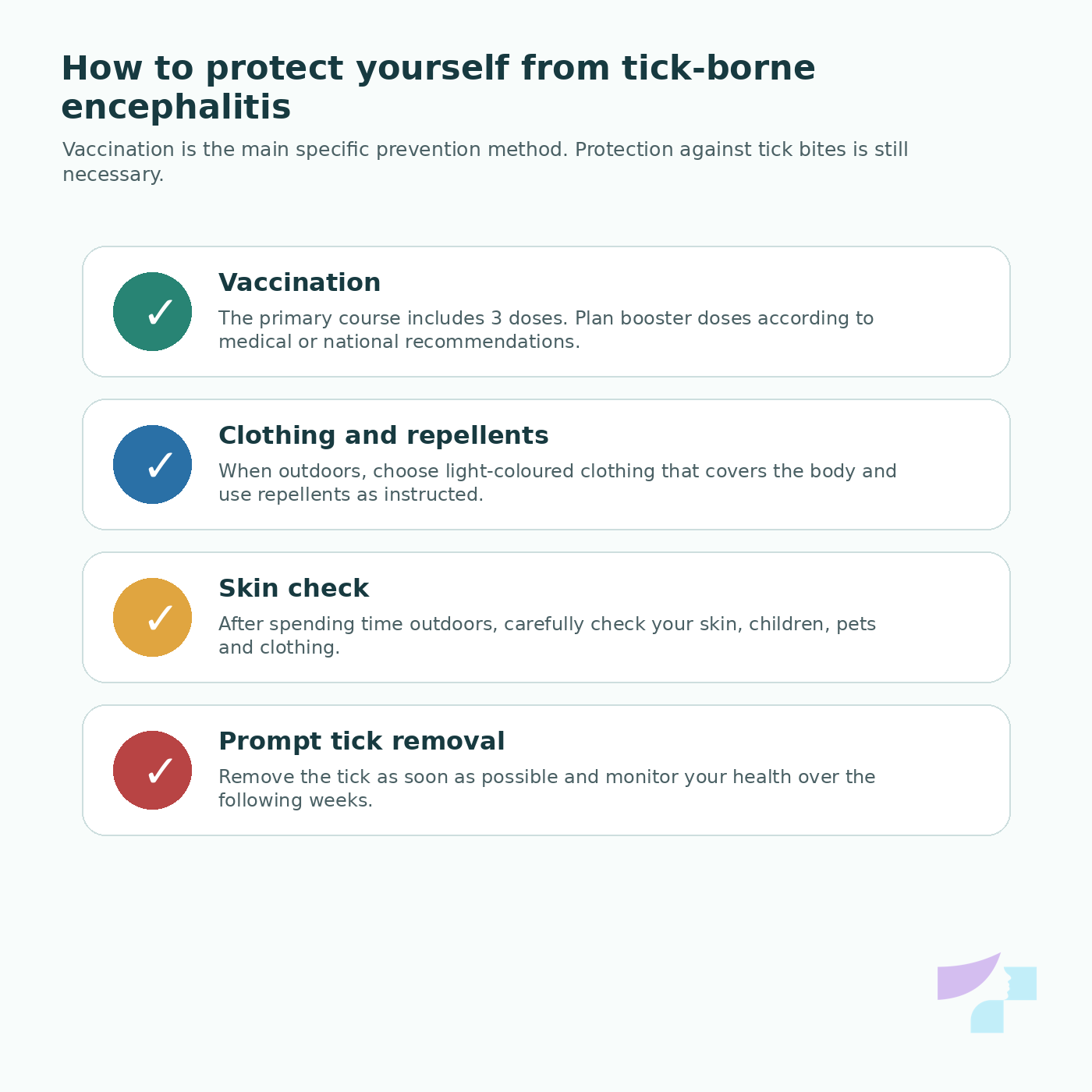
No. The vaccine against tick-borne encephalitis does not protect against Lyme disease, anaplasmosis, babesiosis or other tick-borne infections. Therefore, even vaccinated people should continue to prevent tick bites: appropriate clothing, repellents, skin checks after spending time outdoors and proper tick removal.
How to protect yourself from tick bites?
Prevention of tick-borne encephalitis is based on two approaches: vaccination and reducing the risk of tick bites.
Practical recommendations:
- when going outdoors, choose light-coloured clothing that covers the body;
- trousers should preferably be tucked into socks or shoes;
- use repellents according to the instructions;
- after spending time outdoors, check the skin, especially the armpits, groin, behind the knees, scalp, neck and behind the ears;
- check children and pets;
- remove an attached tick as soon as possible;
- do not consume unpasteurised milk or unpasteurised dairy products if there is uncertainty about their origin and processing.
How to remove a tick correctly?
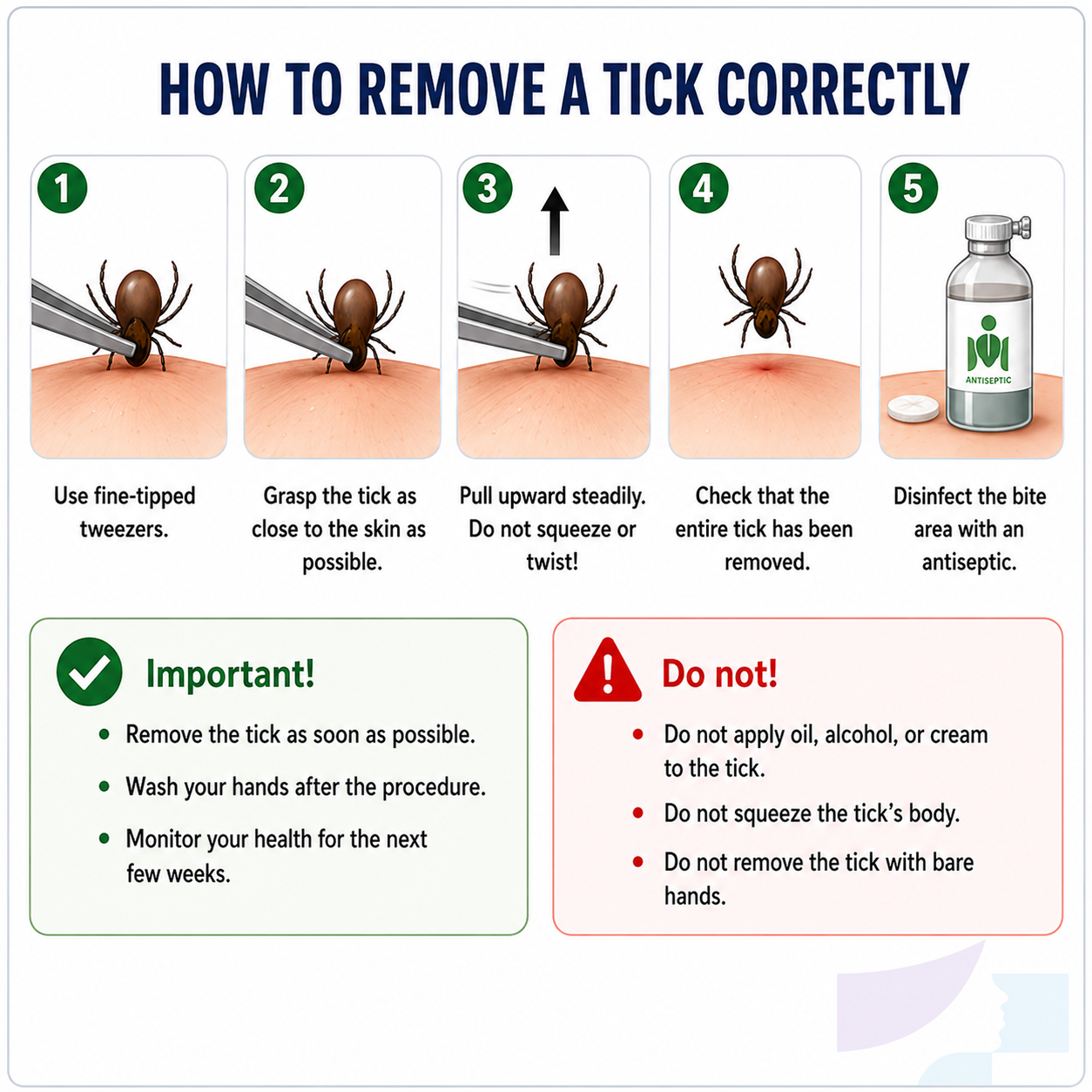
A tick should be removed as soon as possible. It is best to use fine-tipped tweezers or a special tick removal tool. The tick should be grasped as close to the skin as possible and pulled out with a steady motion. The tick should not be squeezed, burned or covered with oil, butter, alcohol solutions or other substances.
After removal, the bite site can be disinfected. Then wellbeing should be monitored over the following weeks. If fever, severe headache, rash, vomiting, neck stiffness or other unusual complaints appear, a doctor should be consulted.
Tick-borne encephalitis and Lyme disease: main differences
Tick-borne encephalitis and Lyme disease can both be associated with a tick bite, but they are different diseases. The infectious agent, treatment, vaccination options and characteristic signs differ.
| Criterion | Tick-borne encephalitis | Lyme disease |
|---|---|---|
| Causative agent | Virus | Borrelia bacteria |
| How it is transmitted | Most often through the bite of an infected tick; more rarely through infected unpasteurised milk or products made from it | Through the bite of an infected tick |
| Disease onset | Often begins with flu-like symptoms — fever, headache, weakness, muscle pain | May begin with skin redness, fatigue, fever, headache or muscle and joint pain |
| Characteristic skin sign | An expanding red rash is not typical | Erythema migrans, or an expanding red rash, may be an early sign |
| Nervous system involvement | Meningitis, encephalitis or other central nervous system damage may develop | Neuroborreliosis may develop if the disease is not recognised and treated in time |
| Treatment | No specific antiviral medicines; treatment is symptomatic and supportive | Treated with antibiotics prescribed by a doctor |
| Vaccination | A vaccine is available | There is no widely used vaccine against Lyme disease in Latvia |
| Prevention | Vaccination and protection against tick bites | Protection against tick bites and timely recognition of symptoms |
One tick can theoretically transmit several infectious agents, so after a tick bite it is important to monitor both general symptoms and skin changes. If fever, severe headache, neck stiffness, confusion, an expanding skin rash or other unusual complaints appear, a doctor should be consulted.
What is proven, and what is medicine still researching?
Medically well established:
- tick-borne encephalitis is caused by a virus;
- the main route of transmission is the bite of an infected tick;
- the disease can affect the central nervous system;
- there is no specific antiviral treatment;
- vaccination is effective prevention;
- the tick-borne encephalitis vaccine does not protect against Lyme disease;
- long-term sequelae are possible after a more severe course of disease.
Medicine is actively researching:
- why some patients develop long-term sequelae after the acute illness;
- which factors best predict a severe disease course;
- how to optimally assess and treat post-encephalitic syndrome;
- how climate and environmental changes affect tick distribution and disease risk;
- how to improve vaccination coverage in risk regions;
- how to standardise assessment of long-term sequelae in studies.
Recent publications emphasise that various neurological, neuropsychiatric and other long-term complaints may occur after tick-borne encephalitis, and researchers point to the need to better standardise the classification and follow-up duration of these sequelae.
Brief summary for patients
Tick-borne encephalitis is a viral infection most often transmitted by an infected tick. At first, the disease may resemble influenza, but in some patients it can progress to a second phase and affect the nervous system. An expanding red rash is not characteristic of tick-borne encephalitis — it is more closely associated with Lyme disease.
There are no specific medicines against the tick-borne encephalitis virus. Treatment is supportive, and hospital care is needed in more severe cases. The main specific prevention is vaccination, but even vaccinated people should continue to protect themselves from tick bites, because ticks can transmit other diseases as well.
When to book an appointment with a specialist?
If fever, severe headache, vomiting, neck stiffness, confusion, balance problems, seizures, marked weakness or other unusual complaints appear after a tick bite or after spending time outdoors, a medical evaluation is needed. It is also advisable to see a specialist if the vaccination status is unclear, a booster is needed, there are questions about a child’s vaccination, or long-term complaints remain after recovery.
At Medart clinic, it is possible to book an appointment with the specialists listed below the article, who will assess symptoms, risk factors, vaccination history and the necessary further tests or prevention steps.
Disclaimer
The information provided in this article is intended for educational and informational purposes only. It does not replace medical consultation, diagnosis or treatment. If fever, severe headache, vomiting, neck stiffness, confusion, coordination problems, seizures, marked weakness or other concerning signs appear after a tick bite, after spending time outdoors or after consuming unpasteurised dairy products, contact an infectious disease specialist, family doctor, neurologist or paediatrician in the case of a child without delay. Do not attempt to diagnose or treat possible tick-borne encephalitis on your own. In an emergency, severe or rapidly worsening situation, call 113.
References and authoritative sources
- Centre for Disease Prevention and Control of Latvia: state-funded childhood vaccination against tick-borne encephalitis
- Centre for Disease Prevention and Control of Latvia: vaccination against tick-borne encephalitis and state-funded childhood vaccination
- Centre for Disease Prevention and Control of Latvia: tick activity season and disease risks in Latvia
- U.S. Centers for Disease Control and Prevention (CDC): tick-borne encephalitis symptoms, diagnosis and treatment
- U.S. Centers for Disease Control and Prevention (CDC): tick-borne encephalitis treatment and prevention for healthcare professionals
- U.S. Centers for Disease Control and Prevention (CDC): tick-borne encephalitis vaccine
- European Centre for Disease Prevention and Control (ECDC): factsheet on tick-borne encephalitis
- European Centre for Disease Prevention and Control (ECDC): epidemiology and disease information on tick-borne encephalitis
- World Health Organization (WHO): position paper on vaccination against tick-borne encephalitis
- World Health Organization (WHO): summary of the position paper on tick-borne encephalitis vaccination
- Bogovič P., Strle F. Tick-borne encephalitis: review of epidemiology, clinical features and management
- Nygren T. M. et al. Recovery and sequelae in adults and children after tick-borne encephalitis
- Halsby K. et al. Clinical spectrum and dynamics of sequelae following tick-borne encephalitis
