Psoriasis in children, also known as childhood psoriasis, is a chronic inflammatory skin disease that may appear as red, pink or otherwise inflamed areas of skin, scaling, itching, scalp flaking, rashes in skin folds, nail changes or, less commonly, joint symptoms. Psoriasis is not an infection, is not a fungal disease and is not contagious, so a child with psoriasis cannot “infect” other children at nursery, school, in the swimming pool or during play.
In children, psoriasis may look different from psoriasis in adults. The patches are often smaller, thinner, less scaly and more commonly located on the face, scalp, skin folds or, in younger children, the nappy area. Guttate psoriasis is also important in children and adolescents, as it can appear suddenly after an infection, especially after streptococcal throat infection or tonsillitis.
Accurate diagnosis is important in psoriasis, because parents may confuse a child’s skin rash with atopic dermatitis, eczema, allergy, fungal infection, seborrhoeic dermatitis, nappy dermatitis or other skin conditions. Treatment in children must always be adapted to the child’s age, the affected skin area, disease severity, daily routine and safety considerations.
In brief: psoriasis in children
- Psoriasis in children is a chronic inflammatory skin disease that is not contagious.
- In children, it may look different from psoriasis in adults — patches can be thinner, less scaly and more often located on the face, scalp or in skin folds.
- Guttate psoriasis in children may appear after a throat infection or tonsillitis.
- Psoriasis in a child can be confused with atopic dermatitis, eczema, fungal infection, seborrhoeic dermatitis or nappy dermatitis.
- Treatment must always be adapted to the child’s age, disease severity and the affected skin area.
- Prescription ointments, phototherapy, systemic therapy or biological therapy in children should only be used under medical supervision.
- If a child has joint pain, nail changes or a rash after an infection, medical consultation is needed.
What is psoriasis in children?
Psoriasis in children is a chronic immune-mediated inflammatory disease. This means that the condition is caused by changes in immune system activity, resulting in inflammation in the skin and excessively rapid renewal of skin cells. Normally, skin cells mature gradually, but in psoriasis this process is accelerated. As a result, red, thickened or scaly patches develop on the skin.
Psoriasis is sometimes called a scaly skin condition because scaling is one of its most visible signs. However, childhood psoriasis does not always look like thick, silvery scales on the skin. In children, rashes may be subtler, less scaly, more itchy and located in less typical areas, such as the face, scalp, groin or nappy area.
Psoriasis in children does not look the same in every child. One child may have small patches on the elbows or knees, another may have scalp scaling, while another may suddenly develop many small rashes after a throat infection. This is why, in childhood psoriasis, it is important to assess not only how the skin looks, but also the child’s age, disease onset, family history, infections, itching, nail changes and joint symptoms.
Can children have psoriasis?
Yes, children can have psoriasis. It may begin at any stage of childhood — in younger children, school-aged children or adolescents. In some children, psoriasis begins with individual scaly patches, while in others it appears more suddenly, for example as guttate rashes after an infection.
Childhood psoriasis can be mild, moderate or severe. Mild disease may affect only a small area of skin, but even a small lesion can be troublesome if it is located on the face, scalp, hands, feet, genital area or visible parts of the body. In children, the emotional impact is also particularly important — rashes can cause embarrassment, avoidance of sport or swimming, difficulties at school and reduced self-esteem.
Psoriasis in babies and young children
Psoriasis in babies and very young children is less common than in school-aged children and adolescents, but it is possible. At this age, psoriasis can be especially difficult to recognise because it may resemble nappy dermatitis, seborrhoeic dermatitis, cradle cap, atopic dermatitis or fungal infection.
In younger children, psoriasis may be less scaly, especially in skin folds and the nappy area, where the skin is more moist. Parents should therefore avoid diagnosing the condition themselves based only on pictures found online. If the rash does not go away, keeps returning, spreads, does not improve with ordinary skin care or if psoriasis runs in the family, the child should be seen by a dermatologist or paediatrician.
It is especially important to pay attention when a rash in the nappy area is persistent, affects the skin folds, appears outside the nappy area, keeps recurring or occurs together with scalp scaling. In such cases, medical assessment is needed because several different skin conditions can look similar.
How does childhood psoriasis differ from adult psoriasis?
Childhood psoriasis can be similar to adult psoriasis, but there are often several differences. In children, patches may be thinner, smaller, less scaly and more often located on the face, scalp and in skin folds.
In adults, classic plaque psoriasis often presents with thicker plaques on the elbows, knees, lower back and scalp. In children, the appearance may be milder but diagnostically more challenging, because psoriasis can resemble atopic dermatitis, fungal infection, seborrhoeic dermatitis or nappy dermatitis.
Another difference is treatment. In children, safety, age-appropriate medicines, gentle treatment of sensitive areas and parental involvement are particularly important. Not all treatments used in adults are suitable for children, and prescription medicines should only be used under medical supervision.
Is childhood psoriasis contagious?
Childhood psoriasis is not contagious. It is not an infection, not a fungal disease and not caused by bacteria or viruses. A child with psoriasis may attend school, nursery, clubs, sports activities and play with other children.
Psoriasis cannot be transmitted by:
- touching the child’s skin;
- sharing toys;
- being in the same classroom or group;
- playing sport together;
- visiting a swimming pool;
- hugging or playing together.
This is important for parents and teachers, because children with visible skin rashes may sometimes experience unnecessary social isolation. If a child has psoriasis, people around them should know that the condition is not contagious and that the child is not a risk to others.
What does psoriasis look like in a child?
Psoriasis in a child can look different in different cases. Most often, it appears as red, pink or, in darker skin, purplish-brown inflamed areas of skin that may be dry, scaly, itchy or thickened. On lighter skin, psoriasis more often appears pink or red, while on darker skin the patches may be brownish, greyish or violet in colour.
Psoriasis patches in children may be:
- red or pink;
- clearly defined;
- dry and scaly;
- itchy;
- thinner than in adults;
- less visibly scaly;
- sometimes cracked;
- sometimes tender or painful.
On the scalp, psoriasis may look like thicker scaling that resembles dandruff or seborrhoeic dermatitis. In skin folds, it may be pink, smoother, more moist and less scaly. In younger children, psoriasis in the nappy area can be confused with nappy dermatitis, because the scales may be less visible due to moisture.
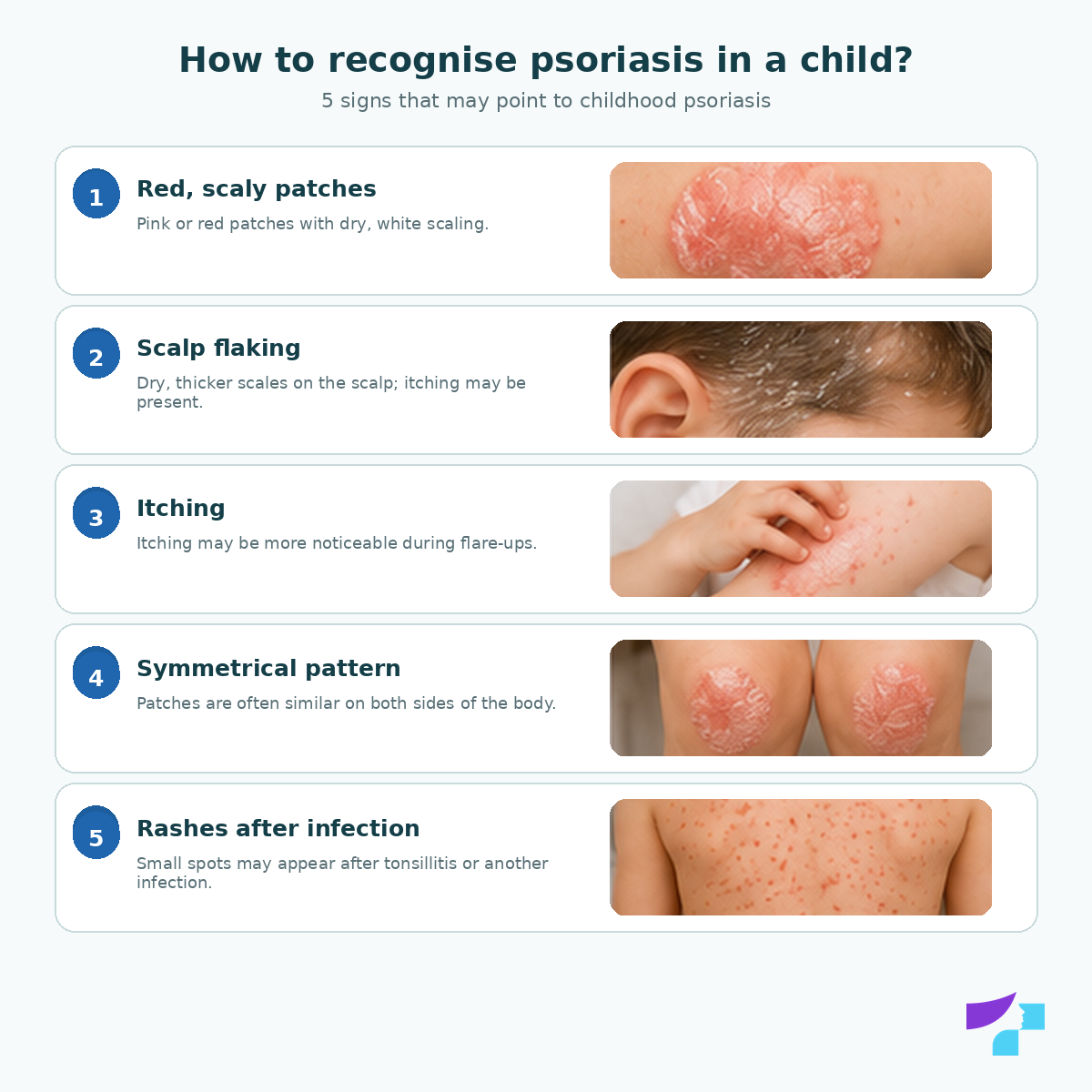
3–5 key signs that may suggest psoriasis in a child
The following signs may suggest possible psoriasis in a child:
- red, pink or scaly patches that recur or do not go away;
- scalp scaling that does not resemble ordinary dandruff or does not improve with routine care;
- rashes on the elbows, knees, scalp, face or in skin folds;
- small guttate rashes after tonsillitis, throat infection or another infection;
- nail changes or joint pain together with skin rashes.
These signs do not mean that the child definitely has psoriasis. They mean that assessment by a dermatologist or paediatrician is needed, especially if the rashes recur, spread, itch, hurt, crack or do not respond to ordinary skin care.
Below are the most common signs that may suggest psoriasis in a child. They can help with orientation, but they do not replace assessment by a dermatologist or paediatrician.
Where does psoriasis most often appear in children?
Psoriasis in children can appear almost anywhere on the body, but some locations are particularly characteristic.
The most common areas in children are:
- the scalp;
- the face, especially the forehead and hairline area;
- elbows;
- knees;
- lower back;
- skin folds;
- behind the ears;
- the navel;
- the nappy area in younger children;
- hands and feet;
- nails.
Psoriasis in children may appear in different areas of the body, but some locations are more typical and help the doctor assess the possible diagnosis.
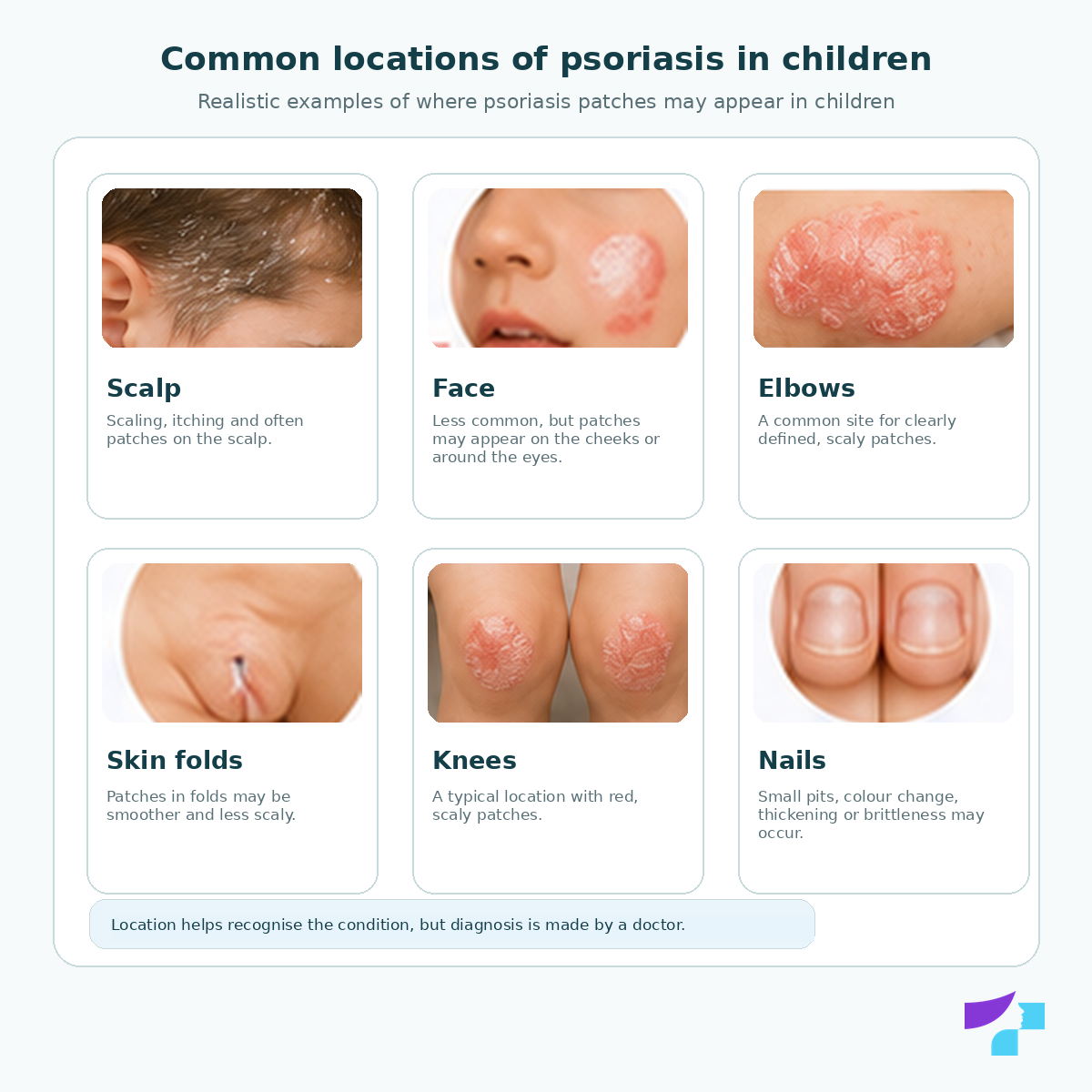
Parents should be especially careful with rashes in skin folds and the nappy area, because psoriasis in these areas may be less scaly and can look like irritation, fungal infection or nappy dermatitis. On the scalp, psoriasis can resemble dandruff or seborrhoeic dermatitis.
Types of psoriasis in children
Children may have different forms of psoriasis. Sometimes a child has only one form, while in other cases the manifestations of the disease change over time.
Plaque psoriasis in children
Plaque psoriasis is a common form of psoriasis in children as well. It is characterised by red or pink, clearly defined, scaly patches of skin. In children, these patches may be thinner and less scaly than in adults.
Typical locations include the elbows, knees, scalp and lower back. More information about this type of psoriasis is available in the Medart article “plaque psoriasis”.
Guttate psoriasis in children
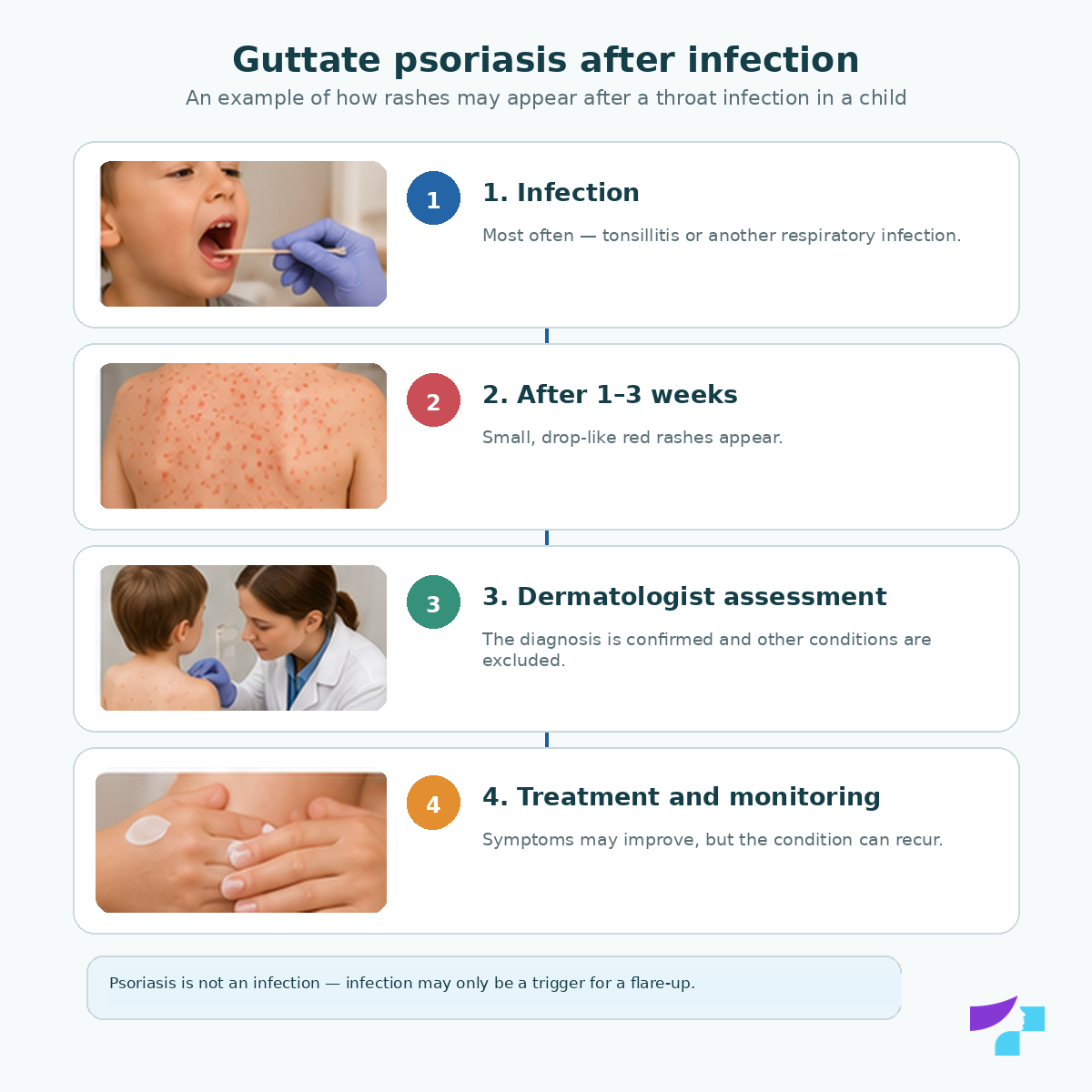
Guttate psoriasis in children is especially important because it often begins suddenly and may appear after an infection, particularly after streptococcal throat infection or tonsillitis. It is characterised by many small, drop-like rashes on the body, arms, legs or scalp.
Guttate psoriasis can look very alarming because there may be many rashes. However, the course of the condition can vary — in some children the rashes decrease over time, while in others a more chronic form of psoriasis may later develop. A child with sudden small scaly rashes after an infection therefore needs medical assessment.
Scalp psoriasis in children
Scalp psoriasis in children may cause scaling, itching, redness and dry flakes on the scalp. It can resemble dandruff or seborrhoeic dermatitis. Sometimes psoriasis patches extend beyond the hairline onto the forehead, behind the ears or the back of the neck.
In scalp psoriasis, it is important not to use aggressive products and not to mechanically peel off the scales. A doctor chooses appropriate treatment for the child, taking into account the child’s age, the thickness of scaling, inflammation and itching.
Psoriasis in skin folds and the nappy area
In children, psoriasis may appear in skin folds — the groin, armpits, under abdominal folds, in the buttock crease or in the nappy area. In these areas, the skin is more moist and exposed to friction, so scaling may be less obvious.
In younger children, psoriasis in the nappy area can be confused with nappy dermatitis or fungal infection. If the rash in this area does not go away, recurs or does not improve with ordinary care, a medical examination is needed.
Nail psoriasis in children
Nail psoriasis in children may appear as small pits on the nail surface, nail thickening, colour changes, separation of the nail from the nail bed or brittleness. Nail changes can resemble fungal nail infection, so the diagnosis should not be made based on appearance alone.
Nail psoriasis is also important because in some cases it may be associated with a higher risk of psoriatic arthritis. If a child has nail changes together with joint pain, swelling or morning stiffness, medical assessment is needed.
Rarer and more severe forms of psoriasis in children
Less commonly, children may develop pustular, erythrodermic or other more severe forms of psoriasis. These may present with widespread skin redness, pustules, pain, fever, weakness or deterioration in general condition.
In such cases, urgent medical help is needed, because extensive skin inflammation in a child can be a serious condition.
Who is at higher risk of developing psoriasis in childhood?
Psoriasis in children may develop without an obvious reason, but several factors can increase the risk or contribute to flare-ups.
The risk may be higher in children who:
- have a family history of psoriasis;
- have had recurrent scaly skin rashes before;
- have had streptococcal infections or frequent throat infections;
- experience chronic stress or emotional strain;
- often have skin trauma or irritation;
- are overweight;
- have other inflammatory or immune-mediated diseases;
- have nail changes or joint symptoms.
This does not mean that a child with these factors will definitely develop psoriasis. These are risk and flare-up factors, not a simple chain of causes.
How psoriasis develops in children
The mechanism of psoriasis development in children is broadly similar to that in adults. The immune system becomes overactive and maintains inflammatory signals in the skin. These signals accelerate skin cell renewal. As a result, cells accumulate in the upper layer of the skin, forming red, thickened or scaly patches.
In simple terms, this can be explained as follows:
- genetic predisposition or immune system characteristics;
- a triggering factor, such as infection, stress or skin trauma;
- activation of inflammatory signals in the skin;
- accelerated skin cell division;
- red, scaly or inflamed skin patches.
Childhood psoriasis is not a sign that the child has a “weak immune system”. Rather, it is a feature of immune system regulation in which the inflammatory reaction in the skin becomes too active or prolonged.
Timeline of onset and flare-ups in childhood psoriasis
Psoriasis is not an infection, so it does not have an incubation period. However, in children there may be a typical sequence of disease onset or flare-up.
A possible timeline:
Triggering factor
The child may have an infection, sore throat, stress, skin trauma, friction, cold weather or another strain.
First skin changes
Red spots, itching, scaling, scalp flaking or small rashes appear.
Development of patches
The rashes become more clearly defined, more scaly or spread. In guttate psoriasis, there may be many small rashes.
Medical assessment
A dermatologist or paediatrician assesses the skin changes, infection history, family history and whether tests are needed.
Treatment and skin care
Treatment is adapted to the child’s age, affected area and disease severity.
Symptom improvement or monitoring
In some children the symptoms improve, while in others the disease may recur or require longer-term control.
Symptoms of psoriasis in children: early signs, later signs and typical combinations
The symptoms of childhood psoriasis can vary, so it is useful to divide them into early signs, later signs and typical combinations.
Early signs
- small red or pink spots;
- dry or scaly skin;
- itching;
- scalp flaking;
- rashes after infection;
- redness in skin folds;
- recurrent rashes that do not go away with ordinary care.
Later signs
- more pronounced scaling;
- thickened patches;
- cracks or pain;
- wider spread of rashes;
- nail changes;
- joint pain or stiffness;
- emotional discomfort or avoidance of social situations.
Typical combinations
Scalp + scaling + itching
May resemble dandruff or seborrhoeic dermatitis.
After tonsillitis + many small rashes
May suggest guttate psoriasis.
Elbows and knees + red scaly patches
May suggest plaque psoriasis.
Skin folds + pink smoother rashes
May be psoriasis in skin folds, but it must be distinguished from fungal infection or irritant dermatitis.
Nails + joint symptoms
May require assessment for psoriatic arthritis.
Causes and flare-up factors in childhood psoriasis
There is no single simple cause of childhood psoriasis. It develops through the interaction of genetic predisposition, immune system characteristics and external or internal triggering factors.
Common flare-up factors in children include:
- streptococcal infection or tonsillitis;
- other respiratory infections;
- stress;
- skin trauma;
- scratching and friction;
- cold and dry weather;
- skin irritation;
- lack of sleep;
- excess weight;
- some medicines;
- sudden discontinuation of treatment without medical advice.
It is not always possible to identify a specific trigger. A symptom diary may help parents record when the rash appeared and whether there was an infection, stress, skin trauma, a new skin care product or other circumstances beforehand.
Infections, tonsillitis and guttate psoriasis in children
The link between infections and guttate psoriasis is especially important in children. Guttate psoriasis may appear after streptococcal throat infection or tonsillitis. It presents with many small, drop-like, red or pink rashes that may cover the body, arms, legs or scalp.
This does not mean that psoriasis is an infection. An infection can act as a trigger in a child who is predisposed to psoriasis. If a child develops widespread small rashes after tonsillitis or a throat infection, medical consultation is recommended. In some cases, the doctor may assess whether infection testing or treatment is needed.
Guttate psoriasis in children may appear after an infection, especially after a sore throat or tonsillitis, but psoriasis itself is not an infection and is not contagious.
Koebner phenomenon in children — why can psoriasis appear at sites of skin trauma?
The Koebner phenomenon means that psoriasis patches may appear at sites of skin trauma or irritation. This is practically important in children because children often scratch, fall, get abrasions, play sport or wear clothing that rubs the skin.
Psoriasis may appear in areas where there have been:
- scratches;
- abrasions;
- burns;
- strong friction;
- long-term irritation;
- scratch marks;
- scars.
A child with psoriasis should therefore not be allowed to scratch or pick at scales. Skin trauma can increase inflammation and promote the formation of new patches.
How is psoriasis diagnosed in children?
Psoriasis in children is most often diagnosed by a dermatologist, who assesses the appearance of the skin, location of the rash, disease course, family history, infection history and possible triggering factors. In many cases, the diagnosis can be made during a clinical examination.
The doctor may ask:
- when the rash started;
- whether it appeared after an infection;
- whether there is itching, pain or cracking;
- where the rash is located;
- whether there is psoriasis in the family;
- whether the child has scalp scaling;
- whether there are nail changes;
- whether there is joint pain or morning stiffness;
- which treatments have already been used;
- whether the treatment helped.
Tests are not always needed. They may be required if infection, fungal disease or another skin condition needs to be excluded, or if a particular treatment is being planned. Skin biopsy is usually not the first choice in typical cases in children, but in rare cases it may be considered if the diagnosis is unclear. Psoriasis should not be diagnosed with certainty based on a photograph alone, because childhood rashes can resemble many different conditions.
What can childhood psoriasis be confused with?
Childhood psoriasis can be confused with several common skin conditions.
The most common similar conditions include:
- atopic dermatitis;
- eczema;
- fungal infection;
- seborrhoeic dermatitis;
- nappy dermatitis;
- allergic rashes;
- contact dermatitis;
- viral rashes;
- fungal nail infection.
Atopic dermatitis is more often associated with very pronounced itching, dry skin and typical locations depending on age. Psoriasis more often has clearer borders and scaly patches, but in children the distinction can be difficult.
Fungal infection may cause scaly patches that spread differently, and sometimes mycological testing is needed. Seborrhoeic dermatitis on the scalp can resemble psoriasis. In the nappy area, psoriasis may look like persistent irritation that does not improve with ordinary care.
Accurate diagnosis is important because treatment can differ for each condition.
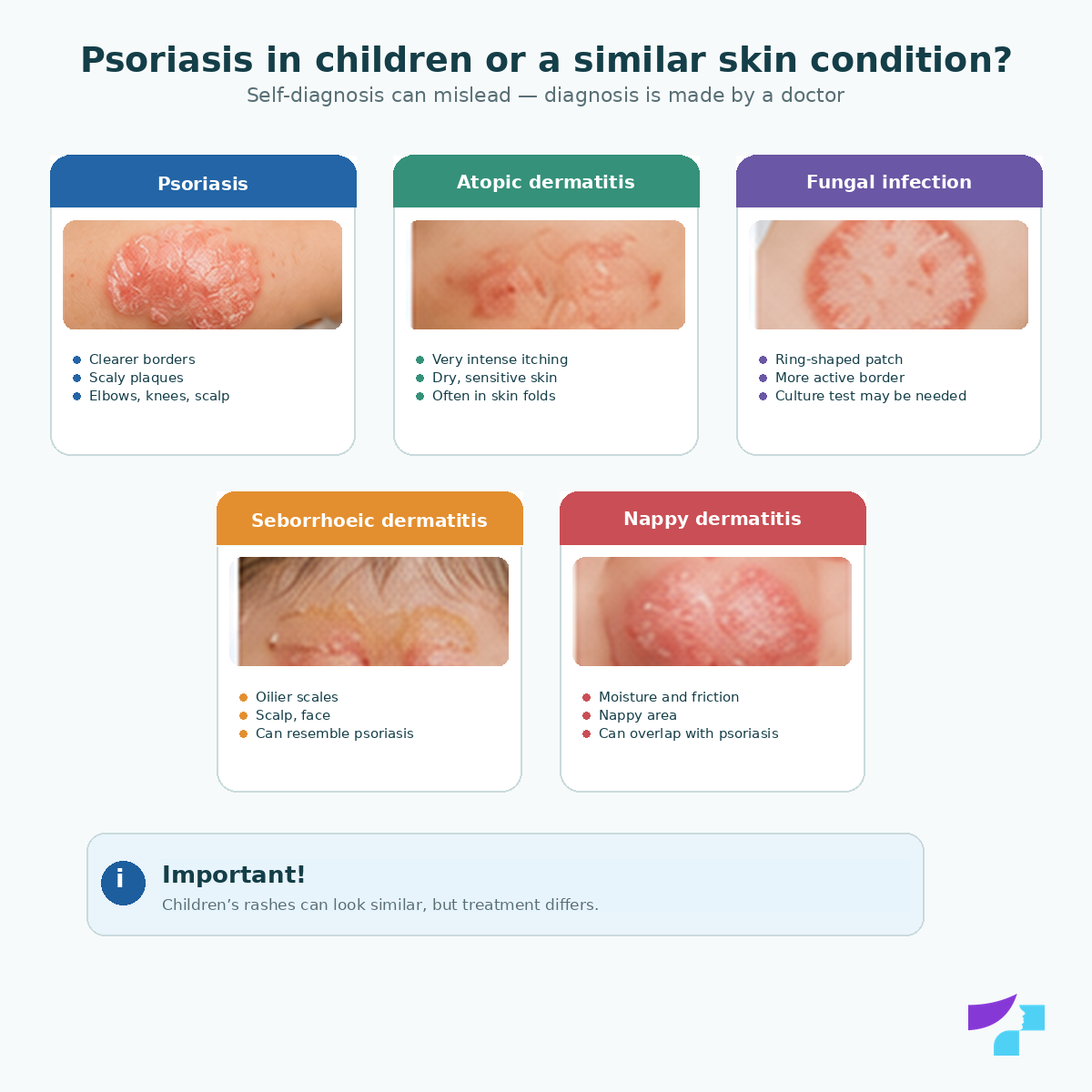
How does psoriasis in a child differ from atopic dermatitis, fungal infection and nappy dermatitis?
Psoriasis in a child more often forms clearly defined red or scaly patches. Typical locations include the elbows, knees, scalp, lower back, and sometimes the face, hands, feet, nails and skin folds.
Atopic dermatitis in children is more often very itchy and commonly affects skin creases, the neck and face. Dry, sensitive skin, scratch marks and flare-ups triggered by irritants or allergens are typical.
Fungal infection can form scaly patches with a more active border and may affect the feet, skin folds or nails. If fungal infection is suspected, the doctor may order a test.
Seborrhoeic dermatitis and cradle cap more often affect the scalp, eyebrows and behind the ears, and may look like oilier scales. However, scalp psoriasis can look similar.
Nappy dermatitis is usually related to moisture, friction and irritation in the nappy area. If a rash in this area is persistent, atypical or does not improve with ordinary care, psoriasis or fungal infection should also be excluded.
For this reason, parents should not rely only on online images or the experience of other parents when assessing a child’s rash. Different skin conditions in children can look similar, but their treatment may differ.
Children’s skin conditions can look visually similar. This comparison helps explain possible differences, but the precise diagnosis is always made by a doctor.
Psoriasis in children and immunity
Because psoriasis is not an infection, a child does not develop immunity to psoriasis in the same way as after a viral or bacterial infection. A child cannot “catch psoriasis once” and then become immune to it.
Psoriasis is characterised by periods of flare-up and remission. Remission means that symptoms decrease or almost disappear for a time. A flare-up means that new rashes appear or existing ones become more pronounced.
In some children, psoriasis symptoms may decrease for long periods, while in others the disease may recur. It is not possible to reliably predict whether a child will “grow out of” psoriasis. Correct diagnosis, regular monitoring and age-appropriate treatment are therefore important.
Consequences and possible complications of psoriasis in children
Psoriasis in a child can affect more than the skin. It may affect self-esteem, sleep, sport, relationships with peers, school or nursery life and the emotional burden on the family.
Possible consequences include:
- itching and sleep disturbance;
- pain due to cracks or inflammation;
- scratching and skin damage;
- nail changes;
- avoidance of sport, swimming or shorter clothing;
- embarrassment about visible rashes;
- anxiety or reduced self-esteem;
- joint symptoms;
- less commonly — extensive or severe forms of psoriasis.
This does not mean that these problems will definitely develop in children, but it does mean that the doctor should be informed about joint pain, weight problems, fatigue, sleep disturbance or emotional difficulties.
Psoriasis in children and joint pain
Less commonly, children with psoriasis may develop psoriatic arthritis — an inflammatory joint disease. Parents should pay special attention to joint pain, swelling or stiffness because a child may not always be able to describe symptoms accurately.
Possible signs of joint involvement include:
- morning stiffness;
- joint pain;
- swelling around joints;
- limping;
- refusal to take part in sport or play;
- heel or foot pain;
- swollen fingers or toes;
- back pain with stiffness;
- nail psoriasis together with joint symptoms.
A child does not always say “my joint hurts”. Joint inflammation may also be suggested by difficulty “getting going” in the morning, reluctance to run, avoidance of physical education, complaints about heel pain, swollen fingers or marked fatigue after physical activity. If such signs appear in a child with psoriasis or nail changes, medical assessment is needed. A rheumatologist consultation may be required.
Treatment of psoriasis in children
Treatment of psoriasis in children should be adapted to the child’s age, type of psoriasis, location, severity, itching, pain, quality of life and the family’s ability to follow the treatment plan. The goal of treatment is to reduce inflammation, itching, scaling, discomfort and flare-up frequency while maintaining treatment safety.
Important principles in childhood treatment include:
- not overloading the skin with overly aggressive products;
- not using prescription medicines without medical advice;
- treating the face, skin folds and genital area particularly gently;
- choosing age-appropriate products;
- monitoring treatment effect and possible side effects;
- not stopping treatment without medical advice;
- involving parents and the child in the treatment plan.
Skin care and moisturising
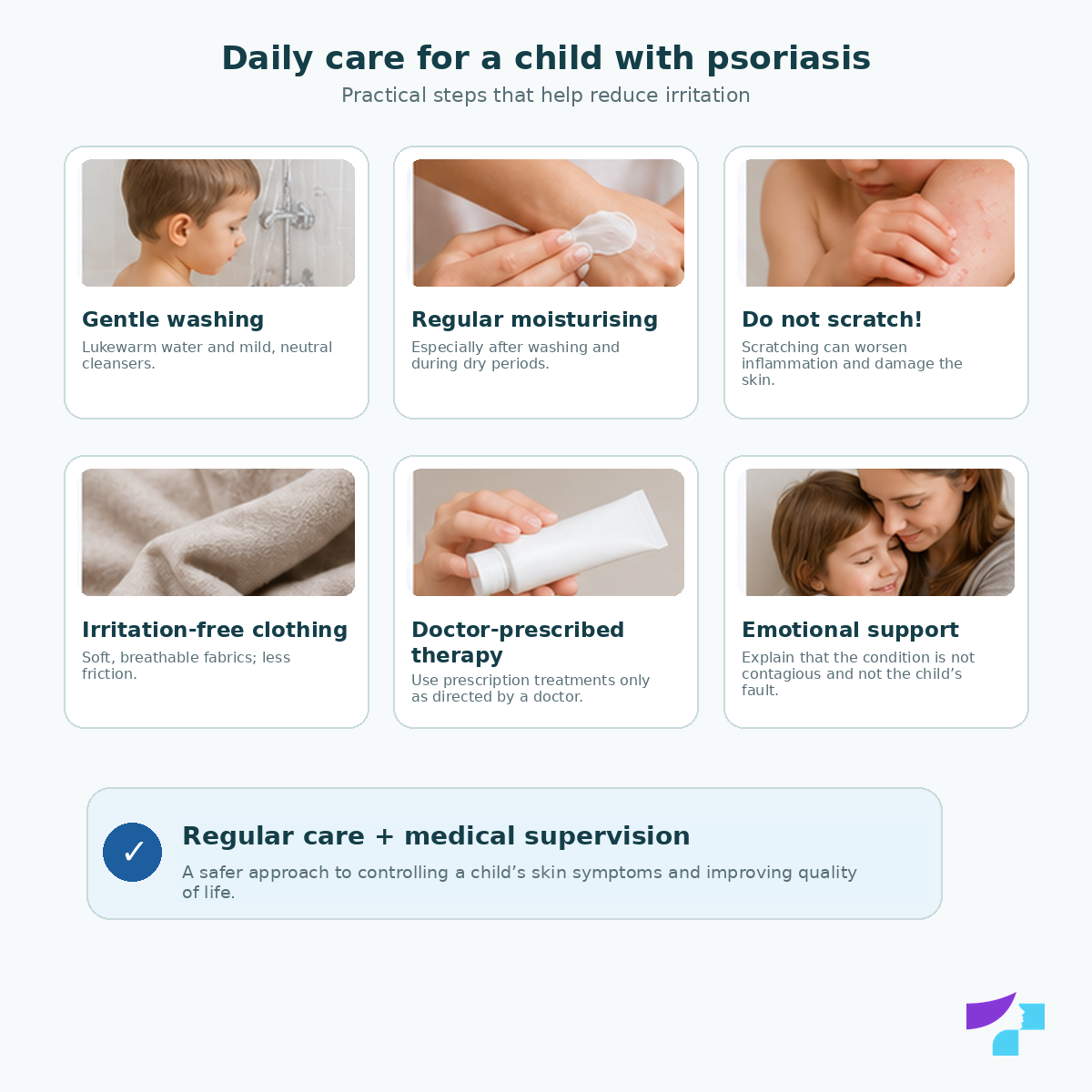
Moisturising is the foundation of childhood psoriasis care. It does not replace treatment, but it helps reduce dryness, itching and cracking. Moisturisers can be used regularly, especially after washing.
Daily recommendations include:
- washing the child in lukewarm rather than hot water;
- choosing gentle washing products;
- avoiding strongly fragranced products;
- applying moisturiser after washing;
- not rubbing the skin with a rough towel;
- not peeling off scales;
- choosing soft, non-irritating clothing.
Topical therapy in children
Topical therapy means products applied directly to the skin. It is often the first treatment choice in mild or localised psoriasis.
Topical therapy may include:
- moisturisers;
- topical anti-inflammatory medicines;
- vitamin D analogues;
- keratolytic agents to reduce scaling;
- solutions, foams or shampoos suitable for the scalp;
- especially gentle products for the face and skin folds.
Prescription ointments in children should be used only as instructed by a doctor. This is especially important with hormonal or corticosteroid preparations, because children’s skin is more sensitive and the risk of side effects is higher in some areas. Children should not use ointments prescribed for adults without medical supervision.
Phototherapy in children
Phototherapy is medically controlled treatment using a specific type of ultraviolet radiation. It may be suitable for some children with more widespread or harder-to-control psoriasis, but it must be prescribed by a doctor.
Phototherapy is not the same as sunbathing or using a sunbed. Sunbeds must not be used to treat childhood psoriasis. Medical phototherapy is performed with a specific type and dose of radiation under medical supervision.
Prescription medicines and systemic therapy in children
Systemic therapy means treatment that acts on the whole body. It is considered in children only in specific situations — for example, when psoriasis is moderate or severe, widespread, significantly affects quality of life or cannot be controlled with topical therapy.
This type of treatment requires careful medical assessment, safety checks and regular monitoring. Parents should not start, stop or change systemic therapy on their own.
Biological and targeted therapy in children
Biological and targeted therapy is a modern treatment approach for selected children and adolescents with moderate to severe psoriasis. It acts on specific inflammatory mechanisms involved in the development of psoriasis.
This treatment is not needed for all children. It is considered only when there are medical indications, and treatment takes place under specialist supervision.
Why self-treatment should be avoided in children
Children’s skin is more sensitive, and treatment safety is especially important. Incorrectly used products can irritate the skin, cause side effects, mask another condition or delay the correct diagnosis.
A child should not use the following without medical advice:
- prescription ointments prescribed for adults;
- strong topical anti-inflammatory medicines;
- antifungal products if fungal infection has not been confirmed;
- antibiotics;
- aggressive peels or mechanical scale removal;
- sunbeds or uncontrolled UV exposure.
Common parental mistakes in childhood psoriasis
Parents often try to help quickly when a child has psoriasis, but some actions can worsen the skin condition or delay correct diagnosis.
Common mistakes include:
- treating rashes for a long time as allergy, fungal infection or “dry skin” without medical examination;
- using an adult’s prescription ointment on a child;
- stopping prescribed treatment immediately after the first improvement;
- mechanically peeling off scales or aggressively rubbing the skin;
- using fragranced, irritating cosmetic products;
- washing the child in overly hot water;
- ignoring rashes after tonsillitis or a throat infection;
- ignoring nail changes or joint pain;
- using sunbeds or uncontrolled sun exposure as treatment;
- basing treatment only on other parents’ experiences on social media.
The correct approach is assessment by a dermatologist or paediatrician, gentle skin care, age-appropriate treatment and regular monitoring of the condition.
What to do during a psoriasis flare-up in a child?
During a flare-up, itching, redness and scaling may worsen, and new patches or cracks may appear. Parents should respond calmly and avoid worsening skin irritation.
During a flare-up, it is recommended to:
- continue the treatment prescribed by the doctor;
- moisturise the skin regularly;
- wash in lukewarm water;
- not allow the child to scratch or pick at scales;
- keep nails short to reduce the risk of scratch marks;
- choose soft clothing;
- avoid new irritating cosmetic products;
- record possible flare-up triggers;
- contact the doctor if the flare-up is extensive, painful or does not improve.
If the rash spreads rapidly, the child has fever, severe pain, widespread skin redness, pustules, weakness or signs of infection, urgent medical help is needed.
In childhood psoriasis, care is not only about doctor-prescribed treatment, but also gentle daily skin care and emotional support.
A child’s daily life: school, nursery, sport, swimming and self-esteem
A child with psoriasis can usually continue daily activities — going to school, nursery, playing sport and taking part in play. Because psoriasis is not contagious, the child does not need to be isolated from peers.
A child should not be excluded from sport or swimming because of psoriasis alone. Restrictions may be needed only if the skin is severely cracked, painful, bleeding, shows signs of infection or if the child has significant discomfort. After swimming, chlorinated water should be rinsed off and a moisturiser applied. If the child has visible rashes, a teacher or coach can be briefly told that this is not a contagious condition.
Visible rashes can affect a child’s self-esteem. The child may be afraid of questions, comments, misunderstanding or teasing. Parents should explain in simple terms that psoriasis is not the child’s fault and is not contagious.
Practical recommendations:
- the child should know a simple phrase to explain the condition, for example: “It is my skin condition, it is not contagious”;
- a teacher or nursery teacher can be informed if the rashes are visible or the child needs support;
- sport can usually be continued if the skin is not very painful or cracked;
- swimming is usually possible if the skin is not severely damaged, but the child should rinse off and moisturise afterwards;
- clothing that rubs psoriasis patches should be avoided;
- the child’s emotional wellbeing should be considered.
Diet, weight and lifestyle in childhood psoriasis
There is no single special diet that cures childhood psoriasis. However, a healthy diet, sufficient sleep, regular physical activity and maintaining a healthy body weight can support overall health and disease control.
A child with psoriasis is advised to:
- eat a balanced diet;
- maintain a healthy body weight;
- get enough sleep;
- be physically active according to age and wellbeing;
- reduce chronic stress;
- avoid skin trauma;
- treat infections promptly;
- moisturise the skin regularly.
Parents should not introduce highly restrictive diets without advice from a doctor or dietitian. Children need adequate nutrients for growth, so unnecessary dietary restrictions can be harmful.
What is proven, what requires individual assessment and what is medicine working on?
What is well established
It is well established that childhood psoriasis is not a contagious infection and that the disease is based on immune system regulation changes and genetic predisposition. The role of infections, especially streptococcal tonsillitis, as a trigger for flare-ups or guttate psoriasis in children is also well established.
It is also well established that childhood psoriasis should be assessed not only as a skin problem, but also in terms of its impact on quality of life, itching, sleep, emotional wellbeing and possible joint involvement.
What requires an individual approach
An individual approach is needed when choosing treatment. In children, therapy depends on age, patch location, disease severity, family adherence, other medical conditions and safety considerations. There is no single treatment plan that suits every child.
Diet, sport, swimming, skin care, the child’s emotional wellbeing and the need to inform school or nursery should also be assessed individually.
What medicine is working on
Modern dermatology is working towards safer and more precise treatment of childhood psoriasis. Development areas include personalised therapy, biological and targeted therapy for selected patients, better assessment of quality of life, early recognition of psoriatic arthritis and family education.
An important goal is to treat not only the skin, but also to help the child participate normally in everyday life — at school, in sport, in friendships and in family activities.
When should a child see a dermatologist or paediatrician?
A doctor should be consulted if a child has recurrent, persistent or unclear skin rashes, especially if they are scaly, itchy, appear after infection or affect the scalp, face, skin folds, nails or nappy area.
Consultation with a dermatologist or paediatrician is needed if:
- the rash does not go away or keeps returning;
- the rash spreads;
- there is severe itching;
- the skin cracks, hurts or bleeds;
- there is scalp scaling;
- there are nail changes;
- the rash appears after tonsillitis or infection;
- there is joint pain or morning stiffness;
- the child avoids school, sport or swimming;
- there is emotional discomfort;
- treatment does not help;
- the diagnosis is unclear.
Urgent help should be sought if the child has widespread skin redness, severe pain, fever, weakness, pustules, rapidly worsening condition or signs of infection in damaged skin.
References and authoritative sources
- Latvian clinical recommendations: Psoriasis. Latvian Association of Dermatovenereologists
- Rīga Stradiņš University: Psoriasis in children in Latvia — epidemiology, clinical features and therapy
- Centre for Disease Prevention and Control of Latvia
- National Institute for Health and Care Excellence (NICE): psoriasis assessment and management
- American Academy of Dermatology Association: clinical guidelines for psoriasis
- American Academy of Dermatology and National Psoriasis Foundation: guidelines for the management and treatment of paediatric psoriasis
- DermNet: paediatric psoriasis
- DermNet: guttate psoriasis
- DermNet: psoriasis
- DermNet: treatment of psoriasis
- British Association of Dermatologists: psoriasis in children and young people — patient information
- British Association of Dermatologists: psoriasis — an overview for patients
- European Dermatology Forum and EuroGuiDerm: psoriasis guideline
- European Alliance of Associations for Rheumatology (EULAR): recommendations for the management of psoriatic arthritis
- PubMed: paediatric psoriasis studies and reviews
- PubMed: guttate psoriasis in children and streptococcal infection
Medical disclaimer
The information in this article is intended for informational and educational purposes only and does not replace medical consultation, diagnosis or treatment. If a child has scaly or recurrent skin rashes, scalp flaking, nail changes, joint pain, rashes after infection or other symptoms, consultation with a dermatologist, paediatrician or another appropriate specialist is needed. Self-diagnosis and self-treatment in children can be incorrect and may delay appropriate treatment, especially if prescription ointments or other medicines are used without medical advice. In the case of severe, rapidly worsening or high-risk symptoms, such as widespread skin redness, painful peeling, fever, marked weakness, pustules, rapidly increasing pain or signs of infection, urgent medical help should be sought immediately.
