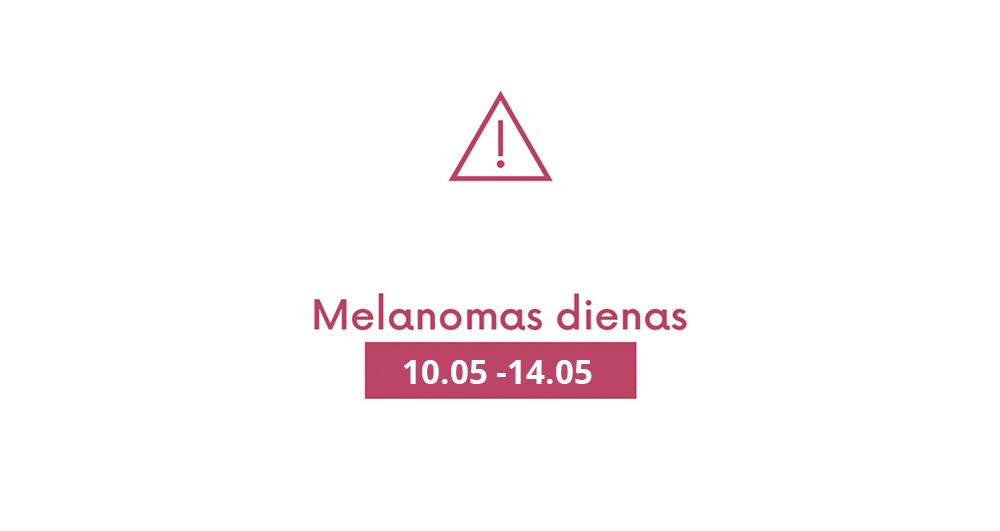
The annual Melanoma Days campaign aims to draw greater public attention to melanoma, one of the most aggressive types of cancer, and to increase awareness of the seriousness of the disease and the opportunities for timely prevention. It remains one of the most common causes of death in Latvia. This year's Melanoma Days will take place from 10 to 14 May and are intended for pensioners, people with a low income and people with Group I disabilities. To make an appointment, call the clinic on +371 28699111, and you will be offered an available appointment time.
Everyone else is advised to undergo an examination at least once a year, preferably both before and after the sun-exposure season. This means that now is the right time to make an appointment for a consultation.
When should moles be examined?
New moles most commonly appear after sun exposure as a result of ultraviolet radiation. If a new mole appears after the age of 35, you should consult a specialist, as the development of new moles at this age is no longer considered as normal as it is among people aged 25–35. However, even in this age group, new moles should be examined to confirm that they are benign, particularly if a mole has appeared after sun exposure. The risk of melanoma is also significantly increased by the use of sunbeds: even one tanning session may increase the risk by up to 25%.
To reduce the risk of disease and ensure that melanoma is diagnosed promptly, it is important to pay particular attention not only to new moles but especially to any moles that change over time. If a mole has features that make it stand out from the others as an “ugly duckling”, there is good reason for concern. A mole should always be examined if it changes colour, shape or size, develops hair growth or ulceration, or begins to itch or bleed.
An initial examination of moles can be performed at home through visual self-examination to determine whether any of them appear concerning or display suspicious features. A mole being lighter or darker in colour can be normal, but a change in colour or uneven pigmentation may indicate melanoma. Other warning signs include a raised or uneven surface and irregular borders.
Mole examination at the clinic
The most effective examination method is mole mapping, which may also involve video monitoring. This makes it possible to monitor existing skin lesions and detect changes promptly. Regular mole mapping, at least once a year, significantly increases the likelihood of detecting a malignant skin tumour at an early stage. Unlike in several other European countries, this procedure is not state-funded in Latvia. However, it is considerably more effective than self-examination and helps ensure that no mole is overlooked.
To examine a suspicious lesion, the doctor will perform dermoscopy. The mole is magnified using a specialised optical instrument, allowing the doctor to examine structures beneath the surface of the skin. To capture images, the dermatoscope is connected to a computer, smart device or camera. If a mole is considered to carry a high risk of melanoma, a biopsy will be required. A skin sample is taken to determine whether the lesion is benign or malignant. Surgical removal of a mole at an early stage of melanoma provides an almost 100% chance of recovery.
Get examined in time!
Every year, Melanoma Days provide people in Latvia with an opportunity to undergo this important examination free of charge. The Med Art clinic team encourages anyone who has noticed suspicious moles not to postpone the examination until the following year but to arrange a timely consultation now. This provides an opportunity to protect your health and, if a malignant skin lesion is diagnosed, begin skin cancer treatment promptly. It is important to remember that melanoma can develop at any age and that anyone may be at risk of developing skin cancer.




 +1
 +1
 +1 242
 +1 246
 +1 268
 +1 441
 +20
 +212
 +213
 +216
 +218
 +220
 +221
 +222
 +223
 +223
 +224
 +225
 +226
 +227
 +228
 +229
 +230
 +231
 +232
 +234
 +235
 +236
 +237
 +238
 +239
 +239
 +240
 +241
 +242
 +243
 +244
 +245
 +248
 +249
 +250
 +251
 +252
 +253
 +254
 +255
 +256
 +257
 +258
 +260
 +261
 +262
 +263
 +264
 +265
 +266
 +267
 +268
 +269
 +269
 +27
 +284
 +290
 +291
 +297
 +298
 +299
 +30
 +31
 +32
 +33
 +34
 +340
 +345
 +350
 +351
 +352
 +353
 +354
 +355
 +356
 +358
 +359
 +36
 +370
 +371
 +372
 +373
 +374
 +375
 +376
 +377
 +378
 +380
 +385
 +386
 +387
 +389
 +39
 +39
 +40
 +41
 +41
 +420
 +421
 +43
 +45
 +46
 +47
 +473
 +48
 +49
 +500
 +501
 +502
 +503
 +504
 +505
 +506
 +507
 +509
 +51
 +52
 +53
 +54
 +55
 +56
 +57
 +58
 +590
 +591
 +593
 +594
 +594
 +595
 +596
 +597
 +598
 +60
 +61
 +62
 +63
 +64
 +649
 +65
 +66
 +664
 +671
 +672
 +672
 +672
 +673
 +674
 +675
 +676
 +677
 +678
 +679
 +680
 +681
 +682
 +683
 +684
 +686
 +687
 +688
 +689
 +690
 +691
 +692
 +6982
 +7
 +7
 +7
 +7
 +758
 +767
 +784
 +809
 +809
 +81
 +82
 +84
 +850
 +852
 +853
 +856
 +86
 +868
 +869
 +876
 +880
 +885
 +886
 +90
 +91
 +92
 +93
 +94
 +95
 +960
 +961
 +962
 +963
 +964
 +965
 +967
 +968
 +971
 +972
 +973
 +974
 +975
 +976
 +977
 +98
 +993
 +994
 +995
 +996
 +996