HIV, or human immunodeficiency virus, is a virus that damages the human immune system — the body’s defence system against infections. HIV mainly affects CD4 cells, or T lymphocytes, which help coordinate the immune system’s activity. If HIV is not treated, the number of CD4 cells gradually decreases, immunity weakens, and the risk of serious infections and certain cancers increases. The World Health Organization states that HIV damages the immune system and, without treatment, sharply increases the risk of infections such as tuberculosis, cryptococcal infections and severe bacterial infections; their course may also be incomparably more severe than in a person without HIV. In certain cases, HIV infection increases the risk of some cancers.
Today, HIV is no longer a disease that automatically means a short life expectancy or AIDS. With timely HIV diagnosis and doctor-prescribed antiretroviral therapy, a person can live a long and full life. Effective treatment reduces the amount of virus in the blood to an undetectable level, and in this situation HIV is not sexually transmitted. The CDC emphasises that HIV treatment helps people live long and healthy lives and prevents HIV transmission.
This article explains what HIV infection is, how it spreads, what symptoms may occur, when an HIV test should be performed, how to protect yourself and what modern HIV treatment involves. AIDS is discussed only briefly in this article, because AIDS is a separate, late stage of HIV infection, covered in a separate article on the website.
Key points in brief
- HIV is the human immunodeficiency virus, which gradually damages the immune system if left untreated.
- HIV is not the same as AIDS — AIDS is a late, severe stage of HIV infection.
- HIV can be transmitted during sexual intercourse, through blood, by sharing needles or syringes, and from mother to child during pregnancy, childbirth or breastfeeding.
- HIV cannot be acquired by hugging, shaking hands, sharing dishes, using a toilet or swimming pool, through sweat, tears or mosquito bites.
- HIV cannot be reliably diagnosed by symptoms alone — an HIV test is required.
- If a risk contact occurred within the last 72 hours, urgent medical advice should be sought about PEP prevention.
- Timely HIV treatment allows a person to live a full life and, when an undetectable viral load is achieved, not to transmit HIV sexually.
What is HIV?
HIV is a virus whose full name is human immunodeficiency virus. This means that the virus gradually reduces the immune system’s ability to protect the body. HIV infection is a condition in which the virus is present in the human body and multiplies in immune system cells.
HIV is not the same as AIDS. HIV is the virus and the infection, while AIDS is a late, severe stage of HIV infection that usually develops only when HIV remains untreated for a long time. Modern treatment can prevent HIV from progressing to AIDS.
How does HIV affect the human body?
HIV mainly affects CD4 cells. These are white blood cells that help the body recognise and control infections. HIV enters these cells, uses them for its own replication and, over time, reduces their number or function.
The most important medical indicators in HIV care are:
- CD4 cell count — an indicator that helps assess the condition of the immune system and the risk of developing other infections. The World Health Organization states that the CD4 cell count is used to assess HIV disease progression and the risk of opportunistic infections.
- Viral load — the amount of HIV in the blood. The higher the viral load, the more actively the virus is replicating and the greater the potential risk of transmission. The goal of treatment is to achieve an undetectable viral load.
- Undetectable viral load — a condition in which the amount of virus in the blood is so low that it cannot be detected by standard laboratory methods. This does not mean that HIV has been completely cured, but it does mean that treatment is effectively suppressing the virus.
HIV or AIDS — what is the difference?
HIV is the beginning of the infection and the virus itself. AIDS is a late stage of HIV infection, when the immune system is severely weakened and a person may develop serious infections or cancers.
The most important point for the patient: an HIV diagnosis does not mean that a person has AIDS. If HIV is diagnosed in time and treatment is started promptly, the development of AIDS can usually be prevented. The World Health Organization recommends antiretroviral therapy for all people with HIV as soon as possible after diagnosis, regardless of symptoms or CD4 cell count.
This HIV article does not discuss AIDS-defining illnesses, AIDS diagnostic criteria, AIDS stages, Kaposi sarcoma, severe immunodeficiency or AIDS prognosis in detail. These are topics for a separate article on AIDS.
How can HIV be transmitted?
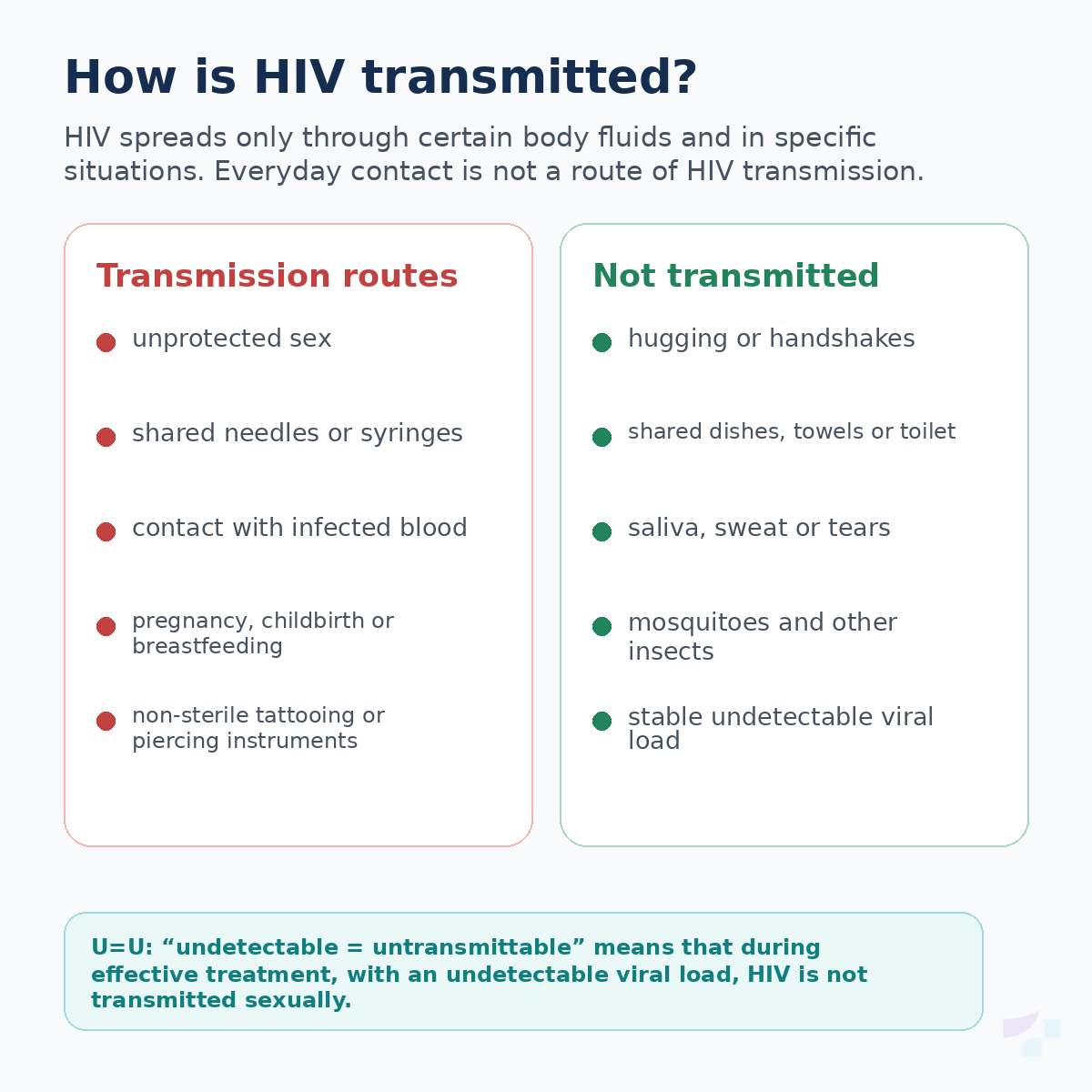
HIV is transmitted when infectious body fluids enter another person’s blood or mucous membranes. The most important routes of transmission in practice are:
- unprotected vaginal or anal intercourse;
- contact with blood, for example by sharing needles or syringes;
- transmission of HIV from mother to child during pregnancy, childbirth or breastfeeding;
- use of non-sterile instruments in invasive procedures, tattooing or piercing.
Condoms, PrEP, PEP and never sharing needles, syringes or other injecting equipment are important in HIV prevention.
How is HIV not transmitted?
HIV is not transmitted through everyday social contact. A person cannot become infected with HIV:
- by hugging;
- by shaking hands;
- by kissing in ordinary social contact;
- by sharing dishes;
- by using a shared toilet, bath, shower, swimming pool or sauna;
- by using a shared towel if there is no direct contact with blood;
- through sweat, tears or saliva in everyday situations;
- from mosquito or other insect bites.
This information is important because HIV is still associated with stigma. A person with HIV does not pose an infection risk to others during ordinary everyday contact — at work, at school, in the family, when shaking hands, hugging or using shared household spaces. However, HIV can be transmitted through blood, so standard precautions should always be followed in situations involving bleeding, wounds or contact with another person’s blood.
Mechanism of infection
The mechanism of HIV infection begins when the virus enters the body through a mucous membrane, damaged skin or directly into the blood. The virus then attaches to immune system cells, especially CD4 cells, enters them and uses them to replicate. The body responds to the infection with an immune response, but without treatment HIV does not disappear completely.
In the early stage of infection, the amount of virus in the body may be high. This is why a person can be infectious at the beginning of infection even before knowing that they are infected. The World Health Organization states that HIV is transmitted more easily in the first months after infection, but many people find out only later.
Timeline of infection
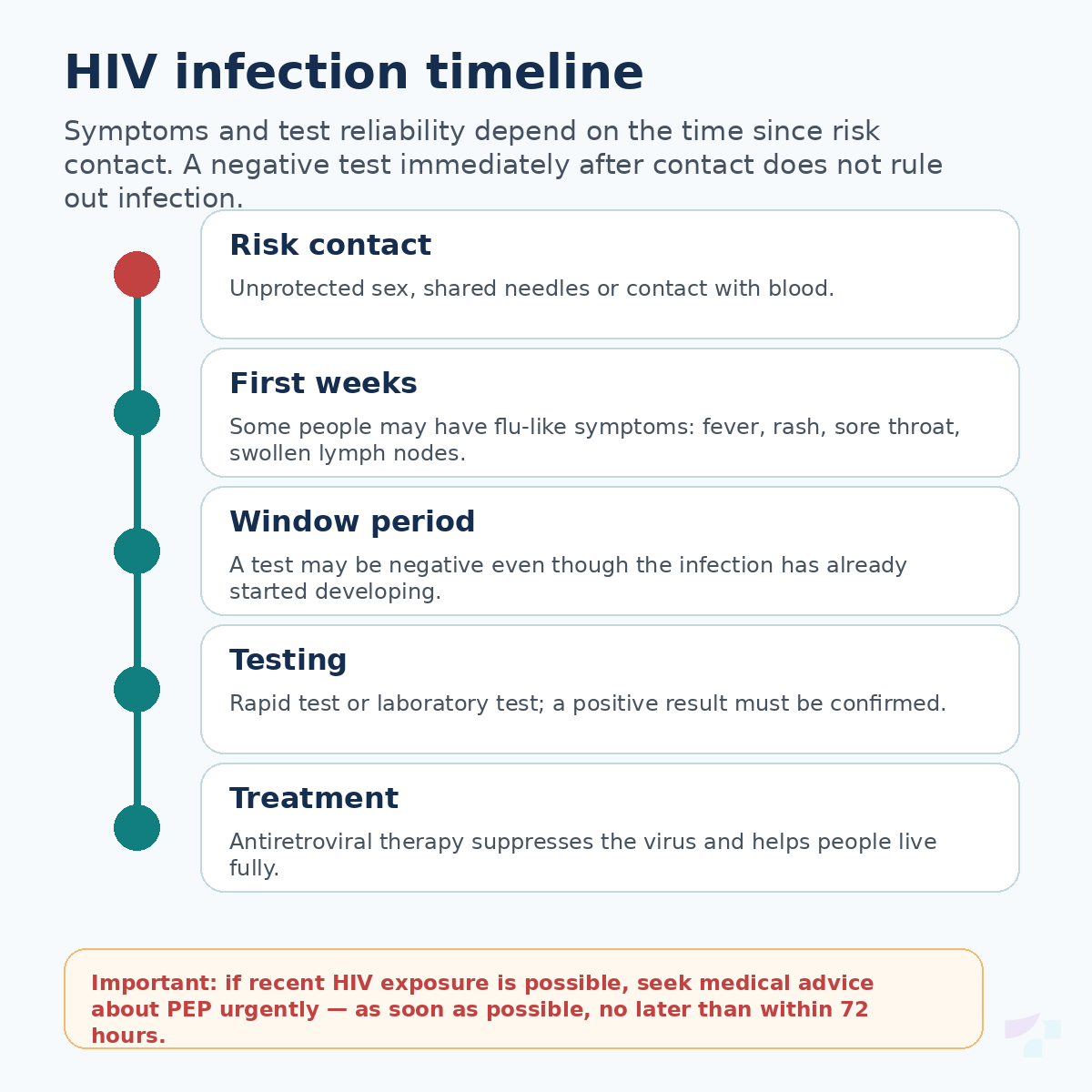
After a risk contact, HIV infection does not always cause symptoms immediately. Some people may develop flu-like symptoms after a few weeks, while others have no symptoms at all.
Typical development of HIV infection:
- Risk contact — unprotected sex, shared needles or contact with another person’s blood.
- Early infection — the virus begins to multiply; the person may feel healthy or may develop flu-like symptoms.
- Window period — the time after infection when a test may still not detect the infection because the body has not yet produced enough detectable markers.
- Testing period — depending on the type of test, HIV can be detected earlier or later; a negative test after a recent risk contact sometimes needs to be repeated.
- Treatment — once the diagnosis is confirmed, the doctor prescribes antiretroviral therapy.
What are the first symptoms of HIV?
The first symptoms of HIV may resemble flu, mononucleosis or another viral infection. The World Health Organization lists fever, headache, rash and sore throat as possible signs of early HIV infection.
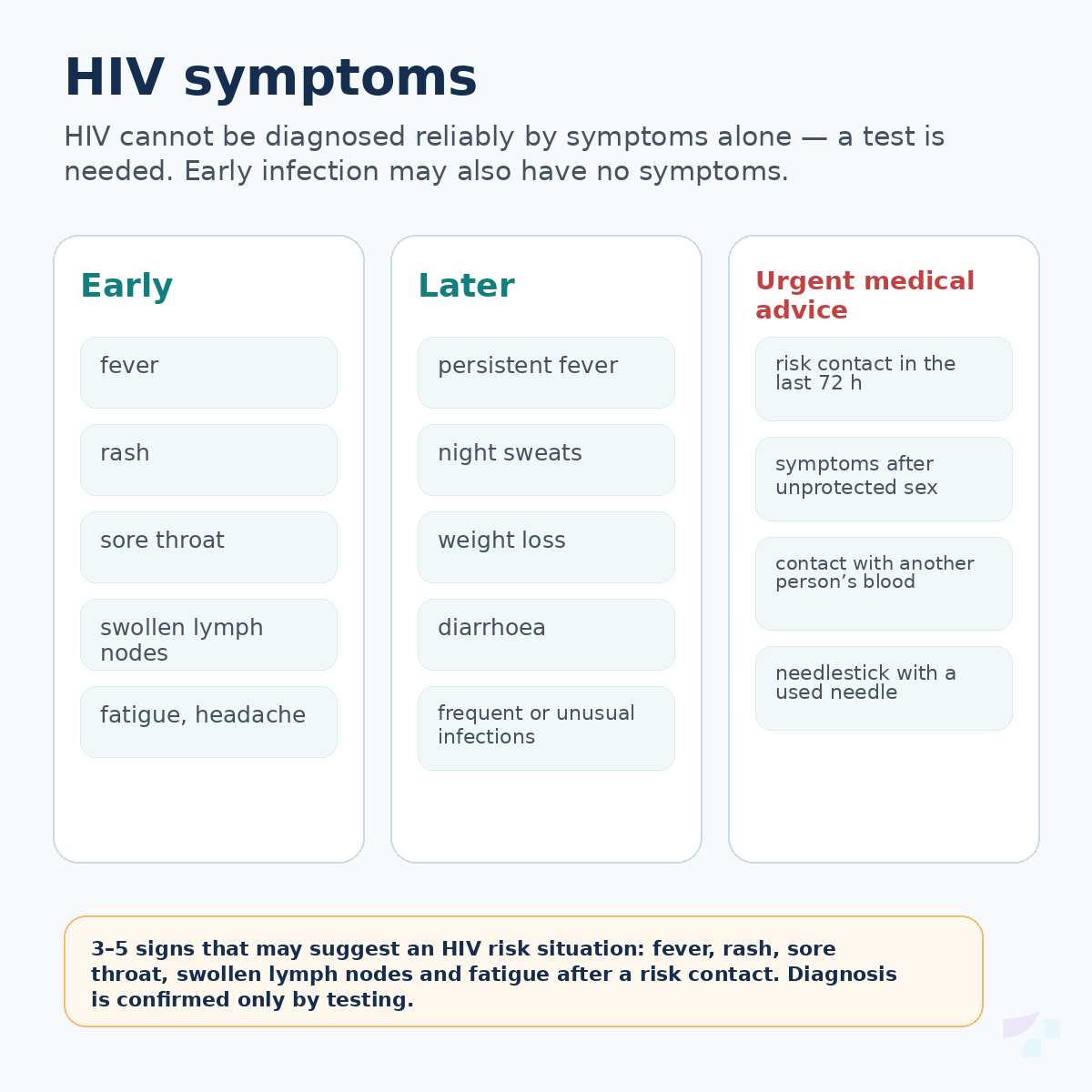
Early HIV symptoms may include:
- fever;
- rash;
- sore throat;
- swollen lymph nodes;
- fatigue;
- headache;
- muscle or joint pain;
- night sweats;
- sores in the mouth or genital area.
Important: these symptoms are not specific to HIV alone. They may also occur with flu, Covid-19, mononucleosis, syphilis, hepatitis or other infections. Therefore, HIV cannot be reliably diagnosed by symptoms alone — a test is required.
Can HIV be asymptomatic at first?
Yes. HIV can initially be asymptomatic. A person may feel healthy, while the virus continues to multiply in the body. This is why HIV testing after a risk situation is important even when there are no complaints.
A negative test immediately after a risk contact does not fully rule out HIV infection, because there may be a period during which the infection cannot yet be detected. The appropriate time for testing and the need to repeat the test should be discussed with a doctor.
3–5 signs that may suggest HIV infection
Possible HIV infection should be considered especially if the following combination of symptoms appears after a risk contact:
- fever;
- rash;
- sore throat;
- swollen lymph nodes;
- marked fatigue or a flu-like feeling.
These signs are not a diagnosis. They are a signal that an HIV test should be performed and a doctor should be consulted, especially if the symptoms were preceded by unprotected sex, condom breakage, contact with another person’s blood or sharing needles.
What symptoms may appear in later stages of HIV infection?
If HIV is not treated, the immune system gradually weakens. Later symptoms may include:
- prolonged or recurrent fever;
- night sweats;
- unexplained weight loss;
- prolonged diarrhoea;
- chronic fatigue;
- swollen lymph nodes;
- frequent fungal infections;
- frequent or unusual infections;
- persistent cough;
- changes in the skin, mouth or genital mucosa.
These symptoms may also be related to other diseases, so medical evaluation is needed.
Who is at risk of HIV infection?
HIV risk is not related to a person’s appearance, social status or belonging to a single group. Risk is related to specific situations and behaviours.
HIV risk may be increased if:
- there has been unprotected sex with a partner whose HIV status is unknown;
- there are multiple sexual partners;
- a condom has broken;
- another sexually transmitted infection is present;
- there are genital sores, bleeding or mucosal damage;
- shared needles, syringes or other injecting equipment are used;
- there has been contact with another person’s blood;
- a needlestick injury has occurred in a healthcare or other work setting;
- tattooing or piercing has been performed with non-sterile instruments;
- a person was born to a mother with untreated HIV infection.
Anal intercourse is generally associated with a higher risk of HIV transmission than vaginal intercourse, because the rectal mucosa is more easily injured. The risk of HIV during oral sex is lower, but it may increase if there is bleeding, sores, gum inflammation or another STI.
Do sexually transmitted infections increase HIV risk?
Yes. Sexually transmitted infections can increase HIV risk because they may cause inflammation, sores, discharge or mucosal damage. Damaged or inflamed mucosa makes it easier for the virus to enter the body.
Therefore, HIV prevention is not only about using condoms. It also includes regular STI testing, timely treatment of STIs and safer sexual behaviour.
HIV test or STI panel — what should you choose?
If there has been unprotected sex, an HIV test is important, but it does not rule out other sexually transmitted infections. Depending on the situation, a doctor may recommend testing for syphilis, hepatitis B and C, chlamydia, gonorrhoea and other infections. This is especially important if there is discharge, burning during urination, sores, rash, pain in the genital area or if a partner has been diagnosed with an STI. Some STIs may be asymptomatic, so after a risk contact a broader sexual health check is often more appropriate than only one HIV test.
Can the body develop immunity to HIV?
After HIV infection, protective immunity does not develop in the same sense as it may after some other infections. HIV remains in the body and, without treatment, continues to affect the immune system. The human body can produce antibodies to HIV, and these are often used in diagnostics, but these antibodies usually cannot completely eliminate the virus.
Some people experience slower disease progression, and some people may have a lower risk of infection or progression for genetic or immunobiological reasons. However, this is not a reason to rely on “natural protection”. In practice, the safest approaches are prevention, testing and timely treatment.
Medicine is actively researching HIV vaccines, long-acting prevention and treatment options, and methods that may in the future help achieve a functional cure. In everyday clinical practice, however, HIV is currently controlled with antiretroviral therapy rather than fully cured.
When should an HIV test be performed?
An HIV test should be performed if:
- there has been unprotected sex;
- a condom has broken or slipped off;
- a partner has been diagnosed with HIV;
- the partner’s HIV status is unknown and there has been a risk contact;
- shared needles or syringes have been used;
- there has been contact with another person’s blood;
- a needlestick injury has occurred;
- another sexually transmitted infection has been diagnosed;
- pregnancy is present or being planned;
- flu-like symptoms have appeared after a risk contact;
- a person wants to confirm their status.
HIV testing is a responsible action, not a reason for shame. People without symptoms also get tested, because HIV may remain unnoticed for a long time.
What should be done after a specific risk situation?
| Situation | What to do |
|---|---|
| Unprotected sex | If less than 72 hours have passed, seek urgent advice about PEP. Take HIV and STI tests at the appropriate time. |
| Condom breakage or slipping | Assess the partner’s HIV status and the risk. If the risk is significant and less than 72 hours have passed, ask a doctor about PEP. |
| Contact with another person’s blood | Wash the area with water and soap, avoid further injury to the skin and contact a doctor as soon as possible. |
| Needlestick injury with a used needle | Seek medical care immediately, because PEP and hepatitis risks may need to be assessed. |
| A partner has been diagnosed with HIV | Take an HIV test, clarify the partner’s treatment status and viral load, and consult a doctor about further prevention. |
| Symptoms after a risk contact | Do not assess symptoms in isolation — take an HIV test and consider testing for other STIs. |
Where can an HIV test be performed in Latvia?
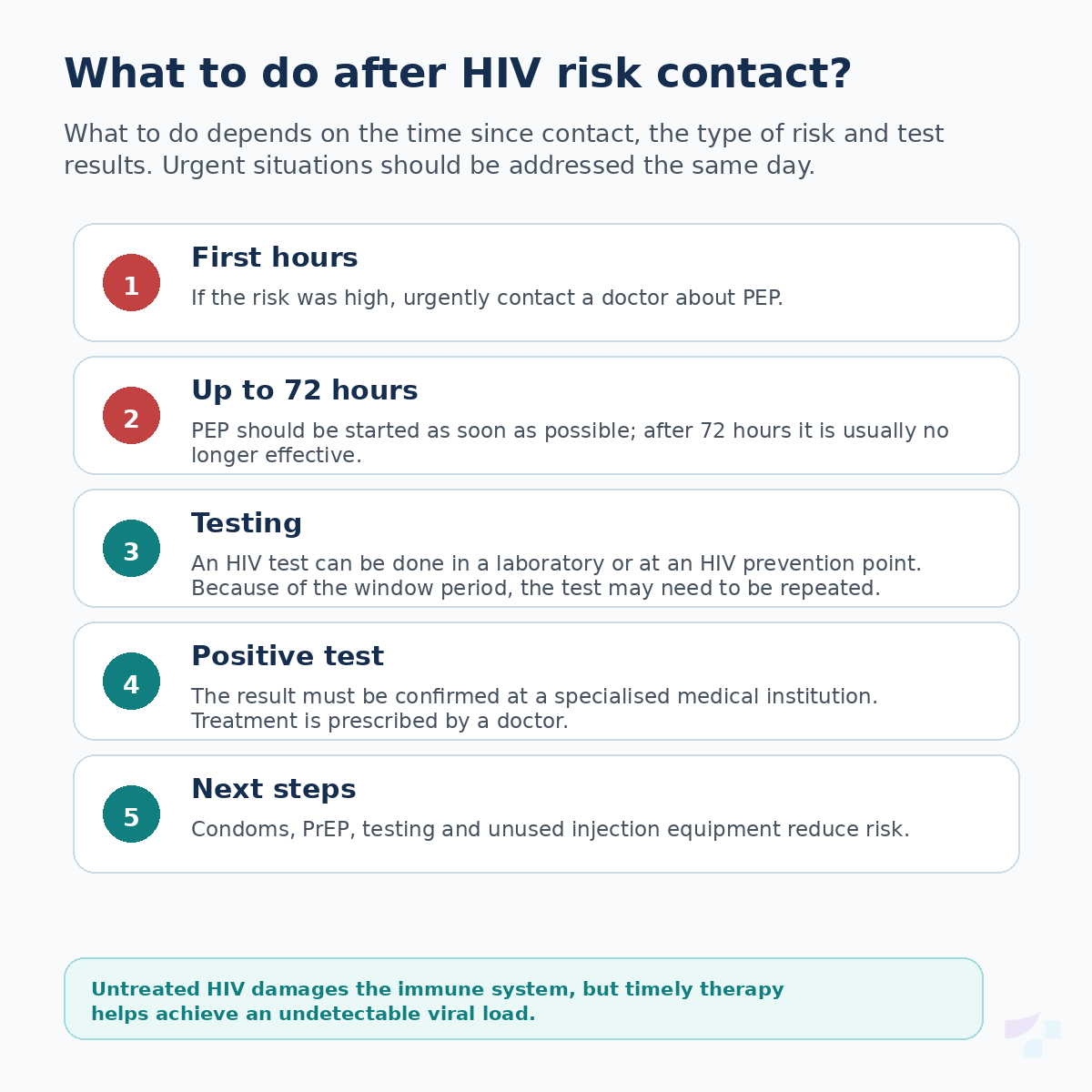
In Latvia, an HIV test can be performed in a laboratory with or without a doctor’s referral. A rapid HIV test can be taken free of charge, anonymously and confidentially at HIV prevention points. The Centre for Disease Prevention and Control states that HIV prevention points offer free rapid tests for HIV, syphilis, hepatitis B and C, as well as pre- and post-test counselling.
If an HIV test is positive, it does not mean that the final diagnosis has already been fully confirmed. The Centre for Disease Prevention and Control states that in the event of a positive HIV result, a person should contact the “Latvian Centre of Infectious Diseases” inpatient unit of Riga East Clinical University Hospital, where the final confirmation of the HIV infection diagnosis is performed.
Why is HIV an important topic in Latvia?
HIV remains an important public health issue in Latvia because some people learn their HIV status late — at a time when the infection has already been present in the body for a long period. This increases health risks for the person and the possibility of unknowingly transmitting the infection further. Regular testing after risk situations, accessible HIV prevention points, timely treatment and reducing stigma are therefore especially important. Current data and the list of HIV prevention points are available on the website of the Centre for Disease Prevention and Control.
What is the HIV window period?
The window period is the time between infection and the point when an HIV test can reliably detect the infection. During this time, a person may be infected, but the test may still be negative.
The length of the window period depends on the type of test. Laboratory tests that detect both HIV antigen and antibodies can usually identify infection earlier than tests that detect antibodies only. Rapid tests are very useful for accessible and quick testing, but after a recent risk contact repeat testing may be needed.
| Test type | What it means for the patient |
|---|---|
| Rapid test | A quick and accessible test, especially useful for regular screening. After a recent risk contact, a negative result may need to be checked again. |
| Laboratory antigen/antibody test | Usually more suitable for earlier detection of infection than an antibody-only test. |
| Confirmatory diagnostics | Required after a positive initial test. In Latvia, a positive HIV result is confirmed at the Latvian Centre of Infectious Diseases. |
Because test types and their sensitivity differ, after a recent risk contact it is not advisable to rely on only one early negative test. The optimal time for testing and the need for repeat testing should be discussed with a doctor, laboratory or HIV prevention point specialist.
What types of HIV tests are available?
Several types of HIV tests are used in practice:
- Rapid HIV test — usually detects HIV antibodies. It can be performed at HIV prevention points, and the result is usually available quickly.
- Laboratory HIV test — performed on a blood sample in a laboratory. Depending on the test type, it may detect HIV antibodies and/or antigen.
- Confirmatory tests — performed after a positive initial result to confirm the diagnosis.
- Self-test — in some countries, HIV self-tests are also available, but a positive self-test must always be confirmed in a medical institution. If a patient uses a self-test bought at a pharmacy or elsewhere, the result should not be interpreted separately from the window period and the risk situation.
What does a positive HIV test mean?
A positive HIV screening test means that the test has shown possible HIV infection. This requires confirmatory diagnostics. Until the diagnosis is confirmed, the person should take precautions to avoid creating a possible risk to others.
If the positive test is confirmed, the doctor assesses the person’s health, performs additional tests and prescribes antiretroviral therapy.
What does a negative HIV test mean?
A negative HIV test means that at the time of testing, signs of HIV infection were not detected by the test. However, if the test was performed very soon after a risk contact, infection may not be ruled out because of the window period. In such cases, a doctor or testing specialist may recommend repeating the test.
What should be done after unprotected sex or condom breakage?
If the risk contact occurred recently, action should be taken quickly. If less than 72 hours have passed, a doctor, emergency service or medical institution should be contacted urgently to assess the need for PEP. PEP is emergency prevention after possible HIV exposure and must be started no later than 72 hours; the sooner, the better.
If more than 72 hours have passed, PEP is usually no longer an effective solution, but HIV and other STI testing should still be performed at the appropriate time.
If there is a risk of pregnancy, emergency contraception should also be considered, and a doctor should be consulted.
What is PEP?
PEP, or post-exposure prophylaxis, is a course of prescription medicines used after possible HIV exposure to reduce the risk of infection. It is not daily prevention and is not intended for regular use after repeated risk contacts.
PEP should be started as soon as possible, ideally in the first hours after the risk situation. PEP must be started within 72 hours after possible HIV exposure, and the course usually lasts 28 days.
The need for PEP is assessed by a doctor. Specific prescription medicines are intentionally not listed in this article, because the choice of therapy is determined by a doctor based on the type of exposure, the patient’s health, other medicines and test results.
What is PrEP?
PrEP, or pre-exposure prophylaxis, is an HIV prevention method for people who have an increased risk of HIV infection. It means taking doctor-prescribed prescription medicines before possible exposures to reduce the risk of HIV infection.
PrEP may be appropriate for people with repeated risk contacts, a partner with HIV whose viral load is unknown or not undetectable, multiple sexual partners or other individual risk factors. The decision about PrEP is made together with a doctor.
PrEP does not protect against other sexually transmitted infections, so condoms and regular STI testing remain important.
How can you protect yourself from HIV?
HIV prevention is a combination of several measures. The most effective approach is adapted to a person’s individual life situation and risk level.
The main prevention measures are:
- using condoms during sexual intercourse;
- regular HIV and STI testing;
- PrEP for people at increased risk;
- PEP after recent possible HIV exposure;
- not sharing needles, syringes or injecting equipment;
- choosing only safe, sterile tattooing, piercing and medical procedures;
- timely treatment of sexually transmitted infections;
- informing partners and having open conversations about testing;
- HIV treatment for people with HIV to achieve an undetectable viral load.
What is U=U, or “undetectable = untransmittable”?
U=U means “Undetectable = Untransmittable”. It means that a person with HIV who is taking effective treatment and maintains an undetectable viral load over time does not transmit HIV sexually to another person.
This is not the same as a cure. HIV is still present in the body, so therapy must be continued. If treatment is stopped, the viral load may increase again.
How is HIV treated?
HIV is treated with antiretroviral therapy. Its goal is to suppress HIV replication in the body, reduce the viral load to an undetectable level, preserve immune system function and prevent HIV transmission to others.
The World Health Organization recommends antiretroviral therapy for all people with HIV as soon as possible after diagnosis, regardless of symptoms and CD4 cell count.
HIV medicines usually need to be taken for life. This does not mean that a person cannot live a full life. Regular therapy is what allows HIV to be controlled as a chronic infection.
What happens if HIV is not treated?
If HIV is not treated, the virus continues to multiply and the immune system gradually weakens. This increases the risk of serious infections, tuberculosis, fungal infections, severe bacterial infections and certain cancers. The World Health Organization lists these diseases as possible consequences of untreated HIV infection; however, a detailed analysis of AIDS and opportunistic infections is covered in a separate article on AIDS.
HIV and pregnancy
A woman with HIV can give birth to a healthy child if HIV is diagnosed and treated in time. HIV can be transmitted during pregnancy, childbirth or through breast milk, but treatment significantly reduces this risk.
HIV testing is important for pregnant women because timely therapy protects both the mother and the child. A person with HIV can have a family and children, but pregnancy planning and care should be carried out together with a doctor.
If one partner is living with HIV and has a consistently undetectable viral load, the risk of sexual HIV transmission is prevented under the U=U principle. However, the couple’s situation should be assessed individually, especially when planning pregnancy.
HIV compared with other diseases
HIV and hepatitis differ in terms of the virus, disease course and main mechanisms of damage. Hepatitis mainly affects the liver, while HIV affects the immune system. Some transmission routes overlap — for example, blood, shared needles and unprotected sexual contact.
HIV and syphilis can both be sexually transmitted, but syphilis is caused by a bacterium and is treated with antibacterial therapy. Syphilis sores can increase the risk of HIV infection.
HIV and mononucleosis may look similar early on because both can cause fever, sore throat, fatigue and swollen lymph nodes. They can only be distinguished through testing.
HIV and flu can cause similar early symptoms. If flu-like symptoms appear after a risk contact, an HIV test should be performed.
An HIV test is not the same as a full STI panel. An STI panel may include syphilis, gonorrhoea, chlamydia, hepatitis and other tests. After a risk contact, it is often useful to consider a broader sexual health check.
PrEP and PEP are not the same. PrEP is taken before possible exposures by people at increased risk, while PEP is used in an emergency situation after a recent possible exposure.
Common myths about HIV
- HIV is not a “disease of certain groups of people”. Any person can acquire HIV if there has been a relevant risk situation.
- A person with HIV does not always look ill. Many people with HIV may not know their status for years.
- HIV cannot be acquired from shared dishes, hugs, toilets, swimming pools or saunas.
- Mosquitoes do not transmit HIV.
- A person who is HIV-positive is not always infectious. If a person is taking effective therapy and has an undetectable viral load, HIV is not transmitted sexually.
- HIV treatment is not more dangerous than the disease itself. Modern treatment is the basis of HIV care, and its benefits significantly outweigh the risks of untreated infection.
What is currently well established in medicine?
It is well established that HIV damages the immune system, especially CD4 cells. Effective antiretroviral therapy reduces the viral load, protects the immune system and prevents sexual HIV transmission when the viral load is consistently undetectable. The role of condoms, PrEP, PEP and sterile injecting equipment in HIV prevention is also well established.
What is medicine still working on?
In HIV medicine, work continues in several directions:
- vaccine development;
- long-acting prevention and treatment options;
- more convenient treatment regimens;
- monitoring resistance, meaning the virus’s resistance to medicines;
- functional cure strategies;
- improving access to early diagnosis and testing;
- reducing stigma so that people get tested and receive treatment sooner.
At present, the basis of clinical practice is early diagnosis, regular care and antiretroviral therapy.
Which doctor should you contact?
If HIV is suspected or there has been a risk contact, a person can initially contact an infectious disease specialist, an HIV prevention point or a laboratory. If the test is positive, confirmation of the diagnosis and further care at the Latvian Centre of Infectious Diseases are required.
Urgent medical help should be sought if:
- possible HIV contact occurred within the last 72 hours;
- a needlestick injury occurred;
- there has been contact with another person’s blood;
- there has been sexual contact with a known HIV-positive partner whose viral load is unknown;
- fever, rash, sore throat or swollen lymph nodes appear after a risk contact.
Disclaimer
The information provided in this article is intended for educational and informational purposes only. It does not replace medical consultation, diagnosis or treatment. If you have had a possible HIV risk contact, developed symptoms mentioned in this article or have questions about HIV testing, prevention or treatment, contact a doctor, infectious disease specialist, dermatovenereologist, family doctor or HIV prevention point specialist without delay. Do not attempt self-diagnosis or self-treatment, especially in situations where emergency PEP prevention may be needed within 72 hours after possible exposure.
References and authoritative sources
- Centre for Disease Prevention and Control: HIV infection — information on HIV testing in Latvia, laboratories, HIV prevention points and confirmation of diagnosis at the Latvian Centre of Infectious Diseases.
- Centre for Disease Prevention and Control: HIV prevention points — free, anonymous and confidential rapid tests for HIV, syphilis, hepatitis B and C in Latvia.
- World Health Organization: HIV and AIDS — information on HIV symptoms, routes of infection, immune system damage, consequences of untreated HIV infection and the importance of treatment.
- US Centers for Disease Control and Prevention: About HIV — an overview of HIV transmission routes, prevention, testing, PrEP, PEP and the role of treatment in preventing HIV transmission.
- US National Institutes of Health, HIVinfo: Post-exposure prophylaxis, or PEP — information on emergency prevention after possible HIV exposure, starting within 72 hours and principles of the treatment course.
- US National Institutes of Health, HIVinfo: Basics of HIV prevention — information on condoms, PrEP, PEP, testing and not sharing injecting equipment.
Content author
Dermatologist Dr. med. Dace Buile
