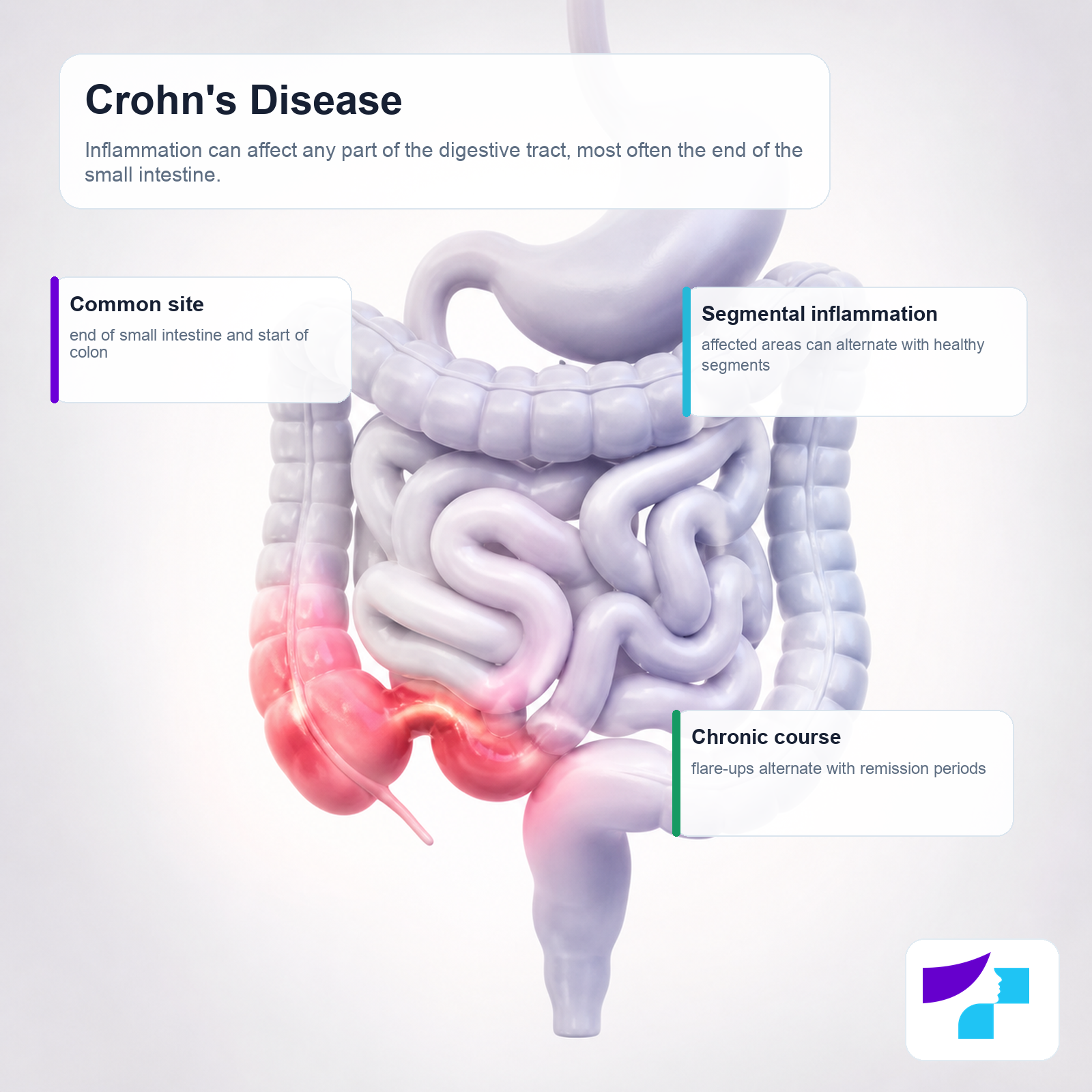
Crohn’s disease is a chronic inflammatory bowel disease that can affect any part of the digestive tract, from the mouth to the anus. Inflammation most often occurs at the end of the small intestine and the beginning of the large intestine. The disease usually follows a relapsing-remitting course: symptoms may worsen during flare-ups and improve or disappear during remission.
Crohn’s disease is not contagious and is not the same as “sensitive intestines”. It is an organic inflammatory disease involving immune system activity, genetic predisposition, the gut microbiome and environmental factors. Today, Crohn’s disease usually cannot be completely cured, but appropriate treatment can reduce inflammation, control symptoms, prevent complications and help achieve long-term remission.
What is Crohn’s disease?
Crohn’s disease belongs to a group of conditions called inflammatory bowel diseases, or IBD. Ulcerative colitis also belongs to this group.
Crohn’s disease is characterized by chronic inflammation in the intestinal wall. Unlike some other intestinal diseases, the inflammation may be segmental: affected bowel segments can alternate with healthy areas. Inflammation may involve the full thickness of the intestinal wall, which is why Crohn’s disease can lead to complications such as intestinal narrowing, fistulas, abscesses and bowel obstruction.
How does Crohn’s disease develop?
The exact cause of Crohn’s disease is not known. It is not caused by one specific food, stress or infection. Most medical sources explain Crohn’s disease as the result of several interacting factors.
Possible contributing factors include:
- an excessive or incorrectly regulated immune response in the intestinal wall;
- genetic predisposition and family history;
- changes in the gut microbiome;
- environmental factors;
- smoking;
- some medicines, such as non-steroidal anti-inflammatory drugs, especially if used without medical supervision.
Smoking is one of the most important modifiable risk factors. It can increase the risk of developing Crohn’s disease, worsen the course of the disease and increase the risk of flare-ups or surgery.
Symptoms of Crohn’s disease
The symptoms of Crohn’s disease vary depending on which part of the digestive tract is affected and how active the inflammation is. In some people, symptoms develop gradually; in others, they may begin more suddenly.
The most common symptoms include:
- persistent or recurrent diarrhea;
- abdominal pain and cramps;
- weight loss;
- fatigue;
- loss of appetite;
- fever;
- nausea or vomiting;
- blood or mucus in the stool;
- anemia;
- pain, swelling, discharge or fissures around the anus.
Crohn’s disease should be considered especially when diarrhea is persistent, occurs at night, or is accompanied by weight loss, fever, blood in the stool, anemia or perianal symptoms.
Disease course: flare-ups and remission
Crohn’s disease often follows a wave-like course. A flare-up means that inflammation becomes more active and symptoms worsen. Remission means that symptoms decrease or disappear, and ideally the inflammation in the intestinal lining also decreases.
It is important to understand that feeling well does not always mean that inflammation has completely disappeared. For this reason, doctors may monitor not only symptoms but also blood tests, fecal calprotectin, endoscopy and imaging results. A modern approach to Crohn’s disease treatment is often based on a “treat-to-target” principle: the aim is not only to reduce symptoms, but also to control the inflammation itself.
Symptoms outside the intestine
Crohn’s disease can affect more than the intestines. Some patients may develop extraintestinal manifestations:
- joint pain or swelling;
- eye redness, pain or inflammation;
- skin changes, such as painful red nodules;
- mouth ulcers;
- fatigue and anemia;
- iron, vitamin B12 or vitamin D deficiency;
- growth delay or delayed puberty in children.
These signs may be related to inflammatory activity, impaired nutrient absorption or disease complications.
Crohn’s disease in children
In children, Crohn’s disease does not always begin with diarrhea. Symptoms may include abdominal pain, fatigue, poor appetite, poor weight gain, growth delay, delayed puberty, anemia or elevated inflammatory markers.
If a child has persistent abdominal pain, diarrhea, weight loss, fatigue or growth problems, medical evaluation is needed. Early diagnosis is important because long-lasting inflammation can affect growth, nutrient absorption and quality of life.
Crohn’s disease and ulcerative colitis - what is the difference?
Crohn’s disease and ulcerative colitis are both inflammatory bowel diseases, but they are not the same condition.
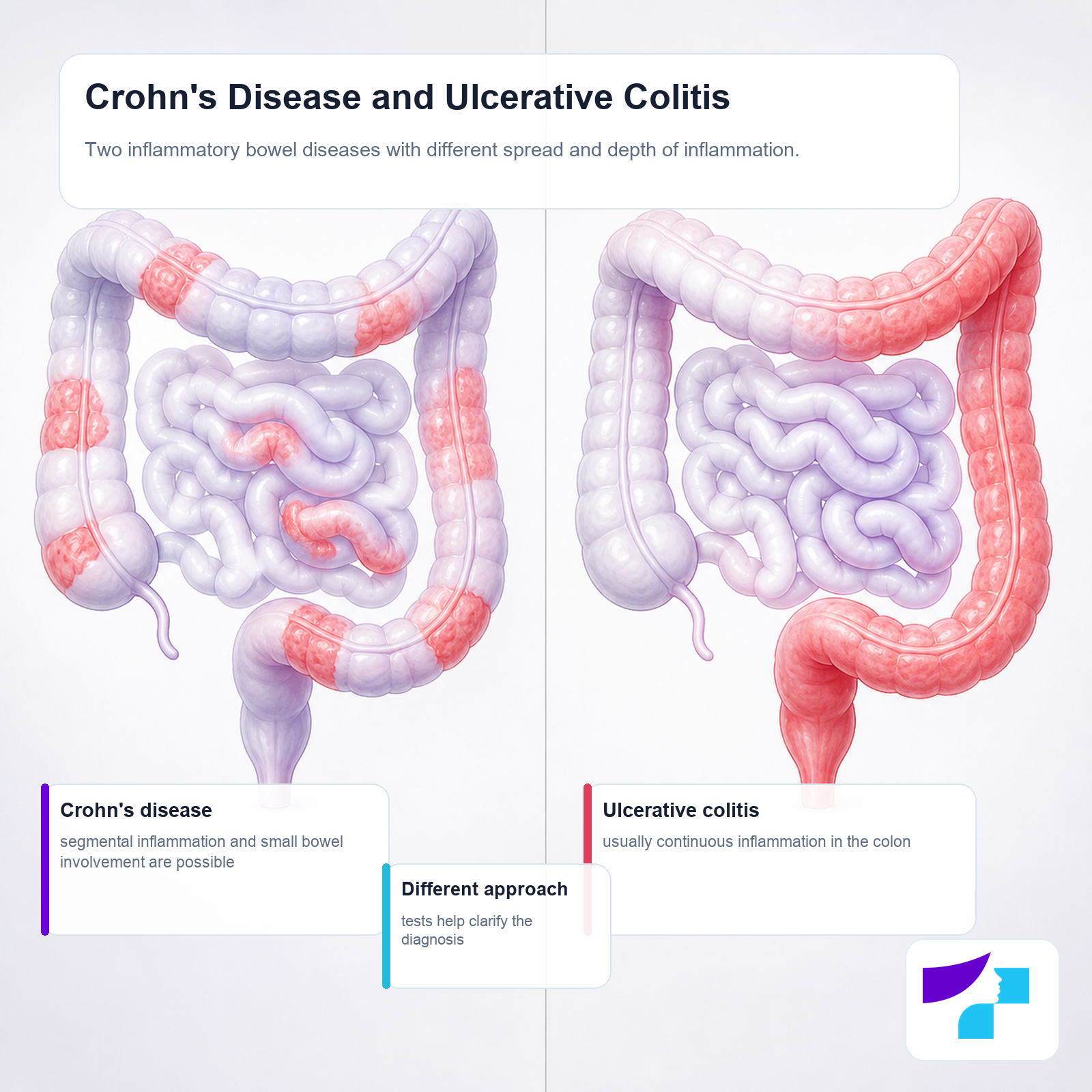
| Feature | Crohn’s disease | Ulcerative colitis |
|---|---|---|
| Affected area | Can affect any part of the digestive tract | Usually affects the large intestine and rectum |
| Pattern of inflammation | Often segmental, with healthy areas between affected segments | Usually continuous inflammation |
| Depth of inflammation | May involve the full thickness of the intestinal wall | Mainly affects the mucosa |
| Common complications | Strictures, fistulas, abscesses, bowel obstruction | Bleeding, severe colitis, toxic megacolon |
| Diagnosis | Endoscopy, biopsy and often small bowel imaging | Endoscopy and biopsy, focused on the large intestine |
Accurate distinction is important because treatment and complication monitoring may differ.
Crohn’s disease and irritable bowel syndrome - what is the difference?
Irritable bowel syndrome, or IBS, is a functional bowel disorder. It can cause abdominal pain, bloating, diarrhea or constipation, but it is not characterized by chronic intestinal inflammation, ulcers, fistulas, intestinal narrowing or inflammatory changes on biopsy.
Crohn’s disease is an organic inflammatory disease. It may be associated with elevated fecal calprotectin, CRP, anemia, weight loss, nighttime diarrhea, blood in the stool or visible inflammation on endoscopy. If these “red flag” signs are present, symptoms should not be explained only by irritable bowel syndrome.
Can Crohn’s disease be dangerous?
Crohn’s disease can be mild, moderate or severe. In some patients, the disease remains controlled for a long time, while others may develop serious complications.
Possible complications include:
- intestinal narrowing, or stricture;
- bowel obstruction;
- fistulas, or abnormal connections between the intestine and other tissues;
- abscesses;
- perianal disease;
- intestinal perforation;
- bleeding;
- anemia;
- nutrient deficiency and malnutrition;
- osteoporosis;
- increased risk of colorectal cancer in long-standing intestinal inflammation.
The risk of complications is one reason why Crohn’s disease should not be treated only by suppressing symptoms or following a self-chosen diet.
How does a doctor diagnose Crohn’s disease?
Crohn’s disease cannot be reliably diagnosed based only on symptoms, photos or internet descriptions. Diagnosis is made by combining the patient’s symptoms, examination, laboratory tests, stool tests, endoscopy, biopsy and imaging.
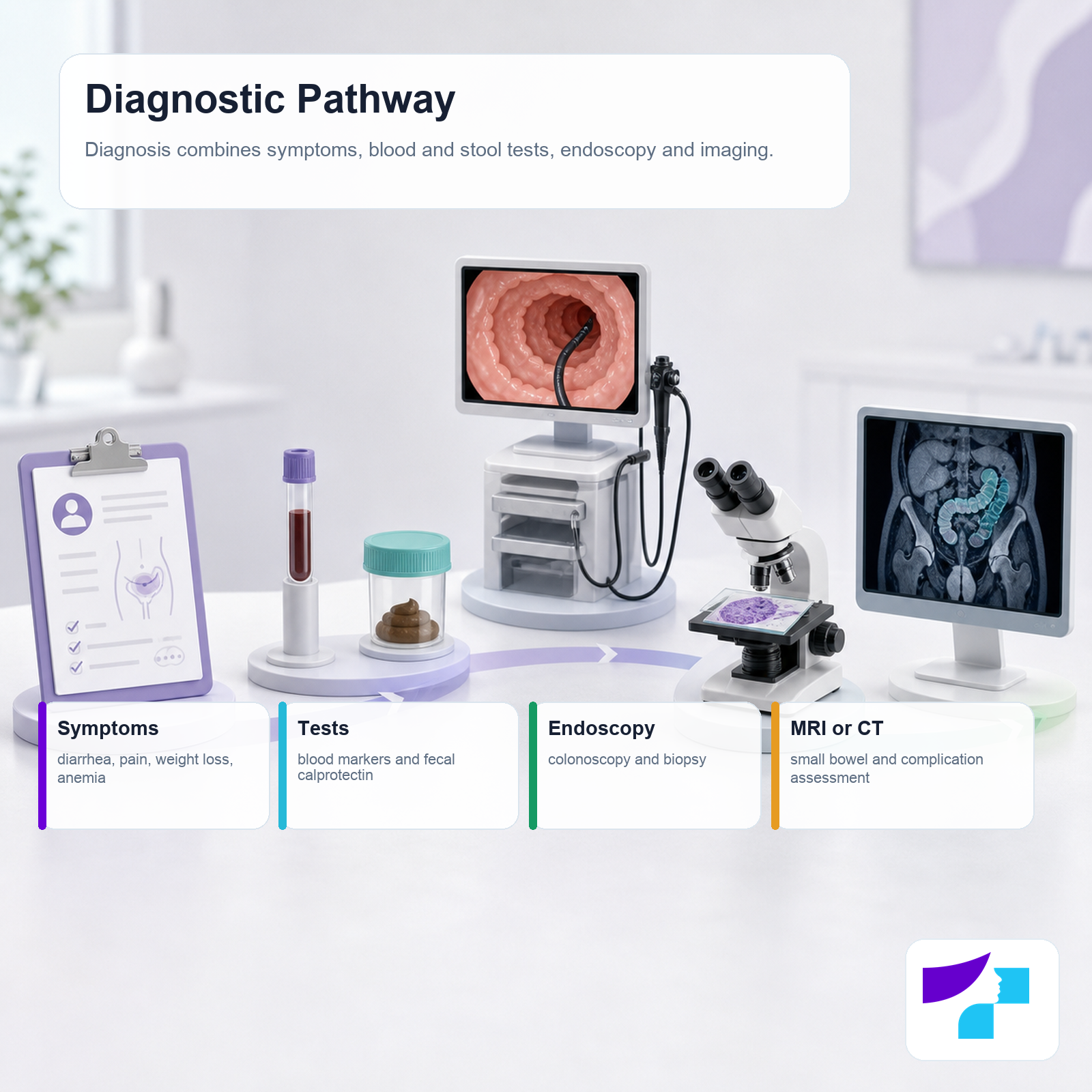
Diagnostic tests may include:
- a complete blood count to assess anemia and signs of inflammation;
- CRP and other inflammatory markers;
- assessment of iron, vitamin B12, vitamin D and other nutrients;
- stool tests to rule out infections;
- fecal calprotectin, which helps assess the likelihood of intestinal inflammation;
- colonoscopy with ileoscopy;
- biopsy, meaning microscopic examination of tissue samples;
- MR enterography or CT enterography to assess the small intestine;
- capsule endoscopy in selected situations, if intestinal narrowing is not suspected;
- ultrasound, if available and suitable for the specific situation.
Fecal calprotectin is not specific only to Crohn’s disease, but it can help distinguish an inflammatory process from functional disorders. Colonoscopy with biopsy is one of the most important tests for confirming the diagnosis.
Treatment of Crohn’s disease
Treatment of Crohn’s disease is individualized. It depends on disease location, activity, complications, the patient’s age, other medical conditions, infection risk, previous treatment and the patient’s goals.
Treatment goals include:
- reducing inflammation;
- achieving remission;
- preventing flare-ups;
- reducing the risk of complications;
- improving quality of life;
- ensuring normal growth and development in children.
Several groups of medicines may be used. Corticosteroids, such as budesonide or systemic steroids, can help during a flare-up, but they are not intended for long-term maintenance therapy. Long-term steroid use may cause significant side effects.
Immunomodulators and biological medicines help influence inflammatory mechanisms. Biological therapy may include anti-TNF agents, integrin inhibitors, interleukin inhibitors or other targeted medicines. Newer targeted therapies may also be used in selected situations.
Antibiotics are not a universal treatment for Crohn’s disease. They may be needed, for example, in cases of abscess, infection or certain perianal complications. Antidiarrheal and pain-relieving medicines should be used only with caution and according to a doctor’s advice, especially if there is fever, bleeding or suspicion of bowel obstruction.
Biological therapy for Crohn’s disease
Biological therapy is targeted treatment that acts on specific parts of the inflammatory process. It is not a “last resort”, but a modern treatment option for patients with moderate to severe disease, complication risk or insufficient response to other treatments.
Before starting biological therapy, the doctor usually assesses infection risk, vaccination status, tuberculosis and hepatitis risk, blood tests and general health. Regular monitoring is required during treatment.
When is surgery needed?
Surgery may be needed if bowel obstruction, stricture, fistula, abscess, perforation, severe bleeding develops, or if medical treatment cannot control the disease sufficiently.
Surgery can treat a specific complication or remove a severely damaged bowel segment, but it does not always completely cure Crohn’s disease. The disease may recur in another area, so continued gastroenterologist follow-up and maintenance therapy are often needed after surgery.
Diet in Crohn’s disease
There is no single universal Crohn’s disease diet that works for all patients. Dietary recommendations differ during remission and flare-ups and depend on disease location, intestinal narrowing, previous surgery, weight changes and nutrient deficiencies.
During remission, the goal is usually a complete, balanced diet with enough protein, energy, vitamins and minerals. During a flare-up, some patients tolerate softer, easier-to-digest foods better. If intestinal narrowing is present, the doctor may recommend temporarily limiting coarse fiber, such as nuts, seeds, popcorn, vegetable skins or very fibrous foods.
A food diary may help identify foods that worsen symptoms. However, eliminating foods without a plan can increase the risk of inadequate nutrition. If there is weight loss, anemia, vitamin B12 deficiency, vitamin D deficiency or dietary restrictions, it is advisable to involve a dietitian or nutrition specialist experienced in inflammatory bowel disease.
Natural remedies and dietary supplements
Many patients are interested in probiotics, turmeric, omega-3 fatty acids, medicinal herbs or other natural remedies. The effectiveness of these approaches in treating Crohn’s disease is not the same and is not always convincingly proven. They must not replace doctor-prescribed therapy, especially in active inflammation, bleeding, weight loss, fever or complications.
Dietary supplements may be useful when a deficiency has been confirmed, such as iron, vitamin B12, vitamin D or calcium deficiency. They should preferably be used after testing and medical advice.
Lifestyle and daily control
Managing Crohn’s disease is not only about taking medicines. Regular gastroenterologist follow-up, stopping smoking, a balanced diet, infection risk assessment, a vaccination plan, enough sleep and not stopping treatment without medical advice are important.
A symptom and bowel movement diary, weight monitoring, keeping test results and having a clear plan for what to do during a flare-up may help patients manage the condition.
Crohn’s disease and pregnancy
Many women with Crohn’s disease can successfully plan pregnancy. It is best to do this during remission and in cooperation with a gastroenterologist and gynecologist. Active inflammation during pregnancy may pose a greater risk than many doctor-supervised therapies, so medicines should not be stopped without medical advice.
Before planning pregnancy, disease activity, current medicines, nutrient deficiencies, vaccination and follow-up plans should be discussed.
When should you see a doctor?
You should see a family doctor or gastroenterologist if you have:
- diarrhea lasting several weeks;
- recurrent or worsening abdominal pain;
- unexplained weight loss;
- blood in the stool;
- persistent fatigue or anemia;
- fever without a clear cause;
- nighttime diarrhea;
- pain, swelling or discharge around the anus;
- growth delay or poor weight gain in a child.
When is urgent medical help needed?
Urgent medical help should be sought if there is:
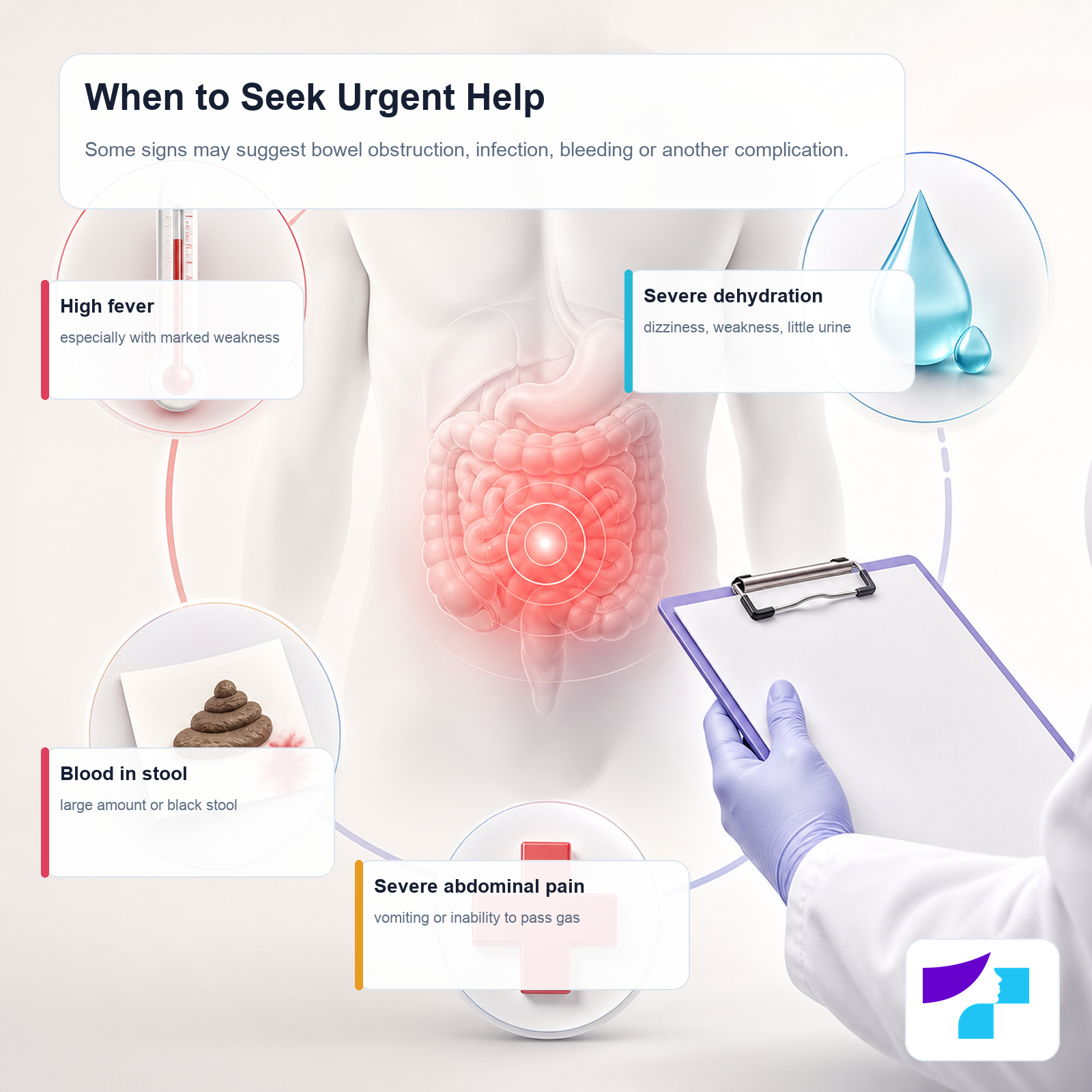
- severe or worsening abdominal pain;
- repeated vomiting;
- high fever and marked weakness;
- fainting or confusion;
- severe dehydration;
- a large amount of blood in the stool or black stools;
- abdominal bloating with inability to pass stool or gas;
- pus-filled, very painful lumps around the anus;
- sudden worsening of general condition.
These signs may indicate bowel obstruction, severe inflammation, infection, bleeding or another complication.
What should not be done without medical advice?
You should not diagnose yourself based on symptoms or internet materials. You should not use non-steroidal anti-inflammatory drugs, such as ibuprofen or naproxen, for a long time without medical advice. You should not stop prescribed treatment simply because symptoms have improved. You should not replace medicines with diet, supplements or “natural remedies” if there is active inflammation or signs of complications.
How to prepare for a gastroenterologist visit?
Before the visit, it is helpful to write down:
- how long the symptoms have been present;
- how often bowel movements occur;
- whether there is nighttime diarrhea;
- whether there is blood or mucus in the stool;
- whether there has been weight loss;
- whether there is fever;
- which medicines are being used;
- whether inflammatory bowel disease has occurred in the family;
- which foods worsen symptoms;
- previous test and examination results.
You can ask the doctor whether fecal calprotectin, colonoscopy, biopsy, MR enterography, involvement of a nutrition specialist, vaccination review or treatment adjustment is needed.
Common myths about Crohn’s disease
Myth: Crohn’s disease is the same as ulcerative colitis.
Fact: both are inflammatory bowel diseases, but they differ in location, depth of inflammation and complications.
Myth: Crohn’s disease is the same as irritable bowel syndrome.
Fact: irritable bowel syndrome is not a chronic inflammatory disease, while Crohn’s disease can damage the intestinal wall.
Myth: Crohn’s disease is contagious.
Fact: it is not an infection and does not spread from person to person.
Myth: Crohn’s disease is caused only by poor diet.
Fact: diet can affect symptoms, but the disease is based on complex immune, genetic and environmental factors.
Myth: Crohn’s disease can be completely cured with diet.
Fact: diet is important, but it does not replace doctor-supervised treatment.
Myth: Biological therapy means the disease is hopeless.
Fact: it is a modern treatment option that helps many patients control inflammation.
Myth: Surgery completely cures Crohn’s disease.
Fact: surgery can treat a complication, but the disease may recur.
Summary
Crohn’s disease is a chronic inflammatory bowel disease that may be mild, moderate or severe. It can cause diarrhea, abdominal pain, weight loss, fatigue, anemia and symptoms outside the intestine. Diagnosis cannot be made based only on complaints - medical evaluation, blood tests, stool tests, endoscopy, biopsy and sometimes imaging are needed. Treatment is individualized, and its goal is not only to reduce symptoms but also to control inflammation and prevent complications.
Medical disclaimer
This information is for educational purposes only. It does not replace medical consultation, diagnosis or treatment. The course, treatment and risks of Crohn’s disease depend on disease location, activity, complications and the patient’s health condition. If you have questions about skin manifestations, itching, rashes, redness, ulcers or other skin-related symptoms in Crohn’s disease, we invite you to consult the clinic’s dermatologists. If there is severe abdominal pain, repeated vomiting, high fever, a large amount of blood in the stool, fainting, severe dehydration, abdominal bloating with inability to pass stool or gas, or sudden worsening of general condition, urgent medical help should be sought immediately.
References and authoritative sources
- NIDDK: patient information about Crohn’s disease, symptoms, diagnosis and treatment
- MedlinePlus: overview of Crohn’s disease, causes, symptoms and treatment
- Crohn’s & Colitis Foundation: patient and professional information about inflammatory bowel diseases
- ECCO 2024: summary of Crohn’s disease treatment guidance
- Mayo Clinic: Crohn’s disease symptoms, causes, diagnosis and treatment
- Cleveland Clinic: Crohn’s disease signs, types, complications and treatment options
