Skin ageing is a natural biological process during which the structure of the skin, its moisture balance, elasticity, pigmentation, protective barrier function and ability to regenerate gradually change. It is not limited to the appearance of wrinkles. Ageing affects the epidermis, or the outer layer of the skin, the dermis, or the deeper connective-tissue layer, the subcutaneous tissues, blood vessels, sebaceous and sweat glands, hair follicles and the skin’s immune defence.
Skin ageing may be natural, or chronological, and related to age, genetics and hormonal changes, or premature, accelerated by external factors such as ultraviolet radiation, sunbeds, smoking, air pollution, insufficient sleep, chronic stress, unsuitable skin care and repeated inflammation. Photoageing — premature skin ageing caused by sunlight and artificial ultraviolet radiation — is particularly important.
Skin ageing itself is not a disease or an infection. It is not contagious and has no incubation period. However, the signs of ageing skin may overlap with the features of skin diseases, precancerous conditions or skin tumours. New, changing, bleeding, painful, itchy, irregularly pigmented or non-healing skin lesions should therefore not be regarded merely as “age spots” — they should be examined by a dermatologist.
What is skin ageing?
Skin ageing is a combination of gradual structural and functional changes. With age, the skin usually becomes thinner, drier, less elastic and slower to regenerate. Fine lines, deeper wrinkles, pigmentation spots, skin laxity, a rougher texture, visible blood vessels, increased sensitivity and slower wound healing may develop.
Skin ageing affects different people in different ways. In one person, wrinkles may be the most pronounced change; in another, pigmentation, dryness, sensitivity or changes in facial contours may be more noticeable. These differences are influenced by heredity, skin phototype, hormonal status, lifestyle, cumulative lifetime exposure to UV radiation and a history of skin disease.
It is important to understand that skin ageing is not merely an aesthetic issue. A weakened skin barrier, slower healing, sun damage and pigmented lesions may be medically significant. The role of a dermatologist is not only to reduce wrinkles but also to distinguish benign signs of ageing from conditions that require diagnosis or treatment.
How and why does the skin age?
The skin ages because of several interconnected processes. The principal mechanisms include slower cell renewal, deterioration in the quality of collagen and elastin, reduced amounts of hyaluronic acid and other moisture-binding substances, weakening of the skin barrier, oxidative stress and chronic low-grade inflammation.
Collagen is one of the main structural proteins of the skin. It helps maintain skin density and firmness. With age, collagen production declines, while existing collagen fibres become more fragmented and less organised. As a result, the skin becomes thinner, less dense and more prone to wrinkles.
Elastin is a protein that helps the skin return to its original shape after being stretched. When elastin fibres are damaged, the skin loses elasticity, becomes looser and may begin to sag. Particularly marked elastin damage can result from long-term exposure to UV radiation.
Hyaluronic acid binds water and helps maintain skin hydration. Its quantity and function in the skin may decrease with age and as a result of sun damage. The skin may therefore become drier and less plump, making fine lines more visible.
The skin barrier is the protective outer layer that helps retain moisture and protects against irritants. When the barrier is impaired, the skin may become dry, sensitive, itchy, red or flaky. Ageing skin often has a more fragile barrier, which means that overly aggressive cleansing, frequent peeling or excessive use of active ingredients may do more harm than good.
At what age does skin ageing begin?
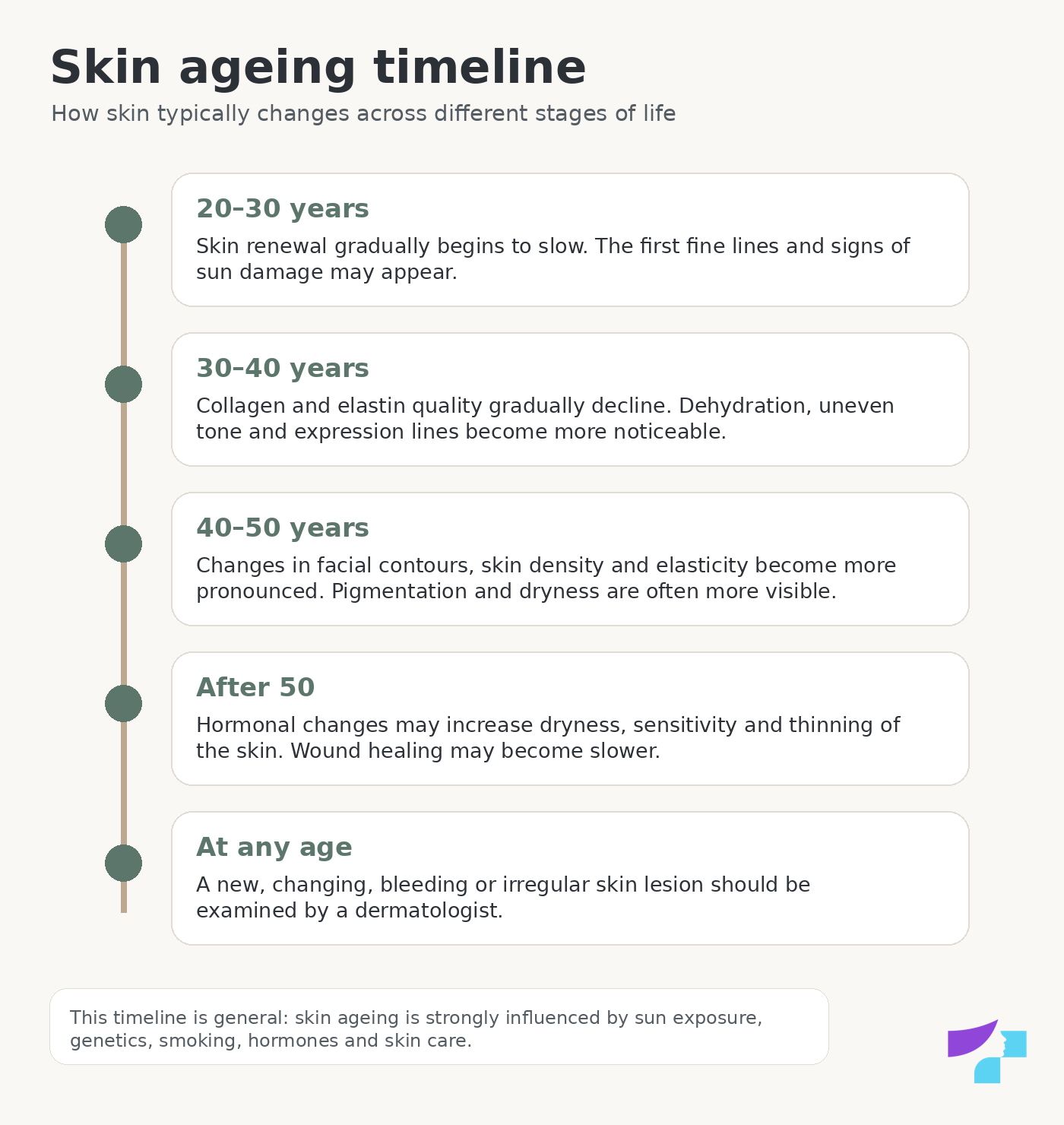
Biological ageing begins before visible signs appear. In some people, the first fine lines and changes in skin texture may become noticeable after the age of 25–30, particularly around the eyes, on the forehead and around the mouth. This does not mean that everyone at this age requires intensive anti-ageing treatment.
Before the age of 30, prevention is usually the priority: regular sun protection, gentle cleansing, moisturising, avoiding or stopping smoking, adequate sleep and preservation of the skin barrier. After the age of 30–40, fine lines, pigmentation and uneven skin tone often become more relevant. After the age of 40–50, loss of elasticity, changes in facial contours, dryness and hormonally related skin changes may become more noticeable.
These age ranges are approximate. In a person with substantial sun exposure, a history of sunbed use or smoking, the signs of premature ageing may appear considerably earlier. In contrast, visible changes may develop more slowly in someone who consistently protects the skin from UV radiation and follows appropriate skin-care practices.
Main signs of skin ageing
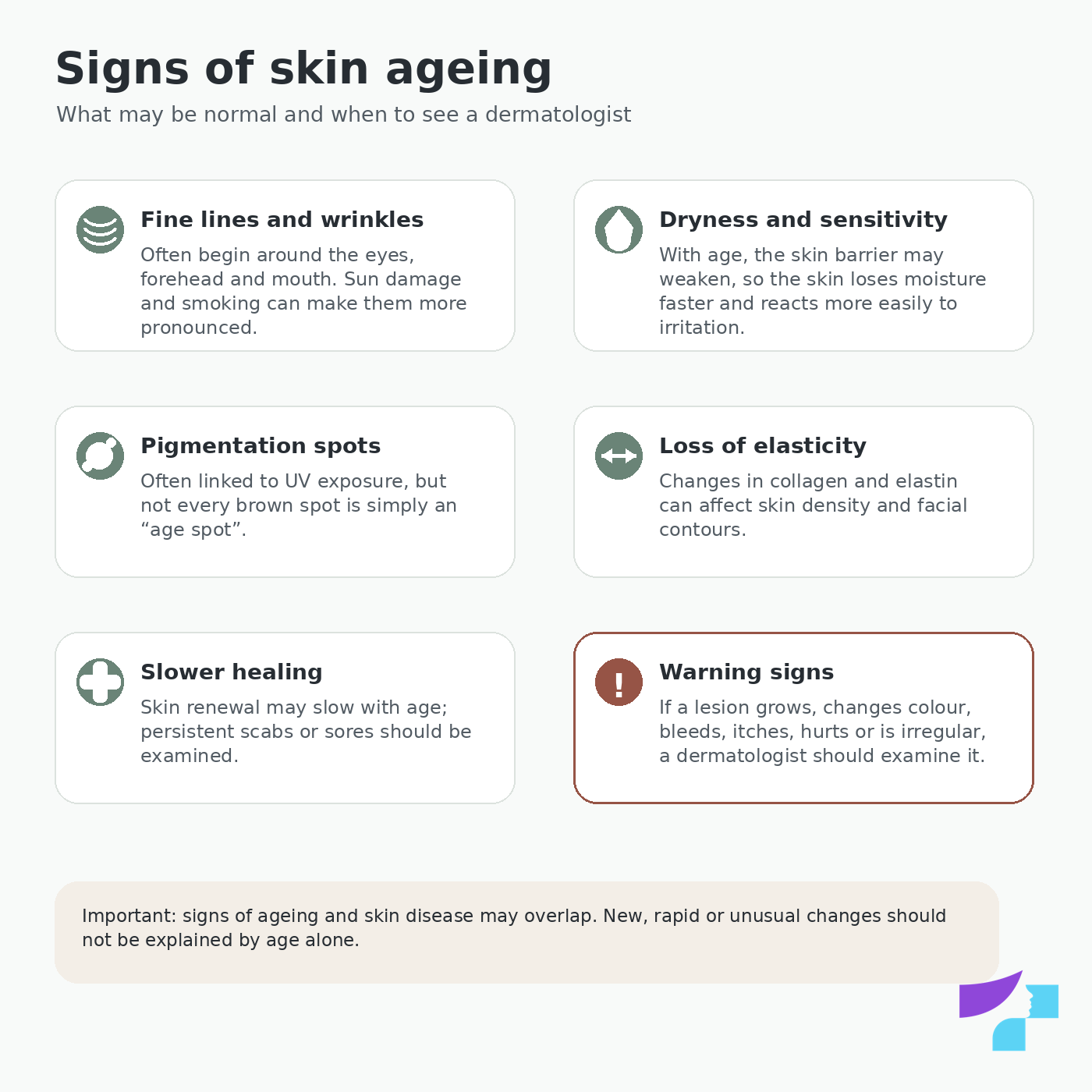
The signs of skin ageing may vary, although patients most commonly notice several changes at the same time.
The most common signs include:
- fine lines around the eyes, on the forehead and around the mouth;
- deeper wrinkles and skin folds;
- dryness, tightness and flaking;
- loss of elasticity and firmness;
- changes in facial contours and tissue sagging;
- uneven skin tone;
- pigmentation spots;
- a rougher skin texture;
- visible blood vessels or persistent redness;
- slower healing after injury or procedures;
- itching, particularly in dry skin;
- thinner skin that is more easily injured.
The three to five features most commonly associated with more pronounced skin ageing are wrinkles, pigmentation spots, loss of elasticity, persistent dryness and uneven texture. A single sign, however, does not necessarily indicate ageing. Dryness, for example, may also be a sign of atopic dermatitis, irritation, a medicine-related adverse effect or thyroid dysfunction. A pigmented spot may be benign but may also resemble a potentially dangerous skin lesion.
Natural and premature skin ageing
Natural, or chronological, skin ageing is related to age, genetics, hormonal changes and the overall biological ageing of the body. It generally develops gradually and relatively evenly.
Premature skin ageing develops more rapidly than would be expected for a person’s age. It is most commonly promoted by UV radiation, sunbeds, smoking, chronic inflammation, unsuitable skin care, insufficient sleep and other lifestyle factors. Premature ageing often presents as pigmentation spots, deeper wrinkles, rough skin texture, loss of elasticity and visible sun damage.
The distinction is important because natural ageing cannot be stopped completely, whereas premature ageing can often be slowed considerably. Early prevention, especially daily protection against UV radiation, is the most effective approach.
Photoageing, or sun-induced skin ageing
Photoageing is premature skin ageing caused by repeated exposure to ultraviolet radiation. Its main sources are sunlight and artificial UV radiation, including sunbeds. Photoageing most often affects the face, neck, décolletage, backs of the hands, forearms and other areas regularly exposed to the sun.
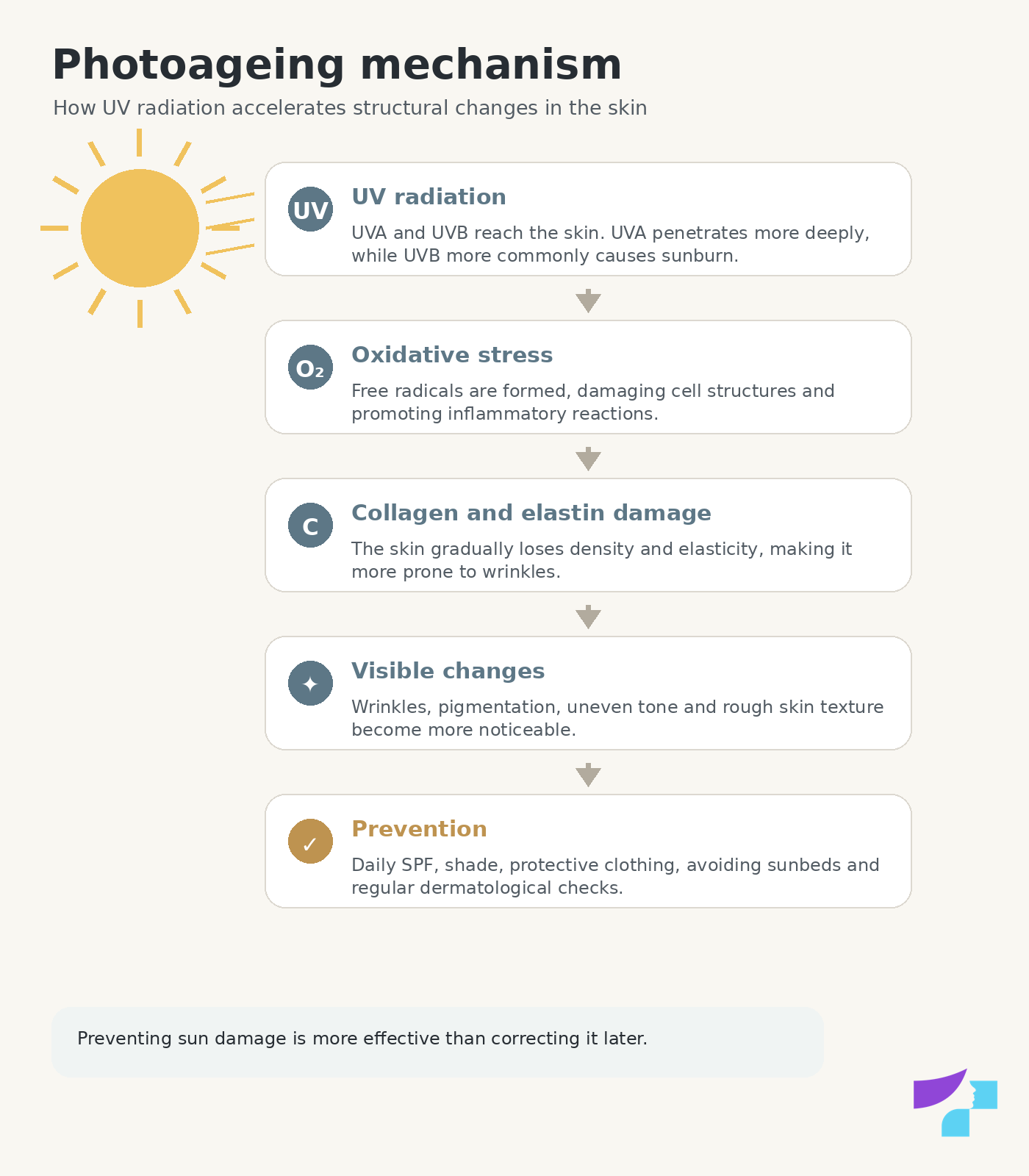
UV radiation damages the DNA of skin cells, promotes oxidative stress and inflammation and accelerates collagen breakdown. Over time, this can cause not only wrinkles and pigmentation spots but also precancerous changes and an increased risk of skin tumours.
Signs of photoageing include:
- uneven pigmentation;
- brown spots, or solar lentigines;
- a rough, thickened texture;
- fine and deep wrinkles;
- visible blood vessels;
- redness;
- loss of elasticity;
- actinic keratoses — pink, rough areas caused by sun damage;
- an increased risk of skin cancer.
Photoageing differs from natural ageing because it is often uneven and more pronounced on sun-exposed areas. For example, the face and hands may appear more aged than areas of the body that have generally been protected from the sun.
UV radiation, UVA and UVB
Ultraviolet radiation is an invisible component of sunlight. UVA and UVB rays are particularly important in dermatology.
UVA rays penetrate more deeply into the skin and are closely associated with photoageing, pigmentation and damage to elastin and collagen. UVA radiation is also present on cloudy days and can partly pass through window glass. Sun protection may therefore be important for people who spend substantial time near windows or in a car, even without deliberate sun exposure.
UVB rays act predominantly on the upper layers of the skin and are the principal cause of sunburn. They also damage DNA and are important in relation to skin-cancer risk. Both UVA and UVB radiation contribute to skin damage, so a broad-spectrum sunscreen that protects against both should be selected for everyday use.
Does skin type affect the signs of ageing?
The way skin ageing appears varies according to skin phototype. In lighter skin that burns easily, UV-induced changes tend to become visible earlier. Fine wrinkles, redness, sun spots, rough areas of sun damage and uneven pigmentation are more common.
In darker skin, melanin may partially reduce the visible effects of UV radiation, but it does not provide complete protection against photoageing or the risks associated with skin lesions. In darker phototypes, ageing may more often present as uneven pigmentation, sagging of the mid-face, seborrhoeic keratoses or other pigmented changes.
Sun protection and the assessment of suspicious skin lesions are therefore important for all skin types, not only for people with fair skin.
Should SPF be used every day?
Sunscreen is one of the fundamental measures for preventing premature skin ageing. A broad-spectrum sunscreen is recommended for daily use, particularly on the face, neck, décolletage and backs of the hands. In practical terms, when the skin is regularly exposed to daylight, UV radiation or time outdoors, sun protection remains important even when sunbathing is not planned.
SPF is also required on cloudy days because some UV radiation passes through clouds. In winter, sunscreen is particularly important when spending time outdoors, skiing, being exposed to light reflected by snow or using active ingredients that increase skin sensitivity. SPF 30 or higher is commonly selected for everyday use, although the most appropriate choice depends on skin type, pigmentation, sensitivity, skin disease, procedures and lifestyle.
Sunscreen cannot remove existing deep wrinkles, but it helps reduce the accumulation of further UV damage. This is particularly important when retinoids, acids or pigmentation-reducing products are used, or when dermatological procedures are being performed.
Sunbeds and skin ageing
Sunbeds are not a safe alternative to sunlight. Artificial UV radiation damages the skin and may contribute to premature ageing, pigmentation, loss of elasticity and an increased risk of skin cancer. A tan is not a sign of health; it is a protective response of the skin to UV-induced injury.
Sunbeds are particularly associated with UVA radiation, which penetrates more deeply into the skin and contributes to photoageing. The absence of visible sunburn after using a sunbed does not mean that the skin has not been damaged. UV damage accumulates gradually, and its consequences may become apparent years later.
Risk factors for skin ageing
Skin ageing is influenced by both non-modifiable and modifiable risk factors.
Non-modifiable factors
- age;
- genetics;
- skin phototype;
- hormonal changes;
- certain chronic diseases.
Modifiable factors
- excessive sun exposure;
- sunbed use;
- smoking;
- chronic sleep deprivation;
- an unbalanced diet;
- frequent alcohol consumption;
- chronic stress;
- air pollution;
- inappropriate skin care;
- damage to the skin barrier from aggressive products;
- untreated skin disease.
Smoking increases oxidative stress, impairs blood flow to the skin and may accelerate the development of wrinkles, particularly around the mouth. Alcohol may worsen dehydration, redness and inflammatory reactions, especially in people with rosacea or sensitive skin. Chronic stress and insufficient sleep may affect skin-repair processes and aggravate inflammatory skin disease.
Hormones, menopause and skin ageing
Hormones have a significant influence on the condition of the skin. Oestrogens help maintain skin hydration, elasticity, collagen metabolism and skin thickness. During menopause, oestrogen levels decline, and the skin may become drier, thinner, more sensitive and less elastic.
Women during the menopausal period more commonly experience tightness, itching, fine lines, changes in facial contours and slower skin regeneration. Barrier-supporting skin care, regular moisturising, sun protection and a dermatological consultation are particularly important when dryness, redness or itching is pronounced.
Hormonal changes may also affect pigmentation, hair growth, oil production and the development of adult acne. Not every skin change after the age of 40 or 50 is therefore merely an age-related sign; assessment by a dermatologist or another appropriate specialist may sometimes be required.
How can normal signs of ageing be distinguished from skin disease?
Normal signs of ageing usually develop gradually, are relatively symmetrical and are not associated with rapid growth, bleeding, pain or non-healing ulcers. Skin disease, however, may resemble age-related changes.
A dermatologist should be consulted if:
- a new pigmented lesion appears;
- an existing mole changes in size, shape or colour;
- a lesion bleeds, itches, hurts or forms a crust;
- a brown or black spot has irregular borders;
- there is a non-healing ulcer or rough area;
- a pigmented spot enlarges rapidly;
- dryness, flaking or itching is pronounced and persistent;
- the skin remains irritated for a prolonged period after procedures or use of active ingredients;
- unexplained redness, burning or swelling develops.
Pigmented spots are not always merely a sign of ageing. They may represent solar lentigines, melasma, post-inflammatory pigmentation, moles, seborrhoeic keratoses or lesions requiring more detailed assessment. Dermoscopy — examination of skin lesions with a specialised optical device — is the safest approach.
A normal sign of ageing or a reason for dermatological assessment?
| Skin change | More commonly consistent with ageing | Should be assessed by a dermatologist |
|---|---|---|
| Fine lines | Develop gradually, especially around the eyes, on the forehead or around the mouth | Changes appear suddenly and are accompanied by swelling, inflammation, pain or a rash |
| Pigmented spot | Evenly coloured and slowly developed on a sun-exposed area | Changes colour, shape or size, bleeds, itches, hurts or has irregular borders |
| Dry skin | Improves with gentle care and moisturising | Persists, cracks, hurts, itches, becomes inflamed or continues to flake |
| Rough area of skin | May be related to dryness or irritation | Persists, forms a crust, bleeds or is located on a sun-exposed area |
| Skin lesion | Has remained unchanged for a long time and has previously been examined by a doctor | Is new, growing, different from other lesions, irregular or non-healing |
Particular attention should be paid to rough, scaly or crusted areas on the face, ears, scalp, backs of the hands and forearms. These may be signs of chronic sun damage and may sometimes correspond to precancerous changes such as actinic keratoses. Such changes should be assessed by a dermatologist.
When does sun damage become more than a cosmetic concern?
Sun damage may initially appear as uneven skin tone, pigmentation spots or fine wrinkles. Prolonged UV damage, however, may also cause medically significant changes.
One such change is actinic keratosis — a rough, scaly or crusted area that usually develops on sun-exposed skin. It may feel similar to sandpaper. Actinic keratoses are not simply dry skin; they are signs of chronic UV damage and may be associated with precancerous skin changes.
A dermatologist should be consulted if there is:
- a rough area that does not improve with moisturising;
- a crusted or bleeding skin lesion;
- a persistent red or scaly spot on a sun-exposed area;
- a non-healing ulcer;
- a new lesion on the face, ears, scalp, backs of the hands or forearms.
Such changes should not be scrubbed, cauterised, bleached or treated independently with randomly selected products.
When should a dermatologist be consulted?
A dermatological consultation is appropriate not only when disease is suspected, but also when a person wishes to obtain a safe and evidence-based assessment of age-related changes, pigmentation, suitable skin care or planned procedures.
Consultation is particularly advisable when there are:
- new or changing skin lesions;
- pigmentation spots of uncertain nature;
- signs of sun damage;
- pronounced dryness, itching or flaking;
- suspected actinic keratoses;
- a previous history of skin tumours or precancerous changes;
- a family history of melanoma or skin cancer;
- planned laser procedures, peels, injections or other aesthetic procedures;
- sensitive or inflamed skin, or chronic skin disease;
- failure of non-prescription skin care to improve the condition, or worsening after its use.
A dermatologist can assess the skin type, degree of photodamage, nature of pigmentation, condition of the skin barrier, safety of skin lesions and the most appropriate treatment or skin-care plan.
Prevention of skin ageing
Skin ageing cannot be stopped completely, but it can be slowed. Prevention is more effective than late correction.
The most important preventive measures include:
- daily protection against UV radiation;
- avoiding sunbeds;
- using hats, sunglasses and protective clothing;
- seeking shade during periods of intense sunlight;
- stopping smoking;
- skin-barrier-friendly care;
- regular moisturising;
- adequate sleep;
- a balanced diet;
- treatment of chronic skin disease;
- regular assessment of suspicious skin lesions.
Prevention should be consistent. A single procedure cannot compensate for years of UV damage if sunbathing, sunbed use or inadequate sun protection continues afterwards.
Daily care for ageing skin
Care of ageing skin is based on three principles: gentle cleansing, moisturising and sun protection. Active ingredients may be beneficial, but they should be introduced gradually and according to the skin’s tolerance.
Morning skin care
- gentle cleansing or rinsing;
- a moisturiser;
- an antioxidant product, if tolerated;
- a broad-spectrum sunscreen.
Evening skin care
- gentle cleansing;
- a moisturiser;
- an active ingredient, such as a retinoid or another product recommended by a dermatologist, if suitable;
- a barrier-repair cream for dry or sensitive skin.
After the age of 30, prevention and reduction of the earliest signs are generally the priorities. After the age of 40, a more targeted approach to pigmentation, loss of elasticity and dryness is often required. After the age of 50, restoration of the skin barrier, moisturising, gentler care and medical assessment become especially important when marked dryness, itching or skin lesions are present.
The skin should not be over-cleansed. Frequent washing with aggressive products, alcohol-containing toners, abrasive scrubs and simultaneous use of several active ingredients may damage the skin barrier and cause redness, burning, flaking or rashes.
Active ingredients for skin ageing
Active ingredients may help improve skin texture, hydration, tone and fine lines, although they do not work equally well for everyone and cannot replace medical assessment.
Retinoids
Retinoids are a group of vitamin A derivatives. They are among the most extensively studied treatments for reducing signs of photoageing. Retinoids may improve skin texture, fine lines and uneven pigmentation, but they may also cause dryness, irritation and increased sensitivity. Prescription retinoids are prescribed by a doctor and should not be used without medical advice, particularly during pregnancy or breastfeeding.
Vitamin C
Vitamin C is an antioxidant that may help reduce the effects of oxidative stress and improve uneven skin tone. Its effectiveness depends on the form, concentration, stability and individual skin tolerance.
Niacinamide
Niacinamide is a form of vitamin B3 commonly used to support the skin barrier, reduce redness, help control pigmentation and improve overall skin tone.
Hyaluronic acid
Hyaluronic acid helps bind water in the superficial layers of the skin and may temporarily improve hydration and the appearance of fine lines. It does not restore the skin’s structure by returning youthful collagen levels, but it may be a valuable moisturising ingredient.
Peptides
Peptides are short chains of amino acids used in skin care with the aim of supporting regenerative processes. This field continues to develop, but the quality of evidence varies between different peptides and products.
AHA and BHA acids
AHA and BHA products may help improve skin texture and tone, but incorrect use may damage the skin barrier. Acids should be used cautiously on sensitive, dry or inflamed skin.
Active ingredients should not all be introduced at the same time. Particular caution is required when combining retinoids, acids, pigmentation-reducing products and procedures. If burning, marked flaking, swelling, pronounced redness or pain develops, use should be discontinued and professional advice sought.
What should be avoided when trying to slow skin ageing?
Excessive and aggressive measures may harm the skin. Frequent changes in active ingredients, simultaneous use of several strong products and intensive peeling may damage the protective barrier. The skin may consequently become drier, more sensitive, red and inflamed.
Avoid:
- using several strong active products at the same time without professional advice;
- combining retinoids, acids and abrasive scrubs when the skin is sensitive or inflamed;
- using sunbeds to obtain a “healthy” tan;
- attempting to bleach, cauterise or mechanically remove pigmentation spots independently;
- undergoing intensive procedures immediately before or after substantial sun exposure;
- assuming that a new or changing lesion is merely an age spot;
- ignoring persistent dryness, itching, redness or non-healing crusts.
A safer approach is to introduce active ingredients gradually, monitor the skin’s response and consult a dermatologist when necessary.
Dermatological and aesthetic treatment options
Treatment of skin ageing does not consist of a single procedure. It is an individual plan based on the condition of the skin, age, degree of photodamage, pigmentation, medical conditions, expectations and risks. In some cases, adjusting skin care and using SPF may be sufficient. In others, dermatological procedures may be appropriate.
Possible groups of procedures include:
- laser procedures to reduce changes in skin texture, pigmentation, vascular features and signs of photodamage;
- intense pulsed light procedures for selected types of pigmentation and redness;
- chemical peels to improve texture, pigmentation and fine lines;
- microneedling to stimulate structural changes in the skin;
- injectable procedures to address volume loss, expression lines or skin quality;
- biorevitalisation to improve hydration and skin quality;
- mesotherapy with individually selected substances when medically justified;
- dermatologist-prescribed topical treatment for pigmentation, inflammation or signs of photodamage.
Botulinum toxin injections are used to reduce expression lines, for example on the forehead, between the eyebrows or around the eyes. Fillers may help restore volume or correct selected wrinkles and contours. These procedures should be performed by a medical professional with appropriate knowledge of anatomy, indications, contraindications and the management of complications.
Laser procedures and peels may be effective but are not suitable for everyone. Possible risks include pigmentation changes, irritation, burns, infection, scarring or exacerbation of chronic skin disease. Before treatment, the skin phototype, type of pigmentation, medicines, previous procedures, history of herpes infection, skin disease and sun exposure should therefore be assessed.
Treatment of skin ageing does not usually provide a permanent result for life. The skin continues to age, and maintenance requires skin care, UV protection and sometimes repeated procedures. A realistic aim is not to stop ageing but to improve the health, safety, comfort and appearance of the skin.
Creams or procedures — which are more effective?
Creams and procedures address different concerns. Skin care is the foundation; without it, the results of procedures may be shorter lived and the risks greater. SPF, moisturising and suitable active ingredients help reduce further damage and improve superficial changes. Procedures may act more deeply or more selectively on pigmentation, blood vessels, texture, volume loss or expression lines.
If the problem is mild dehydration, correcting skin care may be sufficient. When sun damage, pigmentation spots, actinic keratoses, deep wrinkles or skin laxity are pronounced, cosmetics alone will usually be insufficient. A dermatological consultation should then be considered.
Beautician or dermatologist — whom should you consult?
A beautician may help with everyday skin care, gentle skin-care protocols and improving comfort. A dermatologist is a doctor who diagnoses skin disease, assesses lesions, pigmentation, precancerous changes and chronic skin conditions, and prescribes medically appropriate treatment.
A dermatologist should be consulted for unexplained pigmentation spots, changes in moles, non-healing skin damage, pronounced redness, itching, pain, inflammation, suspected skin disease or before more invasive procedures. An aesthetic goal should never replace medical safety.
Lifestyle, diet and skin health
Skin health is influenced by the overall condition of the body. A balanced diet containing sufficient protein, vegetables, fruit, whole grains, healthy fats and micronutrients helps provide the substances required for skin-repair processes.
Protein is required for tissue repair and the formation of structural proteins. Dietary antioxidants help the body counteract oxidative stress, but they do not replace SPF or medical treatment. Excessive sugar intake may contribute to glycation — structural changes in proteins that may affect collagen quality. Skin ageing, however, cannot be explained by a single dietary factor.
Drinking water is important for general health, but does not in itself remove wrinkles. In a person who is not dehydrated, consuming additional large quantities of water will not usually correct collagen loss, elastin changes or sun damage. Restoration of the skin barrier and appropriate moisturising products are often more important for dry skin.
Dietary supplements, including collagen, are popular, but the evidence varies according to the preparation, dose, study quality and outcome assessed. Collagen supplements have shown modest benefits in some studies, but they are not a miracle treatment and do not replace sun protection, smoking cessation, a balanced diet or dermatological treatment. People with chronic disease, allergies, pregnancy or regular medicine use should discuss supplements with a doctor.
Physical activity, adequate sleep and stress reduction support general health and may have a positive effect on the skin. Chronic sleep deprivation and stress may impair skin-barrier function, control of inflammatory skin disease and regenerative processes.
Can skin ageing be stopped?
Skin ageing cannot be stopped completely. It is part of the biological ageing of the body. Premature ageing can, however, be substantially reduced by limiting UV exposure, avoiding sunbeds, not smoking, caring for the skin barrier and treating skin disease promptly.
The best strategy is not to search for a single anti-wrinkle solution, but to create a long-term skin-health plan. This includes prevention, daily care, medical assessment of suspicious signs and evidence-based procedures when genuinely required.
What is medicine still investigating, and where are innovations developing?
Research into skin ageing is advancing in several areas. Sun protection, retinoid-based products, selected laser procedures and dermatologically appropriate treatment of photodamage are well supported and clinically relevant. Many popular anti-ageing approaches, however, are not supported by equally strong evidence.
Current areas of active research include:
- cellular ageing, or senescence;
- the role of inflammation and the skin microenvironment in ageing;
- the use of peptides, growth factors and exosomes;
- personalised dermatology according to phototype, genetics and lifestyle;
- the role of the skin microbiome in barrier function;
- combined procedures with shorter recovery periods;
- new forms of photoprotection against UVA, UVB, visible light and pollution.
Some innovations are promising, but not all have sufficient long-term safety and effectiveness data. Patients should therefore be cautious about claims that promise to restore the skin completely, stop ageing or replace dermatological treatment.
What should be done if the skin suddenly becomes dry and sensitive?
If the skin suddenly becomes dry, sensitive, red or flaky, skin care should first be reviewed. Aggressive peels, retinoids, acids, heavily fragranced products and frequent cleansing should temporarily be stopped. A gentle cleanser, a barrier-repair moisturiser and daytime SPF should be used.
If the symptoms persist, worsen or are accompanied by pain, swelling, cracks, rashes or pronounced itching, a dermatological consultation is required. Dryness is not always merely a sign of ageing.
What should be done when new pigmentation spots appear?
New pigmentation spots should be observed carefully. A uniformly coloured spot that has developed slowly on a sun-exposed area may be a benign solar lentigo. It is not possible, however, to exclude other lesions reliably without examination.
A dermatologist should be consulted if the spot is asymmetrical, has irregular borders, contains several colours, grows rapidly, itches, bleeds, hurts or looks different from the person’s other skin lesions. Dermoscopy can be performed to determine whether observation, treatment or further investigation is required.
What should be done if wrinkles appear at a young age?
Early wrinkles are often associated with facial expression, UV radiation, skin dehydration, smoking, insufficient sleep or inappropriate skin care. The first steps are daily SPF, moisturising and restoration of the skin barrier. If tolerated, active ingredients such as retinoid-based products may be introduced gradually, although people with sensitive skin should preferably consult a dermatologist first.
If wrinkles appear together with sudden dryness, rashes, redness, hormonal symptoms or other changes in health, possible medical causes should also be considered.
References and authoritative sources
- Centre for Disease Prevention and Control of Latvia: information on UV radiation, sunbeds, premature skin ageing, pigmentation spots and the risks of skin cancer.
- World Health Organization: ultraviolet radiation and health risks.
- International Agency for Research on Cancer: sunbeds and UV radiation — UV-emitting tanning devices are classified as carcinogenic to humans.
- International Agency for Research on Cancer: European Code Against Cancer — ultraviolet radiation and skin-cancer risk.
- European Commission Scientific Committees: health effects of sunbeds used for cosmetic purposes.
- American Academy of Dermatology Association: retinoids and retinol for fine lines, pigmentation changes and signs of skin ageing.
- American Academy of Dermatology Association: prevention of skin ageing and the importance of sun protection.
- DermNet: ageing skin — signs, causes and treatment options.
- DermNet: facial lines and wrinkles — causes and treatment approaches.
- DermNet: topical retinoids — vitamin A derivatives in dermatology.
- DermNet: topical treatment of photoageing and sun-damaged skin.
- Mayo Clinic: prevention of wrinkles and the importance of sun protection.
- Mayo Clinic: anti-wrinkle creams, retinoids and active ingredients for reducing signs of skin ageing.
- Mukherjee S. and co-authors: retinoids in the treatment of skin ageing — a review of clinical and histological evidence. Clinical Interventions in Aging.
- Milosheska D. and co-authors: use of retinoids in topical anti-ageing products. Cosmetics.
- Rittié L. and Fisher G. J.: UV radiation, skin ageing and mechanisms of skin damage. Cold Spring Harbor Perspectives in Medicine.
- Krutmann J. and co-authors: skin-ageing strategies — photoprotection, retinoids, antioxidants and other approaches. Dermato-Endocrinology.
- Gabros S. and co-authors: sunscreens and photoageing — the importance of broad-spectrum protection. StatPearls / NCBI.
Medical disclaimer
The information provided in this article is intended for informational and educational purposes only. It does not replace consultation with a dermatologist or another doctor, medical diagnosis or individually prescribed treatment. Self-diagnosis and self-treatment may be incorrect and may delay the timely detection of disease. Consult a dermatologist if you notice new, changing, bleeding, painful, itchy, irregularly pigmented or non-healing skin lesions, pronounced dryness, redness, flaking or other concerning changes. Seek urgent medical assistance immediately if symptoms are severe, deteriorate rapidly or indicate a potentially high-risk condition.
