
Our nails are a small piece of the puzzle that represents our health. Beautiful, strong nails are a sign of good health. However, certain diseases can make the nails appear unattractive and cause changes in their colour and structure. In 50% of cases, nail abnormalities are caused by fungal infections acquired in communal showers, swimming pools, by wearing someone else's footwear and in other similar circumstances. Fingernails reflect changes in the body during the preceding 2–3 months, while toenails can provide information about our health over a period of up to 6 months.
A fungal infection most commonly begins in the first or fifth toenail. Several or even all of the nails may be affected. The condition can affect women, men and young children. Older patients are a particular risk group because their nails grow more slowly, they may have circulatory changes in the lower extremities and they often have other medical conditions. An affected nail loses its shine, changes colour and may develop white spots. Its surface may become uneven, and the nail may thicken or become crumbly. These changes, as well as changes characteristic of psoriasis, often develop following nail trauma.
Fungal infections of the skin and nails of the feet can have a significant impact on patients' lives. Most patients report a substantial reduction in their quality of life, mainly because of concerns that the infection may spread to other nails or be transmitted to other people, as well as because of its aesthetic effects. It is important to remember that nail fungus may also affect general health by sensitising the body and contributing to the development of allergic conditions.
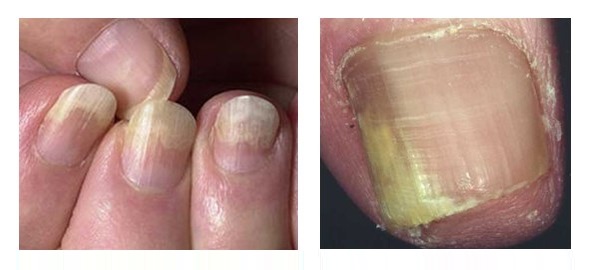
Psoriasis more commonly affects the fingernails. The nails may become brown or yellow, and red spots may appear beneath them. Small pits or grooves may develop on the nail surface. A chalky white deposit may form beneath the nail and cause it to separate from the nail bed. The nail may also become thickened or crumbly.
Different nail diseases may look similar (see Figures 1 and 2) and may occur simultaneously. It is therefore particularly important to establish an accurate diagnosis so that appropriate and effective treatment can be provided. Only a specialist can determine whether topical treatments such as medicated nail lacquers or creams will be sufficient and how long they should be used. At our clinic, patients can receive assistance from highly qualified and experienced doctors specialising in the treatment of nail diseases. We offer access to modern, effective medicines and treatment options.
We look forward to welcoming you to Med Art clinic at 20 Firsa Sadovņikova Street, 4th floor, Riga (find out more under Contacts).
Figure 1 – nail psoriasis (left)
Figure 2 – fungal nail infection (right)




 +1
 +1
 +1 242
 +1 246
 +1 268
 +1 441
 +20
 +212
 +213
 +216
 +218
 +220
 +221
 +222
 +223
 +223
 +224
 +225
 +226
 +227
 +228
 +229
 +230
 +231
 +232
 +234
 +235
 +236
 +237
 +238
 +239
 +239
 +240
 +241
 +242
 +243
 +244
 +245
 +248
 +249
 +250
 +251
 +252
 +253
 +254
 +255
 +256
 +257
 +258
 +260
 +261
 +262
 +263
 +264
 +265
 +266
 +267
 +268
 +269
 +269
 +27
 +284
 +290
 +291
 +297
 +298
 +299
 +30
 +31
 +32
 +33
 +34
 +340
 +345
 +350
 +351
 +352
 +353
 +354
 +355
 +356
 +358
 +359
 +36
 +370
 +371
 +372
 +373
 +374
 +375
 +376
 +377
 +378
 +380
 +385
 +386
 +387
 +389
 +39
 +39
 +40
 +41
 +41
 +420
 +421
 +43
 +45
 +46
 +47
 +473
 +48
 +49
 +500
 +501
 +502
 +503
 +504
 +505
 +506
 +507
 +509
 +51
 +52
 +53
 +54
 +55
 +56
 +57
 +58
 +590
 +591
 +593
 +594
 +594
 +595
 +596
 +597
 +598
 +60
 +61
 +62
 +63
 +64
 +649
 +65
 +66
 +664
 +671
 +672
 +672
 +672
 +673
 +674
 +675
 +676
 +677
 +678
 +679
 +680
 +681
 +682
 +683
 +684
 +686
 +687
 +688
 +689
 +690
 +691
 +692
 +6982
 +7
 +7
 +7
 +7
 +758
 +767
 +784
 +809
 +809
 +81
 +82
 +84
 +850
 +852
 +853
 +856
 +86
 +868
 +869
 +876
 +880
 +885
 +886
 +90
 +91
 +92
 +93
 +94
 +95
 +960
 +961
 +962
 +963
 +964
 +965
 +967
 +968
 +971
 +972
 +973
 +974
 +975
 +976
 +977
 +98
 +993
 +994
 +995
 +996
 +996