Measles is a highly contagious viral infectious disease. At first, it may resemble a cold or a flu-like illness, but later it causes a characteristic rash and can lead to serious complications. Although many people still think of measles as a “childhood disease”, it is a serious infection that can be dangerous for infants, unvaccinated children, adults, pregnant women and people with weakened immunity. Measles can cause severe, sometimes long-lasting complications. The World Health Organization states that measles symptoms usually begin 10–14 days after contact with the virus, while the most visible symptom is the rash.
Measles is caused by the measles virus. It spreads through the air when an infected person coughs, sneezes, talks or is in the same room with other people. The disease is epidemiologically significant because a person can be contagious even before the rash appears, and the virus can spread very efficiently indoors. The Centers for Disease Control and Prevention states that measles is contagious from about 4 days before to 4 days after the rash begins.
The main and most effective way to protect against measles is vaccination. In Latvia, prevention uses the combined vaccine against measles, mumps and rubella; the Centre for Disease Prevention and Control of Latvia states that maximum protection requires two vaccine doses and that in Latvia the first dose for children is scheduled at 12–15 months of age, while revaccination is scheduled at 7 years of age.
Key points in brief
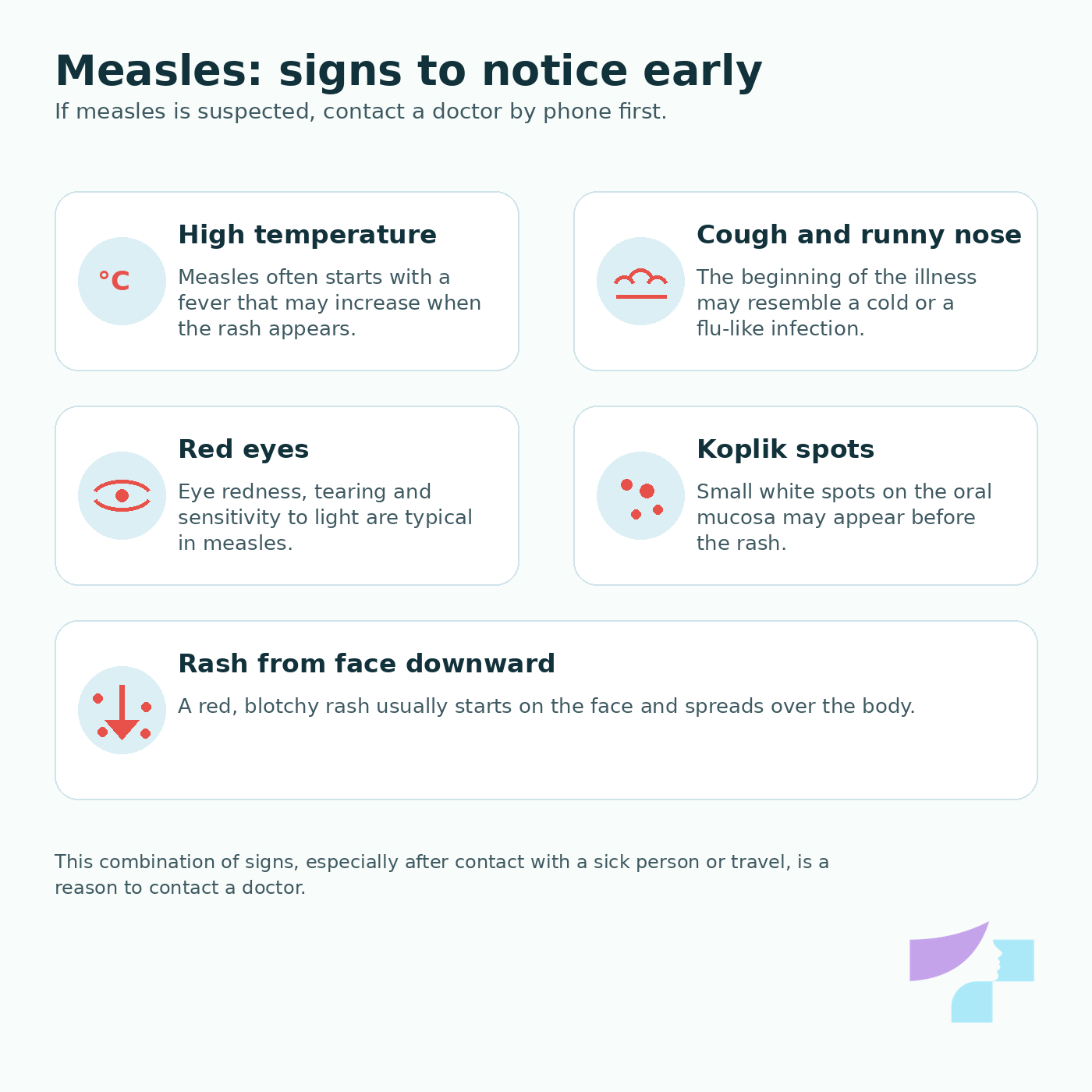
Measles most often begins with fever, cough, runny nose, red eyes and weakness. After a few days, a red, blotchy rash appears, usually beginning on the face and behind the ears, then spreading to the neck, body, arms and legs. The European Centre for Disease Prevention and Control states that early measles symptoms include runny nose, cough, mild fever, red eyes and sensitivity to light, while later a high temperature and a rash may appear, starting on the face and spreading over the body.
Measles is not just a rash illness. It can cause middle ear infection, diarrhoea, pneumonia, encephalitis, meaning inflammation of the brain, and, in rare cases, late nervous system complications. The materials of the World Health Organization and the European Centre for Disease Prevention and Control describe measles as a disease that can cause severe complications and death, especially when vaccination coverage in society is insufficient.
If measles is suspected, a person should not go to a clinic, school, kindergarten or workplace without first contacting a doctor. The first step is to contact the family doctor or healthcare facility by phone, because measles can spread in waiting rooms, public transport and other places where susceptible people may be present.
What is measles?
Measles is an acute viral infection caused by the measles virus. The disease affects the whole body, but it is most visibly expressed by fever, respiratory symptoms, eye inflammation and a rash. The virus first enters the respiratory mucosa, then multiplies in the body and triggers a broad inflammatory reaction through the immune system.
Measles is a vaccine-preventable infection. This means that effective prevention is available — vaccination. The Centre for Disease Prevention and Control of Latvia emphasises that vaccination is the only effective preventive measure against measles to prevent illness.
Measles and rubella are not the same disease. They are caused by different viruses and have different disease courses, complication risks and epidemiological significance. In everyday language the names may seem similar, but medically they must be distinguished.
How contagious is measles?
Measles is one of the most contagious human infectious diseases. The European Centre for Disease Prevention and Control states that an unvaccinated person who has been exposed to measles has about a 90% risk of becoming infected if they have no immunity.
The measles virus spreads through the air. It can enter the surrounding environment with tiny respiratory droplets and aerosols produced when coughing, sneezing or talking. Therefore, the infection can spread not only during direct contact, but also in rooms where an infected person has recently been present. This characteristic makes measles dangerous in kindergartens, schools, healthcare facilities, public transport and other closed or poorly ventilated spaces.
A person with measles is contagious even before the rash appears, which is why the disease is difficult to stop based only on visible signs. The clinical materials of the Centers for Disease Control and Prevention state that a person is usually infectious 4 days before and 4 days after the rash appears.
How long can the measles virus remain indoors?
The measles virus can remain in the air or on surfaces indoors for up to about two hours after an infectious person has been there. Therefore, a susceptible person can become infected even if they enter the room shortly after the sick person has left. For this reason, if measles is suspected, the first step is to contact a doctor by phone rather than going to a clinic, school, kindergarten or other public places.
How can a person become infected with measles?
A person becomes infected with measles by inhaling virus-containing droplets or aerosols. The infection can spread if a susceptible person is in the same room as the sick person or visits a place where an infectious person was present shortly before.
The risk of infection is higher if a person is not vaccinated, has not had measles before or does not know their immunity status. This is especially important for travellers, because measles outbreaks periodically occur in different regions of the world, including Europe. The World Health Organization and the European Centre for Disease Prevention and Control regularly emphasise that insufficient vaccination coverage allows measles to return and cause outbreaks.
Mechanism of infection: what happens in the body?
After entering the airways, the measles virus begins to multiply in the mucosa and nearby lymph nodes. It then enters the bloodstream and spreads throughout the body. During this period, the person usually does not yet feel symptoms — this is called the incubation period.
When the immune system begins to respond to the virus, fever, cough, runny nose, red eyes and general weakness appear. The rash is not simply a “skin problem”; it is the visible expression of the body’s immune response. This is why the measles rash usually appears after the prodromal, or early symptom, phase rather than on the first day of illness.
Measles can also affect the immune system’s memory for a short or longer period. Research shows that measles infection can reduce previously acquired immune protection against other infections — this phenomenon is sometimes called “immune amnesia”. A study published in Science described that measles infection can significantly reduce previously formed antibodies, while Harvard Medical School explains that after measles, part of immune memory against previously encountered microorganisms may decrease.
Measles incubation period and disease timeline
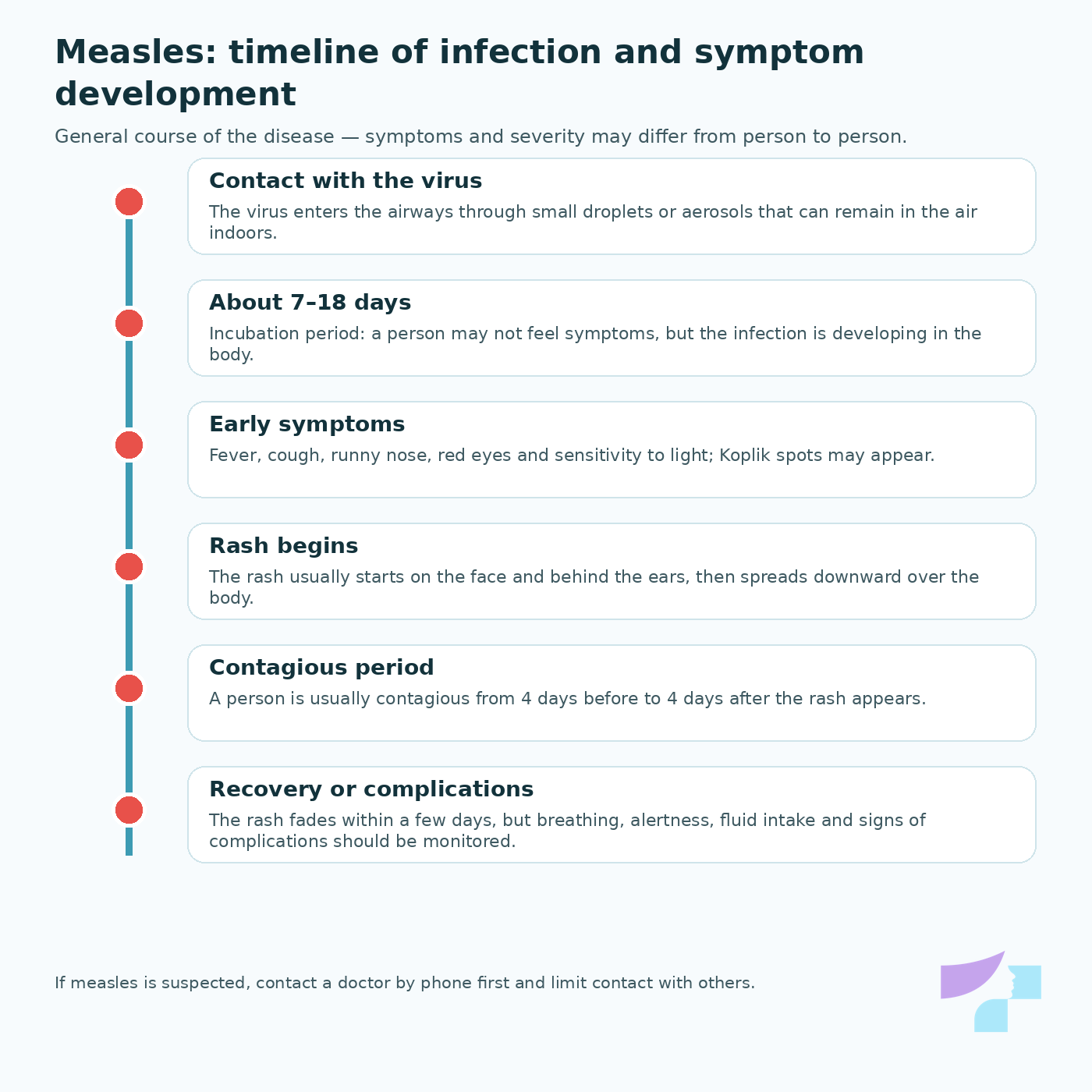
The incubation period of measles most often lasts approximately 10–14 days, although a broader time window of 7–21 days is possible. On average, the prodromal phase begins around days 10–14; after approximately 3 days, the rash begins and usually lasts for 5–6 days.
In practical terms, the course of the disease can be understood as follows:
- contact with the measles virus;
- incubation period without symptoms;
- early phase with fever, cough, runny nose, red eyes and weakness;
- Koplik spots on the oral mucosa, if they appear;
- a rash that begins on the face and spreads downward;
- recovery or development of complications.
Measles symptoms and course of illness
Measles usually does not begin immediately with a rash. The first signs often resemble a respiratory infection: fever, cough, runny nose, red eyes, tearing, sensitivity to light, fatigue and loss of appetite. The European Centre for Disease Prevention and Control lists runny nose, cough, mild fever, red eyes and sensitivity to light as early symptoms.
A typical combination of measles symptoms includes:
- fever;
- cough;
- runny nose;
- red or watery eyes;
- a rash that begins on the face and spreads downward over the body.
Together, these signs are much more suspicious than each sign separately. For example, cough and fever alone often suggest a viral infection, but cough, runny nose, red eyes, high temperature and then a rash after contact with a possible measles case is a situation in which a doctor should be contacted.
Early measles symptoms
Early measles symptoms are usually fever, cough, runny nose, red eyes, sensitivity to light, fatigue and general weakness. The beginning of the illness may resemble the start of a cold, flu or Covid-19, so the context is important: vaccination status, contact with a sick person, travel and the appearance of a rash after a few days.
In measles, the temperature may be high. The Centers for Disease Control and Prevention states that fever may increase when the rash appears.
What are Koplik spots?
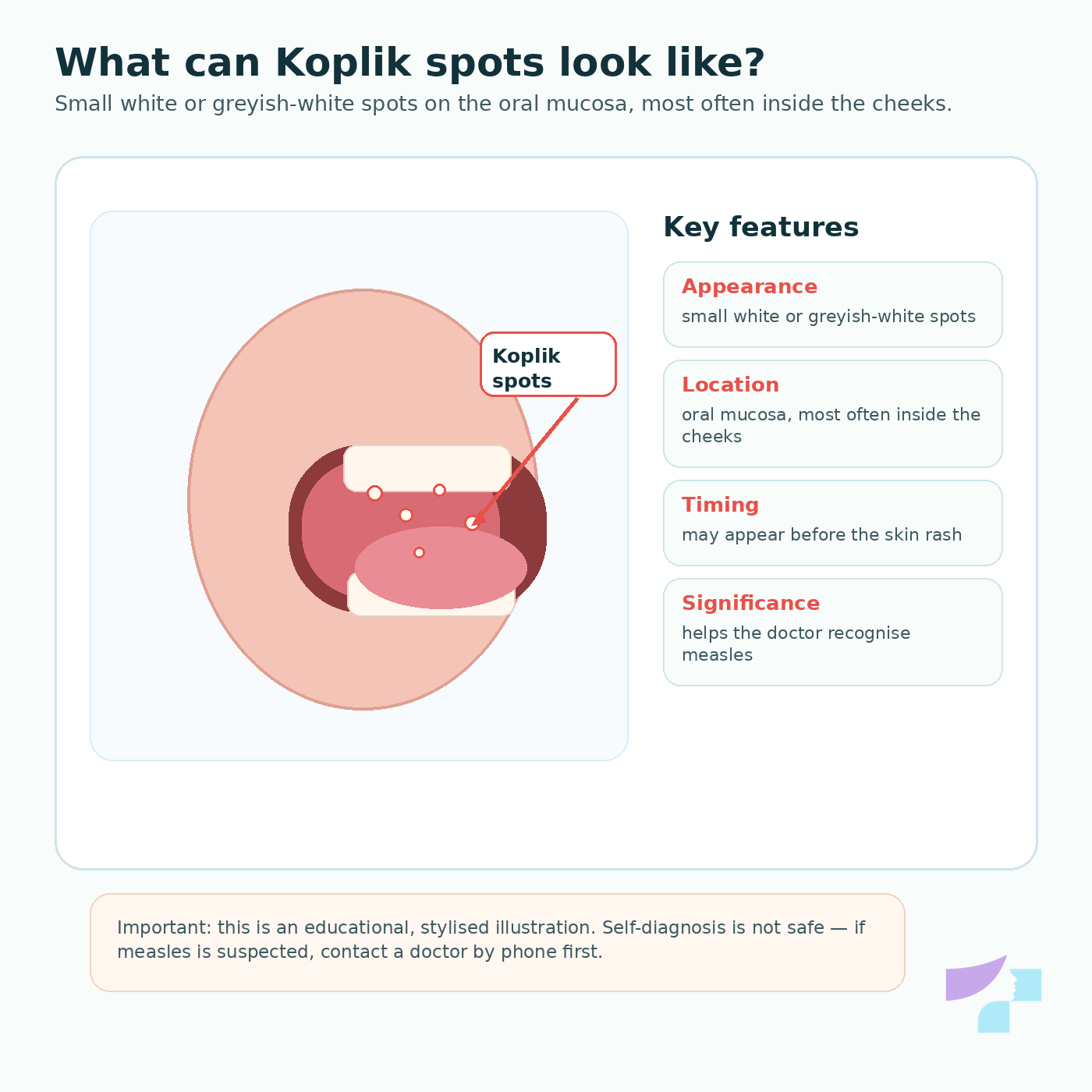
Koplik spots are small white or greyish-white spots on the oral mucosa, most often inside the cheeks. They may appear before the rash and are a clinically significant sign of measles. The Centers for Disease Control and Prevention describes them as tiny white spots inside the mouth that may appear 2–3 days after symptoms begin.
It can be difficult for a patient to recognise Koplik spots on their own, so they are assessed by a doctor.
What does a measles rash look like?
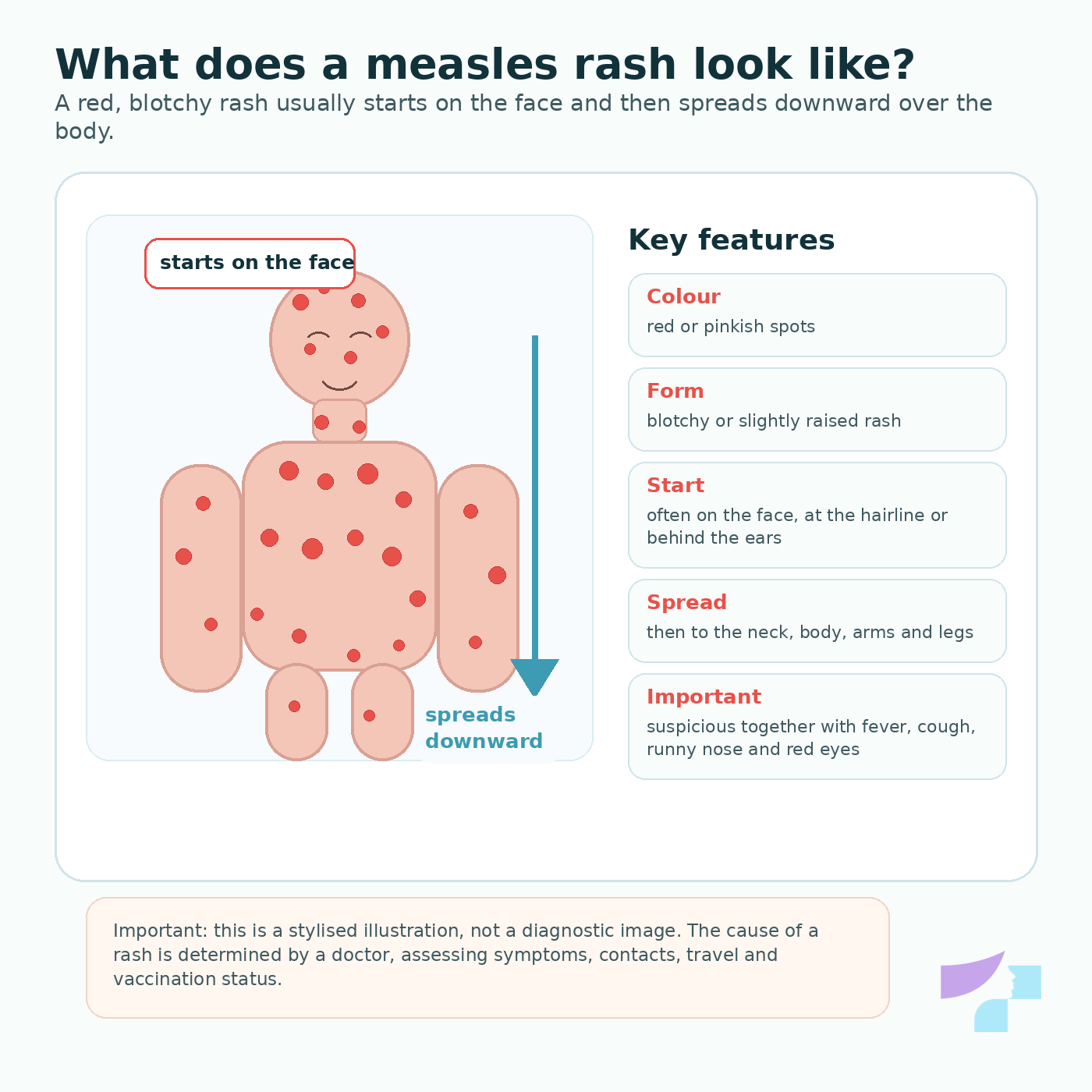
The measles rash is usually red, blotchy and maculopapular — this means that it may be both flat and slightly raised above the skin. It often starts on the face, at the hairline or behind the ears, then spreads to the neck, chest, abdomen, back, arms and legs. The Centers for Disease Control and Prevention describes that the measles rash begins on the head and face and then spreads downward to the neck, body, arms, legs and feet.
The rash may merge into larger areas. It usually lasts for several days and then begins to fade. Some patients may have dry or peeling skin after the rash.
The measles rash may itch, but itching is usually not the main sign. If the rash is very itchy, appears and disappears suddenly or resembles hives, allergy or another diagnosis should also be considered.
How is measles diagnosed?
Measles is diagnosed by a doctor, who evaluates symptoms, vaccination status, possible contact with a measles patient, travel and the epidemiological situation. Because measles can resemble other infections, laboratory confirmation may be needed if measles is suspected. Testing may include detection of measles virus nucleic acid, serological tests for antibodies, and samples from the airways, saliva or urine. The doctor determines the specific type, timing and need for testing.
Does measles always cause a rash?
In a typical case, the rash is one of the main signs of measles. However, the course of the disease may vary, especially in people with partial immunity, for example after incomplete vaccination or, in rare cases, after vaccination. In such cases, symptoms may be milder or less typical, but this does not mean that measles can be safely ruled out without medical assessment and, if necessary, laboratory confirmation.
The Centers for Disease Control and Prevention emphasises that laboratory confirmation is important in sporadic cases and outbreak situations.
Measles in children
In children, measles often begins with fever, cough, runny nose, red eyes and weakness. A rash appears later. A child may be sleepy, tearful, refuse food and fluids, complain of light sensitivity or headaches.
Infants and young children should be monitored especially carefully because they have a higher risk of dehydration, breathing problems and complications. Infants who have not yet reached the age for vaccination depend on the immunity of people around them — this is why vaccination coverage among parents, family members and society is important.
Measles in adults
In adults, measles can be severe, especially if the person is not vaccinated. Adults often clearly experience high fever, weakness, headaches and pronounced illness severity. The risk of complications is not only a problem for children — adults can also develop pneumonia, middle ear infection, severe weakness and other complications.
If an adult develops fever and rash after travel, contact with a sick person or being in an outbreak setting, they should not go to work or a healthcare facility without prior telephone contact.
When do symptoms become dangerous?
In measles, a doctor should be contacted immediately if measles is suspected, especially if the person is not vaccinated, has been in contact with a sick person or has recently travelled. Emergency medical help should be sought if shortness of breath, bluish lips, confusion, seizures, severe headache, neck stiffness, marked sleepiness, signs of dehydration, persistent high fever or rapid deterioration occurs.
Danger signs in children include difficulty breathing, inability to drink, very infrequent urination, unusual sleepiness, seizures, altered consciousness or a rash together with poor general condition suggesting a severe infection.
Who is measles dangerous for?
Measles can be dangerous for any susceptible person, but the risk of severe illness and complications is higher in:
- infants;
- unvaccinated children;
- adults without immunity;
- pregnant women;
- people with weakened immunity;
- people with chronic diseases;
- people who travel to places with measles outbreaks or low vaccination coverage.
Unvaccinated people are the main risk group because measles is highly contagious and even small gaps in immunity in society are enough for the disease to spread. The European Centre for Disease Prevention and Control states that elimination of measles requires very high vaccination coverage — at least 95% coverage with two doses in society.
Measles during pregnancy
Measles during pregnancy is a particularly serious situation. A live attenuated MMR vaccine is not recommended during pregnancy, so vaccination status should ideally be clarified before planning pregnancy. If a pregnant woman has been in contact with a measles patient, she should contact a doctor immediately so that the risk and possible actions can be assessed.
Measles infection in pregnancy may be more severe and may increase the risk of miscarriage, premature birth, stillbirth and low birth weight. The MMR vaccine is contraindicated during pregnancy because it is a live attenuated vaccine. After contact with a measles patient, a pregnant woman’s immunity to measles should be assessed immediately; if there is no immunity or it is unknown, immunoglobulin may be indicated for post-exposure prophylaxis up to 6 days after contact.
After a live attenuated vaccine has been administered, pregnancy planning is usually postponed for a period determined by the doctor according to current recommendations and the specific vaccine.
Measles complications
Measles complications can be mild, moderately severe or life-threatening. The most common complications include middle ear infection, diarrhoea, dehydration and pneumonia. More severe complications include encephalitis, meaning inflammation of the brain, seizures, vision damage and, in rare cases, death. The materials of the European Centre for Disease Prevention and Control mention that complications can include ear infections, diarrhoea, dehydration, pneumonia, blindness and brain damage due to encephalitis.
Pneumonia is one of the most important measles complications because measles affects the respiratory tract and can also open the way for secondary bacterial infections. Therefore, shortness of breath, chest pain, rapid breathing or marked worsening of the condition is a reason for urgent medical assessment.
What is subacute sclerosing panencephalitis?
Subacute sclerosing panencephalitis, or SSPE, is a very rare but severe late complication of measles that affects the central nervous system. It can develop several years after measles and usually progresses severely. The most important thing for the patient and family to understand is that preventing such complications is one of the reasons why measles prevention through vaccination is so important. SSPE is a progressive and very serious disease that causes irreversible damage to the central nervous system.
Does measles weaken the immune system?
Yes, measles can affect the immune system not only during the acute phase of illness. Studies on “immune amnesia” show that measles infection can reduce the diversity of previously acquired antibodies and make a person more susceptible to other infections for a period of time or longer. Harvard Medical School describes study results showing a significant reduction in previous antibodies after measles.
This does not mean that every child will necessarily become severely ill with other infections after measles, but it helps explain why measles is not a “harmless childhood disease”.
Does immunity develop after having measles?
After having measles, long-lasting immunity usually develops. Reinfection with measles is rare, although unusual situations are possible in medicine, especially if the previous diagnosis was not laboratory-confirmed or if a person has immune system disorders.
The lower the vaccination coverage in society, the greater the risk of measles outbreaks and the more vulnerable are people who have no immunity or cannot be vaccinated.
A safer and more controlled way to gain protection is vaccination rather than having the disease. Vaccination reduces the risk of severe illness, complications and outbreaks.
How is measles treated?
There are no specific antiviral medicines that are usually used as direct measles virus-destroying therapy in everyday cases. Treatment is mainly supportive: fluid intake, fever control with appropriate non-prescription medicines according to age and doctor’s instructions, rest, ventilation of rooms, reducing light irritation and monitoring for complications.
If complications develop, treatment is determined by a doctor. Hospitalisation, oxygen therapy, fluid administration and prescription medicines for secondary infections or other complications may be necessary. Specific prescription medicines must be prescribed only by a doctor after examination and diagnostic assessment.
In some situations, medicine also considers the role of vitamin A in reducing measles complications, especially in regions or patient groups at risk of deficiency. However, a patient should not start high-dose vitamins without a doctor’s instruction.
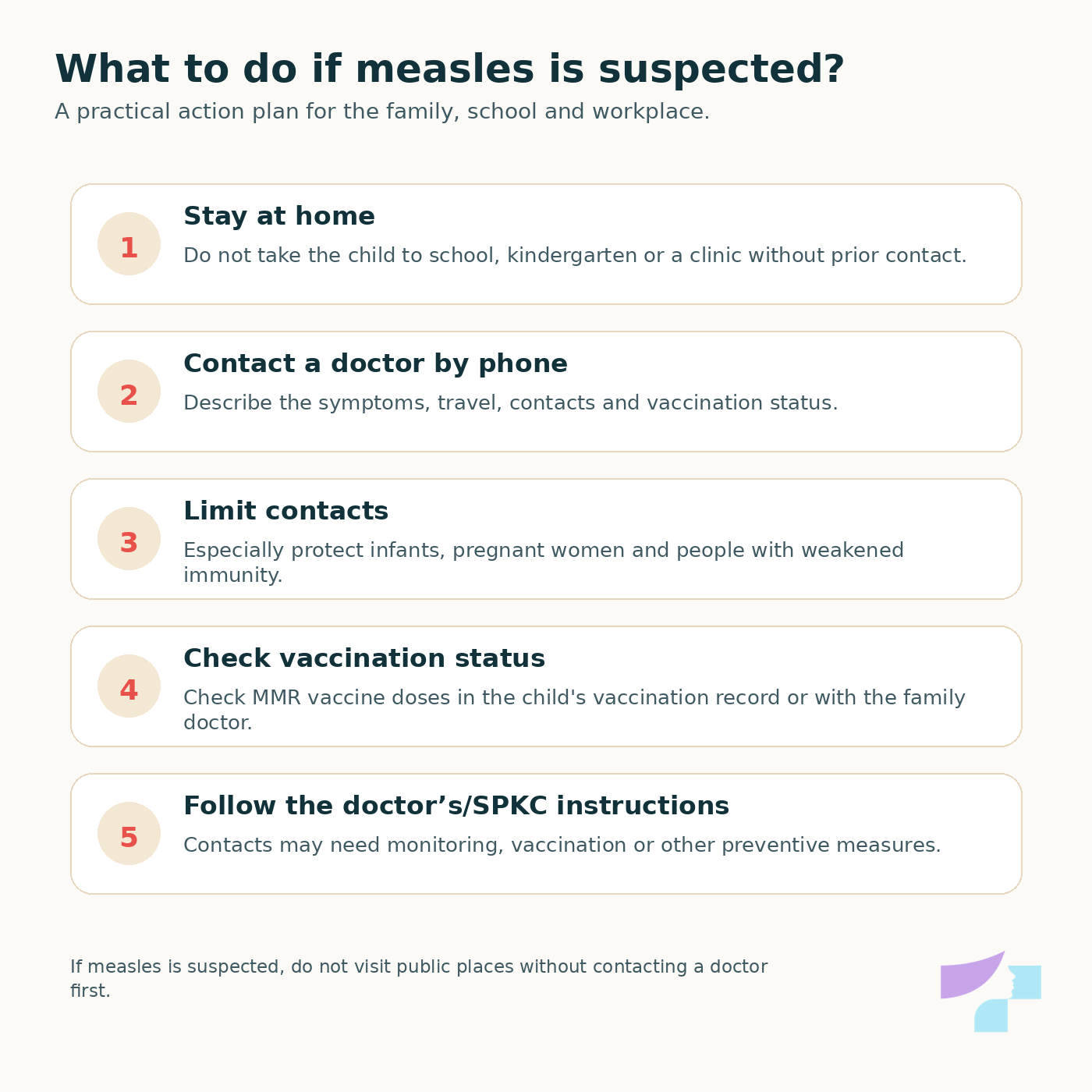
What to do if measles is suspected?
If a child or adult has fever, cough, runny nose, red eyes and rash, especially after contact with a sick person or after travel, the situation should be treated as a potentially contagious infection.
The first step is to stay at home and contact a doctor by phone. A person should not go to a clinic, emergency department, kindergarten, school or work without prior arrangement, because measles can spread to other people, including infants and immunosuppressed patients.
The doctor should be told:
- when the fever started;
- when the rash appeared;
- whether there is cough, runny nose or red eyes;
- whether there has been contact with a measles patient;
- whether there has been recent travel;
- whether the person is vaccinated;
- whether there are infants, pregnant women or people with weakened immunity in the family.
What to do after contact with a measles patient?
If there has been contact with a measles patient, it is important to clarify vaccination status immediately and contact the family doctor or epidemiologist according to the recommended procedure. The European Centre for Disease Prevention and Control states that administration of a measles-containing vaccine may be an option for post-exposure prophylaxis within 72 hours after contact.
For certain risk groups, such as infants, pregnant women or people with severe immunosuppression, the approach may differ. In such cases, the doctor assesses individual risks and possible preventive measures.
Contacts should monitor for symptoms. If fever, cough, runny nose, red eyes or rash appears, a doctor should be contacted by phone and contact with others should be limited.
When should action be taken immediately after contact?
After contact with a measles patient, symptoms should not be waited for. A doctor should be contacted as soon as possible, especially if the contact person is an infant, pregnant woman, unvaccinated child, person with weakened immunity or an adult with unknown vaccination status. In some cases, a doctor may consider post-exposure prophylaxis — vaccination shortly after contact or administration of immunoglobulin for risk groups.
When can a person return to kindergarten, school or work?
After measles, return to kindergarten, school or work should be determined by the doctor and epidemiological instructions. In general, it should be taken into account that a person remains contagious for several days after the rash begins. The Centers for Disease Control and Prevention states that isolation is usually required for 4 days after the rash appears, but specific action must be adapted to the situation and local requirements.
If measles is suspected, a child must not be taken to kindergarten or school “to see if it passes”. This can cause an outbreak and endanger other children. It is also unacceptable to deliberately bring a healthy child into contact with a child who has measles in the hope that the child will “get it over with”. Such behaviour is medically dangerous, epidemiologically irresponsible and can endanger other people.
Does measles have to be reported to the CDPC?
Measles is an epidemiologically significant infection, and public health institutions are involved in suspected or confirmed cases. In its clinical guidance, the Centers for Disease Control and Prevention emphasises that suspected measles cases should be reported to the local health authority and that sporadic cases or outbreaks should be laboratory-confirmed. In Latvia, the practical reporting and epidemiological investigation procedure is determined by current legislation and the instructions of the Centre for Disease Prevention and Control.
For the patient, the most important thing is not to break isolation principles and to provide the doctor with accurate information about contacts, travel and vaccination status.
Vaccination against measles
Vaccination is the main form of measles prevention. In Latvia, the combined vaccine against measles, mumps and rubella is used. In Latvian usage, the abbreviations MMP and MPR are both encountered; the Centre for Disease Prevention and Control uses “MPR vaccine” in its material.
The MMR/MPR vaccine is a live attenuated vaccine. This means that the viruses it contains are weakened in order to stimulate the immune system to develop protection without causing typical disease in people with normal immune system function. It is not suitable for everyone — for example, live attenuated vaccines are generally not given to pregnant women and people with certain severe immune system disorders. Contraindications must always be assessed by a doctor.
The Centre for Disease Prevention and Control states that maximum protection requires two MPR vaccine doses; in Latvia, the first dose is scheduled at 12–15 months of age and the second at 7 years of age.
Why is the second vaccine dose necessary?
The second dose is needed to ensure the most complete protection possible for those whose immune response after the first dose was insufficient and to strengthen society’s overall protection. Measles is so contagious that moderate vaccination coverage is not enough — the European Centre for Disease Prevention and Control states that measles elimination requires about 95% vaccination coverage.
Can a vaccinated person get measles?
Yes, in rare cases a vaccinated person can get measles, especially if only one dose has been received or if the immune response was insufficient. However, vaccination significantly reduces the risk of infection, severe disease and complications. A full two-dose vaccination is the safest and most effective way to gain protection against measles.
Is the MMR/MPR vaccine safe?
The MMR/MPR vaccine has been used widely and for a long time, and it is one of the essential public health tools for measles prevention. The Centre for Disease Prevention and Control states that the vaccine is safe and effective.
After vaccination, temporary side effects may occur, such as pain or redness at the injection site, mild fever, short-term rash or feeling unwell. Severe reactions are rare, but any serious reaction should be assessed by a doctor.
Can the MMR/MPR vaccine cause measles?
In people with normal immune system function, the MMR/MPR vaccine does not cause typical measles. It contains weakened viruses intended to create immunity. After vaccination, mild, temporary symptoms such as fever or rash may occur, but these are not the same as natural measles infection.
Does the MMR/MPR vaccine cause autism?
No — high-quality studies and assessments by international health organisations do not support a causal link between vaccines and autism. The World Health Organization has repeatedly confirmed that there is no evidence of a causal association between vaccines and autism spectrum disorders. The World Health Organization’s Global Advisory Committee on Vaccine Safety, after reviewing the available evidence, has not found a causal link between vaccines and autism.
This topic is especially important because misinformation about the MMR vaccine is one of the reasons why vaccination coverage decreases in some groups and measles outbreaks return.
How can I know whether I am vaccinated against measles?
Vaccination status can be checked in the vaccination record, the child’s medical documentation, with the family doctor or in relevant e-health or medical documentation systems if the data are available there. If vaccination status is unknown, the family doctor or an infectious disease specialist should be contacted; they will assess whether vaccination or additional tests are needed.
It is especially important for adults to check immunity before travel, work in healthcare or educational institutions, or if there is an infant, pregnant woman or person with weakened immunity in the family.
What to do if the vaccination record is lost?
If the vaccination record is lost or it is unclear whether a person has been vaccinated against measles, the family doctor should be contacted. The doctor can check available medical records, assess age, previous vaccination and, if necessary, recommend vaccination or immunity testing. Unclear vaccination status is especially important before travel, pregnancy planning, work with children or patients, and after contact with a measles patient.
Is vaccination against measles state-funded for children in Latvia?
Vaccination of children against measles is included in the Latvian childhood vaccination schedule. The Centre for Disease Prevention and Control states that the Latvian childhood vaccination schedule provides two MPR vaccine doses — at 12–15 months of age and at 7 years of age.
For adults, the payment procedure for vaccination may depend on the specific situation, indications, risk group, travel needs or healthcare provider. In practice, this should be clarified with the family doctor, vaccination office or current materials from the National Health Service or the Centre for Disease Prevention and Control.
How to protect an infant who is not yet old enough for vaccination?
An infant is best protected by the immunity of people around them. This means that parents, siblings, caregivers and close family members should be vaccinated or have proven immunity. If measles is detected in the surrounding area, contact between the infant and unvaccinated or sick people should be limited and the doctor’s or CDPC instructions should be followed.
Measles in Latvia and worldwide
Measles has not disappeared completely. It continues to cause outbreaks in countries and communities where vaccination coverage is insufficient. The Centre for Disease Prevention and Control states that measles still occurs in European countries and that outbreaks are linked to imported cases and insufficient immunisation coverage in certain groups.
For current information about measles in Latvia, it is recommended to follow announcements and epidemiological materials from the Centre for Disease Prevention and Control.
How to distinguish measles from other diseases?
Measles can resemble several other diseases, so the diagnosis must not be based only on the appearance of the rash. The sequence of symptoms, vaccination status, contact with a sick person, travel and medical examination are important.
| Comparison | Main differences |
|---|---|
| Measles or rubella | Measles usually has a more severe course, with higher fever, cough, runny nose, red eyes and a characteristic rash spreading from the face downward. Rubella is often milder but is especially dangerous during pregnancy because of risks to fetal development. They are different diseases, not the same infection. |
| Measles or chickenpox | Chickenpox is characterised by blister-like rashes in different stages at the same time — spots, blisters and crusts may all be present. In measles, the rash is usually maculopapular, begins on the face and spreads downward, and it is often preceded by cough, runny nose and red eyes. |
| Measles or scarlet fever | Scarlet fever is a bacterial infection often characterised by sore throat, fever, a fine rash and a “strawberry tongue”. More typical of measles are cough, runny nose, red eyes, Koplik spots and a rash that begins on the face. |
| Measles or allergy | Allergic rashes are often very itchy, may appear suddenly and change within hours. Measles usually has general infection symptoms — fever, cough, runny nose and red eyes — and the rash appears after several days of illness. |
| Measles or roseola | Roseola more often affects young children. It is characterised by high fever for several days, followed by a rash as the temperature falls. Measles usually has respiratory symptoms and red eyes, and the rash starts on the face. |
| Measles or flu | Flu can start with sudden high fever, chills, muscle pain and headache. In measles, fever is accompanied by cough, runny nose, red eyes and later a rash. |
| Measles or Covid-19 | Covid-19 and measles can overlap in fever, cough and weakness. However, measles is more typically associated with a combination of runny nose, red eyes, Koplik spots and a rash that starts on the face and spreads downward. The diagnosis is made by a doctor, using laboratory tests if necessary. |
| Measles or meningococcal infection | Meningococcal infection can be life-threatening and progress very quickly. Especially dangerous are rashes that do not fade when pressed with a transparent glass, together with high fever, sleepiness, confusion, neck stiffness or rapid worsening of the condition. In such a situation, emergency medical help must be called immediately. |
Measles and public health
Measles is an important public health infection because a single case can create a wide circle of contacts in a kindergarten, school, healthcare facility, workplace or public event. The more unvaccinated or non-immune people there are in society, the easier it is for the virus to spread and cause an outbreak. Therefore, vaccination against measles protects not only the individual, but also infants, pregnant women and people who cannot be vaccinated for medical reasons.
Practical and indirect costs
Measles creates not only a medical burden, but also a practical burden for the family and society. A sick child needs isolation and care at home. Parents may need to miss work. Contacts may need monitoring, vaccination status checks or temporary isolation. In kindergartens, schools and healthcare facilities, a measles case can require extensive epidemiological work.
If the disease is severe, hospitalisation may be needed. Therefore, measles prevention is not only an individual health issue, but also a matter of public health and economic security.
What is clearly proven in medicine, and what is still being studied?
Medicine has clearly established that measles is a highly contagious viral infection, that vaccination significantly reduces the risk of illness and complications, that two-dose vaccination coverage is needed to prevent outbreaks and that measles can cause serious complications. These conclusions are consistently supported by the materials of the World Health Organization, the European Centre for Disease Prevention and Control, the Centre for Disease Prevention and Control of Latvia and the Centers for Disease Control and Prevention.
Areas in which medicine continues to work include early detection of measles outbreaks, improving vaccination coverage, communication with people who have doubts about vaccination, research into the long-term significance of immune amnesia, and better public health tools for identifying contacts and limiting infection spread. Research into measles-induced reduction of immune memory is one example of how understanding of the long-term impact of the disease is evolving.
When should a doctor be contacted?
A doctor should always be contacted if measles is suspected. This is especially important if the person is not vaccinated, has been in contact with a measles patient, has recently travelled, or if there is an infant, pregnant woman or person with weakened immunity in the family.
The first contact should be by phone so that the healthcare facility can organise a safe appointment and reduce the risk of spreading the infection.
Emergency medical help should be called if there is shortness of breath, seizures, impaired consciousness, marked sleepiness, neck stiffness, bluish lips, severe dehydration or rapid deterioration.
The information in this article is intended for informational and educational purposes only. It does not replace medical consultation, diagnosis or treatment. Self-diagnosis and self-treatment can be incorrect and dangerous, especially in infants, pregnant women, people with weakened immunity or in cases of severe symptoms. If you or your child has fever, cough, runny nose, red eyes, rash, has been in contact with a measles patient or measles is suspected, contact a family doctor, infectious disease specialist or paediatrician by phone immediately and follow the instructions received. In case of severe, rapidly worsening or high-risk symptoms, call emergency medical help immediately.
References and authoritative sources
- Centre for Disease Prevention and Control of Latvia: Measles.
- CDPC informational material on measles.
- European Centre for Disease Prevention and Control (ECDC): Measles factsheet.
- World Health Organization (WHO): Measles fact sheet.
- Centers for Disease Control and Prevention (CDC): Measles clinical diagnosis and clinical overview.
- European Centre for Disease Prevention and Control (ECDC): 95% vaccination coverage for a measles-free European Union.
- Mina MJ et al.: Measles virus infection diminishes preexisting antibodies that offer protection from other pathogens. Science.
- Harvard Medical School: Inside immune amnesia.
- WHO Global Advisory Committee on Vaccine Safety / Reuters summary on vaccines and autism evidence review.
Content author
Dermatologist Dr. med. Dace Buile
